Archive | September, 2026

Reviews of “The Weight” and “Resident Evil”

18 Sep

Intensity in survival and horror

“The Weight”

⭐⭐⭐Rating: 3 out of 4

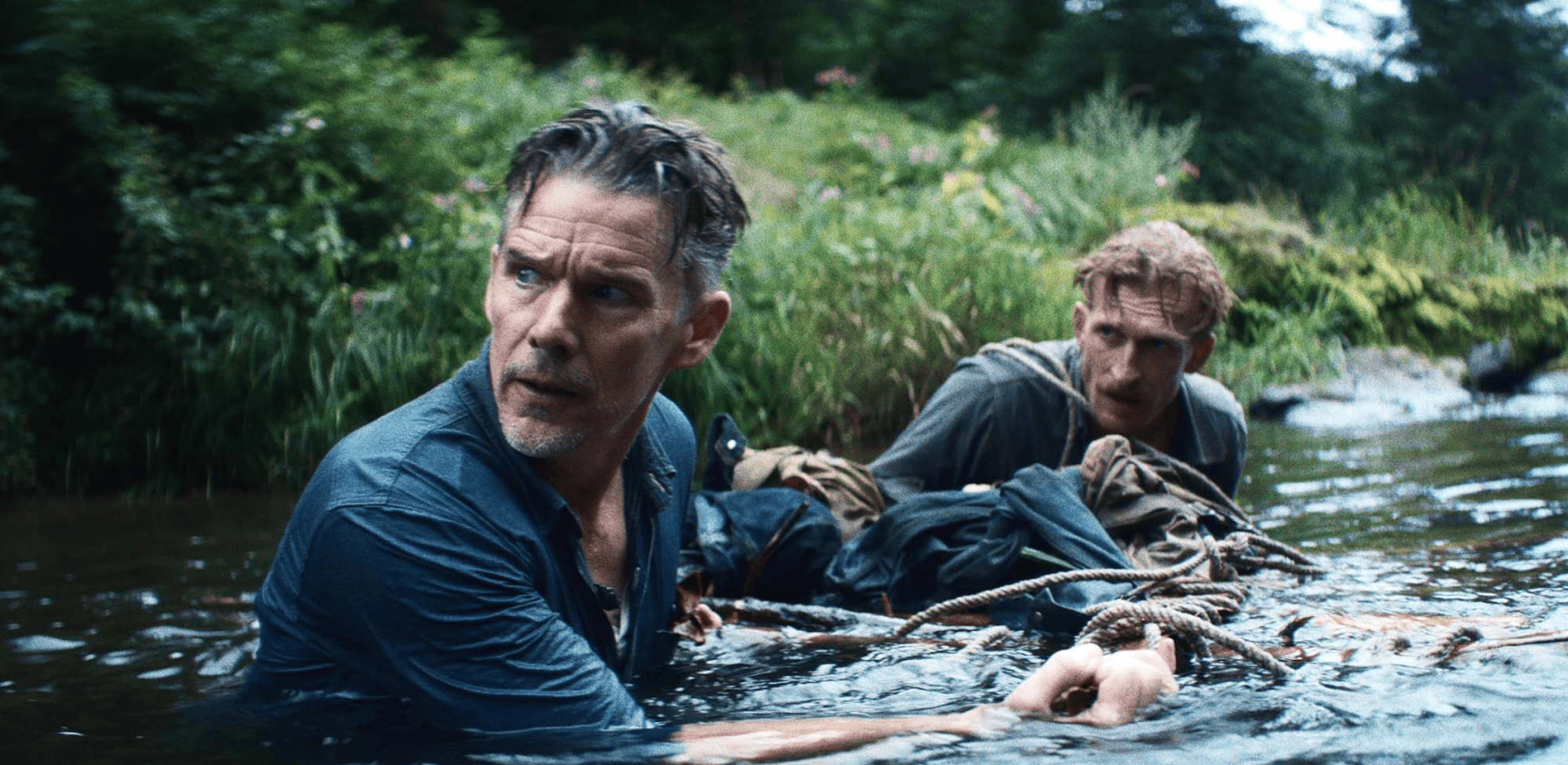
In “The Weight,” a muscular, Depression-era survival drama, Ethan Hawke again looms large in a small, gritty framework. Hawke brings a lean, tightly wound intensity to a man carrying more than his body— or perhaps his soul — can bear. It’s another powerful performance, following a deserved Oscar nod for his turn as beleaguered lyricist Lorenz Hart in Richard Linklater’s “Blue Moon” last year, and his portrayal of spiritual torment in “First Reformed” (2017). 

Set in Oregon in 1933, “The Weight” centers on Hawke’s Samuel Murphy, a widowed mechanic barely holding together a life for himself and his young daughter, Penny (Avy Berry). An unwise altercation lands him in a brutal prison work camp with Penny taken into state custody. Samuel’s only path back to reuniting with her comes through the camp’s corrupt warden, Clancy (a droll, snaky Russell Crowe), who offers him early release if he helps transport an illicit stash of gold through miles of treacherous wilderness.

Samuel sets out with a fractious band of convicts and armed overseers, among them Rankin (Austin Amelio), Singh (Avi Nash) and Anna (Boston-born Julia Jones), a resourceful Native American woman who joins their perilous trek. The gold grows heavier with every arduous mile, but it’s hardly the only burden being carried. There’s Samuel’s guilt over losing Penny, his responsibility for those traveling with him and the moral toll of participating in Clancy’s corrupt enterprise. There’s also the crushing pressure that poverty places upon people with no good choices.

“The Weight” marks the feature-directing debut of Padraic McKinley, a veteran editor whose credits include “Dexter,” “Igby Goes Down” (2002) and Hawke’s 2020 John Brown mini-series “The Good Lord Bird.” McKinley’s background shows in the film’s lean construction and tactile action. In tempo, texture and tenor it feels akin to some of the best character-driven cinema from the New Hollywood-era— think “Cool Hand Luke” (1967), “Jeremiah Johnson” (1972), and William Friedkin’s 1977 film “Sorcerer.”

Like Clint Bentley’s similarly set “Train Dreams, (2025)” the film regards the American wilderness as beautiful, indifferent and faintly mythic, though McKinley substitutes hard-driving suspense for lyrical introspection. Crowe makes for a formidable avatar of institutional greed, but this is Hawke’s load to shoulder. Quiet, weathered and morally alert, he gives the film its grit—and its gravity.

Continue reading

“The Uprising”

11 Sep

A Robin Hood origin story–kind of, sorta

⭐⭐⭐Rating: 3 out of 4

The latest action flick from “Jason Bourne” director Paul Greengrass has been marred by a marketing fumble that hailed the movie as a Robin Hood origin story. “Witness the rise of Robin Hood,” was the mid-summer tagline until Focus Features caught flack — too much of a spoiler, and not the story’s focus — and walked it back. Now that the cat’s out of the bag, the reveal of Andrew Garfield’s rebel Ploughman as Robin Hood arrives late in the movie, as a semi-gotcha. But it’s really a non-issue since “Uprising” works on its own as a period piece about the 1381 Peasants’ Revolt in England, Robin Hood subtitle or not. It takes place after the Black Death of the mid-1300s, when half the population has been wiped out. Fourteen-year-old King Richard II (Woody Norman, foppishly excellent as the effete and conniving overload) and his court of corrupt advisors are economically squeezing peasants and serfs under the Poll Tax to finance the ongoing war with France and the lush life of the royals. Commoners must toil under inhumane conditions and give up all they reap to the king — resist and die. During one such incursion, a peasant wanting to hold reserves to feed his family is beaten, which is when Garfield’s Ploughman (that is all he is called) wades in and gives it back fist-for-fist. The film frames this as a major galvanizing point in the sweeping peasant uprising led by Wat Tyler (Cosmo Jarvis) and monk John Ball (Jamie Bell). Ball and Tyler were real historical figures; Garfield’s working man is loosely pulled from William Langland’s “Piers Plowman” — the OG Robin Hood — which was put down on paper around the same time as the plague and revolt. Other (later) tellings of Robin Hood — the ones that begat Errol Flynn’s randy forest romp of 1938 and Ridley Scott’s 2010 redux starring Russell Crowe and Cate Blanchett — placed the cloaked outlaw further back in time (1199/1200) with King Richard the Lionheart (Richard I), King John, and the Sheriff of Nottingham as the faces of tyranny. 

Continue reading

“Mighty Mary” and the all-woman team that cannonballed America’s Cup

11 Sep

A high seas adventure that broke the glass ceiling

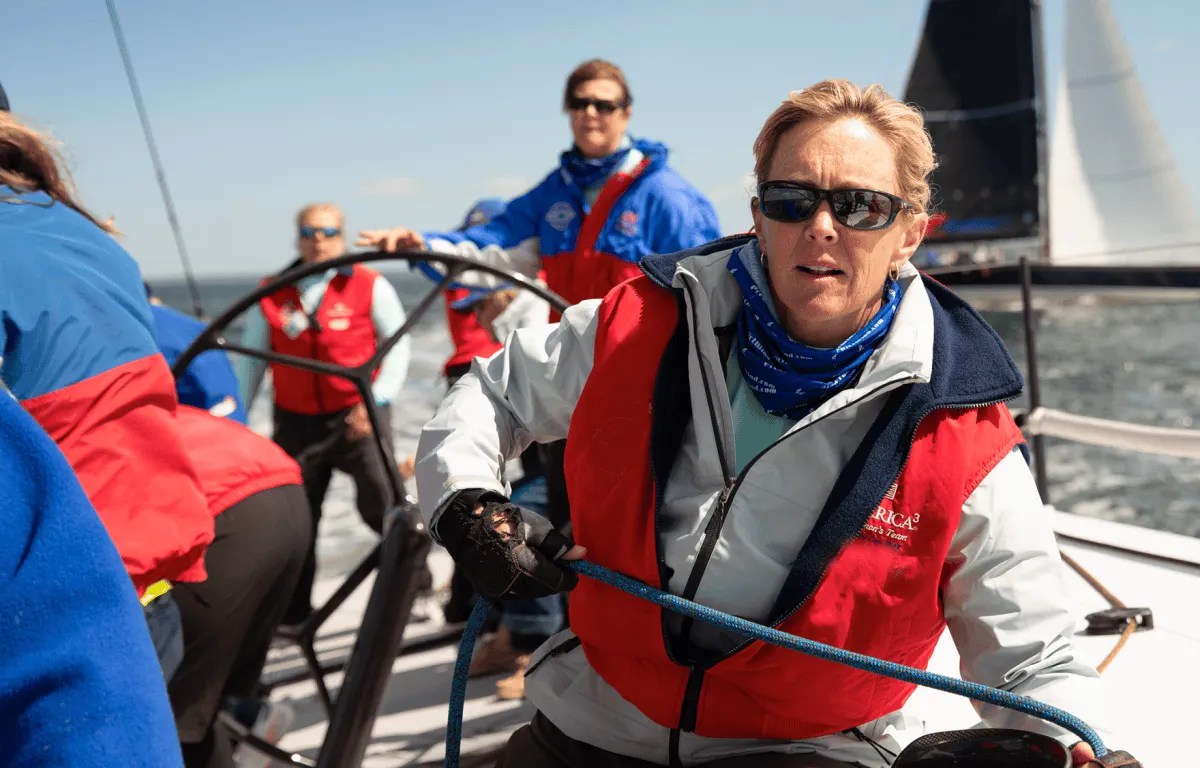
A still from “Mighty Mary”

Most of the action in “Mighty Mary,” the new documentary about the first all-woman yachting team to vie for the America’s Cup in 1995, takes place in San Diego, where the women train and race. But the film also has plenty of Cambridge connections. Director and former Olympic rower Mary Mazzio lived in Cambridge in the early 1990s and trained at the Weld Boathouse on the Charles River. So did two of the Mighty Mary crew, 1992 Olympic teammates of Mazzio: Amy Baltzell and Marci Porter Lucier.

“There used to be a national-team training center run out of Weld Boathouse,” Mazzio said in an interview with Cambridge Day. “All of us came from that — birthed, if you will, by Cambridge. Love that dirty water.”

Mazzio, a filmmaker-in-residence at Babson College, was drawn to the story of the all-women’s crew as they trained for the competition to represent the U.S. in the race. “I remember following the story and thinking, ‘Oh my God, how are they going to achieve this?’” Mazzio said. “It seemed daunting, almost a fool’s errand. Then I thought, ‘I know these women. If anybody can do it, it’s them.’”

The story behind the story was that Bill Koch — who had won the 1992 America’s Cup with a nearly all-male crew — wanted to push boundaries with an all-woman crew. Koch believed that with advanced technology and tactical skills, winning the race was no longer just about sheer strength and endurance.

Continue reading

Reviews of “Remake” and “The Runner”

11 Sep

an intimate documentary and a sprinting kidnapping rescue

“Remake”

Adrian McElwee in “Remake.” Credit: Courtesy of Music Box Films

⭐⭐⭐1/2 Rating: 3.5 out of 4

Ross McElwee’s “Remake” opens with a wry proposition: a Hollywood producer wants to turn McElwee’s 1986 documentary, “Sherman’s March” — the filmmaker’s meandering meditation on love, Southern culture, and romantic rejection — into a conventional scripted feature, perhaps even a comedy. Questions abound: Who would play McElwee? How could its accidental encounters and intimate revelations be scripted? McElwee picked up a camera to document the cinematic transformation but, as both efforts inched forward, McElwee’s film takes on a more painful tone. The Cambridge-based filmmaker’s lens turns inward on decades of footage of his son Adrian, who died from a fentanyl overdose in 2016 at age 27, eight years into McElwee’s project. In the rewinds, we watch Adrian grow from an imaginative, playful child into a sullen teenager and then a young man struggling with addiction, mental-health issues, and the burden of finding his own identity — particularly as an aspiring filmmaker living in the shadow of a celebrated documentarian father.

McElwee, an avuncular, reflective man whose deeply personal work has always blurred the line between home movie, essay, and autobiography, does not spare himself. Had the camera brought father and son closer, or placed an obstructive lens between them? Did appearing in his father’s films distort Adrian’s understanding of reality? And did Ross’s attempts to mentor Adrian — from “Sherman’s March,” we know his own father never encouraged his filmmaking — carry expectations the son could not meet?

For anyone who has seen “Sherman’s March,” the notion of turning the captivating documentary into anything else would seem improbable, if not wrong — but the outcome will surprise you. And that’s the gentle initial humor of “Remake,” underscored by McElwee’s patient cynicism. While there are moments of joy and tenderness with Adrian, those images — the two at Cannes with Adrian shooting his own mockumentary about a film honcho, Haskell-Wexler style — take on a secondary weight as the catalyst for “Remake” gets pushed to the corners of the frame. It’s a devastating film about the way grief slowly and surely guts you. “Remake” is as much a loving memorial as it is an agonizing act of self-interrogation. Some things can be remembered, revisited, and even remade — but never repaired.

Continue reading

Reviews of “Teenage Sex and Death at Camp Miasma,” “The Whisper Man,” “Mayday” and “Onslaught”

3 Sep

Art horror, serial killer nonchiller, espionage comedy and a gorefest


“Teenage Sex and Death at Camp Miasma”

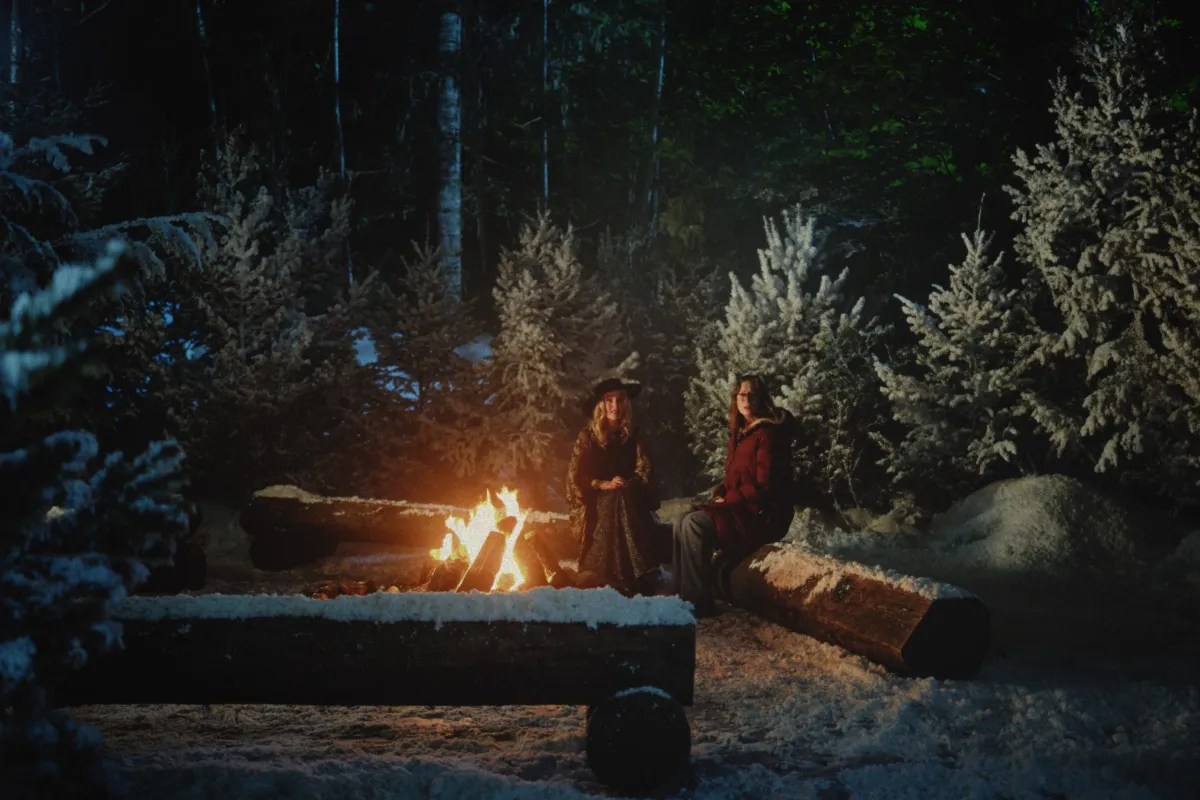
A still from “Teenage Sex and Death at Camp Miasma.” Credit: Courtesy of MUBI

⭐⭐⭐Rating: 3 out of 4

In this latest art-horror curio from Jane Schoenbrun, the alt-indie hand behind psycho-chillers “We’re All Going to the World’s Fair” (2021) and “I Saw the TV Glow” (2024), the “Friday the 13th” film franchise and gender politics get skewered with bloody orgasmic gusto. There is plenty of sex and death, as the title promises, with the bloodshed bringing the joy more than any muted, intoned, crest of pleasure. A head gets cut off and an arc of crimson red gushes 30 feet into the air, so over-the-top it’s comical. The effects are gorgeously framed by Eric Yue, who worked with Schoenbrun on their previous projects.

Camp Miasma is somewhere in the wooded Pacific Northwest at a lake, which was many years ago the setting of a slasher film starring Billy Presley (Gillian Anderson) as an ingénue. It becomes a long-running series of films and Presley, the “final girl,” now lives as a recluse at the site. 

Enter Kris (Hannah Einbinder, “Hacks”), a young queer indie film director hired to reboot the franchise. Kris hopes to recruit Billy for her project (think Jamie Lee Curtis or Neve Campbell). The set up’s clearly self-referential — and part of the backdrop is that the original films have become criticized for their treatment of gender — namely trans. Kris — a clear stand-in for Schoenbrun—is an adoring fan of Billy’s and given the cold foreboding nights (it’s winter) the two end up smoking weed, watching old “Miasma Camp” videos and working on Kris’s failures at sex — she’s in a polyamorous relationship, but appreciates companionship more for the intellectual than the physical. 

Much is asked of Einbinder in range — goofy, sexy, witty but shy — and she pulls it off, but it’s Anderson, with her bumper-bangs-and-victory-rolls updo (and menacingly aloof cattiness) that drives the film and alluringly so. It’s an intoxicating and immersive performance that holds the film together as it slips into alter realities and other strange and wonderfully murky segues. We see plenty of Little Death (Jack Haven) the being at the bottom of the lake, who when hungry, rises from the depths in a Devo Hazmat suit with a ceiling air vent for a mask, and eviscerates any and all with a double-bladed spear. The cherry on the top is seeing Eva Victor (“Sorry Baby”)’s cameo as a punked-out ’80s DJ — mohawk and all — with sassitude.

Continue reading