Intensity in survival and horror
“The Weight”

⭐⭐⭐Rating: 3 out of 4
In “The Weight,” a muscular, Depression-era survival drama, Ethan Hawke again looms large in a small, gritty framework. Hawke brings a lean, tightly wound intensity to a man carrying more than his body— or perhaps his soul — can bear. It’s another powerful performance, following a deserved Oscar nod for his turn as beleaguered lyricist Lorenz Hart in Richard Linklater’s “Blue Moon” last year, and his portrayal of spiritual torment in “First Reformed” (2017).
Set in Oregon in 1933, “The Weight” centers on Hawke’s Samuel Murphy, a widowed mechanic barely holding together a life for himself and his young daughter, Penny (Avy Berry). An unwise altercation lands him in a brutal prison work camp with Penny taken into state custody. Samuel’s only path back to reuniting with her comes through the camp’s corrupt warden, Clancy (a droll, snaky Russell Crowe), who offers him early release if he helps transport an illicit stash of gold through miles of treacherous wilderness.
Samuel sets out with a fractious band of convicts and armed overseers, among them Rankin (Austin Amelio), Singh (Avi Nash) and Anna (Boston-born Julia Jones), a resourceful Native American woman who joins their perilous trek. The gold grows heavier with every arduous mile, but it’s hardly the only burden being carried. There’s Samuel’s guilt over losing Penny, his responsibility for those traveling with him and the moral toll of participating in Clancy’s corrupt enterprise. There’s also the crushing pressure that poverty places upon people with no good choices.
“The Weight” marks the feature-directing debut of Padraic McKinley, a veteran editor whose credits include “Dexter,” “Igby Goes Down” (2002) and Hawke’s 2020 John Brown mini-series “The Good Lord Bird.” McKinley’s background shows in the film’s lean construction and tactile action. In tempo, texture and tenor it feels akin to some of the best character-driven cinema from the New Hollywood-era— think “Cool Hand Luke” (1967), “Jeremiah Johnson” (1972), and William Friedkin’s 1977 film “Sorcerer.”
Like Clint Bentley’s similarly set “Train Dreams, (2025)” the film regards the American wilderness as beautiful, indifferent and faintly mythic, though McKinley substitutes hard-driving suspense for lyrical introspection. Crowe makes for a formidable avatar of institutional greed, but this is Hawke’s load to shoulder. Quiet, weathered and morally alert, he gives the film its grit—and its gravity.
“Resident Evil”
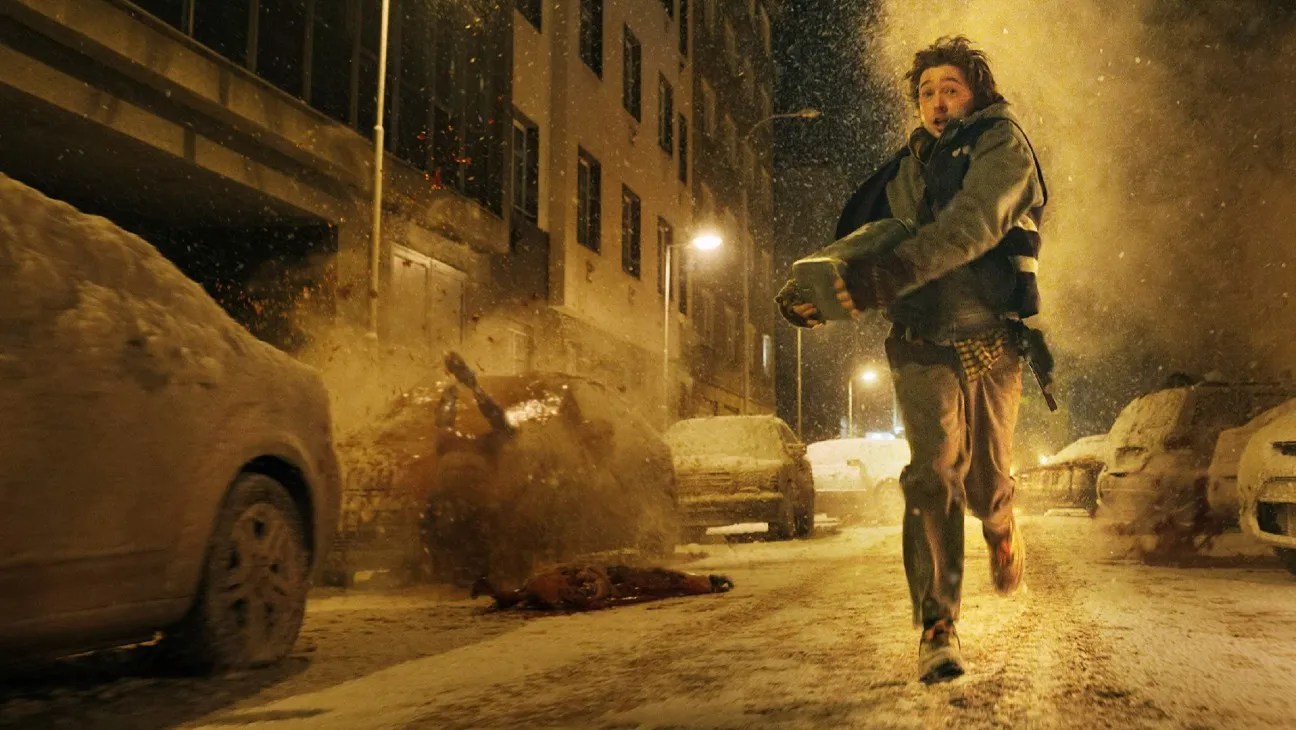
⭐⭐⭐Rating: 3 out of 4
A punchy, assertive reboot by director Zack Cregger, the whiz kid of creeps behind “Barbarian” (2022) and last year’s lurid school-shooting metaphor, “Weapons.”
The 2002 cornerstone that launched a thousand follow-ons was based on the popular 1990s PlayStation video game. The films as adapted by Paul W. S. Anderson were slack sci-fi fantasy flicks, but Anderson made Milla Jovovich the franchise’s heroine, Alice, and her striking performance made for a zombie horde at the box office. Jovovich was Ripley or Sarah Connor only pulled from an Abercrombie & Fitch shoot.
Cregger shifts direction, making the hero a character not found in the game, Bryan (Austin Abrams), a simp of sorts who, through grim happenstance (a viral outbreak, what else?) becomes mankind’s last hope. When we catch up with the dweebish medical courier, he’s already in a pinch, with no mutant zombies in sight. His girlfriend is pregnant and wants to know what he wants to do about it. But he can’t address the question because his phone keeps dropping out and he has one last organ to deliver to a hospital over in Raccoon City, a populous valley enclave over a snow-slicked mountain (Denver would be my guess, but much of the film was shot in the Czech Republic). Bryan also doesn’t have the necessary snow chains for the journey.
Cregger goes all in for the slow burn, as he did in “Barbarian,” holding the crescendo of bloody mayhem back with tight reins and punctuating tense moments with well-orchestrated jump scares. It’s masterfully done and Abrams, who was infectiously hopeless as the homeless junkie James in “Weapons,” carries off the wisecracking anti-hero part with a more restrained, but equally irreverent sassitude of Rodney Piper in John Carpenter’s “They Live” (1988) or Bruce Campbell’s Ash in Sam Raimi’s “Evil Dead” flicks. It’s pretty funny at turns and like “Evil Dead” — or the source video game — there’s plenty of first person-shooter POVs as you come around a corner or burst into a room — and some of the FX of the gory ghouls that flood the streets and hospital corridors of Raccoon City are evocative of the shape-shifting enigma in Carpenter’s “The Thing” (1982).
The film’s at its best during the lead-up, with Bryan navigating the snowy wooded roadway or warily wandering the expanse of a seemingly abandoned farm. Paul Walter Hauser (“Richard Jewell”), Zach Cherry (“Severance”) and Kali Reis add punch in small parts as Umbrella Corp. minions (Reis’s operative feels worthy of their own chapter). The set work is killer too — especially the hellish sewer tunnels under the city. And as much as Cregger’s reimagining is fresh, witty and bold, it feels scripted and bound by the console-packaged concept. The execution of scene and Abrams are the reasons to see the film — and there is a clear hook for more to come. Perhaps an opportunity to bring in reigning goth-horror queen Mia Goth as the next X-factor in Raccoon City?


Leave a comment