Tag Archives: reviews

Reviews of “Remake” and “The Runner”

11 Sep

an intimate documentary and a sprinting kidnapping rescue

“Remake”

Adrian McElwee in “Remake.” Credit: Courtesy of Music Box Films

⭐⭐⭐1/2 Rating: 3.5 out of 4

Ross McElwee’s “Remake” opens with a wry proposition: a Hollywood producer wants to turn McElwee’s 1986 documentary, “Sherman’s March” — the filmmaker’s meandering meditation on love, Southern culture, and romantic rejection — into a conventional scripted feature, perhaps even a comedy. Questions abound: Who would play McElwee? How could its accidental encounters and intimate revelations be scripted? McElwee picked up a camera to document the cinematic transformation but, as both efforts inched forward, McElwee’s film takes on a more painful tone. The Cambridge-based filmmaker’s lens turns inward on decades of footage of his son Adrian, who died from a fentanyl overdose in 2016 at age 27, eight years into McElwee’s project. In the rewinds, we watch Adrian grow from an imaginative, playful child into a sullen teenager and then a young man struggling with addiction, mental-health issues, and the burden of finding his own identity — particularly as an aspiring filmmaker living in the shadow of a celebrated documentarian father.

McElwee, an avuncular, reflective man whose deeply personal work has always blurred the line between home movie, essay, and autobiography, does not spare himself. Had the camera brought father and son closer, or placed an obstructive lens between them? Did appearing in his father’s films distort Adrian’s understanding of reality? And did Ross’s attempts to mentor Adrian — from “Sherman’s March,” we know his own father never encouraged his filmmaking — carry expectations the son could not meet?

For anyone who has seen “Sherman’s March,” the notion of turning the captivating documentary into anything else would seem improbable, if not wrong — but the outcome will surprise you. And that’s the gentle initial humor of “Remake,” underscored by McElwee’s patient cynicism. While there are moments of joy and tenderness with Adrian, those images — the two at Cannes with Adrian shooting his own mockumentary about a film honcho, Haskell-Wexler style — take on a secondary weight as the catalyst for “Remake” gets pushed to the corners of the frame. It’s a devastating film about the way grief slowly and surely guts you. “Remake” is as much a loving memorial as it is an agonizing act of self-interrogation. Some things can be remembered, revisited, and even remade — but never repaired.

Continue reading

Reviews of “Teenage Sex and Death at Camp Miasma,” “The Whisper Man,” “Mayday” and “Onslaught”

3 Sep

Art horror, serial killer nonchiller, espionage comedy and a gorefest


“Teenage Sex and Death at Camp Miasma”

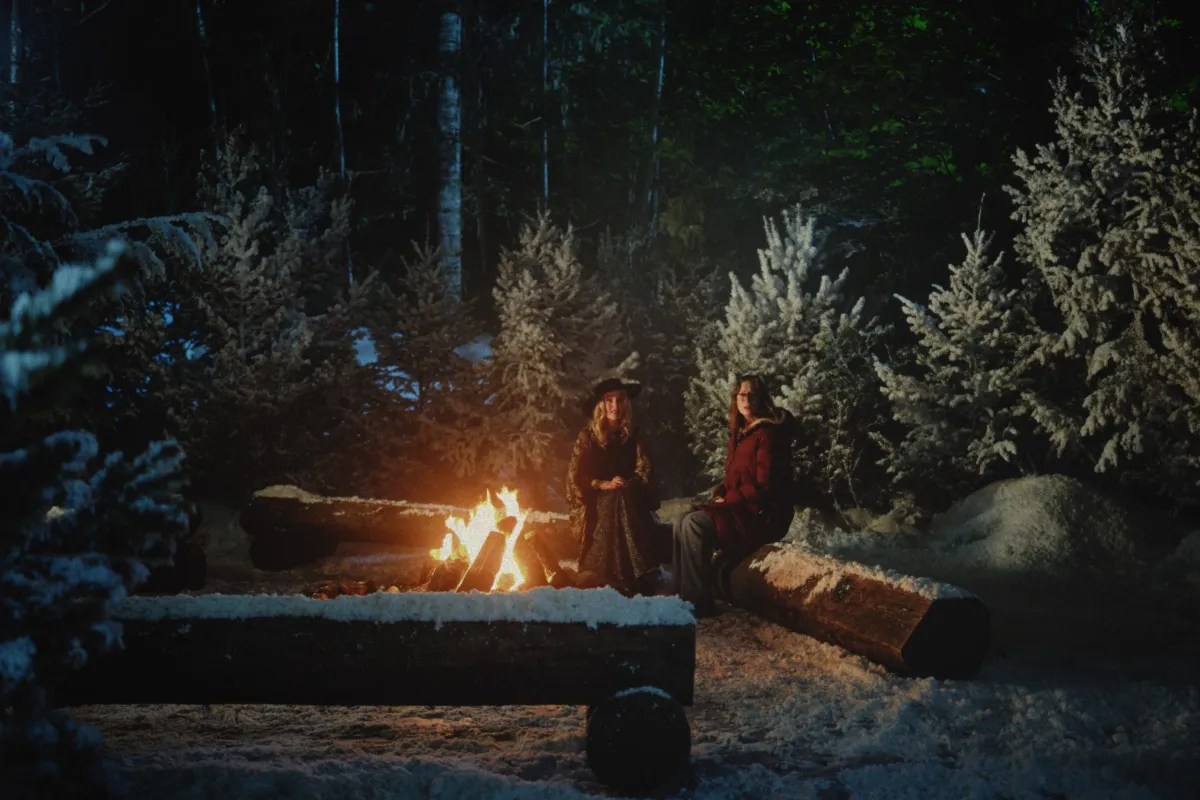
A still from “Teenage Sex and Death at Camp Miasma.” Credit: Courtesy of MUBI

⭐⭐⭐Rating: 3 out of 4

In this latest art-horror curio from Jane Schoenbrun, the alt-indie hand behind psycho-chillers “We’re All Going to the World’s Fair” (2021) and “I Saw the TV Glow” (2024), the “Friday the 13th” film franchise and gender politics get skewered with bloody orgasmic gusto. There is plenty of sex and death, as the title promises, with the bloodshed bringing the joy more than any muted, intoned, crest of pleasure. A head gets cut off and an arc of crimson red gushes 30 feet into the air, so over-the-top it’s comical. The effects are gorgeously framed by Eric Yue, who worked with Schoenbrun on their previous projects.

Camp Miasma is somewhere in the wooded Pacific Northwest at a lake, which was many years ago the setting of a slasher film starring Billy Presley (Gillian Anderson) as an ingénue. It becomes a long-running series of films and Presley, the “final girl,” now lives as a recluse at the site. 

Enter Kris (Hannah Einbinder, “Hacks”), a young queer indie film director hired to reboot the franchise. Kris hopes to recruit Billy for her project (think Jamie Lee Curtis or Neve Campbell). The set up’s clearly self-referential — and part of the backdrop is that the original films have become criticized for their treatment of gender — namely trans. Kris — a clear stand-in for Schoenbrun—is an adoring fan of Billy’s and given the cold foreboding nights (it’s winter) the two end up smoking weed, watching old “Miasma Camp” videos and working on Kris’s failures at sex — she’s in a polyamorous relationship, but appreciates companionship more for the intellectual than the physical. 

Much is asked of Einbinder in range — goofy, sexy, witty but shy — and she pulls it off, but it’s Anderson, with her bumper-bangs-and-victory-rolls updo (and menacingly aloof cattiness) that drives the film and alluringly so. It’s an intoxicating and immersive performance that holds the film together as it slips into alter realities and other strange and wonderfully murky segues. We see plenty of Little Death (Jack Haven) the being at the bottom of the lake, who when hungry, rises from the depths in a Devo Hazmat suit with a ceiling air vent for a mask, and eviscerates any and all with a double-bladed spear. The cherry on the top is seeing Eva Victor (“Sorry Baby”)’s cameo as a punked-out ’80s DJ — mohawk and all — with sassitude.

Continue reading

Reviews of “Hope” and “Coyote vs. Acme”

27 Aug

In these films, creatures and cartoon characters live among us

“Hope”

A still from “Hope”

⭐⭐1/2 Rating: 2.5 out of 4

For those who relish Korean creature-feature flicks laced with social commentary — think “The Host” (2006) or the gonzo zombie blast “Train to Busan” (2016) — “Hope” may scratch your itch. But be advised, you’ll be nearly an hour in before the first beastie rears its ugly head (I’m being colloquial, not judging beauty), and the film runs nearly three hours. Set in a small seaside town where residents work the earth and harvest fruits de mer, the chief of police, Bum-seok (Hwang Jung-min), is called out to investigate a mutilated bull — a scene that feels lifted from the opener of “Busan.” (Incidentally, Director Yeon Sang-ho’s ten-year followup, “Colony,” also opens in theaters this week, but not in Camberville.) Puzzled by the grim disemboweling — a tiger is suspected — Bum-seok makes his way back to his department’s humble headquarters, but the streets of the cloistered village are strangely desolate, several buildings have been laid to waste, and blood is smeared on walls like a bad stab at an alfresco Rothko. The ominous scene is punctuated by the echo of gunfire, coupled with loud sonorous growls — and every now and then, a car sails through the air and crashes through a rooftop. It’s a riveting build-up, orchestrated with adroit skill by director Na Hong-jin and his filmmaking crew: The choreography is critically tight, the set work impeccable, and Bum-seok’s hyperbolic reactions add a splash of comedy to the taut suspense. Then, just as all hell breaks loose, one of Bum-seok’s deputies, Sung-ae (Hoyeon, “Squid Game”), zips in on cue to demonstrate her boss-level grenade-launching and F1 driving skills. 

Loath to give away further details, I’ll just say Grendel would be smiling. The second half of the film doesn’t quite marry up to the blistering start; action sequences go on too long, likely an indulgence of cheap CGI. The narrative, too — which, like “The Host,” hinges on human folly — gets weak in the knees late, and the premise, never deepened enough, begins to sag. As “Hope” wraps, it feels like you’ve just seen Part 1 of a two-parter — and clearly something that could have been made tighter and sharper with better editing and narrative restraint. Na hadn’t made a film in a decade since “The Wailing” in 2016, and if that was the full incubation period of “Hope,” perhaps it cooked too long. If you’re curious about the title, Hope Harbor is the fictional inlet where the action takes place. The film also boasts international stars Michael Fassbender and Alicia Vikander as the voices of the shape-shifting humanoids dislocated and in conflict.

Continue reading

Reviewed: ‘The Drama’

4 Apr

Dark rom-com with likable leads packs a big wallop–one certain to polarize.

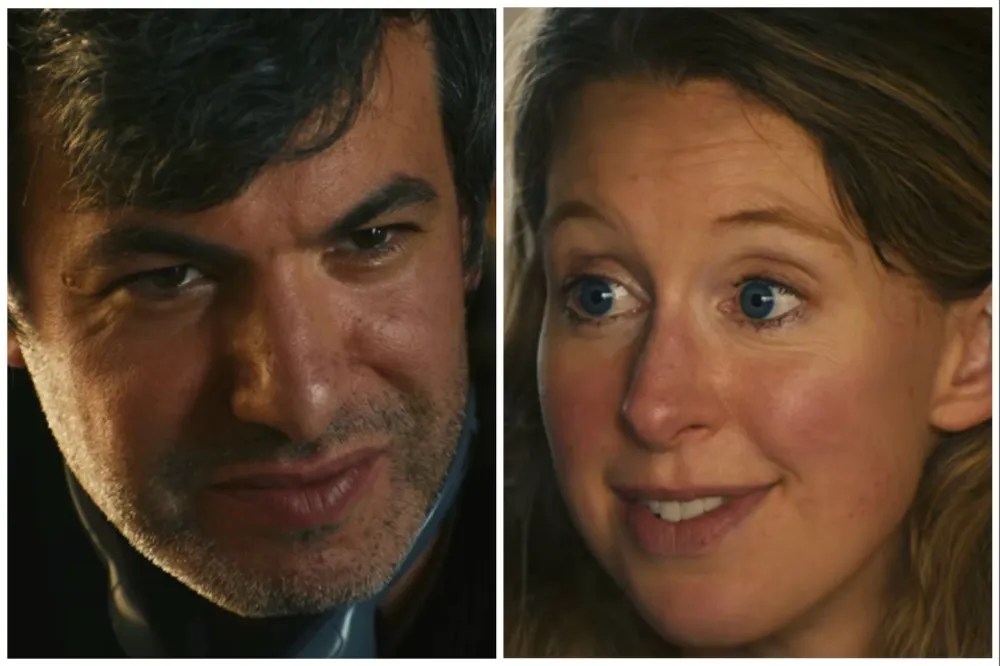
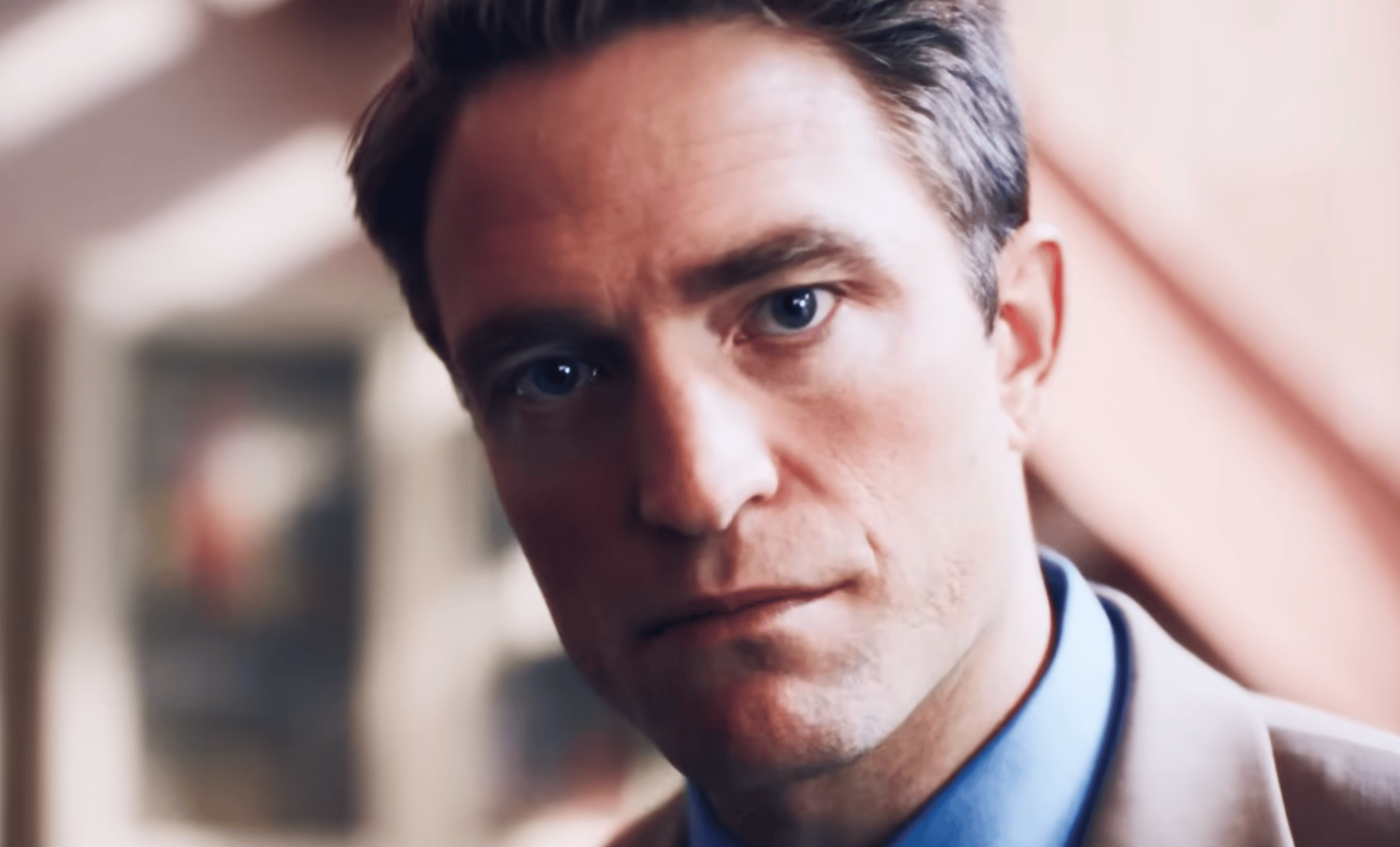
The latest from off-kilter impresario Kristoffer Borgli is a dark, sardonic rom-com with a sharp morality barb — one so pointed and polarizing that it will repel many viewers.  Others will be provoked, but still hop on board with Borgli’s go-for-broke vision. Of course, the real reason we’re all on tenterhooks about “The Drama,” starring hot properties Zendaya and Robert Pattinson as an engaged couple, is because the movie was shot here in Cambridge and Boston, with a pivotal scene playing out at Porter Square stalwart Andy’s Diner.  

The one thing “The Drama” is not: predictable. It’s also surprisingly funny in awkward, uncomfortable ways. As with “Dream Scenario” (2023), Borgli plants his biggest twists in small, mundane scenes. Things begin innocuously as Pattinson’s Charlie eyes Zendaya’s Emma at a Back Bay Tatte, where she’s reading a novel (it’s fictional fiction, although it shares the name as real novel by Caitlin Wahrer). He’s instantly smitten, looks up the book online, and pretends to have read it for his goofy, gawky overture. Emma ignores him. It’s not a classic cold shoulder, though: An earbud blasts beats in one of her ears, concealed by hair, and the other is deaf — the why of it, revealed later, packs a twist worthy of a Wes Anderson film.

Continue reading

Reviewed: “Pillion” and “Crime 101”

20 Feb

“Crime 101”

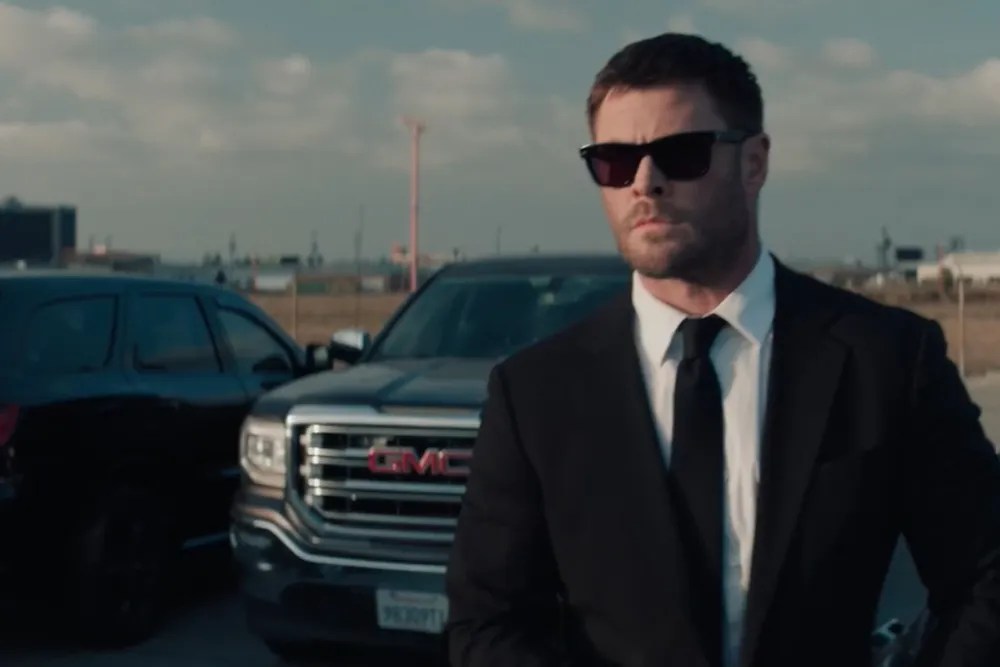
Bart Layton’s neo-noir crime drama has a killer cast draped in a B-movie sheen.  The aloof antihero is Mike Davis (Chris Hemsworth), who executes precise jewelry heists. Mike knows every detail of the courier or shop he’s knocking over and every job is done within a mile of LA’s 101 freeway, hence the name, shared with Don Winslow’s novella from which the movie is adapted.

Layton seamlessly weaves divergent threads that might otherwise have meandered. We meet Lou Lubesnick (Mark Ruffalo), a detective who vexes his department head by pursuing justice and truth instead of closing cases, and Sharon Combs (Halle Berry), an insurance investigator who also is up against it with her corporate hierarchy. Berry could have given her character the pop, sizzle and verve of Vicki Anderson (Fay Dunaway) in the brilliant 1968 version of “The Thomas Crown Affair.” Berry instead plays Sharon as a woman who was once all that but has been worn down by sexism, misogyny and promises broken.

Still, she’s good at her job. So is Mike. Astute at assessing risk, he turns down the next job from his handler (Nick Nolte), who pitches it to Orman (Barry Keoghan), a punkish up-and-comer whose methods are far different from Mike’s. The things bad bosses do to good employees will have you wishing Mike, Lou and Sharon had an HR department to lodge a complaint with.

The taut script gives the ensemble rich material, shaping characters more deeply than seems possible in their brief time on screen. Hemsworth is especially good as Mike, switching from socially awkward to debonair as the job demands it. His troubled past bubbles up as he starts to date a young publicist (Monica Barbaro, who steals a few scenes). Layton and crew tie things up neatly, but the ending is where the movie is least compelling. The gems in “Crime 101” are stashed along the road.

Continue reading

Frederick Wiseman, chronicler of democratic society

19 Feb

Fred Wiseman (left) and Iranian filmmaker Jafar Panahi at the Coolidge Corner Theater (Claire Vail).

Frederick Wiseman, the critically revered documentarian whose films mapped the moral frame of American life, died Monday at 96 at his home near Porter Square, in the city he in many ways, spent a career studying.

Born in Boston in 1930 and trained as a lawyer (Yale Law and a stint in the army) before turning to filmmaking, Wiseman carried a jurist’s sensibility into cinema — gathering evidence, observing behavior, withholding judgment. His camera did not accuse; it revealed. His body of work may be one of the most sustained portraits of modern democratic society ever assembled on film.

Continue reading

Reviewed: “David,” “Good Luck, Have Fun, Don’t Die” and “The Wrecking Crew”

15 Feb

“David”

Written and directed by Brent Dawes and Phil Cunningham, “David”’s animation is on par with Pixar. It sticks to the part of the Biblical story that chronicles the rise of the young shepherd and poet who would become the unifying King of Israel. Of course, David slays Goliath, repels the Philistines, deals with King Saul’s January 6th cling to power and ultimately makes Jerusalem the capital of Israel — all this around 1,000 BC. David (well voiced by Brandon Engman) is an earnest, reluctant leader full of brio, no matter the tall odds.

Scenes of battle and violent conflict are tres G-rated—think fights in “The Lion King.” As David matures as a military leader, he is not the conflicted warrior king depicted in the streaming series “House of David” and the Bible itself, the one who commits adultery with Bathsheba and subsequently hatches a plot to kill her husband. No, this David often breaks into song and follows prophecy to the letter. It’s crisp animation and tight story-telling.

Continue reading

Reviewed: “Send Help” and “Arco”

1 Feb

“Send Help”

Eyeballs are gouged, testicles put to a blade, and blood spurts in this Sam Rami film. It’s not quite as gory as Rami’s “Evil Dead” films, but it is not exactly shy. Rachel McAdams, dorked out with greasy hair and frumpy clothes, plays an office drone at some cutting-edge tech company. Linda Little is a numbers geek, apt to rise from her cubicle and chat up her bosses with tuna fish smeared to her upper lip. Bradley Preston (played by Dylan O’Brien of “Maze Runner”), becomes Linda’s new boss after his father dies (“Evil Dead”’s Bruce Campbell). Bradley, the jerk, welches on a promised promotion and relocates her to a new Bangkok office. Linda learns of the betrayal en route to Thailand with Bradley and his biz-school bros. The plane goes down, and Linda—a “Survivor” aficionado who has dreamed of a role on the show—suddenly becomes indispensable in hunting, kindling and scavenging. The sex-and-power reversal evokes Ruben Östlund’s darker “Triangle of Sadness” (2022). But “Send Help,” driven by flimsy pretexts for improbable hidden agendas, takes a softer bite of social commentary. The film has Linda and Bradley transitioning from uneasy codependency to something resembling “Lord of the Rings” without earning it. What begins as an empowerment fantasy grows banal. “Send Help” is whimsically entertaining. McAdams’s bravado carries the paunchy plot. 

Continue reading

“The Rip” needs stitching while “H is for Hawk” soars

27 Jan

“The Rip”

With a cast of Ben Affleck, Matt Damon, Teyana Taylor, Kyle Chandler and Stephen Yeun, one couldn’t possibly go wrong, right? All but one have been nominated for, or won, an Academy Award. Alas, in “The Rip,” writer/director Joe Carnahan (“Boss Level,” “Copshop”), bobbles the ball here with an overly complicated script that confusingly employs misdirection.

Cambridge besties Affleck and Damon play Miami detectives J.D. Byrne and Dane Druthers, who are caught up in the aftermath of another detective (Lina Esco) being executed while investigating the “stash house” of a drug cartel. Byrne and Druthers are brought in for questioning about the murder. But they also have a lead on the house and assemble a crew of trusted associates (Taylor, Yuen, and Catalina Sandino Moreno) to move in.

Inside they find only a young woman (Sasha Calle) house-sitting what she says is the property of her recently deceased grandmother. When $20 million in bills is found in plastic paint buckets in the attic, she claims ignorance. Druthers takes everyone’s cellphone while he “figures thing out,” then, a-la “Assault on Precinct 13,” the streets around the abode go vacant, telephone pole lights start to blink and a barrage of bullets fly. The sum of “the rip” (confiscated drug money) was initially purported by intel to be 150K, so right away we know something’s off and that one of the crew is the rat that killed Esco’s cop and is trying to abscond with the green. As suspicions rise, hidden agendas surface and outside forces add to the pressure point. The result is a clunkier “Reservoir Dogs” (1992) or “The Usual Suspects” (1995). Affleck and Damon lean into their parts, though most of the rest of the cast, save Calle, hang in the orbit of their swagger. That’s part of the problem with this big budget escape room caper – it’s more about muscle than character or intrigue. You really want to like “The Rip,” but its stitching is too loose. 

Continue reading

Reviewed: “Resurrection,” “No Other Choice” and “We Bury the Dead”

9 Jan

“Resurrection”

Bi Gan’s dazzling, cerebral sci-fi phantasm folds memory, myth and cinematic form into a single, dream-logic tapestry. Set in a future in which humanity has traded the ability to dream for immortality, “Resurrection” follows the last remaining “deliriant” (Jackson Yee), a Frankenstein-like being still capable of dreaming, and the woman (Shu Qi) tasked with entering his subconscious to retrieve buried truths. What unfolds is an episodic odyssey through visions shaped by Chinese history, genre homage and shifting perspectives. It’s a visually sensual smorgasbord told in chapters aligning with a different sense and narrative style — we begin with German expressionism and wind up with one of the most stunning long shots ever projected on a screen. It’s bathed ominously in languid red and takes place in a trash-strewn, cyberpunk part of the city that hosts a vampire lair where a young punker (Yee again, who plays five roles — one per sense) has come to profess his love for a mercurial chanteuse (Gengxi Li) This bold, poetic nightmare resonates with humanity and wonder. “Resurrection” should be expressly seen on the big screen to drink in Gan’s riveting dreamscape meander.

Continue reading