Intensity in survival and horror
“The Weight”
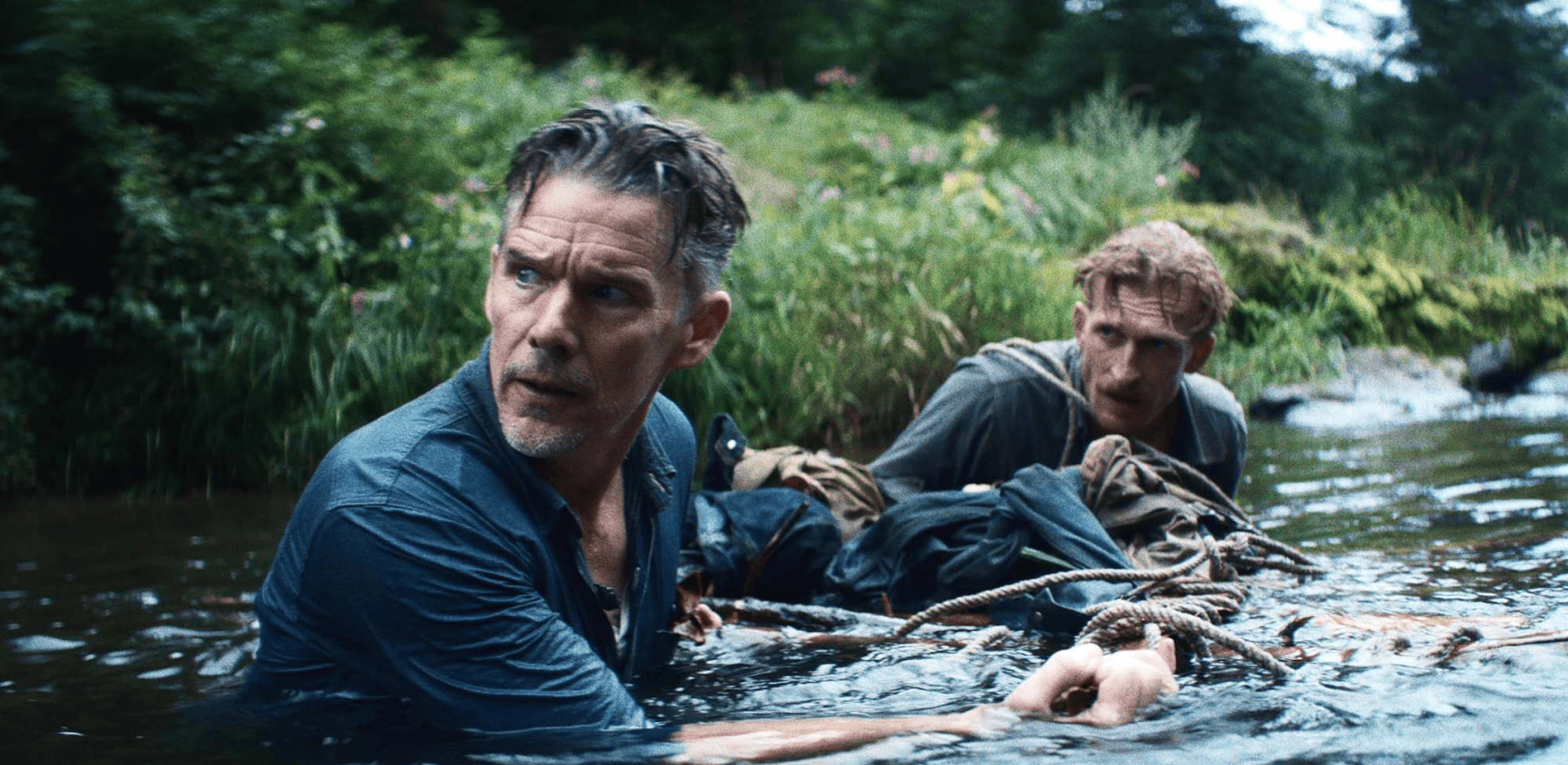
⭐⭐⭐Rating: 3 out of 4
In “The Weight,” a muscular, Depression-era survival drama, Ethan Hawke again looms large in a small, gritty framework. Hawke brings a lean, tightly wound intensity to a man carrying more than his body— or perhaps his soul — can bear. It’s another powerful performance, following a deserved Oscar nod for his turn as beleaguered lyricist Lorenz Hart in Richard Linklater’s “Blue Moon” last year, and his portrayal of spiritual torment in “First Reformed” (2017).
Set in Oregon in 1933, “The Weight” centers on Hawke’s Samuel Murphy, a widowed mechanic barely holding together a life for himself and his young daughter, Penny (Avy Berry). An unwise altercation lands him in a brutal prison work camp with Penny taken into state custody. Samuel’s only path back to reuniting with her comes through the camp’s corrupt warden, Clancy (a droll, snaky Russell Crowe), who offers him early release if he helps transport an illicit stash of gold through miles of treacherous wilderness.
Samuel sets out with a fractious band of convicts and armed overseers, among them Rankin (Austin Amelio), Singh (Avi Nash) and Anna (Boston-born Julia Jones), a resourceful Native American woman who joins their perilous trek. The gold grows heavier with every arduous mile, but it’s hardly the only burden being carried. There’s Samuel’s guilt over losing Penny, his responsibility for those traveling with him and the moral toll of participating in Clancy’s corrupt enterprise. There’s also the crushing pressure that poverty places upon people with no good choices.
“The Weight” marks the feature-directing debut of Padraic McKinley, a veteran editor whose credits include “Dexter,” “Igby Goes Down” (2002) and Hawke’s 2020 John Brown mini-series “The Good Lord Bird.” McKinley’s background shows in the film’s lean construction and tactile action. In tempo, texture and tenor it feels akin to some of the best character-driven cinema from the New Hollywood-era— think “Cool Hand Luke” (1967), “Jeremiah Johnson” (1972), and William Friedkin’s 1977 film “Sorcerer.”
Like Clint Bentley’s similarly set “Train Dreams, (2025)” the film regards the American wilderness as beautiful, indifferent and faintly mythic, though McKinley substitutes hard-driving suspense for lyrical introspection. Crowe makes for a formidable avatar of institutional greed, but this is Hawke’s load to shoulder. Quiet, weathered and morally alert, he gives the film its grit—and its gravity.
Continue reading
