Tag Archives: writing

Reviews of “Over Your Dead Body,” “Balls Up,” “I Swear,” “Apex” and “Mother Mary”

25 Apr

Soccer balls, bodies, & the occasional manhunt

“Over Your Dead Body”

Samara Weaving seems to be typecast as an onscreen punching bag. In the “Ready or Not” films and now this dour rom com/thriller, she plays a fetching can-do femme transformed by the masochistic madness of the plot into a purple bloody mess. Directed by Jorma Taccone, “Over Your Dead Body” is a remake of 2021’s grim Norwegian film “I Onde Danger” (lamely rebranded as “The Trip” in the United States).

The story begins with Weaving’s Lisa and her husband Dan (Jason Segal) having marital problems, not least of which are a two-year drought in the conjugal bliss department. He’s an indie film director who scored critical success early but now is relegated to making “pop-up ads.” Lisa is a struggling stage actress cheating on Dan with a fellow thespian. Money is another sizable problem. A getaway to Dan’s dad’s cabin on a lake in Upstate New York during a stunning fall season (the landscapes are shot in Finland but look legit) becomes an opportunity for Dan to off Lisa and cash in an insurance policy. But when he hesitates to apply Chloroform, she tases him and ties him to a kitchen chair to put her own permanent separation plan in play. But then, murder interruptus — a trio of escaped convicts (Timothy Olyphant, Keith Jardine and Juliette Lewis) drop through the ceiling. The couple have to team up or die.

The main problem with “Over Your Dead Body” is that neither Lisa nor Dan is all that interesting or likable. It’s the trio of malevolent misfits that hold our attention, especially Olyphant’s smooth but demonic mastermind and Lewis’s edgy Allegra, who is sexually aroused by the clamor of violent confrontation. The movie may be even more gruesome than its Norwegian inspiration, though “Dead Body” somehow manages to make whimsy from the severing of fingers, ears and noses. Turns out romantic separation is always messier than it has to be.

Continue reading

Urban Confluence

13 Apr

by T. B. Meek

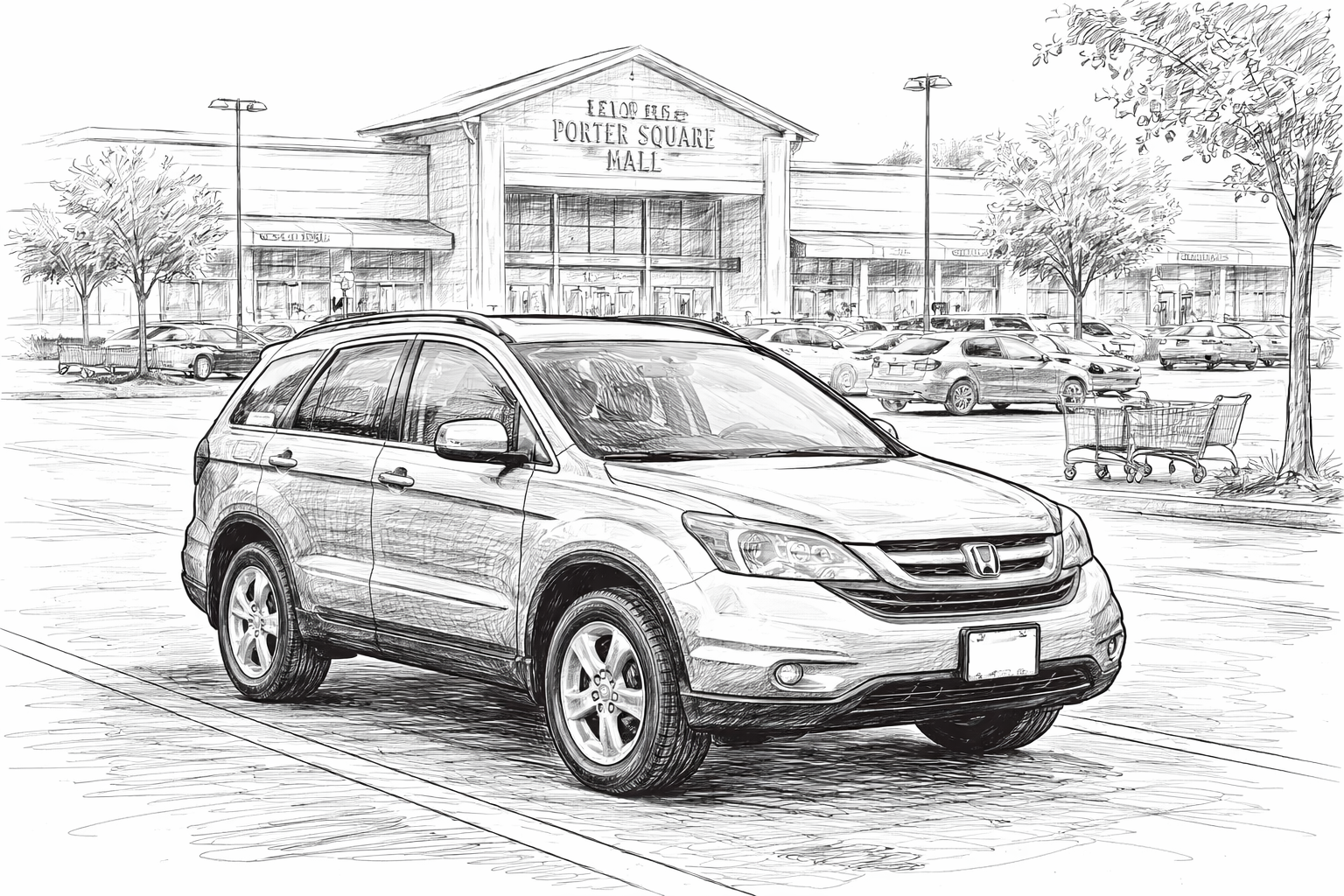
It was a typical bustling day at the Porter Square shopping mall made more so by the beautiful spring day, a gift from Mother Nature after a week of overcast skies and two torrential rain storms that caused drain basins to back up and overflow. Chaz Perkins, his sciatica acting up, gingerly baby stepped his way out of the CVS, skirted his way around one of the many lingering puddles that dotted the parking lot and a his way towards old Betsy, his trusted Honda CRV with more than 15 years of reliable service. He had parked Betsy near the pharmacy with strategic intent to minimize the taxation of his hip. As he had envisioned it, he would first hit up Ace Hardware for his spring planting needs (a new trowel to replace the rusty, ineffective relic that had been in the condo’s basement since before the Boston Tea Party, and nasturtium and magnolias seeds for the planters that abutted the sidewalk in front of the three story walkup) and then the liquor store for a half case of Vino Verde to go with the Portuguese fisherman’s stew he had made for his book club which would be arriving at his Huron Village abode within the next three hours. Everything was going according to plan, the trowel, seeds and wine had been deposited in Betsy’s boot, what Chaz didn’t bargain for was the demanding woman insisting that the pharmacist check and recheck his records as he stood by on achy joint waiting to claim his ‘scipts and pay for the much needed vial of Advil and coveted Reeses Peanut Cups. When it was revealed that the woman’s prescription order had been placed at another CVS some two miles away, the woman, who Chaz felt possessed the melodramatic air of Blanche DuBois, launched into an indignant tirade shaming the pharmacist for her mistake and adding another five minutes of hip grinding discomfort to his day.


Outside in the cloudless blue Chaz examined the space between the blue Tesla and Betsy. It was sideways sliding tight, but every space in the parking lot was ridiculously small. It was as if some over zealous planner decided to take normal sized spots and reduce them all to compact size so they could squeeze in an extra fifteen or twenty cars, but for what gain? Anyone with a minivan or plus size SUV took up two spaces and the rear of the monstrosity often jutted out, adding to the lot’s chaotic traffic flow woes. Chaz imagined that the number of insurance claims filed at Porter Square had to be substantially higher than those at the suburban shopping expanses like Burlington or Natick where you could park an apatosaurus-sized family truckster without fear of losing a sideview and still have ample room to swing your door open without dinging your neighbor.


Gripping the doorframe, Chaz swung his right leg up and into Betsy, but suddenly seized as a bolt of paralyzing pain shot down his thigh. He first thought to back out to rebalance and reassess but pushed forward and pleasantly discovered a modicum of relief in the gentle cupping of his hip bones by the ergonomic form of the well worn bucket seat. Settling in, he pushed back in the seat to retrieve his car keys and cracked screen iPhone from his pant pockets.


Gazing up in the rearview Chaz drank in the scene, cars lulling and going. That was a way of life in the cramped concrete cauldron just minutes from the heart of Harvard Square, drivers passive-aggressively trolling for purchase, issuing toothy smiles and feigned civility. Wearily Chaz inserted the key into the ignition, turned it over and noticed three text messages on his phone. He pulled his reading glasses down from atop his head, gave a habitual tug on his graying beard and used his fingerprint to unlock the phone. Two messages were from book club members, the third was from his publisher. At the age of 68, Chaz was elated to be publishing his first novel. To date he had published three collections of poetry and a memoir, but now the project he had spent nearly fifteen years on, including five years of research before putting pen to paper, was coming to fruition. Staring at that last message he wanted to tap on it but couldn’t. What if it was bad news? After all it was a Sunday, and most professional matters waited til Monday, unless. It could be good news too, he thought. Maybe the publisher had reconsidered the request to up the number of copies for the first printing. The other messages ostensibly had to do with logistics of the upcoming gathering. Chaz decided to start with those and read the publisher’s text when he got home. No matter how the news landed, home was the place to be, not a buzzing hive of distractive hum.


He was about to open the message from Marley Mickelstein, his former co-worker from the Institute of Contemporary Art who was bringing potato rolls and a carrot cake, when two quick taps of a car horn rippled in from behind. The first toot shot through him and made his hand jerk back from the phone’s web etched screen. Chaz looked up into the rearview to see a sleek, navy blue BMW sedan with a young man in aviator sunglasses leering at him like a DEA agent on a bust.


Chaz stared at the ridged incarnation for a second, shrugged and went back to the message. “Running behind, still need to ice the cake.” He had stated to type back, “No worries, take your time,” when a pronounced horn lean halted his focus. Chaz rolled down his window and issued a calm, ‘move along’ hand wave.


The BMW’s tinted window dropped and the deep, thrumping bass of an old school rap song rolled out into the communal air. Chaz thought it might be Tupac’s “California Love,” but wasn’t certain. “Are you going out?” the man shouted over the music.
Chaz leaned out the window, craned his neck and used his right arm to grip the gunnel of the old SUV, the torque of which triggered another pang of pain. He waited for it to subside and then growled, “In a few.”


The volume on the music lowered. “What’s a few?” the man shouted back.


“My friend, I have a feeling that however I define ‘a few,’ it will not be satisfactory to you. I understand and appreciate your frustration. Parking here is a coveted commodity. That said, I have a personal matter to attend to before I depart.”


Chaz pulled his head back in and was about to raise the window when there was another short honk. “Jerk….It’s people like you…” he heard the man mutter shout and then cease. Chaz poked his head back out the window. “People like me? What kind of person am I? An old person, a person who doesn’t look or think like you, or just a person who is in your entitled way? I believe the answer is ‘C,’ all of the above.”


“C’mon man!” the BMW driver shouted and bounced the palms of his hands off the steering wheel. “Are you going out or not?”
Another stab of pain shot down Chaz’s leg. He winced. “Look my friend, here is what I suggest you do, take a lap around the lot and when you come back around, I’ll be rolling out. Easy peasy, right? Besides you have me sealed in and there’s three cars jammed up behind you.”


The driver glanced up into his rearview, it was true, there was a queue of other impatient hopefuls lined up behind him. One driver had their arms up by their ears, mouth agape, while another was pawing the air, hoping the gesture would magically break the stalemate and provide forward progress.


The tinted window rose, Tupac’s synthesized voice ceased and the BMW revved angrily before lurching forward with a guttural squeal. In its wake, the smell of burnt rubber wafted upward and into crystalline day.


Chaz finished his response to Marley and opened the message from Helen Chambers. There was a picture of an Australian shepherd with piecing blue eyes, head cocked to one side and tongue lolled out. “Ok if bring this handsome lad?” Chaz smiled to himself. Bear had been at other bookclub meetings and mostly just curled up at Helen’s feet and slept though the literary excuse to imbibe organic wines and nosh on sinful satiations discouraged by their primary care physicians. Chaz typed back, “Only if he’s read the book” and added a succession of emojis that included a smily face, bear and a dog.


Chaz dropped the iPhone into the console bucket between the two seats, shifted his hips and eased Betsy into reverse, rolling back as slowly as one can. Extricating a vehicle from the Porter Square shopping mall was a no small feat if you did not have one of those fancy newfangled rearview cams or proximity sensors to issue bumper alerts. Betsy had some notable blind spots too that Chaz had to constantly remind himself of. Inch by inch he continued to roll out but hit the breaks when he heard a short inaudible shout and the resonance of a soft thud from the backside of Betsy. He looked up into the rearview mirror, frowned and rolled down the window. “My bad,” he said offering an apologetic wave to the young man and woman with their toddler sitting backwards in a half filled shopping cart. He waited for them to clear and double checked the mirrors before letting off the break. Nearly half way out, he cut the wheel hard left and trained his eye on the left front bumper to make sure it cleared the blue Tesla. It was tight but a well executed maneuver as Betsy came perpendicular to the parking spot. Chaz gathered to put the Honda into drive and noticed in the rearview a dark haired woman in a pristine white SUV with its flasher on looking to take the spot. Further back he saw the blue BMW zip up. Horns sounded, heads craned and arms gestured. Chaz gazed fore. He was out, the two overly caffeinated and impatient could figure it out on their own. He was also fairly certain that the boxy SUV could not fit in the slot. Just as he was about to lay his hand back on the shift, a Toyota Corolla coming from the opposite direction, a vehicle of Betsy’s vintage marred by a multitude of scuff marks and duct tape along the front bumper, paused and put its left blinker on. Chaz marveled at the diminutive white haired woman, her head barely above the the crest of the steering wheel. She returned the eye contact and flashed a friendly smile and expectant head nod. Chaz smiled back, put Betsy in reverse, rolled back the three feet he had between the Honda and the white SUV and flashed his high beams. In three jerky stop and goes, the Toyota pulled snugly into the slip. When all was clear, Betsy rolled on and away from the salvo of blaring horns that erupted in her wake.

Unmended wall in Harvard Square needs a few good neighbors

2 Apr

Historic wall in Harvard Square has become “a prairie dog village … but with rats.” And there isn’t money to repair it.

A historic wall in Harvard Square may be up against it, as business owners and city officials are banging their heads against the problem of how to fix it.

The stone wall was built more than 200 years ago, mostly hidden behind Charlie’s Beer Garden, was erected in the late 1700s and early 1800s to channel the spring-fed Town Creek to the Charles River. The project made Winthrop Square — then a knoll and the heart of Harvard Square — a more stable and level gathering spot by protecting it from a creek winding toward the Charles River.

The wall might also have been intended for a more ambitious project: a wharf on Eliot Street, said Charles Sullivan, executive director of the Cambridge Historical Commission. Like the West End in Boston, some parts of Cambridge near the Charles River were previously underwater and later filled in.

The wall partially collapsed in 2020 and was never repaired. Scarce funding and complicated jurisdiction left it crumbling, and rats — lots of rats — moved in. Last year, Denise Jillson, the Harvard Square Business Association’s executive director, asked public health experts in Cambridge and at Harvard University for help analyzing the problem.

“That site is akin to a prairie dog village … but with rats,” said Richard J. Pollack, Harvard’s senior environmental public health officer.

In March, Jillson issued a release calling on the community and stakeholders to “together to find a solution to the complex challenge of preserving this historical relic that sits on private property.” The release included an illustrated comic about the wall and its history created by Caro Taylor, a Cambridge resident and a junior at the Commonwealth School in Boston who was an intern at the HSBA last summer.

The “Old Stone Wall” runs from Winthrop Street, through Charlie’s Beer Garden, and out to Eliot Street. The better-preserved section, which divides Charlie’s and the former Red House restaurant (soon to be relaunched as the Cox Hicks Club), is an impressive 8- to 10-foot high structure, still intact. The collapsed section of the wall — adjacent to Eliot Street, tucked behind the IHOP — is not publicly visible except through a small alley. Here the wall is 4 or 5 feet tall.

A combination of factors likely contributed to its deterioration, according to the city and the Harvard Square Business Association: age, erosion, weather, ongoing disturbances from area construction, and rats.

A relatively intact section of a historic wall in the Harvard Square alleyway between the former Red House and Charlie’s Kitchen. 

The wall was built with large fieldstones laid in a battered profile that lean inward — a technique used in early retaining walls to release pressure. The rocks were dry-laid to allow water to pass through the wall rather than build up behind it. The stones are local: Roxbury Puddingstone from that neighborhood’s Parker Hill and granite from quarries on the Boston Harbor Islands.

“It’s not the only stone wall in Harvard Square, but it is by far the largest and most significant,” Sullivan said.

The wall is located within the Harvard Square Conservation District, which means work requiring a building permit generally requires review by the historical commission. However, the commission’s jurisdiction applies only to features visible from a public way. Portions of the wall are located behind buildings on private property and cannot be seen from the street, limiting the commission’s authority over those sections.

Given the wall’s historic value, the city appropriated $200,000 in Community Preservation Act (CPA) funds in 2021 to shore up the Eliot Street section of the wall. The estimated cost was about $400,000, however, and since it is on private property Sullivan  asked commercial property owners to contribute the additional $200,000.

Of the property owners, only Paul Overgaag, who owns 98 Winthrop Street (previously home to The Red House) and also Charlie’s Kitchen at 10 Eliot Street, agreed to contribute. Raj Dhanda, owner of the Crimson Galeria building and the property at 96 Winthrop Street (formerly the House of Blues, now The Boiling Crab), expressed concerns about the scope of the project and the financial burden. The project stalled, and in 2024, the city reallocated the CPA funds.

In a recent phone interview, Dhanda said he believed the city should have paid more of the project’s cost. He also disputed the $400,000 price tag. At the time, his own contractor estimated that the work would cost less than $200,000.

Rat traps line a dilapidated segment of a historic wall in the Harvard Square alleyway between the former Red House and the IHOP, parallel to Eliot Street. 

One of the primary concerns has been the growing rat population in the alley near the wall. As the wall continues to deteriorate, it might create even more hiding and nesting pockets for rats, Jillson said. The imminent public health risks from rats — and their recent surge in Cambridge — have been well documented. At a public meeting last year, Cambridge City Manager Yi-An Huang said, “These rodents are, as I understand it, reproducing faster than we can possibly catch up.”

Jillson also fears that the burrowing rats might also be destabilizing the soil and thus contributing to the wall’s deterioration. “That wall is basically infested with rodents, and it’s compromising the integrity of the soil,” she said.

The alleyway behind the Too Hot Sichuan restaurant and IHOP is a hotbed of rat activity in the square, Pollack said. Had the restoration moved ahead, it would have included implementing a cement backing to the wall. That would have helped secure the stones and abate erosion. It would also have effectively blocked the rats from burrowing. 

Jillson hopes her press release spurs action. The economic climate, however, is significantly different.

Remembering Charles Coe, poet, musician and connector

5 Dec

By Tom Meek

Saturday, November 29, 2025

Cantabrigian teacher and poet Charles Coe died Friday Nov. 21.

The spirit of creativity in Cambridge dimmed last week when longtime resident, teacher and poet Charles Coe died Monday from complications related to prostate cancer surgery. His death was sudden and stunned many. In addition to touching people with his words, often delivered in a deep, mellifluous baritone, Coe offered mentorship, leadership and a sense of community. He was 73.

He was an omnipresent figure in local literary circles: the Mass Poetry Festival, long-running literary salons across Cambridge and Somerville, the Writers’ Room, Black Writers Reading series, arts advocacy boards. If there was a gathering where people were wrestling with words or art or community, chances were good Coe had either helped organize it or slipped quietly into a seat to listen.

Continue reading

Reviewed: ‘Train Dreams’ & ‘Left-Handed Girl’

20 Nov

‘Train Dreams’ (2025)

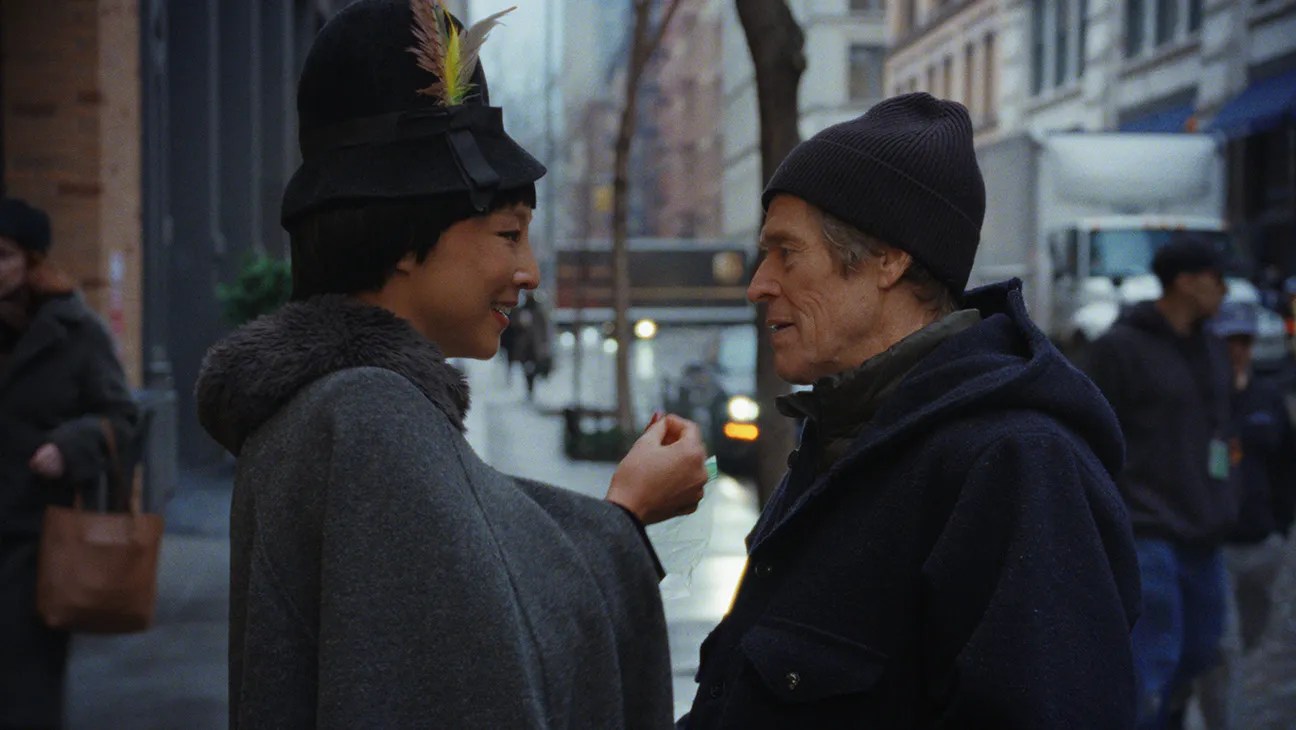
Films crafted around hermits are often peppered with idyllic framings of their lush surroundings and driven by strong, intense performances by the lead, who must, for the most part, connote much of their character’s inner turmoil via facial expressions and the glance of the eye. That was the case with Ben Foster in Debra Granik’s “Leave No Trace” (2018) as well as Daniel Day-Lewis in his recent comeback, “Anemone.” This film, gorgeously shot by Adolpho Veloso, has the trippy, hypnotic aura of a Terrence Malick fever dream, and we get Joel Edgerton in his richest and most robust performance to date. His Robert Grainier, we’re told, never spoke into a phone during a life that ends serenely in 1968. Based on the novella by Denis Johnson and adapted by Clint Bentley and Greg Kwedar – the Oscar-nominated tandem behind “Sing Sing” – “Train Dreams” is pretty much the telling of Grainier’s life in full; orphaned young, unknowing what befell his parents, and, as a quiet young man when we catch up with him, working as a logger and railway hand in the remote reaches of Idaho. His life as a loner and drifter pretty much has him moving from one lumber camp to the next until he meets Gladys (Felicity Jones) at a church in Fry. It’s love at first pleasantry, and with Gladys game for the woods, the two wed, build a bungalow atop the crest of a dell and have a daughter. It’s an enchanting “Little House on the Prairie” existence until a wildfire sweeps through the valley while Grainier happens to be off on one of his logging missions. When he returns, Gladys and his daughter are nowhere to be found. For a good part of the film, Grainier, propelled by guilt and grief, searches nearby towns looking for them or any news of their fate. Ultimately he returns to the woods, where he registers a small degree of comfort taking in an abandoned litter of dogs and rebuilding the cabin on the same perch. The power of guilt and grief creeps in and begins to bend reality, and Grainier struggles to make sense of his existence and the world in large. The acting is top tier, reserved and quietly affecting. Others adding heart and humanity in small, meaty parts are William H. Macy as Arn Peeples, a grumpy coot who likes to use explosives to fell his trees, and Kerry Condon as the first woman to work at a U.S. National Forestry outpost.

Continue reading

Reviewed: ‘Heads of State,’ ‘Jurassic World: Rebirth’ and ‘The Old Guard 2’

10 Jul

Short Takes

‘Heads of State’ (2025)

They could have called this one “Peacemaker and Bloodsport Run for Office,” as it leverages the great yin-and-yang chemistry that actors John Cena and Idris Elba forged in the hilarious Harley Quinn DC comic reboot, “The Suicide Squad” (2021). Here they play Will Derringer (Cena), a former action movie star elected Potus, and British prime minister Sam Clarke (Elba). Derringer – an obvious and affectionate riff on Arnold Schwarzenegger – is famous for his “Water Cobra” films, whereas Clarke was a career commando before moving into the political realm. There’s a bit of a rift between the two, as it was perceived that Clarke supported Derringer’s rival by having fish and chips with them. Clarke and Derringer meet at a European summit and afterward, for squirrelly reasons, Derringer offers to give Clarke a lift on Air Force One. As Harrison Ford is nowhere nearby, the big jumbo jet is plucked from the sky by an international terrorist ring (led by an ever-menacing Paddy Considine), and Clarke and Derringer have to go off-grid and escape Belarus. While the two are assumed dead, their respective successors seek to dissolve Nato, and the U.S. intelligence network is hijacked by hackers. Fairly generic stuff made pleasantly smirk-worthy by the playful onscreen Frick-and-Frack chemistry of its leads and some nifty pacing and action scene choreography by director Ilya Naishuller (“Nobody”). Adding comic spice and sporty can-do are Jack Quaid (“The Boys”) as a wacky CIA safe house operative and Priyanka Chopra Jonas (“The White Tiger” and “Matrix Resurrections”) as a game British agent who served with Clarke in the military. 

Continue reading

Short Takes

14 Jun

Reviewed: ‘Mountainhead,’ ‘Straw,’ ‘Echo Valley’ and “Fountain of Youth’

‘Mountainhead’ (2025)

This smug billionaire-boys-behaving-badly dramedy from “Succession” creator Jesse Armstrong landed just as the relationship between Trump and Musk imploded fantastically in the headlines, not so much an aptly ironic parody as a loaded diaper. Why is America so obsessed with the rich, when most of us – the other 90, 95 or 99 percent – are not so? The fantasy that money can change your life and buy you happiness? With Trump and Musk and this sour lot, it’s more about power and being right, even if you’re not and money is an afterthought (though how much you have is a boasting point). In an airy mountain chalet, four tech bros with complicated pasts and agendas hang out for a weekend of poker and backdoor business parlays. If you called them Zuck, Musk, Altman and Kalanick (the series “Super Pumped” on the Uber founder is a worthy watch), you’d not be far off. The driving plot is the alter-reality tech platform Traam run by Venis/Ven (Cory Michael Smith, who played Chevy Chase in “Saturday Night”). It has 4 billion users but has been coopted to make deepfake news stories with devastating results worldwide. Newscasts show the bloody inflaming of the Palestinian-Israeli conflict and retaliation to a faked story in which women and children in a house of worship are barricaded in, firebombed and killed. People are literally dying because of Traam. Does this give pause or stop Venis from pushing his next release? Nah, he sends it out to the world with the lede “Fuuck!” because “two ‘u’s are cool.” That’s the kind of fuck-all we’re dealing with. When asked about the mayhem Traam is causing, Venis retorts that “The first time people saw a movie, everybody ran screaming because they thought they were going to get hit by a train. The answer to that was not stop the movies. The answer was: Show more movies.” (It’s here that we can drop the “V” and add a “P.”) Ven’s weekend cohort of self-loving insufferables include Randall (Steve Carell), a fat-walleted venture capitalist recovering from cancer, Souper Van Yalk (Jason Schwartzman), the host who hasn’t quite made it into the billionaire club, and Jeff Abredazi (Ramy Youssef, “Mr. Robot”), the most sensible of the bunch, who has just kicked off a tool that could thwart Traam’s AI mayhem but won’t sell it to Ven because of past grievances and ideological differences. As the world continues to go to hell on the widescreen TVs around the chalet, the boys debate taking over and running some of the countries whose governments have fallen. When the water in the manse runs dry, our quartet thinks sabotage and of an imminent terrorist attack and head to the bowling alley bunker below. “Mountainhead” is pretty much a stage play in form, and the actors are all in and hit their mark. What doesn’t is the satire that roils in human misery with a nod and a wink at cheekiness so we can walk a mile in the shoes of the rich and famous who wouldn’t give five dollars to a starving family on the street. 

Continue reading

Short Takes

18 May

Reviewed: ‘Bound,’ ‘Holland’ and ‘We Were Dangerous’

‘We Were Dangerous’

The historical ills of the three Cs (colonialism, capitalism and Christianity) loom at the fore of Josephine Stewart-Te Whiu’s feature debut, a coming-of-age tale about two Māoris and one Pākehā (a white New Zealander) sent to an island reform school for delinquent girls. Nellie (Erana James) and Daisy (Manaia Hall) are sent to the school to whitewash the Māori out of them and accept the word of god. Lou (Nathalie Morris), a rebellious, well-off white girl, is there for remediation of sexual perversions – nothing worse than dad catching you making out with your female babysitter back in the conservative 1950s. As in RaMell Ross’ adaptation of Colson Whitehead’s  “Nickel Boys” last year, there are different rules when it comes to people of color, even in a hellhole. In the still of the night, from one hut, blood-curdling screams are heard. We never really learn what goes on there, just that whatever it is, it isn’t good, and that the school marm (Rima Te Wiata, “Hunt for the Wilderpeople”) is quick to slap any Māori incantation from the mouths of Nellie and Daisy, even though she is of Māori origin and ostensibly came up through the same system. Tellingly, Daisy can’t read and the school doesn’t seem interested in her education; just her assimilation and Christian brainwashing. Part of the school’s mission is to keep the teens chaste (a remote island helps with that logistically) and get them prepared to become demurring housewives, a low bar made even lower by the persistent patronization and Draconian discipline. The driving force to the film is the playful kinship between the trio (aided by the chemistry among the three performers) and their never-give-in resolve despite the dead-end hopelessness of their situations. Gorgeously shot by Maria Ines Manchego (“Uproar”) and executive produced by Taika Waititi (“Wilderpeople,” “JoJo Rabbit”), “We Were Dangerous” is a quiet reminder of the sins of religious imperialism, the agency of lateral violence that accompanies it and the sexual oppression and subjugation of women during the rising tide of world prosperity.

Continue reading

My Speedo!

21 Sep

A short story about grief and cat-nappers recently published in the Fall Edition of Word Disorder.


         The text came in at 12:22 in the morning. “I have ur cat. The $$ is now $200.”

         Miriam had been unable to sleep that evening, it had been three days since Speedo scampered out the door of their third-floor walk-up and hadn’t returned. It wasn’t the first time the black cat with a white blaze across its face and one white paw went on a “walkabout” as Miriam and Charles affectionately called it. The first time he disappeared Miriam was riddled with angst and emailed the neighborhood listserv at 4:30 in the morning, “Our cat Speedo has gone missing. Have you seen him? We are worried sick. If you see him, please call.” She included her cellphone number and attached her favorite picture of the pet, which was the embodiment of kitty cuteness, though the creature’s piercing green eyes probed the viewer as if the cat knew the beholder’s deepest, darkest secret. Later that day, the McFadden’s son, home from college on a laundry run, found Speedo batting around a balled-up paper bag in the basement. To thank the boy, Miriam and Charles invited the young McFadden up for a brunch of vegetarian black bean chili crowned with poached eggs and hollandaise along with Miriam’s personal pride, home cured lox on bagel crisps with whipped cream cheese and chive. As Miriam arduously whisked the thick yellow sauce, the scene of Charles assembling a bagel as he listened to the boy talk excitedly about his future plans—something outdoors, urban planning, land conservation or maybe renewables—tweaked memories of the weekends that Leah would come home from veterinary school for comfort food and quiet. She laughed inwardly for a second because Charles always overloaded his bagel with a triple spread and a double heaping of onions with capers rolling off a teetering crown of sprouts, and then there was the two layers of her meaty, thick lox, and as usual, a good portion of it ended up in his bushy beard. She was about to do a subtle chin point behind the boy’s back but paused in mid motion as a hot tear welled up and made its way down her cheek and into the hollandaise.

         More overnight “Where’s Speedo?” disappearances happened, but the cat always returned the next day for his mid-morning feeding, and seemed to be eerily cognizant that Wednesday, Friday and Sunday, were sardine days as he’d always be there waiting in the kitchen for Miriam, excitedly purring and crashing into her legs, nearly tripping her as she tried to fork a pungent headless filet into the cat’s bowl. As Speedo escape days became more and more, the mode of which, the stealthily trailing of a pant leg of an unwary resident, delivery person or anyone else operating the heavy wooden door that closed with creaking, achey slowness, Miriam and Charles began to fret less, often sharing a glass of crisp kosher white wine and laughing about, “Speedo being Speedo.” “He’s out saving the world,” Charles said one night as he sipped wine and noshed on crackers crowned with a diced mixture of Miriam’s lox, capers and pickles. To Miriam’s non-reaction he reiterated, “I’m serious, I think he morphs into a giant crime-fighting kitty.”

         Miriam took a long sip of wine, savored the buttery oak sweetness for a contemplative beat, and then nodded in reluctant agreement.

         “See?” Charles said, perching forward in his chair, “I’m telling you, it’s a thing. What do you think his superpower is?”

         Again, Miriam regarded the question with pause and said, “Laser beam eyes and saber claws, or maybe, he can command other cats as allies like the rat girl in ‘The Suicide Squad’?”

         “A giant starfish and Jim Ignatowski with Christmas tree lights popping out of his head? That movie was utter poop!” Charles bellowed. “Superhero films are ruining cinema.”

         “So says the grown-up man who collects kewpie dolls.”

         “They are trolls! Trolls are not ruining film!”

         ***

Continue reading