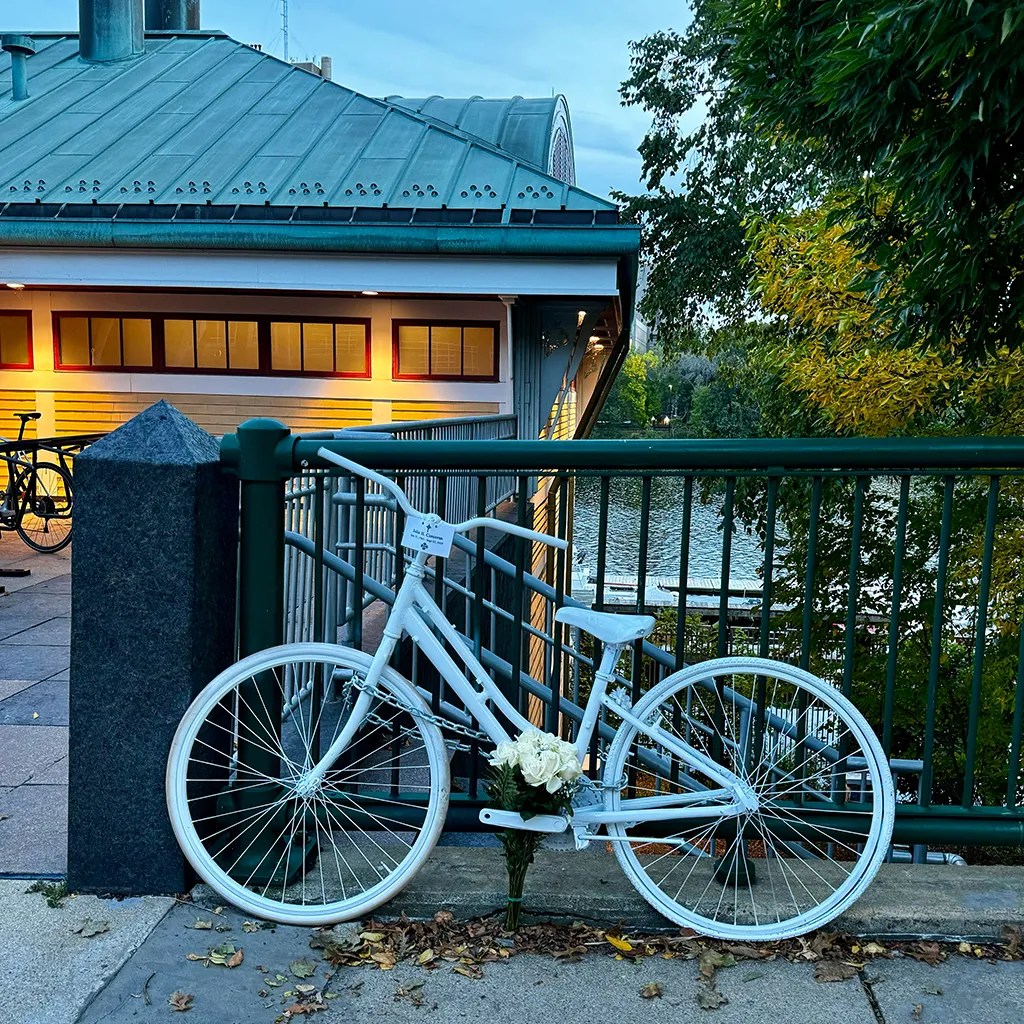
The “ghost bike” memorial for bicyclist John Corcoran by the DeWolfe Boathouse in Cambridge.
Junming Zhu was sentenced to two-and-a-half years in prison as well as the loss of his driver’s license for 15 years for the death of cyclist John Corcoran Sept. 23, 2024. The decision was rendered Thursday in Cambridge District Court by Judge David E. Frank. Frank suspended the final 18 months of the sentence, meaning Zhu will serve one year and then be on probation.
The sentence was split despite pleas from Corcoran’s family to keep Zhu in prison for the full two and a half years, the maximum term permissible under the law. “After everything we’ve endured, I ask that this court please hold him fully accountable for taking my father’s life,” said Corcoran’s daughter, Christine, during her victim impact statement, calling it “the only fair sentence.”
Assistant District Attorney Caroline Evans requested that Zhu serve 18 months of the sentence, with the remaining year suspended, while Zhu’s attorney sought two years of probation without incarceration, asking for leniency because Zhu helps care for his six-year-old nephew, whose father works late hours in the food industry.
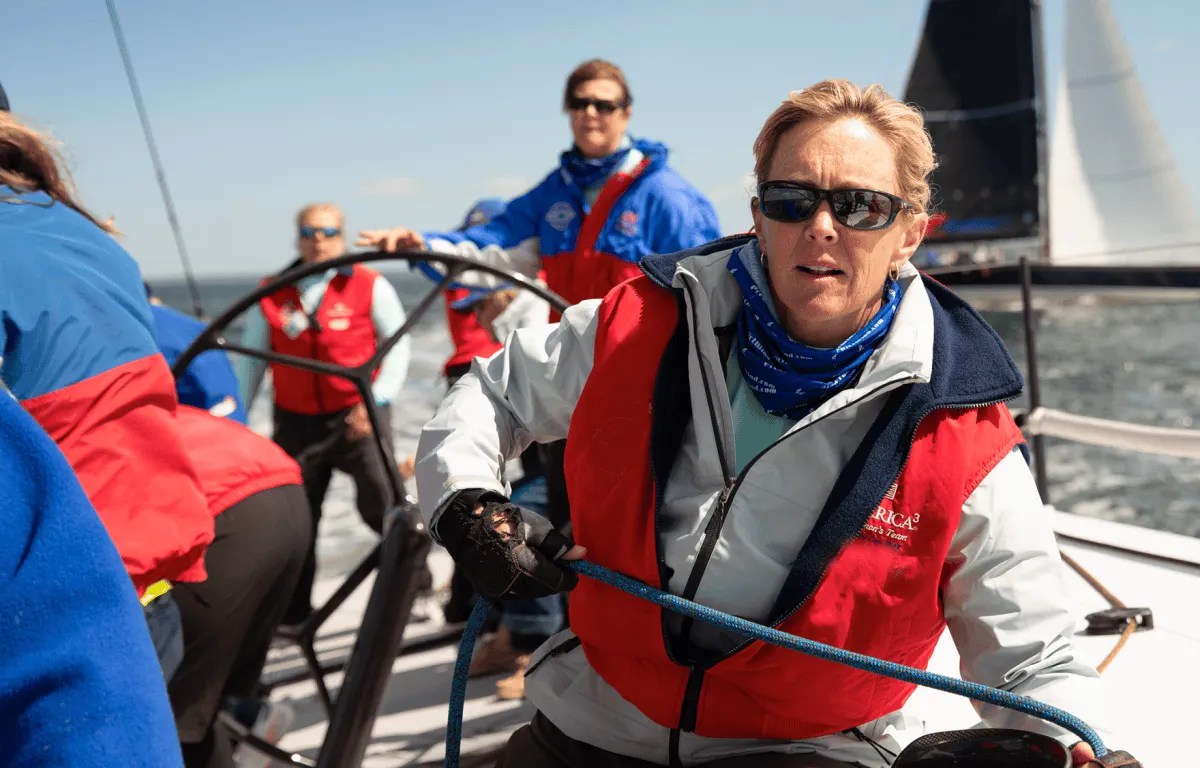
Most of the action in “Mighty Mary,” the new documentary about the first all-woman yachting team to vie for the America’s Cup in 1995, takes place in San Diego, where the women train and race. But the film also has plenty of Cambridge connections. Director and former Olympic rower Mary Mazzio lived in Cambridge in the early 1990s and trained at the Weld Boathouse on the Charles River. So did two of the Mighty Mary crew, 1992 Olympic teammates of Mazzio: Amy Baltzell and Marci Porter Lucier.
“There used to be a national-team training center run out of Weld Boathouse,” Mazzio said in an interview with Cambridge Day. “All of us came from that — birthed, if you will, by Cambridge. Love that dirty water.”
Mazzio, a filmmaker-in-residence at Babson College, was drawn to the story of the all-women’s crew as they trained for the competition to represent the U.S. in the race. “I remember following the story and thinking, ‘Oh my God, how are they going to achieve this?’” Mazzio said. “It seemed daunting, almost a fool’s errand. Then I thought, ‘I know these women. If anybody can do it, it’s them.’”
The story behind the story was that Bill Koch — who had won the 1992 America’s Cup with a nearly all-male crew — wanted to push boundaries with an all-woman crew. Koch believed that with advanced technology and tactical skills, winning the race was no longer just about sheer strength and endurance.
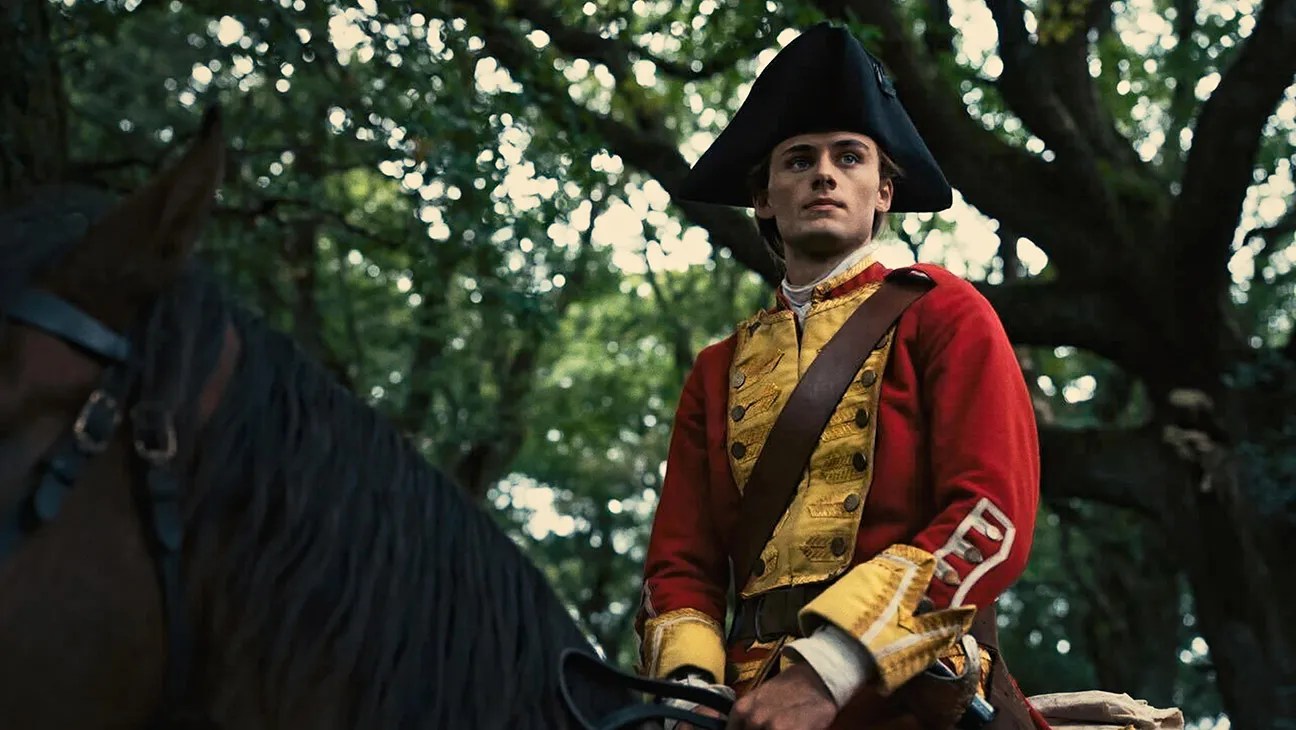
Happy 250th, ‘Merica, from Angel Studios, which brings us this founding father and first president origin story. We might not all be in the flag-waving mood, what with MMA on the South Lawn, war with Iran and ICE raids (though maybe that gets your patriotic fervor going), but this tells a chapter of Washington’s life you might not know, his early rise from Virginia surveyor to major of a militia detachment under British command.
The time is the 1750s, a quarter-century before Washington will take command of the rebel army on the Cambridge Common. The young patriot-to-be, played by William Franklyn-Miller with bland stiffness (perhaps requisite to the role), is tasked with a reconnaissance mission in the Ohio River Valley, where the French are busily erecting forts and laying land claims. Washington and his unprepared troops get their tricorn hats handed to them.
The French, aided by Indigenous warriors, had already adopted guerrilla tactics — shooting from the wooded hills at the red coats lined up in the meadow below waiting to engage in “proper battle.” Washington serves as an advisor to General Braddock (Andy Serkis), the British commander brought in to clean up the brink-of-war mess. Washington warns him of the new way of warfare in the New World, but Braddock’s hubris and dismissiveness ultimately spark the French and Indian War of 1754-1763, and the cocksure tactician’s own demise.
The movie is neither as jingoistic nor Christian-leaning as the family values studio’s earlier projects, “Sound of Freedom” (2023), “Cabrini” (2024) and this year’s “David.” There’s no triumphant payoff to “Young Washington.” It more illustrates the budding resolve of the man who would later cross the Delaware and become page one in United States lore. It’s interesting and informative history, but not great filmmaking — the dialogue’s stilted, the acting at times is hyperbolic and the directional timing is off.
The best line comes from Half-King Tanacharison (Ryan Begay), leader of a small band of Seneca warriors who embed with Washington for that ill-fated recon mission but refuse to re-up, telling Washington, “When you are finished killing each other we will reclaim our land.” In the mix in small parts are veteran actors Ben Kingsley (Virginia’s lieutenant governor), Mary-Louise Parker (George’s mom) and Kelsey Grammer (Lord Fairfax). As the end credits roll, Grammer, out of costume, pleads with viewers to make “Young Washington” the number one movie in America by scanning a QR code to “pay it forward” — buy a ticket so some other American can saunter in for free and learn some history adjacent to the ongoing semiquincentennial celebration. A big ask, given the new Spielberg movie, Minions and “Toy Story 5.”
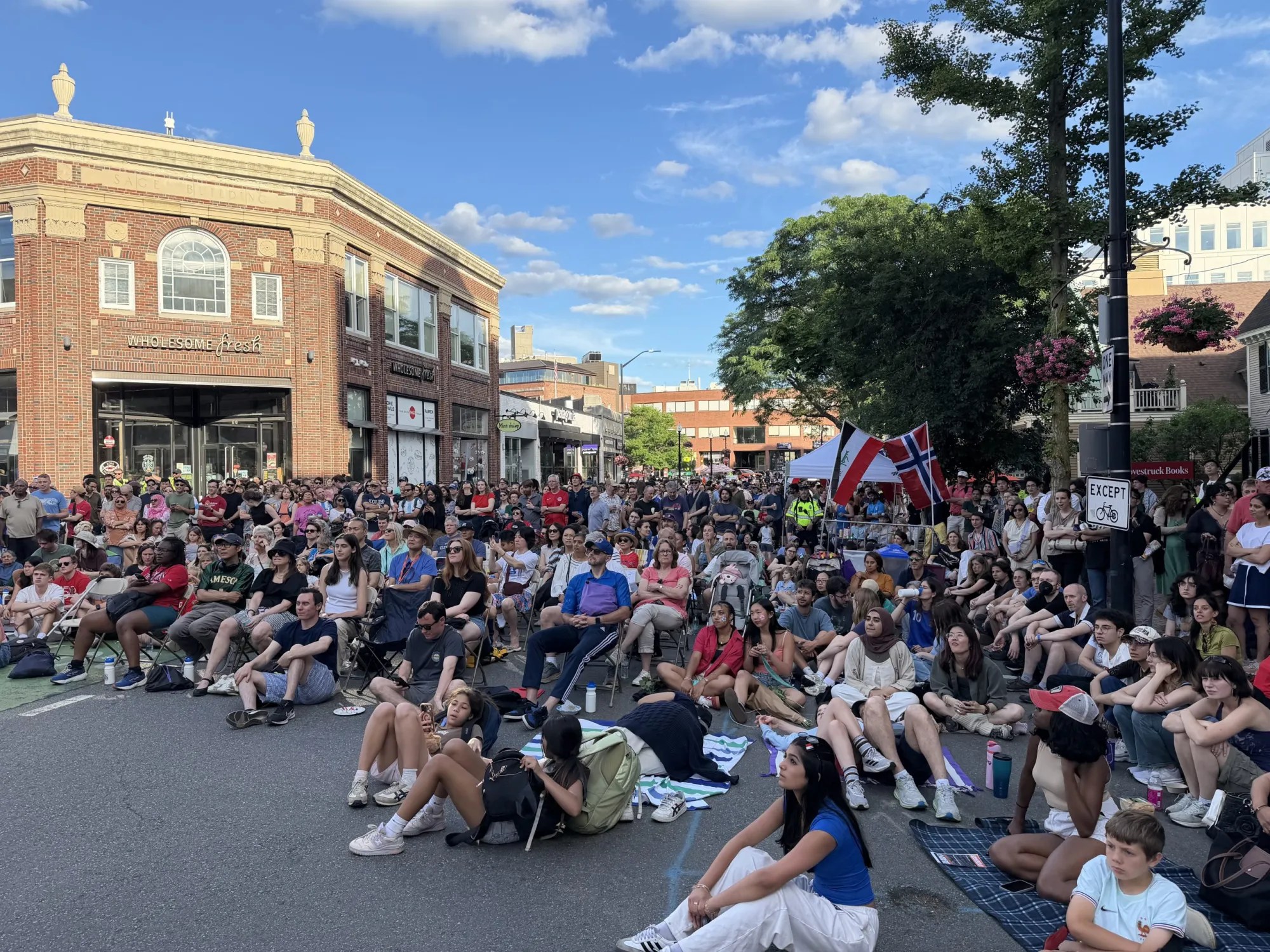
Cambridge was first to sign up after Gov. Maura Healey signed the bill earlier this month, giving municipalities the opportunity to extend bar and restaurant last calls by one hour (but no later than 3 a.m.) and allow participating establishments to offer to-go alcohol that can be consumed on the street in designated social districts.
The city saw it as dovetailing with the Cambridge United initiative to host soccer watch parties throughout the city for each match held at Foxborough’s Gillette Stadium (Boston Stadium is its name for the duration of the World Cup).
The pilot period started June 12 and runs through the end of July, intentionally spanning the World Cup and the arrival of the Sail Boston Tall Ships.
Somerville, meanwhile, allowed the extended last call hour, but did not enact designated public drinking districts, saying the city was not laid out in a way that made sense from logistical point of view.
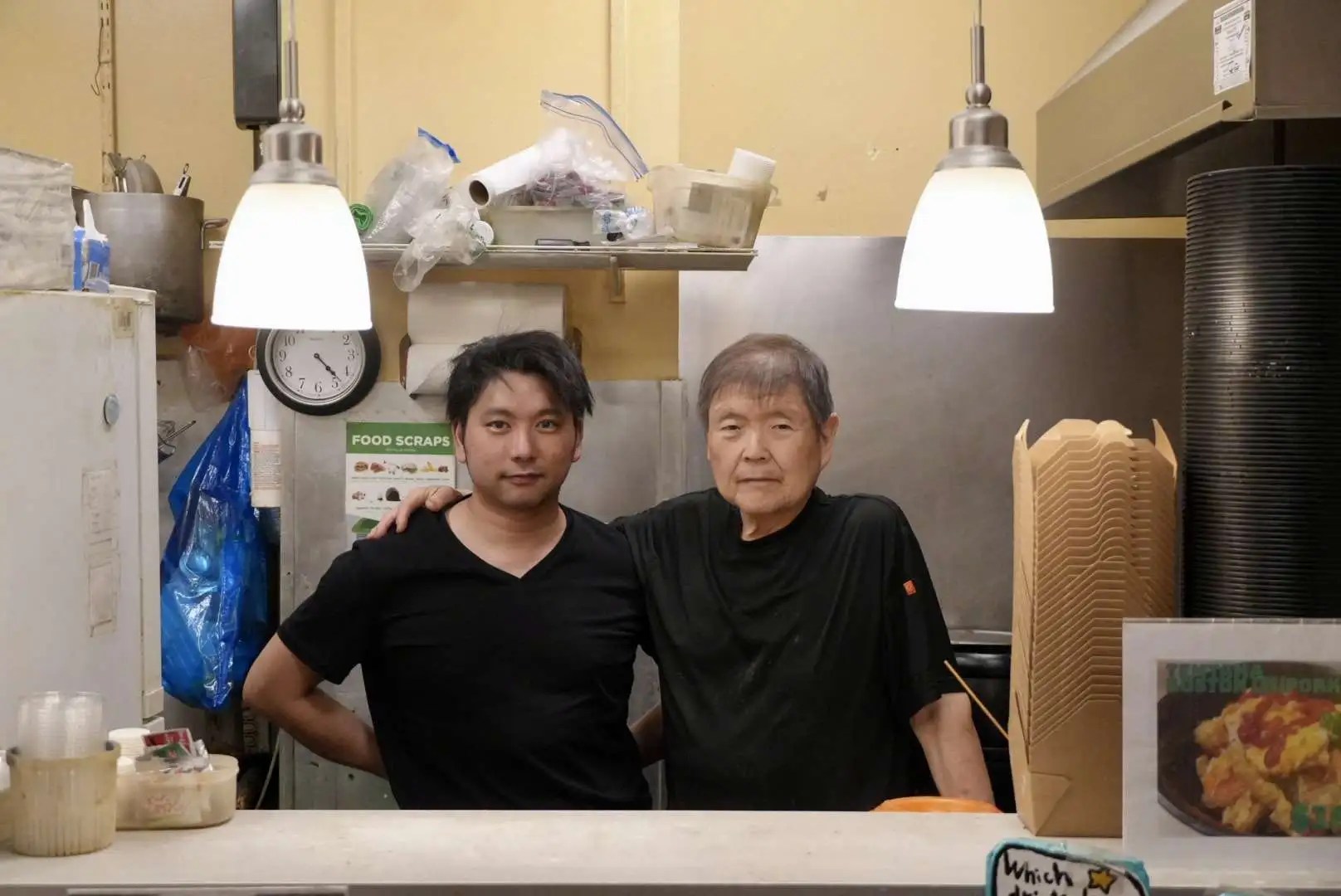
When 2025 became 2026, Yasumasa Ito decided 34 years was long enough and it was time to shut down Tampopo, the venerable Japanese noodle and donburi bowl bodega in the Lesley Building in Porter Square. Cambridge Day posted an appreciation piece highlighting our favorite dishes, and lauding Ito for maintaining high quality over the years.
That story led to this story: around Memorial Day, the Day received an email from Kotaro Moria, who lives in Kanazawa — also known as “Little Kyoto” — in Japan’s Ishikawa Prefecture. Moria told us he appreciated our story, and it was a reason why he was coming to Boston to help Ito through the last 30 days of Tampopo’s existence.
Moria studied at Fisher College 16 years ago and worked for Ito while he was here. He now runs an IT and web design firm in Japan.
“I knew Tampopo was closing,” Morita said. “Another staff member asked me to make a website so customers could send messages to Ito-san. While I was working on it, I saw a recent photo of him. He looked thinner than I remembered, and I thought that this was hard on him, and I felt like I should go help. A few days later he took me up on it.”
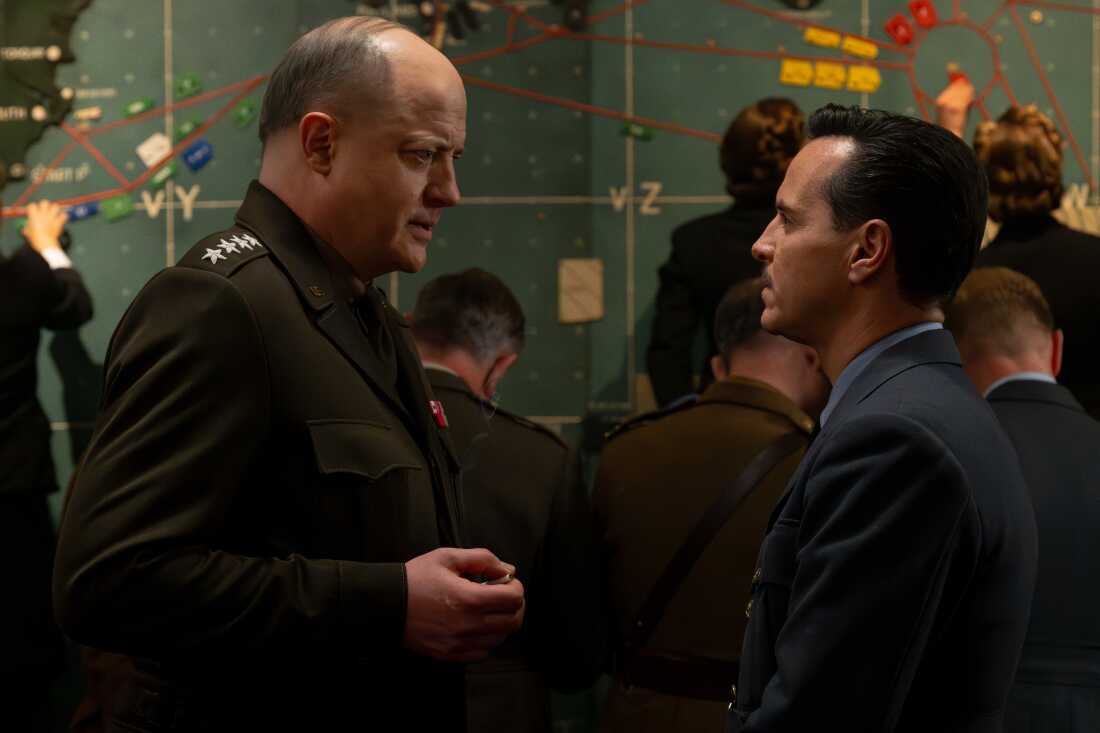
Who knew that the timing of D-Day was much ado about dueling meteorologists? Obviously, David Haig, whose play about this little-known chapter of the war gets the big-screen treatment in the capable hands of Anthony Maras (the deft thriller, “Hotel Mumbai”) — and Haig, who co-wrote the screenplay. The setting is the Southwick House — a sprawling mansion in England — some 72 hours before the planned invasion that would change the course of history. General Dwight D. “Ike” Eisenhower (Brendan Fraser) tries to hone the fine details of the landing with the other commanders, including British general Bernard Montgomery and his U.S. counterpart, Omar Bradley. The big question is the weather.
Churchill recommends his chief weather guy, Scottish meteorologist Group Captain James Stagg (Andrew Scott, stoic and complex), who gets posted above Ike’s weather guy, Irving Krick (Chris Messina, Michael Jordan’s brash agent in “Air”) — and that’s where the rub comes. Krick, who notched great success in the North Africa campaigns, lives by almanacs and historical trends, while Stagg works from real-time data and tracks the current conditions. Two different methods, two different calls drive Ike and the command team bonkers with just two days until the launch. Stagg predicts 10-foot waves that would blow the landing force off course.
History books chronicle how it all plays out, but Maras and the inspired ensemble reenact it to a deeply compelling effect. Scott and Fraser, a long way from “Mummy” (1999)— anchor the film, with Damian Lewis stealing scenes as Montgomery, both anxious and devilishly cheeky. Kerry Condon makes Kay Summersby, Ike’s indispensable aide, feel essential, her warmth and resolve a counterweight to the chaos around her. Backstories about a failed earlier attempt, led by Ike, that got a lot of young men killed, and the bombing of the hospital where Stagg’s pregnant wife is convalescing, lend human depth. Some of the best insights of “Pressure” are the stark contrast between the British stiff upper lip and American maverick arrogance. The title is a play on weather pressure, the decision to go or not, and the weight of the world. Towards the end, the film shows some ancillary staging of the landing (the 82nd anniversary is nigh), but nothing that will end up in conversations with “Saving Private Ryan” (1998) or “The Longest Day” (1962).
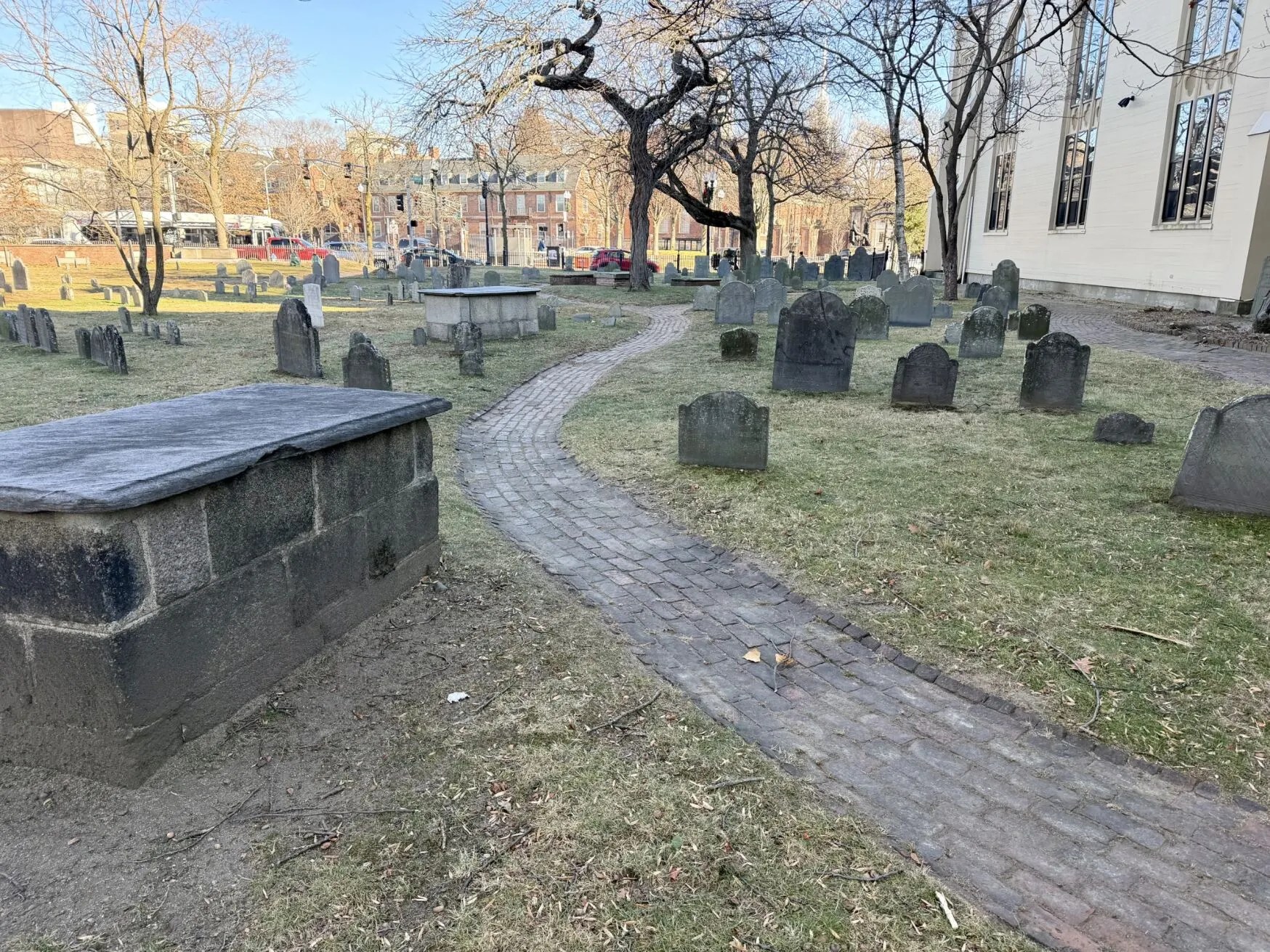
Now that the snow has melted and spring is (tentatively) here, visitors can once again stroll the Old Burying Ground behind First Church, adjacent to Garden Street — on long-buried brick walkways that had been forgotten for decades.
The cemetery, one of the oldest in the country, is the resting place for an octet of Harvard presidents including the first, Henry Dunster, his successor Charles Chauncy, John Leverett and Edward Holyoke, as well as Neptune Frost, an enslaved man believed to have served in the Revolutionary War. But for years, there were no paths, only graves and open green space.
Last summer, Denise Jillson, the Harvard Square Business Association’s executive director, noticed what seemed to brick walkways, buried beneath sod. It turned out that the pathways were installed in the 1930s, with help from the Works Progress Administration (WPA), city officials said. Jillson, who has lived in Cambridge and Somerville most of her life, said she can’t remember ever seeing the brickwork.
Harvard University student volunteers worked to restore the path in the Old Burying Ground. Credit: Harvard Square Business Association
The paths were restored — improving accessibility for visitors — by Harvard students in the Hasty Pudding Club. They had asked Jillson about volunteer opportunities to fulfill community service requirements. Jillson said the students went “above and beyond” in their effort and commitment.
One lingering issue remains: ongoing maintenance of the pathways. Responsibility technically falls to the City of Cambridge, while Harvard oversees a small enclosed section. Jillson said she plans to work with the Department of Public Works (DPW) and use HSBA resources — including staff and interns — to maintain the paths.
A historic wall in Harvard Square may be up against it, as business owners and city officials are banging their heads against the problem of how to fix it.
The stone wall was built more than 200 years ago, mostly hidden behind Charlie’s Beer Garden, was erected in the late 1700s and early 1800s to channel the spring-fed Town Creek to the Charles River. The project made Winthrop Square — then a knoll and the heart of Harvard Square — a more stable and level gathering spot by protecting it from a creek winding toward the Charles River.
The wall might also have been intended for a more ambitious project: a wharf on Eliot Street, said Charles Sullivan, executive director of the Cambridge Historical Commission. Like the West End in Boston, some parts of Cambridge near the Charles River were previously underwater and later filled in.
The wall partially collapsed in 2020 and was never repaired. Scarce funding and complicated jurisdiction left it crumbling, and rats — lots of rats — moved in. Last year, Denise Jillson, the Harvard Square Business Association’s executive director, asked public health experts in Cambridge and at Harvard University for help analyzing the problem.
“That site is akin to a prairie dog village … but with rats,” said Richard J. Pollack, Harvard’s senior environmental public health officer.
In March, Jillson issued a release calling on the community and stakeholders to “together to find a solution to the complex challenge of preserving this historical relic that sits on private property.” The release included an illustrated comic about the wall and its history created by Caro Taylor, a Cambridge resident and a junior at the Commonwealth School in Boston who was an intern at the HSBA last summer.
The “Old Stone Wall” runs from Winthrop Street, through Charlie’s Beer Garden, and out to Eliot Street. The better-preserved section, which divides Charlie’s and the former Red House restaurant (soon to be relaunched as the Cox Hicks Club), is an impressive 8- to 10-foot high structure, still intact. The collapsed section of the wall — adjacent to Eliot Street, tucked behind the IHOP — is not publicly visible except through a small alley. Here the wall is 4 or 5 feet tall.
A combination of factors likely contributed to its deterioration, according to the city and the Harvard Square Business Association: age, erosion, weather, ongoing disturbances from area construction, and rats.
A relatively intact section of a historic wall in the Harvard Square alleyway between the former Red House and Charlie’s Kitchen.
The wall was built with large fieldstones laid in a battered profile that lean inward — a technique used in early retaining walls to release pressure. The rocks were dry-laid to allow water to pass through the wall rather than build up behind it. The stones are local: Roxbury Puddingstone from that neighborhood’s Parker Hill and granite from quarries on the Boston Harbor Islands.
“It’s not the only stone wall in Harvard Square, but it is by far the largest and most significant,” Sullivan said.
The wall is located within the Harvard Square Conservation District, which means work requiring a building permit generally requires review by the historical commission. However, the commission’s jurisdiction applies only to features visible from a public way. Portions of the wall are located behind buildings on private property and cannot be seen from the street, limiting the commission’s authority over those sections.
Given the wall’s historic value, the city appropriated $200,000 in Community Preservation Act (CPA) funds in 2021 to shore up the Eliot Street section of the wall. The estimated cost was about $400,000, however, and since it is on private property Sullivan asked commercial property owners to contribute the additional $200,000.
Of the property owners, only Paul Overgaag, who owns 98 Winthrop Street (previously home to The Red House) and also Charlie’s Kitchen at 10 Eliot Street, agreed to contribute. Raj Dhanda, owner of the Crimson Galeria building and the property at 96 Winthrop Street (formerly the House of Blues, now The Boiling Crab), expressed concerns about the scope of the project and the financial burden. The project stalled, and in 2024, the city reallocated the CPA funds.
In a recent phone interview, Dhanda said he believed the city should have paid more of the project’s cost. He also disputed the $400,000 price tag. At the time, his own contractor estimated that the work would cost less than $200,000.
Rat traps line a dilapidated segment of a historic wall in the Harvard Square alleyway between the former Red House and the IHOP, parallel to Eliot Street.
One of the primary concerns has been the growing rat population in the alley near the wall. As the wall continues to deteriorate, it might create even more hiding and nesting pockets for rats, Jillson said. The imminent public health risks from rats — and their recent surge in Cambridge — have been well documented. At a public meeting last year, Cambridge City Manager Yi-An Huang said, “These rodents are, as I understand it, reproducing faster than we can possibly catch up.”
Jillson also fears that the burrowing rats might also be destabilizing the soil and thus contributing to the wall’s deterioration. “That wall is basically infested with rodents, and it’s compromising the integrity of the soil,” she said.
The alleyway behind the Too Hot Sichuan restaurant and IHOP is a hotbed of rat activity in the square, Pollack said. Had the restoration moved ahead, it would have included implementing a cement backing to the wall. That would have helped secure the stones and abate erosion. It would also have effectively blocked the rats from burrowing.
Jillson hopes her press release spurs action. The economic climate, however, is significantly different.
After six long years, the Harvard-Renty controversy came to a close last week when 15 daguerreotypes of Renty Taylor, his daughter Delia and five other enslaved people were transferred to the International African American Museum in South Carolina. The court case – Lanier vs. President & Fellows of Harvard College – had Renty’s great-great-great granddaughter, Tamara Lanier, suing Harvard for possession of the 176-year-old depictions, which were commissioned by Harvard biologist Louis Agassiz in 1850 as evidence for his racist polygenic theory that whites were intellectually superior to Blacks. Its conclusion in May came after many turns and twists. (Harvard has said it cannot confirm that Lanier is related to Renty.)
What stands out is that just after Lanier initiated the case in 2019, Harvard launched the Committee on Harvard & the Legacy of Slavery. That committee’s 2022 report showed that Harvard had enslaved 70 or more people and benefited financially and otherwise from their enslavement. It prompted Harvard to create a $100 million initiative to support descendant communities and educational initiatives tied to that legacy.
Yet it was during that time that Harvard fought Lanier’s claim, citing she lacked property rights – seeming antithetical to a mission to document and atone. To observers the question became: Was Harvard operating out of different ideological silos, or simply talking out of both sides of its mouth?
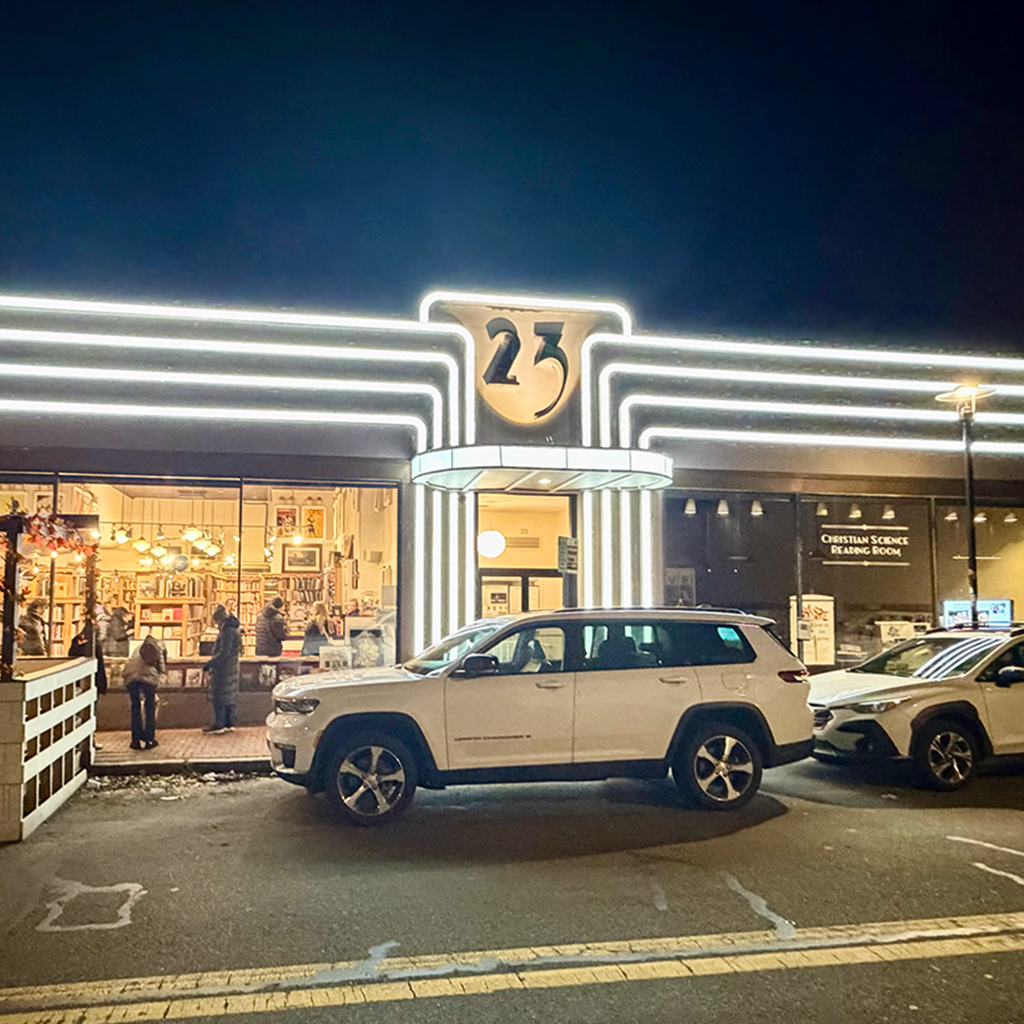
The restored lighting at the Christian Science Reading Room on Church Street in Cambridge’s Harvard Square.
A burst of brightness came to a gloomy stretch of Church Street last month as the Christian Science Reading Room restored soft white art deco lighting absent from the building’s facade for decades. The lights returned to Church Street, across from the long-dormant AMC Loews Harvard Square, at a Nov. 7 unveiling. Pictures of the alluring illumination have become a slow-trending wave on local social media.
“Now when you see it, it catches your eye,” said Jason Fredette of Poyant Signs, the New Bedford company that restored the lighting over nine months. “The building looks totally different.” The first structure at the site was a blacksmith shop in the late 1800s, later a veterinary practice. That became mixed retail at the turn of the century as Harvard Square became more thickly settled and the subway arrived in 1912, said Cambridge Historical Commission executive director Charles Sullivan. The 23 Church St. structure was razed in favor of the current one-story 1936 art deco design by architect William Laurence Galvin as a new, upscale home for Cambridge Gas and Electric Light Co.






 The restored lighting at the Christian Science Reading Room on Church Street in Cambridge’s Harvard Square.
