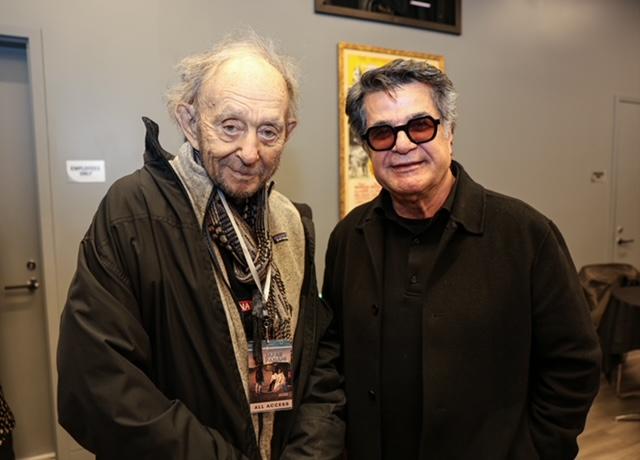
Fred Wiseman (left) and Iranian filmmaker Jafar Panahi at the Coolidge Corner Theater (Claire Vail).
Frederick Wiseman, the critically revered documentarian whose films mapped the moral frame of American life, died Monday at 96 at his home near Porter Square, in the city he in many ways, spent a career studying.
Born in Boston in 1930 and trained as a lawyer (Yale Law and a stint in the army) before turning to filmmaking, Wiseman carried a jurist’s sensibility into cinema — gathering evidence, observing behavior, withholding judgment. His camera did not accuse; it revealed. His body of work may be one of the most sustained portraits of modern democratic society ever assembled on film.
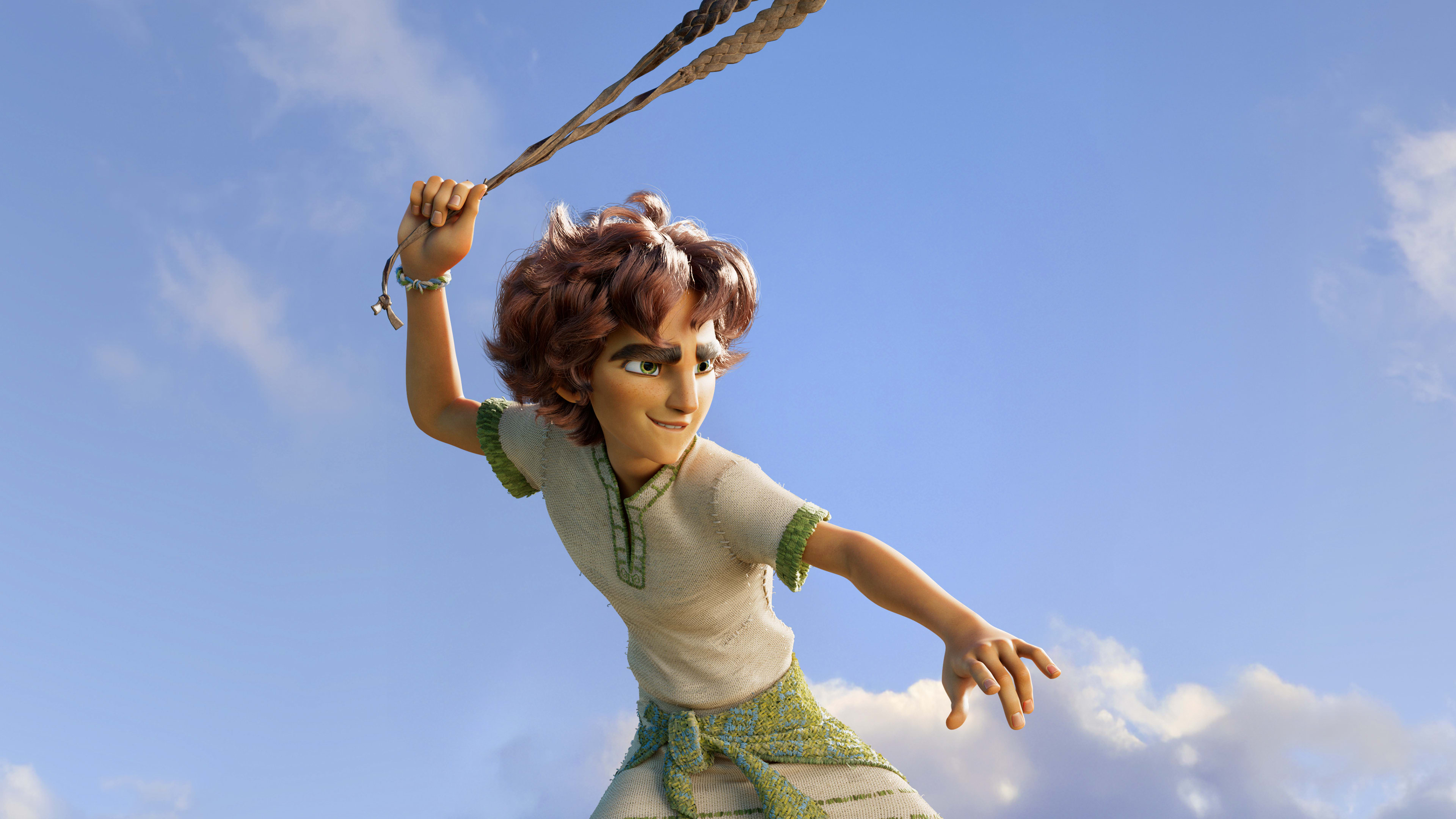
Written and directed by Brent Dawes and Phil Cunningham, “David”’s animation is on par with Pixar. It sticks to the part of the Biblical story that chronicles the rise of the young shepherd and poet who would become the unifying King of Israel. Of course, David slays Goliath, repels the Philistines, deals with King Saul’s January 6th cling to power and ultimately makes Jerusalem the capital of Israel — all this around 1,000 BC. David (well voiced by Brandon Engman) is an earnest, reluctant leader full of brio, no matter the tall odds.
Scenes of battle and violent conflict are tres G-rated—think fights in “The Lion King.” As David matures as a military leader, he is not the conflicted warrior king depicted in the streaming series “House of David” and the Bible itself, the one who commits adultery with Bathsheba and subsequently hatches a plot to kill her husband. No, this David often breaks into song and follows prophecy to the letter. It’s crisp animation and tight story-telling.
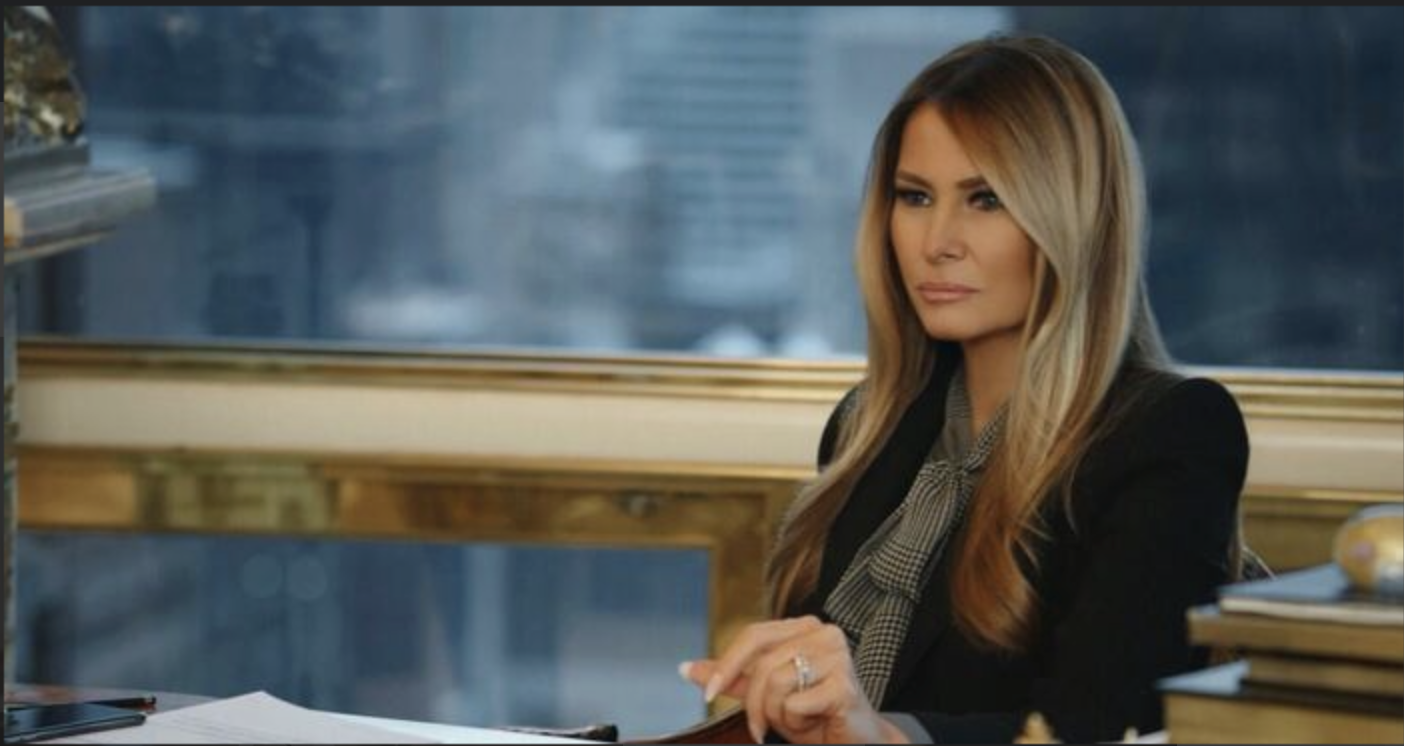
For “Melania,” Amazon MGM Studios spent $75 million to bring us what can at best be called a smug, self-aggrandizing video diary. Of that money, only an estimated $5 million was spent on the production. The initial $40 million payment was a license fee for the film and a ‘docu-series’ to run later, of which, Melania Trump reportedly received $28 million, with another $35 million being spent on marketing —i.e., the ad campaign we had to suffer through during the Patriots playoff run. Considering it’s arguably the most expensive documentary ever made, is it any good?
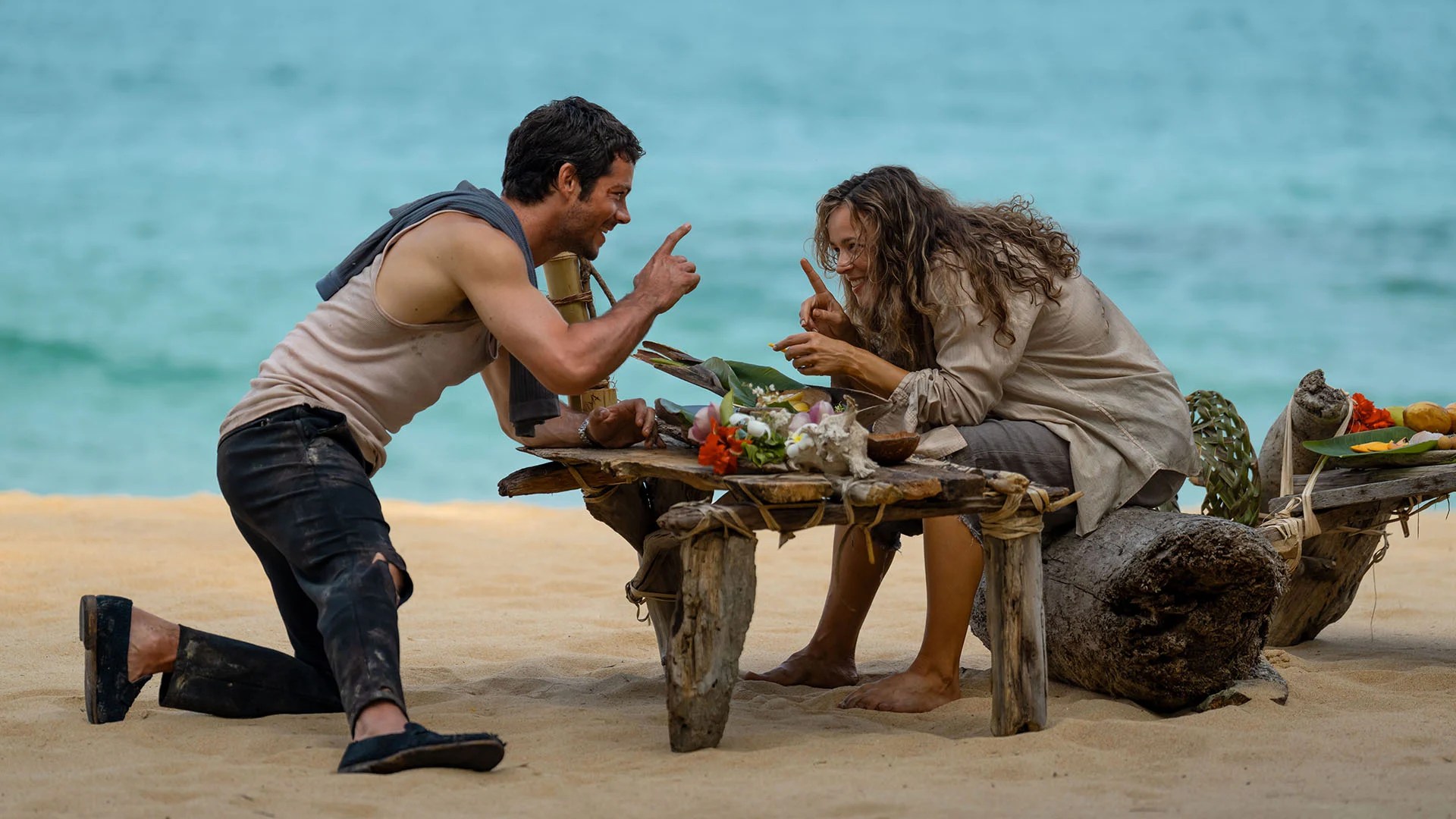
Eyeballs are gouged, testicles put to a blade, and blood spurts in this Sam Rami film. It’s not quite as gory as Rami’s “Evil Dead” films, but it is not exactly shy. Rachel McAdams, dorked out with greasy hair and frumpy clothes, plays an office drone at some cutting-edge tech company. Linda Little is a numbers geek, apt to rise from her cubicle and chat up her bosses with tuna fish smeared to her upper lip. Bradley Preston (played by Dylan O’Brien of “Maze Runner”), becomes Linda’s new boss after his father dies (“Evil Dead”’s Bruce Campbell). Bradley, the jerk, welches on a promised promotion and relocates her to a new Bangkok office. Linda learns of the betrayal en route to Thailand with Bradley and his biz-school bros. The plane goes down, and Linda—a “Survivor” aficionado who has dreamed of a role on the show—suddenly becomes indispensable in hunting, kindling and scavenging. The sex-and-power reversal evokes Ruben Östlund’s darker “Triangle of Sadness” (2022). But “Send Help,” driven by flimsy pretexts for improbable hidden agendas, takes a softer bite of social commentary. The film has Linda and Bradley transitioning from uneasy codependency to something resembling “Lord of the Rings” without earning it. What begins as an empowerment fantasy grows banal. “Send Help” is whimsically entertaining. McAdams’s bravado carries the paunchy plot.
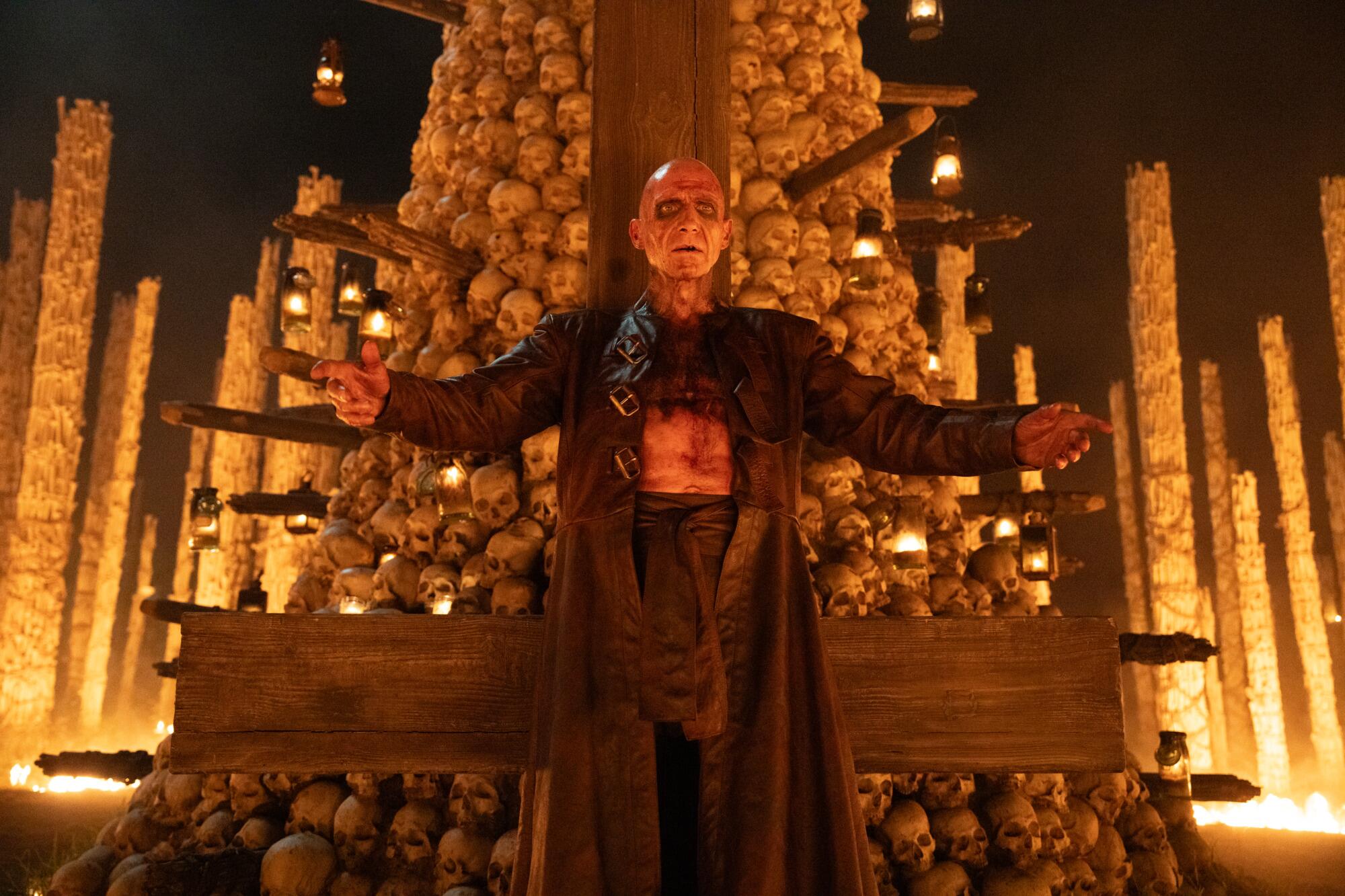
Faster, angrier and meaner—that’s how folks have come to like their zombies since director Danny Boyle and writer Alex Garland flipped the genre on its head in 2002’s “28 Days Later.” They introduced a “rage virus” that transformed infected humans into berserk, flesh-rending decathletes on crack. George Romero’s shamblers could barely hold the beer of these boss-level zombies and a series was hatched. The latest entry, “28 Years Later: The Bone Temple,” is chomping its way through theaters. Boyle and Garland have dropped in and out of the series. Neither were onboard for the 2007 follow up, “28 Weeks Later” (perhaps its best chapter), but reunited last year for “28 Years Later”—the ostensible cornerstone of a trilogy, now a tetralogy probably still not complete. Garland wrote the script for “Bone Temple” but Boyle hands directorial duties to Nia DaCosta, who caught our eye with their 2021 “Candyman” remake, lost us with their insipid “Marvels” meander in 2023, but regained our interest with last year’s opulent and bawdy “Hedda.” DaCosta may not be a top orchestrator of character and the human element, but they do have a formidable visual sense, and “Bone Temple” is strikingly framed — be it scenes of bloody butchery or serene countryside meadows. Its rampant gore is hard to look away from.
At the end of last year’s first act, our pre-teen protagonist Spike (Alfie Williams) had left his family’s island enclave to seek answers on the mainland. There he teamed up with Sir Jimmy Crystal (Jack O’Connell) and his band of lost boys, known as the Jimmys. A cartoonish ending (golf clubs and parkour to take out the “infected”) offered a wisp of hope. But “Bone Temple” finds them in a place that is dark, sinister and grim.
The sequel opens with Spike in a death match to earn his into Jimmy’s gang. O’Connell’s Jimmy presides over the fray, a cartoonish Nero savoring the slow demise of another. The film’s other thread reunites us with Dr. Ian Kelson (Ralph Fiennes), curator of the Bone Temple ossuary — pillars of bleached ulnas and tibias surrounding a tower of skulls — and observer of the infected. Kelson, slathered in iodine (which staves off the virus), has developed the neat trick of using morphine darts to tranquilize zombie Alphas, infected that can rip the spine from a human like blowing their nose. This allows him to bond with one regular visitor that he names Samson (six-foot-eight former MMA fighter Chi Lewis-Parry, who looks like Jason Momoa’s maxi-me). It’s an intriguing relationship, with Kelson something of a fatherly Frankenstein seeking to strike connection and balance.
Jimmy has a different relationship with the “infected.” He was the young boy watching the “Teletubbies” in act one’s preamble when his da, a priest, embraced the horde descending on his house and church as a divine intervention (Jimmy is the only one who escapes). Jimmy’s character is inspired by flamboyant, blonde-wig wearing 1960s–’80s British TV host Jimmy Savile, who was revealed after his death in 2011 to have been a prolific pedophile and sexual predator. But Jimmy and his wig-wearing minions put another evil layer on things — they roam the countryside pillaging and torturing other quarantined survivors in the name of Old Nick (another name for Satan). It’s a bit of a leap, but one that DaCosta, O’Connell, and Garland mostly make stick.
O’Connell was also a villain in “Sinners,” playing the opportunistic vampire Remmick in Ryan Coogler’s imaginative, genre-blending period piece and current awards contender. At least Remmick had a code. Jimmy is an amoral sadist with a deity complex and an intense amount of charm, which makes him twice as lethal.
The Kelson and Jimmy threads eventually converge, not because of Spike’s prior connection to Kelson, but through Jimmy’s manipulation when he deems Kelson Old Nick himself due to his Satan-red application of iodine — a claim Jimmy weaponizes to cement his authority over his restless charges.
“Bone Temple” moves in strange and unexpected ways that mostly work. When it falters, Sean Bobbitt’s rich visuals and a knockout performance by Fiennes easily carry it past the rough patches. Williams, too, is strong as the torn and vulnerable youth roped into an unenviable and horrific existence, Lewis-Parry gives anuanced turn as the massive, naked Alpha. O’Connell is just as (for better or worse) pop-off-the-screen audacious here as he was in the waning moments of last year’s film.
Those expecting waves of zombie carnage may be surprised by “Bone Temple.” Its ugliest horrors come from human cruelty dressed up as moral purpose, acts Jimmy chillingly tags as “charity.” These are often peek-through-your-fingers grim. As with previous entries in the series, “Bone Temple” closes on a note of wary hope, punctuated by a big reveal that promises that the “28 Years” saga will shamble on.
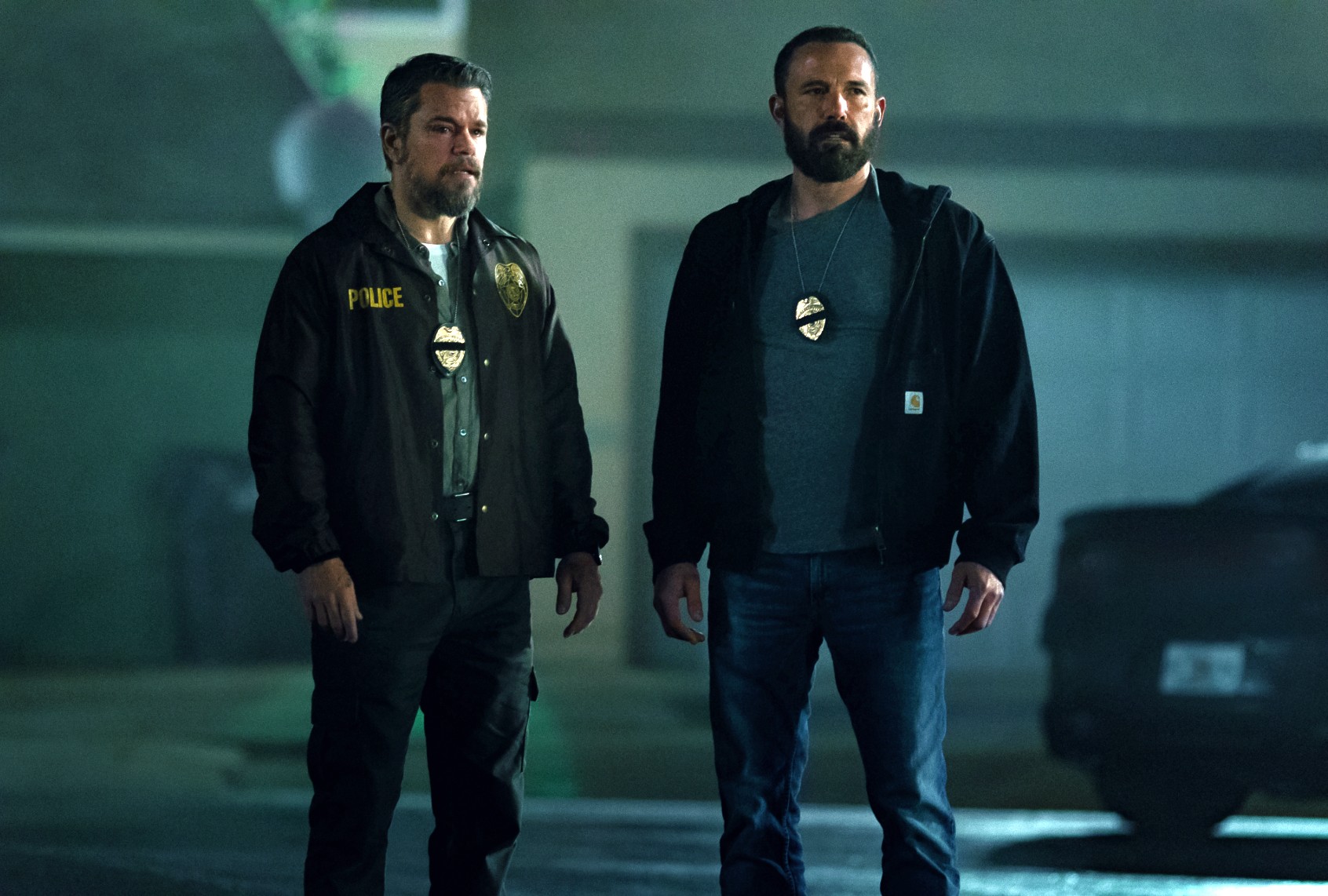
With a cast of Ben Affleck, Matt Damon, Teyana Taylor, Kyle Chandler and Stephen Yeun, one couldn’t possibly go wrong, right? All but one have been nominated for, or won, an Academy Award. Alas, in “The Rip,” writer/director Joe Carnahan (“Boss Level,” “Copshop”), bobbles the ball here with an overly complicated script that confusingly employs misdirection.
Cambridge besties Affleck and Damon play Miami detectives J.D. Byrne and Dane Druthers, who are caught up in the aftermath of another detective (Lina Esco) being executed while investigating the “stash house” of a drug cartel. Byrne and Druthers are brought in for questioning about the murder. But they also have a lead on the house and assemble a crew of trusted associates (Taylor, Yuen, and Catalina Sandino Moreno) to move in. Inside they find only a young woman (Sasha Calle) house-sitting what she says is the property of her recently deceased grandmother. When $20 million in bills is found in plastic paint buckets in the attic, she claims ignorance. Druthers takes everyone’s cellphone while he “figures thing out,” then, a-la “Assault on Precinct 13,” the streets around the abode go vacant, telephone pole lights start to blink and a barrage of bullets fly. The sum of “the rip” (confiscated drug money) was initially purported by intel to be 150K, so right away we know something’s off and that one of the crew is the rat that killed Esco’s cop and is trying to abscond with the green. As suspicions rise, hidden agendas surface and outside forces add to the pressure point. The result is a clunkier “Reservoir Dogs” (1992) or “The Usual Suspects” (1995). Affleck and Damon lean into their parts, though most of the rest of the cast, save Calle, hang in the orbit of their swagger. That’s part of the problem with this big budget escape room caper – it’s more about muscle than character or intrigue. You really want to like “The Rip,” but its stitching is too loose.
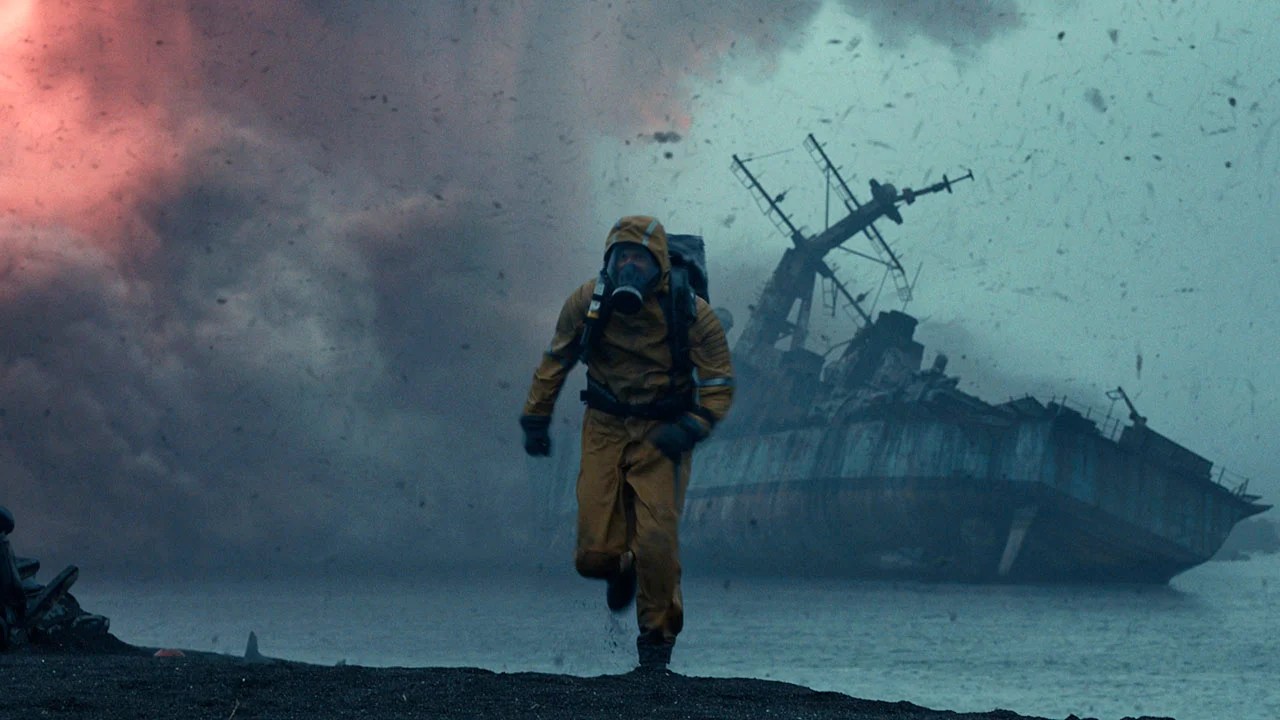
Every January, Hollywood dumps movies in which the studios have no faith, such as this sequel to 2020’s “Greenland” —a generic, end-of-the-world yawner with a meteor (or was that a comet?) and a regular Joe who has to get his betrothed to safety. In the sequel, Joe (actually, John, played by Gerard Butler) now has to get his family out of Greenland, past radiation hell and tsunami-level high water (note to POTUS: are you sure about this place?). John gets his wife (Morena Baccarin, “Deadpool”) and son (Roman Griffin Davis) into a sea capsule and on to Liverpool, which alas is now mostly a pond. Lawlessness, tuberculosis-ridden air and block-destroying lightning storms must be overcome, all in the hopes of reaching a crater in the middle of France where life has started to regenerate. The catch is that this European tour features an obstacle course of factions warring over the narrow pass out, an English Channel converted into a shallow ravine of scree and an Alps-like mountain range. I found myself reflecting that the only reason to make this movie is to give people more reasons to dislike making Greenland a U.S. territory.
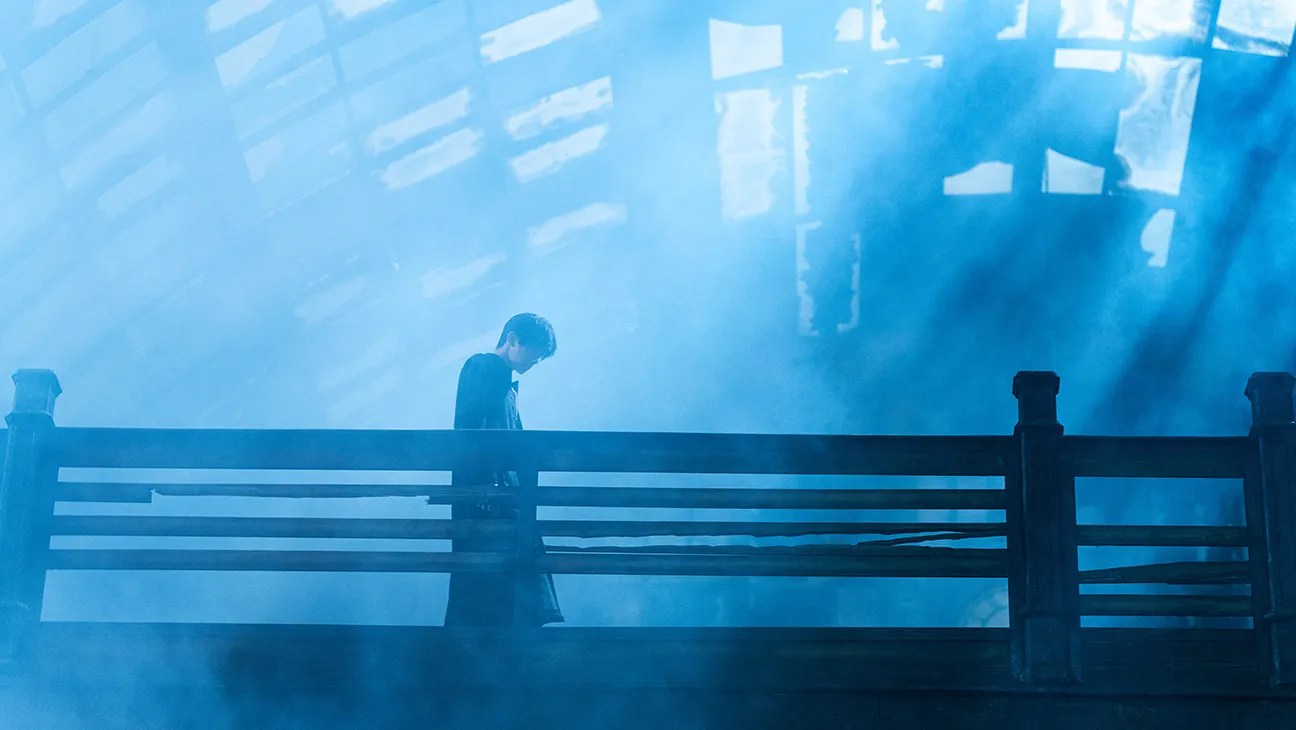
Bi Gan’s dazzling, cerebral sci-fi phantasm folds memory, myth and cinematic form into a single, dream-logic tapestry. Set in a future in which humanity has traded the ability to dream for immortality, “Resurrection” follows the last remaining “deliriant” (Jackson Yee), a Frankenstein-like being still capable of dreaming, and the woman (Shu Qi) tasked with entering his subconscious to retrieve buried truths. What unfolds is an episodic odyssey through visions shaped by Chinese history, genre homage and shifting perspectives. It’s a visually sensual smorgasbord told in chapters aligning with a different sense and narrative style — we begin with German expressionism and wind up with one of the most stunning long shots ever projected on a screen. It’s bathed ominously in languid red and takes place in a trash-strewn, cyberpunk part of the city that hosts a vampire lair where a young punker (Yee again, who plays five roles — one per sense) has come to profess his love for a mercurial chanteuse (Gengxi Li) This bold, poetic nightmare resonates with humanity and wonder. “Resurrection” should be expressly seen on the big screen to drink in Gan’s riveting dreamscape meander.
The latest from Iranian director and noted dissident Jafar Panahi is something more contrived and ambitious than his normal quietly observant style — de facto cinéma vérité in its oblique shining of the light on the oppressive nature of Iran’s theocracy. Take “Offside” (2006), “This is Not a Film” (2011) — made while under house arrest when Panahi was banned from making films — or his masterwork, “The Circle” (2000), with its zinger of a reveal that women in what seems to be a social setting are in fact in jail for the equivalent of jaywalking or speeding.
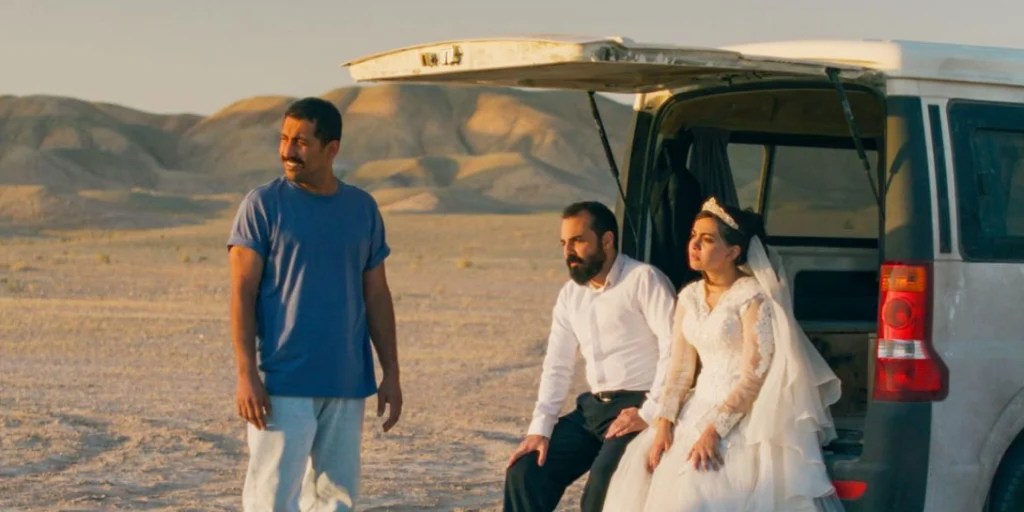
In his first film since being released from prison in 2023, Panahi engages a stage-like convention akin to something Martin McDonagh (“In Bruges,” “The Banshees of Inisherin”) might cook up, set in our world but with the players seemingly acting in their own absurdist universe. An auto mechanic, Vahid (Vahid Mobasseri), recognizes Eghbal (Ebrahim Azizi), whom he believes tortured him while in prison. Vahid employs the flat of a shovel during a traffic confrontation in the middle of a busy street to render Eghbal pliable and whisk him into his windowless van. The big tell is that the victimizer had a prosthetic leg, as does Eghbal. But Vahid was blindfolded and only know his assailant from the feel and hollowness of the leg. To ensure he has the right man, Vahid enlists the aid of others tortured by “Peg Leg” — all, likewise blindfolded. It’s an existential jurisprudence conundrum as the victims ride around in Vahid’s van bursting into bouts of rage and uncertainty as they debate what to do with their alleged former torturer, bound and gagged and locked in a tool chest in the back of the van.
The film won the Palme d’Or at Cannes last year, and it will make many best-of lists (as it should) but it is atypical Panahi, rich in production values and gingerly plotted, something that Panahi’s other films — seeking to skirt government censorship — avoided in their raw, natural, unflinching lens.
If 2025 proved anything, it’s that cinema remains most alive when it resists easy definition. This was a year of films that slipped between categories — between art-house and genre (”Sinners,” “Bring Her Back”), intimacy and spectacle (”Resurrection”), sincerity and provocation — often in the same breath. The most compelling work didn’t shout its importance; it lingered, unsettled (”Die My Love,” “Sorry Baby”), and quietly reoriented how we look at the world, and at ourselves (One Battle After Another).
This was a year shaped less by consensus hits (”Fire and Ash” noted) than by films that demanded engagement–”Sinners” per se. Stories of grief (”Hamnet”), obsession, identity, and endurance unfolded in unexpected registers: tender where you expected bombast (”The Life of Chuck”), abrasive where comfort once reigned (”If I Had Legs I’d Kick You”). Even familiar auteurs–Paul Thomas Anderson, Ryan Coogler, Richard Linklater and Chloé Zhao to name a few–arrived with sharpened (or re-honed in the case of Zhao) instincts, pushing past their own signatures to interrogate aging, memory, power, and the quiet violence of love. Meanwhile, emerging voices (Eva Victor, “Sorry Baby”) brought urgency and texture, reminding us that cinema’s future is not only global, but defiantly personal. Female debuts behind the lens resonated in 2025, others being Mary Bronstein (“If I Had Legs I’d Kick You), Kristen Stewart (“Chronology of Water”), Kate Winslet (“Goodbye Jane”), “CSI” icon Mariska Hargitay (“My Mom Jayne”) and kind of (she co-directed a film with “Anora” helmer Sean Baker some 20 years ago), Shih-Ching Tsou (“Left-Handed Girl”).
If there’s a through-line to 2025, it’s an insistence on presence — emotional, political, and sensory. Films that ask us to sit with discomfort, to embrace ambiguity, and to find meaning not in resolution but in reckoning. They linger long after the credits roll, less concerned with tidy conclusions than with the residue they leave behind.
This year’s top 10 isn’t about consensus or cultural dominance. It’s a snapshot of a moment when filmmakers trusted audiences to lean in, to feel deeply, and to meet the work halfway. In a year defined by uncertainty and recalibration, these films reminded us why we keep returning to the dark: not for escape, but for illumination.

 Muse Films





 For What it's Worth