Cantabrigian teacher and poet Charles Coe died Friday Nov. 21.
The spirit of creativity in Cambridge dimmed last week when longtime resident, teacher and poet Charles Coe died Monday from complications related to prostate cancer surgery. His death was sudden and stunned many. In addition to touching people with his words, often delivered in a deep, mellifluous baritone, Coe offered mentorship, leadership and a sense of community. He was 73.
He was an omnipresent figure in local literary circles: the Mass Poetry Festival, long-running literary salons across Cambridge and Somerville, the Writers’ Room, Black Writers Reading series, arts advocacy boards. If there was a gathering where people were wrestling with words or art or community, chances were good Coe had either helped organize it or slipped quietly into a seat to listen.
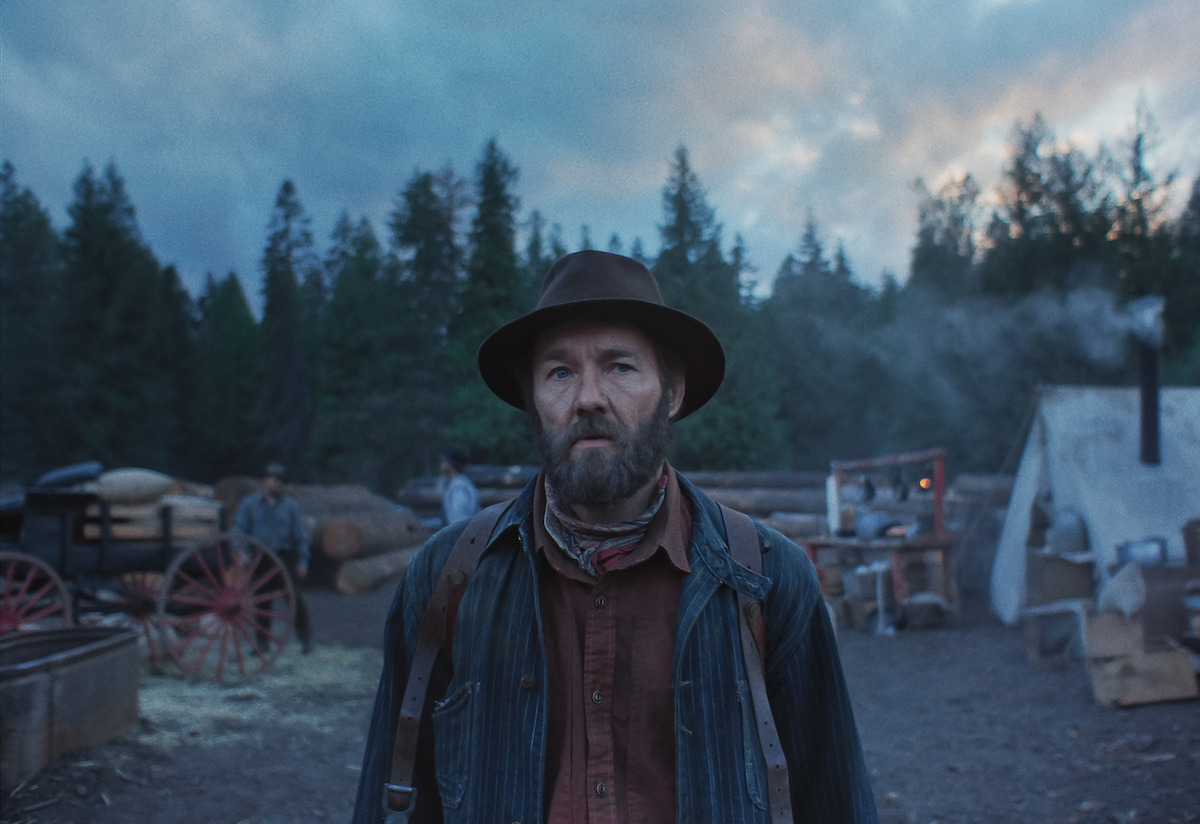
Films crafted around hermits are often peppered with idyllic framings of their lush surroundings and driven by strong, intense performances by the lead, who must, for the most part, connote much of their character’s inner turmoil via facial expressions and the glance of the eye. That was the case with Ben Foster in Debra Granik’s “Leave No Trace” (2018) as well as Daniel Day-Lewis in his recent comeback, “Anemone.” This film, gorgeously shot by Adolpho Veloso, has the trippy, hypnotic aura of a Terrence Malick fever dream, and we get Joel Edgerton in his richest and most robust performance to date. His Robert Grainier, we’re told, never spoke into a phone during a life that ends serenely in 1968. Based on the novella by Denis Johnson and adapted by Clint Bentley and Greg Kwedar – the Oscar-nominated tandem behind “Sing Sing” – “Train Dreams” is pretty much the telling of Grainier’s life in full; orphaned young, unknowing what befell his parents, and, as a quiet young man when we catch up with him, working as a logger and railway hand in the remote reaches of Idaho. His life as a loner and drifter pretty much has him moving from one lumber camp to the next until he meets Gladys (Felicity Jones) at a church in Fry. It’s love at first pleasantry, and with Gladys game for the woods, the two wed, build a bungalow atop the crest of a dell and have a daughter. It’s an enchanting “Little House on the Prairie” existence until a wildfire sweeps through the valley while Grainier happens to be off on one of his logging missions. When he returns, Gladys and his daughter are nowhere to be found. For a good part of the film, Grainier, propelled by guilt and grief, searches nearby towns looking for them or any news of their fate. Ultimately he returns to the woods, where he registers a small degree of comfort taking in an abandoned litter of dogs and rebuilding the cabin on the same perch. The power of guilt and grief creeps in and begins to bend reality, and Grainier struggles to make sense of his existence and the world in large. The acting is top tier, reserved and quietly affecting. Others adding heart and humanity in small, meaty parts are William H. Macy as Arn Peeples, a grumpy coot who likes to use explosives to fell his trees, and Kerry Condon as the first woman to work at a U.S. National Forestry outpost.
They could have called this one “Peacemaker and Bloodsport Run for Office,” as it leverages the great yin-and-yang chemistry that actors John Cena and Idris Elba forged in the hilarious Harley Quinn DC comic reboot, “The Suicide Squad” (2021). Here they play Will Derringer (Cena), a former action movie star elected Potus, and British prime minister Sam Clarke (Elba). Derringer – an obvious and affectionate riff on Arnold Schwarzenegger – is famous for his “Water Cobra” films, whereas Clarke was a career commando before moving into the political realm. There’s a bit of a rift between the two, as it was perceived that Clarke supported Derringer’s rival by having fish and chips with them. Clarke and Derringer meet at a European summit and afterward, for squirrelly reasons, Derringer offers to give Clarke a lift on Air Force One. As Harrison Ford is nowhere nearby, the big jumbo jet is plucked from the sky by an international terrorist ring (led by an ever-menacing Paddy Considine), and Clarke and Derringer have to go off-grid and escape Belarus. While the two are assumed dead, their respective successors seek to dissolve Nato, and the U.S. intelligence network is hijacked by hackers. Fairly generic stuff made pleasantly smirk-worthy by the playful onscreen Frick-and-Frack chemistry of its leads and some nifty pacing and action scene choreography by director Ilya Naishuller (“Nobody”). Adding comic spice and sporty can-do are Jack Quaid (“The Boys”) as a wacky CIA safe house operative and Priyanka Chopra Jonas (“The White Tiger” and “Matrix Resurrections”) as a game British agent who served with Clarke in the military.
Reviewed: ‘Mountainhead,’ ‘Straw,’ ‘Echo Valley’ and “Fountain of Youth’
‘Mountainhead’ (2025)
This smug billionaire-boys-behaving-badly dramedy from “Succession” creator Jesse Armstrong landed just as the relationship between Trump and Musk imploded fantastically in the headlines, not so much an aptly ironic parody as a loaded diaper. Why is America so obsessed with the rich, when most of us – the other 90, 95 or 99 percent – are not so? The fantasy that money can change your life and buy you happiness? With Trump and Musk and this sour lot, it’s more about power and being right, even if you’re not and money is an afterthought (though how much you have is a boasting point). In an airy mountain chalet, four tech bros with complicated pasts and agendas hang out for a weekend of poker and backdoor business parlays. If you called them Zuck, Musk, Altman and Kalanick (the series “Super Pumped” on the Uber founder is a worthy watch), you’d not be far off. The driving plot is the alter-reality tech platform Traam run by Venis/Ven (Cory Michael Smith, who played Chevy Chase in “Saturday Night”). It has 4 billion users but has been coopted to make deepfake news stories with devastating results worldwide. Newscasts show the bloody inflaming of the Palestinian-Israeli conflict and retaliation to a faked story in which women and children in a house of worship are barricaded in, firebombed and killed. People are literally dying because of Traam. Does this give pause or stop Venis from pushing his next release? Nah, he sends it out to the world with the lede “Fuuck!” because “two ‘u’s are cool.” That’s the kind of fuck-all we’re dealing with. When asked about the mayhem Traam is causing, Venis retorts that “The first time people saw a movie, everybody ran screaming because they thought they were going to get hit by a train. The answer to that was not stop the movies. The answer was: Show more movies.” (It’s here that we can drop the “V” and add a “P.”) Ven’s weekend cohort of self-loving insufferables include Randall (Steve Carell), a fat-walleted venture capitalist recovering from cancer, Souper Van Yalk (Jason Schwartzman), the host who hasn’t quite made it into the billionaire club, and Jeff Abredazi (Ramy Youssef, “Mr. Robot”), the most sensible of the bunch, who has just kicked off a tool that could thwart Traam’s AI mayhem but won’t sell it to Ven because of past grievances and ideological differences. As the world continues to go to hell on the widescreen TVs around the chalet, the boys debate taking over and running some of the countries whose governments have fallen. When the water in the manse runs dry, our quartet thinks sabotage and of an imminent terrorist attack and head to the bowling alley bunker below. “Mountainhead” is pretty much a stage play in form, and the actors are all in and hit their mark. What doesn’t is the satire that roils in human misery with a nod and a wink at cheekiness so we can walk a mile in the shoes of the rich and famous who wouldn’t give five dollars to a starving family on the street.
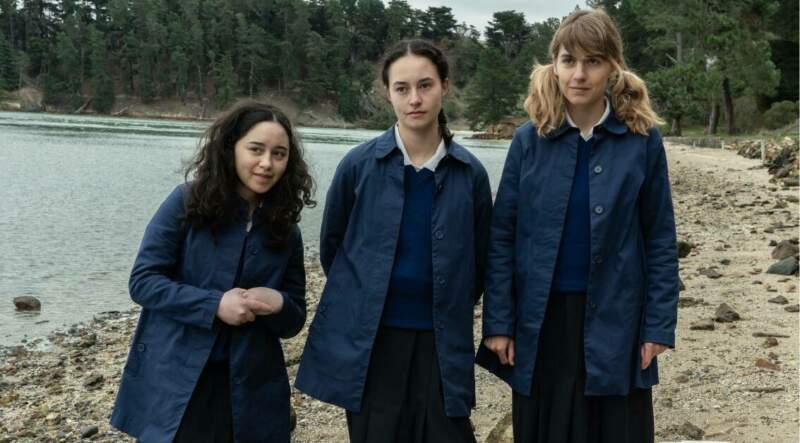
The historical ills of the three Cs (colonialism, capitalism and Christianity) loom at the fore of Josephine Stewart-Te Whiu’s feature debut, a coming-of-age tale about two Māoris and one Pākehā (a white New Zealander) sent to an island reform school for delinquent girls. Nellie (Erana James) and Daisy (Manaia Hall) are sent to the school to whitewash the Māori out of them and accept the word of god. Lou (Nathalie Morris), a rebellious, well-off white girl, is there for remediation of sexual perversions – nothing worse than dad catching you making out with your female babysitter back in the conservative 1950s. As in RaMell Ross’ adaptation of Colson Whitehead’s “Nickel Boys” last year, there are different rules when it comes to people of color, even in a hellhole. In the still of the night, from one hut, blood-curdling screams are heard. We never really learn what goes on there, just that whatever it is, it isn’t good, and that the school marm (Rima Te Wiata, “Hunt for the Wilderpeople”) is quick to slap any Māori incantation from the mouths of Nellie and Daisy, even though she is of Māori origin and ostensibly came up through the same system. Tellingly, Daisy can’t read and the school doesn’t seem interested in her education; just her assimilation and Christian brainwashing. Part of the school’s mission is to keep the teens chaste (a remote island helps with that logistically) and get them prepared to become demurring housewives, a low bar made even lower by the persistent patronization and Draconian discipline. The driving force to the film is the playful kinship between the trio (aided by the chemistry among the three performers) and their never-give-in resolve despite the dead-end hopelessness of their situations. Gorgeously shot by Maria Ines Manchego (“Uproar”) and executive produced by Taika Waititi (“Wilderpeople,” “JoJo Rabbit”), “We Were Dangerous” is a quiet reminder of the sins of religious imperialism, the agency of lateral violence that accompanies it and the sexual oppression and subjugation of women during the rising tide of world prosperity.
The text came in at 12:22 in the morning. “I have ur cat. The $$ is now $200.”
Miriam had been unable to sleep that evening, it had been three days since Speedo scampered out the door of their third-floor walk-up and hadn’t returned. It wasn’t the first time the black cat with a white blaze across its face and one white paw went on a “walkabout” as Miriam and Charles affectionately called it. The first time he disappeared Miriam was riddled with angst and emailed the neighborhood listserv at 4:30 in the morning, “Our cat Speedo has gone missing. Have you seen him? We are worried sick. If you see him, please call.” She included her cellphone number and attached her favorite picture of the pet, which was the embodiment of kitty cuteness, though the creature’s piercing green eyes probed the viewer as if the cat knew the beholder’s deepest, darkest secret. Later that day, the McFadden’s son, home from college on a laundry run, found Speedo batting around a balled-up paper bag in the basement. To thank the boy, Miriam and Charles invited the young McFadden up for a brunch of vegetarian black bean chili crowned with poached eggs and hollandaise along with Miriam’s personal pride, home cured lox on bagel crisps with whipped cream cheese and chive. As Miriam arduously whisked the thick yellow sauce, the scene of Charles assembling a bagel as he listened to the boy talk excitedly about his future plans—something outdoors, urban planning, land conservation or maybe renewables—tweaked memories of the weekends that Leah would come home from veterinary school for comfort food and quiet. She laughed inwardly for a second because Charles always overloaded his bagel with a triple spread and a double heaping of onions with capers rolling off a teetering crown of sprouts, and then there was the two layers of her meaty, thick lox, and as usual, a good portion of it ended up in his bushy beard. She was about to do a subtle chin point behind the boy’s back but paused in mid motion as a hot tear welled up and made its way down her cheek and into the hollandaise.
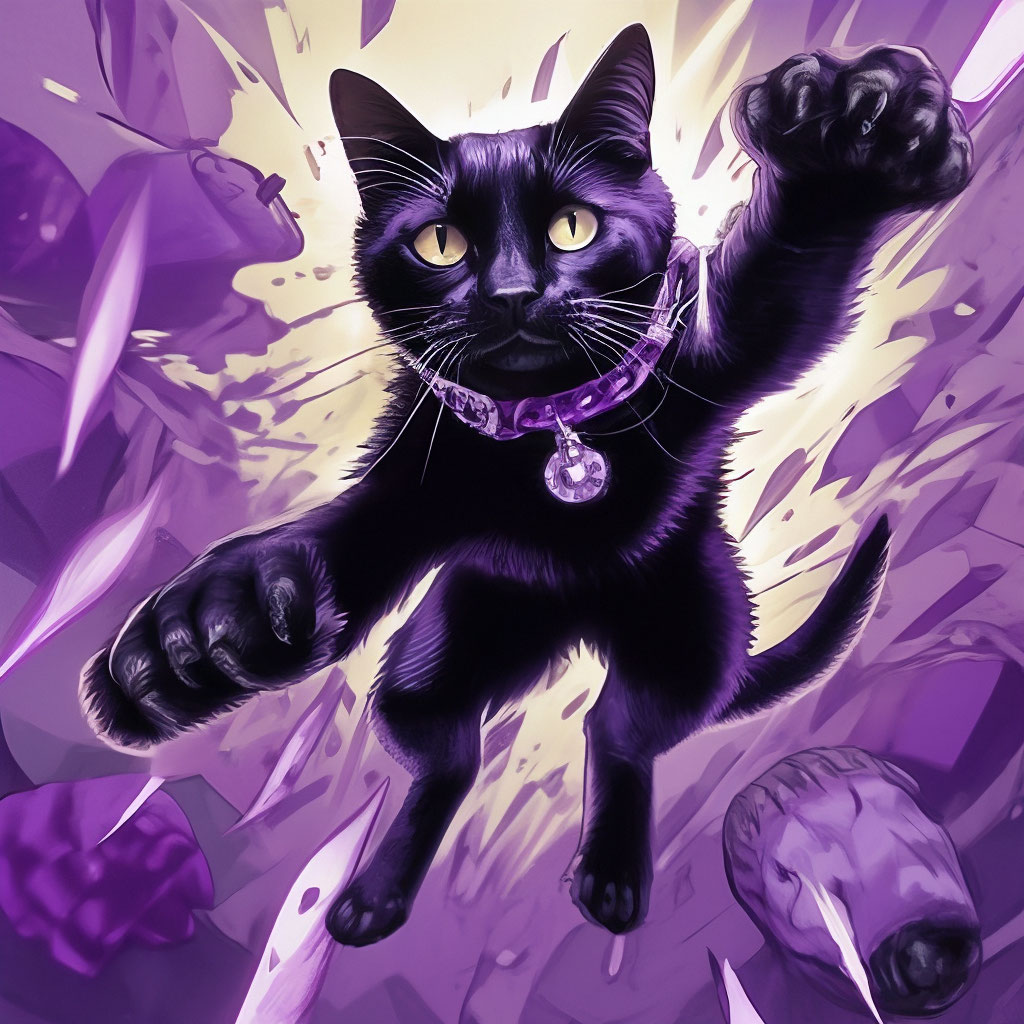
More overnight “Where’s Speedo?” disappearances happened, but the cat always returned the next day for his mid-morning feeding, and seemed to be eerily cognizant that Wednesday, Friday and Sunday, were sardine days as he’d always be there waiting in the kitchen for Miriam, excitedly purring and crashing into her legs, nearly tripping her as she tried to fork a pungent headless filet into the cat’s bowl. As Speedo escape days became more and more, the mode of which, the stealthily trailing of a pant leg of an unwary resident, delivery person or anyone else operating the heavy wooden door that closed with creaking, achey slowness, Miriam and Charles began to fret less, often sharing a glass of crisp kosher white wine and laughing about, “Speedo being Speedo.” “He’s out saving the world,” Charles said one night as he sipped wine and noshed on crackers crowned with a diced mixture of Miriam’s lox, capers and pickles. To Miriam’s non-reaction he reiterated, “I’m serious, I think he morphs into a giant crime-fighting kitty.”
Miriam took a long sip of wine, savored the buttery oak sweetness for a contemplative beat, and then nodded in reluctant agreement.
“See?” Charles said, perching forward in his chair, “I’m telling you, it’s a thing. What do you think his superpower is?”
Again, Miriam regarded the question with pause and said, “Laser beam eyes and saber claws, or maybe, he can command other cats as allies like the rat girl in ‘The Suicide Squad’?”
“A giant starfish and Jim Ignatowski with Christmas tree lights popping out of his head? That movie was utter poop!” Charles bellowed. “Superhero films are ruining cinema.”
“So says the grown-up man who collects kewpie dolls.”