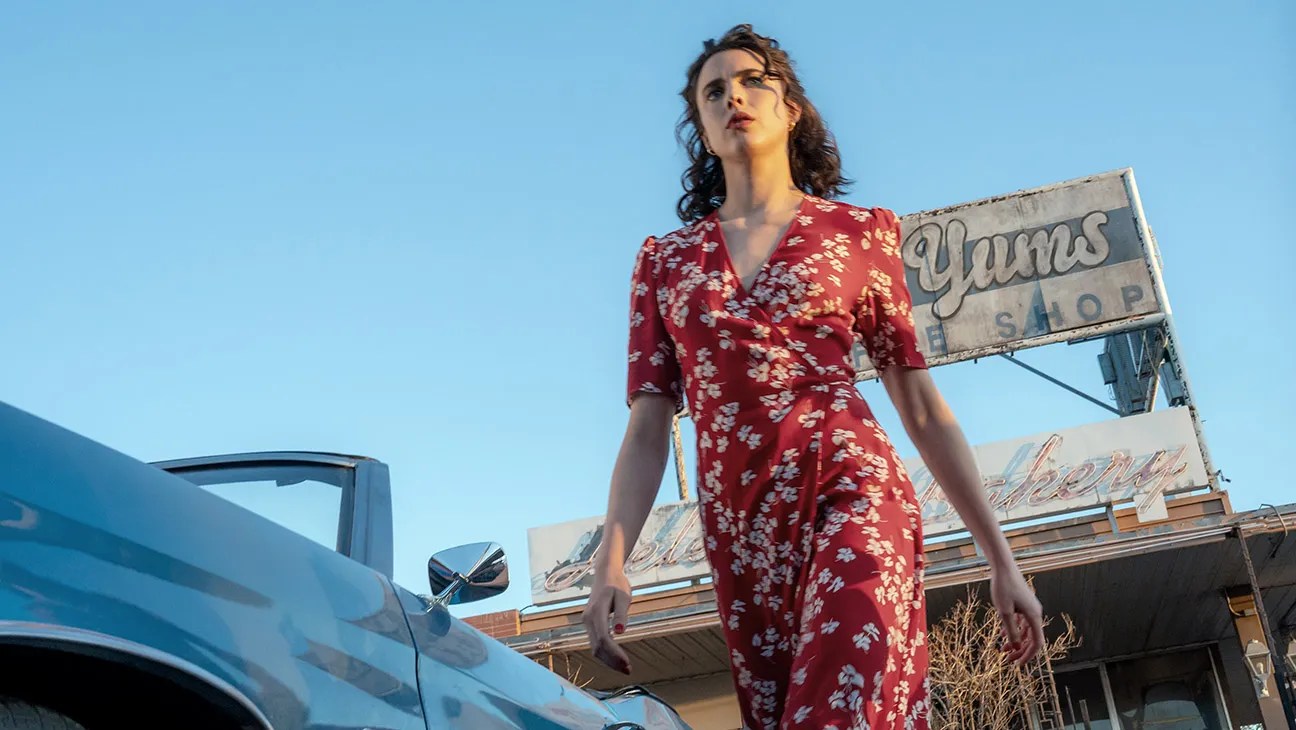
Ethan Coen and co-writer and wife Tricia Cooke reteam with actor Margaret Qualley for the second of a purported loose lesbian neo-noir trilogy. That first outing, last year’s “Drive-Away Dolls,” was a bit of a rickety start, but through no fault of Qualley, who packed the punchy best of both Thelma and Louise as one of two gal pals who zoom off in a car with various factions of angry patriarchy hot on their tail. It was a concept in search of a story. Here, Coen and Cooke dial up the noir aspect and concoct something more worthy of Qualley’s onscreen allure.
She plays Honey O’Donahue, a private detective working the dusty, depressed streets of Bakersfield, California. There’s trouble right off the bat as an angular French woman (Lera Abova) in leopard-skin tights navigates the scree of a ravine to get to an inverted car, its driver dead or dying. She’s not there to help, but to pluck a signet ring off a finger, and in the next scene Abova’s agent of cold deeds is floating casually full frontal in a nearby quarry pond. An important fashion note: As she clads up, there’s a Garanimals moment as we realize her underwear and bra match her motorbike helmet.
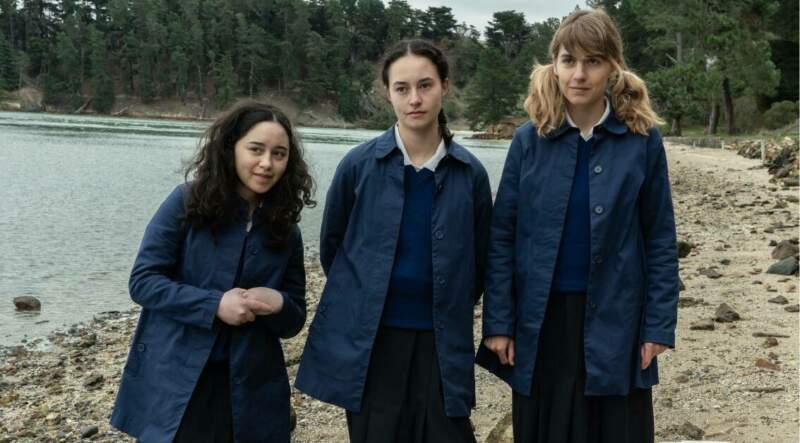
The historical ills of the three Cs (colonialism, capitalism and Christianity) loom at the fore of Josephine Stewart-Te Whiu’s feature debut, a coming-of-age tale about two Māoris and one Pākehā (a white New Zealander) sent to an island reform school for delinquent girls. Nellie (Erana James) and Daisy (Manaia Hall) are sent to the school to whitewash the Māori out of them and accept the word of god. Lou (Nathalie Morris), a rebellious, well-off white girl, is there for remediation of sexual perversions – nothing worse than dad catching you making out with your female babysitter back in the conservative 1950s. As in RaMell Ross’ adaptation of Colson Whitehead’s “Nickel Boys” last year, there are different rules when it comes to people of color, even in a hellhole. In the still of the night, from one hut, blood-curdling screams are heard. We never really learn what goes on there, just that whatever it is, it isn’t good, and that the school marm (Rima Te Wiata, “Hunt for the Wilderpeople”) is quick to slap any Māori incantation from the mouths of Nellie and Daisy, even though she is of Māori origin and ostensibly came up through the same system. Tellingly, Daisy can’t read and the school doesn’t seem interested in her education; just her assimilation and Christian brainwashing. Part of the school’s mission is to keep the teens chaste (a remote island helps with that logistically) and get them prepared to become demurring housewives, a low bar made even lower by the persistent patronization and Draconian discipline. The driving force to the film is the playful kinship between the trio (aided by the chemistry among the three performers) and their never-give-in resolve despite the dead-end hopelessness of their situations. Gorgeously shot by Maria Ines Manchego (“Uproar”) and executive produced by Taika Waititi (“Wilderpeople,” “JoJo Rabbit”), “We Were Dangerous” is a quiet reminder of the sins of religious imperialism, the agency of lateral violence that accompanies it and the sexual oppression and subjugation of women during the rising tide of world prosperity.
The text came in at 12:22 in the morning. “I have ur cat. The $$ is now $200.”
Miriam had been unable to sleep that evening, it had been three days since Speedo scampered out the door of their third-floor walk-up and hadn’t returned. It wasn’t the first time the black cat with a white blaze across its face and one white paw went on a “walkabout” as Miriam and Charles affectionately called it. The first time he disappeared Miriam was riddled with angst and emailed the neighborhood listserv at 4:30 in the morning, “Our cat Speedo has gone missing. Have you seen him? We are worried sick. If you see him, please call.” She included her cellphone number and attached her favorite picture of the pet, which was the embodiment of kitty cuteness, though the creature’s piercing green eyes probed the viewer as if the cat knew the beholder’s deepest, darkest secret. Later that day, the McFadden’s son, home from college on a laundry run, found Speedo batting around a balled-up paper bag in the basement. To thank the boy, Miriam and Charles invited the young McFadden up for a brunch of vegetarian black bean chili crowned with poached eggs and hollandaise along with Miriam’s personal pride, home cured lox on bagel crisps with whipped cream cheese and chive. As Miriam arduously whisked the thick yellow sauce, the scene of Charles assembling a bagel as he listened to the boy talk excitedly about his future plans—something outdoors, urban planning, land conservation or maybe renewables—tweaked memories of the weekends that Leah would come home from veterinary school for comfort food and quiet. She laughed inwardly for a second because Charles always overloaded his bagel with a triple spread and a double heaping of onions with capers rolling off a teetering crown of sprouts, and then there was the two layers of her meaty, thick lox, and as usual, a good portion of it ended up in his bushy beard. She was about to do a subtle chin point behind the boy’s back but paused in mid motion as a hot tear welled up and made its way down her cheek and into the hollandaise.
More overnight “Where’s Speedo?” disappearances happened, but the cat always returned the next day for his mid-morning feeding, and seemed to be eerily cognizant that Wednesday, Friday and Sunday, were sardine days as he’d always be there waiting in the kitchen for Miriam, excitedly purring and crashing into her legs, nearly tripping her as she tried to fork a pungent headless filet into the cat’s bowl. As Speedo escape days became more and more, the mode of which, the stealthily trailing of a pant leg of an unwary resident, delivery person or anyone else operating the heavy wooden door that closed with creaking, achey slowness, Miriam and Charles began to fret less, often sharing a glass of crisp kosher white wine and laughing about, “Speedo being Speedo.” “He’s out saving the world,” Charles said one night as he sipped wine and noshed on crackers crowned with a diced mixture of Miriam’s lox, capers and pickles. To Miriam’s non-reaction he reiterated, “I’m serious, I think he morphs into a giant crime-fighting kitty.”
Miriam took a long sip of wine, savored the buttery oak sweetness for a contemplative beat, and then nodded in reluctant agreement.
“See?” Charles said, perching forward in his chair, “I’m telling you, it’s a thing. What do you think his superpower is?”
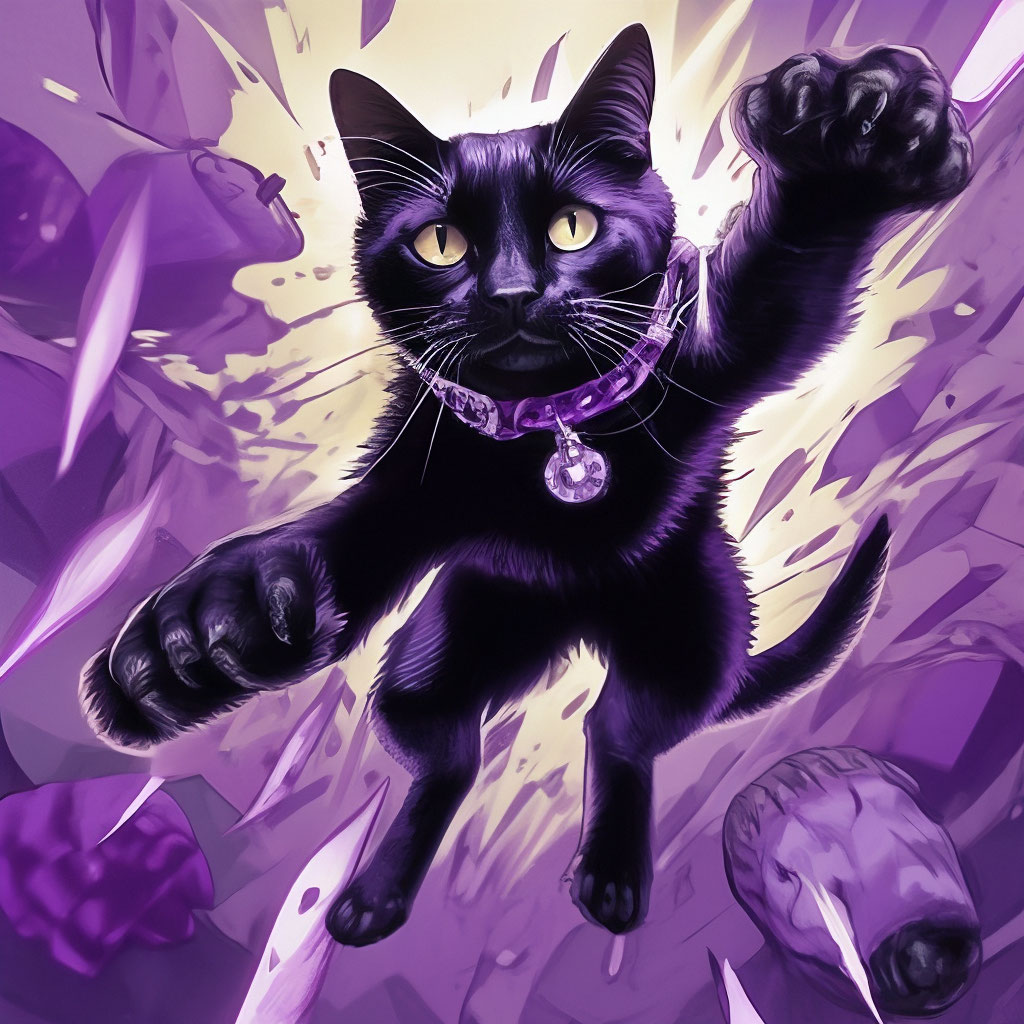
Again, Miriam regarded the question with pause and said, “Laser beam eyes and saber claws, or maybe, he can command other cats as allies like the rat girl in ‘The Suicide Squad’?”
“A giant starfish and Jim Ignatowski with Christmas tree lights popping out of his head? That movie was utter poop!” Charles bellowed. “Superhero films are ruining cinema.”
“So says the grown-up man who collects kewpie dolls.”

 For What it's Worth