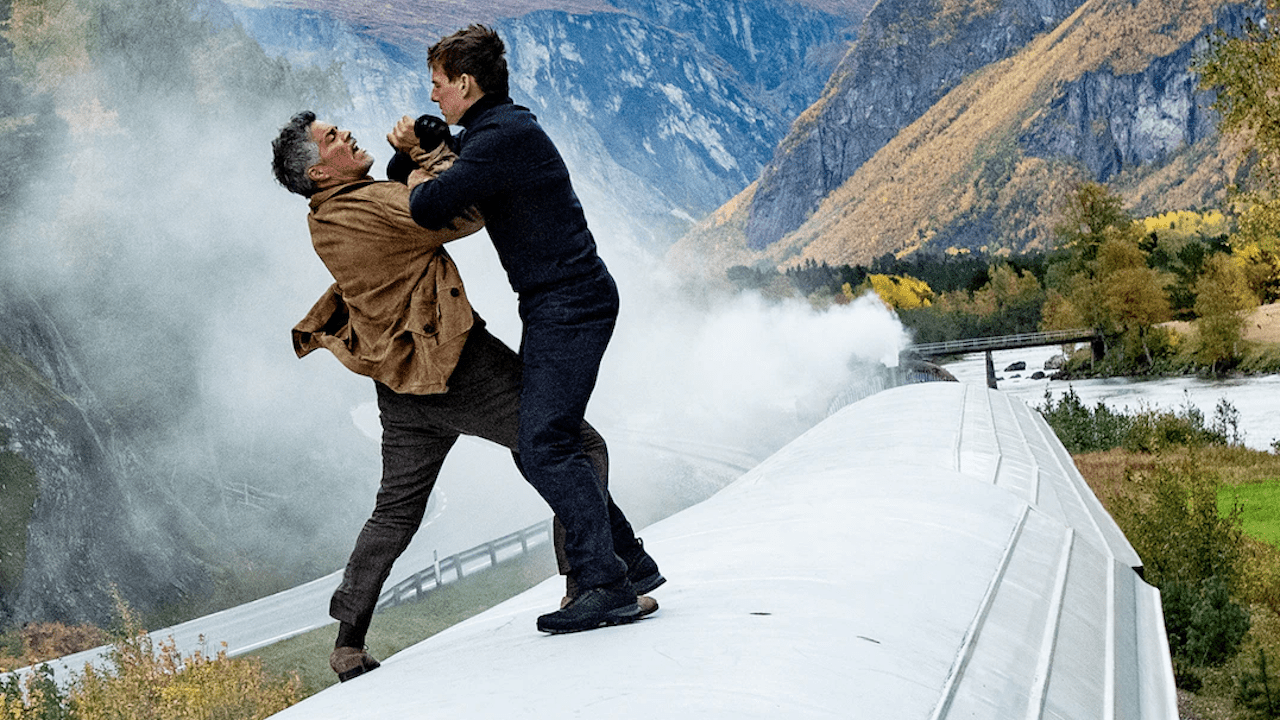
If you’re a “Mission: Impossible” fan, you’re gonna be tickled pink by “Mission: Impossible – Dead Reckoning Part One.” It’s not anything new, but the stunts and thrills are all there and you get to see Tom run and jump, tuck and roll to avoid the exploded carcass of an armored Humvee hurtling at him. But the appeal of a Tom Cruise “Mission Impossible” flick is that his Ethan Hunt has no superpowers to teleport through walls, smash through a steel bunker or bend the wills of the weak, though he is pretty good with a rubber mask. He’s a can-do everyman just like you and me – not really, but that’s the facade we buy into – and Cruise, who at 60 clearly has an all-access pass to the fountain of youth, famously does all his own stunts (perhaps too famously?), which inherently adds to the M:I pizzaz.
Cruise co-opted the 1960s TV series nearly 30 years ago with Brian De Palma in the director seat and an all-star screenwriting team that included Steven Zaillian (“Schindler’s List”), David Koepp (“Jurassic Park”) and Robert Towne (“Chinatown”). In that first big-screen liftoff, the old IMF Team lead by Jim Phelps (played by Peter Graves on TV and by Jon Voight in the film) get killed off – mission disk-wipe and rebrand accomplished! “Dead Reckoning,” not to be confused with the 1946 film noir starring Humphrey Bogart (did Bogie ever leap between planes or speeding locomotives in his films?), is the seventh Cruise-led M:I chapter, and we know there’s going to be no less than eight including next year’s “Dead Reckoning Part Two.” Besides De Palma, Cruise has worked with some of the industry’s most distinguished directors just over the crest from their cinematic highs, including action auteur John Woo (“Bullet in the Head,” “Face/Off”), J.J. Abrams (the later “Star Trek” and “Star Wars” chapters) and animator Brad Bird (“The Incredibles”), but for these last four he’s settled on Christopher McQuarrie as his director and pen man. If you’re unfamiliar with McQuarrie, he’s the rapier wit who smartly played us all in “The Usual Suspects” (1995) and has since gone on to write many a Cruise film: “Edge of Tomorrow” (2014), the World War II Hitler assassination plot “Valkyrie” (2008), “Jack Reacher” (2012) and even the failed Dark Universe monster movie “The Mummy” (2017). McQuarrie also did Cruise’s most recent box office blast, last year’s unanimous crowd pleaser “Top Gun: Maverick.” The point being, Tom and Mr. McQuarrie are tight and have a good thing going, and are sure to keep at it until it’s not.
That said, “Dead Reckoning: Part One” is a lot of hand waving and techno claptrap about something known as “The Entity.” It’s a McGuffin within a breakfast muffin – that is, bread on top of bread, a lot to chew on with no meat to bite into. Just what The Entity is, we’ll all have to wait for “Part Deux,” but as best I can tell it’s something of a hybrid of a ChatGPT artificial intelligence nursing a bottle of Jim Beam and that pained virtual incarnation know as SID (sadistic, intelligent and dangerous) from the 1995 sci-fi whimper known as “Virtuosity,” a movie that people only went to see because it starred Denzel Washington and forgot about quickly because of McQuarrie’s “Usual Suspects.” Hunt knows whoever has the key to The Entity will decide who lives and dies when world-sustaining resources such as water, food and fresh air become critically scarce in the foreseeable tomorrow. If that sounds like there’s serious climate change talking points afoot, it’s just more of that bread filler so Hunt, out to get the two halves of the key (in this digital era, it is a literal key, and an antiquated one that looks like it could have been used to unlock a crypt in “The Mummy”), can ride a motorcycle at breakneck speed through Roma followed by Italian police and Pom Klementieff, more widely known as a demurring empath in the “Guardians of the Galaxy” films, as an able assassin named Paris behind the wheel of a muscular military vehicle. The sequence feels far too akin to the Vatican crash-bang in the recently released “Fast X” (which has an annoying part two, too). As a result, there’s a bit of early letdown; but when atop a runaway locomotive or dashing through a claustrophobic maze of Venetian alleyways (the murky haziness of it all hauntingly reminiscent of Nicholas Roeg’s “Don’t Look Now”) or at an Entity-hosted rave with baddies toting Glocks just three writhing bods away, the action is “Tár”-timing taut, superbly choreographed and maintaining its grip from first blow to final fall.
Old pals show up: The Geek Squad Greek chorus of Luther (Ving Rhames) and Benji (Simon Pegg) are back, as is adversary turned ally Ilsa Faust (Rebecca Ferguson, who’s got another part two on the horizon with the conclusion of “Dune” this summer) with Henry Czerny’s eely IMF director Eugene Kittridge ever making us ponder if we can trust him. Back too, but in less of a commanding role, is Vanessa Kirby, the enigmatic arms dealer called the White Widow. But the true face of nefarious deeds this time isn’t so much the never-really-seen Entity or Klementieff’s Joker-faced assassin, but Esai Morales’ diabolically debonair Gabriel, an old foe of Hunt’s who takes great pride in his demonic gamesmanship. Adding to Hunt’s ever-expanding sea of troubles and checklist of those who may or may not need saving is a stately yet shifty pickpocket named Grace (Hayley Atwell), who lifts a key half from an unwary bearer nearly every other scene. She’d make a good running mate with Phoebe Waller-Bridge’s come-what-may opportunist in “Indiana Jones and the Dial of Destiny.” Just where “Dead Reckoning Part Two” goes doesn’t really matter; it’s all about Tommy under the gun, and it is good fun to see Tom run.
We’ve seen it all from Jennifer Lawrence: gritty, hard-bitten drama (“Winter’s Bone”), culturally critical satire (“Don’t Look Up,” “American Hustle”), spy thriller (“Red Sparrow”), a YA franchise (“The Hunger Games”), even a foray into the superhero ’verse (the “X-Men” series reboot), but a rom-com or straight-up comedy? “Silver Linings Playbook” (2012) kinda fit that bill (though it’s a dark one, as it deals with loss and mental illness) and Lawrence would win an Oscar for her part as a grieving widow looking for release and a way to move on. But in “No Hard Feelings,” Gene Stupnitsky’s not-quite-a-rom-com, Lawrence gets to open up and be free in a way she’s never done – think Cameron Diaz in “Bad Teacher” (2011) or Charlize Theron in “Long Shot” (2019). The thing that will be made the most of is Lawrence’s birthday suit scene. It is an eye popper, but not in the (racy, smutty) way you may think – it’s a punctuation mark in triplicate in a film that otherwise charms on its comedic merits and moments of humanity.
Lawrence’s Maddie lives in swank Montauk, Long Island, but is not one of the living-large summer weekenders looking to escape the dog days of Manhattan; she’s a townie living in the modest one-story bungalow in which she grew up. Mom died not so long ago, and the house is about to be taken away for back taxes. Maddie gets by gig-economy style bartending at the marina to those wealthy sorts and by giving Uber rides – that is, until her car is repossessed. No car, no house, no cash, what’s a youngish single woman to do?
Plan B comes in the form of a Craigslist ad posted by a wealthy couple (a dutiful Laura Benanti and Matthew Broderick, rocking a Rasputin ’do) who want a 20-ish woman to help instill confidence in their Princeton-bound son, Percy (Andrew Barth Feldman, on leave from Harvard for the filming). What that translates into: Make our son a man (take his virginity) and we’ll give you a Buick and enough cash to handle the back taxes. Percy is unaware of the plot, and the task for Maddie – who is in her early 30s and barely passes the mom-and-dad interview – becomes more complicated than expected.
Maddie’s a hot mess, and endearingly self-deprecating. She’s also vulnerable, up against it and has can-do resolve. There’s a whole backstory about her dad and plenty of attempts to get Percy to Buick land. Stupnitsky, a veteran of “The Office” TV series pulling double duty as writer, does a nice job with the comedic timing and plots changeups. Lawrence, believe it or not, is adroit as a physical comedian, be it her Maddie trying to rob her car back from a tow truck, or that buck-naked throwdown on a beach that involves crotch shots (both punches and sightings of) and sleeper holds. Maddie and Feldman’s geeky, sensitive Percy also score some truly tender moments. It’s evocative of “Risky Business” (1982) and “Booksmart” (2019) without being derivative. it’s also refreshing to see Lawrence take a chance, and Stupnitsky does a nice job of playing with the have-and-have-not dynamic the way “One Crazy Summer” (1986) and “Caddyshack” (1980) did, but more affectingly and subtly.
Go ahead, call me a curmudgeon, hater or whatever, but I’m done with the whole consuming concept of the “multiverse.” Yeah, it rocked the Oscars with “Everything Everywhere All at Once,” but the Daniels are a cheeky, creative tandem whose projects are driven by wit and verve – and that had Michelle Yeoh. Otherwise (with a hall pass given for the animated “Spider-Verse”), it’s a lazy way to just keep the same-old-same-old going around, a toilet bowl eddy of narrative ineptitude that no studio exec will flush as long as it can rack up boffo box office mojo. With “The Flash,” I have reached the end of my tether. Is anyone out there holding onto super fond memories of this year’s “Ant-Man and the Wasp: Quantumania” or “Spider-Man: No Way Home” (2021)?
That said,“The Flash” does pass the time. But then it begins to rewind it – too often – and in the end, feels pointless. In the rebooted DCU (Detective Comic Universe), many of the Justice League entries besides Batman and Superman have fallen flat – sorry “Aquaman” and “Wonder Woman 1984” – and “The Flash” shows even less flair. The plot has Barry Allen (Ezra Miller), aka the Flash, using his super speed to go back in time to save his mother (Maribel Verdú) from a deadly supermarket run-in that left his dad (Ron Livingston) on the hook for murder. Natch, there’s a fly in the time continuum ointment, and Barry drops out and in with his 18-year-old self and loses his superpowers. Also in the mix of this alter ’verse is old foe General Zod (Michael Shannon), trying to terraform the Earth to his desired specs (which would mean the annihilation of the human race), and now there is no Superman, but Supergirl (Boston-born Sasha Calle, in a generic part). And while we do get Ben Affleck’s Batman in a cool opening sequence, the one here giving Barry an assist is a gray-haired kook in a Wayne Manor that’s a weedy, seedy mess, (though the Batcave still rocks) played by none other than Michael Keaton, who pretty much steals the show and saves the film as well as the universe and Barry’s slow-moving ass.
Miller, so good as the troubled, titular Kevin in “We Need to Talk About Kevin” (2011) and as Credence Barebone in the “Fantastic Beasts” flicks – and a controversial figure given some recent offscreen incidents – is adequate as Barry Allen. The problem is that the character just isn’t that deep. That mom is lost and there’s that pining to bring her back and the idea that a superhero without powers still has to be superhuman feel borrowed from another movie and sprinkled in. The time rewinds, so much fun in “Groundhog Day” (1993) and “Edge of Tomorrow” (2014), just don’t add anything, and at nearly two and a half hours, a film with a speedy protagonist should feel faster. Directed by Andy Muschietti (“It”) and penned by Christina Hodson (the dully flat “Birds of Prey”) the film does have some neat action sequences – the breakout of Supergirl from a Russian prison – and the Batcycle and Batplane are pretty dope. Besides that and Keaton’s screen time, this “Flash” is pretty much treadmill superhero 101.
The latest from Ari Aster doesn’t quite swerve off into a macabre occult or seasonal cult rite the way “Heredity” (2018) and “Midsommar” (2019) did to the delight of art house horror fans, though “Beau is Afraid” has its own special flourishes of outré that disturb as much as they provoke. The film moves in a very A-then-B fashion with flashbacks to inform us on the trauma unfolding in the present. We begin in the dark with a series of dull thuds and agonized groans. There’s occasional bolts of white light and peers through murky pink filament. What’s going on, you might ask, trench warfare at night? Soon the answer is delivered as Beau is birthed and slapped awake into his new world. We leap ahead to find the mature, balding 40-something Beau (Joaquin Phoenix) in therapy, where we learn he has a lot of mommy issues. Given his father died at the very moment of his conception, this makes sense. His mother calls several times during the session; he doesn’t answer, but tells his therapist (Stephen McKinley Henderson) he’s supposed to go visit her the next day – a task Beau doesn’t fully want to do.
We wander through chaotic streets, or is this unsettled world a projection of Beau’s inner turmoil? A berserk tattoo-faced man chases him with maniacal intent on his way home to a high-rise roost, where he hears news of a naked man stabbing people randomly. That evening, as Beau sleeps, a neighbor keeps sliding notes under his door asking him to turn down the music, yet his apartment is mute, and when Beau takes a bath, another neighbor literally drops in, in nearly the same demonic fashion a possessed soul does in the “Evil Dead” reboot out this week. Getting to mom proves elusive too. Lost keys, lost luggage – he never makes it to the airport, and when he calls his mother a UPS driver (Bill Hader, though you’d never know because you never really see him) answers and blathers on about police on the way and something about a chandelier and a missing head.
Beau remains absurdly calm and tries a plan B. The end result is that he gets stabbed, hit by a car and wakes up two days later in the bucolic home of Roger (Nathan Lane) and Grace (Amy Ryan, so good in “Gone Baby Gone”), kind medical professionals who nurse him back to health. Lurking around is a menacing looking “former war hero” (Denis Ménochet) who I’m not sure ever speaks, and the couple’s surly, sassy daughter (Kylie Rogers), who offers to drive Beau to his mother’s house. It turns out to be something of a blunt-smoking, kangaroo-court shenanigan.
With effusive control, Aster keeps working us – and Beau – in a downward spiral where the sense of what’s real and what’s not is as murky as that birth canal opener. Lost in the woods, Beau stumbles upon a theater group enacting the play of his life, and there’s a neat segue into animation, further gonzo, dark turns and Parker Posey, superb in a brief yet pivotal part. Mom’s in nearly every frame even when she’s not there, but about midway through we get her in the flesh, in flashbacks (played by Zoe Lister-Jones) and breathing fire in the now (Patti LuPone, bringing it). The line-blurring journey is reminiscent of the award-winning Daniels’ film “Swiss Army Man” (2016), with Aster’s frenetic edginess and dread imbued in nearly every frame. It’s a near three-hour odyssey that rivets right up to the Orwellian finale. Not all of it works, and Beau never seems genuinely afraid at times others might hit the panic button, but Aster’s film, like his others, has that lingering provocative tease that’s both a sign and a gift.
Daniel Goldhaber’s eco-terrorist (his word) thriller rides a sharp edge while executing some sneakily cool plot twists. The frenetic techno score by Gavin Brivik rivets as it breathes dread into nearly every frame – it’s essential. That said, there’s also something naggingly twee and subtly insincere to “How to Blow Up a Pipeline” that robs it of what could have been an earnestly earned victory lap.
You can’t argue with the film’s high-alert climate change messaging – I mean you can, but I won’t. Adapted by Goldhaber, Ariela Barer (who also stars and is one of the producers) and Jordan Sjol from Andreas Malm’s 2021 nonfiction work, the movie settles in with a group of young climate change activists who are looking to up their game from slashing the tires of diesel-chugging SUVs to the event of the title. The assemblage is one of diverse backgrounds, but all are focused on the same thing: Stopping climate change now, by any means. Xochitl (former “Modern Family” star Barer) lost her mom during a heat wave; the bomb-making expert Michael (Forrest Goodluck, who played Leonardo DiCaprio’s son in “The Revenant”) is angered by the presence of oil crews on his native lands; another, a square-jawed Texan (Jake Weary), is pissed off a pipeline is being put through his backyard; and then there’s the Bonnie and Clyde hipster couple (Kristine Froseth and Lukas Gage) who seem to do this kind of thing just for the fun of it.
Goldhaber, who came to notoriety for his taut Internet chiller “Cam” (2018) about a camgirl who encounters her doppelgänger on the Web, shows a deft eye for plot orchestration and messaging, but when it comes to depth of character, not so much. How the principals come together – by happenstance, Internet forums, current relations and even a documentary – is well baked, but once we meet them and learn their “Dirty Dozen” expertise, we never really get much more; most come off as posturing idealists with an ax to grind and no grindstone.
There are, at varying key junctures, punctuated flashbacks in which each activist’s backstory is meted out. Some add great relevance to the current action, others feel like ill-advised meanders, a detraction from the main mission, like the driver of a getaway car who decides to go into a bar for a burger and a beer moments before the heist goes down. Of the characters, Barer’s Xochitl feels the most developed (wearing the writer’s hat likely having something to do with that) along with Theo (Sasha Lane), who grew up with Xochitl and, like several others in the group, withholds critical information from other players – though her’s is more organic and real, less a plot-twist gotcha. Thankfully on tap is Theo’s girlfriend Alisha (Jayme Lawson), the group’s Greek chorus (“people are going to get hurt,” “this won’t work” and so on).
The group’s decision to go over the line into violence is rationalized as justified because global corporations bow only to their boards and the bottom dollar, and the only way to stem climate change now is to trigger a domino effect of eco-terrorist acts. I’d argue that getting legislation passed that would put a stiff tax on non-green corporations and those lazily reliant on fossil fuel would be the way to go, but, hey, if someone asked me that back in my bar-brawling days (probably at the apex of fossil fuel consumption), I’ll likely be up for lighting it up. Then again, I don’t think I was that interesting or deep back then either.
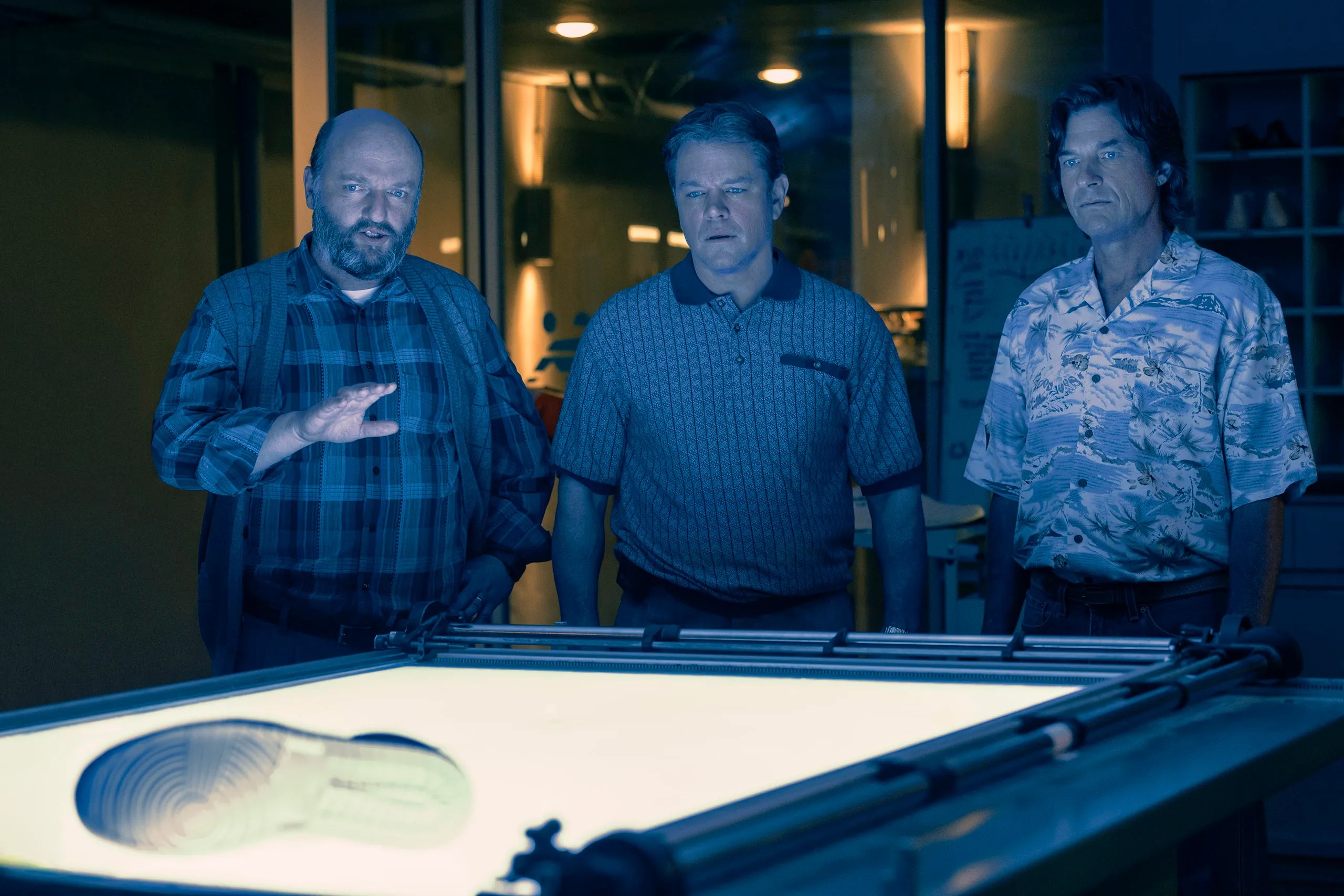
When it’s hard to imagine humble beginnings for corporate giants, origin stories reframe, refocus and provide new context. Microsoft and Apple started out of garages, right? Nike, the now-mega sports apparel conglomerate, took flight when founder and longtime chief executive Phil Knight started selling shoes out of the trunk of his car in the ’60s. The company became a leader in the track and running market in the ’70s, but as far as basketball went, it was a JV wannabe behind Converse and Adidas. The push to garner a greater market share is what “Air” is all about, and we all know who his royal Airiness is and how the story goes – but that union wasn’t as easy or even as probable as many might imagine, and that is where this film, directed by Ben Affleck and sharply written by Alex Convery, finds its sweet spot.
The lens falls on portly basketball scout Sonny Vaccaro (Matt Damon), who’s given a quarter-million dollars by Knight (played with shaggy-dog gusto by Affleck) to sign an NBA draftee and help the company move up in market share. The problem is that Converse and Adidas have millions at their disposal; Vaccaro and crew (a chatty, avuncular Chris Tucker and Jason Bateman, stealing every scene as a smug marketing maven) have to look past the cream of the crop – Charles Barkley, No. 1 pick Hakeem Olajuwon, Sam Bowie and Michael Jordon – to the next tier of John Stockton, Jeff Turner and Melvin Turpin (who, you might ask?) for a realistic signee that may, against steep odds, become a marquee player in the NBA and give Nike a brand blastoff. Instead of spreading the money around on a few late, first-round long shots, Vaccaro fixates on Jordan, proclaiming him a once-in-a-generation superstar. History shows he wasn’t wrong, but few at the time, including Knight and the Nike board, were willing to take a chance. Vaccaro persists, though, coloring outside the lines by bypassing Jordan’s agent (played with hilarious, foulmouthed vitriol by Chris Messina in a breakout role) and driving to North Carolina to connect with Jordan’s parents, James (a gentlemanly Julius Tennon) and Deloris (Oscar winner Viola Davis, bringing her A-game to the pivotal role).
Like the journalistic investigation that sussed out the evils of Harvey Weinstein in “She Said” (2022) – granted, the contexts are worlds apart – you never really see or hear the object of the film’s focus, though Jordan haunts nearly every frame. It’s good to see Damon and Affleck together again. They played together most recently in Ridley Scott’s “The Last Duel” (2021) but most Boston-famously in “Good Will Hunting” (1997); this is the first time one Cambridge Rindge and Latin buddy gets to direct the other, and their casual familiarity deepens the scenes between old colleagues Vaccaro and Knight. Speaking of Rindge, there are some cheeky references to Mike Jarvis and that phenom from Jamaica, Patrick Ewing. Rounding out the ingeniously cast ensemble is Matthew Maher as Peter Moore (who passed away last year), the designer who came up with the iconic logo of Jordan hanging in the air, and Marlon Wayans as George Raveling, a college basketball coach and sounding board for Vaccaro.
(from left, back to camera) Eddie (Alden Ehrenreich) and Stache (Aaron Holliday) in Cocaine Bear, directed by Elizabeth Banks.
When in college during the big ’80s we’d cross the Florida peninsula at night to partake in spring break mayhem in Fort Lauderdale and Miami – gonzo road trips for a wee bit of fun. To do so we took a route through the Everglades known as Alligator Alley and were warned by locals never to stop, or at least not to dally. Why? Alligators for sure, but more so, drug dealers and other illicit types collecting bales of marijuana and duffel bags full of cocaine kicked out of prop planes to dealers camped out to retrieve them and sell to those spring breakers. Tony Montana it wasn’t, and often, as I was told, dumps were lost or intercepted by other shady sorts or the ever-prowling authorities. About the only things I ever ran into along Alligator Alley were swarms of mosquitoes and some really godawful, low-grade tequila one of my college mates insisted on drinking as pregame petrol for all in the van not taking wheel duty.
That said, such a real-life drug drop from above is the loose inspiration for “Cocaine Bear,” a devilish little diamond in the rough with cult aspirations that isn’t far off in tenor and production values from the 1990 surprise “Tremors,” starring Kevin Bacon. The drug drop is supposed to take place over Tennessee but goes awry when the plane malfunctions and starts to go down. Most of the coke lands in the Chattahoochee National Forest in Georgia, where a few kilos are snorted up by a 500-pound mama bear (we learn that the pronouns are “she/her” when she passes out on a random drug dealer who can then identify her because – well, now you get a feel for the film’s cheeky, campy edge). The bear wants more, and will kill for it, be you a wayward hiker with a little accidental dust on your leg, a drug dealer seeking to retrieve the stash because your Colombian supplier will come for you, a law enforcer trying to intercept the former or an amorous ranger with designs on the park’s goofball naturalist. There’s a potpourri of personalities and agendas swirling around this very dangerous, coked-up beast.
Directed by Pittsfield native and more often actor Elizabeth Banks (“The Hunger Games” and “Pitch Perfect” series) making a nice rebound from her 2019 failed reboot of “Charlie’s Angels,”“Cocaine Bear” packs a lot into 90-ish minutes and hits some hilarious highs. It’s also pretty gruesome and the CGI bear is, to be kind, B-rate, which only adds to the winning camp factor. It’s a go-for-broke concept played to the wire by Banks and bolstered by a cast of deft character actors and stars outside their normal wheelhouse: Keri Russell as the mom trying to find her wayward daughter (Brooklynn Prince), who’s lost in the woods; “Modern Family” guy Jesse Tyler Ferguson; Ice Cube’s kid O’Shea Jackson Jr., so good in “Long Shot” (2019) and pretty spot on here as drug dealer’s gopher; the ever-affable Isiah Whitlock Jr. as the maverick cop out of his jurisdiction and having to deal with a pampered lap dog; Margo Martindale as the park ranger quick on the trigger; Alden Ehrenreich (“Solo”) as the dealer’s son, in tow to help retrieve the coke; Russell’s “Americans” costar Matthew Rhys in a cameo as the coke-snorting aviator who kicks the whole mess off; and the late Ray Liotta as the head heavy not looking forward to answering to his Escobar sources.
How much of it is true? Very little that we know of. In 1985 a load of coke did get lost in Tennessee, never to be recovered, and a 175-pound black bear was found dead of an overdose across the border in Georgia. That’s it – the rest is a gift from Banks and writer Jimmy Warden during the time of year studios dump their failed projects in theaters and on streaming platforms as the movie industry gears up for the Oscars and big-screen spring seasons. Due to an illness I had to scrap my plans to attend a press screening in Boston and instead caught the early Thursday show at the Somerville Theater’s large auditorium, which was a true, relaxing pleasure – navigating evening press screenings, to which media outlets and PR firms often give away promo passes to the public, can be teeming gantlets (a bear, dare I say?). I was in no mood and double happy to stay local.
Gay guys rule the apocalypse. With “Knock at the Cabin,” the latest from M. Night Shyamalan, and the “Long, Long Time” chapter of the zombie plague video-game-turned-HBO series “The Last of Us,” this fact can be now be officially confirmed. It’s a good thing too, because they’re the most interesting, fully formed players on screen – the only reason the series maintains an edge and that “Cabin” is more than just an outré M. Night “Twilight Zone”-inspired curio.
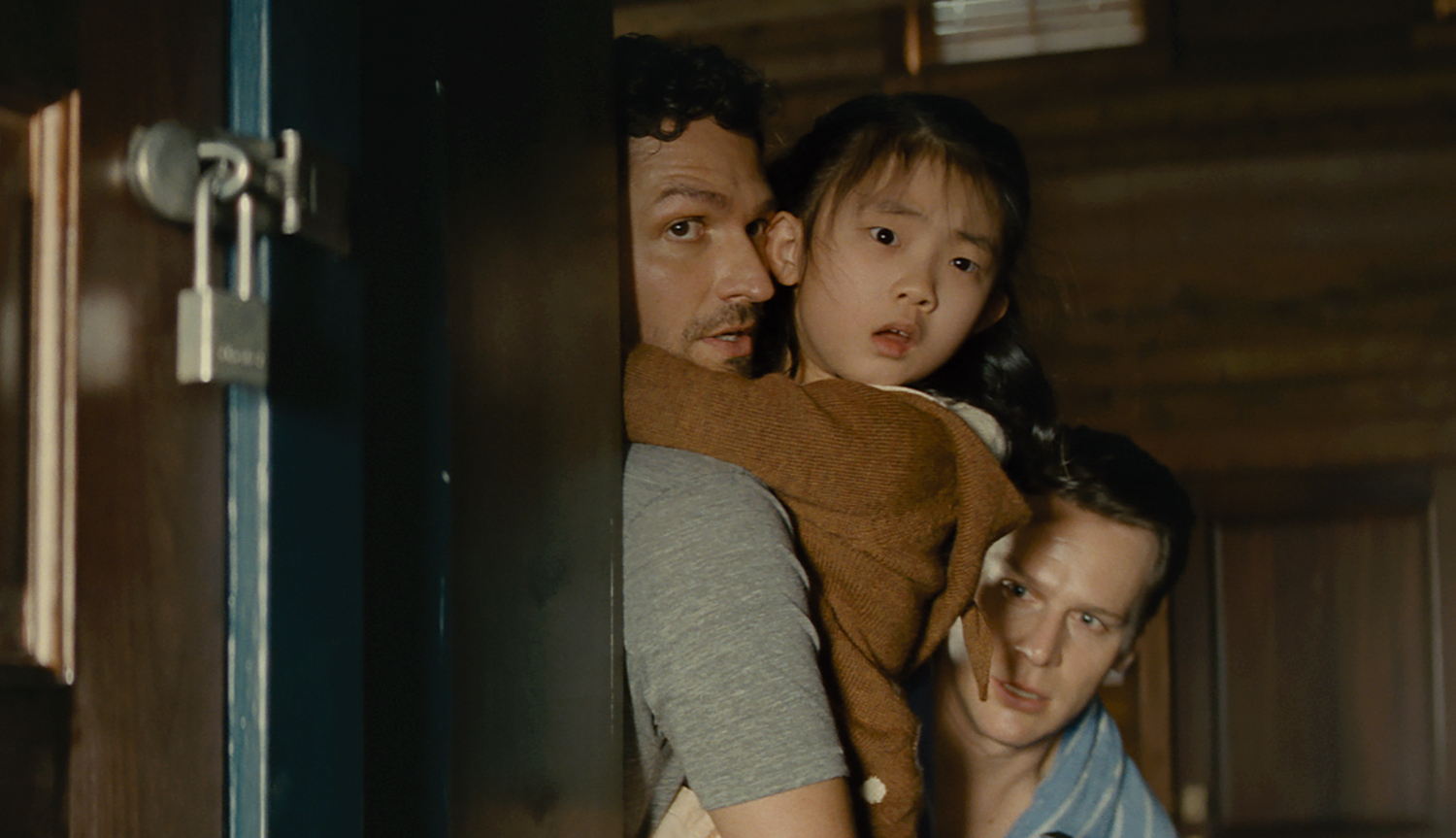
Since breaking in with “The Sixth Sense” in 1999, Shyamalan has largely made his buck with misdirection plot pivots that sometimes deliver (“Unbreakable” and “The Village”) and other times fall down woefully (“The Happening” and “Lady in the Water”). We won’t talk about some very bad departures from the format – okay, we will: the inert “After Earth” (2013) and inept “The Last Airbender” (2010) – but Shyamalan got back on track with the creepy grandparent thriller “The Visit” (2015) and the concluding chapters to his “Unbreakable” trilogy, “Split” (2016, in which James McAvoy is so good) and “Glass” (2019).“Old,” the 2021 film about a resort island where the aging process goes haywire, had promise and an excellent ensemble (Alex Wolff, Vicky Krieps and Gael García Bernal), but wasn’t quite top-shelf Shyamalan. “Knock at the Cabin” is a bit more the same. It starts with a couple (Jonathan Groff and Ben Aldridge) and their adopted daughter, Wen (Kristen Cui), glamping at the woodsy structure of the title. Musty odors and squeaky screen doors this is not, with a spacious main room replete with a central fireplace, flat-screen TVs and columns of stately bookshelves nearly worthy of comparison to the square-jawed angularity of the dads, Eric (Groff, from the excellent “Mindhunter” series) and the rugged Andrew (Aldridge, of “Fleabag”).
The vacation gets interrupted when Dave Bautista‘s hulking Leonard encounters Wen out catching grasshoppers and demands to speak to her fathers. Leonard’s got three friends, Redmond (Rupert Grint, very far from his ”Harry Potter” days), Sabrina (Nikki Amuka-Bird, “Persuasion”) and Adriane (Abby Quinn, “Torn Hearts”), a teacher, construction worker, nurse and a cook who come with garish homemade weapons. They share a vision of the world ending, and after tying up the dads home-invasion style (think “The Strangers” or “Funny Games”) give the dads and Wen an ultimatum: Choose one of the three to sacrifice to save the world. Are these four ostensible horsemen of the apocalypse crazy? And if not, why is god, Satan or an alien power giving us the mandate now?
Reports on those televisions show tsunamis consuming beaches, planes falling from the sky and worse. Time is ticking down and a decision must be made, but there are rules: The four can’t harm the three – and don’t want to – but can restrain them. And one of the four must pay in flesh at the top of each hour if a decision isn’t made, enforced by the others with those ghoulish weapons. The film, based on Boston-area author and teacher Paul Tremblay‘s 2018 novel “The Cabin at the End of the World,” becomes something of a stage play rooted in one locale, similar to Daren Aronofsky’s “The Whale,” and quite cyclical – nearly running out of gas before the final frame. What keeps it going are the performances by Groff, Aldrich and the scene-grabbing Cui, the humanity of their tribe delineated by touching flashbacks of how they came to be, cleft lip and all, the slow-emerging profiles of the four at the door and some awkward yet interesting veers into homophobia as a possible agent in the mix.
Religious overtones and bigger themes feel tacked on and the final resolution feels like a plop in a lake, but hey, the dads and Wen are a fun lot to spend time with, be it woodsy recreation, cataloging nature or battling the evils of the universe to absolve all of humankind.
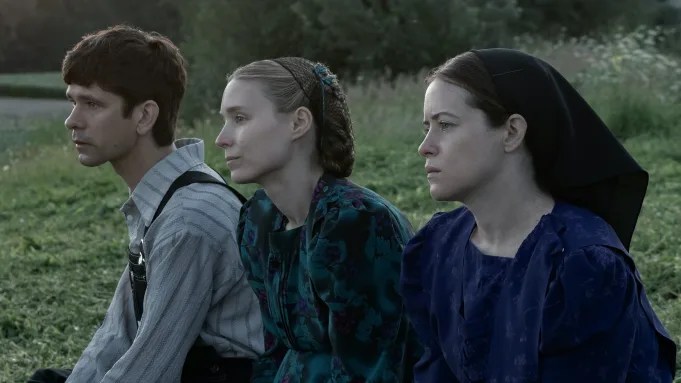
Sarah Polley’s ambitious adaptation of Miriam Toews’ novel of the same title is a poignant contemplation about women, their systemic subjugation and ultimately the union of sisterhood that enables them to stand and fight male oppression, which in this case packs a heinous, criminal twist. Toews’ “Women Talking” was inspired by real events in a remote Mennonite colony in Bolivia where several women and underage girls were given animal tranquilizers, raped repeatedly while unconscious and told that their bruises and subsequent pregnancies were the work of ghosts and devils. It’s a dark tale that, in the wake of Harvey Weinstein and #MeToo, feels necessary and on point.
In construct, the film feels a bit like a stage play; much of the action takes place in the loft of a barn where three matriarchs (played by Sheila McCarthy, Judith Ivey and the great Frances McDormand) and their female kin debate what to do in response to the spate of sexual atrocities. There’s almost no men onscreen, though their presence remains ever present through the lingering effects of their misdeeds. The one XY allowed up in the loft is a sheepish lad by the name of August (Ben Whishaw), tasked with taking notes of what the women say and to help record the events that led to this moment. Why he’s invited is an interesting twist – part of the sequestered community’s oppressive tradition is that only boys learn to read and write. The revelation’s not as vile or personal as sexual assault, but illuminates a community where a segment can be used and abused with seeming impunity. The scene of a teenage girl waking up in the aftermath of one such unlawful trespass is heartbreaking. When the women catch onto the methodic violations (they’re called “attacks”) and capture a perpetrator in the act, he gives up his fellow assailants and several are imprisoned, with the rest in town rallying around and trying to post bail.
The film has a veneer of surreality that works to its benefit. Polley never tells us explicitly we’re embedded in a Mennonite community, and for a while you feel you could be on an Amish farm in rural Pennsylvania, or even the Calvinist outpost in Robert Eggers’ “The Witch” (2015), but then a pickup truck blasting “Daydream Believer” rolls down a dusty road and there’s a reality-check moment that feels right out of M. Night Shyamalan’s “The Village” (2004) – it comes early, so don’t have at me for a spoiler.
Over its run, “Women Talking” becomes a bit too cyclical and verbose. The main debate becomes if the women should leave while the men are away, stay and fight or forgive and move on. It’s provocative and engaging at first, but begins to ebb into something existential that blunts the severity of the situation. Still, Polley has an ace cast who are all-in on concept and mission, especially Jessie Buckley, who last year starred in another thought piece about the harmful, entitled misdeeds of the opposite sex in Alex Garland’s “Men.” Here she plays one of the matriarch’s daughters dispensed into a marriage with a known abusive husband – and encouraged by the mother to stay. Mara Rooney (“The Girl with the Dragon Tattoo,” “The Social Network”) is one of the young women violated and impregnated in her sleep.
One of the big quandaries that arises in the ongoing debate is what to do about the boys? There’s some consensus that 15 is the right cutoff between offender and innocent who need their mother. There’s also a school of thought that the boys, and even the men, are victims of tradition, lore and a religion that enables it all. Going beyond #MeToo, “Women Talking” brings to the fore religious regimes not unlike the conservative theocracy in Iran, which recently has come under criticism from brave naysayers within. Polley’s film isn’t a clean shot, but it hits a nerve that needs hitting again and again.
In 2022 we finally got back to the movies the way we knew them. There were blockbusters again, as evidenced by “Top Gun: Maverick” and “Avatar: The Way of Water” ringing it up the box office, but the real eye grabber was the strength of the Non-English language films, which could mean another “Parasite” year at the Oscar. The top 10 list below features Non-English language films with strong Korean and Iranian leanings. Without further ado…
1. Return to Seoul
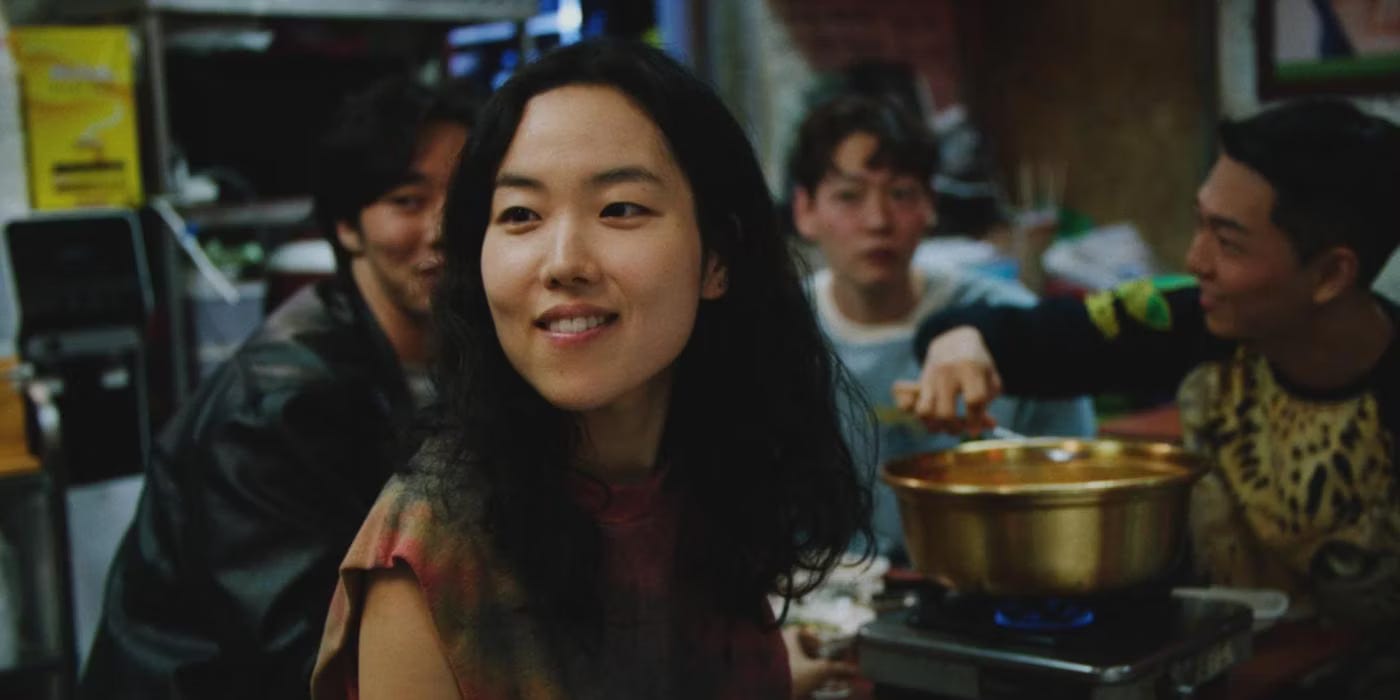
Cultural identity takes center stage in Davy Chou’s emotional sojourn about a 25 year-old Korean woman (Ji-Min Park), adopted by French parents as a young girl, who returns to Korea to meet her biological parents. The piquant awkwardness of being from somewhere else while appearing to be “from here” ebbs to a degree as Park’s Freddie shows us what she’s all about, brash and cavalier, she takes lovers and discards them with aloof nonchalance. It’s a compelling character study that has one of the best “dancing by yourself” scenes in film. The true amazement here is that Park, whose performance is deep, nuanced and felt, is a first time actor. Chou takes the simple concept and deftly curratses the right moments to move us through time and Freddie’s emotional odyssey.
2. Tár
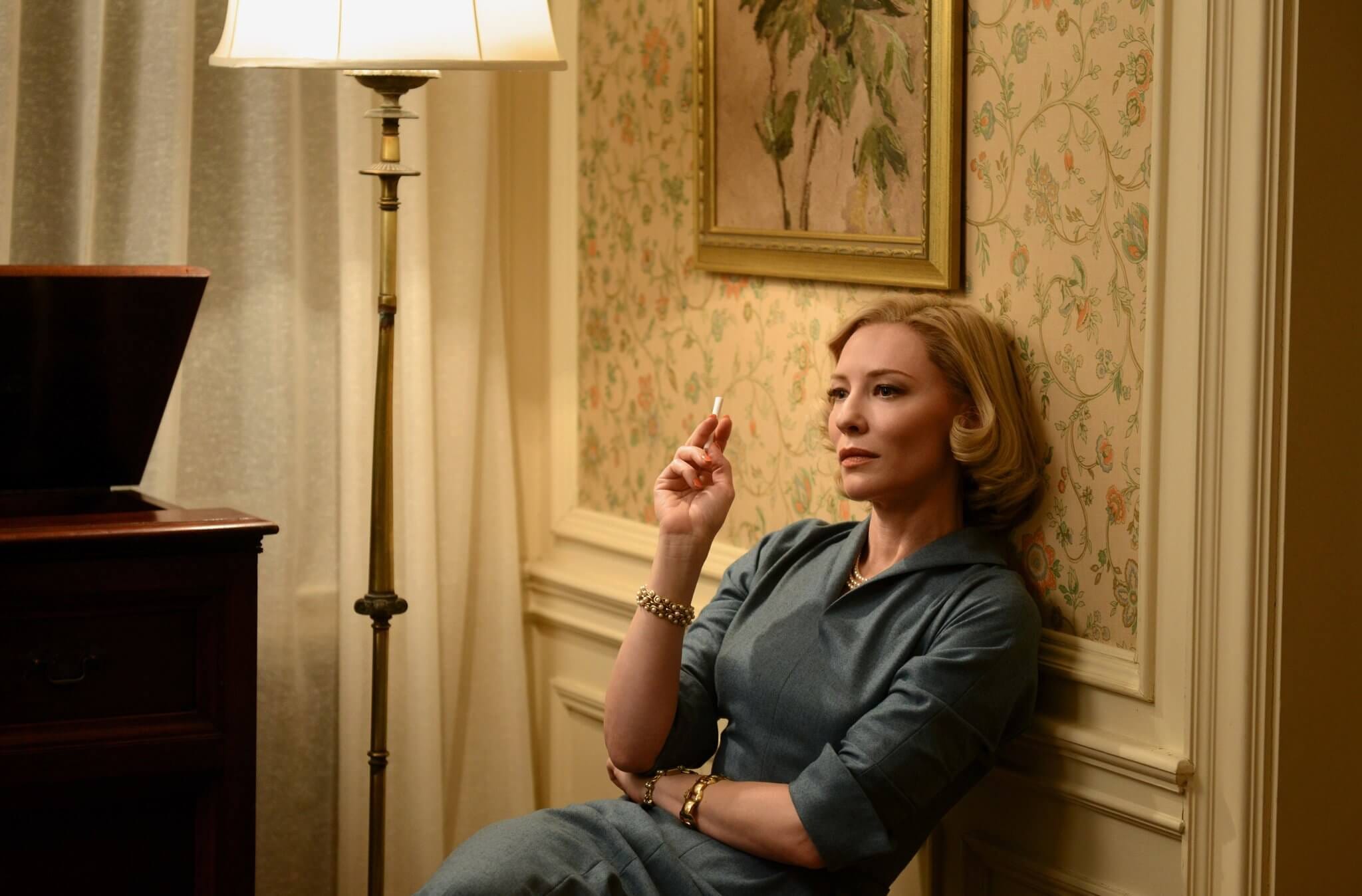
Todd Field’s first film in 15 years following “Little Children” likely could not have come into existence without its star, Cate Blanchett, who delivers a turn so bravura, lived-in and essential that it may just be the most defining performance of a highly accomplished career that already has notched two Oscars (“Blue Jasmine” and “The Aviator”). Her Lydia Tár, the commanding maestro of the Berlin Philharmonic, is a barrier breaker and even more so, a breaker of souls. Lydia has a wife and daughter – she’s a self labeled “U-Haul lesbian” – and also manipulative, often cruel, if not abusive, and an opportunist fostering and engaging in several inappropriate relations with young aspiring female musicians and conductors. Field’s provocative flip is of a woman behaving as entitled and above the law as many a miscreant called out and cut down via the #MeToo movement. The astute use of sound, both atmospheric and Lydia’s keen perception of it, gives the film an aurally immersive texture that deepens the moral contemplation. Let’s hope it’s not another 15 year for Field’s next potential magnum opus.
3. Decision to Leave
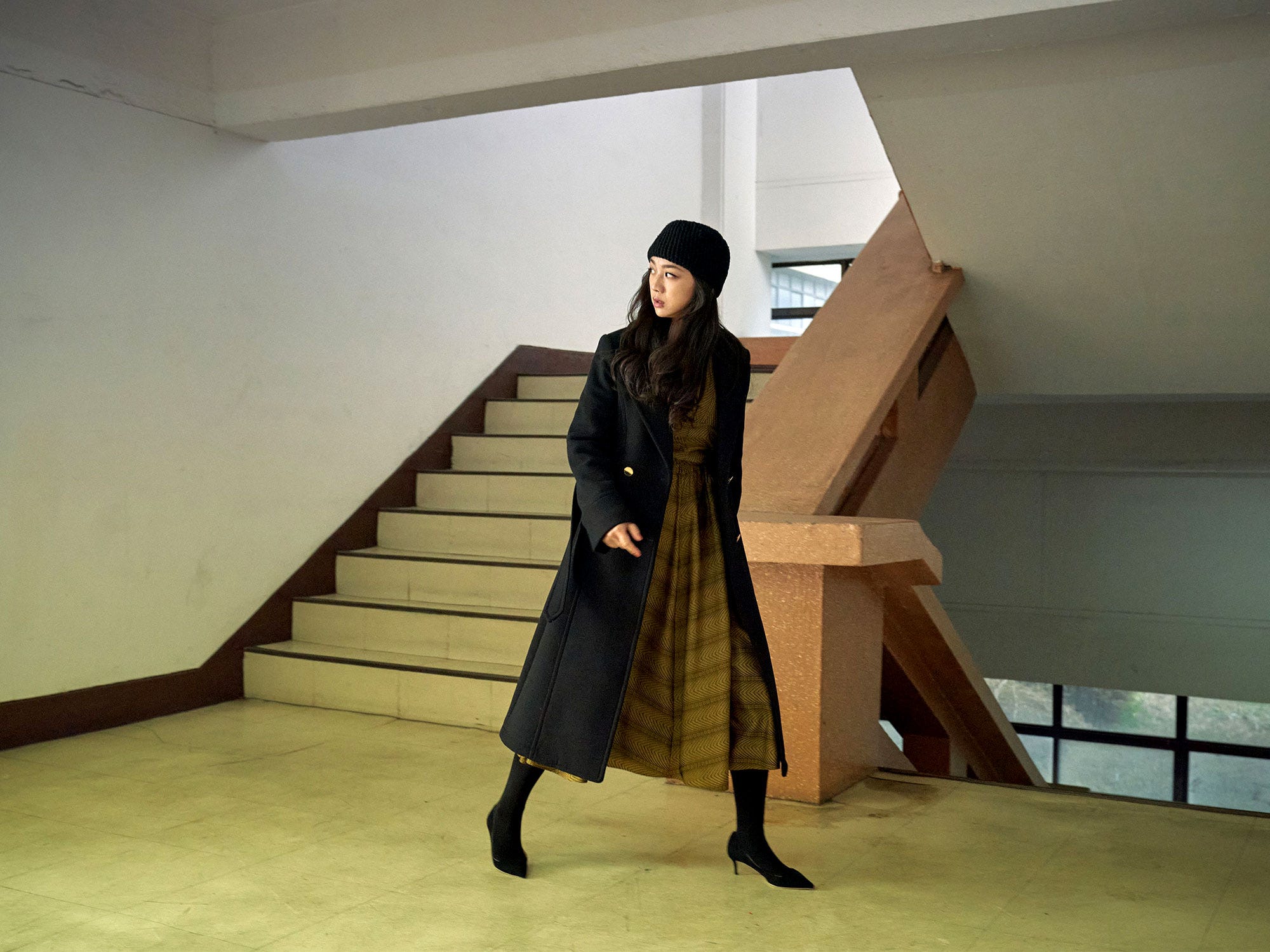
The latest from Korean director Park Chan-wook (“Oldboy,” “The Handmaiden”) is a dark crime drama in which the lives of a police detective and murder suspect intersect and fold in on each other. It’s a psychological thriller that has Hae-jun (Park Hae-il) looking into the curious death of a skilled rock climber who fell despite safety measures. Gathering the mountainside evidence makes for an interesting process, with a second detective strapped to Hae-jun’s back as they rope walk up the sheer surface. Suspicion falls on the wife, Seo-rae (Tang Wei), a Chinese immigrant who’s not quite fluent in Korean – did I mention that her departed husband was an immigration official? Hae-jun is a hands-on profiler sort and in scenes when observing Seo-rae, he’s suddenly in the room, a ghost to her, observing her. It’s a neat device Park throws at us that blurs the lines between reality and projection. It’s also a reflection of Hae-jun’s detached demeanor; he’s an insomniac, and has a strangely dysfunctional sex life with his wife. Natch, Hae-jun and Seo-rae have an attraction to each other that hangs dank and ripe in every scene they’re in. In the second part of the hypnotic slow burn, both have relocated to the same new city where Seo-rae is married to a fund manager and works as a caregiver to the old. It’s here that the film moves into darker territory, as Seo-rae is visited by a disgruntled client of her husband who slaps her around (the character is actually named Slappy) and there’s another death that cannot be misconstrued an accident or suicide. Of course Hae-jun is the one assigned the case. How Park lays down the cards does have reveals, but it’s mostly a deeply internal reckoning by Hae-jun. The film feels a bit like a true-crime noir and would make a perfect double bill with countryman Bong Joon Ho’s “Memories of Murder” (2003), about Korea’s first true documented serial killer.
4. EO
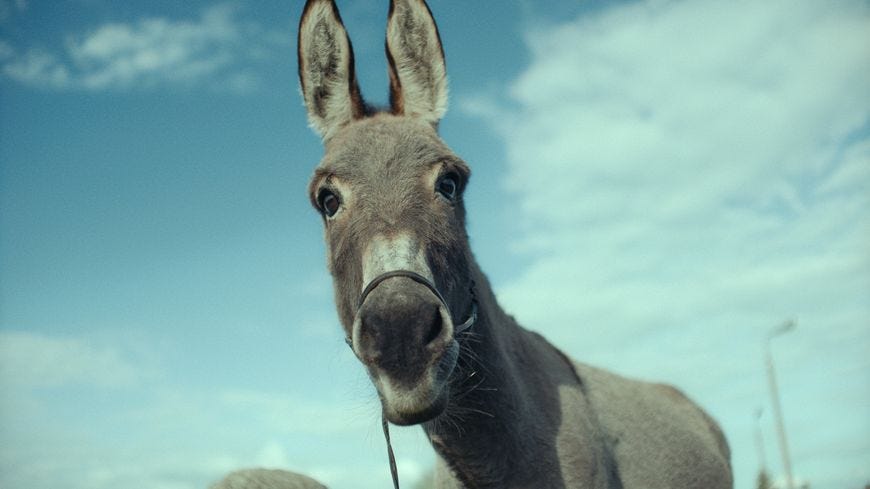
In spirit, an updating of the Robert Bresson’s 1966 classic “Au hasard Balthazar” about a mistreated donkey that ultimately becomes a provocative Christ-like contemplation. The official Polish entry for the Academy’s Best International Feature, says much about humanity as the people who meet and interact with the wayward ass meandering across the country’s photogenic landscape treat it with wide ranging regard—contempt and compassion among them. Jerzy Skolimowski, best know for his 1982 film “Moonlighting” about a Pole laborer in London (Jeremy Irons) had made a tight focused narrative that’s big in scope and rich in visuals. To boot it has the great French actress Isabelle Huppert in a small part as a countess.
5. Hit the Road
Iranian filmmaker Panah Panahi’s debut is right in line with the films of his politically imprisoned father, Jafar, whose dissident-leaning works “The Circle” (2000), “Offside” (2006) and “The White Balloon” (1995), have gotten him into trouble with the theocratic government. Eerily, “Road” tells of the story of a family in an SUV on a sojourn across the baren Iranian desert, up against time and clearly looking to escape a situation. Just what that situation is and what’s at stake takes a while to come into focus and done so with such careful, provocative meting by the younger Panahi.
6. Everything Everywhere All at Once
The Daniels who piqued audiences with their “WTF did I just see” “Swiss Army Man” (2016) with Harry Potter’s Daniel Radcliffe as a corpse whose unbridled flatulance can transform his stiff form into a jet ski of sorts or need to know where you’re going, his boner is a perfect north pointing compass. Here the Daniels take the multiverse concept and cheekily blend it with a first gen immigrant experience. The result is astounding, gonzo spectacle reined in by the film’s excellent cast with Michelle Yeoh (“Crouching Tiger, Hidden Dragon”) as Chinese transplant trying to run a laundromat while under investigation by a relentless IRS auditor (Jamie Lee Curtis) and estranged from her husband (Ke Huy Quan) and heady daughter (Stephanie Hsu). The jumps through the rabbit hole has Yeoh’s mom in turns as a glamorous martial arts movie star (now that’s meta), a lesbian lover to Curtis’s agent and an addled human whose fingers are hot dogs.
7. Holy Spider
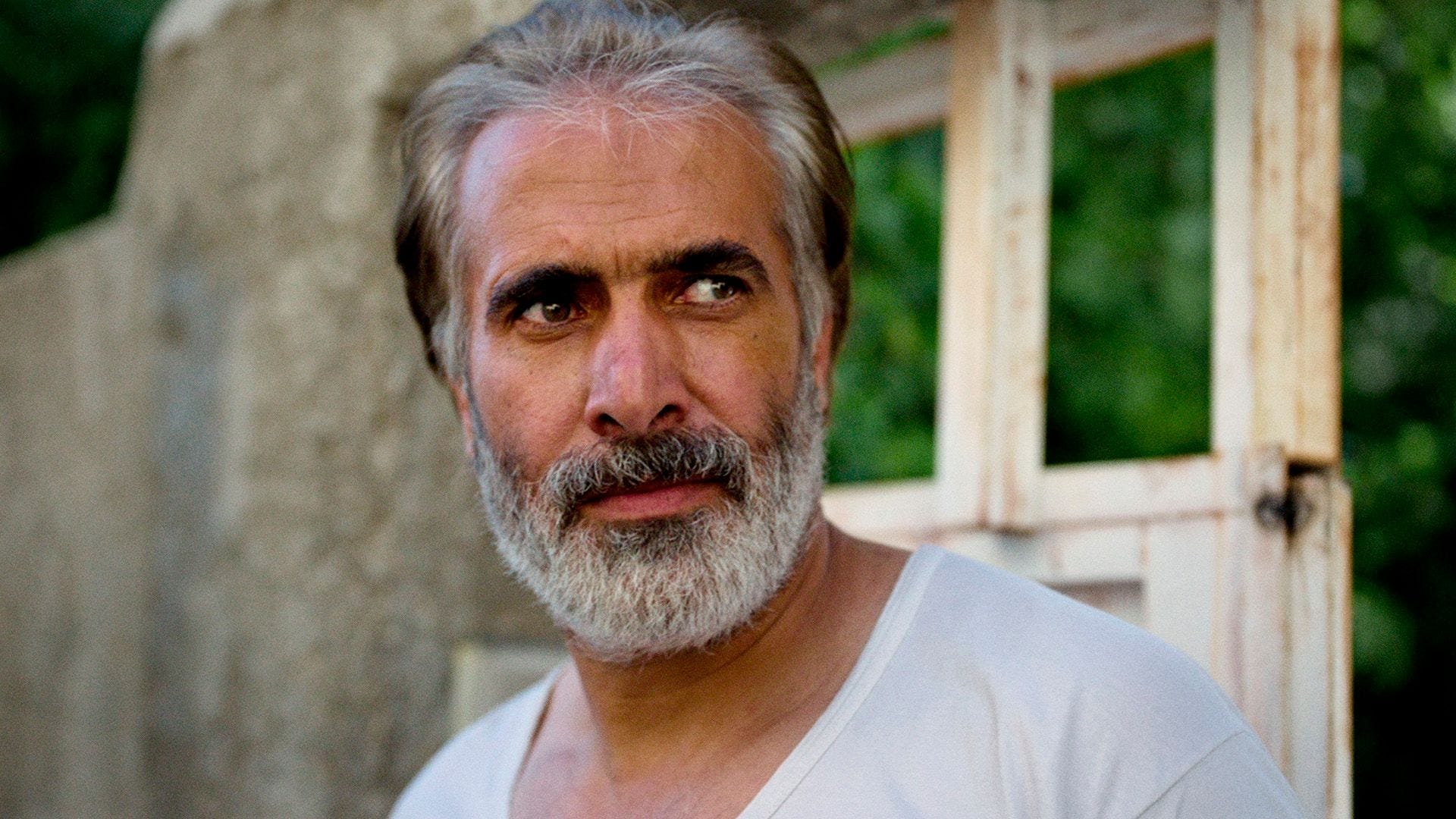
Ali Abbasi’s riveting, true crime serial killer thriller recounts a crime spree in Iran that yielded 16 victims in the early 2000s. A Saeed Hanaei, a construction worker who feels the need to purge the Shiite hub of Mashhad, Iran of prostitutes, Mehdi Bajestani delivers a performance that mesmerizes as much as it terrifies and never flinches. His preferred mode of performing those cleansing acts is strangulation, and the violence, hard to take (big viewer trigger warning), is rendered with prolonged and disturbing intimacy—think Hitchcock’s “Frenzy” (1972). After such deeds Saeed simply returns home to his family as if weary from a day’s work. When the film shifts to the courtroom, the grabber is the throng of people in the street supporting Saeed as if a hero come home from the war.
8. Emily the Criminal
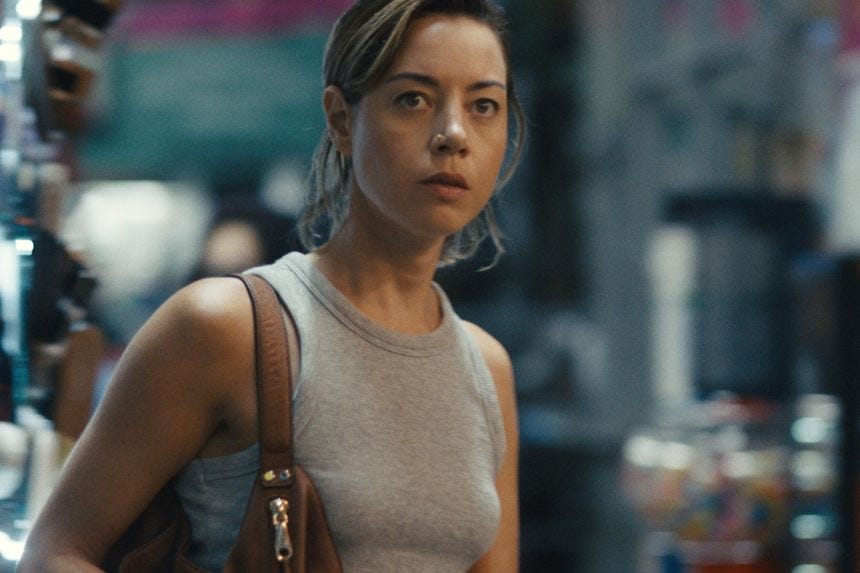
Aubrey Plaza, also currently starring in season two of “The White Lotus,” is all-in as the titular Emily, an art school dropout with a criminal record, trying to get by via gig-work while drowning under a heap of student loan debt. What’s a tough Jersey girl lost in LA to do when the closest she can get to her dream job is an internship that doesn’t pay? The answer is credit card scams with some shady sorts; dreamers with their backs also up against the wall. Part of the nuanced character study’s appeal is the complexity of Emily, who refuses to wear the label of victim no matter how frustrated she becomes, and when pushed, she’s a can do, take no shit operator. The film’s a first time effort by John Patton Ford, a name to watch for down the pike.
9. Triangle of Sadness
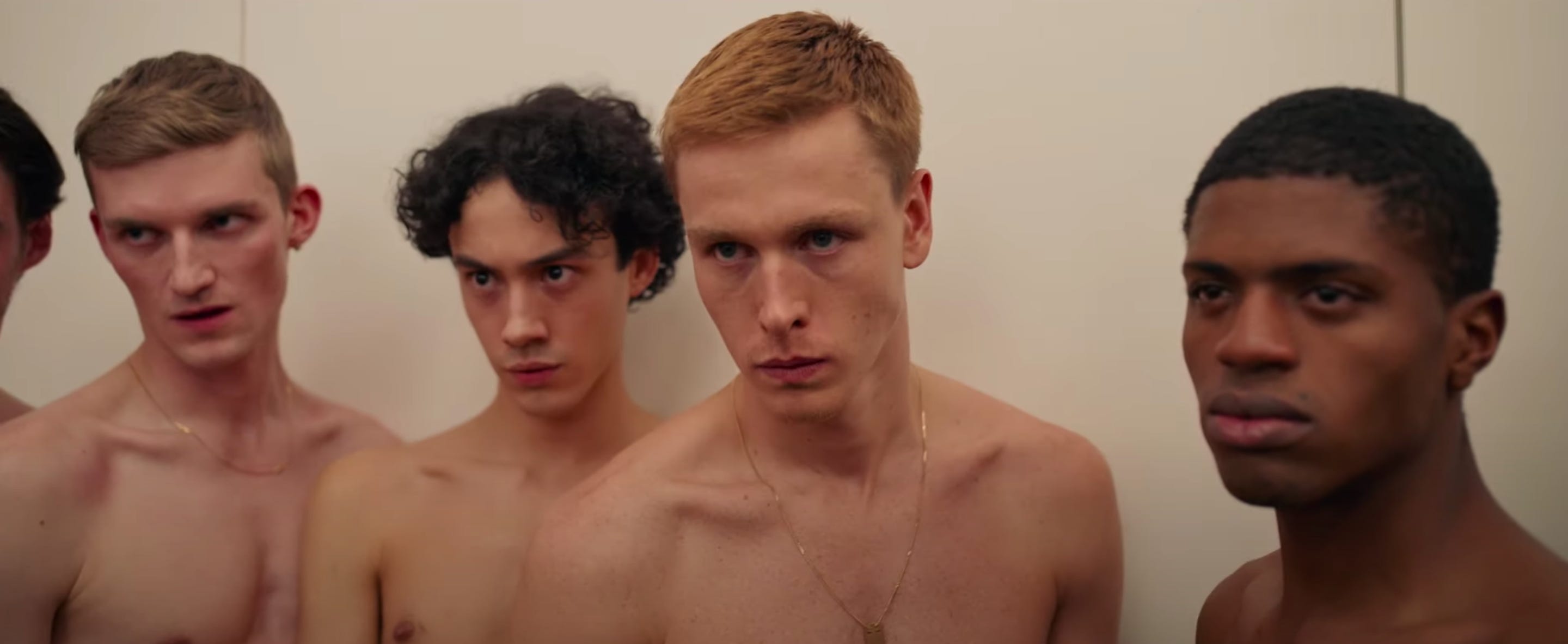
Ruben Östlund’s Palme d’Or winner is a strange sojourn that doesn’t quite click with the intense, quirky fury of his “Force Majeure” (2014) or “The Square” (2017). The film’s told in three chapters, beginning with a bunch of young, shirtless male models aping for the lens in camaraderie but clear competition. We home in on one hunk named Carl (Harris Dickinson, “Where the Crawdads Sing”) whose standoffish girlfriend, Yaya (Charlbi Dean, a young actor-model who died after filming) is a trending influencer who makes more money than he does and reminds him of it often. The couple gets to go on the luxury cruise that makes up Chapter 2, with Woody Harrelson in a boozy cameo as the Marxist captain (though it’s Vicki Berlin, sporting a blonde pixie bob, who runs away with the film as the head steward). Chapter 3 takes us into “Lord of the Flies” territory with several of the boat’s passengers and crew marooned on an island with head toilet cleaner Abigail (Dolly De Leon) holding the conch as the only one who knows how to forage and make fire. The reversal of power structures and gender roles, and the grim extremes to which folks go, take the dark comedy into provocative and unsettling places, though it hits some wildly inane snags along the way, including a dinner party right out of Monty Python’s “The Meaning of Life” (1983). The title, as we’re told by a talent agent, refers to the area between the nose and the forehead that expresses the title emotion.
10. Athena
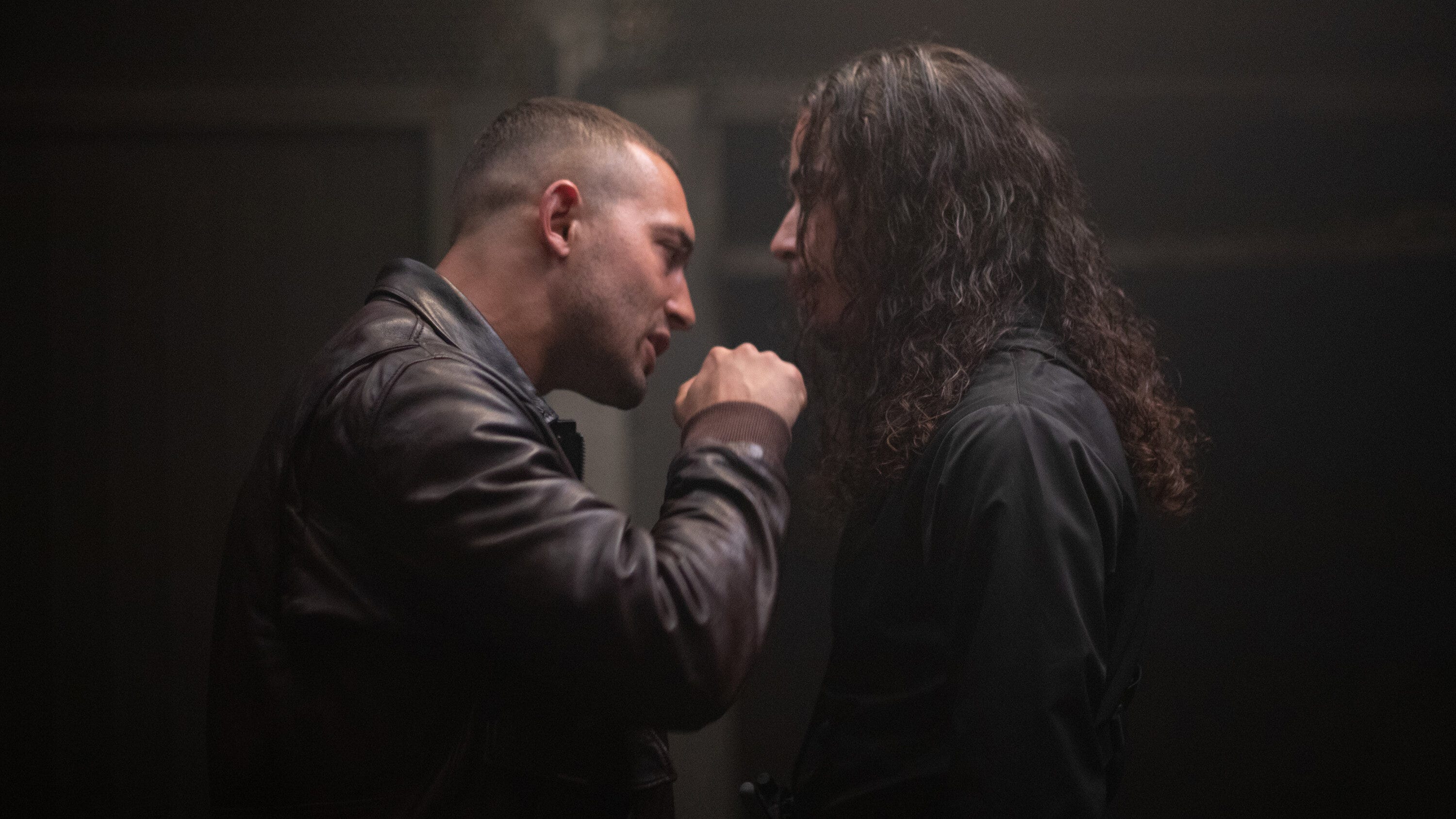
Romain Gavras’ riotous ghetto thriller is something of a bristling bull both for its acrid texture and bravura filmmaking. Jaw-dropping in composition, the film contains a series of unbelievable long shots (even by “La La Land” standards) and essentially amounts to 90 minutes of social unrest inside a French housing development known as Athena. The name channels the god of war, and to the housing project war comes. The cause for so much violence is the death of an Algerian boy, purportedly by police. We begin with one of the boy’s brothers Abdel (Dali Benssalah), a decorated soldier just back from a foreign mission, listening to a officials’ press conference; the camera pivots and moves into the crowd, where another brother, Karim (charismatic, impressive newcomer Sami Slimane), hurls a Molotov cocktail at the podium, igniting a coordinated flash raid of the police station that feels like a scene out of John Carpenter’s “Assault on Precinct 13” (1976). Karim and crew abscond with weapons and take a hostage back to Athena, where a prolonged siege ensues, ebbing and erupting with the balance and outcomes shaped by the actions of Abdel, Karim and a third, older brother Moktar (Ouassini Embarek), the projects’ resident drug dealer, who all have very different agendas. The dynamics between the brothers and the bigger issues and prejudices amid raging war takes on the scope of Shakespearian tragedy. The apple doesn’t fall far from the tree: Gavras, who cut his teeth shooting music videos (M.I.A.’s “Bad Girls”), is the son of filmmaker Costa-Gavras, who made a whole career out of political unrest with “State of Siege” (1972), “Z” (1969) and “Missing” (1982) among the many.
Close and in the hunt: S.S. Rajamouli’s bold, three-hour-plus anti-colonial epic “RRR,” Robert Egger’s primal revenge quest “The Northman,” “Top Gun: Maverick,” the gorgeously shot documentary “All that Breathes” about two brothers trying to save small raptors in India, the Harvey Weinstein paper chase “She Said,” Spielberg’s nostalgic nod to his youth, “The Fabelmanns,” the subtly lessoning “Turning Red,” critic darling “Banshees of of Inisherin”and Charlotte Wells’ arresting father and daughter getaway, “Aftersun.”