Reflections by a food and film critic about the evocative biopic “Tony” and how it changes the way we see the worl
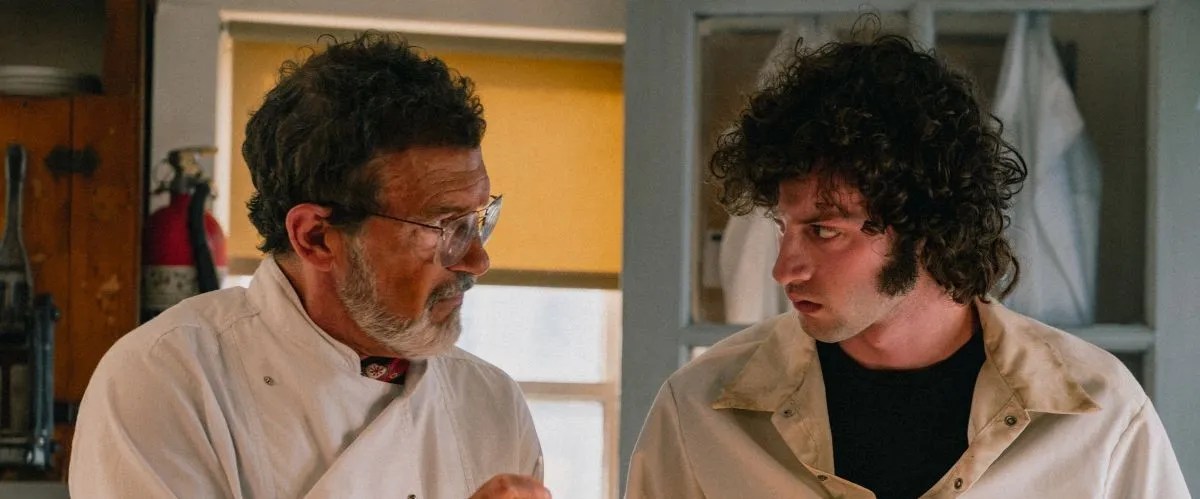
“Tony,” the plucky biopic that follows a young Anthony Bourdain during the summer he fell in love with restaurant life in Provincetown in the mid-1970s, not only entertained me with its deep character dive into a mercurial soul who would become a food-culture icon but also took me back. During that same era, my family vacationed amid the dunes of Fisher Beach in nearby Truro, and I have fond memories of licking creamy soft-serve twists along Commercial Street, and perusing the endless bins of saltwater taffy from Cabot’s Candy — still there! But the best were the lobster boils my mother served on the sand-swept deck, setting out clear Pyrex bowls full of rich, drawn butter for dipping. We ate the clams and claw first and saved the tail for the savory end.
Here at Cambridge Day I write about food and film. Seeing “Tony” made me wonder just why stories about food resonate so powerfully on the screen (and on the page) when you don’t get to taste or smell what’s being eaten? Bourdain spent most of his career answering that question without ever really asking it.

Film has taught me to pay attention to framing, narrative arc, rhythm and pace, as well as the technical craft that makes the final result a transportive experience. Writing about food demands the same close attention, but food is even more physical, immediate, and universal. When your plate arrives, you smell the rich, browned butter, hear the crack of a lobster shell, and feel the warmth of a toasted brioche bun between your fingers before taste brings it all together. Food is as sensual as it is essential. As a food writer, you have to carry that experience to someone who wasn’t there and do so on a visceral level — the burst of warm yolk in your mouth, the crisp skin of a wild-caught Arctic char, dry-aged and flash-seared, or a maple-miso-butter burger stacked with bread-and-butter pickles and a peppery slab of house-smoked bacon. The right words should make the reader taste, wonder, and want.
But Bourdain did something larger. After graduating from the Culinary Institute of America in 1978, he spent more than two decades working his way through New York kitchens before publishing “Kitchen Confidential: Adventures in the Culinary Underbelly.” His earlier New Yorker essay, “Don’t Eat Before Reading This,” gave readers a bracing peek behind the swinging doors at the rear of the restaurant and introduced the voice that would make him famous and deliver us the inquisitive rogue of the pantry — acerbic, restless, curious, and suspicious of refinement for refinement’s sake.

On his hit series, “Parts Unknown,” food became his passport into conversations about culture, politics, poverty, history, and belonging, where he might be served braised moose, a pig-ear sandwich, or a chicken cooked in a pig’s bladder. But ultimately, he was less interested in what went into his mouth than in how it got there — why it was prepared that way and, most importantly, who had placed it before him.
The bowl, plate, or banana leaf was an invitation. Food got him through the door and gave him a reason to sit down.
That is food’s great narrative trick. Everyone eats, but what we eat — how we cook it, serve it, share it, and remember it — tells the story of who we are. A recipe can carry a family across generations or an immigrant across an ocean. A meal can reveal poverty or abundance, religion or rebellion, isolation or community. People who cannot exchange a sentence can still share a table.
Food also recognizes no hierarchy. Elation can come from a $6 breakfast sandwich as readily as from a $300 omakase excursion. Fine, casual, fast — it doesn’t matter. Good is good. A dish does not need white linen, tweezers, or a pedigree to possess artistry. It needs care, skill, and something worth remembering.
That democratic quality is central to why I write about food. I’m interested in the chef working with rare ingredients and exacting technique, but equally in the person behind the counter who has spent years perfecting an egg sandwich, bowl of noodles, or plate of dumplings. Both are creating an experience. Both are telling us something about themselves and the communities that shaped them.
Food is also care. Many go without, and feeding someone remains one of the most elemental ways to say: You belong here.
In Cambridge and Somerville, Food For Free, Community Cooks, neighborhood pantries, and community refrigerators connect those who prepare and provide with those who need. Food also informs us about community in quieter, more subtle ways. Restaurants such as Pagu, Helmand, and Dali create a gathering place where personal history, cultural inheritance, and culinary invention converge — diners experience new flavors and gain insight into culinary practices and communities continents away. During COVID, Tracy Chang and Pagu were part of Project Restore Us, providing culturally appropriate sustenance for Asian communities experiencing food scarcity.
The relationship between food preparer and the recipient gives food reporting its purpose. Description matters, but the story is rarely contained entirely in the dish. It also lies in the hands that made it, the route it traveled to your table, and the memories it carries.
“Tony” helped me see the fluidity between writing about film and food. Both can transport us and awaken curiosity, but food is without doubt our most universal medium. We need it to survive, yet as an industry and a cultural event, we transform that necessity into ritual, art, comfort, and adventure.
Bourdain understood that the world was filled not merely with unfamiliar things to eat, but with people worth meeting. He showed us cultures and cuisines we had largely been blind to and made the distant feel immediate. There are few strangers left once you have broken bread with them.
That is why we need stories about and around food. Eating gives us the experience. Writing reveals the lives inside it.
Thank you, “Tony,” for stoking childhood memories, giving the food industry and food journalism affirmation — and here’s to Bourdain portrayer Dominic Sessa and Antonio Banderas as the soulful chef who takes the wayward Tony in, deserving Oscar nods for their above-the-bar work.


Leave a comment