Archive | Article RSS feed for this section

How Big is Too Big

16 Jan

Groups’ rankings set climate as top priority, but forum discussion still turns to housing


Upward of 150 people gathered Saturday for a citizen-run community forum at the Citywide Senior Center. (Photo: Charlie Teague)

Though affordable housing was the most talked-about topic at Saturday’s “How Big is Too Big” public forum, it was climate issues – the environment, trees and parks – that were identified as Cambridge’s top priority by vote of participating neighborhood groups.

Close behind, tied with seven votes each from neighborhood group, were the topics of “sustainable planning/development” (including zoning and questions of the pace and size of development) and “quality of life” (seeing some overlap with climate issues, this covered concerns over parks and open spaces, light and noise, garbage, street drugs, homelessness and a diminished arts scene).

Housing, as its own topic, was officially third tier – tied with the topics of “city responsiveness” and “neighborhoods” (referring to preservation and civic engagement issues) with five votes each. Advance publicity for the event suggested housing might be key, as organizers noted concerns about figures estimates from the citywide planning process Envision Cambridge that under current zoning there will be 20,800 more Cantabrigians by 2030, and certain zoning changes could raise that to 24,300. That bigger figure is a 21.5 percent increase over the current 113,000 population, and its 12,300 residential units added to the current 44,000 is growth of 28 percent.

Also participating were citywide organizations focused on housing, including A Better Cambridge, which circulated a pamphlet about the city’s “Affordable Housing Zoning Overlay” with data about equitable distribution of affordable housing units throughout the neighborhoods. The Port has the highest amount of the city’s affordable housing units at 34.5 percent, the group noted, while West Cambridge has the least at 1.3 percent.  

The two-hour forum, held at the Citywide Senior Center across from City Hall, drew upward of 150 people – including five city councillors – as drawn together by the the Livable Cambridge discussion group and organizers shared with the Harvard Square Neighborhood Association, including Suzanne Preston Blier. Ahead of the forum, Blier said its key moments would be when participating groups presented three to four issues each considers vital for a more livable Cambridge, which could be used to prioritize politically. 

“We all share many of the same concerns,” Blier said, “and we believe that by working together not only will our citizens have a stronger voice, but Cambridge itself will be stronger.”

Big event

The forum was laid out job-fair fashion, with neighborhood associations hosting tables with fliers boosting causes – groups from the Cambridge Highlands and East Cambridge, for instance, served up a stark flier opposing a proposed Eversource power substation at Fulkerson Street. Refreshments were close by.

The meeting kicked off with HSNA member Nicola A. Williams speaking briefly to the desire for socioeconomic, ethnic, cultural and age diversity in the city and asking all to join her in the mantra that “all opinions are valued” and a reminder to “respect differences.” Blier, a preservation activist and architectural historian, ran through a slideshowilluminating the surveyed goals for a “Livable Cambridge” from the approximately dozen neighborhood associations in attendance. Affordability, sustainability and the need for more green open space were highlights.

Comedian and former candidate for lieutenant governor Jimmy Tingle spoke to close the Saturday event. (Photo: Tom Meek)

About an hour in, representatives from the neighborhood associations were summoned to talk about their organizations and goals; the Cambridgeport Neighborhood Association seized the opportunity to announce that its Thursday meeting would discuss congestion and noise from the Boston University Bridge rotary, which worsened with completion of the Commonwealth Avenue Bridge project in August.

A brief audience Q&A focused on affordability, inclusion and high rents, residential and commercial, with the tripling of rent that shuttered Crema Cafe in Harvard Square still a raw wound.“Development can’t be market driven,” speakers said several times. Transportation was another major topic of conversation; trees and the diminishing tree canopy – the top polled priority of the neighborhood groups – registered a distant third in the conversation.

Not quite the end

Comedian and former candidate for lieutenant governor Jimmy Tingle spoke to close the event, and people filed out abuzz, with some wondering what had been accomplished. (Organizers referred to the Saturday forum as “setting the table for more interaction and discussion.”)

The event’s meaning remained somewhat open to interpretation. In a follow-up discussion online Sunday, Blier underlined that there was “a big message [in] this input and insight from current residents in our different neighborhoods” – but where some heard a conversation still dominated by the need for affordable housing that suggests the need for more development, she saw an answer to “the city … moving willy-nilly in the Envision effort to upzone to add more and higher developments for commerce and for housing.”

“Note climate and overdevelopment are at the top,” she said, pointing to the formal tallies of issues from neighborhood groups.

Remembering a solid citizen

12 Jan

Paul Wilson: Big guy with an even bigger heart whose memory will outlast headlines’ violence

The life of Paul Wilson, 60, will be celebrated Jan. 26 in Danvers. (Photos courtesy of Cindy Amor)

Last week a brutal crime took from our city one of its kindest, gentlest souls. Paul Wilson, 60, was a stand-up human: generous, respectful, friendly and imbued with a deep sense of humor.

I knew Paul on and off for two decades but didn’t know of his death until the day after the Jan. 2 assault on him in Danehy Park, which has yet to be solved. I was in New York on a business trip when my wife texted and told me to check the news back home. The thing that struck me in all the reports was the prominent underscoring of Paul’s appearance – 6-foot-6, and wearing shorts and a red winter jacket in the dreary cold of the New England winter.

Anyone who ever met Paul knew that wearing shorts in the dead of winter was his thing. I never asked Paul why he did it, because as a guy who wore shorts well into November and slapped them on after the first thaw, I got it. And it was shorts and not our mutual employment at Lotus/IBM that brought us together. I was playing Ultimate Frisbee at Danehy Park, where Paul was on his usual evening walk, and he paused to take in our game. He approached to ask about the rules and I said, “Hey, you’re the only guy in the office who wears shorts more than me.” We learned that we lived close by and, when IBM shipped us both 30 miles west to Littleton, sometimes commuted together. I’m a talker, and so was Paul – we talked some politics, and at the time of our commutes we were both going through the loss of our parents. He also loved good food and off-the-beaten path establishments that stood the test of time. The Out of the Blue restaurant in Davis Square was a favorite of his, and we often had a post-commute snack at the under-the-radar Italian eatery Gran Gusto, across from his apartment, or a beer at Paddy’s Lunch just up the street. 

Paul Wilson in a Danvers High School yearbook.

In reaching out to other people for this piece, including Carla Bekeritis and Cindy Amor, who went to Danvers High with Paul, the unanimous sentiment was that he was a deeply loved and valued member of the community. Paul attended the University of Massachusetts at Lowell and studied music, but like many from that era with creative leanings and sharp minds, he found his way into software and worked for IBM for nearly 30 years.

I last saw Paul three days before the new year on Massachusetts Avenue outside Changsho restaurant – it was 20-something degrees out, but he was wearing shorts and telling me proudly that he was now a card-carrying member of the Blue Bikes share; IBM had landed him back in Cambridge for work, and that was his new means of commuting. We made a pledge to get together soon. Soon would obviously not be soon enough.

Paul was a big guy, with an even bigger heart. Justice and closure on the mystery of his death can’t come soon enough. Still, though the nature of the crime may be what seizes headlines, in time that will fade and his memory will carry on in the hearts of those he touched. 

A celebration of Paul’s life will be held at 11 a.m. Jan. 26 at the Northshore Unitarian Universalist Church, 323 Locust St., Danvers. Expressions of sympathy may be made in Paul’s memory to Doctors Without Borders.

A community meeting about the homicide investigation and safety concerns is scheduled for 6:30 p.m. Thursday in the Peabody School, 70 Rindge Ave., North Cambridge. Representatives of the City Manager’s Office, Cambridge Police Department, and the Middlesex District Attorney’s Office will be on hand for questions.

News and Cantabrigian Views

30 Dec

News or views? Newsletter on loss of trees sparks confusion, questions – and answers


The Cambridge News was delivered by mail to residents shortly after Christmas. (Photo: Marc Levy)

Shortly after Christmas much of Cambridge received what looked like a newspaper in the mailbox: the “Cambridge News.” Its eight pages held plenty about trees – including a cover article headlined “Tree Canopy Collapsing” advocating for maintaining and expanding green space – with some familiar and friendly bylines, including city councillor Quinton Zondervan.

Still, the who, what and why remained a mystery to many who missed a box on Page 6 describing the Cambridge News as a project of the Association of Cambridge Neighborhoods, a citywide citizens’ nonprofit launched in 1994.

“I would just like to know the individuals behind an expressed view, not it parading as ‘news,’” said Ruth Ryals, of the Porter Square Neighborhood Association, a self-described supporter of the environmental message of the publication. Mayor Marc McGovern was more pointed in his reaction: “Talking about our tree canopy and other environmental matters is extremely important. What concerns me about this mailing is that it’s not upfront as to who is producing it.” A commenter in the Cambridge Trees! group on Facebook said “part of the problem is this brand-new newspaper came with no introduction – just a big scary headline. No one bothered to write a simple paragraph that said ‘We’re a group of Cambridge residents worried about tree loss. We think you might be too once you know more.’”

Inspired by another publication 

That is exactly what the ACN was trying to say, according to responses provided by the group late Friday.

“This is called ‘Cambridge News’ because this is important news for the people of Cambridge. Our goal was to bring information together from a variety of sources – including the city’s own experts – and present it in a comprehensive format so the reader can understand the magnitude and speed that climate change is happening to them while they are sleeping and assuming the city is taking care of them,” said ACN clerk Charlie Teague, a green activist and North Cambridge resident whose work previously resulted in the formation of an Outdoor Lighting Ordinance Task Force.

Continue reading

Theater Updates

21 Dec

Trip to the movies changes for the luxurious, with more upgrades on the way along red line

Theaters by Alewife, Kendall, Davis and Harvard are all being refashioned


Apple Cinemas at Fresh Pond has received a refresh that includes luxurious recliners and reserved seating. (Photo: Apple Cinemas via Facebook)

Christmas and the usual slew of seasonal film openings is right around the corner, so after the tinsel trimming, paper shredding and eggnog overload, a trip to the cinema may be just what’s needed to take the edge off all the holiday cheer. Maybe a family excursion to Apple Cinemas at Fresh Pond, or perhaps a somber arthouse seating at the Landmark Kendall Square Cinema? If you haven’t been to these venues recently, there’s been considerable change – and more is coming.

For one, both theaters replaced their old stadium-style seats recently with recliners (Kendall has a mix of recliners and rockers, which are a bit less like a La-Z-Boy) and Apple Cinemas now features reserved seating like the AMC in Assembly Square, as well as self-serve ticketing and concessions. All of this is part of a trend in cinema-going sparked by lux-experience theaters (see: Showplace Icon at Seaport or the Showcase SuperLux Chestnut Hill). Almost two years ago Landmark added beer and wine, with general manager Howard Sandler pointing to the local brewers among the offerings.

Also this month, the parent company of the Kendall Square Cinema, Landmark Theatres, was sold by Mark Cuban’s group to Cohen Media Group, an independent film distribution company formed in 2008 with such credits as “Frozen River.” The deal ends months of speculation that saw Amazon and Netflix in the running. Just how the deal will affect the chain and Kendall Square location specifically is unclear, but the group’s head, Charles S. Cohen, is a cinephile. The news is likely only good and comes at an opportune time: The site has been affected greatly by a two-year construction buildout out front that has made getting to the theater difficult and confusing.

Across the line in Davis Square, the Somerville Theatre just renovated downstairs theaters 2 and 3 with new seats, a Dolby sound system upgrade and wide screens that pretty much ensure there’s not a bad viewing angle in the house. Director of operations Ian Judge says renovation of the restrooms and lower-level lobby area is next. 

Richard Fraiman – owner of Frame One Theatres and operator of the Somerville Theatre and Capitol Theatre in Arlington – is slated to add the theater space in the old Harvard Square AMC on Church Street whenever a new structure is ultimately built out. According to attorney (and former Cambridge mayor) Anthony Galluccio, who represents property owner Kirche and billionaire developer Gerald Chan, demolition of the old building is scheduled for January with an ongoing review by the Cambridge Historical Commission. Traffic counters have been posted to help gauge traffic impacts from demolition and construction, as well as for business use when the 60,000-square-foot structure is finally built. Given the congestion in Harvard Square and proximity to the T, demolition and construction will need to be done with some care. 

The theaters there have been dark since since AMC sold it to Charles Hotel owner Richard Friedman back in 2012 for $6.5 million. Kirche picked it up for $17.5 million in 2014. Amid allegations of real estate warehousing, the city pressured Chan for development plans. Estimates for the building’s completion are early to mid-2020s. The mixed-use building will have two below-ground theaters that Frame One will program. Judge said it’s hard to say anything else beyond that until there is an actual space to lease.

The Brattle Theatre carries on meanwhile as the square’s cinema stalwart, but the future for cinephiles seeking screenings off the red line looks bright.

Haunts

30 Nov

Andy’s Diner, home of the Cambridge Classic, has become one itself after 60 years in Porter

Andy’s Diner has been serving food in Cambridge since 1958. (Photo: Tom Meek)

Hard to believe Andy’s Diner, the old-school breakfast and lunch spot just north of Porter Square at 2030 Massachusetts Ave., has been slinging eggs and serving coffee since 1958. Over those 60 years there’s barely been a change in process, service or menu. Sure, there was a switch in owners (current owner and chef Jimmy Dres bought it from Andy Sbordone in 1989) and the diner moved locations by a few doors about a decade in, but when you walk through the door, you feel like you’ve stepped back in time: There’s a soda fountain-style counter with fixed barstools that swivel, and the walls are decorated with Boston sports heroes from before the Sox reversed the curse or Tom Brady stepped into the GOAT conversation – you know, guys like Larry Bird, Dennis Johnson and Steve Grogan.

With exposed brick walls and ’70s-style booths, Andy’s, open 6 a.m. to 3 p.m., serves breakfast all day and boasts a basic but vast griddle and deli menu – including homemade soups. Dres describes most of his clientele as loyal, blue-collar workers and regular local families with a peppering of curious collegians seeking a hearty hangover cure or in need of a cozy study session spot-cum-comfort food. 

Andy’s owner and chef Jimmy Dres and server Kelly Butler Pinksen. (Photo: Tom Meek)

If there’s a specialty, it’s the omelettes. Dres has a process adopted carefully from Sbordine. “They’re never burned, and perfectly even, kind of like an egg burrito,” Dres says. Indeed: They are neatly folded, long golden crepes of egg with a perfect distribution of fillings.

Dres, who has an affable, low-key persona, reflects on the joy of serving families with parents who’d been the kids in that booth decades earlier. He’s also appreciative of the people he works with, including Tina Ravanis, one of Sbordine’s granddaughters. During a recent visit, hardworking server Kelly Butler Pinksen – with Dres for more than 15 years – greeted customers by first name and asked if they wanted “the usual.” You really don’t see that in Cambridge so much these days. 

The building Andy’s is in sold recently, and while the rent may have gone up, you can still get a dollar-stretching deal there. The menu, with its “Cambridge Classic” – French toast with two eggs, sausage, bacon and coffee – also has daily specials and rotational items, such as a fish dinner on Fridays. “Everything is fresh and made here,” Pinksen says.

An Andy’s omelette – ““They’re never burned, and perfectly even, kind of like an egg burrito.” (Photo: Tom Meek)

Outside there’s the continual reminders of transformation in the neighborhood, if not the new hotel and Target store in Porter Square then the gaping construction site across the street where the Lechmere Car Wash used to be. Dres shows no signs of slowing amid all the change. Asked if there’ll be a new generation to run the place, he smiles and says only, “It’s a lot of work.”

If a perfectly cooked omelette, low cost and friendly service isn’t enough to draw you in, know that Andy’s also has its own free parking lot – something else that’s not so common in Cambridge this days.

Much around Andy’s has changed, but it remains one of the few true Cambridge classics.


Cambridge Delves Inward on Racism

27 Nov


A rally at City Hall held Aug. 14, 2017, responded to a violent white supremacist gathering in Charlottesville, Virginia, but only hinted at some of the racial animosity to come in America and Cambridge. (Photo: Marc Levy)

The city launches its Cambridge Digs Deep sessions Wednesday, a program initiated by Mayor Marc McGovern and city councillor Sumbul Siddiqui to spur a citywide conversation about race, diversity and equity. The program partners with the Disruptive Equity Education Project – a professional development organization that specializes in building community and breaking down barriers based on stereotypes and preconceptions. Deep will lend its services to help facilitate and shape the conversation.

Part of the impetus for the series were ongoing concerns raised by the Black Student Union at Cambridge Rindge and Latin School, which also get a hearing at Tuesday’s meeting of the School Committee, and recent viral flares of racism including a July confrontation between a Harvard employee and the mother of a biracial child who was playing “noisily” and a public schools employee who used the N-word with a student. Siddiqui also cited a divisive climate created by the administration of President Donald Trump and national events such as last year’s white supremacist gathering in Charlottesville,Virginia, and the migrant caravan seeking asylum at the southern border.

“Cambridge is not truly the progressive utopia that everyone sees it as,” which makes constant examination and reevaluation necessary, McGovern said.

One of the tools Deep and chief executive Darnisa Amante will bring to the table is the exploration of microaggressions versus macroaggressions, as well as the understanding of intent and impact. As illustration, McGovern cited a scenario in which a teacher on the first day of a high school honors English class asked the lone black student if he was “in the right class.”

“The teacher might not think they are racist,” McGovern said, “but there’s an impact.”

Siddiqui, a Pakistani-born, Muslim woman raised in Cambridge affordable housing, added, “It’s also simply how people mispronounce different names or dismiss them as ‘too difficult.’”

McGovern and Siddiqui believe their deep roots in Cambridge will help give the workshops a historical perspective, and said they hope for a dialogue that will “get people outside their comfort zones and begin to see the ways in which identities – such as race, class, gender, religion – impact our lives.” Expected outcomes are a “bit of a work in progress,” McGovern admitted. “We’re going to be learning as we go.”

“We don’t expect a prescribed list of policies,” Siddiqui echoed, “but we’ll be listening.”

Also on the agenda will be issues of class and inclusion made newly prominent by an affordable housing overlay zoning proposal raised by the Envision Cambridge master plan process. 

“Our goal is to ensure that people can talk about race and inequity – and know the differences between diversity, equity, and inclusion, race, racism and oppression – in a way that does not ostracize others and/or make anyone feel unwelcome,” Amante said. “We will, however, push with love.”

The initial Cambridge Digs Deep session takes place at 6 p.m. Wednesday in the gymnasium of the Fletcher Maynard Academy, 225 Windsor St. Four more are scheduled for the early part of 2019. The sessions are set up to build on each other, but there is no requirement to have attended previous sessions to be part of the conversation. McGovern and Siddiqui said they hope for a strong turnout and a constructive dialogue.

Of all things Kurosawa

20 Nov

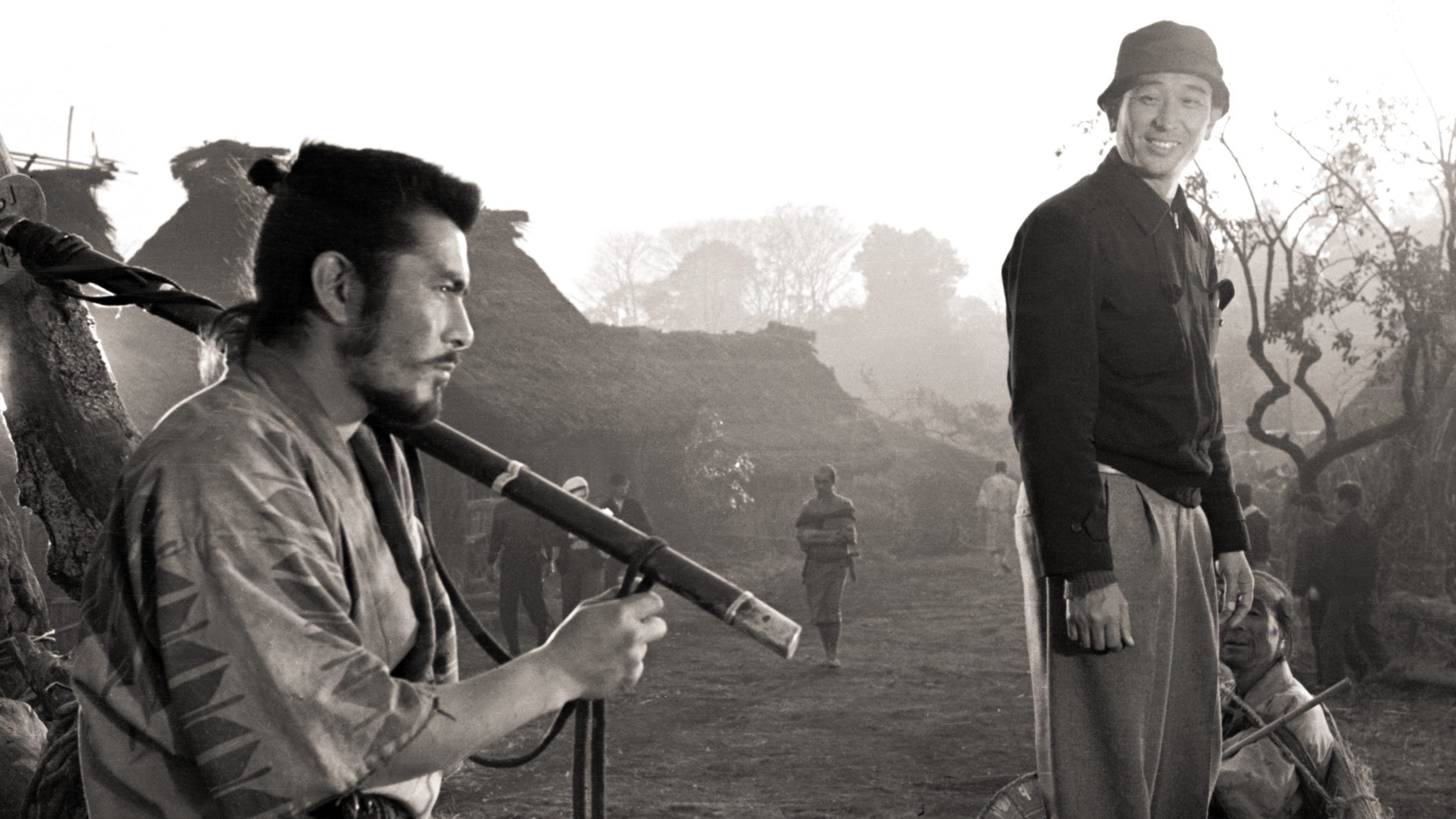
Brattle’s full week of ‘Kurosawa in History’ shows how West was won by East’s auteur

One thing I dislike when reading about film: reviews or other critical pieces infused with the word “I.” It’s not about you, it’s about the art, and letting your words about the art convert that “I.”

That said, here “I” go – and I promise to get to Akira Kurosawa, but indulge me for a moment.

Growing up, I wasn’t really that big a film fan. Granted we had only three channels the aerial could catch, and living in a town of 3,000 you had to drive two towns away to find our single-screen theaters, which didn’t get “Star Wars” until six months after its opening. (One was just an auditorium in a town hall.) So for me as a kid, film was mostly John Wayne and Godzilla, and while I couldn’t get enough of the man in the rubber suit, I didn’t like the former much – he seemed phony and too righteous, when the world around me was a darker, less black and white place. You knew things didn’t get resolved by some beefy human with a twangy drawl riding in at high noon, guns blazing.  

The one other movie during this era that grabbed me was “A Fistful of Dollars” (1964). Not only was Clint Eastwood’s no-name badass cool and scruffily handsome, he answered Wayne with moral ambiguity; in those spaghetti westerns the good and the righteous often got their asses kicked, hard. Even with its quirk and dark, tongue-in-cheek humor, Sergio Leone’s cornerstone western felt genuine, authentic from the top down the first time I saw it – and it still does today, hundreds of screenings later. (Though over time there would become many Wayne films I would came to adore – “The Shootist,” “Stagecoach,” perhaps mostly “The Man who Shot Liberty Valance.”)

Flash forward to college. As part of my English major at a small liberal arts school, film was on my eclectic list of elective, dubbed “clapping for credit” and quite popular with athletes (I’ll let you all guess my two sports) because the professor, a man named Roger Farrand used to lecture us for a scant half-hour, then roll film; by the time the lights came up, there was maybe five to 10 people remaining of the 30-plus people enrolled. He loved film so much and was so excited by it that if you paid attention during his preamble you could walk out and still safely get a B – he told you everything you needed to know for a quiz or paper.

Continue reading

The Other Side of the Wind

11 Nov

‘The Other Side of the Wind’: Welles’ final bow is a 1960s trip, an artifact, a triumphant mess


Image result for the other side of the wind

Once of the best films you can catch right now, you can’t catch in a theater. It is a new release from an American filmmaking maverick, starring a filmmaking maverick and about a filmmaking maverick. If that sounds recursive, it is, and well-intended – it’s a movie within a movie, and something of an in-your-face takedown of Hollywood, like Robert Altman’s “The Player” in 1992. It’s also got shades of 1960s psychedelic pop (think “The Trip”), gobs of over-sexualized free-love fetish petting by the camera (think “Barbarella”) and, well, the Kardashian butt decades before it became a thing.

The film might offend some, be dismissed by others as a “better left where it was” lesser effort or hailed as masterpiece by more discerning eyes. Still not with me? The late-arriving, posthumous work is Orson Welles’ “The Other Side of the Wind,” a project begun in 1970 that was finally this year pulled together, edited and released for theaters in Los Angeles and other cities and for streaming on Netflix with the not-to-be-missed companion documentary “They’ll Love Me When I’m Dead,” by “Won’t You Be My Neighbor?” director Morgan Neville – a making-of film doc that’s worthy of comparison with “Burden of Dreams” (1982) and “Hearts of Darkness” (1991). 

“The Other Side of the Wind” is both the name of the (mockumentary) film about a legendary filmmaker making his last film on the last day of his life, and the film being shot, which is loosely but best described as a surreal road lust flick – more on that later. The filmmaker, J. J. Hannaford, is played by John Huston (“The Treasure of the Sierra Madre” and “The Maltese Falcon”) whose gruff voice and cagey demeanor call to mind Pa Hemingway. His film project’s in financial trouble (as was Welles’, which was financed by the Shah of Iran) and there’s myriad hangers-on including Mercedes McCambridge, Edmund O’Brien, a young Peter Bogdanovich (who would shoot“The Last Picture Show” and more during its filming) as Hannaford’s onset biographer, Geoffrey Land as a Robert Evans-style producer, and Susan Strasberg channeling Pauline Kael for her film critic role.

You can see where where Welles is going with the rambling project, which he shot willy-nilly over the years. At one point, as the documentary tells us, Welles was rooming with Bogdanovich and Cybill Shepherd’s house while shooting. The film within the film stars Welles’ latter-years love, Oja Kodar (co-writer) as simply “The Actress” and TV star Robert Random as a Jim Morrison-looking hunk named John Dale, who says little and mostly provides boy toy pleasure for Kodar’s passion seeker, more metaphorically looking for meaning and her place in the universe. For much of the surreal cutaways, Kodar, a Croatian beauty, appears naked, the camera hanging on her ample posterior. Some of the scenes are brilliantly shot, with a great psychedelic-blues score.

Probably the cheesiest is the bathroom orgy scene, which is lurid and alluring, but then there’s the sex scene in a muscle car when the driver suddenly realizes his girlfriend and a stranger are having sex as he drives. It’s done on a rain-soaked night, shot and edited with a hypnotic eroticism. It’s interesting to learn in the documentary that the car the whole time was stationary, and that the torrential rain was the result of three men with garden hoses – to think back, the scene is even more of a win than initially perceived. The documentary and film deepen each other in unsuspecting ways.

The documentary not only underscores the difficulty Welles had making the film financially (he actually created a shell corporation to game the Shah) but also the struggles the filmmaker had as an outcast from Hollywood, ever tied to his freshman effort, “Citizen Kane” (1941), hailed universally as the greatest movie ever made. 

For those familiar with the works of Welles, “The Other Side of the Wind” is more in line with “F for Fake” (1973) than his more renowned black and white efforts (“A Touch of Evil” and “Chimes at Midnight”). Given his career, it seems fitting that “The Other Side” ultimately made it to the screen. For me it’s an eye-popping wonderment steeped in incredible circumstance. Given the Hollywood history, I was just happy to hear Houston’s indelible voice shouting out direction offscreen to the buxom Kodar, standing in the far off distance of a desert with a phallic something protruding in the fore.

Bike death at the Museum of Scince

10 Nov


A bicyclist died Friday after being hit by a dump truck at Museum Way and Monsignor O’Brien Highway, near the Museum of Science. (Image: Google)

A ripple of rage went through the bike community Friday when it was learned a 24-year-old cyclist and Cambridge resident was struck and killed by a dump truck at Museum Way and Monsignor O’Brien Highway, near the Museum of Science.

The truck was reportedly trying to make a turn onto Museum Way shortly before 8:15 a.m., with the cyclist on the right waiting to make the same turn. “When both the truck and bicyclist began to make their right turn, the bicyclist was struck by a tire of the truck,” according to state police.

The bicyclist was taken to Massachusetts General Hospital, where he was pronounced dead from injuries from the incident, police said. The crash is under investigation and police are withholding the name of the victim until next of kin is notified. Boston student media identified the victim as Meng Jin, of Shanghai, who expected a graduate degree in economics next year.

The name of the truck driver, a 50-year-old man from Leicester, will not be released until the investigation determines if charges will be filed.

Last month dump truck driver Daniel Desroche, 54, of Methuen, was charged with negligent operation in connection with the crash that killed Cambridge’s Jie Zhao, 27, who was walking at Magazine Street and Putnam Avenue in the Cambridgeport neighborhood.

“This has to stop,” city councillor Quintin Zondervan said. “It is inexcusable that we continue to allow these dangerous trucks to operate on our city streets without requiring them to have guardrails, sensors, automatic braking, collision avoidance, backup cameras and all other technical and other safeguards to maximally reduce the chances of them running us over.” 

Heather Allen, a Cambridge mother of four children who ride, pointed to the dicey nature of the stretch of road, where cars exceed the speed limit regularly and bicyclists are intimidated from taking the full lane, despite being allowed by traffic signs. “It is unconscionable that the Charles River Dam road still lacks bicycle lanes,” Allen said. 

Bike advocate Jon Ramos of Somerville and Steve Bercu of Cambridge, who serves on the board of the Boston Cyclists Union, were more critical of state Department of Transportation oversight of the roadway, where safety improvements were promised for after the Longfellow Bridge was completed in the spring. “Where are the changes?” Ramos said, “How many deaths is it going to take to fix all of your known problem roadways?” Many in the cycling community shared that upset with the agency’s delay – one using the phrase “blood on their hands.”

The agency, through its communications department, said, “We express our sincere condolences to the family of the victim and will continue to work with key stakeholders to ensure ongoing pedestrian, cyclist and vehicular safety throughout this area and around the commonwealth.”

The agency’s plan for safety improvements – still on the books – is mostly for line striping; the Cambridge Bicycle Safety Group, citing an increasing number of fatalities since 2015, prefers protected bike lanes. Ramos said the solution that would have avoided the day’s tragedy was protected intersections.

Transportation Tomorrow

5 Nov

New ways of getting around don’t get around need for laws and consensus, conference finds


An the elevated mass transit pod proposal by TransitX drew attention at Transportation Transformation: A Conference About the New Urban Mobility, held Saturday at the Massachusetts Institute of Technology. (Photo: Tom Meek)

Hoping to explore “how people get around tomorrow,” city councillor Craig Kelley, the Massachusetts Institute of Technology and Cambridge Innovation Center convened “Transportation Transformation: A Conference About the New Urban Mobility” on Saturday, with panel topics ranging from the future of ride-sharing to “micro-mobility” devices, the need for regulation and even whether urban gondolas seem like a good idea.

Speakers included Kent Larson, director of city science at the MIT Media Lab; Assaf Biderman, founder and chief executive of Superpedestrian, the company behind the Copenhagen Wheel device; and Joseph Barr, director of the city’s Traffic, Parking & Transportation Department.

Regulation for safety, space considerations and pricing on e-scooters, dockless bikes and similar alternative transportation rippled throughout the afternoon. Barr talked in detail about the complications of policy and enforcement and the search for a way to address all in a broad manner so they were not “reinventing the wheel” – so to speak – each time a new e-transit device hits the streets.

The conference drew around 150 people, many in the urban planning sector., (Photo: Tom Meek)

Audience asked whether the new urban mobility movement wasn’t something mainly initiated by and for a socioeconomic class that was educated, well-off, white and male (statistics showed women behind men in use of the alternative transportation), while panelists pitched the ergonomic and environmental benefits of people-powered transit and e-vehicles shared and unlocked by app. Barr cited a Portland, Oregon, study that claimed a 20 percent migration to alternative transportation as a reliable means for commutes, errands and leisure; Denmark was mentioned as reporting that 41 percent of all work and school trips were made by bicycle or alternative means, and Copenhagen officials hope to see that increase to 50 percent by 2025.

Many of the 150 conference attendees at the institute’s Walker Memorial Building were in the urban planning sector and liked the transportation innovations being touted apart from the panels, particularly the elevated transit pod concept by TransitX and an enclosed e-bike that, like driverless nuTonomy cars, can navigate bike lanes without anyone pedaling.

Officials acknowledged challenges ahead for Cambridge, with its growing population, need to address forms of transit as they arrive and population divided over finding space and funds for alternative infrastructure – whether it’s bike lanes now or monorails in the future.

The conference “underscored that the biggest challenge we face in transforming transportation is not technological or even infrastructure, but changing people’s mindsets, habits and behavior,” said vice mayor Jan Devereux, who attended.