“Late Fame”

⭐⭐1/2 Rating: 2.5 out of 4
Director Kent Jones (“Diane“ (2018)) works with a killer cast in this reset of a novella by Arthur Schnitzler, with 1890s Vienna transposed to modern day New York City (the script’s by Samy Burch, “May December” and the upcoming “Coyote vs Acme”). The esteemed Willem Dafoe stars as Ed Saxberger, a New York City postal worker who back-in-the-1980s-day penned an obscure work of revered poems. He’s rediscovered by a gaggle of youthful writers and artists who brand themselves the Enthusiasm Society. There’s a beatnik vibe to the group, led by a scarf-wearing dilettante who goes by the moniker of just Meyers (Edmund Donovan, who gives his pompous character a modicum of depth and vulnerability). They embrace Ed as something of a Bukowski-esque literary lion and through fawning flattery entreat him into their circle. The newfound notoriety rekindles Ed’s creative passions. As he starts to see the world through the progressive lens of his admirers, he calls out fellow old White guys for the intolerance he had become numb to over the years. The rising arc becomes Ed’s mounting affections for the much younger Gloria (Greta Lee, the soulful heart of “Past Lives”), the group’s aspiring actress, chanteuse and something of a Blanche DuBois in the making.
Lee, who you can also catch in the subpar sci-fi thriller, “The Last House“ over on Netflix, strikes the screen as a luminous wonder, but at times feels miscast and out of place. She does strike a genuine (if more platonic than romantic) chord with her veteran costar. Ultimately, the film feels drawn out, as Dafoe’s Ed never brings congruence to a hodgepodge of ideas and icons, despite the actor’s affable effort.
“The Brink of War”
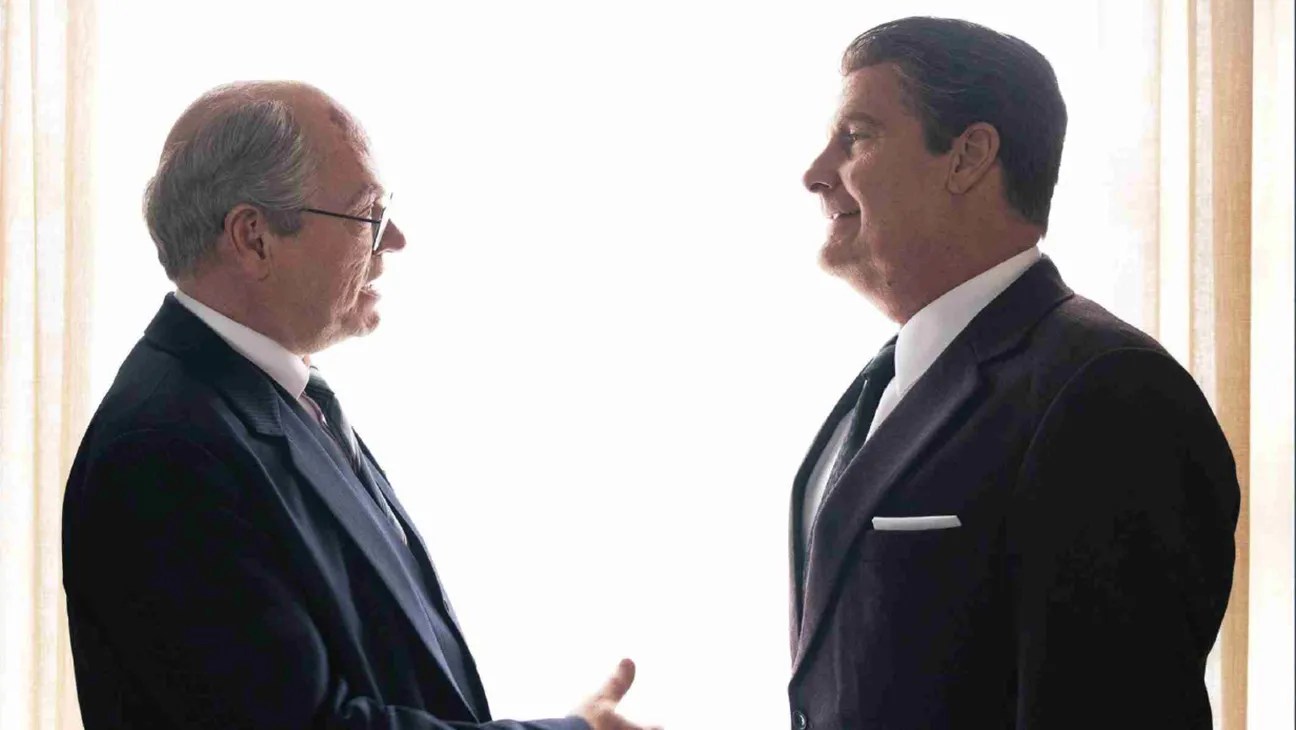
⭐⭐Rating: 2 out of 4
There’s solid acting but thin bones in this Cold War dramatization of the 1986 Reykjavík Summit talks between U.S. President Ronald Reagan and Soviet leader Mikhail Gorbachev. The movie’s premise is the two men came tantalizingly close to a sweeping agreement that would have eliminated both country’s nuclear arsenals. Written and directed by Michael Russell Gunn, the film’s essentially a stalemate debate dressed up as a geopolitical thriller. Jeff Daniels (“The Squid and the Whale,” “Dumb and Dumber”) is Reagan and Jared Harris (“Mad Men,” “Chernobyl”) Gorbachev, staring at each other across a table, trying to win by touting the virtues of capitalism or communism, respectively. It could almost be a single set, two-man stage play, although having it on-location in Iceland makes for gorgeous framing, and we get cameos from the first ladies (Hope Davis as Nancy Reagan left back home, and Branka Katić as Raisa Gorbachev on site and obsessed with Icelandic horses).
As Gorbachev, Harris looks and feels the part, stubborn and full of resolve. Daniels is less convincing as Reagan — he seems younger and snappier than my newsreel footage recall dials up (though Daniels is 71, just four years younger than Reagan was in 1986). He gets Reagan’s classic “Well…” verbal tic down with aplomb but never goes full-on Gipper. His Ronnie feels somewhat elevated, too, maybe because of the Angel Studios values-driven haloing of its subjects (“Young Washington,” “David“). The “way of life” speech is clunky, even ham-fisted (for contrast, Daniels fired a flame thrower blast about American greatness as Will McAvoy in Aaron Sorkin’s “Newsroom”).
There is plenty of deep, emotive acting and well-forged chemistry between its leads — and Oscar winner J.K. Simmons is steadfast in support as Secretary of State George Shultz. Devil-may-care comic relief comes from Katić’s punchy Raisa, who brings chaotic kitsch to every scene she’s in; Gunn is wise not to overuse her. Points to the production, too, for using the Höfði House — the actual humble site of the summit— for their set. But “Brink of War” is not as interesting or as historically informative as the previous Angel offerings. It’s a long 117 minutes and strains to manufacture suspense from its small sliver of history. There’s just not enough heft or hook to turn a footnote into a feature.
 For What it's Worth
Leave a comment