Keanu is the chain-smoking angel who flies away with this class comedy
Aziz Ansari, the shaggy-dog comedian (“Master of None”) known for his casual demeanor and biting social barbs, makes his directorial debut with this comedy about fate, happiness and how much the rich – and AI – are eating those further down the social ladder. “Good Fortune” is a devilish mix of light and dark that takes a good long time to reveal just how dark things can get, despite focusing on people sleeping in their cars because they can’t put a roof over their heads no matter how many jobs they work.
Even with the billing of Ansari and fellow comedy mainstay Seth Rogen, it’s Keanu Reeves who marches off with the film. It’s mostly the actor’s innate warmth and humanity that do the trick, but there’s also that dash of goofball vacancy that made the “Bill & Ted” movies so indelible and endearing that gives the film agency and air – a project that, in hindsight, might have otherwise floundered.
The first film from indie stalwart Hal Hartley in more than 10 years – a Kickstarter campaign got it off the ground before a Covid pandemic delay – is a loose, autobiographical reflection on the director’s life and body of work like Almodóvar’s deeply personal “Pain and Glory” (2019). At the center is Joseph Fulton (Bill Sage), a lion in winter edging toward 60 and one-time maker of successful romantic comedies who’s taking a break from the director chair to get his last will and testament together. He also has a desire to put his hands in mother earth, and applies for a job as a cemetery groundskeeper. Through a comedy of miscommunication, Joe’s girlfriend, Muriel (Kim Taff), an actor in Season 14 of her “Wonder Woman”-esque TV series, and his niece and assistant, Veronica (Katelyn Sparks) discover an unopened, confidential letter from a hospital and think it all adds up to Joe dying. Adding fuel to the fire is the subplot about a wannabe screenwriter (Jeremy Hendrik) claiming to be Joe’s son. It’s a stoic, reflective affair with some strong writing. The best moment is when a film studies professor (Aida Johannes) challenges Joe with SAT word salad and Rorschach test reasoning about the meaning of his films. It’s blazingly brilliant, but begs the question as to why Joe’s rom-coms are being intellectualized as if they’re “One Battle After Another.” No offense to rom-coms, but it’s apples and oranges – and Joe, a likable sort, doesn’t really emanate the auteur je ne sais quoi that many in the film seem to heap on him. As to the title, the film begins and ends with a Shackleton-esque-esque ship amid rough seas – a clear metaphor for hitting a patch of turbulence late in life and what to do. It works, even if weakly employed. As with most Hartley (or Mamet, for that matter) films, it’s less about the oblique references and more about matters of the heart and struggling soul.
Luca Guadagnino’s films have always included edgy, provocative sexual situations. Take “Call Me By Your Name” (2017), “Challengers” (2024) or “Queer” (2024). Even his ventures into the strange – “Suspiria” (2018) or “Bones and All” (2022) – are driven by primal lusts filmed in a way that can border on erotica. Guadagnino’s latest, “After the Hunt,” deals with the politics of sex and ethical morality in higher education.
The film opens with a holiday party at the cozy apartment of a tenured Yale English professor (Julia Roberts). The camera meanders from the warmth of the fireplace and into the stately den where faculty and grad students engage in boozy intellectual debate. Robert’s Alma is the clear queen of the ball (it’s her house). Her suck-ups include fellow lit prof Hank (Andrew Garfield, “The Social Network”) and doctoral candidate Maggie (Dorchester’s Ayo Edebiri, “The Bear”). Hank’s waiting to hear if he’s been awarded tenure; Maggie comes from an uber rich family that has given generously to the school. It’s all a raucous who’s-smarter-than-who fun time until Hank walks Maggie home and accusations of sexual misconduct are leveled.
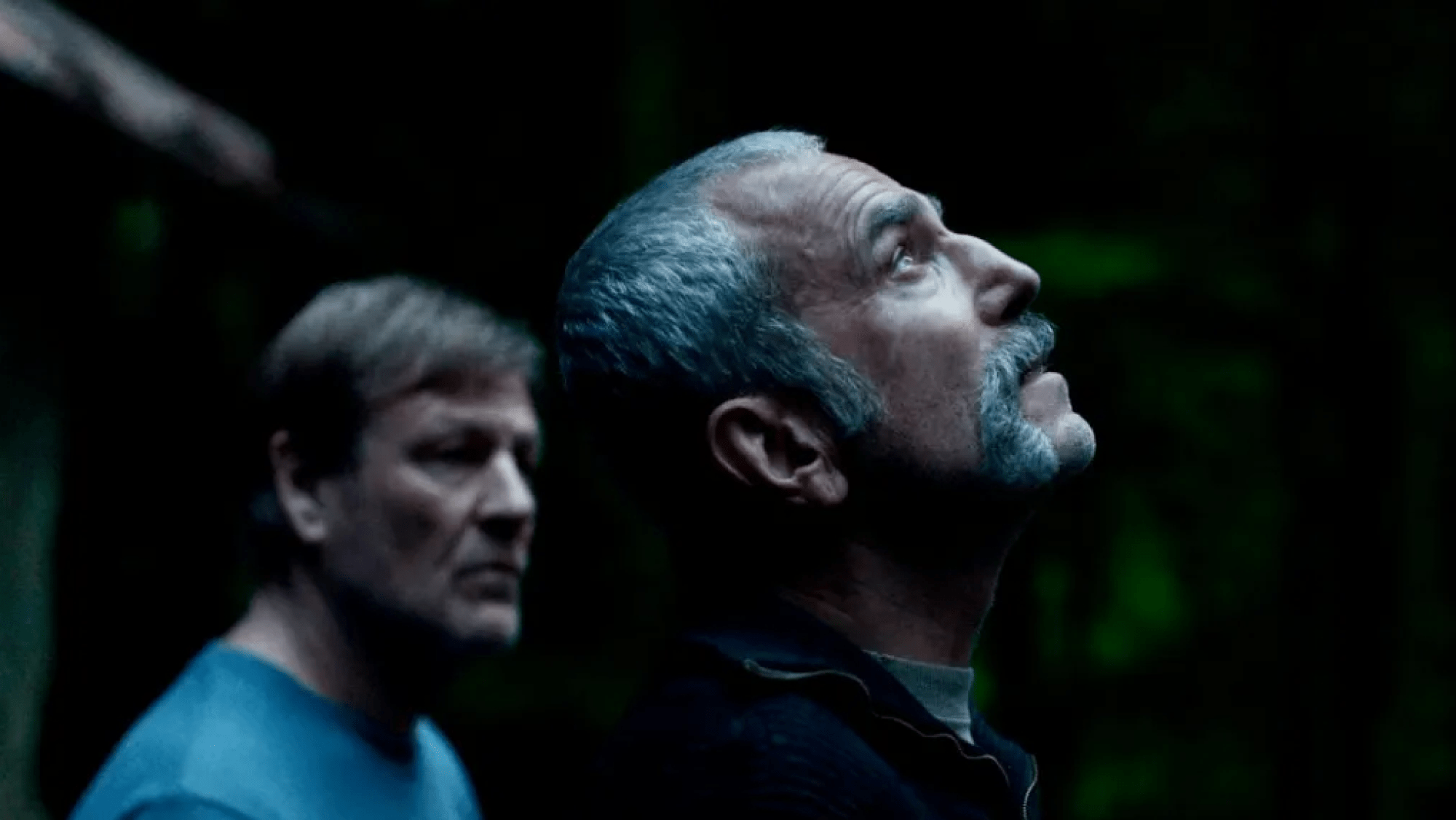
A deeply engrossing, if uneven, sojourn into the realm of reckoning and redemption. The ace in the hole here would be Daniel Day-Lewis, who came out of retirement (in 2017, with the release of “Phantom Thread,” he implied it would be his last film before the camera) to make this deeply emotionally portrait with his writer-director son Ronan in his filmmaking debut. The senior Day-Lewis co-wrote the script, but from the overall scrumptious look and intensity, Ronan is an up-and-comer to watch. The title refers to the delicate and sensitive flower that closes up when touched and is evocative of Day-Lewis’ Ray, who has dropped out of society and is living off the grid in the woods of Northern England. For nearly 20 years, his brother Jem (Sean Bean) has been rearing Ray’s son Brian (Samuel Bottomley, “How to Have Sex”) after marrying Ray’s former lover, Nessa (Samantha Morton). In short, Jem stepped in when Ray stepped out on the pregnant Nessa; Jem ventures out to find Ray now because Brian is struggling. To say why Ray has gone into isolation wouldn’t be a spoiler, but it’s besides the point – involving Ireland’s violent Troubles, with the present-day of “Anemone” set in the early to mid-1990s. Much of the early segments of the film are long, speechless moments between Jem and Ray in the lush, deep forest that offers access to a remote beach and nearby stream. The intensity that defined Day-Lewis and earned him three Best Actor Oscars (the only male lead to do so; Katherine Hepburn notched four) is on full display in the red flicker of his cottage’s fireplace as he delivers two big soliloquies that give us Ray’s “why.” Cutbacks to Nessa and Brian in a distant working-class borough fill out the picture, and Bean and his character know the landscape and their place in it. The film, shot by Ben Fordesman (“Love Lies Bleeding,” “Out of Darkness”) and scored by Bobby Krlic, is a stunning fusion of sound and image – intimate yet expansive with deep eerie chords that conjure wonderment and a haunting sense of foreboding. Not all of it melds, yet it rivets in nearly every frame.
Brothers who direct together don’t always stay together. We know this from the Coens, who after 30-something films went off to do solo projects, and it seems to be the same for the Safdie brothers (“Good Time,” “Uncut Gems”), with Benny breaking out for this biopic about MMA fighting pioneer Mark Kerr (Dwayne Johnson) when the sport was mostly in Europe and Japan. Much of the action takes place there, and it’s an odd sojourn. You can see Safdie, so good at channeling the freneticism of fringe personalities in “Gems” and “Good Time,” constrained here by facts versus fiction and straining to find a character motivation or that challenging event that drives the protagonist. Kerr’s challenges with painkiller addiction and recovery come early in the film, and there are domestic struggles at his Arizona hacienda with significant other Dawn (Emily Blunt), but otherwise no real arc. It’s more a meandering love letter to Kerr and an era, and in some ways has a docudrama feel. Johnson, jacked up to seam-bursting size, acts his pants off. It’s an impressive immersion and a major turn in his career, fusing his WWE roots and aspirations to be taken as more of a serious actor than straight-up action star or Schwarzenegger-ish comedian. Blunt, close in tenor to Amy Adams as the girlfriend in “The Fighter,” is good too but never gets enough breathing space to make Dawn fully formed, and the role comes dangerously close to lapsing into rote hysteria. The one seam Safdie finds is the camaraderie and bonding among the athletes, namely between Kerr and friend-coach-rival Mark Coleman (MMA fighter Ryan Bader, who nearly wrestles the film from Johnson and Blunt). It’s a soulful meander in search of a reason to go to the mat.






 For What it's Worth