Tag Archives: reviews

The Long Walk

14 Sep

Murderous marathon for an American dystopia by Vietnam-era Stephen King

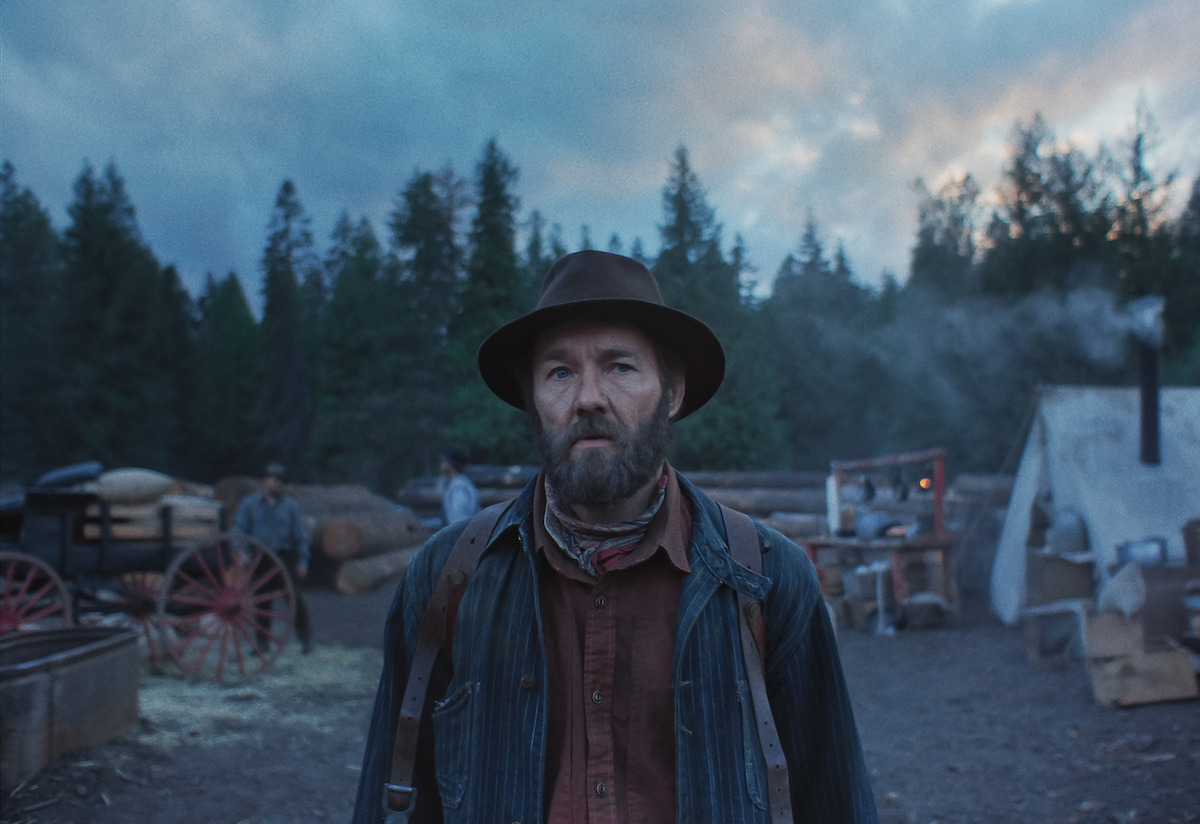
There’s little surprising or new in “The Long Walk” despite its pedigree, passion and professionalism. It’s still a compelling and emotionally charged tale primarily because of those three Ps – and the grim prospect of how much further we as a society can fall. It’s based on Stephen King’s first novel, written as a student while at the University of Maine but not published until 1979; even then it went under King’s pen name of Richard Bachman, like “The Running Man.”

In “Walk,” we get dropped into a dystopian America in the late 1960s or ’70s. It takes a while to register, but the unhappy alter reality has the distinct tang of “The Mist” or “The Stand”: The United States has just emerged from a war, but the country is not the portrait of Ozzie and Harriet productivity we’ve all been sold on. Much of what we see in our limited lens is the depressed and the needy. Most of the people we see along the long stroll could use a hot shower, a bowl of hot soup and some new threads.

Continue reading

‘Honey Don’t!’ has a detective who stands out against drab settings, luckily for these Coens

22 Aug

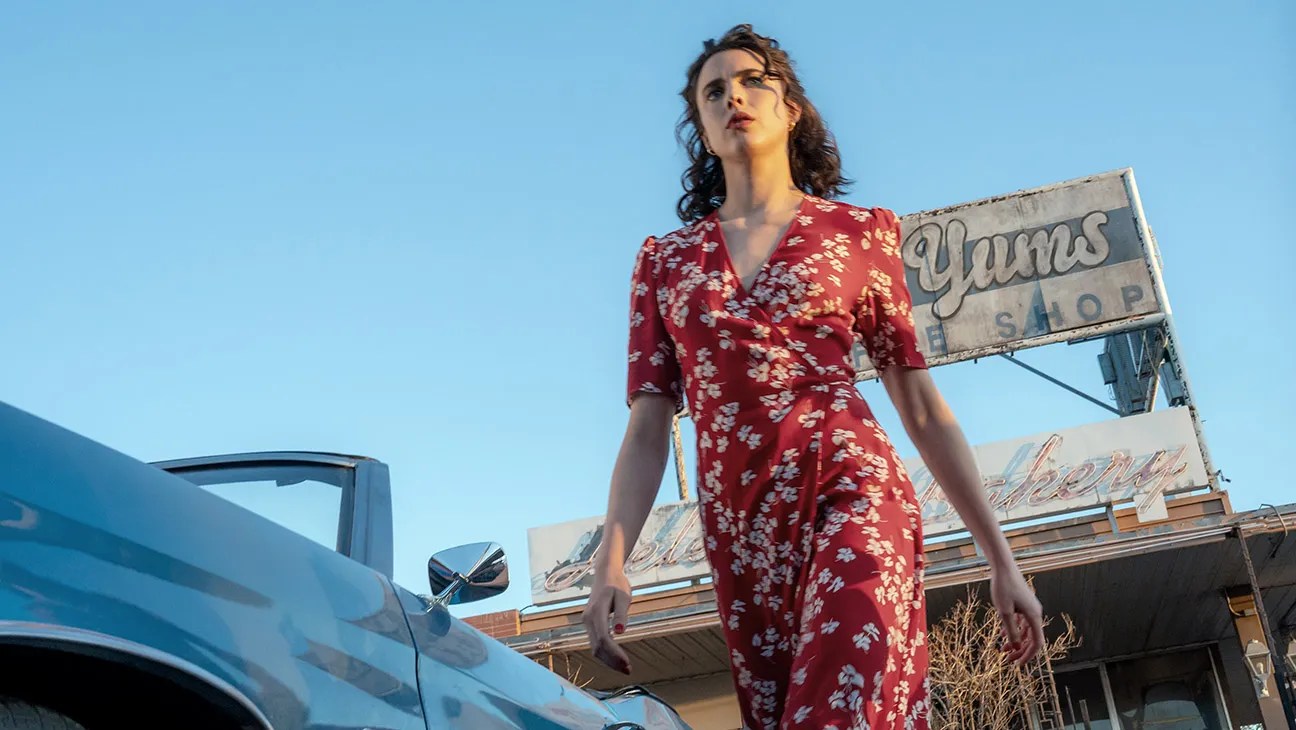
Ethan Coen and co-writer and wife Tricia Cooke reteam with actor Margaret Qualley for the second of a purported loose lesbian neo-noir trilogy. That first outing, last year’s “Drive-Away Dolls,” was a bit of a rickety start, but through no fault of Qualley, who packed the punchy best of both Thelma and Louise as one of two gal pals who zoom off in a car with various factions of angry patriarchy hot on their tail. It was a concept in search of a story. Here, Coen and Cooke dial up the noir aspect and concoct something more worthy of Qualley’s onscreen allure. 

She plays Honey O’Donahue, a private detective working the dusty, depressed streets of Bakersfield, California. There’s trouble right off the bat as an angular French woman (Lera Abova) in leopard-skin tights navigates the scree of a ravine to get to an inverted car, its driver dead or dying. She’s not there to help, but to pluck a signet ring off a finger, and in the next scene Abova’s agent of cold deeds is floating casually full frontal in a nearby quarry pond. An important fashion note: As she clads up, there’s a Garanimals moment as we realize her underwear and bra match her motorbike helmet.

Continue reading

The Phoenician Scheme

7 Jun

Ambitious as a Korda plan, as misfiring as a Korda assassination plan

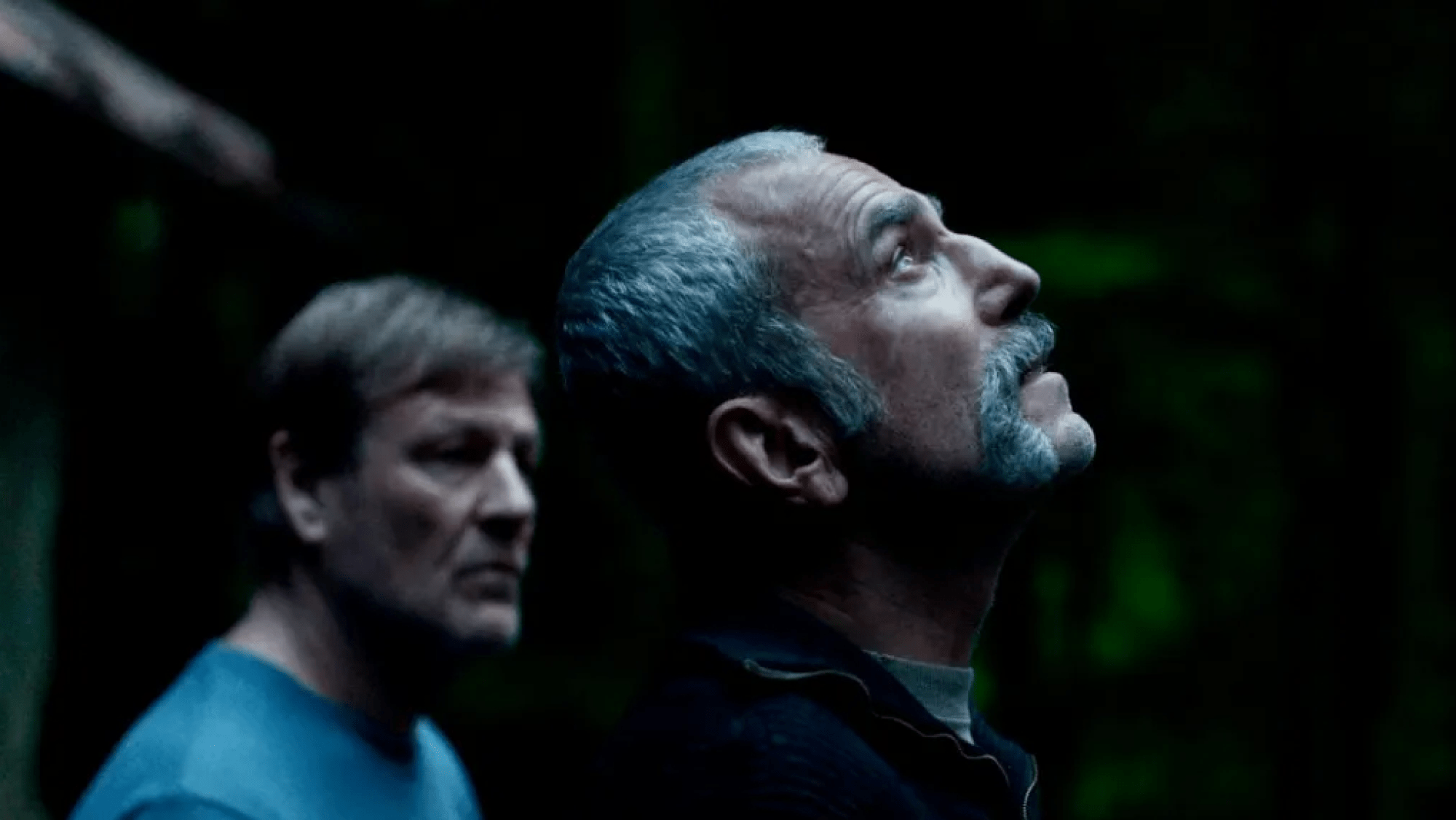
Dispatch from Cambridge: The quirky, witty twee of Wes Anderson may be running dry. Sad but so. The genre-bending director scored early and often with such notable art house hits as his take on Salinger’s Glass family, “The Royal Tenenbaums” (2001), his toe dip into animation, “The Fabulous Mr. Fox” (2009) and my favorite, “Moonrise Kingdom” (2012). The list goes on. Anderson was pretty much a sure thing, but his most recent three films – “The French Dispatch” (2021), “Asteroid City” (2023) and this ambitious misfire – have been sputters of what was and what might have been and, worse, smug delves into cinematic overindulgence.

Continue reading

Bring Her Back

2 Jun

Beware the foster mom with the dead daughter

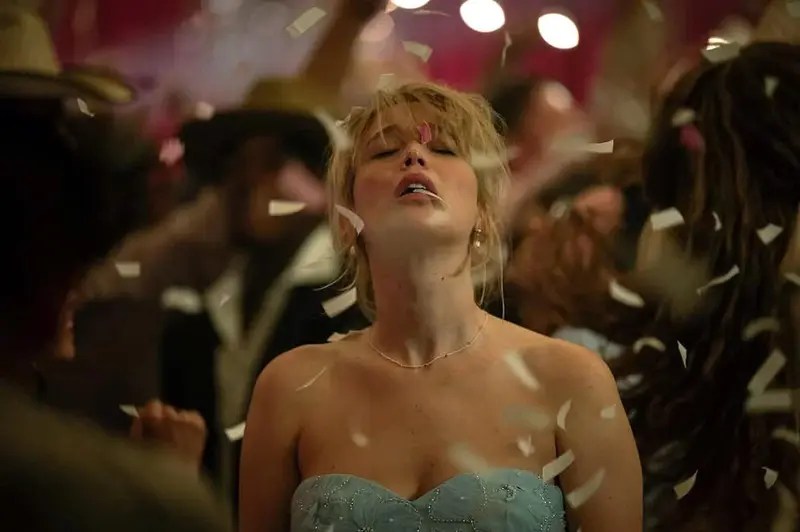
The creepy horror shenanigans of YouTubers-turned-filmmakers Danny and Michael Philippou caught fire with their feature debut “Talk to Me” (2022), which played smartly with genre, race and mythos. It didn’t all click, but you couldn’t forget it. With their follow-up, “Bring Her Back,” the brothers reach a new level in psychological horror that features several grim, look-away scenes.

Things begin badly for brother and sister Andy (Billy Barratt) and Piper (Sora Wong), who come home after school and find their father dead on the bathroom floor. Piper is legally blind (she can see shapes and light, and that’s about it) and the protective Andy is months shy of his 18th birthday, ineligible to get custody. Complicating matters, there are documented incidents of violence in Andy’s past. Initially, child services wants to split the two up, but a saving grace comes in the form of Laura (Sally Hawkins), a former child services worker who lost her daughter in a recent drowning accident and is caretaking for another foster child, a mute 10-year-old by the name of Oliver (Jonah Wren Phillips).

As the sibs settle in at Laura’s remote bungalow, there’s hope in the air, but something’s clearly off. Laura’s chatty and welcoming, but also controlling, spouting out a litany of rules and regs between awkward hugs. Piper is given the daughter’s room – which, bathed in pink and bejeweled with beads, has been maintained like a shrine – while Andy is relegated to a utility closet of sorts that has barely enough room for his mattress and a workout bench. The first real tell comes when we meet Oliver, a lithe androgynous sort with a faraway look in his eyes, standing shirtless and barefoot at the bottom of the drained pool out back, holding the cat that’s “not to be let out of the house” like he’s about to break its neck. Damien, the kid from “The Omen” (1976), has nothing on Oliver. And there are those strange red marks under his eyes; hard to tell if they’re birthmarks or the result of some occult ritual. 

Continue reading

Short Takes

18 May

Reviewed: ‘Bound,’ ‘Holland’ and ‘We Were Dangerous’

‘We Were Dangerous’

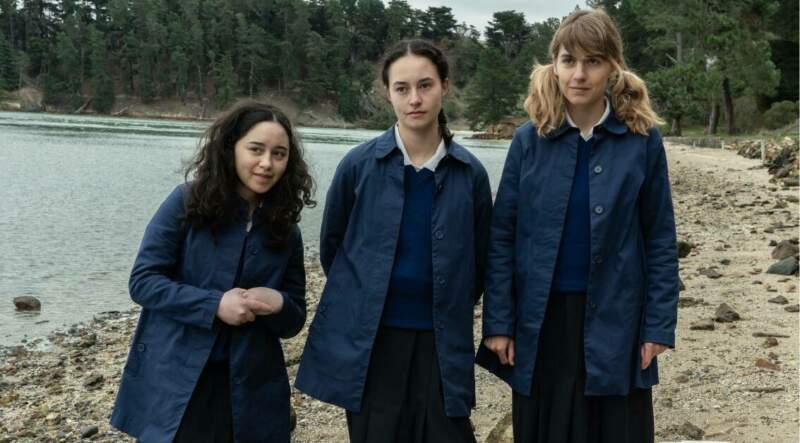
The historical ills of the three Cs (colonialism, capitalism and Christianity) loom at the fore of Josephine Stewart-Te Whiu’s feature debut, a coming-of-age tale about two Māoris and one Pākehā (a white New Zealander) sent to an island reform school for delinquent girls. Nellie (Erana James) and Daisy (Manaia Hall) are sent to the school to whitewash the Māori out of them and accept the word of god. Lou (Nathalie Morris), a rebellious, well-off white girl, is there for remediation of sexual perversions – nothing worse than dad catching you making out with your female babysitter back in the conservative 1950s. As in RaMell Ross’ adaptation of Colson Whitehead’s  “Nickel Boys” last year, there are different rules when it comes to people of color, even in a hellhole. In the still of the night, from one hut, blood-curdling screams are heard. We never really learn what goes on there, just that whatever it is, it isn’t good, and that the school marm (Rima Te Wiata, “Hunt for the Wilderpeople”) is quick to slap any Māori incantation from the mouths of Nellie and Daisy, even though she is of Māori origin and ostensibly came up through the same system. Tellingly, Daisy can’t read and the school doesn’t seem interested in her education; just her assimilation and Christian brainwashing. Part of the school’s mission is to keep the teens chaste (a remote island helps with that logistically) and get them prepared to become demurring housewives, a low bar made even lower by the persistent patronization and Draconian discipline. The driving force to the film is the playful kinship between the trio (aided by the chemistry among the three performers) and their never-give-in resolve despite the dead-end hopelessness of their situations. Gorgeously shot by Maria Ines Manchego (“Uproar”) and executive produced by Taika Waititi (“Wilderpeople,” “JoJo Rabbit”), “We Were Dangerous” is a quiet reminder of the sins of religious imperialism, the agency of lateral violence that accompanies it and the sexual oppression and subjugation of women during the rising tide of world prosperity.

Continue reading

Short Takes

12 Apr

Reviewed: ‘Secret Mall Apartment,’ ‘Drop’ and ‘A Working Man’

‘Secret Mall Apartment’ (2024)

Home | Arts + Culture | Film | Film Clips

Reviewed: ‘Secret Mall Apartment,’ ‘Warfare,’ ‘The Amateur’ and ‘Drop’ in theaters

By Tom Meek and Oscar Goff

Thursday, April 10, 2025

‘Secret Mall Apartment’ (2024)

Video Player

00:00

01:00

Jeremy Workman’s documentary recounts the antics of eight Rhode Island artists who in 2003 covertly built and lived in a hidden 750-square-foot apartment within the Providence Place Mall. To build the secret enclosure within a dead space in the massive mall, the team had to smuggle in cinder blocks and furniture. The apartment remained undetected for more than four years. The focal point of the film is Michael Townsend, a Rhode Island School of Design instructor, installation artist and something of a merry pied piper who sees the world as his canvas. Earlier Townsend projects include a creepy-cool community of mannequins in a post-apocalyptic setting under an overpass and along an industrial canal, as well as a 9/11 memorial depicting the faces of the fallen. The mall apartment, by default, was something more whimsical, and those involved videotaped the progress on grainy lo-res camcorders. Some of the banter about sacrifice for art and commercialism amid a retail center provokes, coming most to an edge when Townsend and his then wife, Adriana Valdez, one of the eight, get into a jocular tiff about life goals and values – she wants to build a real house in the world. The apartment, replicated on a soundstage for the documentary, makes a nice backdrop for the talking-head testimonials of Townsend and others, but it borders on the cheesy when Townsend acts out moments from the past. The apartment became second-tier national news when exposed; when asked then if he’d been curating a piece of art or living in the mall out of necessity, Townsend gleefully says, essentially, “life is art and art is life.” The son of military parents, Townsend makes for an intriguing character study in real time, archival footage and cheeky reenactment. 

Continue reading

Filmmaker Carson Lund has love of the game and knows how to pitch an expert ‘Eephus’

21 Mar

Keith Poulson, Ari Brisbon and David Pridemore in “Eephus.”

Opening day is near. There’s Cracker Jack excitement in the air and a legitimate hope that the Red Sox will return to postseason form. For lovers of the game and team enthusiasts (primed to get their hearts broken) who can’t wait, catch “Eephus,” a nostalgic slow-roller of a film with “Field of Dreams” (1989) undertones. Though it doesn’t play like one, it’s a rookie effort – the directorial debut of Carson Lund, a longtime cinematographer with roots in New England and ties to the hometown team and America’s game.

The Nashua, New Hampshire, native attended Emerson College and had a stint taking tickets and helping out at the Harvard Film Archive (where his film had a sneak peek last month; it’s now at the Somerville Theatre). His cinematic moorings put him in good company with Robert Eggers, a fellow filmmaker from the Granite State (“The Witch,” “Nosferatu”) and, from the halls of Emerson, the Daniels, who rocked the 2023 Oscars with “Everything Everywhere All at Once.”

Lund has been shooting commercials and making independent films for the past 10 years in Los Angeles, where he and Tyler Taormina have formed the Omnes Films collaborative to help finance and launch independent projects. Lund served as director of photography on Taormina’s two critically acclaimed lo-fi features, “Ham on Rye” (2020) and “Christmas Eve in Miller’s Point” (2024). On “Eephus,” Taormina serves as one of several producers.

Lund said that while growing up, he played baseball around all of New England. “I consider Boston my home city. I went to Red Sox games when I was young, and it cemented my love of the game.” When he moved to L.A., he joined an adult recreational league that became the inspiration for “Eephus.” The project took nearly 10 years to get to the plate.

Continue reading

Short Takes

26 Jan

Reviewed: ‘All We Imagine as Light,’ ‘The Front Room’ and ‘Ad Vitam’ and ‘Back in Action’

‘All We Imagine as Light’ (2024)

Payal Kapadia’s somber meditation on womanhood and companionship amid the bustling streets of Mumbai feels like a living and breathing document. It follows the lives of three intertwined women, two of whom are nurses and roommates. The more dour of the duo, Prabha (Kani Kusruti), is estranged from her arranged husband, who is now working in Germany, and moves through her days with restrained and wistful introspection. The younger of the two, Anu (Divya Prabha), is bright-eyed, perky and naively idealistic as she constantly overspends and often asks Prabha to cover her rent. She has a secret Muslim lover who asks her to wear a burka when sneaking over for their trysts. That’s one of the interesting things about Kapadia’s portrait of Mumbai – it delves into and illuminates the myriad subtle cultural, linguistic and religious identities that coexist nearly seamlessly in the dense urban setting. The movie places the patriarchy under a microscope, not by lambasting double standards and gender inequality, but by showing the sisterhood formed through common causes and tribulations. Prabha and Anu are busy working out their romantic and professional futures while the third woman, the hospital’s cook, Parvaty (Chhaya Kadam), a steely, no-nonsense, middle-aged widow, rails in vain against a developer who wants to displace her. “All We Imagine as Light” is a quiet film that affects the viewer in ebbs and flow, and Kapadia’s poetic cinematic flourishes add a dreamy, hypnotic affect to the deeply emotional sojourn. Kapadia was recently in Brookline to show the film at the Coolidge Corner Theatre and was rightly praised as a breakthrough filmmaker. The texture and tenor of “All We Imagine as Light” is reminiscent of Deepa Mehta’s Elements trilogy, which bodes well for Kapadia’s future endeavors.

Continue reading

RPM brings experimental filmmaker Saul Levine to The Brattle on Sunday to show 10 explorations

26 Jan

Filmmaker Saul Levine in 1968.

The Revolutions per Minute Festival hosts 10 works by Somerville experimental filmmaker Saul Levine at The Brattle Theatre on Sunday.

Not sure what experimental films are? If you’ve ever been to Boston’s Institute of Contemporary Art and seen trippy, surreal video installations, you’re on your way. Experimental or avant-garde film is usually deeply personal, often sociopolitical in context and reflective of the artist’s life in the moment.

Levine, born 1938, has been producing films for nearly 60 years; he was a professor in the Visual Arts Program at MassArt for 39 years.

Levine started his filmmaking career with “Salt of the Sea” (1965), featuring footage of his friends hopping from a boat to a buoy in the New Haven harbor. “I tried to make the jump with the camera,” Levine said, “and I fell into the water but held on to the camera.” The waterlogged footage, which Levine described as “abstract swirls of magenta and turquoise,” was turned into a four-minute short that ended with a clear shot of his friend perched upon the buoy.

If you watch Levine’s later works, such as his series “Driven (Boston After Dark)” (2002-present), in which Levine rides around in a car filming subjects and captures moments in time, or “Sun Drum Moon Note” (2018), which screens Sunday, you’ll notice shaky camera work. Part of that is Levine’s editing style, but adding to it are genetic neurological ticks – what Levine refers to as “tremors” – that he’s had since birth. As a result, Levine also speaks with a noticeable stammer.

Age and neurological affliction keeps Levine from getting behind the camera as much as he used to. Levine’s time at MassArt was also cut short, ending with his resignation in 2018. He said he felt “forced out” after school administrators accused him of harming students by showing his compiled film “Notes After a Long Silence” (1989), a collage that includes scenes of him having sex with his then partner. “It was ridiculous,” Levine said, as he’d screened “Notes” over several years without complaint and “the film was posted on the school’s website.” Levine gave passionate commentary on the situation in a video on Facebook, saying he felt “ambushed” by the school’s administration. The same year, fellow MassArt professor Nicholas Nixon, a Guggenheim fellow and photographer, came under scrutiny in a Boston Globe article for more severe, yet similar allegations of inappropriate academic behavior. The Globe mentioned Levine in conjunction with Nixon, who also resigned.

Continue reading

Short Takes

9 Jan

Reviewed: ‘Seed of the Sacred Fig,’ ‘Soundtrack to a Coup d’Etat’ and ‘Room Next Door’ in theaters

‘The Seed of the Sacred Fig’ (2024)

It’s amazing, given how Draconian the Iranian government has been about censorship and control over its own narrative, that the voices of filmmakers Mohammad Rasoulof and Jafar Panahi persist. Both have been arrested and spent time in jail because they make films critical of the oppressive regime. These films are usually shot and edited secretly and often bootlegged out of the country to gain distribution in the West. Panahi struck the first blow with the sublime and frightening “The Circle” (2000), which detailed the systemic imprisonment of women for morality violations that most people in a free state would consider little more than jaywalking. Rasoulof goes further with “The Seed of the Sacred Fig,” crafting a domestic gender rift against the backdrop of the real-life death of Mahsa Amini in 2022 after being taken into custody for a hijab violation. The event galvanized the Woman, Life, Freedom movement and led to protests in the streets. In the home of Iman (Missagh Zareh), he and his wife Najmeh (Sohelia Golestani) and teenage daughters Rezvan (Mahsa Rostami) and Sana (Setareh Maleki) come at the headline event differently. Iman, who works for the state judicial department and reviews and signs execution orders, believes the theocracy’s line that Amin died of a stroke; his wife and daughters, like all those protesting, believe the death was the result of abuse and torture. Iman has a gun as part of his position, and as tension in the house rises, the firearm goes missing. Ultimately the action leaves the confines of the family’s apartment and the distrust threatens to turn violent. Just before the film played Cannes, Rasoulof was sentenced to eight years in prison with a flogging and fled the country, another reflection of a theocratic patriarchy holding authoritarian reins chokingly tight. 


‘Soundtrack to a Coup d’Etat’ (2024)

A perfect companion to RaMell Ross’ superb “Nickel Boys,” as both deal with a grotesquely unjust Black experience on the cusp of the civil rights movement. “Nickel Boys” is a microcosm of racial injustice, whereas “Soundtrack to a Coup d’Etat” looks globally. The doc by Johan Grimonprez details the dubious events surrounding the assassination of Patrice Lumumba,  inaugural leader of the Democratic Republic of Congo – just liberated from Belgium and quickly becoming a Cold War conflict because its rich uranium deposits were coveted by the United States and Soviet Union for use in nukes. It is astounding to see archival footage of the smooth and charismatic Malcom X and an animated Nikita Khrushchev making the same condemnations at the U.N. of the West for its colonialism and denial of rights to Black people. Insert into the mix Louis Armstrong as a Trojan horse cultural ambassador to the Congolese while Eisenhower, the CIA and Belgian operatives scheme against Lumumba in ways troublesome, embarrassing and downright heinous out of fear the nation (and its uranium) would fall into Soviet hands. Grimonprez, employing frenetic freestyle editing, homes in on socially active jazz greats of the time – among them Nina Simone, doing her amazing “Sinnerman,” Abbey Lincoln and Max Roach bringing the beat and emotional heat and Dizzy Gillespie – as well as X and Maya Angelou (she, Lincoln and Roach stormed the U.N. in the wake of Lumumba’s death) to fill the frame with sound and voice. The frequent shards of quotes he flashes onscreen are stunningly effective. Grimonprez has tapped into an incredible intersection of time, place and players that he turns into an immersive experience that entertains and informs unlike any Wikipedia page or history book. 


‘The Room Next Door’ (2024)

Iconic Spanish filmmaker Pedro Almodóvar (“Tie Me Up, Tie Me Down,” “Women on the Verge of a Nervous Breakdown”) makes his first English-language film, and with the double-barrel casting of Tilda Swinton and Julianne Moore on paper it seems like a can’t-miss collaboration. While it definitely hits, it’s not the boom you’d expect from such a loaded lot. Based on Sigrid Nunez’s novel “What Are You Going Through,” “Room Next Door” is a contemplation on mortality – something that seems to be on Almodóvar’s mind these days given this, “Parallel Mothers” (2021) and most personally, “Pain and Glory” (2018). Novelist Ingrid (Moore) and war correspondent Martha (Swinton sporting a neat crop top), Manhattanites but distant for years, reunite because Martha is terminally ill and wants Ingrid to spend the end days with her in a quaint VRBO upstate. The performers are all in, yet the characters somehow feel shallow and contrived and the dialogue too meted, as if were a stage play. It’s gorgeous and affecting, but ephemeral and wispy.