
Tag Archives: Idris Elba

Reviews of “Masters of the Universe” and “Leviticus”

25 Jun

“Leviticus”

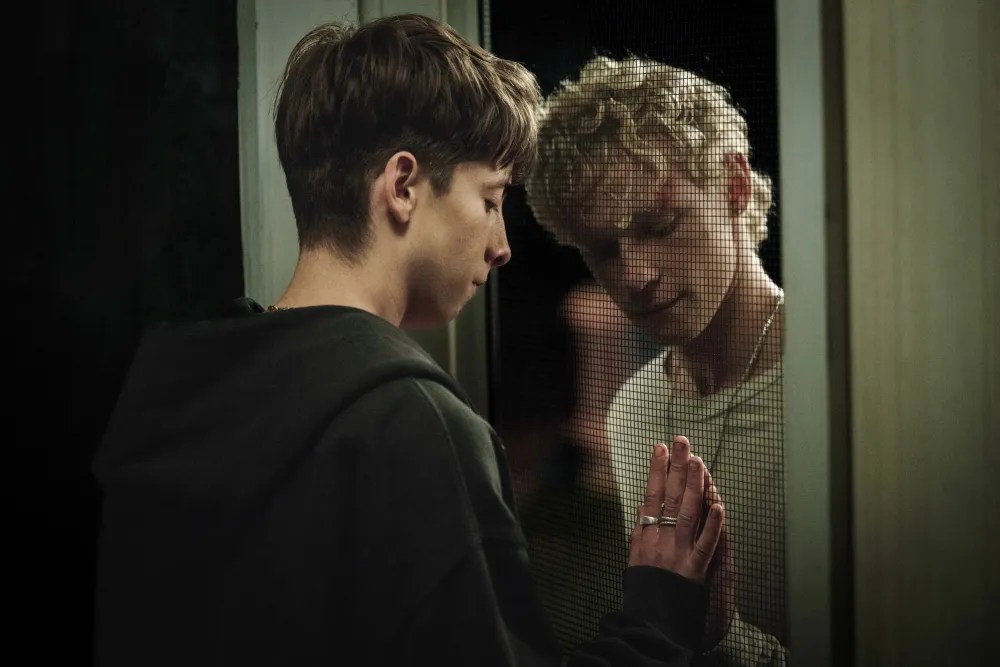
Nothing like a homophobic township with the power of God behind it to execute a modern version of the “Crucible,” complete with supernatural manifestations. Adrian Chiarella’s directorial debut depicts two teens who are tormented for who they are by the usual posse of bullies, as well as a supernatural manifestation.

We meet the boyishly naive Naim (Joe Bird) and edgier Ryan (Stacy Clausen) as two kids exploring an abandoned mill. They get to horsing around, trading punches and falling to the ground in a violent bear hug that quickly relaxes into a loose hug and ultimately a kiss. There it is, they’re rebel lovers going against the grain in the deeply religious rural Australian town where they live.

Naim later witnesses Ryan intimately grappling with another classmate, Hunter (Jeremy Blewitt). Jealous, Ryan tells the town’s pastor (Ewen Lesley), who happens to be Hunter’s dad. What ensues is an exorcism performed by a “deliverance preacher” (Nicholas Hope) brought in to force the gay out of the lads (Naim’s mom, Mia Wasikowska of “Alice in Wonderland,” forces him to endure the ritual because he’s too close to Ryan).

It seems hokey at first, but the brief fire and brimstone rite unleashes a personal demon that torments each boy in isolation, by taking the form of the person each boy desires most (Naim for Ryan, and vice versa). Lust is its lure, bloodlust its mission. It’s a frightening change that no one else can see, and it leads to terrible ends first for a young woman and then for Hunter. Yet somehow, their bullying classmates manage to be worse.

The film’s title refers to the Bible’s third book, which contains Old Testament laws defining sin, purity and sexual conduct that some use to condemn homosexuality.

The small-town dwellers are shepherded into an angry horde by Hope’s outsider. The performances by Bird and Clausen are pivotal, and the rest of the ensemble are also strong. But the characters of Naim and especially Ryan feel underdeveloped. The supernatural element also is wispy. The message, however, is not. Chiarella creates effective eerie and edgy moments. He’s another budding horror auteur like Kane Parsons (“Obsession”) and Curry Baker (“Backrooms”), who know how to craft mood and scene beyond their years, but have room to grow to conjure spirit and soul.

Continue reading

Three Thousand Years of Longing

27 Aug

Spectacle with an unfulfilled wish for narrative harmony

By Tom Meek Thursday, August 25, 2022

The latest from George Miller, the man known primarily as the force behind the innovative “Mad Max” film franchise (though let’s not forget he also helmed such diverse fare as “The Witches of Eastwick” and “Happy Feet”), is an opulently rendered tale about two bereft souls who find each other through happenstance and blossom as a result. Part of the film’s charm is Miller’s ability to go big, something put on glorious display in his last, “Mad Max: Fury Road” back in 2015, and again here in “Three Thousand Years of Longing” in re-creating a mid-B.C. visit between the Queen of Sheba and King Solomon amid Ottoman empire buildings. The film’s other charm is its leads: Tilda Swinton, as a set-in-her-ways scholar and Idris Elba – whom you can also catch in theaters this week in the “Jaws”-with-claws thriller “Beast” – as the genie she uncorks while on an academic retreat in Istanbul.

Much of what unfolds in this adaptation of the novella by A.S. Byatt (“Possession”) takes place in a hotel suite. Not just any hotel suite, but the one in which Agatha Christie wrote “Murder on the Orient Express.” It’s something of a dark pajama party, with Swinton’s Alithea and Elba’s Djinn (as he’s called by Alithea) in bathrobes; she’s just out of the shower when wrangling with the hand-blown bauble picked up in a marketplace, and he, after initially being room-fillingly large and vaporous, dons terry cloth in his more human assumed form. The two trade tales: Back in the day, he was Sheba’s lover and Solomon trapped him in a jar and tossed him in the sea. Not to be outdone about a love gone wrong, Alithea recounts her marriage to a fellow academic, intellectually and sexually fulfilling until he ran off with a student. There’s also the matter of three wishes, and the long, inglorious history of unintended circumstances that have come back to bite greedy wishers. Alithea, an expert on narrative structure, the history of storytelling and lore, is wise to the perils and wonders if The Djinn is in fact trying to trick her – to gain his freedom from the bottle and mortal servitude, he needs to grant a mortal three wishes. Alithea holds out, and just like the Major and Barbara Eden in “I Dream of Jeannie,” mortal and magical begin a relationship with sexual undercurrents raging and rife at every turn. 

Miller’s vision has some big, spectacular set pieces, especially as it riffles back to the ancient times of The Djinn’s long-lived existence, and the actors, both talented and clearly up for the game – Swinton ethereal, wise and ever probing, while Elba, so commanding as Bloodsport in “The Suicide Squad” last year, casts a majestic yet troubled, somber aura – are captivating to behold with all their soul-baring. And yet somehow, something feels amiss. Something’s not there. Their sudden, deep romantic bond feels like a quick Gorilla Glue fix applied during script revision triage, and what of the rules of those wishes? There’s some stuff about unfulfilled third wishes (the wisher died after No. 2) requiring closure that never seem to get addressed. Several times Alithea says, “I wish …,” but what happens, or not, never fully makes sense. The two do finally get out of the hotel suite and travel back to London, where Alithea, tired of her xenophobic neighbors, has Djinn help her deliver exotic midday snacks to the biddies who spend their days doing little more than othering. I wish the film had more moments like that. There’s much to admire in the craft all around, but for all its grand gestures, “Three Thousand Years” feels not quite fully formed. It’s a novel concept about parched beings thirsting for soul-slaking water, as was the case for the masses in “Fury Road.” In Miller’s impressive “Max” revisit, in the end, the water flowed in torrents. Here, it’s as if someone forgot to pay the water bill.