Short Takes

14 Jun

Reviewed: ‘Mountainhead,’ ‘Straw,’ ‘Echo Valley’ and “Fountain of Youth’

‘Mountainhead’ (2025)

This smug billionaire-boys-behaving-badly dramedy from “Succession” creator Jesse Armstrong landed just as the relationship between Trump and Musk imploded fantastically in the headlines, not so much an aptly ironic parody as a loaded diaper. Why is America so obsessed with the rich, when most of us – the other 90, 95 or 99 percent – are not so? The fantasy that money can change your life and buy you happiness? With Trump and Musk and this sour lot, it’s more about power and being right, even if you’re not and money is an afterthought (though how much you have is a boasting point). In an airy mountain chalet, four tech bros with complicated pasts and agendas hang out for a weekend of poker and backdoor business parlays. If you called them Zuck, Musk, Altman and Kalanick (the series “Super Pumped” on the Uber founder is a worthy watch), you’d not be far off. The driving plot is the alter-reality tech platform Traam run by Venis/Ven (Cory Michael Smith, who played Chevy Chase in “Saturday Night”). It has 4 billion users but has been coopted to make deepfake news stories with devastating results worldwide. Newscasts show the bloody inflaming of the Palestinian-Israeli conflict and retaliation to a faked story in which women and children in a house of worship are barricaded in, firebombed and killed. People are literally dying because of Traam. Does this give pause or stop Venis from pushing his next release? Nah, he sends it out to the world with the lede “Fuuck!” because “two ‘u’s are cool.” That’s the kind of fuck-all we’re dealing with. When asked about the mayhem Traam is causing, Venis retorts that “The first time people saw a movie, everybody ran screaming because they thought they were going to get hit by a train. The answer to that was not stop the movies. The answer was: Show more movies.” (It’s here that we can drop the “V” and add a “P.”) Ven’s weekend cohort of self-loving insufferables include Randall (Steve Carell), a fat-walleted venture capitalist recovering from cancer, Souper Van Yalk (Jason Schwartzman), the host who hasn’t quite made it into the billionaire club, and Jeff Abredazi (Ramy Youssef, “Mr. Robot”), the most sensible of the bunch, who has just kicked off a tool that could thwart Traam’s AI mayhem but won’t sell it to Ven because of past grievances and ideological differences. As the world continues to go to hell on the widescreen TVs around the chalet, the boys debate taking over and running some of the countries whose governments have fallen. When the water in the manse runs dry, our quartet thinks sabotage and of an imminent terrorist attack and head to the bowling alley bunker below. “Mountainhead” is pretty much a stage play in form, and the actors are all in and hit their mark. What doesn’t is the satire that roils in human misery with a nod and a wink at cheekiness so we can walk a mile in the shoes of the rich and famous who wouldn’t give five dollars to a starving family on the street. 

Continue reading
The Life of Chuck

14 Jun

A feel-good Stephen King Story

Adapted from the similarly titled Stephen King novella from the collection “If It Bleeds,” “The Life of Chuck” has to be the best feel-good downer of a film – maybe ever. It’s got everything, from a mysterious apocalyptical event to a rigorous dance number. Wang Chung shoehorns its way into the action too. (The band has little to do with the dance number, though it may have been the inspiration.)

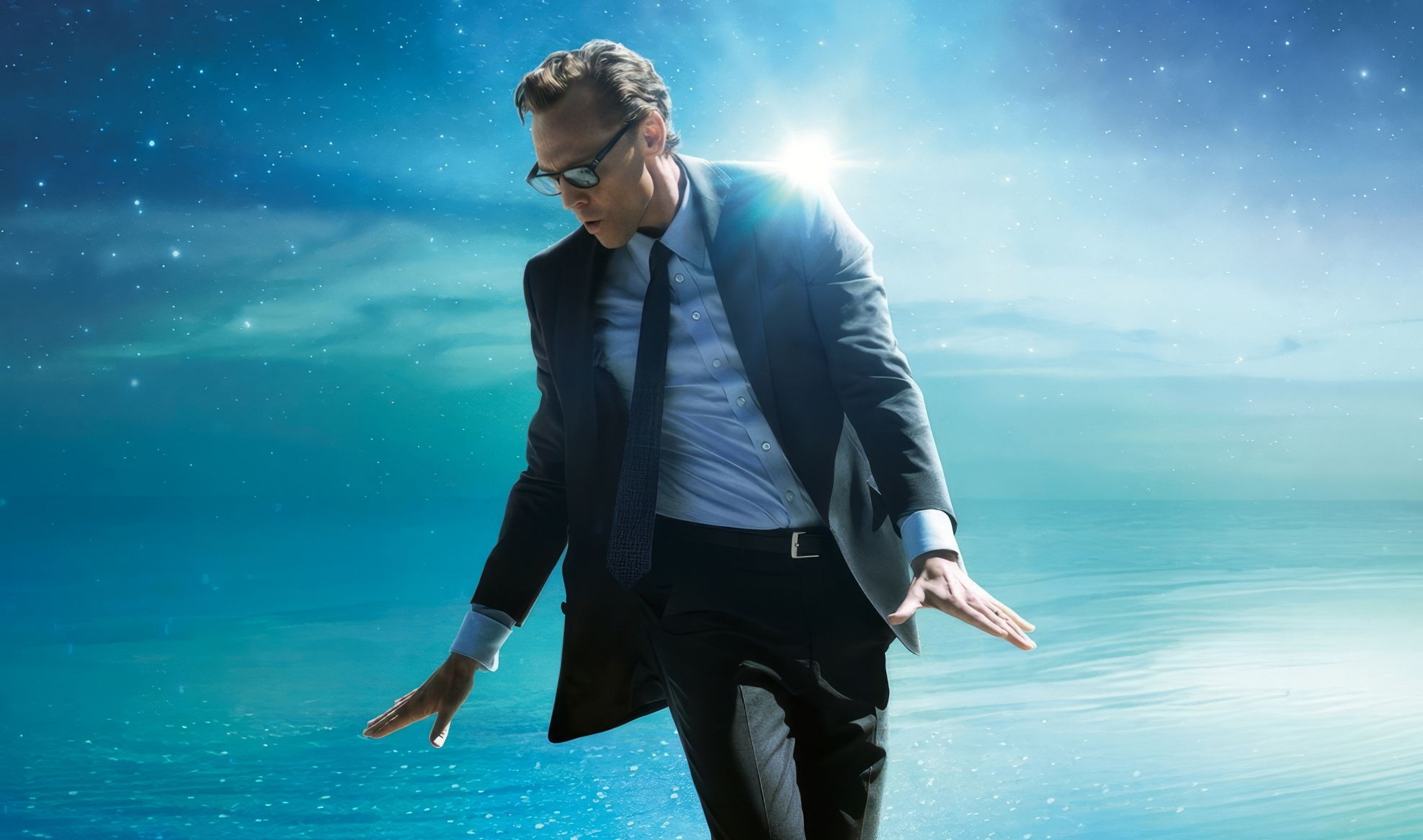
“Chuck” unfolds in three acts told in reverse. In Act III, “Thanks Chuck,” small-town schoolteacher Marty Anderson (Chiwetel Ejiofor) tries to reconnect with his ex-wife, Felicia (Karen Gillan), as the world implodes in small, eerie waves. Traffic backs up, technology goes on the fritz and the busy hospital where Felicia works is suddenly empty one day. Then glowing billboards thanking Chuck “for 39 great years” start popping up everywhere with the bespectacled mug of a guy who looks like a meek, mild local TV host. He’s the Chuck of the title, played by Tom Hiddleston – more commonly known as Loki in the Marvel Universe and a Bond-esque presence in “The Night Manager” streaming series. Things get weird and even more Chucky when the power goes out and his glowing visage starts projecting from the windows of the houses in Felicia’s neighborhood.

Continue reading

From the World of John Wick: Ballerina

10 Jun

Expanding universe of assassins, one star bigger

This “John Wick” spin-off has not quite the muscle or star power to fill the triple-E fandom shoes that the Wick World has grown to offer. It’s a double letdown too, as Ana de Armas, excellent as K’s virtual lover in “Blade Runner 2049” (2017) and transformative, not to mention Oscar nominated, as Marilyn Monroe in “Blonde” (2022), seems more than capable of taking on a fierce female franchise character. Sadly, as rendered by director Len Wiseman and writer Shay Hatten (who penned the past two Wick chapters), in action and character it’s a template in search of a soul – which is something of a shock. Wiseman’s directed kick-ass heroines better before, namely then-wife Kate Beckinsale in the “Underworld” films. 

To be clear, the World of Wick was never anything all that imaginative. Like the “Fast & Furious” films or Tom Cruise’s “Mission: Impossible” stunt projects, it’s always been an excuse for a star to blaze across the scene. Keanu Reeves, the man who is John Wick, sold the franchise with his weary, zoned-out zen assassin persona and willingness to go all in on the fight work and stunts. The action in “Ballerina” takes place between “John Wick: Chapter 3 – Parabellum” (2019) and “John Wick: Chapter 4” (2023). If you remember from “Parabellum” when Wick visits The Director (Angelica Houston) at the Tarkovsky Theater, a front for the Ruska Roma crime syndicate that Wick used to do hits for, there was a lithe, tiny dancer on stage (played then by real-life ballerina Unity Phalen). Turns out those tiptoe gazelles are the kikimora, elite assassins and not bad dancers. With de Armas now donning the pointe slippers as Eve Macarro and losing her “Parabellum” handle of Rooney, we get her backstory: father killed by another assassin org run by some grizzled honcho known as The Chancellor (the ever stately Gabriel Byrne, though he’s not as stately here as Ian McShane as Winston, overseer of the New York outpost of The Continental Hotel, where all the hip, high-paid hit-people hang out gun free); goes through grueling assassination training under The Director – the grimmest being in a room with an assassin in training and put on a clock to assemble a Glock or die.

Continue reading

The Phoenician Scheme

7 Jun

Ambitious as a Korda plan, as misfiring as a Korda assassination plan

Dispatch from Cambridge: The quirky, witty twee of Wes Anderson may be running dry. Sad but so. The genre-bending director scored early and often with such notable art house hits as his take on Salinger’s Glass family, “The Royal Tenenbaums” (2001), his toe dip into animation, “The Fabulous Mr. Fox” (2009) and my favorite, “Moonrise Kingdom” (2012). The list goes on. Anderson was pretty much a sure thing, but his most recent three films – “The French Dispatch” (2021), “Asteroid City” (2023) and this ambitious misfire – have been sputters of what was and what might have been and, worse, smug delves into cinematic overindulgence.

Continue reading

Bring Her Back

2 Jun

Beware the foster mom with the dead daughter

The creepy horror shenanigans of YouTubers-turned-filmmakers Danny and Michael Philippou caught fire with their feature debut “Talk to Me” (2022), which played smartly with genre, race and mythos. It didn’t all click, but you couldn’t forget it. With their follow-up, “Bring Her Back,” the brothers reach a new level in psychological horror that features several grim, look-away scenes.

Things begin badly for brother and sister Andy (Billy Barratt) and Piper (Sora Wong), who come home after school and find their father dead on the bathroom floor. Piper is legally blind (she can see shapes and light, and that’s about it) and the protective Andy is months shy of his 18th birthday, ineligible to get custody. Complicating matters, there are documented incidents of violence in Andy’s past. Initially, child services wants to split the two up, but a saving grace comes in the form of Laura (Sally Hawkins), a former child services worker who lost her daughter in a recent drowning accident and is caretaking for another foster child, a mute 10-year-old by the name of Oliver (Jonah Wren Phillips).

As the sibs settle in at Laura’s remote bungalow, there’s hope in the air, but something’s clearly off. Laura’s chatty and welcoming, but also controlling, spouting out a litany of rules and regs between awkward hugs. Piper is given the daughter’s room – which, bathed in pink and bejeweled with beads, has been maintained like a shrine – while Andy is relegated to a utility closet of sorts that has barely enough room for his mattress and a workout bench. The first real tell comes when we meet Oliver, a lithe androgynous sort with a faraway look in his eyes, standing shirtless and barefoot at the bottom of the drained pool out back, holding the cat that’s “not to be let out of the house” like he’s about to break its neck. Damien, the kid from “The Omen” (1976), has nothing on Oliver. And there are those strange red marks under his eyes; hard to tell if they’re birthmarks or the result of some occult ritual. 

Continue reading

‘Mission: Impossible – The Final Reckoning’

24 May

Tom Cruise and team fights AI, concedes to age

All good things must end, or so they say. But do they have to? This part deux to 2023’s “Mission: Impossible – Dead Reckoning Part One” does have a sheen of finality to it, with plenty of nostalgia.

The key to the MI series is Tom Cruise: No Cruise, no movie. He’s a transcendent (and ageless) actor who sells the brand with bona fide stardom, a renown for performing his own stunts and a drive to be forever outdoing himself – and he usually doesn’t disappoint. In “Final Reckoning,” he succeeds with the help of writer-director Christopher McQuarrie, back for his fourth MI go-round. 

Obviously, Cruise has a lot of faith in McQuarrie – and why wouldn’t he? After winning a Best Screenwriting Oscar early on for “The Usual Suspects” in 1996, McQuarrie has had a meteoric shot of a career in Hollywood. Besides these MI shuffles, he was one of the pens on another Cruise franchise, “Top Gun: Maverick,” back in 2022 and four others, directing Cruise in“Jack Reacher” (2012) and with scriptwriting creds on “Valkyrie” (2008), “The Edge of Tomorrow” (2014) and “The Mummy” (2017).

Continue reading

Short Takes

24 May

Reviewed: ‘Deaf President Now!’ and ‘The Assessment’

‘Deaf President Now!’ (2025)

Davis Guggenheim has long aimed his lens on social issues and humans of interest, be it his Oscar-winning climate change contemplation “An Inconvenient Truth” (2006), “He Named Me Malala” (2015) or “Waiting for Superman” (2010), which took on the failures of the education system. Here, with co-director Nyle DeMarco, the first Deaf contestant to win “Dancing with the Stars” and “America’s Next Top Model,” Guggenheim homes in on a small moment of American civil disobedience that, in context, reflects larger equity issues. The time is the big ’80s, the place, Gallaudet University, the only Deaf university in the world. Founded as a result of an executive order by Abraham Lincoln in 1864 (one we can all get behind), Gallaudet had never had a Deaf president; when it was announced that two of the three candidates to take on the role in 1988 were Deaf, there was much hope and excitement among students. The trustees, none of whom were Deaf or hearing impaired, picked the lone hearing candidate, Elisabeth Zinzer. The students immediately rejected Zinzer and locked down the campus. For the framing, Guggenheim and DeMarco find the four leaders of the protest – the reserved Tim, the passionately demonstrative Jerry, the quiet and demurring Greg and fiery Bridgetta – to reflect back. One of the most intriguing aspects of the protest is how the student negotiator to the trustees was selected: Jerry, who in flashbacks clearly has the innate ability to rouse a crowd, believed he should have been the one, but it was Greg, who, while reserved, was student body president. His showdown on “Nightline” with Zinzer, which nearly gets thrown by host-mediator Ted Koppel doing his Ted Koppel thing, is telling on many levels. The lockdown also had pundits and politicians such as Pat Buchanan and Barney Frank at odds and in an uproar. One of the most inflaming inflection points however, was the insistence by Zinzer and the head of the board, an out-of-touch matron with an impeccable bouffant by the name of Jane Bassett Spilman, that they were simply trying to “help” the students. As with Guggenheim’s other delves, “Deaf President Now!” is composed meticulously. There’s a virtuosic blending of interviews with archival footage and smart dramatizations that aptly employ sensory deprivation to put you in the moment. The Gallaudet uprising came two years before the Americans with Disabilities Act was signed into law by the administration of Bush senior. The roots of that law is well framed in the small, little seen 2007 Ron Livingston film “Music Within,” which would make an ideal viewing companion with “Deaf President Now!”

Continue reading

Short Takes

18 May

Reviewed: ‘Bound,’ ‘Holland’ and ‘We Were Dangerous’

‘We Were Dangerous’

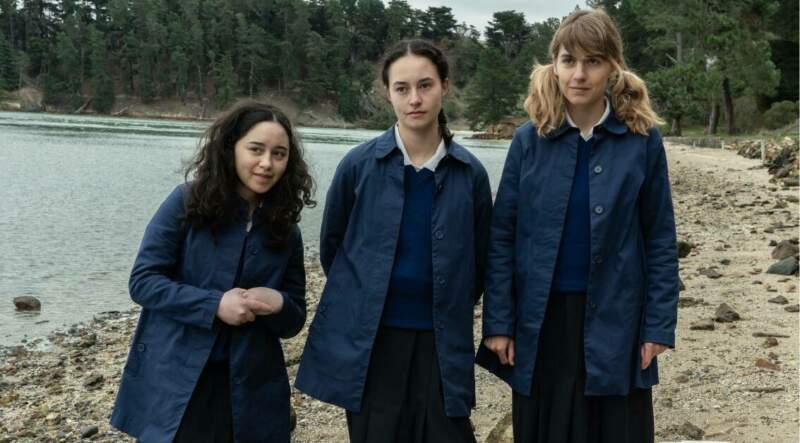
The historical ills of the three Cs (colonialism, capitalism and Christianity) loom at the fore of Josephine Stewart-Te Whiu’s feature debut, a coming-of-age tale about two Māoris and one Pākehā (a white New Zealander) sent to an island reform school for delinquent girls. Nellie (Erana James) and Daisy (Manaia Hall) are sent to the school to whitewash the Māori out of them and accept the word of god. Lou (Nathalie Morris), a rebellious, well-off white girl, is there for remediation of sexual perversions – nothing worse than dad catching you making out with your female babysitter back in the conservative 1950s. As in RaMell Ross’ adaptation of Colson Whitehead’s  “Nickel Boys” last year, there are different rules when it comes to people of color, even in a hellhole. In the still of the night, from one hut, blood-curdling screams are heard. We never really learn what goes on there, just that whatever it is, it isn’t good, and that the school marm (Rima Te Wiata, “Hunt for the Wilderpeople”) is quick to slap any Māori incantation from the mouths of Nellie and Daisy, even though she is of Māori origin and ostensibly came up through the same system. Tellingly, Daisy can’t read and the school doesn’t seem interested in her education; just her assimilation and Christian brainwashing. Part of the school’s mission is to keep the teens chaste (a remote island helps with that logistically) and get them prepared to become demurring housewives, a low bar made even lower by the persistent patronization and Draconian discipline. The driving force to the film is the playful kinship between the trio (aided by the chemistry among the three performers) and their never-give-in resolve despite the dead-end hopelessness of their situations. Gorgeously shot by Maria Ines Manchego (“Uproar”) and executive produced by Taika Waititi (“Wilderpeople,” “JoJo Rabbit”), “We Were Dangerous” is a quiet reminder of the sins of religious imperialism, the agency of lateral violence that accompanies it and the sexual oppression and subjugation of women during the rising tide of world prosperity.

Continue reading

Short Takes

10 May

Reviewed: ‘Rust,’ ‘Thunderbolts*’ and ‘Another Simple Favor’

‘Rust’ (2024)

After four years of headlines about the tragic on‑set shooting of cinematographer Halyna Hutchins, “Rust” finally arrives in theaters for a limited run and on streaming platforms with something of a whimper. There’s plenty of gunplay to be sure, and the film’s evocative of Clint Eastwood’s “Pale Rider” (1985) and the Coen brothers’ 2010 remake of the John Wayne classic, “True Grit,” without reaching those lofty heights. Star Alec Baldwin’s now notorious shooting death of Hutchins – and wounding of director Joel Souza – clouds nearly every scene, something underscored by Baldwin’s Harland Rust being a stone-cold killer more than able with a six-shooter. The Wyoming-set Western begins with a bit of a “Little House on the Prairie” preamble as Lucas Hollister (Patrick Scott McDermott), a parentless 13-year-old protecting his younger brother from bullies, inadvertently shoots and kills the ruffians’ father (the eerie tie-ins to real life are endless). Hanging is in order, but before the execution can be carried out Harland shows up, wipes out the jail watch and absconds with the boy. On the trail, conversations between Harland and Lucas are terse. If Lucas asks too many questions, Harland dishes out some of Wayne’s slap-first tough love. Of course the law and a horde of scummy bounty hunters are after the two, with plenty of blazing shootouts along the dusty path. Baldwin looks the part of gruff gunslinger, but his avuncular, wispy voice undercuts his character’s bravado where a Wayne, Eastwood or Jeff Bridges would have tonal command of a scene. Another unavoidable reminder of Hutchins: The film is stunningly shot, with dark and muted texturings and rich, opulent framings of the amber plains akin to the camerawork by Ari Wegner that made “Power of the Dog” (also shot in 2021) jump off the screen. “Rust” makes for a passable Western sojourn that will forever be steeped in tragic ignominy. 

Continue reading

Short Takes

3 May

Reviewed: ‘The Surfer’ and ‘Havoc’

‘The Surfer’ (2024)

Fans of Nicolas Cage behaving off-center in such curios as “Mandy” (2018), “The Unbearable Weight of Massive Talent” (2022) or “Pig” (2021), should be all in on this hazing ritual turned grudge match. Cage stars as an unnamed family man (we’ll just call him Cage; the credits list him as “The Surfer”) who wants to take his teen son (Finn Little) surfing at a remote beach in Australia. Once on the golden sands of surfer paradise, the local hang-10 tribe – trim, hyper-fit, middle-aged men – tell Cage and his kid: No surf, not now, not ever. Cage quickly but sheepishly notes that it’s a public beach, to which the snappish beach bullies threaten a beatdown. “Before you can surf, you must suffer,” says the ringleader (a steely-eyed Julian McMahon). If Cage seems an odd fit to be randomly out in the wilds of Australia, since he doesn’t dial up an Australian accent for a second, the script has answers: Cage’s pa was born on a hillside house overlooking the beach; Cage has returned all these years later after being raised in California. Also, hey, this is a Nic Cage movie, and you can’t have Cage not being Cage. What ensues is Cage living out of his car in the parking lot above the beach (his son is back at some hotel with his mother), trying to suss out the right opportunity to sneak in a run. Adding complexity to the quest at hand, the surf bros have a rocking beach shack that they seemingly never leave and from which they regularly dispatch squads to harass Cage and trash his ride. Days pass, tensions rise and mean-boy pranks get nastier and nastier, as Cage’s classic Bimmer becomes a squalid rat’s nest of candy wrappers and fly-worthy grunge. It’s a grinding game of wills with the prospect of tripping into point-of-no-return territory, as well done in Down Under touchstones “Wake in Fright” (1971) and “Eden Lake” (2008). “The Surfer” is not quite that kind of psychological horror-thriller; it’s more a psychological dark comedy with ’70s B-movie bite, though with a redundant ebb and flow of conflict and retreat in which the stakes don’t rise. Sure, there are ripples that affect Cage’s character’s offscreen life (money, family, the father’s house, etc.), but it feels like filler, not consequence. Still, Lorcan Finnegan’s sunbaked homage and Cage’s winning persona carry the never-surrender clash in from the foamy breakers without a wipeout. It’s a safe, sure ride that never fully shoots the waves.

‘Havoc’ (2025)

Off the top, there’s a lot to like about this amped-up actioner. First, the cast is killer: Tom Hardy (“Inception,” “Dunkirk”), Oscar winner Forrest Whitaker, Timothy Olyphant of “Justified” and Luis Guzmán, whom we haven’t seen enough as of late. Secondly, the slick, style-infused crime thriller has aspirations of, of all things, Peckinpah and Woo, which should come as no surprise – it’s directed by Gareth Evans, the hyperactive eye behind the gonzo Indonesian cop beatdown “Raid” flicks. All that goodness gets lost in an arduous overkill of hyper action that explodes around Hardy’s dirty cop on a bloody path to redemption. The film, an opulent, rain-slicked, Gotham-esque spectacle, is set in an unnamed, ambiguous American city (Chicago gets my bid, though it was shot in the U.K.) where gangs, racial lines and revenge agendas stand out like blazing neon road signs in the jet-black night. In the mix, we have a Chinese triad, a corrupt business owner running for mayor (Whitaker), a massive shipment of smack, an inner sanctum of cops on the take who shoot first, and a bunch of hockey-masked gangbangers who have gotten in too deep. The resident triad boss gets offed because of the smack, and his hair-triggered mother (Yann Yann Yeo) comes stateside for a little payback. Hardy’s Walker gets caught in the never-ending crossfire trying to protect one of the gangbangers (Quelin Sepulveda) from the wrath of the triad and other bent cops (led by Olyphant) trying to cover their bloody tracks with more blood. It’s also Christmas, and Walker has an estranged 6-year-old daughter he wants to get a present to. It’s just more dressing for long, overproduced shootouts and smackdowns that go on far too long. Some of the choreography and camera work are more than impressive, but “Havoc” is style over substance, with a director continually shouting out “did you see what I did there?” Hardy’s inherent bristling grit, well used in “Fury Road” (2015), gets wasted here; most of what sparkles and pops are the dark sets, acute framings and a fresh-faced Jessie Mei Li as one of the department’s only clean cops.