Reviewed: ‘Alien: Romulus’ and ‘Borderlands’ in theaters

17 Aug

‘Alien: Romulus’ (2024)

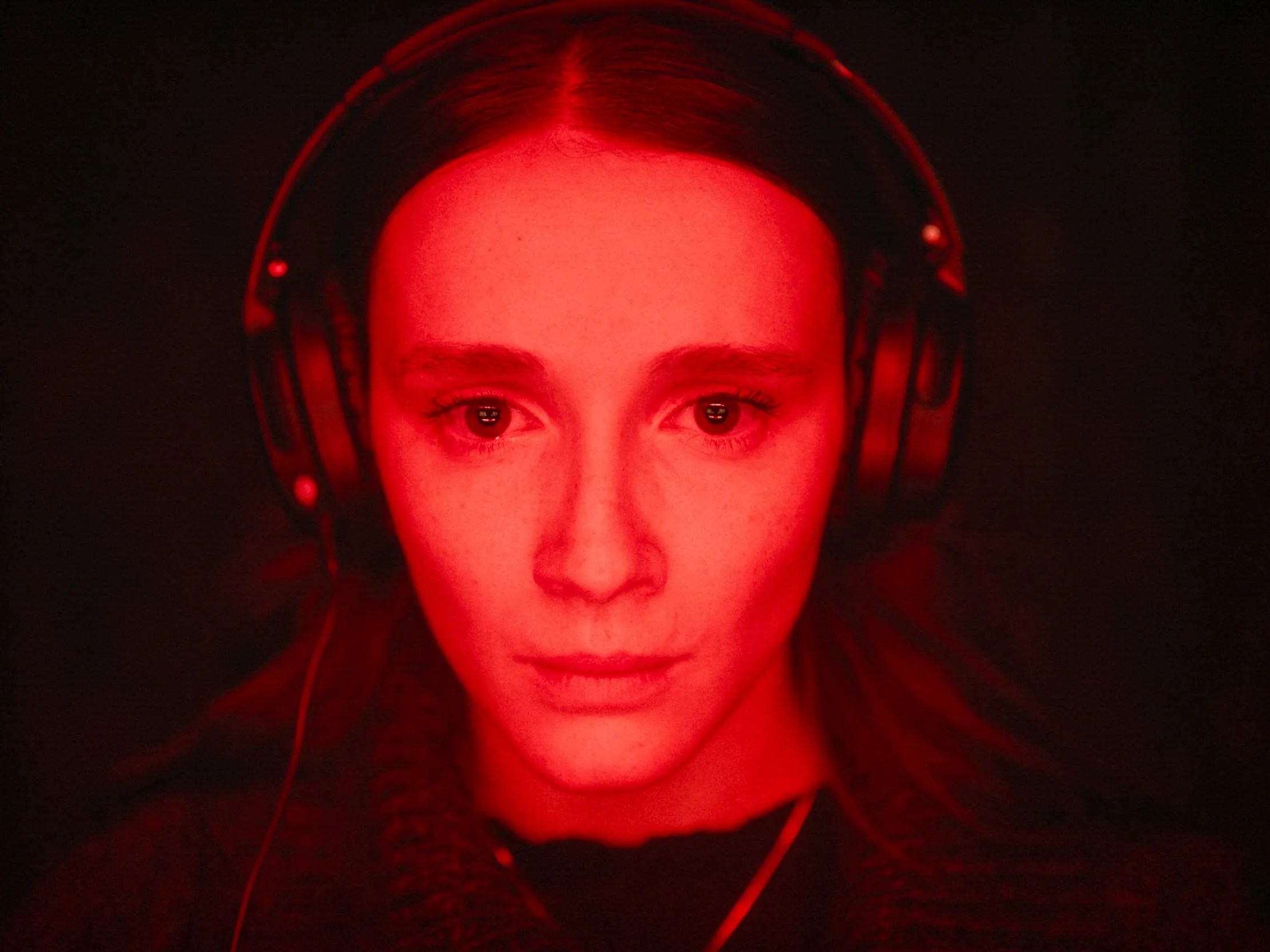
If you can’t get Ripley, go for Rain, or so that’s how this “interquel” between “Alien”  (1979) and “Aliens” (1986) rolls. In theory, Ripley is in a cryogenic sleep in a space pod elsewhere as this bombastic stand-alone episode unfolds on a grungy remote mining planet where Rain (Cailee Spaeny, “Priscilla,” “Civil War”) is indentured to labor 12,000 hours before she and her brother Andy (David Jonsson) can leave. Most who stay die from lung cancer – you’d think they’d have masks and clean-air breathing apparatuses circa 2130, but no, it’s like West Virginia 1956, canary in a cage and all. Andy is Black (Rain is white) and a synthetic (or droid) like Ash and Bishop in the ’79 and ’86 films respectively. This is no spoiler, as he oozes white goo after being harassed and beaten by a mob of ruffians early on because of his mild, quirky demeanor and penchant to spout corny dad jokes (“What did the claustrophobic astronaut want? More space”). Andy served as family companion to Rain as she grew up and her parents died from the ills of the planet, thus that “brother” tag. We catch up with Rain just after she has notched her hour quota, but when she goes to pick up her off-world pass, she’s informed that the corporation running the show (Weyland, so prevalent in “Prometheus” and perhaps an intergalactic rival to Atlas in “Borderlands”) has doubled the ante; she’s got another five years to go. Syncing up with her posse of hipster hackers (an uber generic lot who, like Rain, rage against the machine) they discover a dormant space station is drifting by the plant and hatch the idea to take a mining shuttle up to the structure, fire it up, slip into cryogenic pods and jet off to somewhere with clean air and fresh water. What begins as a pipe dream quickly becomes a nightmare when the adrift Romulus turns out to be a hive of the jaws-within-jaws xenomorphs that so voraciously ate their fill of other all-too curious humans in other “Alien” deep-space chillers. “Alien” director Ridley Scott must have green-lit the full-on cut-and-paste pastiche on display here, as he serves as a producer on the film directed by Fede Alvarez (“The Girl in the Spider’s Web”). There are whole scenes and lines from the films it spans incorporated to stoke franchise fans’ glee in knowing “in space, no can hear you scream,” but the execution’s shoddy, not the least bit nuanced (or nostalgic), and mostly falls flat. The nifty special FX and the Imax-Dolby surround sound (which is how I saw it, and suggest as the way to go, if you go) elevates the grinding bang of cargo ships belly-to-belly to a near Disney-ride experience. That said, much of the action is muddled and, as far as character development goes, Rain’s synth sibling probably has the deepest backstory of all … and it’s on a programmed chip that can be slipped in and out of a slot behind his ear. Speaking of synths, AI is used to bring back the likeness of Ash – or an android like Ash. The actor Ian Holm died in 2020, so the result is creepy but cool if ultimately just another reheated “Alien” ort. Of future events, one can only imagine the additional rage Ripley spouts when she awakes in another 30 years (“What, you made a Ripley movie without me? Get my agent on the line!”). Then again, one could see Ripley and Rain teaming up and going all “Thelma & Louise” (1991, another Scott film) on the Weyland Corp. honchos and studio execs, let along the duplicitous droids and skittering xenomorphs in their way.


‘Borderlands’ (2023)

This lackluster sci-fi adventure based on the hit video game gets an extra half-star just for its fine cinematic framing of Cate Blanchett’s alluring cheekbones. You could see “Borderlands” as a project with possibility, helmed by Eli Roth as a maestro of mostly lo-fi shock fare (“Cabin Fever,” “Hostel” and “The Green Inferno”) and featuring poker-hot thespians Blanchett (“Blue Jasmine,” “Tár”) and Jamie Lee Curtis (“True Lies,” “Everything Everywhere All at Once”) with Kevin Hart as the X-factor. Unfortunately, it never clicks, and the troubled production was allegedly taken away from Roth and reshot by “Deadpool” (2016) director Tim Miller too late for a script that’s a pileup of tired lines such as “I’m too old for this shit.” Blanchett is Lilith, an intergalactic bounty hunter impossible to miss with her cool, punky pink shock of hair and tasked with reluctantly retrieving the wayward daughter (Ariana Greenblatt) of universe-spanning Atlas Corp.’s swaggering CEO (Edgar Ramírez, putting some buzz in his Jeff Bezos bit) from a rust-bucket planet named Pandora. As the storyline has it, the youth is a divine being and third key to opening something known as “the Vault” on the far-flung planet where Lilith was born. “The Fifth Element” (1997) this is not, and loose (and lame) pokes at “Star Wars” are seated here and there (Hart’s soldier in a Vader-esque mask jokes that it’s hard to breathe in) with Lilith as a Han Solo stand-in. The concept of “the Vault” as an endgame likely makes more sense in online play; here, it’s a dull, uninspired MacGuffin. Giving chase to Lilith and her posse, soon including the sassy adolescent Greenblatt tossing exploding teddy bears at friends and foes with snarky glee, are Hart’s buttoned-up soldier and Curtis’ archaeologist, Atlas security forces riding hoverboards and a blood-lusting tribe of the wasteland so originally branded as “the psychopaths” who clearly have taken their hockey mask and half-naked fashion cues from Lord Humongous and Jason Voorhees. Hart, who has motormouth comedic skills to rival Chris Tucker in “The Fifth Element,” is uncharacteristically mute here; it’s Jack Black voicing beat-up ’bot Claptrap that notches the film’s few genuine laughs. To give you an example of just how little faith the studio had in releasing the film, it was already shot and sitting in the studio vault before Blanchett delivered her knockout performance in “Tár” in 2022. Its resurrection and theatrical run, adding to this summer’s dismal screening season, is further evidence of the downstream ills of the writers’ strike.

The Instigators

10 Aug

A Boston movie misdemeanor, speeding onto streaming despite Damon, Affleck

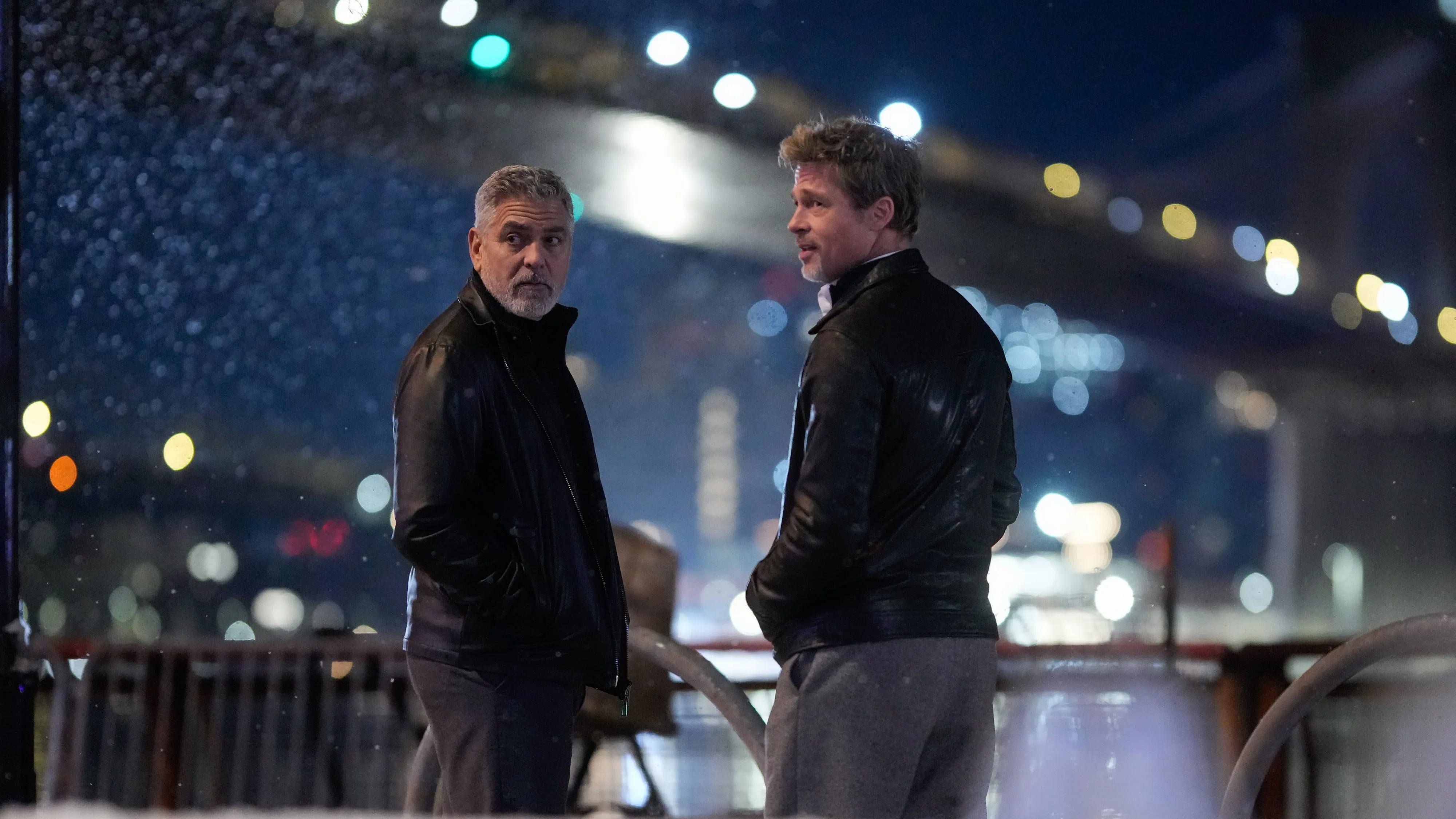
To be clear, “The Instigators” is a bona fide Boston crime movie (are there other kinds of Boston movies?). That doesn’t mean it’s in the conversation with “The Friends of Eddie Coyle” (1973), the best Boston movie ever, “Mystic River” (2003) or even “The Departed” (2006), but it does have more local accent and identifiable scenery than either of those latter two. Then again, so did the 2020 flops “Ava” and “Spenser Confidential” – the only reason to see those was to drink in their fond framing of our fair city; any other postal code and you’d be certain to spin the dial. Both came out during the Covid lockdown, when theaters were closed and films were going direct to streaming, but given the quality (despite A-lister casts with the likes of Jessica Chastain, Mark Wahlberg, John Malkovich and Colin Farrell) they’d be heading to streaming today too. “The Instigators” is partially in their company, as it got just a limited theatrical release last week (at the Alamo Drafthouse Cinema in Boston’s Seaport) and drops on Apple TV+ Friday. It’s a much better film than “Spenser Confidential” or “Ava,” and does a decent job of leveraging Boston culchah and history rather than just using the city (and its filmmaking tax breaks) as a backdrop. But overall “The Instigators” is a missed opportunity considering its incredible cast, headlined by homeboys Matt Damon and Casey Affleck, who return home regularly to make Boston movies since their first pairing, “Good Will Hunting” (1997), which notched both actors’ big breakout.

The story, written by Affleck and Quincy-born scribe Chuck MacLean, the guy behind the Boston-set Kevin Bacon crime series “City on a Hill,” revolves around Damon’s Rory, an ex-Marine depressed over the $32,480 in child support he needs to come up with to see his kid again. To deal with his downcast condition he sees a therapist (Hong Chau, who paired with Damon in Alexander Payne’s 2017 Lilliputian satire, “Downsizing”) and teams up with Affleck’s boozy Cobby, fresh out of the slammer, to do a job for small-time mobster Mr. Besegai (Michael Stuhlbarg) and his partner, Richie Dechico (Alfred Molina), who operate out of a North End pastry shop. The gig is to raid the election headquarters of incumbent Mayor Mayor Miccelli (Ron Perlman), who is expected to win reelection in a landslide. The thought is that the cash vault at the victory fete will be brimming and all the celebratory attendees pickled. Walk in, walk out, simple, but the reality is not so.

First, Cobby and Rory get teamed up with a bungling petty hood named Scalvo (rapper Jack Harlow, who starred in the bland “White Men Can’t Jump” remake), who for some reason is given point; then, when in, there’s no cash in the vault because it got so full that there were earlier armored car pickups. Add to that the materializing realization that the election is no landslide, but a runoff dogfight in which upstart progressive Mark Choi (Ronnie Cho) may have done just enough last-second politicking to trigger a regime change. No matter who takes the reins, city hall has never seen a mayor like either of these two, and the lovely brutalist facade down in Government Center that we all have come to love and hate gets plenty of screen time as the meandering plot turns it into a “Butch Cassidy and the Sundance Kid” (1969) shootout scene late in the game. 

For those who wax romantically about our town’s old-school legacy, there’s plenty of dive bar love and Bahston Easter eggs. “Badass” Quincy (who knew?) gets a gritty new recasting. It’s a cheeky and warmly nostalgic cinematic sojourn for us locals; it’s hard to see how that works for anyone not in the know.

The film’s helmed by Doug Liman, who made made a name for himself early with the indelible “Swingers” (1996) and “Go” (1999) before teaming with Damon in 2002 for the “The Bourne Identity.” His efforts alongside Tom Cruise for the sci-fi thriller “Edge of Tomorrow” (2014) and underappreciated “American Made” (2017) were equally as solid, but then there was the flat-footed “Jumper” (2008) and this year’s unnecessary “Road House” remake with Jake Gyllenhaal. With a middling title, “Instigators” feels like a concept in search of a story.

Besides “Good Will Hunting,” Damon and Affleck (brother Ben serves as a produsah) have emitted cinematic synergy in the Steven Soderbergh “Ocean’s” flicks as well as reteaming with “Good Will” director Gus van Sant in 2002’s “Gerry,” a dark existential tale based on a real-life Boston Globe intern lost in the New Mexico desert (part of Van Sant’s provocative realism films that include “To Die For,” “Paranoid Park” and “Elephant” – all great). Unfortunately, here they bounce off each other more than they play off each other. That said, the car chase scenes are top dollar – or at least the one in which Cobby and Rory take Chau’s psychiatrist hostage (she jumps in the car willing). The route takes them to some unlikely side venues, including the public alleyway parallel to Newbury Street and the Esplanade and tops the chase sequence in brother Ben’s “The Town” (2010).

Sadly, that’s as good as the film gets; the more it spins and recycles, the more it loses its mojo – and us. Toby Jones, Ving Rhames and Paul Walter Hauser (“Richard Jewell”) round out the veteran ensemble and the use of Petula Clark’s “Downtown” and Thunderclap Newman’s “Something in the Air” help, but … 

For the record, as far as Boston locale authenticity and verisimilitude go, the original “Thomas Crown Affair” (1968) with Steve McQueen and Faye Dunaway still soars above the rest.

Trap

10 Aug

Hard to enjoy this concert when the FBI is closing in

The latest from M. Night Shyamalan, whose plot twist sleight-of-hand shenanigans captivated audiences early (“The Sixth Sense” and “The Village”) but faltered over the years (“The Happening” and “Lady in the Water”), is in line with his more recent fare “Old” (2021) and “Knock at the Cabin” (2023) – serviceable suspense despite ridiculous carrying-ons. The set-up’s fairly simple: A serial killer by the name of The Butcher, whose kill spree is at an even dozen, is purportedly at a pop diva’s concert, which the FBI and local police have targeted as the venue to apprehend Philadelphia’s most wanted. The task isn’t a simple grab-and-nab, as the authorities don’t know what The Butcher looks like, just that he has a tattoo of a bunny on his wrist and likely drives a dark-colored sedan. The latter is a deduction made by the veteran profiler on the case, Josephine Grant, played by ’60s icon Hayley Mills in a cheeky bit of casting – as she starred in “The Parent Trap” (1961). Grant believes the OCD nature of the crime scenes suggests The Butcher wouldn’t drive an ostentatious vehicle of light color, because dust and dirt would show too much. Given his moniker, though, it’s hard to imagine such exact order at the killing sites.

Attending the concert is Philly firefighter Cooper Adams (Josh Hartnett) and his teen daughter Riley (Ariel Donoghue), a ravenous fan of Lady Raven (played by Shyamalan’s daughter Saleka) who’s of the same pop queen royalty as Lady Gaga, Katy Perry and Taylor Swift. Dad’s not too hip and has to get explanations of the happening lingo of the moment – “crispy” and “jelly,” to name two – which wasn’t too far off from me getting a recent lecture on “rizz” from my teenage daughter, whom I similarly took to a Katy Perry show. It’s not too far into the show when dad, sussing out all the extra security precautions, starts to get antsy, and it’s not because he’s the only dorky dude towering above a sea of shrieking teens, but the killer himself. Early on, in one trip to the restroom, Cooper pulls up video footage of a panicked young man imprisoned in a basement. The film could have easily been titled “Serial Dad.”

The cat-and-mouse ferreting works pretty well for a while, and the concert orchestration is pretty dope. Saleka, who’s had small parts in her dad’s films before, wrote and performs all the songs with convincingly Swiftian appeal and nearly steals the film. Hartnett’s fine as the dad-joke pop with a sinister side, and hauntingly reminiscent of Robert Urich playing a firefighter in the film “Turk 182” (1985); Donoghue’s career, as evidenced here, should continue to rise. That said, there’s a dramatic shift in the film and locale about two-thirds in where the wheels of plausibility start to come off the bus. That’s frustrating, because until then “Trap” manages to hold your attention while you grit your teeth. Like the recently released “The Instigators,” the film could have used a better title and a less ludicrous wrap-up, though the last sequence almost does enough to redeem.

Short Takes:  ‘Queendom’ and ‘Knox Goes Away’ 

2 Aug

‘Queendom’ (2023)

“And yet, she persisted” would also have made an apt title for Agniia Galdanova’s gripping and pointedly political documentary about 21-year-old Russian drag performance artist Gena Marvin (birth named Gennadiy Chebotarev), who, alienated, ostracized and worse, never surrenders their identity, and in the process, takes on the draconian social politics of the Putin regime as well as the war in Ukraine. Gena, a striking, lithe figure evocative of Tilda Swinton in “Orlando” (1992) or Bowie as Ziggy or in “The Man Who Fell to Earth” (1976) mode, was born in the far eastern town of Magadan, a place that in lens feels like it would make a good hellish gulag of a work camp in a different movie. For the most, Gena and their art are not well received in the remote town, and when taking to the streets they are often harassed and even assailed. In one scene when strolling a supermarket aisle, pasty white, bald and towering over other shoppers in a fur coat and a loose-fitting bustier (just coming from a shoot to get some essentials), they are asked by security to leave the store and not return. Raised by their grandparents, Gena is often at odds with them – the identity thing, but also money. There’s genuine care and affection in the homestead, but the grandfather, trying hard, is unable to accept his grandchild’s feminine persona and wants to know how they can subsist  on TikTok likes (I did too, something that “Skywalkers: A Love Story,” another recent portrait of Russian artists, never fully plumbed). Identifying as nonbinary and still figuring it out, Gena heads to Moscow for college, where they don’t quite fit in. Meanwhile, during protests against the war and demanding freedom for Putin opponent Alexei Navalny, they take to the street, gliding through the unrest in stark, alluring costumes; like when Bowie made his way to the stage, everything seems to stop and focus on them – the stark difference being the pervasive air of hostility versus Bowie’s adoring sea of fans. While Gena doesn’t launch into particularly political diatribes onscreen, their art is inherently so, especially in light of Putin’s increasing crackdown on trans-queer culture. The access that Galdanova and camera operator Ruslan Fedotov have is immersive, intimate and in the moment. The scenes of performance art executed on the shore of a raging sea or in a muddy quarry pit are breathtaking in composition and framing, and made all the more alluring by Gena’s keen sense of presentation and otherworldly personas.


‘Knox Goes Away’ (2023)

John Knox (Michael Keaton) has a lot on his mind, or so he tries to keep it that way despite recent tests that indicate the onset of dementia. Not a good thing for a contract killer, but Knox is not your ordinary hand of riddance, no, he’s got two doctorates and is super methodical and thorough in his work. He’s never been nabbed; he did do a stint in the slammer, but that was more the way they got Al Capone, a subplot that folds back into the final reckoning. For Knox, waning cognition turns out to be a liability when on a job. He loses track of where he is and who he’s there to shoot. At the core is a botched hit, an ongoing investigation (Suzy Nakamura, scene-grabbing as the lead investigator) and things get get amped up when Knox’s estranged son Miles (James Marsden) shows up one night seeking professional help. To say more about the pieces and how they click and don’t click together would do a disservice to this thinking-person’s thriller helmed by Keaton (his second feature) doing double duty. As the addled, once razor-sharp lead, the versatile Keaton – who’s been Batman; Birdman (in Alejandro González Iñárritu’s 2014 Best Picture winner); Elmore Leonard-written detective Ray Nicolette in films by Quentin Tarantino and Steve Soderbergh; and Beetlejuice (a sequel on the way this year) – does a fantastic job of conveying a failing mind, the cold facade of a calculated killer and the jittery bridge in between. The robust cast includes Marcia Gay Harden as Knox’s ex, Al Pacino as his criminal handler, Ray McKinnon of “Deadwood” as Knox’s sometime partner and Joanna Kulig, so amazing in 2018’s “Cold War” as Knox’s Thursday afternoon lover. The Miles subplot is a little overbaked, as is Marsden’s performance, but overall Keaton and his immersion into a character in transition drive the film confidently.

Deadpool & Wolverine

27 Jul

Mouth meets multiverse in a super sequel, this time inducing some yawns

Bigger isn’t always better. The initial “Deadpool” (2016) entry was crass, curt and ingeniously fresh in its fourth-wall-breaking delivery and dark humor. Ryan Reynolds was a revelation as the potty-mouthed superhero who can’t die, and the plucky gut punch sparked a possible resurrection of an increasingly dull and dying genre. “Deadpool 2” (2018) came out with the same kick and verve, but the trick was starting to thin as the plots thickened – and now, with “Deadpool & Wolverine,” the “more” is too much when the charms of yesteryear (nearly 10 years ago) largely float around like the remains of a bad, high-fiber meal left unflushed.

How did we get here? Let’s keep in mind that “Deadpool” was a Marvel outlier owned by 20th Century Fox while Disney held most of the rest of the Marvel Universe in its IP vault. Now that Disney has gobbled up Fox, it’s an all-for-one cross-breeding box office grab. Match ’em up, shift ’em around and listen to that cash register go ka-ching.  This is not the first time Deadpool and Wolverine have crossed cinematic paths: Deadpool made an appearance in “X-Men Origins: Wolverine” (2009), back before the mega merge. Now coveted eggs nestled under the same corporate structure, they team up – kinda – though oddly there’s no “Hey, remember back when” immortal bro moment.

What we get is Deadpool’s unmasked, badly disfigured street person, Wade Wilson, stashing away his cool red costume and ninja swords for a stapled-on toupee and a job as a car seller. He’s just been rejected by the Avengers as a team member and his girlfriend Vanessa (Morena Baccarin) has moved on too.  The removal of the mask mutes the rapid, rapier wit that usually spew from Deadpool’s mouth – that is, until he’s abducted through a time portal by an agency know as the Time Variance Authority, run by a smug, Trumpian suit named Mr. Paradox (Matthew Macfadyen of “Succession,” having hammy good fun with the part). The long and short is that the universe Wade is from is due to die unless an “anchor being” – an entity critical to a universe’s existence, in this case, the Wolverine – is restored. As you recall, Hugh Jackman’s Wolverine took an honorable exit in “Logan” (2017), but since this is another multiverse of nonsense, anything is possible, including the impossible. “Fox killed him. Disney brought him back. They’ll make him do this until he’s 90,” Deadpool says in one of his many studio-merger-skewering lines, though few, if any, are really funny. There’s even a joke about how the multiverse had been overdone and overused, and yet the story chooses to chew the fat it just urinated on.

When the two immortals first re-meet, it’s as adversaries. They fight, arms are broken, torsos are skewered and blood spurts – it’s Bugs Bunny violence gone guts-and-gore graphic. It’s fun to watch for a second, but to what point? The pair wind up in a wasteland called “The Void” in which they encounter Charles Xavier’s evil twin sister, Cassandra Nova (Emma Corrin, the young Di in “The Crown”) a supreme being who lords over the dregs of superheroes from long-past Marvel franchises you forgot about and a few you never heard of. To give away further details would ruin the fun of the cameos that are one of the few bright spots of the movie, but I can say that Patrick Stewart does not come walking through the door, or even a time portal. 

As plotless as the film is – its’s a series of not-so-meta inside jokes that occasionally land – I have to give it to Disney for taking off the family-values harness.  “I’m going to show you something huge,” someone tells Deadpool, who retorts: “That’s what scoutmaster Kevin used to say.” At the beginning showdown with a legion of TVA henchmen, he says in an aside to the audience, “Get out your special sock.” There’s definitely some short, sharp jabs of dark, sophomoric wit that hit. Part of that’s credited to the return of writers Rhett Reese and Paul Wernick, but their usual tightness gets sapped by including that everything-bagel multiverse and a host of others jumping into the scripting mix, including Reynolds and director Shawn Levy, who seems to be Reynolds go-to guy after pairing on “The Adam Project” (2022) and the Boston-set comedy “Free Guy” (2021).

Other wins are Rob Delaney, as Wade’s best friend and fellow car seller who has certain pull in other universes, and the series’ brilliant casting of Leslie Uggams as Wade’s cocaine-craving roommate, Blind Al. The two rob the few scenes they are in. As the titled leads, Reynolds and Jackman (and he is super jacked) give you what you’d expect: snarky sass, gruff growls and macho-manly bonding just in time to save the world. But all the reality- and alternate-reality rejiggering takes away from anything anyone can bite into, because the reality presented in frame can be rewritten ad infinitum without consequence. The dead and destroyed can come back just as easily as Deadpool and birthday candles. Where’s the emotional stock in that? In genre alone, we’re already dealing with a level of removed disbelief; now we just toss a handful of disparate this-and-that into a blender and take whatever the purée, chop or mince cycle gives us? To infinity and blah!

Short Takes: “Faye,” “Skywalkers,” “Land of Bad” and “A Family Affair”

27 Jul

‘Faye’ (2024)

Faye Dunaway, who for my money was the actor who embodied the redefinition of women during the New Hollywood era – “the most exciting time in film,” she calls it in the new documentary from producer-turned-filmmaker Laurent Bouzereau. I couldn’t agree more. Dunaway’s chiseled, alluring countenance cut a striking image, and she was often a barn burner in her onscreen delivery. Dunaway would be Oscar nominated for her performances in “Bonnie and Clyde” (1967) and “Chinatown” (1974) and win the bald, golden guy for “Network” (1976). That body of work practically defined the time, with “Bonnie and Clyde” alone hailed as the cornerstone of a wave of classics that include the “Godfather” films, “The French Connection” (1971) and Monte Hellman’s “Two-Lane Blacktop” (1971). Bouzereau serves up a spry Dunaway (now in her 80s) reflecting on her childhood and marriage, relationships and affairs with Boston rocker Peter Wolf, film director Jerry Schatzberg (“Scarecrow,” “The Panic in Needle Park”) and Marcello Mastroianni among the starry lot. The Southern-born Dunaway had several ties to Boston besides Wolf: She attended Boston University, filmed the original 1968 “Thomas Crown Affair” with Steve McQueen here and sought regular guidance from playwright and Harvard professor William Alfred, whom she describes as the father she never had (her own father was an alcoholic, and her parents divorced when she was young). The jumping-off for the film is the iconic 1977 shot of Dunaway poolside at the Beverly Hills Hotel with her Oscar at an ungodly 6 a.m. the day after her win. The photo would lead to Dunaway marrying photographer Terry O’Neill; the couple would adopt Dunaway’s lone child, Liam, who in the film has much affection to offer about mom. Other talking heads that chime in are Mickey Rourke, who co-starred with Dunaway in the 1987 Charles Bukowski-inspired flick “Barfly” and fan-friend Sharon Stone, who broke a few glass ceilings in her own right, but there’s also no drop-in from “Chinatown” co-star Jack Nicholson. If there’s any downside to the film, it’s that it feels too curated by the actor and thus narrow in scope. Though we get Bette Davis making abundantly clear in one talk show clip that Dunaway was difficult to work with, even the Joan Crawford biopic “Mommie Dearest” (1981), which was critically drubbed at the time – especially Dunaway’s performance – gets spun in a way that pulls blame from Dunaway. The film touches on but does not delve into issues of mental health, a topic that feels so nonchalantly dropped in that it does the topic and the actor a disservice. “Faye” is a great rewind of one of (if not the) most defining periods in filmmaking, but holds the cards too tight on Dunaway as a person.


‘Skywalkers: A Love Story’ (2024)

One part promotion piece and one part jaw-dropping derring-do, this doc by Jeff Zimbalist (“Give Us This Day”) follows Angela Nikolai and Ivan Beerkus, Russian rooftoppers (people who climb skyscrapers illicitly for thrills) who during the last World Cup finals seek to climb the near-completed Merdeka tower in Malaysia – a 2,227-foot structure, the second-tallest in the world. It’s not quite “Man on Wire,” the fantastic 2008 Academy Award-winner that showcased Philippe Petit’s wire walk between the the World Trade Towers in 1974 (neither uses nets or wires, so what’s the difference between 1,368 and 2,227 feet if you fall?), but it grips in its own right. The staging and planning aspects provide intrigue, with World Cup mania leveraged as a distraction, and there’s the added challenge of Covid that shuts off the pair’s sponsorship funding; the couple are undaunted. Zimbalist delves into their strained relationship and backstories to add depth, but it’s not deep enough or blended in seamlessly enough and, if anything, detracts. Much of the stunt footage was shot by the couple, as it’s their bread and butter to garner likes and dollars on social media. It would have been interesting had Zimbalist peeled back more on how social media translate into dollars and how some of the amazing footage is captured – from what’s given, we can infer there are GoPros, selfie sticks and drones, but it’s all so polished there has to be more to it. There are accusations that much of what the pair do is staged and manufactured digitally, and while it doesn’t seem so, it’s another thing the film glosses over. Nikolai and Beerkus are bona fide artists and know how to strike a pose atop the universe (Nikolai will often bring a fancy dress), and the shots looking down are viscerally dizzying – if you have acrophobia, this is your content warning. Everyone else should hang on all the way through: Some of the most impressive stunt footage is at the end as the credits roll.


‘Land of Bad’ (2024)

In this military actioner from director William Eubank in which U.S. Army Special Forces get dropped into a Philippine jungle to extract a CIA package, underpowered plot devices go off throughout: Turns out the simple in-and-out extraction isn’t so simple, as the camp the small strike force is sent into is a hive of international terrorists, largely unbeknownst to the smug higher-ups in intelligence. Shit goes south real fast, which leaves one soldier by the call name of Playboy (Liam Hemsworth) on the run from an endless “Assault on Precinct 13” horde of well-armed baddies. Getting to the extraction checkpoint is an endless task that keeps shifting as each possibility erupts into a new hot zone. The whole harrowing ordeal’s not far off from Marc Wahlberg-Peter Berg collaborations “Mile 22” (2020) and “Lone Survivor” (2013). Added to the mix is Russell Crowe as Reaper, a drone pilot back in Nevada keeping eyes on Playboy and occasionally firing off a Hellcat missile or two. (The two paired on the 2022 crime-thriller “Poker Face,” which Crowe directed.) Eubank, known for his lo-fi 2014 sci-fi thriller “The Signal,” delved into action with Kristen Stewart in the disappointingly unimpressive “Underwater” (2020) but improves here in his orchestration of race-against-time pow-bangs. Crowe and Hemsworth make the fairly pat play watchable, but Liam’s big bro, Chris (“Thor,” “Furiosa: A Mad Max Saga”) did the whole shebang a tad better in “Extraction” (2020), and “Guy Ritchie’s the Covenant” (2023) remains the best of the lot.


‘A Family Affair’ (2024)

Light, silly rom-coms with predictable plots built around a Hollywood vet or two are a lo-fi way for streaming platforms to garner audiences. The Anne Hathaway mom-dating-younger-boy-band-hunk vehicle “The Idea of You” caught fire on Prime this year, and now on Netflix we have this Nicole Kidman-Zac Efron unlikelies-attract as Kidman’s widowed Brooke Harwood, an L.A. novelist, gets her groove back. She lives in a spacious, photo-worthy bungalow with her adult daughter Zara (Joey King, “The Kissing Booth”) who works for Efron’s Hollywood golden boy Chris Cole, something of a bland, watered-down hybrid of Tom Cruise and Robert Downey Jr. Chris is a dick of a boss who wants magical solutions to his first-world problems – my abs aren’t ripped enough, or my latte isn’t hot enough – and threatens to fire Zara in nearly every other frame. As you can expect, the family connection has him bumping into Brooke. Sparks fly, but Zara freaks out when she catches them in the act, especially knowing Chris is a serial dumper in addition to being a jerk to employees. The “affair” here, directed by Richard LaGravenese (“Living Out Loud”), is a plastic one, driven by hollow, entitled sorts with problems many would envy. Zara’s about the only one with a struggle that resonates (she wants to get into the film biz, but Chris keeps her locked into her gofer role). In the end, meandering the dew-misted produce aisles of a high-end boutique supermarket, she too gets shrink-wrapped.

Film Clips: “Touch” and “Long Legs

20 Jul

‘Touch’ (2024)

Not entirely a “missed connection” or even “the one that got away,” but more “the one that ran away.” Based on Ólafur Jóhann Ólafsson’s novel of the same name, Baltasar Kormákur’s pine-across-time-and-continents is bookended in two globally defining fates: the bombing of Hiroshima and the onset of Covid. Told in two timelines, “Touch” revolves around a 70-something Finnish gentleman by the name of Kristofer (Egill Ólafsson), a widower with a daughter who passes the time singing in a choir. He’s also recently diagnosed with early stage Alzheimer’s, and from his long, reflective face it’s clear he’s unsettled, memories a-flutter, unfulfilled; before the disease or virus can take hold, to London he goes, just as hotels and airlines are starting to mask up and shut down. The “why” we get in the other timeline – the 1960s – as a young Kristofer (played by the director’s son, Pálmi) drops out of school and takes up a job as a dishwasher in a Japanese restaurant. Kristofer bonds with the owner, Takahashi (Masahiro Motoki), who came to London to escape the pain and scars of the bombing, and with Takahashi’s daughter, Miko (Kôki). How events pan out in both timeframes take some painful and surprising turns. The ambient tenor orchestrated by Ólafsson is subtle and quietly moving, coming more from the soul and setting than from the flying of romantic sparks. It’s a reflective, internal story that plumbs tragedy and pain as much as it wells with hope and promise. The action takes place primarily in London with scenes in Finland and Japan; in this journey of the yearning heart, location is largely ancillary. The performers hit their marks well, though it’s hard to reconcile the lanky Pálmi with the stout Egill as the younger and older Kristofer. Given that much of “Touch” takes place in the kitchen of a Japanese restaurant, Ólafsson, the director, does a nice job of bringing the sensuality of the food to the fore, if not quite putting it in the company of “The Taste of Things” (2023) or “Babette’s Feast” (1987). 


‘Longlegs’ (2024)

All the hype about this serial killer chiller from Oz Perkins being the next “Silence of the Lambs” (1991) has been well chummed by releasing company Neon, almost to the point of the marketing becoming the reality. Nicolas Cage, also a producer on the film, makes for an unforgettable Hannibal Lecter-Buffalo Bill hybrid as the sadistic psycho of the title, and green FBI agent Lee Harker (Maika Monroe) pops out of the microwave like something of a reheated Clarice Starling as she lurches into dark, forbidding places looking to bag Longlegs. It’s a moody piece propelled by deftly heightened atmospheric dread and some great performances, but it blows its credibility in the final act, and much of what’s thrown onscreen from a crime investigation standpoint makes little sense despite all its ardor and articulation – the hand waving is impressive. Set in Oregon in the 1990s (Bill Clinton is the prez), there’s been a series of families killed over a 20-year period. The crimes look usually like murder-suicide by the dad, except for a series of cryptic notes left at the scenes. Early on we learn that Harker has innate instincts that go beyond profiling and may be tied to a childhood trauma. They get her put on the Longlegs case with senior agent Carter (a dutiful and on-point Blair Underwood). To say more about the plot would be to ruin the tense ride. Monroe was good as a stalked soul who fights back in “Watcher” (2022) and “It Follows” (2014) but is less effective here, if mostly because of the arduous bait-and-switch twists the plot opts for. Cage is unquestionably the reason to see the film: His well-meted appearances as the pasty, androgynous and indelibly ghoulish Longlegs make the film, though the upping of the ante gets to be a little much near the end. Also impressive is Alicia Witt as Lee’s mother, who has a few bad habits and more than a few skeletons in the closet. Perkins’ other films, including “The Blackcoat’s Daughter” (2017), have been equally dark and moody and on point in genre, but yet never quite transcended. “Longlegs,” with the killer turns from Cage and Witt, ups the game, but cliches and a soulless finale hobble it from reaching its full stride.

Share

A Quiet Place: Day One

2 Jul

Killer aliens in NYC? That calls for a slice of pizza, hunted silently

Are prequels necessary? I can say I had a damn good time with “Furiosa,” the “Mad Max: Fury Road” (2015) prequel this year and this, showing how world annihilation by alien invasion came to be a thing in the “Quiet Place” series. What the two films have in common is a can-do – er, make that, kick-ass – lead in the form of Anya Taylor-Joy in George Miller’s post-apocalyptic road-rage flick and here, in an apocalyptic preamble, the infallible Lupita Nyong’o, so compelling – and Oscar winning –  in “12 Years a Slave” (2013) and in two roles in Jordan Peele’s sophomore feature “Us” (2019). Nyong’o is the main reason “Day One” flies as Sam, a young woman who ostensibly has terminal cancer. She’s part of a hospice excursion (the only one without white hair and white skin) bused into New York City for a marionette performance. Then things go crash-bang out on the avenue. Meteors, or the like, are raining down. Explosions and soot and ash are everywhere. 

The imagery is evocative of 9/11. A disoriented Sam walks through the debris and billows of smoke, clinging to her service cat, Frodo, while survivors around her shout out for loved ones. For their efforts they are eviscerated by the velociraptorlike xenomorphs we came to know in the John Krasinski-helmed films. The bloody assault comes on like a flash, akin to the zombies in “World War Z” (2013). People are picked off and picked apart left and right, though as we know from Krasinski’s future chapters, this species of eradicating aliens can’t see; they home in for the kill by sound.

Cut-off survivors hole up in crumbling penthouse-crowned skyscrapers as military Black Hawks fly overhead. Those trapped in Manhattan are told to shelter in place silently and that boats will come to evacuate them – the military has blown the bridges around the island, having learned that water is pretty perilous to the invaders. Sam, with her wide, luminous eyes doing the communicating and Frodo in her clutch, has other ideas and heads for a visit to the old studio apartment where she penned poetry and to get a slice at the best pizza shop in Harlem. She’s going in the opposite direction of everyone else, but a British law school student (Joseph Quinn) tags along with her despite her gestured objections. 

Competently directed by Michael Sarnoski, who punched his ticket with the Nicholas Cage curio “Pig” in 2021, “Day One” builds with purpose and fervor, but ultimately drifts into the predictable.  The use of thunder and rain and a deflating car tire offer up nice flourishes, but not quite to the degree that Krasinski scored on the two chapters starring his wife, Emily Blunt. Djimon Hounsou, who had a significant role as Henri in “Part II” plays the crossover character trapped in the city with Sam. He’s in the film just enough to make the link; this is the Sam show. No Nyong’o, no movie.

The Bikeriders

23 Jun

The gang revs up to go idling through the heartland

By Tom Meek

In the latest from Jeff Nichols, a dying way of life receives a nostalgic elegy. Beyond the big gleaming chrome growl of the Harley hog, “The Bikeriders” is something of a kindred spirit to the 1983 Francis Ford Coppola adaptations of the S.E. Hinton novels “Rumble Fish” and “The Outsiders.” Like those gritty, spare portraits of Midwestern isolationism, “The Bikeriders” embeds us with a tribe who exist on the fringe of society and abide by their own laws. In this case it’s a fictional bike gang named the Vandals that operates on the outskirts of Chicago in the late 1950s and 1960s. The film depicts the chopper brigade as more misunderstood than hood at first, but there’s a shift from freedom of expression (“Easy Rider”) to the more criminal (“Sons of Anarchy”) as new blood infuses the ranks.

Inspired by Danny Lyon’s 1968 similarly titled photo collection – making it like Larry Clark’s provocative “Tulsa,” which was a film and book of photographs – “The Bikeriders” flexes epic aspirations early on while centering on the bromance between gang leader Johnny (Tom Hardy) and his mercurial sergeant-at-arms Benny (“Elvis” himself, Austin Butler) with Benny’s (initially) reluctant love interest Kathy (Jodie Comer, “Killing Eve”) regularly at odds with Johnny in a battle for the man’s soul, if you will. 

Lyon is a character in the film, played by Mike Faist (“Westside Story,” “Challengers”), who hangs occasionally with the Vandals and shoots them while carousing at their biker bar hangouts or drunken campground jamborees. Much of the film’s narrative is meted through his tape-recorded interviews with Kathy over the years as she recounts the rise and fall of the Johnny-led Vandals. It’s a neat device that allows the film to be agile in its temporal movements; the downside is that it saps the grit and grimness of the road and the gang. Imagine if Lorraine Bracco’s Karen Hill narrated “Goodfellas” (1990).

Nichols’ films – “Mud” (2013) and “Take Shelter” (2011) to name two – have generally been about discovery in the heartland. He stretches here. There are moments that punch and pull and others that feel like they are leading somewhere new yet never quite arrive. One of the film’s minor missteps is in Benny, a lone wolf and a romantic, as the film avers through the eyes of the deeply invested Johnny and Kathy. But the character we are given never feels as compelling as we are told. We buy it because of Butler’s ingrained natural charisma and his haunting splash of Johnny Depp’s “Cry-Baby” (1990) simmer.

Hardy (“The Dark Knight Rises,” “Mad Max: Fury Road”), a thinking man’s thug if ever there was one, does much of the heavy lifting as a man who relishes the power of his post but knows there’s a target on his back from the Vandal code, which says members can challenge him to fight to settle a disagreement or move up in rank. What Hardy renders onscreen feels pulled from Brando in “The Wild One” (1953) with a bit of a Boston accent poured on.

The cast of old-school riders is an eclectic mix that features Michael Shanon and Joel Edgerton, who have worked with Nichols before individually (“Take Shelter” and “Loving,” respectively) and collectively (“Midnight Special”), as well as Norman Reedus, who’s a natural on a hog (he did have his own motorcycle travelogue show on AMC); Emory Cohen, the crew’s lovable Squiggy, who goes by the moniker Cockroach because he likes to eat bugs; and Toby Wallace, who plays Sex Pistol guitarist Steve Jones in the Danny Boyle series “Pistol” and kindles more of that menacing youthful sneer here as The Kid, an ambitious punk who wants admittance to the Vandals but runs afoul of Johnny. It’s a Shakespearean kick that needed more revving for its payoff.

Shot by longtime Nichols collaborator Adam Stone, “The Bikeriders” looks the part, capturing the grungy, neon-lit shanty bars and vast farmlands in the day’s dying light. The performers are all in character too, yet the grind of the gangland network gets occasionally sidetracked and lost is in the melodrama of minutiae.

Road improvements are still hastened by deaths but slowed by resentments

16 Jun

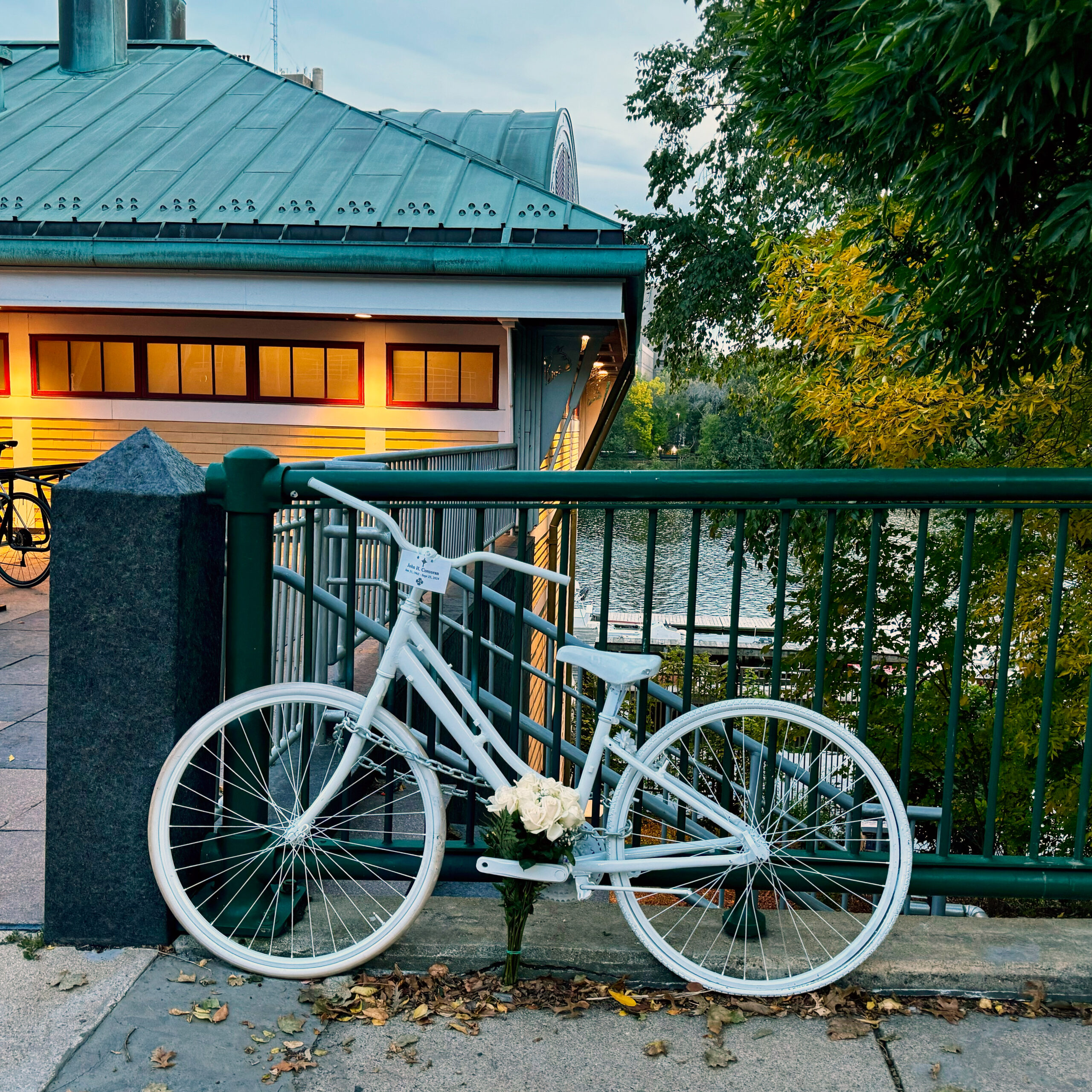
A sticker posted at the scene of a June 7 traffic death in Cambridge’s Harvard Square.

Nearly 10 years ago, after cyclists Bernard Lavins and Amanda Phillips died within three months of each other, I wrote about the vulnerability of cyclists as road users and hoped to see lowered speed limits, fewer trucks in areas where cyclists and pedestrians were common and a shift from car-centric urban planning to equitable, safer-for-all streets. Much has changed. Cambridge’s Cycling Safety Ordinance went through, then-governor Charlie Baker enacted a “safe passing” law, Bluebike stations have blossomed around Greater Boston and e-bikes have made two wheels a more accessible alternative form of commuting for more people. Yet in that time, three more cyclists have been killed by trucks on Cambridge streets, including a 55-year-old woman June 7 at Mount Auburn and DeWolfe streets in Harvard Square; and lawsuits for a time sought to halt and reverse the CSO by returning the slim slivers of safe haven to trucks and other carbon-emitting vehicles – all as unchecked temperatures continue to rise globally. We are allegedly making progress, but trending backward and people are dying.

As a cyclist who’s been riding the streets of Cambridge and Boston some 4,000 miles a year for nearly 40 years, the need to bike defensively hasn’t changed much: There’s still a lack of deference to the safety of vulnerable street users by motor vehicles who don’t look for them, zipping past before making a hard right or blasting their horn because they don’t think they belong on the road.

Nearly all cyclists are multimodal – they also walk and drive – but most will tell you that when on a bike, they have to have their senses engaged more keenly. “Head on a swivel,” as many say. To put it another way, as a pedestrian you don’t regularly assume a car is going to come up on the sidewalk; in a car, if you have a green, you don’t yield for fear that another car will blast through a red and hit you, since you have the right of way. And in both scenarios you have a designated safe place in a sidewalk or a 2-ton encasement should any of that happen, unlikely as it is. On a bike, one ding and you’re out in the road and at the mercy of a six-seat SUV going twice your speed, with nothing to protect you.

This is documented easily by crash data from the state Department of Transportation and Cambridge police open portals. Over a 10-year period, six cyclists have died on our streets and 11 pedestrians; as a percent of population (approximately 105,000 and 9,000), bike riders are six times more likely to die via a motor vehicle strike than a pedestrian. More telling is that at least five of the six fatal crashes involved a truck.

Friday’s tragedy occurred shortly after the CSO took a blow in a recent City Council vote, with deadlines potentially extended in places unless the city laws are adjusted to find more car parking. But a bike-lane backlash has been going on for years – “They run red lights”; “They don’t wear helmets”; “Their bikes don’t have lights” – in addition to resentment over the loss of parking, with spaces for people with disabilities being the emotional ante often laid down. Reckless behavior is never acceptable, and cyclists can be their own best ambassadors by showing courtesy and respect to other road users; that said, motor vehicles pose the far bigger public risk and are the sole agent of road deaths. Meanwhile, in the recent makeover of Porter Square, when separated bike lanes were installed, the number of accessible parking spaces available more than doubled as part of the project.

An important aspect about that June 7 crash is that it happened where there were separated bike lanes. Whether the box truck made an illegal right (rights are allowed only on a green arrow) or the cyclist proceeded through a red light or some other factor was at play has yet to be determined. It may be some time before we know the results of an investigation, but one thing that should be considered in the interim is street design. This section of Mount Auburn is an opening-up point, which adds to its complexity. For traffic heading east on Mount Auburn, there are five traffic lights and three signs. That’s a lot to take in; if you sit at the intersection and observe for a few signal cycles, you will see confusion from users. And, of course, there are those who push through illegally. We try out traffic pattern designs to hopefully improve road safety, but must balance the needs of businesses and those who need to get around. It’s a challenge, and one with impacts.

The long and short is, traffic flows need to be simple and intuitive. Are cyclists from other states familiar with Boston bike signals, are the signals and signs at Mount Auburn and DeWolfe in the best location for each type of road user? These are nagging questions that should have been answered by post-installation use and review by those who came up with them, as well as those who enforce traffic. We’re a world-class city with revered universities that draw people from all corners of the globe; there are going to be new-to-Boston people in the streets every day. Our rotaries are infamous for their WTF factor to those newly entering Massachusetts; intersections in Harvard Square don’t need to be.

The victim, who hailed from Florida, was on a Bluebike, eliciting on social media boards sentiments that those who ride the rentals “don’t know what they’re doing.” Bluebikes are designed to be a simple walk-up-and-use transportation; it’s the violence of the streets that’s the real factor here, and we should acknowledge that. If we applied this same logic of “needing to know how to navigate the streets of Boston before getting on a bike” and extend it to cars, would anyone deplaning from Italy, the U.K. or Japan be able to rent a car at Logan?

The intersection will change. The city will act. The sad reality is that it took a life to do it. We’re one of three area cities with Boston and Somerville that have adopted Vision Zero goals – to eliminate traffic fatalities through engineering – but we’ve struggled to meet checkpoints. Potentially extending CSO deadlines only addles those efforts.

There is a sprig of hope, however, as on Monday the council gets a policy order asking the city to undertake a review of intersections where crashes have resulted in a serious injury. It’s a decade late, but something that could have real results. And getting measurable results is the only way to evaluate downstream efforts: ink is cheap, blood is not. Furthermore, as we become a denser city, we need to rethink how we use our streetscapes and who uses them. It’s not just about safety. It’s also about equity.