Archive | Review RSS feed for this section

Short Takes

5 Dec

“Do Not Expect Too Much from the End of the World,” “Small Things Like These” and “The Lost Children”

‘Do Not Expect Too Much from the End of the World’ (2024)

A sardonically black political comedy that’s right out of left field, powered by witty takes on hot topics (Andrew Tate, Putin and Pornhub, to name a few) and a killer performance by Ilinca Manolache, without whom the movie could not be. Manolache plays Angela, a feisty Romanian woman looking to make it in the gig economy as a filmmaker and TikTok sensation. Her main hustle is as a production assistant for a company that makes safety videos, kind of – on many shoots, Angela coaches accident victims, often in wheelchairs, to talk about the safety measures they should have taken to have avoided injury versus the clear negligence of the employer to provide a safe workplace. They’re more CYAs than PSAs, and that’s the degree of biting humor imbued by writer-director Radu Jude (“Bad Luck Banging or Loony Porn”).

When we meet Angela, she’s buck naked, on her bedside table is Proust, a half-drunk beer and a glass of wine. From her unapologetic posture as she drags herself out from under the covers at 5 a.m. we know she’s a take-no-shit sort. Donning a sequin dress, Angela wills her way through the day, which includes several safety shoots, chatting with director Uwe Boll about beating the bejesus out of critics who take exception to his lowly regarded films (“BloodRayne,” “Alone in the Dark”), a quickie in her SUV, where nearly half the film takes place, and frequent TikTok dispatches as her evil alter-ego, a bald, bushy-browed incel named Bobiţă who boasts of sexual conquests and hanging out with Tate, the controversial purveyor of all things manly and macho.

Jude employees a unique stylistic palette to frame his modern absurdity; much of Angela in transit is shot in matted black-and-white (reminiscent of Pawel Pawlikowski’s wonderful “Cold War”) while her TikTok and safety videos are shot in color. Jude too infuses footage from the 1981 film “Angela Goes On” about a female cab driver in communist Romania. The thematic juxtaposition (of constantly driving and having a hard time getting from point A to point B) is all about the bureaucratic nonsense that confronts and confounds the two Angelas back during the days of Ceaușescu’s police state and in the capitalist now.

Manolache, who feels like she could slide easily into an early Almodovar or classic Fellini romp, is all-in as the foul-mouthed Angela, full of vim and palpable vigor, and quite muscular and confident in the way she defines her womanhood and place in society. Along with Mickey Madison’s bravura turn in “Anora,” it’s the most pop-off-the-screen performance by an actress this year – Angela and Anora could easily team up and rule the world, and given where we’re heading, that would likely be a good thing.

The ending long take, a filming of a PSA at the site of an accident, is the most somber and dark absurdity in the film, with telling plays on Putin and Ukraine, American TV and the devious use of Bob Dylan’s “Subterranean Homesick Blues” placards to further victimize and subjugate the maligned.


‘Small Things Like These’ (2024)

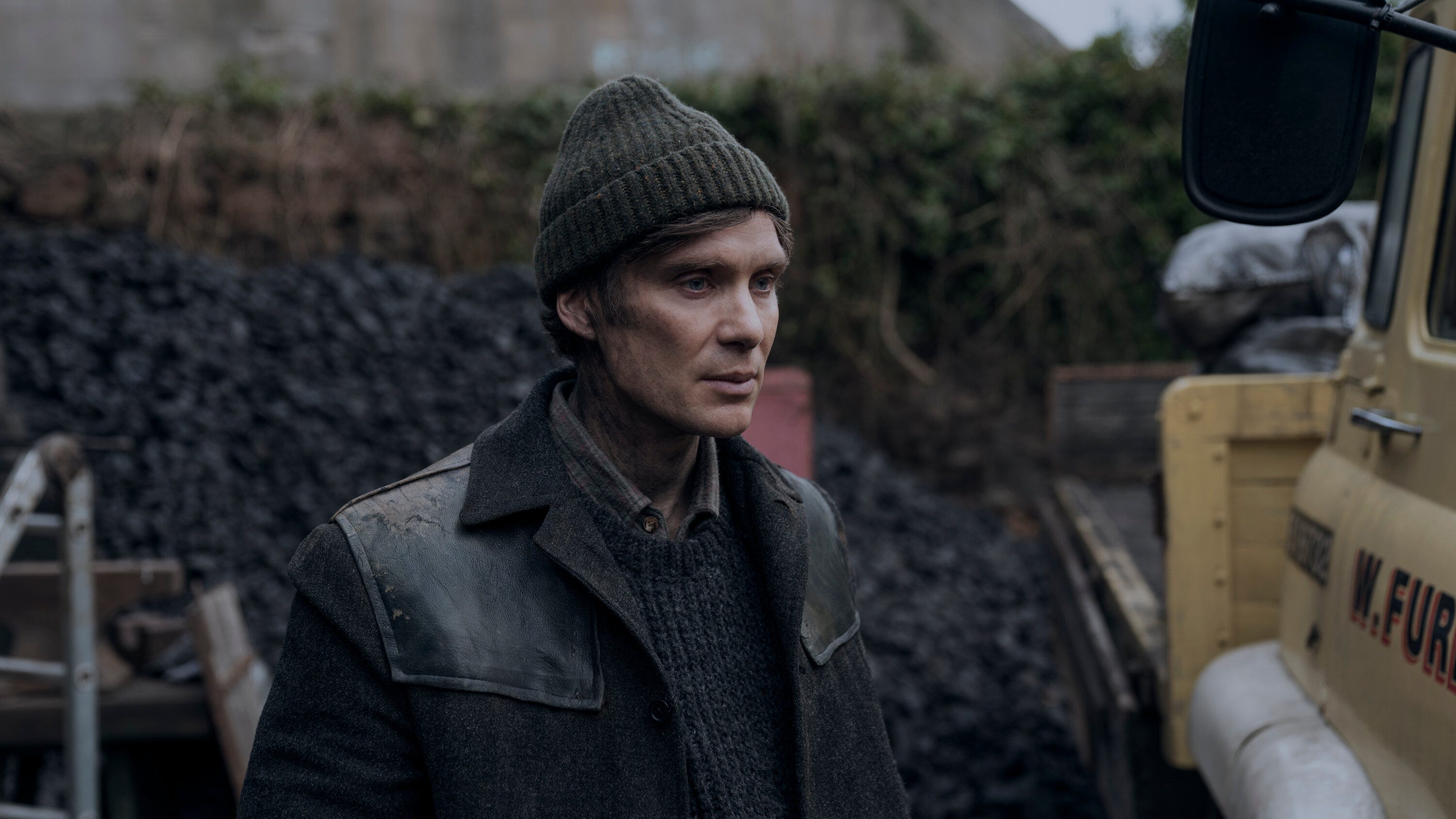
Based on Claire Keegan’s novel about the Magdalene Laundries in Ireland, this project directed by Tim Mielants draws emotional depth from an all-in performance by star Cillian Murphy, nearly even more internalized and conflicted here than he was for his Oscar win as Oppenheimer in the Christopher Nolan-helmed biopic last year. The Laundries were a series of so-called asylums for wayward girls, unwed mothers and “fallen women” (former sex workers, recovering addicts, etc.) run by nuns. Keegan’s story targets their sordid history of using women as indentured labor, housing them in prisonlike lockdowns and often taking their babies forcibly from them so the institution could profit from the adoptions. The misdeeds are revealed through the meanderings of Bill Furlong (Murphy), a merchant in 1985 Ireland who provides one such institution with coal. Seeking a signature for an order one day, he witnesses a girl being dragged across the hall screaming. She mouths to him for help. For a frozen second he thinks to act, but the steely eyed sister in charge (Emily Watson) swoops in to explain things away with a cup of tea. Later, Bill discovers a young pregnant girl shackled in the coal shed – yep, it’s that kind of shop of little horrors. Then there’s Bill’s own backstory, his five daughters (his wife is played by Eileen Walsh, who starred in 2002’s “The Magdalene Sisters,” a film that went at the same subject), which serve as a point of reflection and increasing concern, and the boy down the street, often shoeless and starving. Much of what appears quiet, composed and buttoned-down is anything but. The Magdalene Laundries operated from the 1800s to, amazingly, up through the 1990s. In scope, as Mielants and Keegan (“The Quiet Girl”) tell it, “Small Things Like These” feels not too far off from our own Catholic Church abuse scandal (“Spotlight”): cover-ups over decades, victimization of the vulnerable and the leveraging of religious righteousness to make it happen. It’s a somber weaving of disturbing discoveries, but not one without threads of humanity and compassion brought to the screen by Murphy’s deeply emotive performance.


‘The Lost Children’ (2024)

A hackneyed documentary about the incredible true story of survival by four children (ages 11 months to 13 years) in the Colombian rainforest for 40 days after their plane crashed in May of last year. The three adults aboard (including the pilot and the mother of the Indigenous children) perished upon impact. The Colombian military takes up the search and are later joined by a legion of Indigenous volunteers. Directed by Orlando von Einsiedel, Jorge Duran and Lali Houghton, the film focuses hard on this point to showcase the jungle knowledge of the Indigenous searchers and their unease working with the military because, as the film has it, the factions have been at opposite sides of conflicts over decades. Specifics are never really provided, which is one of the film’s major annoyances. The dramatic recreations of the search feel sloppy and staged (often people in arguably real footage have their faces blurred), though the wildlife photography is top shelf. The reason to stay with the film is the chilling footnote that the children’s father and stepfather, Manuel Ranoque, initially at the fore of the search and a seeming heroic figure, is accused (by talking heads, the mother’s aunt and sister) as an abuser, suggesting the children could be evading the search effort to avoid him. The dubbing is mumblecore awful and the staging of Indigenous rituals and ways borders on exploitative arrogance, even though it ostensibly aims to be embracing.

Gladiator II

21 Nov

Ridley Scott takes a stab at a sequel 24 years after Crowe, but going not quite as deep

Not sure that “Gladiator,” the Oscar-winning sword-and-sandal revenge epic starring Russell Crowe, needed a sequel, but the fates, furies and a cadre of calculating Hollywood studio execs have deemed it so with a clear, hopeful eye on a box-office bang-up. It’s not on par with its 2000 predecessor, but the script by David Scarpa, who collaborated last year on “Napoleon” with director Ridley Scott (still cranking them out well into his 80s), does connect the dots smartly with blood and purpose. We find ourselves 20-something years since the events of the last film that concluded with the death of Crowe’s Colosseum warrior, Maximus after killing hedonistic, self-interested Emperor Commodus (Joaquin Phoenix) and, in theory, restoring the voice of democracy to the senate and the people. What’s happened in the interim is anything but: Rome is run by two foppishly fey brothers, Geta (Joseph Quinn) and Caracalla (Fred Hechinger), man-boys with a penchant for mascara, bloodshed and monkeys. Taking a step back, it’s eerie to realize how much that paradigm feels all too close and reflective of our new now – earmarking the struggle for democracy as pervasive throughout humankind’s brief, short history.

G2 begins with the siege of Numidia (Northern Africa) by Roman legions led by general Marcus Acacius (Pedro Pascal), a dutiful soldier whose political ideals don’t align with those of the decadent, indulgent twin emperors, though he seems all-in on the expansion of the republic. Galleons crash into a seawall, flaming boulders are catapulted, arrows fly and swords get crossed. The resistance is fervent and game, led in part by a farmer-military tactician named Hanno (a beefed up Paul Mescal, of “Aftersun” and “Foe”) whose wife (Yuval Gowen) likewise straps on the lorica segmentata and joins the fray, but Marcus and his troops overwhelm the seaside city easily. Caught by an arrow, Hanno’s wife is one of the casualties. As a result – just as it was with Maximus – a blood grudge ignites and becomes the film’s plot-driving fire: revenge or death. 

Given the title and what came before, the action heads back to Rome, where Marcus is feted for his feat while Hanno is shackled and thrown into the gladiator pool overseen by Denzel Washington’s Macrinus, a former slave turned gladiator turned backroom fixer and ultimately, shrewd political manipulator. Rhinos, killer baboons and sharks (yes sharks, they flood the Colosseum for one such contest) join the endless legion of hulking Master Blasters the ill-equipped gladiators have to confront. Akin to the Maximus arc, Hanno becomes an arena sensation for his fortitude, smartly engineered victories (baboon biting not withstanding) and fanciful beheadings. But as this is old Rome, the real violence is what goes on behind gauzy veils in unofficial councils where schemes within schemes are hatched. Macrinus, who seems to have a J. Edgar Hoover-sized file on everyone in town, plays the ends against the means, promising Hanno his shot at Marcus if he can survive long enough; Marcus, angered by mass corruption and injustice, weighs an insurrection to return Rome to its starving masses. Marcus’ wife, Lucilla (Connie Nielsen), the sister of Commodus and Maximus’ love-interest in G1, it turns out, has blood ties to Hanno (the movie tries to obfuscate this point until midway in, but the plot twist – which I won’t tip – is as clear as day, early on).

The machinations feed and play off each other with Shakespearean overtones. Washington’s performance even feels like a kitschy extension of his 2021 performance in “The Tragedy of Macbeth.” He chews the screen while Mescal simmers, seethes and burns. This is Mescal’s first big studio film, and while he’s up to the task, his Hanno doesn’t have the gravelly gravitas of Crowe’s Maximus; he’s mono-focused whereas Maximus seemed to legitimately play the long game. As Marcus, Pascal is dour and soulful in the thin, thankless part that is mostly tinder fanned to fuel the plot. It’s Nielsen, classic and captivating, who shines with a bigger part to play. It’s her uneasy and evolving relationship with Hanno that becomes the film’s emotional epicenter.

Like “Napoleon,” there’s a lot packed into “Gladiator II.” Not all of it sticks. The overly sexualized identities of the two emperors (and others), gets far too close to the hyperbolic tipping point (think “Caligula”) and stokes the embers of gender politics that so roiled and divided our nation two weeks ago. Then there’s the matter of seemingly unlimited access to Hanno in his cordoned-off jail cell between contests, where Lucilla and Marcus continually score covert meetings despite the emperors’ forbidding. As far as history goes, Nielsen and Mescal’s characters were true historic figures, as was Commodus, but the plotlines and narrative in the two “Gladiators” are all historical fiction. It’s too bad we can’t turn the page like Scott and Scarpa and rescript this moment.

Short Takes

16 Nov

“Memoir of a Snail” and “A Real Pain”

‘Memoir of a Snail’ (2024)

Not a claymation curio for the whole family, nor a sequel to “Marcel the Shell with Shoes On” (2021). No, this very dark and adult animated tale of twins separated after the death of their father and placed in foster care has edgy, plot-driving incursions into swinging, fat feeding, pyromania and religious zealotry. The film is wickedly funny at times but tenderly bittersweet, with deeply realized characters. The casting, an inspired all-star slate from Down Under,  pairs “Succession” star Sarah Snook and Kodi Smit-McPhee (“Power of the Dog”) as Grace and Gilbert Pudel, fraternal twins born with health issues and bullied at school. Mom died early and dad, a street performer who struggles to keep the family afloat, succumbs a few years later; Grace and Gilbert get placed with families at opposite ends of Australia. Much of the film is told through the longing letters between the two, desperate to reunite. Neither is in an ideal situation. Gilbert lives with Calvinist religious zealots who want to “pray the gay out” and abusively employ him as indentured labor on their apple orchard. Grace lives pretty much on her own in a nice house, because her absentee foster parents are swingers and darting constantly out to key parties or nudist retreats. Her bestie is an 80-year-old firecracker named Pinky (a brilliant Jacki Weaver), whose tale of how she earned the nickname and a sidebar about having sex with John Denver in a helicopter are uproarious delights. Directed by Adam Elliot, making a strong impression with his second feature, “Memoir of a Snail” is agile in construct and scrumptious to behold – “The Nightmare Before Christmas” good. The “shell” theme about the personal baggage we all carry around with us and how we withdraw or put up walls is a bit thinly etched, but the movie’s sibling bond is strongly felt. It’s like the dark, loving embrace of Tim Burton done with the edgy verve of Trey Parker and Matt Stone. It’s also one of the best films you can see in a theater now.


‘A Real Pain’ (2024)

Another film featuring a “Succession” star (in addition to Sarah Snook in “Memoir of a Snail” and “The Apprentice,” starring Jeremy Strong in an Oscar-worthy turn, now on Amazon Prime). Kieran Culkin stars opposite Jessie Eisenberg (“The Social Network”) as Benji to his David, cousins who sojourn to Poland to visit the house their Holocaust-surviving grandmother lived in and connect with their Jewish roots. The two are cut from vastly different cloths; Benji is slack, conflicted and seemingly adrift, whereas David is rooted (married, with a child) and tightly wound. We never get the full details of their stateside profiles, but they don’t much matter and you can fill in the blanks easily given their dynamic. The pair signs onto a Holocaust tour led by an amiable guide (Will Sharpe) who, along with a survivor of the Rwandan civil war (Kurt Egyiawan) examining the toll of genocide in other parts of the world, are the only two who do not have personal, Jewish ties to Poland. In the group too is Jennifer Grey of “Dirty Dancing” fame as a middle-aged woman going through a tough divorce. Benji sidetracks the group regularly with his raffish whims – posing for photos at a statue of liberating soldiers as if part of the platoon, or requesting that the guide dig into the souls of Holocaust victims and tell their story rather than just reciting their names from a register. He becomes something of the group’s mercurial class clown, though many of his politely peevish plays are sparked by seeds of genuine emotional intelligence. He’s an amiable lost boy and clearly one subject of the film’s title. As youths, he and David used to be closer, but given time, space and the arc of life, have grown apart, so “the pain” refers also to Benji’s loneliness and the pair’s fraying over the years as well as the inherent trauma of digging into the atrocities of the past. The film, written and directed by Eisenberg, has a talky, European meandering feel to it, a bit like those Linklater films that paired Ethan Hawke with Julie Delpy – people who care deeply for each other yet who talk around a topic. Eisenberg also avoids making the Holocaust a didactic distraction with leaden exposition. It’s present in every frame, but “A Real Pain” is a character study first. Eisenberg, cutting just his second feature, does a solid job of balancing the tale with the looming shadow of world-changing events. It’s a journey of revelation and reconnection that works on the strength of authentic, awkward chemistry between its two leads.

Short Takes

8 Nov

“The Wild Robot,” “Don’t Move” and “Woman of the Hour”

‘The Wild Robot’ (2024)

A very “Wall-E”-esque pleaser with something to say about humans, machines, emotional intelligence and environmental stewardship. Marrying all that together is an AI ’bot named Roz (voiced by Oscar winner Lupita Nyong’o, “12 Years a Slave,” “Us”) whose shipping container is tossed overboard during a storm, marooning her on a remote island with rich Northeastern biodiversity (pinewoods, bears, beavers, geese and possums) that feels right out of Camden, Maine. Roz is a home helper droid made by a megacompany like Amazon to perform tasks such as making beds, building sheds, shearing sheep and so on. Borrowing a page from Isaac Asimov, the semihumanoid robot (think a rounder C-3PO with spindly arms and legs) has a “do no harm” rule – or close enough. Stranded in a humanless remote, Roz reprograms herself to learn animal lingo and learns that the fauna refer to her as “the monster.” In the awkward dance of finding a task to do, tragic happenstance has Roz becoming the mother imprint for a runt gosling named Brightbill (Kit Connor). The to-do then teaching the hatchling how to forage for food, swim and ultimately fly, because the fall migration is around the corner. Other geese don’t think Brightbill is long for this world and bully him, while hanging close to Roz is Fink (“Mandalorian” Pedro Pascal), a fox posing as a knowing adviser when his true intent is a fast meal. Roz’s transmitter to HQ keeps dropping out or breaking, which ultimately brings to the island a maintenance droid (Stephanie Hsu, “The Menu”) that’s not a fan of Roz developing emotionally. Issues of AI and the environment are at the fore, without pulling focus from the central core bonding of Roz, Fink and Brightbill. The animation, as orchestrated by Oscar nominee Chris Sanders (“Lilo & Stitch,” “How to Train Your Dragon”) is well-envisioned and robust and likely to earn him another nod (though it’ll have some real competition from the Latvian gem “Flow” that just played The Brattle). But the heart of the film is castaway Roz, a tin woodswoman who becomes emotionally aware.


‘Don’t Move’ (2024)

Nice-guy serial killers seem to be all the rage. Already this year we’ve had bad dad Josh Hartnett in “Trap,” and “Dating Game” contestant Rodney Alcala in Anna Kendrick’s impressive true-crime-adjacent debut “Woman of the Hour.” Now we get this tale of cat-and-mouse survivorship in which a grieving mother hiking the California mountains (Kelsey Asbille) stands at a ledge contemplating a jump and is talked down sort-of by a dashing, passing-by dad-guy (Finn Wittrock, so fun as one of the two DIY hedge fund knuckleheads in “The Big Short”). Everything’s cordial until they get to the trailhead parking lot and Wittrock’s Richard tases Asbille’s Iris. Iris is zip-tied, tossed in the back of his car and told that he’s going to take her to his cabin, braid her hair and add her to his list of female bodies at the bottom of the lake. Iris gets free and nearly overpowers Richard, and that’s when he hits her with his Plan B: She’s been injected with a paralyzing agent that’s 20 minutes away from kicking in. The film, directed by Brian Netto and Adam Schindler, moves in unpredictable turns as others – a police officer and a fellow cabin owner – cross paths with Richard and Iris. The tension remains high even if elements of the underlying story don’t quite work, including the how and why for Richard’s predilection. Asbille, controversial for her claims of Native Americans origins to shore up her casting as an Indigenous person in the hit series “Yellowstone,” is a bit too glamorous in the part but still compelling, doing much with her large, luminous eyes and trembling lips because, at one point, that’s all she got. It’s not bad, but if you’re on Netflix, “Woman of the Hour” is the better way to spend your time. 


‘Woman of the Hour’ (2023)

Actress Anna Kendrick makes her directorial debut with this chilling true-crime-adjacent serial-killer thriller set in the late ’70s. Like this year’s “MaXXXine,” it revels in the era’s scummy kitsch and skewers its rampant misogyny. The main event is a “Dating Game” show segment in which a young, aspiring actor named Sheryl Bradshaw (Kendrick) is a reluctant contestant, having signed on at the behest of her agent. If you’ve never seen “The Dating Game” or other indelible shows of the time such as “The Gong Show” and “The Newlywed Game,” they’re peppered with innuendos, evoking a degree of cringeworthiness that’s captured well by Kendrick and writer Ian McDonald. Bachelor No. 1 is a bit of a blockhead who can’t answer a question confidently, No. 2’s not much better, but at least he doesn’t trip over his tongue. Then there’s No. 3, who cleans up, masterfully playing off Sheryl’s wit and verve and turning his adversaries’ miscues to his advantage. He’s also Rodney Alcala (Daniel Zovatto), who that year would be arrested and convicted of the murder of six women – and implicated in as many as 130 murders. Of course, he’s Sheryl’s pick. Kendrick and McDonald transform a rote, straight-ahead story into an ever-shifting collage of terror and charm, with cutaways showing Alcala helping a flight attendant move into her apartment, taking snaps of a lonely pregnant woman abandoned by her boyfriend at a national park, and a beach party photo shoot. I don’t need to tell you how these encounters go; it’s how Kendrick decides to shoot and navigate the grimness that matters, as it’s done with subtle, unconventional style and great, visceral affect. Zovatto is a great casting choice and performer, and his Alcala is a natural charmer with a brimming undercurrent of malice – echoing Philip Seymour Hoffman in some of his roles, or Vincent D’Onofrio in “Full Metal Jacket” (1987). Kendrick, not far from her refuses-to-be-a-victim persona of “A Simple Favor” (2018), has some feminist zing as Sheryl, going off script in the final round to ask the bachelors, “What are girls for?” You know Alcala’s a killer early, giving many of his scenes – with his prey, or in the offices of the Los Angeles Times, where he freelances as a photographer – a delectable unpredictability and creepiness. It’s an ambitious and impressive debut for Kendrick, and one that should bear greater casting opportunities for Zovatto.

Anora

1 Nov

‘Pretty Woman’ for a darker age of Russian oligarchs and goons

Sean Baker, who caught fire with “Tangerine,” the punchy 2015 trans dramedy shot on iPhones, and scored with follow-ups “The Florida Project” (2017) and “Red Rocket” (2021), nabbed the Palme d’Or at Cannes for this Cinderella tale about a sex worker whose fortunes change when she hooks up with a freewheeling ne’er-do-well with limitless financial resources. “Pretty Woman” (1990) this is not, though. Given it’s a Baker film, fairy-tale endings are strictly verboten.

The title character (Mikey Madison), who insists on the moniker “Ani,” works at a Brighton Beach strip club where many of the pole dancers have such control and skill you wonder if they couldn’t make the U.S. Olympic gymnastics team. Ani, who dabbles as an escort, has Eastern bloc roots and can manage her way in Russian; one night she meets a raffish, well-off Russian named Ivan (Mark Eydelshteyn) whose boyish good looks beg Timothée Chalamet comparisons. Ivan lives in a seaside manse and hasn’t quite mastered English, which, besides Ani’s sensual skill set and large luminous eyes, is key to why they click. In the majority of their scenes, he speaks in Russian and she retorts in tough Jersey girl “tawk.” His regular English miscues endear him to her (and us) and he pays her $15,000 for a weeklong excursion to Vegas where vigorous sex and raucous, all-night parties in a posh, VIP suite are a daily routine.

It’s all blissful indulgence that feels bottomless, but reality steps in. Turns out that big house is really Ivan’s parents’ U.S. pied-à-terre and Ivan is due back in Russia, his lack of citizenship a ticking clock on his stay. When Ivan explains this to Ani, the two opt for Plan B and get hitched. It’s here that the tenor of the film shifts. Alerted to their son’s marriage to a sex worker, Ivan’s parents (Aleksey Serebryakov and Darya Ekamasova, both fantastic and the very definition of oligarch) dispatch their stateside fixer, an Armenian cleric named Toros (Karren Karagulian), to collar Ivan, secure an annulment and ship their son home on the chop-chop. Toros enlists Russian enforcers (Vache Tovmasyan and Yura Borisov), but when they show up to the gated estate, Ivan flees. Much of the rest of the movie becomes a “Hangover”-like quest to track down Ivan as Toros and his goons head out into the seedy New York night with a reluctant Ani, who proves to be more than a handful as she breaks noses and shatters priceless relics.

As compelling as “Anora” is, the film is long and bears a tinge of tinny hollowness that annoyingly never gets filled – until perhaps the final scene. It feels authentic and has an earned, gritty sheen, but much of the onscreen action feels scripted instead of character driven. The performers more than earn their pay, especially Madison (a Manson girl in “One Upon a Time … in Hollywood”); this film could not be made without her ability to flip on a dime between vulnerable and fierce. Eydelshteyn holds the prepubescent party boy note well, serving as plot catalyst. Karagulian brings a comical, resolute puckishness to his part, reminiscent of F. Murray Abraham in “Scarface” (1983) without the worminess. More nuanced and robust is Borisov as Igor, the more hands-on muscle who lives with his nana and, despite his low-brow occupation, is a sharp reader of souls and often as compassionate as he is intimidating. Like Ivan, he butchers the English language; for him too, Ani is there to bridge the gap. The evolution of their relationship is the ember that smolders throughout. Thematically “Anora” is not that far from “Tangerine” and “Red Rocket,” focusing on angles of the sex industry and those caught in it seeking to find their next stage in life.

Short Takes

13 Oct

“Joker: Folie à Deux,” “The Apprentice” and “Red Rooms”


‘The Apprentice’ (2024)

Not so much a takedown of Donald Trump as a look at the early years of the man who would be president as he morphs from socially awkward entrepreneur to megalomaniac, viewing capitalism and New York City as his oyster to shuck – all under the tutelage of Roy Cohn (thus the film’s title). The film opens with Nixon giving his famous “I am not a crook” speech, the erection of the World Trade Towers and Trump (Sebastian Stan, “Captain America: The Winter Soldier,” “Fresh,” and on screen now in “A Different Man”) going door-to-door in a tenement building shaking down low-income residents for back rent. Turns out the Trumps are under suit and facing stiff penalties from the Department of Justice for discriminating against people of color. Trump is enamored with the well-connected Cohn (Jeremy Strong of “Succession”), who served as chief counsel to U.S. Sen. Joseph McCarthy during his 1950s Red Scare and prosecuted the Rosenbergs, who were executed for espionage. One night he catches the eye of his idol at a swank club and enlists him to represent the family in the suit. To say Cohn employed questionable tactics would be an understatement, but he has advice for the young Trump: Always be attacking; when accused, always deny; and if you lose, claim victory. It seems to have stuck. The films chronicles Trump’s very public fight with Mayor Ed Koch over getting Trump Tower built, his tumultuous first marriage to Ivana (Maria Bakalova, so good at taking down one of Koch’s mayoral successors in “Borat Subsequent Moviefilm”) and his disavowal of Cohn – a closeted gay man who used homosexual slurs constantly – when he comes down with AIDS. It’s directed by Ali Abbasi, who has done equally dark tales in other lands: “Border” (2018) in Denmark and “Holy Spider” (2022) in Iran. The punchy “Apprentice overall” casts a cynical sheen over the young DJT but feels balanced; as the ego swells and grows into a horrific hubris, that’s when we get the goring of a demagogue akin to Oliver Stone’s “W.” (2008) and Adam McKay’s “Vice” (2018). Stan, often under prosthetic makeup, looks the part (the hair!) but doesn’t quite sound it, yet still holds the film together, while Strong is a captivating, conflicted pit bull as Cohn and steals scenes with every razor-barbed line he fires off. Historical icons such as Andy Warhol and Roger Smith pop up, and Cohn has wild orgies that Trump stumbles into, but it’s the timing of the film so close to an election that may raise eyebrows, considering a pretty graphic sexual assault scene featuring the man who would be our president. That said, it doesn’t really tarnish the man or give him an out. It paints a picture that somehow makes the aspirational DJT somewhat sympathetic and allows us to connect the dots. 


‘Red Rooms’ (2023)

The Nicolas Cage flick “Longlegs” was supposed to revive the serial killer genre, but Cage’s bold acting style wasn’t enough of a jolt. Here, in Pascal Plante’s “Red Rooms,” common genre elements get respun more powerfully. We start by witnessing the binding, torture and killing of a victim over the Internet, except that we don’t: It’s experienced only through the aglow facial expressions of an observer who has paid a fortune on the dark web to revel in the act – a bespoke snuff experience, filled with dismemberment and sexual assault. There’s never blood or gore, which makes the result far more visceral than any gushing arterial spray. Set in Canada’s Quebec province (and mostly in French), Ludovic Chevalier (Maxwell McCabe-Lokos) is on trial for the murder of three lithe, blonde and blue-eyed teens, because that “look” brings the best price. In court, Chevalier sits in a thick glass cage, as if in a zoo. The trial is open to the public, but there are limited seats that trial junkies such as Clémentine (Laurie Babin) and Kelly-Anne (Juliette Gariépy) line up for daily so they can drink in every gory detail. Clémentine is a conspiracy theorist who thinks the gaunt, extraterrestrial-like Chevalier is innocent. Kelly-Anne is a psycho killer fan – a hybristophiliac, if you will – and at one point during the trial, dyes her hair blonde, puts in blue eye contacts and dons a schoolgirl outfit, looking just like the dead daughter of the parents she’s sitting behind. As she’s evicted, Chevalier looks up for the first time, smiles sheepishly and waves to her with a mild, knowing expression. The film’s less about the court case and the details of Chevalier’s deeds and more about Kelly-Anne and her obsession. The film works so effectively for the most part because of Gariépy. Her Kelly-Anne is in fact a part-time model and works out arduously, emanating the cold, detached demeanor that comes with the part. She lives alone, messing around on the Internet where we learn she’s blessed with the hacker skills of a Lisbeth Salander (“The Girl With the Dragon Tattoo” 2011), and even better at online poker, scoring buckets of bitcoin that pay for her posh high-rise apartment and schedule-free lifestyle. The concept of red rooms is a bit of Internet urban folklore, though the notion of such snuff chambers goes back to David Cronenberg’s 1983 “Videodrome” decades before the Internet bubble. The fact that they exist in Plante’s universe is all the more effective as a backdrop to Kelly-Anne’s enigmatic drive and obsession. Plante knows how to orchestrate a mood and dial up the stakes in small, unsettling shifts, in part by using an immersive score and sound editing. Along with Gariépy’s impeccable performance, “Red Rooms” spins up unspeakable horrors we see only in our mind’s eye. 


‘Joker: Folie à Deux’ (2024)

Joaquin Phoenix picked up a little golden statue for his 2019 spin on Gotham City nemesis The Joker (much as Heath Ledger did in 2009 for “The Dark Knight,” so it’s a pretty good Oscar gig), an origin story directed by “Hangover” helmer Todd Phillips. “Joker” shone a light on the fragile, fragmented mind of Arthur Fleck, abused as a child, steered wrong, isolated, lonely and seething inside. His alter ego became a manifestation of false leads and media hype for entertainment at Fleck’s expense, but also his defense mechanism. As we know from the death of popular late-night-TV show host Murray Franklin (Robert De Niro) at the end of “Joker,” Fleck gets the last bloody laugh, though “Folie à Deux” deals with Fleck’s imprisonment and trial for Franklin’s death. As we catch up, there’s been a made-for-TV movie about The Joker that has the denizens of Gotham riveted, so much so that Lee Quinzel (aka Harley Quinn, played here by Lady Gaga) commits herself to the same facility that Fleck is in, hoping for a meet-and-greet. The two meet during movie night; sparks fly, she gets him, he gets her, they need to escape and get away to a personal paradise, just them two – nothing an act of arson can’t broker. But the bigger deal is Fleck’s very public trial. After being smitten with Lee, he fires his attorney (a dutiful Cathrine Keener in a flat role) and decides to represent himself. There’s not a lot of true action in the film, and anything that has The Joker in makeup and dancing with malice-tinged merriment is an alter-reality where Quinn and Fleck, more often than not, break into song. There’s even one bit ripped from Sonny and Cher. Some of this works, but Phillips and co-writer Scott Silver can’t decide if Fleck is a Forrest Gump who transcends, a maniacal martyr or someone who got screwed by the system. Perhaps all three, and Phoenix toils arduously to shift gears as the filmmakers see fit. The awkward handling of mental illness and Gaga’s take on Quinn are other issues: She’s nowhere near the kitschy Harley Quinn of Margot Robbie in “Birds of Prey” (2020) or “The Suicide Squad” (2021); there is darkness, no question, but it’s not the infectious, high-energy of a Jersey girl but a dourness that doesn’t add up in the end. The film’s biggest hobbling is that its tonal and contextual (and textual) shifts don’t click. It goes out on a limb with bold bravery, and one of the most impressive things is Gaga and Phoenix doing all the songs on set, not in a sound studio; we know Gaga can crush it, and she does, but Phoenix holds his own for the most part and does a pretty neat tap dance to boot. But the bough breaks. 

Short Takes: “Will & Harper” and “Wolfs”

6 Oct

‘Will & Harper’ (2024)

The Will of the title in Josh Greenbaum’s documentary is “Saturday Night alum” and Ricky Bobby portrayer Will Ferrell; the Harper is a longtime Ferrell pal and former SNL writer who has transitioned at the age of 61. One of the things Harper loved to do as a man was driving across the United States, stopping along the way to drink in various different quarts of Americana in their raw and organic state. The fear is that as a trans woman that might not be as possible. Ferrell, to support his friend, packs two collapsible lawn chairs into a classic old Jeep Wagoner and together they set off. Their conversations are candid, and Harper is incredibly forthcoming with information on the whys of transitioning later in life and the fears that come with it. That said, these two are funny together and know how to play to the camera. Ferrell’s celebrity brings unintended consequences when they go to a Texas steakhouse so Ferrell can try to down a famous 72-ounce steak (that looks like a grim, oily brick) that’s free if you can eat it in under an hour. He strides in with great pomp, dressed as Sherlock Holmes, which draws social media posts by those at the packed steakhouse – which mostly viciously target Harper. The gives pause not only because of the hatred on display, but because the film pushes matters where it feels unwise and even unnecessary. In quieter, more intimate moments, the relationship between Ferrell and Harper is endearing, as is Harper’s journey. It’s clear Harper is in a better, more comfortable place and had a solid support system to make the transition. Whether that translates for others is not explored by the film. Still, “Will & Harper” illuminates challenges, and it warms earnestly. Because of the stars’ comedic origins, there are some pretty well-earned grins to boot. 


‘Wolfs’ (2024)

The charismatic Brad Pitt and George Clooney have teamed up multiple times onscreen, as co-stars in those quirky “Ocean’s” heist capers to Pitt’s minor role in Clooney’s 2002 directorial debut “Confessions of a Dangerous Mind” and voicing animated characters in the movie “IF” this year. Here, in a reference to Harvey Keitel’s character Winston Wolf in “Pulp Fiction” (1994), they play cleaners hired by different agents to remove a body from an uber-posh New York City hotel penthouse. The MacGuffin that drives the film is a well-respected district attorney, Margaret (Amy Ryan), on her way home to her family one night who, for whatever reason, decides to stop for a drink that turns into a tryst with a young, college-aged kid. There’s barely foreplay when the fling-thing winds up dead on the bedroom floor of a suite that likely costs $10,000 a night. In a panic, Margaret calls a number a fixer-connection gave her and summons Clooney’s cleaner (listed in the credits as “Margaret’s man”). Minutes later Pitt’s grease jobber  keys in even though Margaret tells the knock at the door she’s all set, because he’s employed by the hotel (listed as “Pam’s man,” because Pam, voiced by Frances McDormand, runs the hotel) and it turns out there are cameras everywhere. After much back and forth about who’s going to clean the room (lone wolves like to work alone) Pam insists that the two pair up and just get it done. Job No. 1 is to get Margaret out of her bloody clothes and on her way home to hubby and family. That’s the easy part. Then there’s the body and the matter of four bricks of high-test drugs. The two are dragged out in the dark winter night to chase down a loose end and get the drugs to their owner, keeping the DA and the hotel out of the equation. There’s more gunplay as the film builds, though first comes one long and wild foot chase in which the two pursue a target clad in just briefs and socks through the snow-dusted night. At its core, “Wolfs” is a reluctant buddy flick that’s best when Pitt and Clooney are playing off each other through dialogue and one-upmanship. That works well in the beginning, before the film – directed by Jon Watts (of the recent “Spider-Man” films) – forms into an increasingly pat actioner with some unlikely twists. It’s a neat pairing of talent that could have used more bite. 

Megalopolis

1 Oct

Francis Ford Coppola’s urban sprawl

In a single decade Francis Ford Coppola made not just one but four cinema-defining films: “The Godfather” (1972) and “The Godfather Part II” (1974); “The Conversation” (1974); and of course “Apocalypse Now” (1979). It’s a feat hard to beat, but since “Apocalypse Now,” which riveted audiences upon release and garners the adoration of each new generation of cinephiles, Coppola’s output has been less iconic. It’s varied from well-crafted S.E. Hinton adaptations (“The Outsiders” and “Rumble Fish”) to the purposefully idealistic (“Tucker: The Man and His Dream”), some lighthearted comedies (“Peggy Sue Got Married,” “Jack”), a megaselling John Grisham lawyer yarn (“The Rainmaker”) and of course his “Bram Stoker’s Dracula” (1992), all receiving middling receptions. Later in his career, there was work (“Tetro” and “Youth Without Youth”) that piqued interest but never quite went the distance. His latest, “Megalopolis,” is an ambitious, convoluted mess – pretty much a full-frontal mega-flop. To say so comes with great sadness.

Coppola allegedly pawned part of his vineyard and leveraged himself financially for this project, one he’s been incubating for nearly 40 years. From the insightful documentary “Hearts of Darkness: A Filmmaker’s Apocalypse” (1991), which chronicled the ruinous challenges surmounted to make “Apocalypse Now,” we know Coppola is an incredibly passionate and resourceful filmmaker. He’s bucked trends and gone it alone without studio funding before; in this case, maybe getting other eyes and thoughts involved could have salvaged something.

What’s the movie about? Platitudes and posturing on the future of and control over an urban micro-universe in the near, slightly dystopian future – something the current streaming series “The Penguin” does a much better job of. In this case it’s not Gotham, but New Rome, a city that’s closer to New York City now than any Batman-related project. Everything the camera homes in on is 1920s art deco, with much cinematic worship of the Chrysler Building.

In the opener, Adam Driver’s Cesar Catalina, a master architect and something of a nihilist Leonardo da Vinci, steps out on the ledge of the Chrysler Building to observe the activity below. When it looks like he might tumble off or jump, he shouts, “Time! Stop!” And it does. Everything but Cesar freezes – all the cars like ants below, birds in the air, the wind-pushed clouds and so on. With a snap of his fingers everything returns to normal. But even with such a gift, Cesar is not omnipotent, and he has many detractors, especially Mayor Cicero (Giancarlo Esposito), who wants to rebuild crumbling New Rome with casinos, corruption and cronyism. Cesar, head of the Design Authority, wants to build the utopia of the title, something that will “evolve alongside its people.”

Aside from his neat party trick, Cesar has a Nobel Prize for creating Megalon, a substance that can channel one’s dreams and make desires into reality. In an origin myth, one could see it leveraged by god or the gods to build Earth. In this case Cesar uses it to build an organic, ever-evolving city.

Continue reading

Critical Mass comes to Cambridge to remember three riders who died after being hit by vehicles

29 Sep

Bicyclists ride a Cambridge rotary Friday to honor three victims of fatal crashes.

More than 700 bicyclists came Friday to ride three times around the Cambridge rotary where Memorial Drive intersects with the Boston University Bridge – once for each of the riders who have died on Cambridge Streets over the past four months: Minh-Thi Nguyen and Kim Staley, who were struck and killed in June, and John Corcoran, who was killed Monday on a sidewalk by the nearby DeWolfe Boathouse.

The rush-hour protest was put on by the Boston chapter of Critical Mass, an organization with branches in several hundred cities worldwide that hold group rides to promote street safety and advocate for better cycling infrastructure.

Riders met at the Boston Public Library for a brief rally before heading to the bridge near the boathouse where Corcoran was struck. The ride continued down Memorial Drive before heading back into Boston across the Harvard Bridge, ending at Boston Common. The ride was well organized, with ride marshals giving commands to stop or mass up to obey the rules of the road or to let cars out caught in the throng of riders.

Critical Mass had gone dormant in the area for nearly eight years because many members felt there was a confrontational aspect growing among the ridership. Citywide group rides morphed into the Boston Bike Party, which had a more festive and less activist evening events; Critical Mass rides targeted rush hours on the fourth Friday of every month.

Bicyclists gather in Boston on Friday before riding into Cambridge for a memorial. (Photo: Tom Meek)

The dedication of Corcoran’s ghost bike was held Saturday at the BU boathouse. In attendance were Corcoran’s family and friends and about 100 cyclists and other community members.

Ghost bikes mark where cyclists have died; a bike painted white is chained at the site permanently. “We have placed too many of these,” MassBike director and volunteer ghost bike committee organizer Galen Mook said at the ceremony.

The service was co-led by the Revs. James Weldon, Corcoran’s minister at the Parish of the Good Shepherd in Newton, and Laura Everett, a bike advocate and part of the ghost bike committee. Weldon biked to the ceremony and was clad for it. The bike was donated by Bikes Not Bombs in Boston’s Jamaica Plain neighborhood and painted by committee member Peter Cheung. The ceremony focused on community and grief for Corcoran, an investment manager who was remembered as a kind and giving spirit with strong ties to Harvard University, where his son and daughter – who were in attendance – are a senior and a junior.

The ghost bike placed Saturday in honor of John Corcoran.

There was a time for advocacy and a push for change, but that was not the purpose Saturday, Mook said in remarks to the crowd. They were hard to discern as cars on Memorial Drive zipped by fast enough to make attendees on the sidewalk uncomfortable.

“We’ve been begging the DCR for seven years to make changes to this road, and we’ve been continually ghosted,” said Jamie Katz-Christy, head of the Green Streets Initiative and a member of the Cambridge Bicycle Safety Group and Memorial Drive Alliance. She referred to the state Department of Conservation and Recreation, which oversees the road.

A department spokesperson told The Boston Globe on Wednesday that work was underway “to introduce additional bike lanes to this area of Memorial Drive to improve safety for both cyclists and pedestrians.” (Mook countered that “They’ve known this is a problem” for years.)

The penultimate part of the ceremony was a “litany of grief and gratitude” before the family came forward to dedicate the ghost bike amid a chant of “from a place of death to a place of life.”

Short Takes: “Rebel Ridge” and “The Union”

22 Sep

‘Rebel Ridge’ (2024)

The latest slow burn from Jeremy Saulnier, the deft hand behind the acclaimed “Blue Ruin” (2013) and “The Green Room” (2015), has the feel of a “Jack Reacher” or “Rambo” film, with a drifter on the wrong side of the law serving up some social justice. The setup is simple, but working out the problem is not. We open with a well-toned young man riding a bicycle through small-town Louisiana. He’s not your typical Lycra warrior – quite the opposite, he pedals with a sense of urgency that goes beyond logging miles; he’s on a mission. The bicyclist, Terry Richmond (Aaron Pierre), has $36,000 in an overstuffed backpack, $10,000 of which is to bail out his cousin who’s in on a minor possession charge. Out of nowhere, a cop car taps his bike and throws him. The resolute and hulking Terry, like Rambo and Reacher, is former military, while the cop standing over him looks like a menacing version of Richard Jewell as portrayed by Paul Walter Hauser in the 2019 film by Clint Eastwood. (Nearly every cop in the corrupt town of Shelby Springs seems to have the same stylist and barber save the chief, played by a game Don Johnson, and the lone woman on the force who’s mostly behind a keyboard.) Johnson’s head honcho takes the money on some pseudo-legal technicality, and it turns out these kinds of shakedowns are a regular thing in Shelby Springs with nearly everyone, even the judge (James Cromwell), in on the scheme. Terry is not leaving town without the money or his cousin, though, and the depths of local misdeeds are further exposed when Terry gets a reluctant hand from court paralegal Summer McBride (AnnaSophia Robb, “Soul Surfer”). Nothing is made about race outwardly in “Rebel Ridge,” but it’s there; in one scene, when pulled over, Terry asks the officer, “Are my hands in the right place?” Pierre (“Foe,” “Old”) does much with his emotive eyes and carries the film with a brimming rage that is tamped down constantly in favor of the more strategic move. There are many fine and realistic action sequences, but the film is as much a chess match of legal gamesmanship – yet when Terry acts, it is with the brutal, surgical precision of a martial arts expert trained in disarming and disabling. As the single mom with everything to lose, Robb is a standout, though Johnson and the rest playing the corrupt cops – and a few not so corrupt – are nuanced and polished in their supporting parts. It’s a well-executed thriller that lands somewhere between “And Justice for All” (1979) and “First Blood” (1982). This is the action film to put in your queue.


‘The Union’ (2024)

With a star-studded cast featuring Oscar winners Halle Berry (“Monster’s Ball”) and J.K. Simmons (“Whiplash”), the reliable box office draw of Mark Wahlberg and a world-hopping budget, on paper “The Union” has all the ingredients for a mission win. Yet, like other recent Netflix-produced actioners( “Spenser Confidential,” “The Gray Man” and “Red Notice”), it falters in execution. Our can-do heroine Roxanne Hall (Berry) works for The Union, a CIA-like organization – think of it like the IMF in the Tom Cruise “Mission: Impossible” films. The opener has Roxanne, looking like Irma Vep as she darts through the alleyways of Trieste, Italy, arriving at the critical checkpoint too late, losing the assigned package and her entire team. To get that package – a hard drive bearing a coveted secret – the mission requires an “ordinary Joe” to go to “the auction.” Roxanne suggests her high school ex, Mike McKenna (Wahlberg), who still lives with his mom in Bruce Springsteen-worshipping New Jersey and hooks up with his seventh-grade math teacher (a very wry Dana Delany, who scores one of the film’s high points). Roxanne’s higher-up (Simmons) isn’t too keen on the idea, and gets even less so after Mike loses $4 million on his first foray. Directed by Julian Farino, “The Union” boasts a smattering of fine shootouts and car chases through the streets of London, but the rest is generic MacGuffin spy mash with a lazy ladling of rom-com. The leads have chemistry but are hobbled by the thin construct and mushy dialogue that often unnecessarily explains deets about “the Union” and “the auction.” If you do make it to the end, stick around for the credits, when pics of Roxanne and Mike from high school roll. Someone had a good time digging up teenage snaps of Berry and Wahlberg and fusing them. Besides Delany and a neat “Good Will Hunting” zinger, it’s one of the rare, well-earned grins in the film.