As apt as it feels to see a movie now about gestapolike forces patrolling the border, chasing down immigrants and dragging them to detention centers, “One Battle After Another,” the new Paul Thomas Anderson project, is based on the 1990 novel “Vineland” by Thomas Pynchon.
Anderson, best known for witty cynicisms poking at the grandiloquence of America – see “Magnolia” (1999) and “There will be Blood” (2007) – has wrapped his hands around the hard-to-grasp Pynchon before with “Inherent Vice” (2014). Here he proves to have a stronger grip, much of that coming in the reflection of current immigration policies and the political and racial divides that confront the country.
The deftly architected script begins in the 1980s with the French 75, a radical social justice terrorist group akin to the Weather Underground or Black Panthers who act under an “any means possible” mantra to spring detainees from detention camps by employing crafty military tactics – being well armed and brazen doesn’t hurt either. In our inaugural incursion led by Perfidia Beverly Hills (Teyana Taylor, “Straw”), the 75 sweep into a border encampment, free the detainees and flip the playbook on the guards by putting them in pens, including Sean Penn’s commanding officer character, colonel Lockjaw.
Neil Marshall, a normally deft orchestrator of the gritty macabre with such cult hits as “The Descent” (2005), “Dog Soldiers” (2002) and “Doomsday” (2008), has drifted from those roots and into the realm of erotic soft-core noir in his recent collaborations with muse, co-writer, lead actor and paramour Charlette Kirk (“The Lair” and “The Reckoning,” to name two). Here, in the exotic, rolling seaside hills of Malta, Kirk plays Diana, a gamer and attuned opportunist. Her tragically hip beau, Reese (Zack McGowan), is a former app entrepreneur with grand tastes who’s in deep to local heavies. The film, however, revolves around the demure newcomer next door, Evie (Anna-Maria Sieklucka), taking personal time at her stepfather’s palatial villa after breaking up with her girlfriend. In play are a series of recent grisly murders done by an assailant in an S&M getup wielding a straight edge with Ginsu precision. The detective on the case (Giulia Gorietti) is popping by constantly to ask questions, because one of the victims was Evie’s Uber driver, even as Diana and Reese scheme to clean out the stepfather’s secret safe. Since Evie doesn’t like boys, it’s up to the statuesque and most always half-naked Dianna (the budget’s line item for thongs must have been high) to bait the hook. The love triangle aspect has the psychosexual trappings of “Bound” (1996) or “Basic Instinct” (1992) if Brian De Palma had directed either through the lens of his “Rear Window” homage, “Body Double” (1984), or “Dressed to Kill” (1980) – but “Compulsion” isn’t worthy of comparison to any of those films. The dialogue is largely stilted, and many of the plot elements feel crammed in or tacked on. It’s a light erotic tease that doesn’t compel.
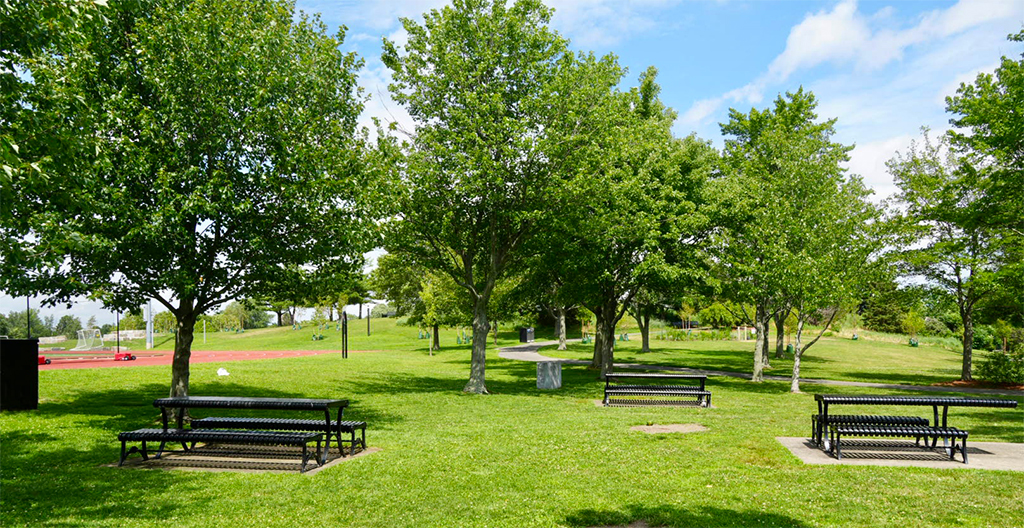
This 50-acre North Cambridge destination for lounging and recreation, picnicking, sports and events big and small hosts the annual Family Day on Saturday; a jazz festival in July; and Shakespeare troupes and the Oldtime Baseball Game, with guests of Red Sox royalty such as Lou Merloni, Oil Can Boyd, Jonathan Papelbon and Pedro Martinez suiting up at St. Peter’s Field.
There’s little surprising or new in “The Long Walk” despite its pedigree, passion and professionalism. It’s still a compelling and emotionally charged tale primarily because of those three Ps – and the grim prospect of how much further we as a society can fall. It’s based on Stephen King’s first novel, written as a student while at the University of Maine but not published until 1979; even then it went under King’s pen name of Richard Bachman, like “The Running Man.”
In “Walk,” we get dropped into a dystopian America in the late 1960s or ’70s. It takes a while to register, but the unhappy alter reality has the distinct tang of “The Mist” or “The Stand”: The United States has just emerged from a war, but the country is not the portrait of Ozzie and Harriet productivity we’ve all been sold on. Much of what we see in our limited lens is the depressed and the needy. Most of the people we see along the long stroll could use a hot shower, a bowl of hot soup and some new threads.
Eva Victor’s Ipswich-shot tale of sisterly bonds and trauma survival is on the big screen in the Boston area only at the Coolidge Corner Theatre, but is now online for a theater-run sticker price, down from an initial $20. The intimate affair focuses on the relationship between Agnes (Victor) and Lydie (Naomi Ackie, “Mickey 17”), grad school besties at the same small fictional New England college – called Fairpoint – where Agnes hopes to spin her adjunct-lecturer gig into a full-time faculty position. (“Lolita” is her thing, and also an arc that leans into bigger plot developments.) Lydie, a New Yorker and expectant parent with her partner (the fiery E.R. Fightmaster), is crashing with Agnes in her humble but quaint New England abode while visiting the campus for a workshop. (The child in Lydie’s belly is the baby of the title). Their conversations are rich and revealing; you could think of “Sorry, Baby” as “My Dinner with Andre” (1981) if directed by Miranda July. The pair’s reunion and academic pursuits take an unsettling shift at Agnes’ review session with her advising professor (Louis Cancelmi), a man who appears kind, astute and intellectually attentive. The meeting gets moved from his office to his house, and though we never see what transpires inside, we know from the time-lapse lens trained judiciously on the stoop that Agnes is there from midday until well into the evening. When she finally stumbles out, she is disoriented and clearly traumatized. Back home, it doesn’t take much for Lydie to know what happened. Both moments are conceived and shot by Victor with subtlety and an emotional precision that resonates profoundly through the rest of the film as the bigger wheels of the college administration looking into Agnes’ complaint and Agnes reporting for jury duty victimize her over and over again. Overall, though, the film is less about putting power-wielding predators on trial and more about the power of sisterhood, quiet compassion and the courage to persevere. Excellent in a pointed yet small role as a sandwich shop owner is John Carroll Lynch (“Fargo”). So too is Lucas Hedges, no stranger to the North Shore (“Manchester by the Sea”), who pops in now and then as Agnes’ far-flung neighbor and occasional hookup. If you’re thinking Victor must be an ingrained local, stop right there; they were born in Paris and raised in California, shooting here for our renowned collegiate backdrop. “Sorry, Baby” marks Victor’s directorial debut. It’s a competent and impressive one that should have many awaiting their sophomore effort.
A rendering of a proposed “Riverwalk” for bicyclist and pedestrians across the Charles River. The Museum of Science refused use of the image without the watermark labeling it “conceptual.”
A bike lane and footpath bridge across the Charles River past the Museum of Science is being discussed again by state Department of Transportation officials as being in early stages of planning.
The “Riverwalk” path along the back of the Museum of Science would connect Lechmere Canal Park and the CambridgeSide mall with the Teddy Ebersol Field section of Boston’s Esplanade without having to navigate the bustle of the McGrath-O’Brien Highway in Cambridge and Somerville or Leverett Circle across the river.
Tom MeekThe Shade structure at Sennott Park in Cambridge, seen Aug. 22, is run by teens to provide community activities and a break from summer heat.
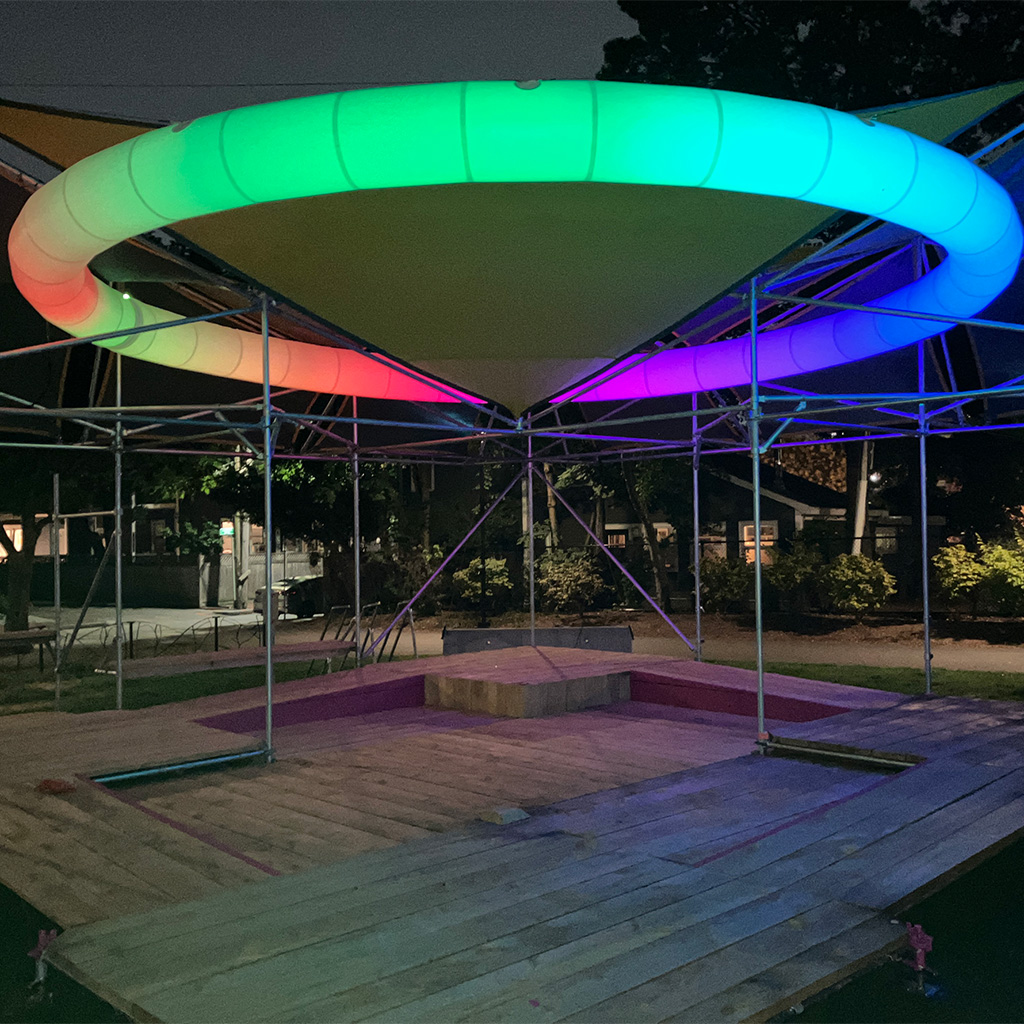
That structure at the south end of Sennott Park on Broadway is not a performance stage, but a community gathering spot designed to get people mingling and interacting and out of the heat. The concept, called Shade, is the creation of community engagement activists Debbie Bonilla and Jeff Goldenson, responding to climate change and teen mental health issues.
While Shade aims to benefit teens by providing a safe, cool space to hang out, it’s also designed to imbue them with a sense of responsibility: Teens are involved directly in all aspects of its social-justice-driven projects, from the structure’s design to its maintenance and operations, paid though grants and resources such as the Mayor’s Summer Youth Employment Program. “Teens know teens best,” Goldenson said during an onsite conversation, “and deserve a place at the table.”
This stay-cool-and-chill pop-up is a series of interconnected ramps and raised platforms capped by an undulating wave of multihued shade sails and an aesthetically pleasing lighting halo. There are hammock seats, built-in benches and a few collapsible camp chairs. It’s available for all to use any time the park is open, and is staffed 5 to 8:30 p.m. Tuesdays, Thursdays and Fridays by teens who can break out a popcorn cart, games, a smattering of radio controlled cars to race and an audio system (all stored in an adjacent shipping container when not in use). Given a few restrictions – not too loud, no graphic lyrics – the teens get to pick and manage the playlists. Pizza is ordered in regularly.
The Sennott Park facility is the second of its kind; the first went up last year not too far away at Donnelly Field as part of the city’s Shade is Social Justice program, which drew a climate resiliency grant from the Metropolitan Area Planning Council and Barr Foundation. The “Sun Block” cube at Lafayette Square – at the of Central Square – was realized as part of the same grant.
ShadeShade’s halo of light comes on at night in Sennott Park.
The Broadway Shade installation came about this year through a grant that Bonilla and Goldenson helped secure from the New England Foundation for the Arts. The site also qualified for the mayor’s program that hires teens into community jobs during the summer. Shade was able to employ six to eight teens part-time from February through June during the administrative, planning and design phases, Goldenson said, and the structure was designed by a committee of local youth: Cheryl Rateau, Eli Goncalves, Nico Chandler, Samadhi Simmons, Matt Keane and A’mara Henry-Guity. More hires were added as part of the Mayor’s Summer Youth Employment Program for setup and operation.
Extreme heat is the leading cause of weather-related deaths, and the area already faces much higher temperatures than in decades past, with a greater number of hot days and some records being set. The hottest June day for the area since data collection began in 1872 was this year: June 24 hit 102 degrees (also the area fourth-hottest day for any month). Another heat record was set July 29, when temperatures hit 98 degrees. Cambridge’s Climate Change Vulnerability Assessment predicts the number of days above 90 degrees could almost triple by 2030 and might be the norm every day of summer by 2070.
ShadeA Shade worker serves neighborhood kids from its dedicated popcorn maker.
A Cambridge Health Department survey in 2022, meanwhile, reported that 37 percent of teens professed regular feelings of depression, and that 20 percent expressed suicidal thoughts, the highest marks since 2012.
As a project that combines summer cooling and teen engagement, Shade won support from the city, and the City Council in particular. “Shade is a example of what happens when young people lead the way. These teens are not only creating spaces where their peers can gather and connect, but they’re also helping Cambridge confront the realities of climate change with creativity and care. I’m proud of their leadership, and of the citywide collaboration that brought this project to life,” councillor Sumbul Siddiqui said.
For the first-year structure, the main material supplier and building partner was a scaffolding company, but scaffolding by design is meant to be climbable and had too many footholds, which presented risk concerns. For Sennott Park, a different framing firm was engaged that donated much of the materials – leaving more money to pay teens, Goldenson said.
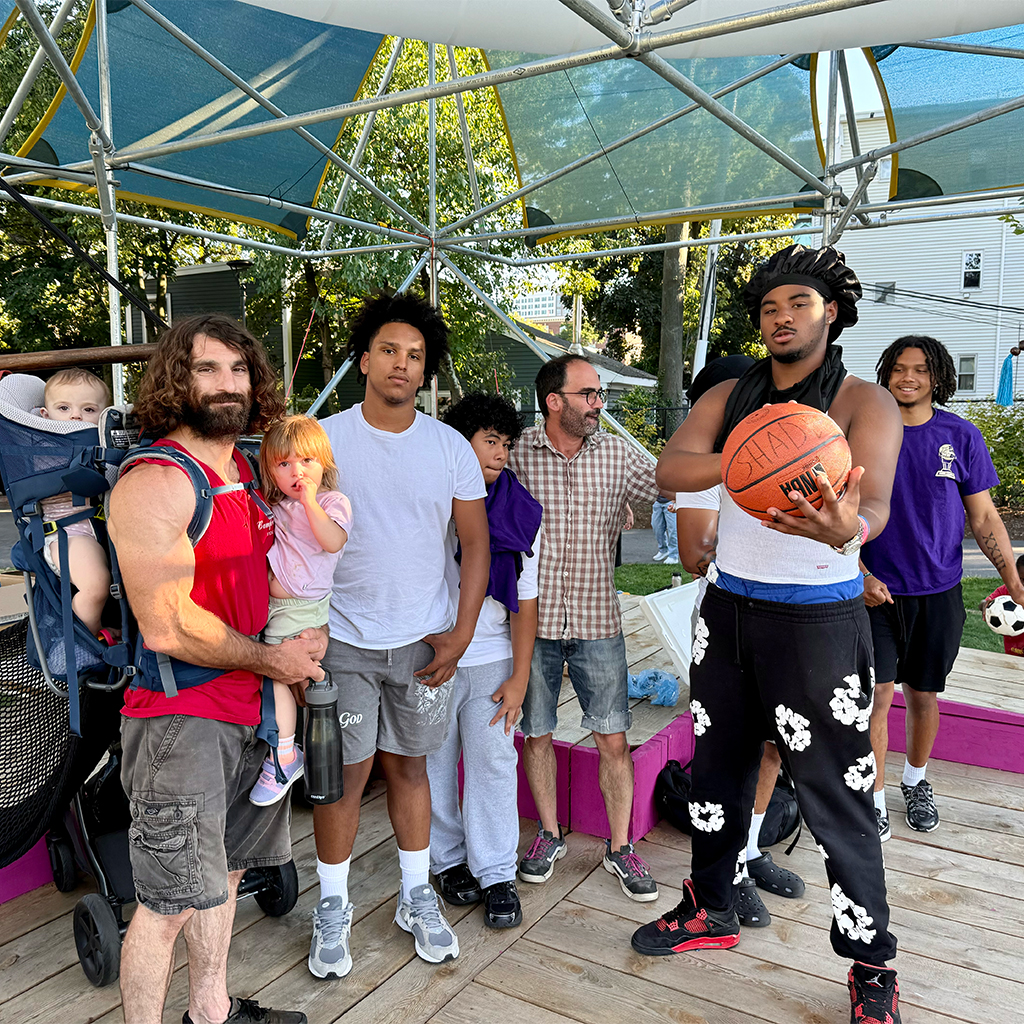
Tom MeekJeff Goldenson, third from right, with Shade workers and visitors on Aug. 22.
Shade is at the less-frequented south end of the park, Goldenson noted, and might have benefited from being near the north-end basketball courts and its regular three-on-three tournaments. The organization runs them, giving winners prizes such as Amazon gift cards.
The community that gathers at Sennott Park is diverse. On a Friday night visit, there were mothers with toddlers rocking in the hammock swings as elementary-aged children giggled over races of those radio-controlled monster trucks, sending them under the Shade structure and across the field. A basketball tourney was underway with players enough for eight teams, and more people to watch. Goldenson said basketball and snow cones are the big draw, but hopes to add movie nights, which would make apt use of that popcorn machine.
But the mayor’s employment program is winding down with the end of summer, and Sennott Park’s Shade structure comes down mid-September.
It’s unknown if another Shade stage will be built in Cambridge next summer, they said.
Bonilla and Goldenson, whose community-based teen engagements before Shade included programs such as the popular Friday Night Hype, hope to share the concept with other communities. A grant from the Sasaki Foundation is paying for the work of imagining how – potentially a franchise or membership-based model, or the selling of the design (made with the help of Wentworth College), materials or even a “best practices” knowledge base from the teen engagement program.
In the fall, with Shade packed away, Bonilla and Goldenson will turn their focus to figuring it out.
“We want to share, but we want to be sustainable too,” Goldenson said. “We don’t want to be always chasing grants.”
Amid climate change challenges, Shade presents obvious answer: Let teens show how to be cooler
The Shade structure at Sennott Park in Cambridge, seen Aug. 22, is run by teens to provide community activities and a break from summer heat.
That structure at the south end of Sennott Park on Broadway is not a performance stage, but a community gathering spot designed to get people mingling and interacting and out of the heat. The concept, called Shade, is the creation of community engagement activists Debbie Bonilla and Jeff Goldenson, responding to climate change and teen mental health issues.
While Shade aims to benefit teens by providing a safe, cool space to hang out, it’s also designed to imbue them with a sense of responsibility: Teens are involved directly in all aspects of its social-justice-driven projects, from the structure’s design to its maintenance and operations, paid though grants and resources such as the Mayor’s Summer Youth Employment Program. “Teens know teens best,” Goldenson said during an onsite conversation, “and deserve a place at the table.”
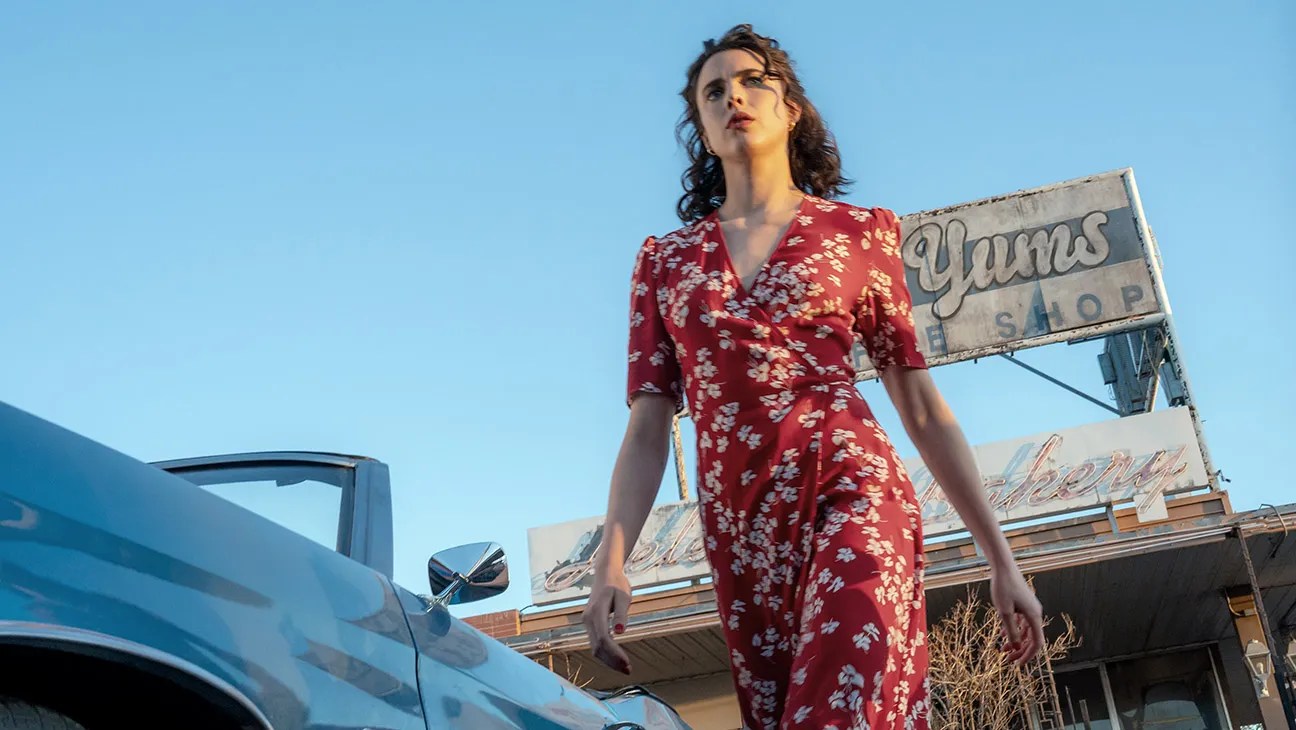
Ethan Coen and co-writer and wife Tricia Cooke reteam with actor Margaret Qualley for the second of a purported loose lesbian neo-noir trilogy. That first outing, last year’s “Drive-Away Dolls,” was a bit of a rickety start, but through no fault of Qualley, who packed the punchy best of both Thelma and Louise as one of two gal pals who zoom off in a car with various factions of angry patriarchy hot on their tail. It was a concept in search of a story. Here, Coen and Cooke dial up the noir aspect and concoct something more worthy of Qualley’s onscreen allure.
She plays Honey O’Donahue, a private detective working the dusty, depressed streets of Bakersfield, California. There’s trouble right off the bat as an angular French woman (Lera Abova) in leopard-skin tights navigates the scree of a ravine to get to an inverted car, its driver dead or dying. She’s not there to help, but to pluck a signet ring off a finger, and in the next scene Abova’s agent of cold deeds is floating casually full frontal in a nearby quarry pond. An important fashion note: As she clads up, there’s a Garanimals moment as we realize her underwear and bra match her motorbike helmet.
The latest Spike Lee Joint might not be the director’s tightest, but it is a passion project as playful as it is nostalgic. New York gets a lot of love, as do Spike’s earlier films – Rosie Perez and Nick Turturro show up in pop-off-the-screen bits – and New York sports teams. The last time Lee adapted a film that was considered an untouchable masterpiece (Park Chan-wook’s “Old Boy”) didn’t go so well; it felt flat, a rote redoing. He’s done better here in reenvisioning Akira Kurosawa’s great 1963 kidnap noir, “High and Low” starring the indelible Toshiro Mifune and adapted from Ed McBain’s novel “King’s Ransom,” flipping a shoe executive whose son is targeted for kidnapping during a corporate merger for a music mogul arguably fashioned after Jay-Z. Denzel Washington reunites with Lee for the first time in 19 years (they have five collaborations, with the previous being “Inside Man”) to play the exec, David King, looking to buy back control of his records label when the kidnapping goes down. The ransom is $17.5 million, which is the money David needs to get his Stackin’ Hits back. But there’s a hitch: Who’s snatched from camp is not David’s son Trey (Aubrey Joseph) but Kyle (Elijah Wright), the son of his loyal chauffeur and right hand man Paul (Jeffery Wright, Elijah’s dad IRL), mistaken for Trey by the kidnapper. It’s here that David has a crisis of conscience when he balks at paying for Kyle, causing a rift between David and Paul and raising questions of character and selfishness from David’s wife (Ilfenesh Hadera, elegant with a capital E) and son.
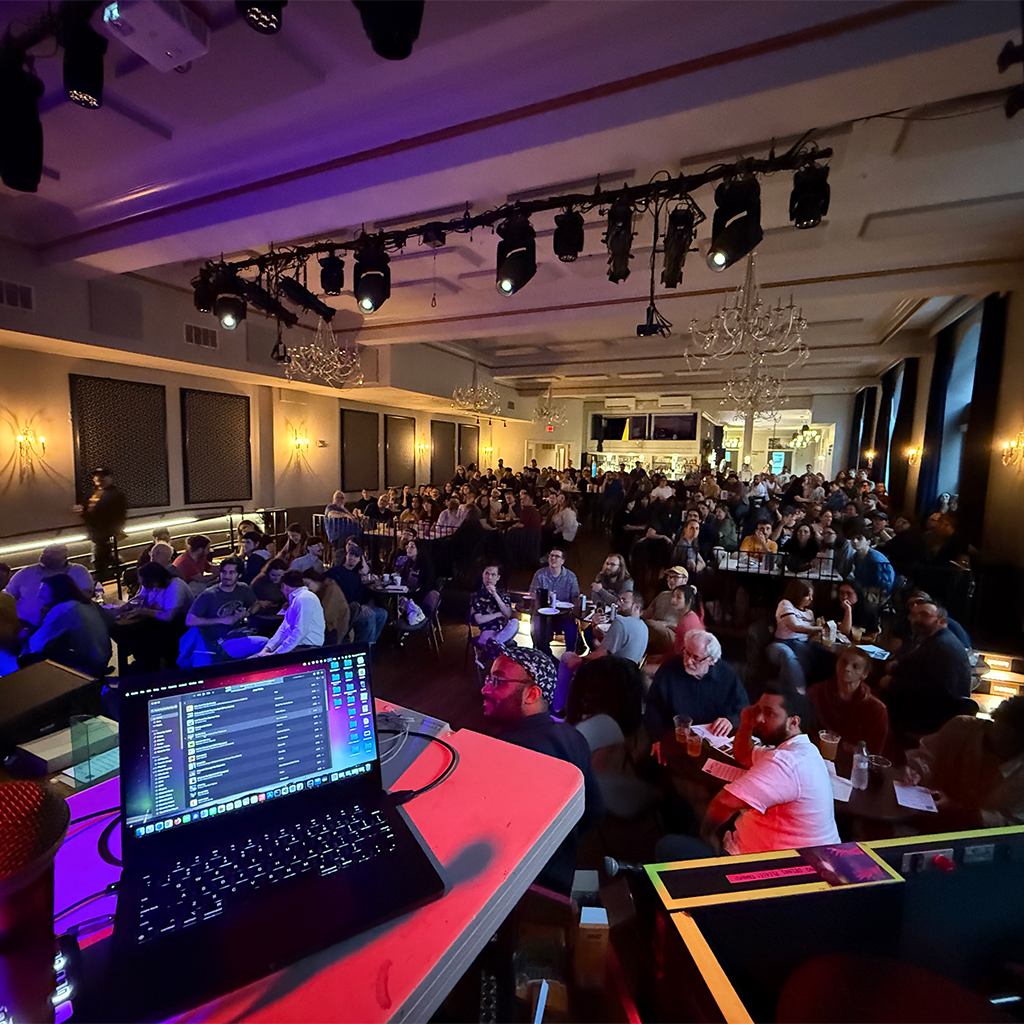
Somerville TheatreSomerville Theatre Crystal Ballroom Movie Trivia nights draw more than 150 people monthly, as seen from the POV of the scorekeeper.
Somerville Theatre Crystal Ballroom Movie Trivia nights are a raucous two hours of competitive film fan fun for self-anointed cinephiles and trivia tricksters looking to flaunt deep stores of knowledge to attain factoid alpha status.
The nights, on the third Tuesday of the month, are hosted by Billy Thegenus, program and outreach coordinator at the Coolidge Corner Theatre in Brookline and Ian Brownell, co-owner of CSB Theaters (with longtime theater manager Ian Judge), which runs the Somerville Theatre.The events have drawn 150-plus people – or 20-ish teams of five to six – to the Crystal Ballroom space. You can show up with your own, ready-to-roll crew or go freelance and hop on with a duo or trio needing a trivia turbo boost.












 For What it's Worth