All good things must end, or so they say. But do they have to? This part deux to 2023’s “Mission: Impossible – Dead Reckoning Part One” does have a sheen of finality to it, with plenty of nostalgia.
The key to the MI series is Tom Cruise: No Cruise, no movie. He’s a transcendent (and ageless) actor who sells the brand with bona fide stardom, a renown for performing his own stunts and a drive to be forever outdoing himself – and he usually doesn’t disappoint. In “Final Reckoning,” he succeeds with the help of writer-director Christopher McQuarrie, back for his fourth MI go-round.
Obviously, Cruise has a lot of faith in McQuarrie – and why wouldn’t he? After winning a Best Screenwriting Oscar early on for “The Usual Suspects” in 1996, McQuarrie has had a meteoric shot of a career in Hollywood. Besides these MI shuffles, he was one of the pens on another Cruise franchise, “Top Gun: Maverick,” back in 2022 and four others, directing Cruise in“Jack Reacher” (2012) and with scriptwriting creds on “Valkyrie” (2008), “The Edge of Tomorrow” (2014) and “The Mummy” (2017).
Davis Guggenheim has long aimed his lens on social issues and humans of interest, be it his Oscar-winning climate change contemplation “An Inconvenient Truth” (2006), “He Named Me Malala” (2015) or “Waiting for Superman” (2010), which took on the failures of the education system. Here, with co-director Nyle DeMarco, the first Deaf contestant to win “Dancing with the Stars” and “America’s Next Top Model,” Guggenheim homes in on a small moment of American civil disobedience that, in context, reflects larger equity issues. The time is the big ’80s, the place, Gallaudet University, the only Deaf university in the world. Founded as a result of an executive order by Abraham Lincoln in 1864 (one we can all get behind), Gallaudet had never had a Deaf president; when it was announced that two of the three candidates to take on the role in 1988 were Deaf, there was much hope and excitement among students. The trustees, none of whom were Deaf or hearing impaired, picked the lone hearing candidate, Elisabeth Zinzer. The students immediately rejected Zinzer and locked down the campus. For the framing, Guggenheim and DeMarco find the four leaders of the protest – the reserved Tim, the passionately demonstrative Jerry, the quiet and demurring Greg and fiery Bridgetta – to reflect back. One of the most intriguing aspects of the protest is how the student negotiator to the trustees was selected: Jerry, who in flashbacks clearly has the innate ability to rouse a crowd, believed he should have been the one, but it was Greg, who, while reserved, was student body president. His showdown on “Nightline” with Zinzer, which nearly gets thrown by host-mediator Ted Koppel doing his Ted Koppel thing, is telling on many levels. The lockdown also had pundits and politicians such as Pat Buchanan and Barney Frank at odds and in an uproar. One of the most inflaming inflection points however, was the insistence by Zinzer and the head of the board, an out-of-touch matron with an impeccable bouffant by the name of Jane Bassett Spilman, that they were simply trying to “help” the students. As with Guggenheim’s other delves, “Deaf President Now!” is composed meticulously. There’s a virtuosic blending of interviews with archival footage and smart dramatizations that aptly employ sensory deprivation to put you in the moment. The Gallaudet uprising came two years before the Americans with Disabilities Act was signed into law by the administration of Bush senior. The roots of that law is well framed in the small, little seen 2007 Ron Livingston film “Music Within,” which would make an ideal viewing companion with “Deaf President Now!”
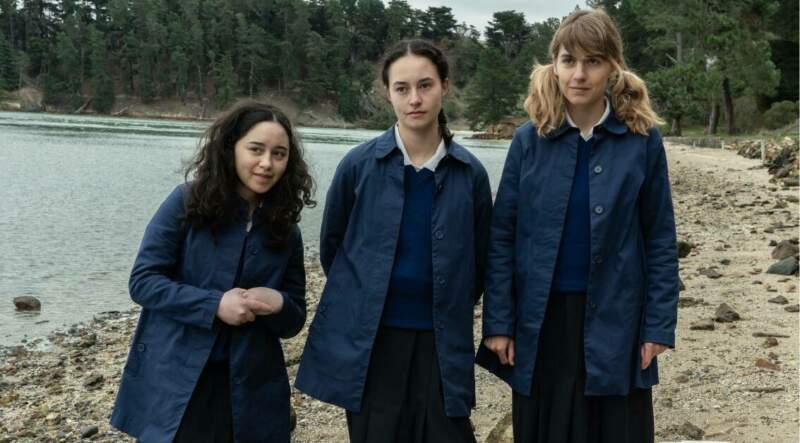
The historical ills of the three Cs (colonialism, capitalism and Christianity) loom at the fore of Josephine Stewart-Te Whiu’s feature debut, a coming-of-age tale about two Māoris and one Pākehā (a white New Zealander) sent to an island reform school for delinquent girls. Nellie (Erana James) and Daisy (Manaia Hall) are sent to the school to whitewash the Māori out of them and accept the word of god. Lou (Nathalie Morris), a rebellious, well-off white girl, is there for remediation of sexual perversions – nothing worse than dad catching you making out with your female babysitter back in the conservative 1950s. As in RaMell Ross’ adaptation of Colson Whitehead’s “Nickel Boys” last year, there are different rules when it comes to people of color, even in a hellhole. In the still of the night, from one hut, blood-curdling screams are heard. We never really learn what goes on there, just that whatever it is, it isn’t good, and that the school marm (Rima Te Wiata, “Hunt for the Wilderpeople”) is quick to slap any Māori incantation from the mouths of Nellie and Daisy, even though she is of Māori origin and ostensibly came up through the same system. Tellingly, Daisy can’t read and the school doesn’t seem interested in her education; just her assimilation and Christian brainwashing. Part of the school’s mission is to keep the teens chaste (a remote island helps with that logistically) and get them prepared to become demurring housewives, a low bar made even lower by the persistent patronization and Draconian discipline. The driving force to the film is the playful kinship between the trio (aided by the chemistry among the three performers) and their never-give-in resolve despite the dead-end hopelessness of their situations. Gorgeously shot by Maria Ines Manchego (“Uproar”) and executive produced by Taika Waititi (“Wilderpeople,” “JoJo Rabbit”), “We Were Dangerous” is a quiet reminder of the sins of religious imperialism, the agency of lateral violence that accompanies it and the sexual oppression and subjugation of women during the rising tide of world prosperity.
After four years of headlines about the tragic on‑set shooting of cinematographer Halyna Hutchins, “Rust” finally arrives in theaters for a limited run and on streaming platforms with something of a whimper. There’s plenty of gunplay to be sure, and the film’s evocative of Clint Eastwood’s “Pale Rider” (1985) and the Coen brothers’ 2010 remake of the John Wayne classic, “True Grit,” without reaching those lofty heights. Star Alec Baldwin’s now notorious shooting death of Hutchins – and wounding of director Joel Souza – clouds nearly every scene, something underscored by Baldwin’s Harland Rust being a stone-cold killer more than able with a six-shooter. The Wyoming-set Western begins with a bit of a “Little House on the Prairie” preamble as Lucas Hollister (Patrick Scott McDermott), a parentless 13-year-old protecting his younger brother from bullies, inadvertently shoots and kills the ruffians’ father (the eerie tie-ins to real life are endless). Hanging is in order, but before the execution can be carried out Harland shows up, wipes out the jail watch and absconds with the boy. On the trail, conversations between Harland and Lucas are terse. If Lucas asks too many questions, Harland dishes out some of Wayne’s slap-first tough love. Of course the law and a horde of scummy bounty hunters are after the two, with plenty of blazing shootouts along the dusty path. Baldwin looks the part of gruff gunslinger, but his avuncular, wispy voice undercuts his character’s bravado where a Wayne, Eastwood or Jeff Bridges would have tonal command of a scene. Another unavoidable reminder of Hutchins: The film is stunningly shot, with dark and muted texturings and rich, opulent framings of the amber plains akin to the camerawork by Ari Wegner that made “Power of the Dog” (also shot in 2021) jump off the screen. “Rust” makes for a passable Western sojourn that will forever be steeped in tragic ignominy.
Fans of Nicolas Cage behaving off-center in such curios as “Mandy” (2018), “The Unbearable Weight of Massive Talent” (2022) or “Pig” (2021), should be all in on this hazing ritual turned grudge match. Cage stars as an unnamed family man (we’ll just call him Cage; the credits list him as “The Surfer”) who wants to take his teen son (Finn Little) surfing at a remote beach in Australia. Once on the golden sands of surfer paradise, the local hang-10 tribe – trim, hyper-fit, middle-aged men – tell Cage and his kid: No surf, not now, not ever. Cage quickly but sheepishly notes that it’s a public beach, to which the snappish beach bullies threaten a beatdown. “Before you can surf, you must suffer,” says the ringleader (a steely-eyed Julian McMahon). If Cage seems an odd fit to be randomly out in the wilds of Australia, since he doesn’t dial up an Australian accent for a second, the script has answers: Cage’s pa was born on a hillside house overlooking the beach; Cage has returned all these years later after being raised in California. Also, hey, this is a Nic Cage movie, and you can’t have Cage not being Cage. What ensues is Cage living out of his car in the parking lot above the beach (his son is back at some hotel with his mother), trying to suss out the right opportunity to sneak in a run. Adding complexity to the quest at hand, the surf bros have a rocking beach shack that they seemingly never leave and from which they regularly dispatch squads to harass Cage and trash his ride. Days pass, tensions rise and mean-boy pranks get nastier and nastier, as Cage’s classic Bimmer becomes a squalid rat’s nest of candy wrappers and fly-worthy grunge. It’s a grinding game of wills with the prospect of tripping into point-of-no-return territory, as well done in Down Under touchstones “Wake in Fright” (1971) and “Eden Lake” (2008). “The Surfer” is not quite that kind of psychological horror-thriller; it’s more a psychological dark comedy with ’70s B-movie bite, though with a redundant ebb and flow of conflict and retreat in which the stakes don’t rise. Sure, there are ripples that affect Cage’s character’s offscreen life (money, family, the father’s house, etc.), but it feels like filler, not consequence. Still, Lorcan Finnegan’s sunbaked homage and Cage’s winning persona carry the never-surrender clash in from the foamy breakers without a wipeout. It’s a safe, sure ride that never fully shoots the waves.
‘Havoc’ (2025)
Off the top, there’s a lot to like about this amped-up actioner. First, the cast is killer: Tom Hardy (“Inception,” “Dunkirk”), Oscar winner Forrest Whitaker, Timothy Olyphant of “Justified” and Luis Guzmán, whom we haven’t seen enough as of late. Secondly, the slick, style-infused crime thriller has aspirations of, of all things, Peckinpah and Woo, which should come as no surprise – it’s directed by Gareth Evans, the hyperactive eye behind the gonzo Indonesian cop beatdown “Raid” flicks. All that goodness gets lost in an arduous overkill of hyper action that explodes around Hardy’s dirty cop on a bloody path to redemption. The film, an opulent, rain-slicked, Gotham-esque spectacle, is set in an unnamed, ambiguous American city (Chicago gets my bid, though it was shot in the U.K.) where gangs, racial lines and revenge agendas stand out like blazing neon road signs in the jet-black night. In the mix, we have a Chinese triad, a corrupt business owner running for mayor (Whitaker), a massive shipment of smack, an inner sanctum of cops on the take who shoot first, and a bunch of hockey-masked gangbangers who have gotten in too deep. The resident triad boss gets offed because of the smack, and his hair-triggered mother (Yann Yann Yeo) comes stateside for a little payback. Hardy’s Walker gets caught in the never-ending crossfire trying to protect one of the gangbangers (Quelin Sepulveda) from the wrath of the triad and other bent cops (led by Olyphant) trying to cover their bloody tracks with more blood. It’s also Christmas, and Walker has an estranged 6-year-old daughter he wants to get a present to. It’s just more dressing for long, overproduced shootouts and smackdowns that go on far too long. Some of the choreography and camera work are more than impressive, but “Havoc” is style over substance, with a director continually shouting out “did you see what I did there?” Hardy’s inherent bristling grit, well used in “Fury Road” (2015), gets wasted here; most of what sparkles and pops are the dark sets, acute framings and a fresh-faced Jessie Mei Li as one of the department’s only clean cops.





 For What it's Worth