
Tag Archives: reviews

Short Takes: “Faye,” “Skywalkers,” “Land of Bad” and “A Family Affair”

27 Jul

‘Faye’ (2024)

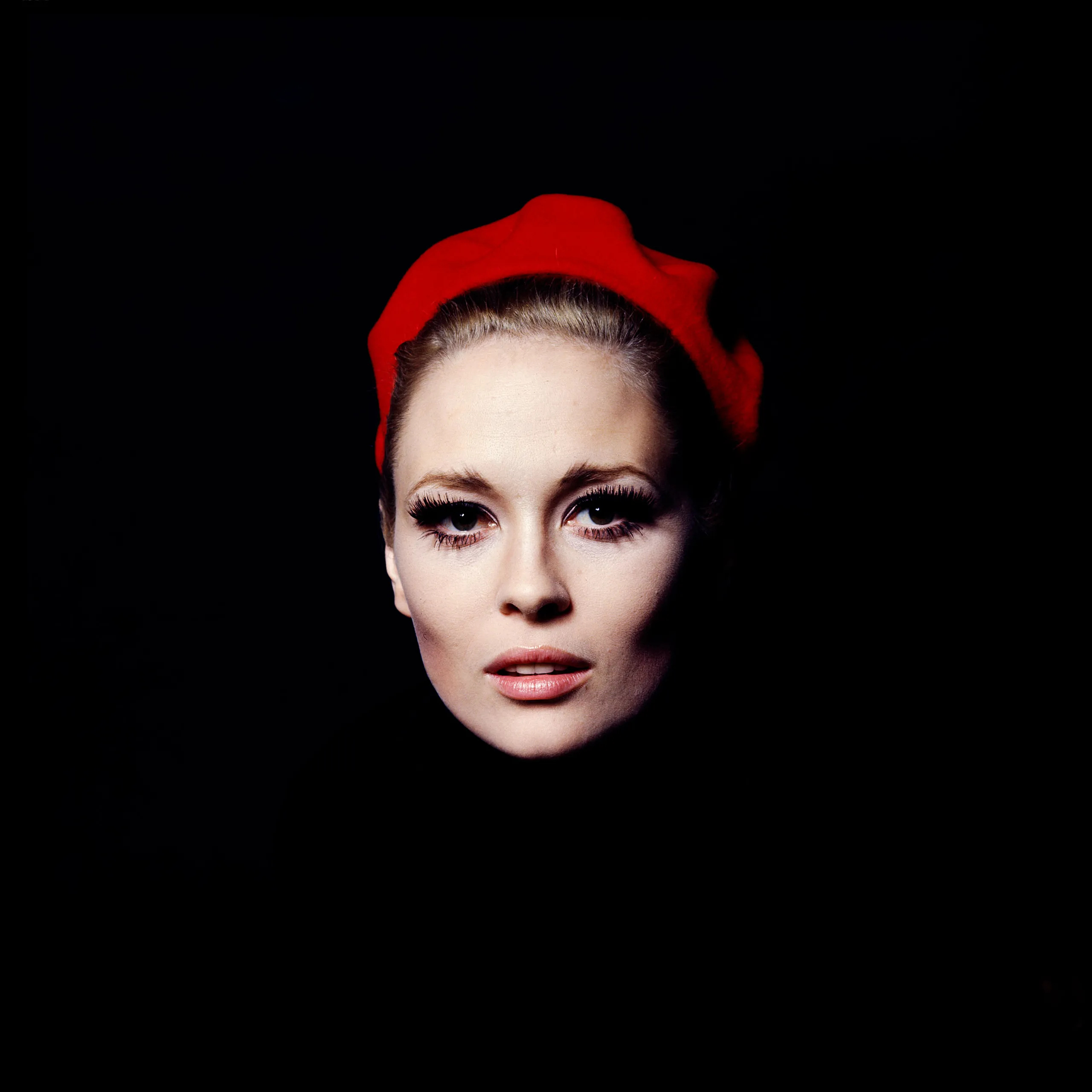
Faye Dunaway, who for my money was the actor who embodied the redefinition of women during the New Hollywood era – “the most exciting time in film,” she calls it in the new documentary from producer-turned-filmmaker Laurent Bouzereau. I couldn’t agree more. Dunaway’s chiseled, alluring countenance cut a striking image, and she was often a barn burner in her onscreen delivery. Dunaway would be Oscar nominated for her performances in “Bonnie and Clyde” (1967) and “Chinatown” (1974) and win the bald, golden guy for “Network” (1976). That body of work practically defined the time, with “Bonnie and Clyde” alone hailed as the cornerstone of a wave of classics that include the “Godfather” films, “The French Connection” (1971) and Monte Hellman’s “Two-Lane Blacktop” (1971). Bouzereau serves up a spry Dunaway (now in her 80s) reflecting on her childhood and marriage, relationships and affairs with Boston rocker Peter Wolf, film director Jerry Schatzberg (“Scarecrow,” “The Panic in Needle Park”) and Marcello Mastroianni among the starry lot. The Southern-born Dunaway had several ties to Boston besides Wolf: She attended Boston University, filmed the original 1968 “Thomas Crown Affair” with Steve McQueen here and sought regular guidance from playwright and Harvard professor William Alfred, whom she describes as the father she never had (her own father was an alcoholic, and her parents divorced when she was young). The jumping-off for the film is the iconic 1977 shot of Dunaway poolside at the Beverly Hills Hotel with her Oscar at an ungodly 6 a.m. the day after her win. The photo would lead to Dunaway marrying photographer Terry O’Neill; the couple would adopt Dunaway’s lone child, Liam, who in the film has much affection to offer about mom. Other talking heads that chime in are Mickey Rourke, who co-starred with Dunaway in the 1987 Charles Bukowski-inspired flick “Barfly” and fan-friend Sharon Stone, who broke a few glass ceilings in her own right, but there’s also no drop-in from “Chinatown” co-star Jack Nicholson. If there’s any downside to the film, it’s that it feels too curated by the actor and thus narrow in scope. Though we get Bette Davis making abundantly clear in one talk show clip that Dunaway was difficult to work with, even the Joan Crawford biopic “Mommie Dearest” (1981), which was critically drubbed at the time – especially Dunaway’s performance – gets spun in a way that pulls blame from Dunaway. The film touches on but does not delve into issues of mental health, a topic that feels so nonchalantly dropped in that it does the topic and the actor a disservice. “Faye” is a great rewind of one of (if not the) most defining periods in filmmaking, but holds the cards too tight on Dunaway as a person.


‘Skywalkers: A Love Story’ (2024)
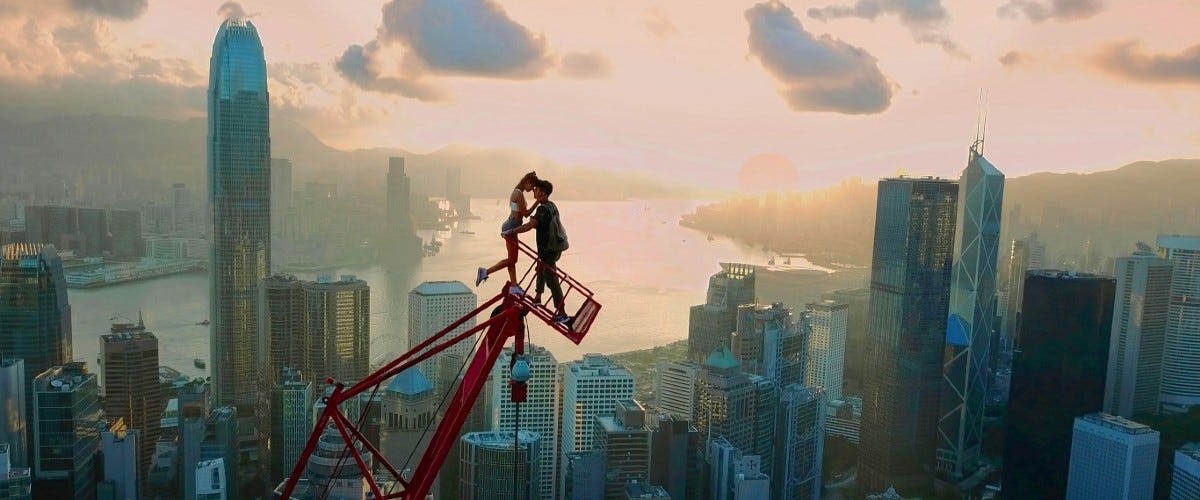
One part promotion piece and one part jaw-dropping derring-do, this doc by Jeff Zimbalist (“Give Us This Day”) follows Angela Nikolai and Ivan Beerkus, Russian rooftoppers (people who climb skyscrapers illicitly for thrills) who during the last World Cup finals seek to climb the near-completed Merdeka tower in Malaysia – a 2,227-foot structure, the second-tallest in the world. It’s not quite “Man on Wire,” the fantastic 2008 Academy Award-winner that showcased Philippe Petit’s wire walk between the the World Trade Towers in 1974 (neither uses nets or wires, so what’s the difference between 1,368 and 2,227 feet if you fall?), but it grips in its own right. The staging and planning aspects provide intrigue, with World Cup mania leveraged as a distraction, and there’s the added challenge of Covid that shuts off the pair’s sponsorship funding; the couple are undaunted. Zimbalist delves into their strained relationship and backstories to add depth, but it’s not deep enough or blended in seamlessly enough and, if anything, detracts. Much of the stunt footage was shot by the couple, as it’s their bread and butter to garner likes and dollars on social media. It would have been interesting had Zimbalist peeled back more on how social media translate into dollars and how some of the amazing footage is captured – from what’s given, we can infer there are GoPros, selfie sticks and drones, but it’s all so polished there has to be more to it. There are accusations that much of what the pair do is staged and manufactured digitally, and while it doesn’t seem so, it’s another thing the film glosses over. Nikolai and Beerkus are bona fide artists and know how to strike a pose atop the universe (Nikolai will often bring a fancy dress), and the shots looking down are viscerally dizzying – if you have acrophobia, this is your content warning. Everyone else should hang on all the way through: Some of the most impressive stunt footage is at the end as the credits roll.


‘Land of Bad’ (2024)
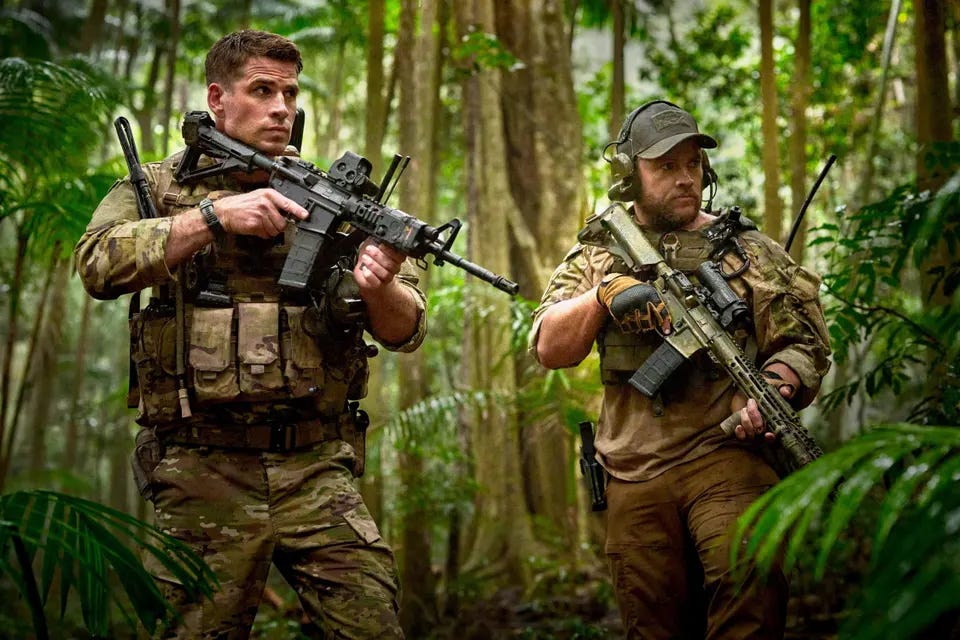
In this military actioner from director William Eubank in which U.S. Army Special Forces get dropped into a Philippine jungle to extract a CIA package, underpowered plot devices go off throughout: Turns out the simple in-and-out extraction isn’t so simple, as the camp the small strike force is sent into is a hive of international terrorists, largely unbeknownst to the smug higher-ups in intelligence. Shit goes south real fast, which leaves one soldier by the call name of Playboy (Liam Hemsworth) on the run from an endless “Assault on Precinct 13” horde of well-armed baddies. Getting to the extraction checkpoint is an endless task that keeps shifting as each possibility erupts into a new hot zone. The whole harrowing ordeal’s not far off from Marc Wahlberg-Peter Berg collaborations “Mile 22” (2020) and “Lone Survivor” (2013). Added to the mix is Russell Crowe as Reaper, a drone pilot back in Nevada keeping eyes on Playboy and occasionally firing off a Hellcat missile or two. (The two paired on the 2022 crime-thriller “Poker Face,” which Crowe directed.) Eubank, known for his lo-fi 2014 sci-fi thriller “The Signal,” delved into action with Kristen Stewart in the disappointingly unimpressive “Underwater” (2020) but improves here in his orchestration of race-against-time pow-bangs. Crowe and Hemsworth make the fairly pat play watchable, but Liam’s big bro, Chris (“Thor,” “Furiosa: A Mad Max Saga”) did the whole shebang a tad better in “Extraction” (2020), and “Guy Ritchie’s the Covenant” (2023) remains the best of the lot.


‘A Family Affair’ (2024)
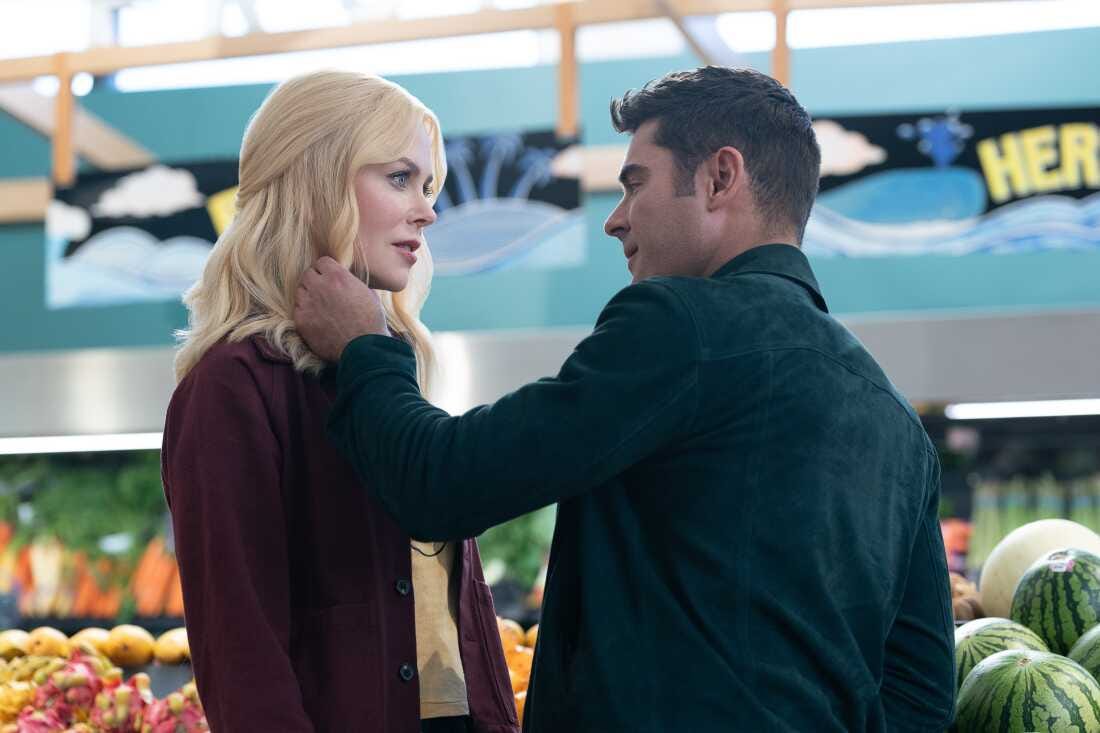
Light, silly rom-coms with predictable plots built around a Hollywood vet or two are a lo-fi way for streaming platforms to garner audiences. The Anne Hathaway mom-dating-younger-boy-band-hunk vehicle “The Idea of You” caught fire on Prime this year, and now on Netflix we have this Nicole Kidman-Zac Efron unlikelies-attract as Kidman’s widowed Brooke Harwood, an L.A. novelist, gets her groove back. She lives in a spacious, photo-worthy bungalow with her adult daughter Zara (Joey King, “The Kissing Booth”) who works for Efron’s Hollywood golden boy Chris Cole, something of a bland, watered-down hybrid of Tom Cruise and Robert Downey Jr. Chris is a dick of a boss who wants magical solutions to his first-world problems – my abs aren’t ripped enough, or my latte isn’t hot enough – and threatens to fire Zara in nearly every other frame. As you can expect, the family connection has him bumping into Brooke. Sparks fly, but Zara freaks out when she catches them in the act, especially knowing Chris is a serial dumper in addition to being a jerk to employees. The “affair” here, directed by Richard LaGravenese (“Living Out Loud”), is a plastic one, driven by hollow, entitled sorts with problems many would envy. Zara’s about the only one with a struggle that resonates (she wants to get into the film biz, but Chris keeps her locked into her gofer role). In the end, meandering the dew-misted produce aisles of a high-end boutique supermarket, she too gets shrink-wrapped.

The Beast

12 Apr

Meeting again for the first time, hopping from disaster to disaster via DNA

Bertrand Bonello’s unsettling yet alluring contemplation on fate and the future, “The Beast,” is an enigmatic weave of three periods in which two actors – Léa Seydoux (“Dune: Part Two,” “Blue is the Warmest Color”) and George MacKay (“1917”) – play roughly the same attracted-to-each-other, but unable-to-connect souls. It’s based loosely on or, I’d say, more inspired by Henry James’ 1903 short story “The Beast in the Jungle.” In the story, a fickle man of stature feels fated to suffer infamy, and as a result, lives a cautious, coddled existence trying to avoid the inevitable. The punchline is that it’s this that makes him notorious. Bonello’s reimagining is more “Cloud Atlas” (2012) by way of “Mulholland Drive” (2001) than anything truly Jamesian.

The film begins with Gabrielle (Seydoux), a pianist and French socialite, perusing an art exhibit in a Parisian gallery circa 1910. Amid the meandering cascade of transmogrified nude men captured in various torturous states, mouths agape and phalluses prominently on display, she bumps into a young British aristocrat named Louis (MacKay) who claims they have met before. Whether the claim is true or a ploy, the connection between the two feels instant and deep and immediately illicit, as Gabrielle’s husband is in the next room. The flirtation as they walk and talk in dour, somber tones isn’t sexual per se, but more soulful, as Louis vows to be Gabrielle’s savior when she, à la James’ protagonist, professes a perpetual fear she cannot fully articulate. From there we jump to 2044 Paris with Gabrielle working with an AI assistant – they have progressed to fully realistic, near-flesh incarnations and can even engage in sex – to try to find work, but can’t because she is too cluttered by emotion (that fear?) and thus less desirable (because emotions make you less effective, or so that is the premise). In both the Belle Époque and future Paris, the streets are nearly bare, as if a pandemic or apocalypse has occurred. All we ever see is Gabrielle and maybe one or two other wandering souls. The gorgeously shot, stark framing is beyond visceral, and that 1910 timeframe is intentional: The sequence takes place right after the Great Flood of Paris, when the Seine overflowed and the streets were knee deep in water, a historic occurrence that later folds into the plot with dire consequences as Lous and Gabrielle pay a visit to the doll factory owned by her husband (a stoic and purposeful Martin Scali).

The third and most jarring of threads takes place in Los Angeles 2014. Gabrielle is an aspiring actor housesitting a spartan glass manse in a upscale neighborhood while Louis, a never-been-kissed incel who vlogs his hate for women, catches sight of Gabrielle at a club and begins to stalk her. Like that Parisian flood, it’s a natural catastrophe – an earthquake – that becomes an agent of fate for the two.

Given all the time and personal hopping, Bonello’s tight narrative control is more than a neat party trick, but beyond that it’s the immersed performances by the actors that compel. Seydoux, whose Gabrielle is driven by a perennial sense of not knowing and doom, is the more rooted across the chapters, though her opening green screen scream scene and audition clips are priceless, eye-popping pullouts. MacKay is the one asked to do some broad changeups, toggling from dutiful gentleman to angry misogynist blaming the world for his failures. You know that in the filmmaking process there was time to change wardrobe and get into character, but as rendered it feels like bold turns on a dime – a wonderment, to be sure.

Pages from other films are clearly borrowed, but feel new. Gabrielle 2044 undergoing a DNA purification process to become a more employable candidate lies in a black isolation pool with a mechanical arm inserting a long needle into her ear. It’s a scene that feels pulled right from a Cronenberg body mutilation movie, which is hauntingly apt; Seydoux appeared in the auteur’s most recent endeavor, “Crimes of the Future” (2022). With the human-AI emotional connection there’s “Her” (2013), and a bit from Michael Haneke’s grim “Funny Games” (1997 and 2007), in which the rewind of video footage plays into the reshaping of the narrative.

The essence of “The Beast” is not unlike Kar-Wai Wong’s haunting elixir “2046” (2004). It’s imbued with a sense of bridled passion as the future and the past inform and influence each other. There’s dread and desire in every frame. Not all of it clicks, but overall its tonality mesmerizes, captivate and drives at you from within. 

Civil War

12 Apr

For correspondents in a torn country with echoes of today, any side is the wrong side

Alex Garland has always been thematically clear in his films. His first two directorial efforts, “Ex Machina” (2015) and “Annihilation” (2018), plumbed creationism and doom, while “Men” (2022) donned the veneer of horror as it wrestled with toxic masculinity and misogyny. Here Garland shifts to the more immediate and less fantastical with this loose-lensed scrutiny of journalism, namely its relevance and the ethics of those plying it. Sure, the civil war of the title is happening across the United States, but it’s vague as to why; all we know is that the Western Forces – a two-star alliance with their own, more spartan rendering of the ol’ red, white and blue – consists of seceded states Texas and California, and that Florida is a wild card trying to pull the Carolinas in to some kind of something or other. It’s a MacGuffin wrapped inside an enigma for certain, but Red and Blue states aligning is a bit of a stretch. Given the premise, folks are going to want to reflect on the nastiness here and now and how we move on, but “Civil War” is not that film. It takes a while to work that out and get on the page with Garland, a more-than-capable writer (“28 Days Later,” “Never Let Me Go”) and inherently immersive filmmaker.

“Civil War” opens with journalists in New York City recording mob unrest and the efforts of a bristling police presence trying to tamp it down. Again, the who and why isn’t explained, but given the immediacy of the scene, Garland and his crew transport us beyond our want-to-knows as veteran war photographer Lee Miller (Kirstin Dunst) snaps away at the post-explosion carnage of a car bomb. Trying to tag along is Jessie (Carlee Spaeny, the apple of Elvis’ eye in “Priscilla”) a Lee Miller wannabe who shoots on old-school film and would have been digitized herself if it weren’t for Lee pushing her out of the bomb blast. Like the punchy western journos in “Welcome to Sarajevo” (1997) and “The Year of Living Dangerously” (1982), the correspondents regroup in a hotel, drink scotch, milk each other for scoops and discuss the next hot spot locale to pursue a story. Lee and her pen man Joel (Wagner Moura) want to score an interview with the power-clinging, third-term president (Nick Offerman) before D.C. is beset. Jessie weasels her way in, as does Sammy (Stephen McKinley Henderson), an older political reporter from the Times looking to get to the front line in Charlottesville. The winding 800 miles to D.C. (can’t go down the main coastal roads) is filled with strange moments: a vintage boutique in a Southern hamlet seemingly untouched by the conflict, a gas stop where alleged looters hang from rafters awaiting “trial,” meticulous mass graves and plenty of skirmishes where not many seem to know what they are fighting for or who’s on whose side. “I’m just shooting at a guy who’s shooting at me,” one gentleman in camouflage and punk-dyed hair offers as he tries to suss out a sniper. 

At the end of the not-too-golden bricked road, Garland stages a phenomenally choreographed siege of Washington that’s as heartbreaking as it is breathtaking. Through it all he digs into the “objective indifference” of journalists – the professional tenet of getting the story and being impartial. It’s a cold and effective mirror that raises begging questions, and others more practical and immediate: If powers are to fall, will the organizations they file with still exist (the Times and Reuters) and if so, shouldn’t they become freelancers for foreign press such as the BBC or The Guardian? Then there’s the matters of personal preservation and the reasons for the civil war that are never discussed, which makes you see more notorious touch points in our recent past, namely Jan. 6 and the Proud Boys. To be clear, the Western Forces are no liberating army – or at least not one I’d want to be liberated by, as they shoot first and ask few questions. When they do ask, if your answers aren’t right, you’re dead. Twice as dead if you’re not white. 

It’s a slippery yet provocative slope. Some might call it manipulative stoking of fears without owning it, and they’d be right. The film also falters with Jessie; she’s as shallow as dew mist – an amalgam of parts with nothing human to grab on to, and Spaeny feels miscast. Thankfully that all fades in the rearview as things ramp up en route to D.C. As a visionary behind a pen or a lens, Garland has a penchant for lawless dystopia that translates well here, and frighteningly so. The war in the backyard holds our eyes and our minds even if the themes offered fail to fully crystallize in the billowing smoke of the distant hills.