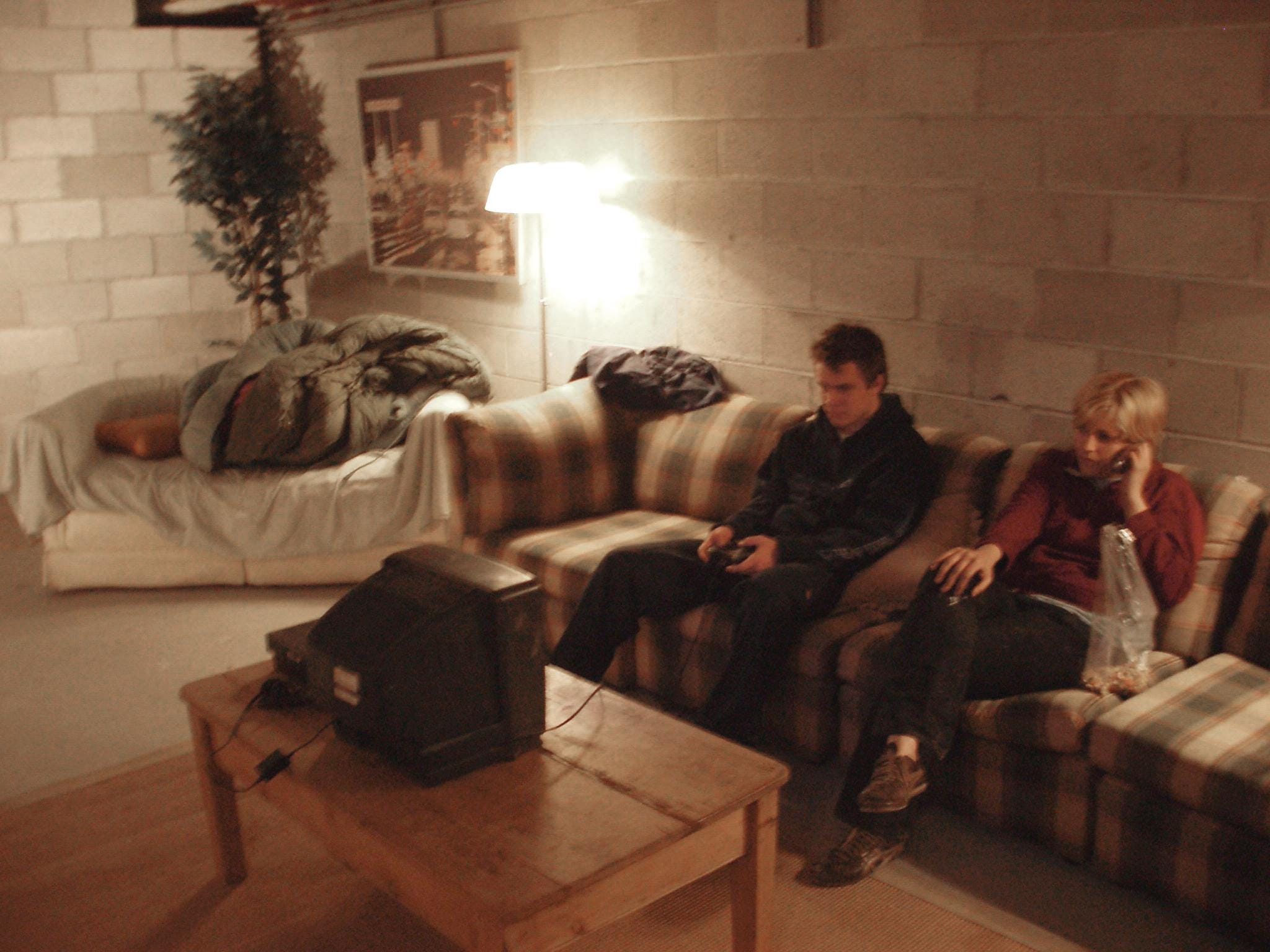
Jeremy Workman’s documentary recounts the antics of eight Rhode Island artists who in 2003 covertly built and lived in a hidden 750-square-foot apartment within the Providence Place Mall. To build the secret enclosure within a dead space in the massive mall, the team had to smuggle in cinder blocks and furniture. The apartment remained undetected for more than four years. The focal point of the film is Michael Townsend, a Rhode Island School of Design instructor, installation artist and something of a merry pied piper who sees the world as his canvas. Earlier Townsend projects include a creepy-cool community of mannequins in a post-apocalyptic setting under an overpass and along an industrial canal, as well as a 9/11 memorial depicting the faces of the fallen. The mall apartment, by default, was something more whimsical, and those involved videotaped the progress on grainy lo-res camcorders. Some of the banter about sacrifice for art and commercialism amid a retail center provokes, coming most to an edge when Townsend and his then wife, Adriana Valdez, one of the eight, get into a jocular tiff about life goals and values – she wants to build a real house in the world. The apartment, replicated on a soundstage for the documentary, makes a nice backdrop for the talking-head testimonials of Townsend and others, but it borders on the cheesy when Townsend acts out moments from the past. The apartment became second-tier national news when exposed; when asked then if he’d been curating a piece of art or living in the mall out of necessity, Townsend gleefully says, essentially, “life is art and art is life.” The son of military parents, Townsend makes for an intriguing character study in real time, archival footage and cheeky reenactment.
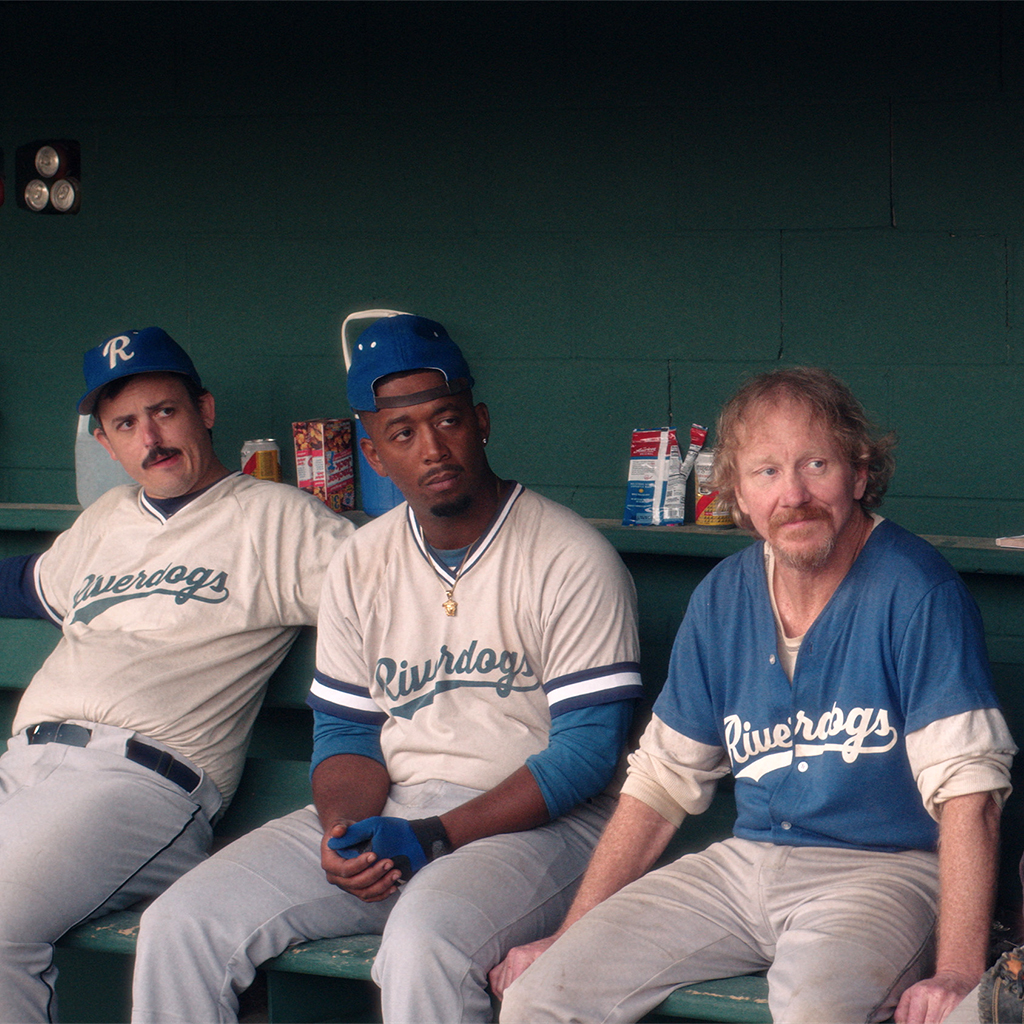
Keith Poulson, Ari Brisbon and David Pridemore in “Eephus.”
Opening day is near. There’s Cracker Jack excitement in the air and a legitimate hope that the Red Sox will return to postseason form. For lovers of the game and team enthusiasts (primed to get their hearts broken) who can’t wait, catch “Eephus,” a nostalgic slow-roller of a film with “Field of Dreams” (1989) undertones. Though it doesn’t play like one, it’s a rookie effort – the directorial debut of Carson Lund, a longtime cinematographer with roots in New England and ties to the hometown team and America’s game.
The Nashua, New Hampshire, native attended Emerson College and had a stint taking tickets and helping out at the Harvard Film Archive (where his film had a sneak peek last month; it’s now at the Somerville Theatre). His cinematic moorings put him in good company with Robert Eggers, a fellow filmmaker from the Granite State (“The Witch,” “Nosferatu”) and, from the halls of Emerson, the Daniels, who rocked the 2023 Oscars with “Everything Everywhere All at Once.”
Lund has been shooting commercials and making independent films for the past 10 years in Los Angeles, where he and Tyler Taormina have formed the Omnes Films collaborative to help finance and launch independent projects. Lund served as director of photography on Taormina’s two critically acclaimed lo-fi features, “Ham on Rye” (2020) and “Christmas Eve in Miller’s Point” (2024). On “Eephus,” Taormina serves as one of several producers.
Lund said that while growing up, he played baseball around all of New England. “I consider Boston my home city. I went to Red Sox games when I was young, and it cemented my love of the game.” When he moved to L.A., he joined an adult recreational league that became the inspiration for “Eephus.” The project took nearly 10 years to get to the plate.
Payal Kapadia’s somber meditation on womanhood and companionship amid the bustling streets of Mumbai feels like a living and breathing document. It follows the lives of three intertwined women, two of whom are nurses and roommates. The more dour of the duo, Prabha (Kani Kusruti), is estranged from her arranged husband, who is now working in Germany, and moves through her days with restrained and wistful introspection. The younger of the two, Anu (Divya Prabha), is bright-eyed, perky and naively idealistic as she constantly overspends and often asks Prabha to cover her rent. She has a secret Muslim lover who asks her to wear a burka when sneaking over for their trysts. That’s one of the interesting things about Kapadia’s portrait of Mumbai – it delves into and illuminates the myriad subtle cultural, linguistic and religious identities that coexist nearly seamlessly in the dense urban setting. The movie places the patriarchy under a microscope, not by lambasting double standards and gender inequality, but by showing the sisterhood formed through common causes and tribulations. Prabha and Anu are busy working out their romantic and professional futures while the third woman, the hospital’s cook, Parvaty (Chhaya Kadam), a steely, no-nonsense, middle-aged widow, rails in vain against a developer who wants to displace her. “All We Imagine as Light” is a quiet film that affects the viewer in ebbs and flow, and Kapadia’s poetic cinematic flourishes add a dreamy, hypnotic affect to the deeply emotional sojourn. Kapadia was recently in Brookline to show the film at the Coolidge Corner Theatre and was rightly praised as a breakthrough filmmaker. The texture and tenor of “All We Imagine as Light” is reminiscent of Deepa Mehta’s Elements trilogy, which bodes well for Kapadia’s future endeavors.
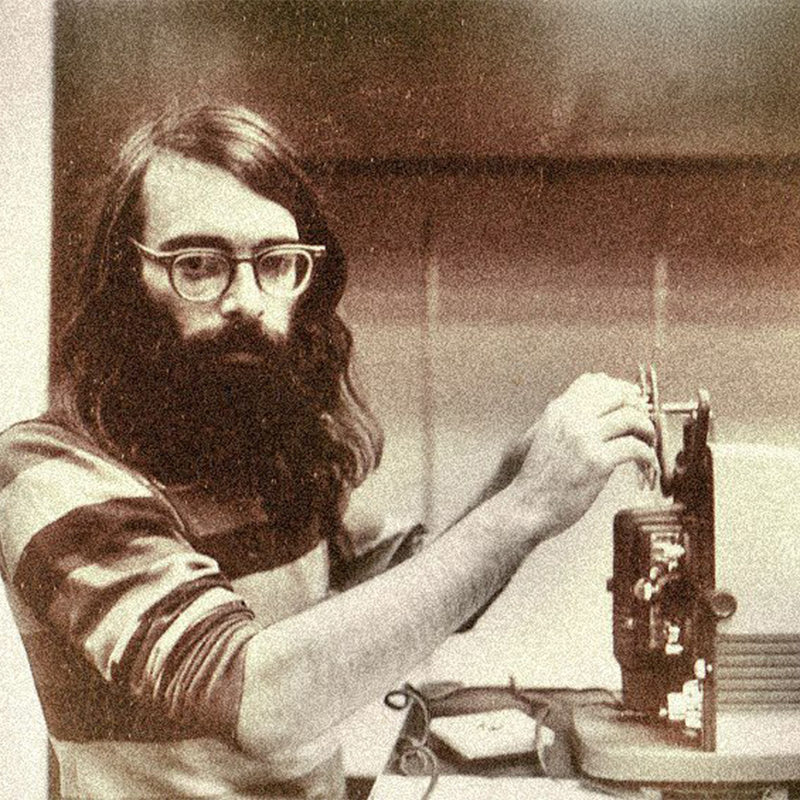
The Revolutions per Minute Festival hosts 10 works by Somerville experimental filmmaker Saul Levine at The Brattle Theatre on Sunday.
Not sure what experimental films are? If you’ve ever been to Boston’s Institute of Contemporary Art and seen trippy, surreal video installations, you’re on your way. Experimental or avant-garde film is usually deeply personal, often sociopolitical in context and reflective of the artist’s life in the moment.
Levine, born 1938, has been producing films for nearly 60 years; he was a professor in the Visual Arts Program at MassArt for 39 years.
Levine started his filmmaking career with “Salt of the Sea” (1965), featuring footage of his friends hopping from a boat to a buoy in the New Haven harbor. “I tried to make the jump with the camera,” Levine said, “and I fell into the water but held on to the camera.” The waterlogged footage, which Levine described as “abstract swirls of magenta and turquoise,” was turned into a four-minute short that ended with a clear shot of his friend perched upon the buoy.
If you watch Levine’s later works, such as his series “Driven (Boston After Dark)” (2002-present), in which Levine rides around in a car filming subjects and captures moments in time, or “Sun Drum Moon Note” (2018), which screens Sunday, you’ll notice shaky camera work. Part of that is Levine’s editing style, but adding to it are genetic neurological ticks – what Levine refers to as “tremors” – that he’s had since birth. As a result, Levine also speaks with a noticeable stammer.
Age and neurological affliction keeps Levine from getting behind the camera as much as he used to. Levine’s time at MassArt was also cut short, ending with his resignation in 2018. He said he felt “forced out” after school administrators accused him of harming students by showing his compiled film “Notes After a Long Silence” (1989), a collage that includes scenes of him having sex with his then partner. “It was ridiculous,” Levine said, as he’d screened “Notes” over several years without complaint and “the film was posted on the school’s website.” Levine gave passionate commentary on the situation in a video on Facebook, saying he felt “ambushed” by the school’s administration. The same year, fellow MassArt professor Nicholas Nixon, a Guggenheim fellow and photographer, came under scrutiny in a Boston Globe article for more severe, yet similar allegations of inappropriate academic behavior. The Globe mentioned Levine in conjunction with Nixon, who also resigned.
It’s amazing, given how Draconian the Iranian government has been about censorship and control over its own narrative, that the voices of filmmakers Mohammad Rasoulof and Jafar Panahi persist. Both have been arrested and spent time in jail because they make films critical of the oppressive regime. These films are usually shot and edited secretly and often bootlegged out of the country to gain distribution in the West. Panahi struck the first blow with the sublime and frightening “The Circle” (2000), which detailed the systemic imprisonment of women for morality violations that most people in a free state would consider little more than jaywalking. Rasoulof goes further with “The Seed of the Sacred Fig,” crafting a domestic gender rift against the backdrop of the real-life death of Mahsa Amini in 2022 after being taken into custody for a hijab violation. The event galvanized the Woman, Life, Freedom movement and led to protests in the streets. In the home of Iman (Missagh Zareh), he and his wife Najmeh (Sohelia Golestani) and teenage daughters Rezvan (Mahsa Rostami) and Sana (Setareh Maleki) come at the headline event differently. Iman, who works for the state judicial department and reviews and signs execution orders, believes the theocracy’s line that Amin died of a stroke; his wife and daughters, like all those protesting, believe the death was the result of abuse and torture. Iman has a gun as part of his position, and as tension in the house rises, the firearm goes missing. Ultimately the action leaves the confines of the family’s apartment and the distrust threatens to turn violent. Just before the film played Cannes, Rasoulof was sentenced to eight years in prison with a flogging and fled the country, another reflection of a theocratic patriarchy holding authoritarian reins chokingly tight.
‘Soundtrack to a Coup d’Etat’ (2024)
A perfect companion to RaMell Ross’ superb “Nickel Boys,” as both deal with a grotesquely unjust Black experience on the cusp of the civil rights movement. “Nickel Boys” is a microcosm of racial injustice, whereas “Soundtrack to a Coup d’Etat” looks globally. The doc by Johan Grimonprez details the dubious events surrounding the assassination of Patrice Lumumba, inaugural leader of the Democratic Republic of Congo – just liberated from Belgium and quickly becoming a Cold War conflict because its rich uranium deposits were coveted by the United States and Soviet Union for use in nukes. It is astounding to see archival footage of the smooth and charismatic Malcom X and an animated Nikita Khrushchev making the same condemnations at the U.N. of the West for its colonialism and denial of rights to Black people. Insert into the mix Louis Armstrong as a Trojan horse cultural ambassador to the Congolese while Eisenhower, the CIA and Belgian operatives scheme against Lumumba in ways troublesome, embarrassing and downright heinous out of fear the nation (and its uranium) would fall into Soviet hands. Grimonprez, employing frenetic freestyle editing, homes in on socially active jazz greats of the time – among them Nina Simone, doing her amazing “Sinnerman,” Abbey Lincoln and Max Roach bringing the beat and emotional heat and Dizzy Gillespie – as well as X and Maya Angelou (she, Lincoln and Roach stormed the U.N. in the wake of Lumumba’s death) to fill the frame with sound and voice. The frequent shards of quotes he flashes onscreen are stunningly effective. Grimonprez has tapped into an incredible intersection of time, place and players that he turns into an immersive experience that entertains and informs unlike any Wikipedia page or history book.
‘The Room Next Door’ (2024)
Iconic Spanish filmmaker Pedro Almodóvar (“Tie Me Up, Tie Me Down,” “Women on the Verge of a Nervous Breakdown”) makes his first English-language film, and with the double-barrel casting of Tilda Swinton and Julianne Moore on paper it seems like a can’t-miss collaboration. While it definitely hits, it’s not the boom you’d expect from such a loaded lot. Based on Sigrid Nunez’s novel “What Are You Going Through,” “Room Next Door” is a contemplation on mortality – something that seems to be on Almodóvar’s mind these days given this, “Parallel Mothers” (2021) and most personally, “Pain and Glory” (2018). Novelist Ingrid (Moore) and war correspondent Martha (Swinton sporting a neat crop top), Manhattanites but distant for years, reunite because Martha is terminally ill and wants Ingrid to spend the end days with her in a quaint VRBO upstate. The performers are all in, yet the characters somehow feel shallow and contrived and the dialogue too meted, as if were a stage play. It’s gorgeous and affecting, but ephemeral and wispy.
RaMell Ross’ adaptation of Colson Whitehead’s 2019 novel about racial injustice and worse at a detention school for boys in 1962 Florida (the tail end of Jim Crow and eve of the civil rights movement) stuns in its dreamy, hypnotic use of POV shifts, abstraction of violence and subtle yet powerful commentary on the inhumane ills we do to each other. The effect of “Nickel Boys” is intentionally unsettling as we embed with Elwood (Ethan Herisse) and Turner (Brandon Wilson), two Black boys at the Nickel Academy, where kids are divided into white and nonwhite under the ever-present eyes of glowering guards, not far off from the “boss man” in “Cool Hand Luke” (1967). As you can guess, the former get better food, longer recesses and lighter labor. They also don’t run the risk of “disappearing”; the real-life school Whitehead modeled his novel on, the Dozier School for Boys, was shut down in 2011 after an investigation by the Department of Justice found 55 unmarked graves. The causes of death were varied: fire, malnutrition, disease and blunt trauma, all grim, if not criminal.
Ross and co-writer Joslyn Barnes choose to go at Whitehead’s straight-ahead arc in fragments and wispy Terrence Malick-esque glimmers. It is as mesmerizing as it is terrorizing. Much of the early part of the film is told from Elwood’s point of view – we don’t see Elwood, just see and experience what he does, from being harassed and assigned extra work by overseers to becoming friends with Turner. When we jump into Turner’s view, we finally see Elwood: lanky, languid and demurely charming. The film slips into omniscient POV at times too, not entirely consistently, but it’s in the boys’ blinders, with each reining in emotions to survive, that the film’s at its most evocative and immersive high.
The backstory for the tour of horrors at Nickel (the beatings and abuse tend to take place just off frame, the way atrocities at Auschwitz were layered in obliquely in Jonathan Glazer’s “The Zone of Interest” last year) is that Elwood was imprisoned wrongly; he was an early enrollee in college and, on his first day of school, innocently caught a ride with a car thief and was held as an accomplice when stopped. In the flash of a badge, his life goes from promising future to dire straits. Fortunately he has a caring nana fighting for him (the always excellent Aunjanue Ellis-Taylor, going a long way here as the woman who raises Elwood after his parents abandoned him when he was 6), which is more than most (and why those 55 graves went unquestioned for so long). Her efforts to raise him are stymied regularly by bureaucracy, systemic racism and shithead shysters and wind up making Elwood a target inside.
The pit of despair is deep and wide, but hope never dims.
In texture and tenor, the reimagining of Whitehead’s text by Ross (a documentary filmmaker making an impressive feature debut) and Barnes is a radical departure while hewing to its narrative structure and barbed social agenda. It’s a jumping-off that adroitly leverages the language of cinema (the camerawork by Jomo Fray is ethereal and transportive) to evoke on a deep level. It wouldn’t work without Herisse and Wilson’s transformative turns and fluid onscreen chemistry, as well as the surrounding cast of boys and jailers. “Nickel Boys” is a subtle yet haunting condemnation of racism in America and one that doesn’t feel as far off as the measure of years in between tell us.
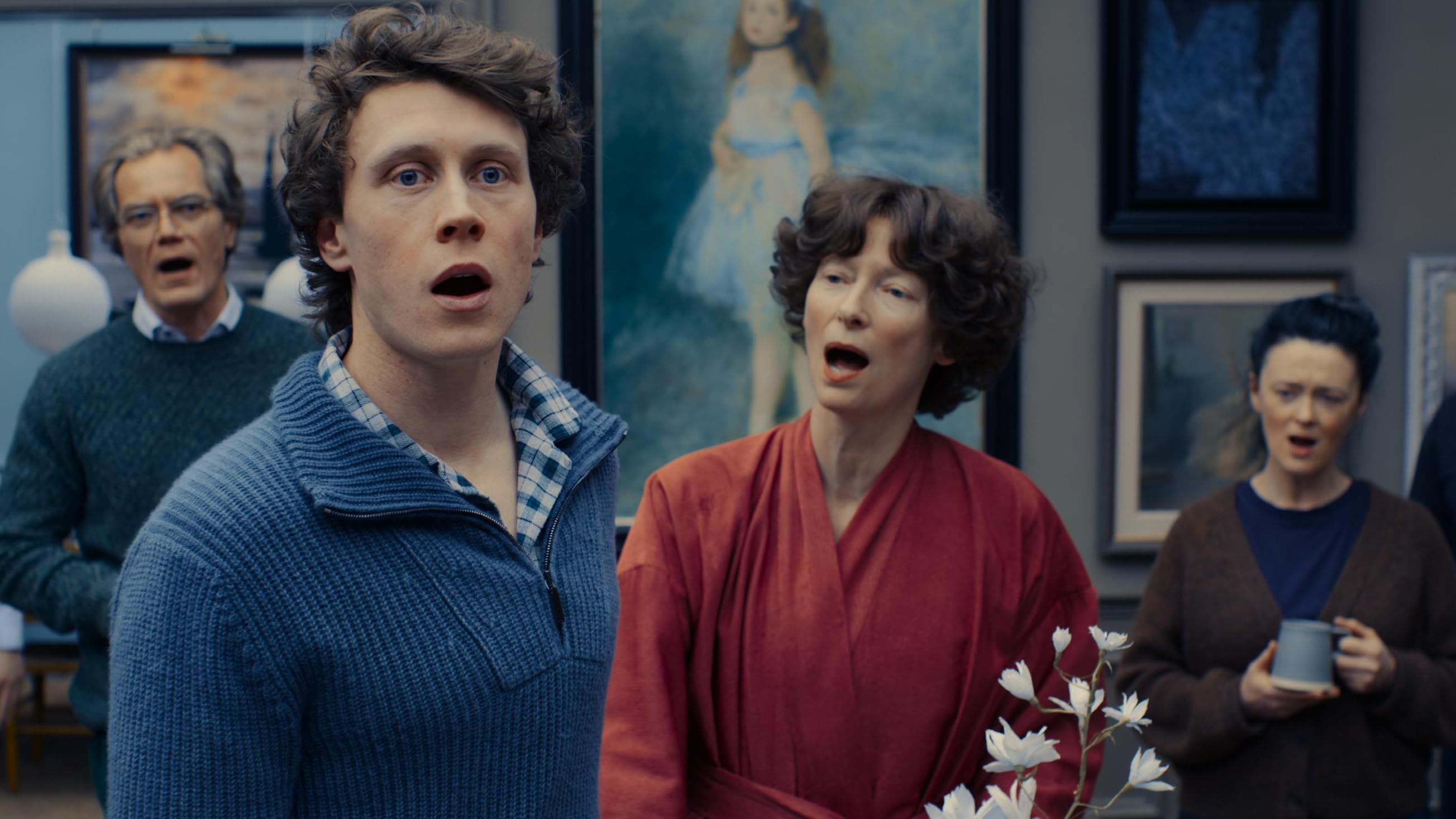
Long, overindulgent and absolutely riveting, the first feature film by Harvard grad Joshua Oppenheimer is hard to make heads or tails of as it explores life after the end of the world. The cinematic visionary who blew audiences away with his imaginative documentaries on the Indonesian death squads of the 1960s (“The Act of Killing” and “The Look of Silence,” both Oscar nominated) saddles up with Tilda Swinton, it boy George McKay of “1917” – already having a banner year with “The Beast” and the hard-hitting “Femme” to his credit – and Michael Shannon, who starred in the similarly themed, “Take Shelter” (2011). They play Mother, Son and Father, respectively. Along with “Nightbitch,” also currently in theaters, this no-name concept seems to be the arthouse convention du jour.
We catch up with the trio living the posh life in a bunker a half-mile underground after the rest of the world has been burned to a crisp. The shelter is in the labyrinth of an abandoned salt mine bought presciently decades ago by Father, a former oil exec (who, by proximity, had a hand in the incineration of humankind). Son was born in the bowels of that salt mine, and the well-tended-to trio are not alone in their enclave. With them are a doctor (Lennie James, “The Walking Dead”), a cook (Bronagh Gallagher) and a butler (Tim McInnerny, “Gladiator II”). Everything for the most is safe and good, and their biggest discomfort is the bitter sourness of the wine they vinify. Then an interloper drops in – almost literally. The arrival of the young woman known as Girl (Moses Ingram) is not welcomed. Mother and Father have a xenophobic policy and initially restrain and restrict Girl; eventually they admit her into their midst, where as you can guess, sexual tensions with Son rise quickly and cause social dynamics and routines to shift.
Did I mention that “The End” – not to be confused with the similarly titled and themed 2013 film “This is the End” starring Jonah Hill and James Franco – is a musical? For his two Indonesian hit-squad docs, Oppenheimer stepped outside the boundaries of nonnarrative convention and gave former squad leaders resources (money and cameras) to make their own films depicting their recollection of their parts in the bloody overthrow. One made a garish musical with former killers dressed in drag and singing alongside the cascading waters of a grand waterfall. Could that have been the inspiration for the cast of “The End” to break into song in the dusty corridors of a salt mine? The probability is too overwhelming to deny.
The overall fabric of “The End” is not too far from L.Q. Jones’s postapocalyptic“A Boy and His Dog” (1975), in which Don Johnson as that “boy” discovers an underground Eden and ultimately upends an order serving mostly an elite few. Besides the gender role swap, the other notable delta between the films is the causality for eradication – global nuclear annihilation or human-triggered climate change catastrophes. Oppenheimer doesn’t harangue the audience by climbing onto the climate change pulpit, a theme more clearly held off in the corner of the frame. For his microsociety, there’s no wrestling with what-ifs, because it’s already happened, but members have guilt and admit to things they did that led to the perishing of others.
Given the texture of his films, it’s clear that the cleansing power of confession is something that drives Oppenheimer – it was the thing he sought to educe from Indonesian militia leaders after decades of denial. The result in those films was stunning, emotionally impactful and horrific; here, narrative artifice diminishes that impact, but “The End” is effectual in its own right. It is gorgeously framed and shot, with near period-piece delicacy, and the performers create sharp characters and prove quite capable when dropping into song. The offset between Swinton’s subtle, ethereal otherworldliness and Shannon’s gruff bristle takes a while to digest, but serves the film well. “The End” does go on a bit too long for the concept, but effectively provokes with themes of isolationism, empowered entitlement and one’s responsibility to a fellow human, as well as stewardship of the vast blue orb we’ve indelibly infected through negligence and avarice.
Not a claymation curio for the whole family, nor a sequel to “Marcel the Shell with Shoes On” (2021). No, this very dark and adult animated tale of twins separated after the death of their father and placed in foster care has edgy, plot-driving incursions into swinging, fat feeding, pyromania and religious zealotry. The film is wickedly funny at times but tenderly bittersweet, with deeply realized characters. The casting, an inspired all-star slate from Down Under, pairs “Succession” star Sarah Snook and Kodi Smit-McPhee (“Power of the Dog”) as Grace and Gilbert Pudel, fraternal twins born with health issues and bullied at school. Mom died early and dad, a street performer who struggles to keep the family afloat, succumbs a few years later; Grace and Gilbert get placed with families at opposite ends of Australia. Much of the film is told through the longing letters between the two, desperate to reunite. Neither is in an ideal situation. Gilbert lives with Calvinist religious zealots who want to “pray the gay out” and abusively employ him as indentured labor on their apple orchard. Grace lives pretty much on her own in a nice house, because her absentee foster parents are swingers and darting constantly out to key parties or nudist retreats. Her bestie is an 80-year-old firecracker named Pinky (a brilliant Jacki Weaver), whose tale of how she earned the nickname and a sidebar about having sex with John Denver in a helicopter are uproarious delights. Directed by Adam Elliot, making a strong impression with his second feature, “Memoir of a Snail” is agile in construct and scrumptious to behold – “The Nightmare Before Christmas” good. The “shell” theme about the personal baggage we all carry around with us and how we withdraw or put up walls is a bit thinly etched, but the movie’s sibling bond is strongly felt. It’s like the dark, loving embrace of Tim Burton done with the edgy verve of Trey Parker and Matt Stone. It’s also one of the best films you can see in a theater now.
‘A Real Pain’ (2024)
Another film featuring a “Succession” star (in addition to Sarah Snook in “Memoir of a Snail” and “The Apprentice,” starring Jeremy Strong in an Oscar-worthy turn, now on Amazon Prime). Kieran Culkin stars opposite Jessie Eisenberg (“The Social Network”) as Benji to his David, cousins who sojourn to Poland to visit the house their Holocaust-surviving grandmother lived in and connect with their Jewish roots. The two are cut from vastly different cloths; Benji is slack, conflicted and seemingly adrift, whereas David is rooted (married, with a child) and tightly wound. We never get the full details of their stateside profiles, but they don’t much matter and you can fill in the blanks easily given their dynamic. The pair signs onto a Holocaust tour led by an amiable guide (Will Sharpe) who, along with a survivor of the Rwandan civil war (Kurt Egyiawan) examining the toll of genocide in other parts of the world, are the only two who do not have personal, Jewish ties to Poland. In the group too is Jennifer Grey of “Dirty Dancing” fame as a middle-aged woman going through a tough divorce. Benji sidetracks the group regularly with his raffish whims – posing for photos at a statue of liberating soldiers as if part of the platoon, or requesting that the guide dig into the souls of Holocaust victims and tell their story rather than just reciting their names from a register. He becomes something of the group’s mercurial class clown, though many of his politely peevish plays are sparked by seeds of genuine emotional intelligence. He’s an amiable lost boy and clearly one subject of the film’s title. As youths, he and David used to be closer, but given time, space and the arc of life, have grown apart, so “the pain” refers also to Benji’s loneliness and the pair’s fraying over the years as well as the inherent trauma of digging into the atrocities of the past. The film, written and directed by Eisenberg, has a talky, European meandering feel to it, a bit like those Linklater films that paired Ethan Hawke with Julie Delpy – people who care deeply for each other yet who talk around a topic. Eisenberg also avoids making the Holocaust a didactic distraction with leaden exposition. It’s present in every frame, but “A Real Pain” is a character study first. Eisenberg, cutting just his second feature, does a solid job of balancing the tale with the looming shadow of world-changing events. It’s a journey of revelation and reconnection that works on the strength of authentic, awkward chemistry between its two leads.
“The Wild Robot,” “Don’t Move” and “Woman of the Hour”
‘The Wild Robot’ (2024)
A very “Wall-E”-esque pleaser with something to say about humans, machines, emotional intelligence and environmental stewardship. Marrying all that together is an AI ’bot named Roz (voiced by Oscar winner Lupita Nyong’o, “12 Years a Slave,” “Us”) whose shipping container is tossed overboard during a storm, marooning her on a remote island with rich Northeastern biodiversity (pinewoods, bears, beavers, geese and possums) that feels right out of Camden, Maine. Roz is a home helper droid made by a megacompany like Amazon to perform tasks such as making beds, building sheds, shearing sheep and so on. Borrowing a page from Isaac Asimov, the semihumanoid robot (think a rounder C-3PO with spindly arms and legs) has a “do no harm” rule – or close enough. Stranded in a humanless remote, Roz reprograms herself to learn animal lingo and learns that the fauna refer to her as “the monster.” In the awkward dance of finding a task to do, tragic happenstance has Roz becoming the mother imprint for a runt gosling named Brightbill (Kit Connor). The to-do then teaching the hatchling how to forage for food, swim and ultimately fly, because the fall migration is around the corner. Other geese don’t think Brightbill is long for this world and bully him, while hanging close to Roz is Fink (“Mandalorian” Pedro Pascal), a fox posing as a knowing adviser when his true intent is a fast meal. Roz’s transmitter to HQ keeps dropping out or breaking, which ultimately brings to the island a maintenance droid (Stephanie Hsu, “The Menu”) that’s not a fan of Roz developing emotionally. Issues of AI and the environment are at the fore, without pulling focus from the central core bonding of Roz, Fink and Brightbill. The animation, as orchestrated by Oscar nominee Chris Sanders (“Lilo & Stitch,” “How to Train Your Dragon”) is well-envisioned and robust and likely to earn him another nod (though it’ll have some real competition from the Latvian gem “Flow” that just played The Brattle). But the heart of the film is castaway Roz, a tin woodswoman who becomes emotionally aware.
‘Don’t Move’ (2024)
Nice-guy serial killers seem to be all the rage. Already this year we’ve had bad dad Josh Hartnett in “Trap,” and “Dating Game” contestant Rodney Alcala in Anna Kendrick’s impressive true-crime-adjacent debut “Woman of the Hour.” Now we get this tale of cat-and-mouse survivorship in which a grieving mother hiking the California mountains (Kelsey Asbille) stands at a ledge contemplating a jump and is talked down sort-of by a dashing, passing-by dad-guy (Finn Wittrock, so fun as one of the two DIY hedge fund knuckleheads in “The Big Short”). Everything’s cordial until they get to the trailhead parking lot and Wittrock’s Richard tases Asbille’s Iris. Iris is zip-tied, tossed in the back of his car and told that he’s going to take her to his cabin, braid her hair and add her to his list of female bodies at the bottom of the lake. Iris gets free and nearly overpowers Richard, and that’s when he hits her with his Plan B: She’s been injected with a paralyzing agent that’s 20 minutes away from kicking in. The film, directed by Brian Netto and Adam Schindler, moves in unpredictable turns as others – a police officer and a fellow cabin owner – cross paths with Richard and Iris. The tension remains high even if elements of the underlying story don’t quite work, including the how and why for Richard’s predilection. Asbille, controversial for her claims of Native Americans origins to shore up her casting as an Indigenous person in the hit series “Yellowstone,” is a bit too glamorous in the part but still compelling, doing much with her large, luminous eyes and trembling lips because, at one point, that’s all she got. It’s not bad, but if you’re on Netflix, “Woman of the Hour” is the better way to spend your time.
‘Woman of the Hour’ (2023)
Actress Anna Kendrick makes her directorial debut with this chilling true-crime-adjacent serial-killer thriller set in the late ’70s. Like this year’s “MaXXXine,” it revels in the era’s scummy kitsch and skewers its rampant misogyny. The main event is a “Dating Game” show segment in which a young, aspiring actor named Sheryl Bradshaw (Kendrick) is a reluctant contestant, having signed on at the behest of her agent. If you’ve never seen “The Dating Game” or other indelible shows of the time such as “The Gong Show” and “The Newlywed Game,” they’re peppered with innuendos, evoking a degree of cringeworthiness that’s captured well by Kendrick and writer Ian McDonald. Bachelor No. 1 is a bit of a blockhead who can’t answer a question confidently, No. 2’s not much better, but at least he doesn’t trip over his tongue. Then there’s No. 3, who cleans up, masterfully playing off Sheryl’s wit and verve and turning his adversaries’ miscues to his advantage. He’s also Rodney Alcala (Daniel Zovatto), who that year would be arrested and convicted of the murder of six women – and implicated in as many as 130 murders. Of course, he’s Sheryl’s pick. Kendrick and McDonald transform a rote, straight-ahead story into an ever-shifting collage of terror and charm, with cutaways showing Alcala helping a flight attendant move into her apartment, taking snaps of a lonely pregnant woman abandoned by her boyfriend at a national park, and a beach party photo shoot. I don’t need to tell you how these encounters go; it’s how Kendrick decides to shoot and navigate the grimness that matters, as it’s done with subtle, unconventional style and great, visceral affect. Zovatto is a great casting choice and performer, and his Alcala is a natural charmer with a brimming undercurrent of malice – echoing Philip Seymour Hoffman in some of his roles, or Vincent D’Onofrio in “Full Metal Jacket” (1987). Kendrick, not far from her refuses-to-be-a-victim persona of “A Simple Favor” (2018), has some feminist zing as Sheryl, going off script in the final round to ask the bachelors, “What are girls for?” You know Alcala’s a killer early, giving many of his scenes – with his prey, or in the offices of the Los Angeles Times, where he freelances as a photographer – a delectable unpredictability and creepiness. It’s an ambitious and impressive debut for Kendrick, and one that should bear greater casting opportunities for Zovatto.
In a single decade Francis Ford Coppola made not just one but four cinema-defining films: “The Godfather” (1972) and “The Godfather Part II” (1974); “The Conversation” (1974); and of course “Apocalypse Now” (1979). It’s a feat hard to beat, but since “Apocalypse Now,” which riveted audiences upon release and garners the adoration of each new generation of cinephiles, Coppola’s output has been less iconic. It’s varied from well-crafted S.E. Hinton adaptations (“The Outsiders” and “Rumble Fish”) to the purposefully idealistic (“Tucker: The Man and His Dream”), some lighthearted comedies (“Peggy Sue Got Married,” “Jack”), a megaselling John Grisham lawyer yarn (“The Rainmaker”) and of course his “Bram Stoker’s Dracula” (1992), all receiving middling receptions. Later in his career, there was work (“Tetro” and “Youth Without Youth”) that piqued interest but never quite went the distance. His latest, “Megalopolis,” is an ambitious, convoluted mess – pretty much a full-frontal mega-flop. To say so comes with great sadness.
Coppola allegedly pawned part of his vineyard and leveraged himself financially for this project, one he’s been incubating for nearly 40 years. From the insightful documentary “Hearts of Darkness: A Filmmaker’s Apocalypse” (1991), which chronicled the ruinous challenges surmounted to make “Apocalypse Now,” we know Coppola is an incredibly passionate and resourceful filmmaker. He’s bucked trends and gone it alone without studio funding before; in this case, maybe getting other eyes and thoughts involved could have salvaged something.
What’s the movie about? Platitudes and posturing on the future of and control over an urban micro-universe in the near, slightly dystopian future – something the current streaming series “The Penguin” does a much better job of. In this case it’s not Gotham, but New Rome, a city that’s closer to New York City now than any Batman-related project. Everything the camera homes in on is 1920s art deco, with much cinematic worship of the Chrysler Building.
In the opener, Adam Driver’s Cesar Catalina, a master architect and something of a nihilist Leonardo da Vinci, steps out on the ledge of the Chrysler Building to observe the activity below. When it looks like he might tumble off or jump, he shouts, “Time! Stop!” And it does. Everything but Cesar freezes – all the cars like ants below, birds in the air, the wind-pushed clouds and so on. With a snap of his fingers everything returns to normal. But even with such a gift, Cesar is not omnipotent, and he has many detractors, especially Mayor Cicero (Giancarlo Esposito), who wants to rebuild crumbling New Rome with casinos, corruption and cronyism. Cesar, head of the Design Authority, wants to build the utopia of the title, something that will “evolve alongside its people.”
Aside from his neat party trick, Cesar has a Nobel Prize for creating Megalon, a substance that can channel one’s dreams and make desires into reality. In an origin myth, one could see it leveraged by god or the gods to build Earth. In this case Cesar uses it to build an organic, ever-evolving city.













 For What it's Worth