Tag Archives: reviews

‘Avatar: Fire and Ash’ is an epic sequel

20 Dec

Bigger, longer and uncut could be the tagline for James Cameron’s latest “Avatar” chapter, “Fire and Ash,” which at three hours and 17 minutes is five minutes longer than 2022’s “Way of Water” and 35 more than the 2009 first film in the series, still the all-time top at the box office at nearly $3 billion in ticket sales. Where the franchise is going seems to be one long continuous saga akin to the J.R.R. Tolkien films (“Hobbit” and “Lord of the Rings”).

“Fire and Ash” picks up a year after “Way of Water,” with the nefarious Resources Development Administration still hunting the whalelike tulkun for amrita, a substance in their brains coveted by rich humans back on Earth for its antiaging effects. Unobtainium – such a great and obvious name for a super metal – was the object of corporate greed in the 2009 original, but now seems to be an afterthought. Back then, to gain control of the resource-rich planet Pandora, the RDA sent in the Marines to expel the indigenous Na’vi, the 10-foot tall, blue-skinned humanoids with cool prehensile tails and limpid yellow eyes, who were in the way of the extractive mining. Now beyond pillaging the sea, it feels like Pandora might be a good spot for humans to relocate, as Earth has become dangerously close to depletion (we’re circa 2150). Intergalactic colonization isn’t a new cinematic concept, to be sure, but Pandora has air that is toxic to humans. They must wear oxygen masks to get around.

Continue reading

The Cambridge woman who gives locals their moment of fame

15 Dec

Angela Peri of the Boston Casting talent firm.

When Hollywood comes to town to make a “Boston movie,” like 2023’s “The Holdovers” starring Paul Giamatti, Da’Vine Joy Randolph and Dominic Sessa, finding the faces in the crowd is often the job of Boston Casting, the biggest such agency in the Boston area.

Boston Casting was founded in 1990 by fifth-generation Cantabrigian Angela Peri. Over a croissant and chai at the Iggy’s Bread cafe in Huron Village, Imagine, Peri walked me through her story.

She’s a Cambridge Rindge and Latin School alum who was bitten by the acting bug. Though her mother discouraged the pursuit, Peri went to Los Angeles and Italy and dabbled in the business as a makeup artist, comedian and bit performer. She brushed elbows with Denis Leary and Ellen DeGeneres on the L.A. comedy scene and, while in Italy, graced the screen ever so briefly in “Cinema Paradiso” (1988), the Academy Award-winning love letter to community movie houses.

Continue reading

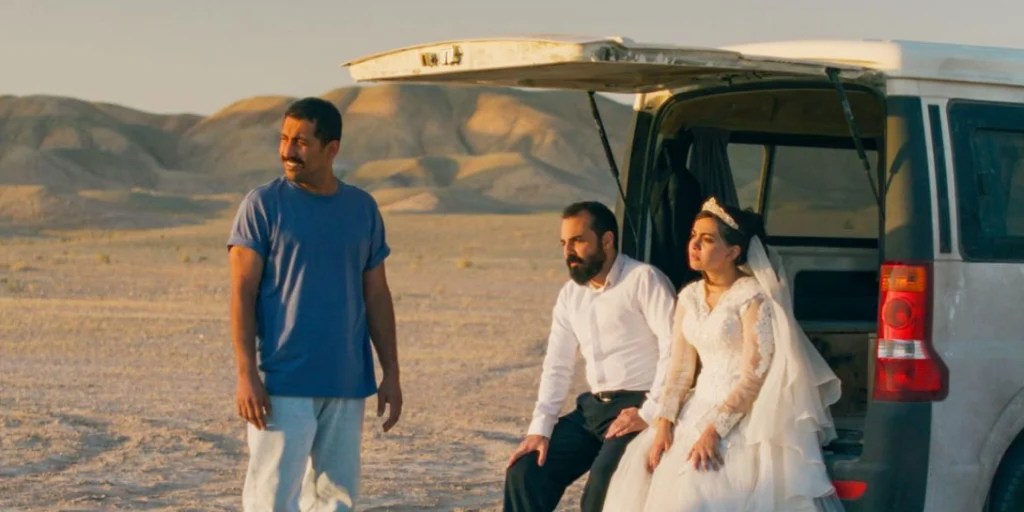
Reviewed: ‘Train Dreams’ & ‘Left-Handed Girl’

20 Nov

‘Train Dreams’ (2025)

Films crafted around hermits are often peppered with idyllic framings of their lush surroundings and driven by strong, intense performances by the lead, who must, for the most part, connote much of their character’s inner turmoil via facial expressions and the glance of the eye. That was the case with Ben Foster in Debra Granik’s “Leave No Trace” (2018) as well as Daniel Day-Lewis in his recent comeback, “Anemone.” This film, gorgeously shot by Adolpho Veloso, has the trippy, hypnotic aura of a Terrence Malick fever dream, and we get Joel Edgerton in his richest and most robust performance to date. His Robert Grainier, we’re told, never spoke into a phone during a life that ends serenely in 1968. Based on the novella by Denis Johnson and adapted by Clint Bentley and Greg Kwedar – the Oscar-nominated tandem behind “Sing Sing” – “Train Dreams” is pretty much the telling of Grainier’s life in full; orphaned young, unknowing what befell his parents, and, as a quiet young man when we catch up with him, working as a logger and railway hand in the remote reaches of Idaho. His life as a loner and drifter pretty much has him moving from one lumber camp to the next until he meets Gladys (Felicity Jones) at a church in Fry. It’s love at first pleasantry, and with Gladys game for the woods, the two wed, build a bungalow atop the crest of a dell and have a daughter. It’s an enchanting “Little House on the Prairie” existence until a wildfire sweeps through the valley while Grainier happens to be off on one of his logging missions. When he returns, Gladys and his daughter are nowhere to be found. For a good part of the film, Grainier, propelled by guilt and grief, searches nearby towns looking for them or any news of their fate. Ultimately he returns to the woods, where he registers a small degree of comfort taking in an abandoned litter of dogs and rebuilding the cabin on the same perch. The power of guilt and grief creeps in and begins to bend reality, and Grainier struggles to make sense of his existence and the world in large. The acting is top tier, reserved and quietly affecting. Others adding heart and humanity in small, meaty parts are William H. Macy as Arn Peeples, a grumpy coot who likes to use explosives to fell his trees, and Kerry Condon as the first woman to work at a U.S. National Forestry outpost.

Continue reading

Reviewed: ‘One to One: John & Yoko,’ ‘Nouvelle Vague,’ ‘Hedda’ and ‘Lurker’

13 Nov

‘One to One: John & Yoko’ (2024)

The latest from Kevin Macdonald (“Touching the Void,” “Last King of Scotland”), working with Sam Rice-Edwards, delves into the life and times of John Lennon and Yoko Ono in New York City during the tumultuous Richard Nixon and Vietnam War era. It’s a spry, electric rewind with sharp, well-cut footage of the time and, naturally, the music and idealistic political activism of Lennon and Ono. Leaving their massive estate in London post-Beatles breakup, Lennon and Ono came to America to try to find Kyoko Chan Cox, Ono’s daughter from an earlier marriage to jazz musician Anthony Cox, who defied a court order and hid her from Ono. Lennon and Ono, in alignment with their ideology, opted to live “plainly” in the middle of New York – a decision that would factor into Lennon’s very public murder in 1980. The focus of the film is the “One to One” concert Lennon and Ono put on at Madison Square Garden in 1972 to benefit the children of the Willowbrook State School on Staten Island, shut down in 1987 but at the time the largest institution in the country caring for children with Trisomy 21 and other developmental disabilities. The concert was a reaction to an exposé by Geraldo Rivera of the inhumane, overcrowded conditions – there was one caregiver for every 30 children (the concert’s title offers a better ratio), living in squalor on cold cement. What’s shown is horrific (think Frederick Wiseman’s “Titicut Follies”). Filling out the frame of this conflict-rich time capsule are the shenanigans of Nixon, the bravery of Shirley Chisholm and the kindness she extended to a wounded George Wallace, a jazzed-up Jerry Rubin, poet and defiant pacifist Allen Ginsberg and Bob Dylan and his controversial “garbologist,” A.J. Weberman. It’s a wild olio that captures the chaotic time with Lennon and Ono at the fore, on point and putting themselves out there in every sense of the word. You have to admire their cool, calm and rapier-sharp responses, especially Ono, fighting to see her daughter and often tagged “an ugly J*#!, who broke up the Beatles.” There’s a bit about Cambridge too, with Ono as a speaker at the First International Feminist Conference held at Harvard University. If you’re not left verklempt by the end sequence, of kids from Willowbrook in daylight, beaming, cross-cut with Lennon and Ono performing classics such as “Imagine” and “Come Together” with Stevie Wonder and Roberta Flack, you need to get to the doctor to see if you have a heartbeat.

Continue reading

Reviewed: ‘Die My Love,’ ‘Christy,’ ‘Nuremberg’ and ‘The Vortex’

9 Nov

‘Die My Love’ (2025)

Lynne Ramsay, the Scottish filmmaker behind such macabre psychological chillers as “We Need to Talk About Kevin” (2011) and “You Were Never Really Here” (2017) – the former, about a youth who commits a mass school shooting, the latter with Joaquin Phoenix as a hammer-wielding sociopath-avenger – may be the most convincing female voice in matters of masculinity onscreen since Kathryn Bigelow (“The Hurt Locker,” “A House of Dynamite”). And the company in that elite club may just be a crew of two. Here, going to the more feminine side of things doesn’t make anything less messy, violent or bloody. In fact, it’s more unsettling. No human being dies of a violent act, though animals – a horse and a poorly adjusted dog – don’t fare as well. Jennifer Lawrence is Grace, who has a lot pushing and pulling in her head. She’s a writer who’s moved into the old Montana farmhouse of her partner Jackson (Robert Pattinson) with the intent of sinking into creativity and new motherhood. Neither really happens as Grace becomes less and less rooted in reality and waking delusions take hold. Is Jackson having an affair? Is the menacing presence on a motorcycle (LaKeith Stanfield) also Grace’s moonlight lover in the rickety old barn? Or is it all an illusion cast by an unreliable narrator dealing with postpartum delirium, or something more chronic? Ramsay, working from Ariana Harwicz’s 2013 novel, keeps us in the dreamy, demented dark – when Grace crashes through a sliding glass door, opens the car door to jump or bashes her head into a hotel suite mirror and Jackson underreacts, you don’t know if this is par for the course, the man has no idea what to do and is simply silent and agog, if it’s a disjointed distortion of reality or somewhere in between. There are clues, but teasingly few. Lawrence gives a bold, brave performance, emotionally exposed and often naked, oddly like an antithetical companion piece to her 2023 dark comedy, “No Hard Feelings.” In “Mother!” (2017) the madness around Lawrence’s bearer of life was external and a metaphor for the religious patriarchy; here it’s internal, and troubling to the forces who can’t get a handle on or squash it – a forced commitment in an asylum seems to fix things for a moment, but did it really happen? The tension over what is real is the film’s weakness and appeal, but not enough can be said about Lawrence: She switches on and off, or explodes, or recedes, with seamless perfection. It’s stunning. Ramsay and Lawrence are in tune at every turn and we are lucky to be here for their deftly deliberate dissonance.

Continue reading

Reviewed: ‘Anemone’ and ‘The Lost Bus’

11 Oct

‘Anemone’ (2025)

A deeply engrossing, if uneven, sojourn into the realm of reckoning and redemption. The ace in the hole here would be Daniel Day-Lewis, who came out of retirement (in 2017, with the release of “Phantom Thread,” he implied it would be his last film before the camera) to make this deeply emotionally portrait with his writer-director son Ronan in his filmmaking debut. The senior Day-Lewis co-wrote the script, but from the overall scrumptious look and intensity, Ronan is an up-and-comer to watch. The title refers to the delicate and sensitive flower that closes up when touched and is evocative of Day-Lewis’ Ray, who has dropped out of society and is living off the grid in the woods of Northern England. For nearly 20 years, his brother Jem (Sean Bean) has been rearing Ray’s son Brian (Samuel Bottomley, “How to Have Sex”) after marrying Ray’s former lover, Nessa (Samantha Morton). In short, Jem stepped in when Ray stepped out  on the pregnant Nessa; Jem ventures out to find Ray now because Brian is struggling. To say why Ray has gone into isolation wouldn’t be a spoiler, but it’s besides the point – involving Ireland’s violent Troubles, with the present-day of “Anemone” set in the early to mid-1990s. Much of the early segments of the film are long, speechless moments between Jem and Ray in the lush, deep forest that offers access to a remote beach and nearby stream. The intensity that defined Day-Lewis and earned him three Best Actor Oscars (the only male lead to do so; Katherine Hepburn notched four) is on full display in the red flicker of his cottage’s fireplace as he delivers two big soliloquies that give us Ray’s “why.” Cutbacks to Nessa and Brian in a distant working-class borough fill out the picture, and Bean and his character know the landscape and their place in it. The film, shot by Ben Fordesman (“Love Lies Bleeding,” “Out of Darkness”) and scored by Bobby Krlic, is a stunning fusion of sound and image – intimate yet expansive with deep eerie chords that conjure wonderment and a haunting sense of foreboding. Not all of it melds, yet it rivets in nearly every frame.

Continue reading

Reviewed: ‘Compulsion’ and ‘Him’

21 Sep

‘Compulsion’ (2024)

Neil Marshall, a normally deft orchestrator of the gritty macabre with such cult hits as “The Descent” (2005), “Dog Soldiers” (2002) and “Doomsday” (2008), has drifted from those roots and into the realm of erotic soft-core noir in his recent collaborations with muse, co-writer, lead actor and paramour Charlette Kirk (“The Lair” and “The Reckoning,” to name two). Here, in the exotic, rolling seaside hills of Malta, Kirk plays Diana, a gamer and attuned opportunist.  Her tragically hip beau, Reese (Zack McGowan), is a former app entrepreneur with grand tastes who’s in deep to local heavies. The film, however, revolves around the demure newcomer next door, Evie (Anna-Maria Sieklucka), taking personal time at her stepfather’s palatial villa after breaking up with her girlfriend. In play are a series of recent grisly murders done by an assailant in an S&M getup wielding a straight edge with Ginsu precision. The detective on the case (Giulia Gorietti) is popping by constantly to ask questions, because one of the victims was Evie’s Uber driver, even as Diana and Reese scheme to clean out the stepfather’s secret safe. Since Evie doesn’t like boys, it’s up to the statuesque and most always half-naked Dianna (the budget’s line item for thongs must have been high) to bait the hook. The love triangle aspect has the psychosexual trappings of “Bound” (1996) or “Basic Instinct” (1992) if Brian De Palma had directed either through the lens of his “Rear Window” homage, “Body Double” (1984), or “Dressed to Kill” (1980) – but “Compulsion” isn’t worthy of comparison to any of those films. The dialogue is largely stilted, and many of the plot elements feel crammed in or tacked on. It’s a light erotic tease that doesn’t compel.

Continue reading

The Long Walk

14 Sep

Murderous marathon for an American dystopia by Vietnam-era Stephen King

There’s little surprising or new in “The Long Walk” despite its pedigree, passion and professionalism. It’s still a compelling and emotionally charged tale primarily because of those three Ps – and the grim prospect of how much further we as a society can fall. It’s based on Stephen King’s first novel, written as a student while at the University of Maine but not published until 1979; even then it went under King’s pen name of Richard Bachman, like “The Running Man.”

In “Walk,” we get dropped into a dystopian America in the late 1960s or ’70s. It takes a while to register, but the unhappy alter reality has the distinct tang of “The Mist” or “The Stand”: The United States has just emerged from a war, but the country is not the portrait of Ozzie and Harriet productivity we’ve all been sold on. Much of what we see in our limited lens is the depressed and the needy. Most of the people we see along the long stroll could use a hot shower, a bowl of hot soup and some new threads.

Continue reading

‘Honey Don’t!’ has a detective who stands out against drab settings, luckily for these Coens

22 Aug

Ethan Coen and co-writer and wife Tricia Cooke reteam with actor Margaret Qualley for the second of a purported loose lesbian neo-noir trilogy. That first outing, last year’s “Drive-Away Dolls,” was a bit of a rickety start, but through no fault of Qualley, who packed the punchy best of both Thelma and Louise as one of two gal pals who zoom off in a car with various factions of angry patriarchy hot on their tail. It was a concept in search of a story. Here, Coen and Cooke dial up the noir aspect and concoct something more worthy of Qualley’s onscreen allure. 

She plays Honey O’Donahue, a private detective working the dusty, depressed streets of Bakersfield, California. There’s trouble right off the bat as an angular French woman (Lera Abova) in leopard-skin tights navigates the scree of a ravine to get to an inverted car, its driver dead or dying. She’s not there to help, but to pluck a signet ring off a finger, and in the next scene Abova’s agent of cold deeds is floating casually full frontal in a nearby quarry pond. An important fashion note: As she clads up, there’s a Garanimals moment as we realize her underwear and bra match her motorbike helmet.

Continue reading

The Phoenician Scheme

7 Jun

Ambitious as a Korda plan, as misfiring as a Korda assassination plan

Dispatch from Cambridge: The quirky, witty twee of Wes Anderson may be running dry. Sad but so. The genre-bending director scored early and often with such notable art house hits as his take on Salinger’s Glass family, “The Royal Tenenbaums” (2001), his toe dip into animation, “The Fabulous Mr. Fox” (2009) and my favorite, “Moonrise Kingdom” (2012). The list goes on. Anderson was pretty much a sure thing, but his most recent three films – “The French Dispatch” (2021), “Asteroid City” (2023) and this ambitious misfire – have been sputters of what was and what might have been and, worse, smug delves into cinematic overindulgence.

Continue reading