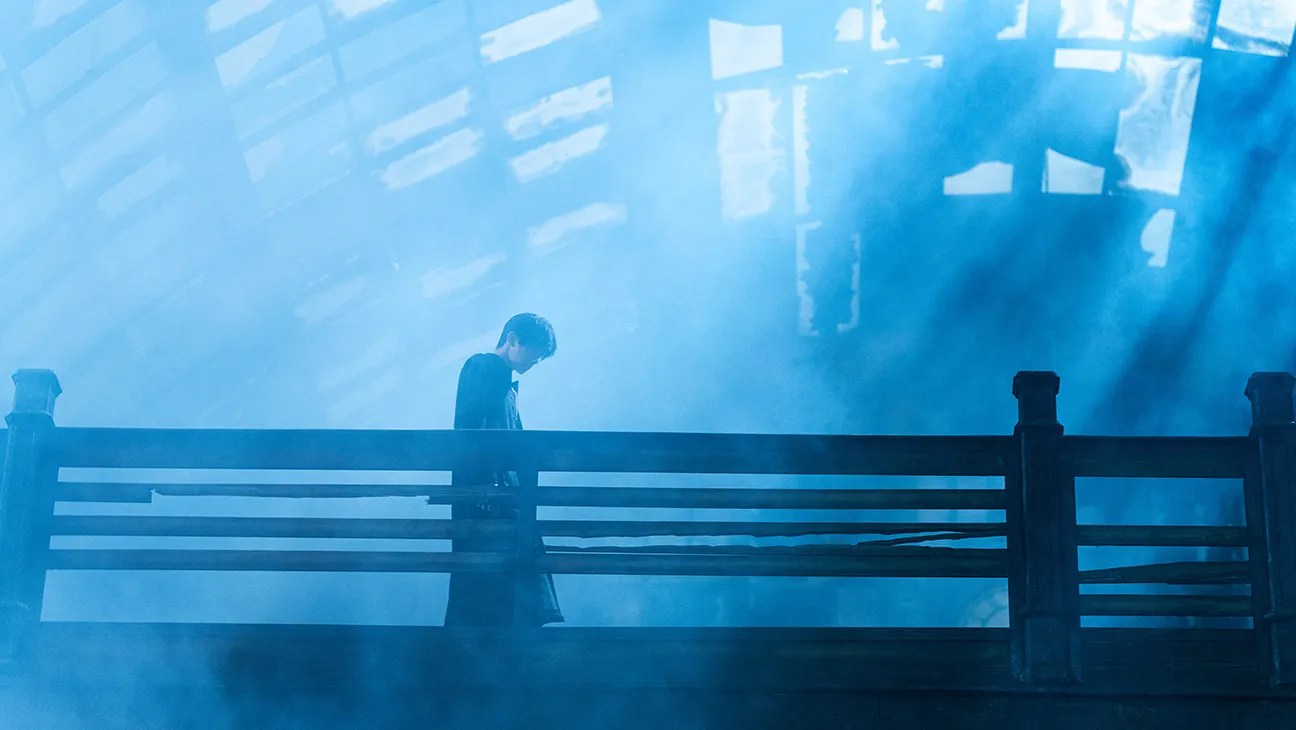
Bi Gan’s dazzling, cerebral sci-fi phantasm folds memory, myth and cinematic form into a single, dream-logic tapestry. Set in a future in which humanity has traded the ability to dream for immortality, “Resurrection” follows the last remaining “deliriant” (Jackson Yee), a Frankenstein-like being still capable of dreaming, and the woman (Shu Qi) tasked with entering his subconscious to retrieve buried truths. What unfolds is an episodic odyssey through visions shaped by Chinese history, genre homage and shifting perspectives. It’s a visually sensual smorgasbord told in chapters aligning with a different sense and narrative style — we begin with German expressionism and wind up with one of the most stunning long shots ever projected on a screen. It’s bathed ominously in languid red and takes place in a trash-strewn, cyberpunk part of the city that hosts a vampire lair where a young punker (Yee again, who plays five roles — one per sense) has come to profess his love for a mercurial chanteuse (Gengxi Li) This bold, poetic nightmare resonates with humanity and wonder. “Resurrection” should be expressly seen on the big screen to drink in Gan’s riveting dreamscape meander.
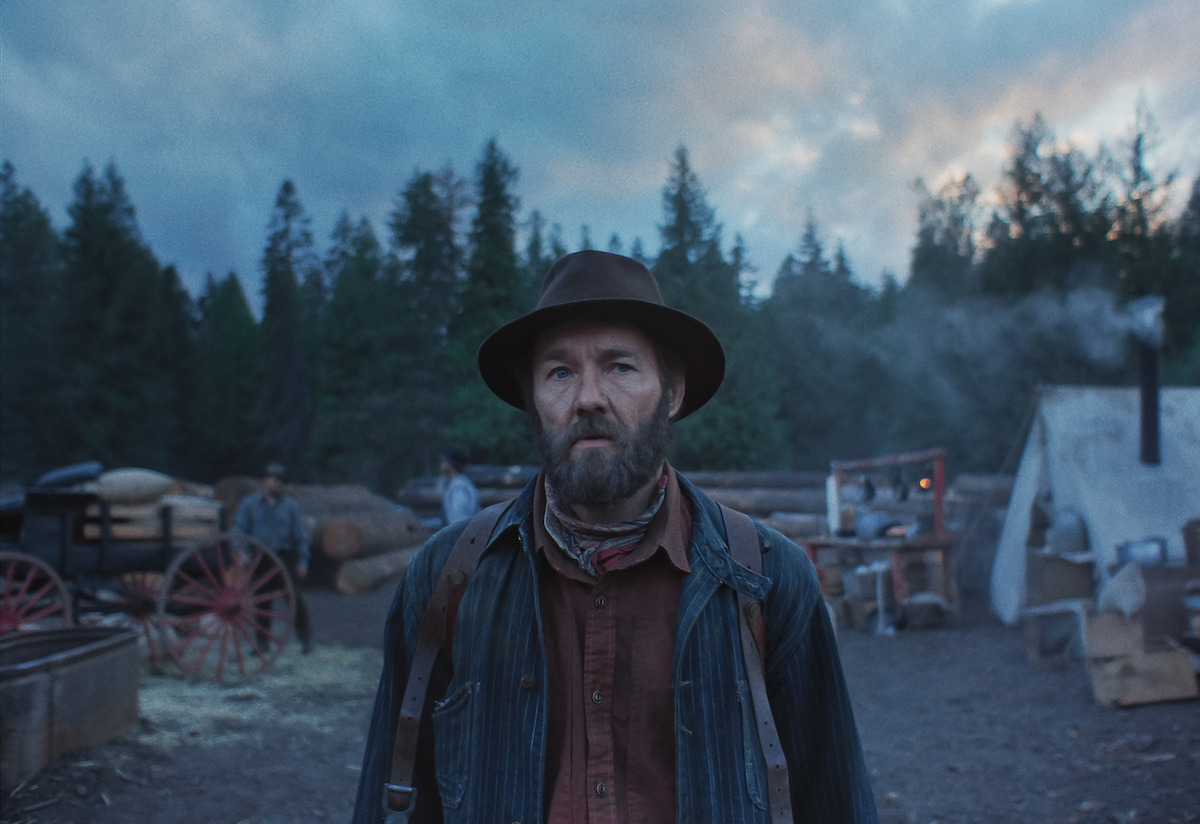
Films crafted around hermits are often peppered with idyllic framings of their lush surroundings and driven by strong, intense performances by the lead, who must, for the most part, connote much of their character’s inner turmoil via facial expressions and the glance of the eye. That was the case with Ben Foster in Debra Granik’s “Leave No Trace” (2018) as well as Daniel Day-Lewis in his recent comeback, “Anemone.” This film, gorgeously shot by Adolpho Veloso, has the trippy, hypnotic aura of a Terrence Malick fever dream, and we get Joel Edgerton in his richest and most robust performance to date. His Robert Grainier, we’re told, never spoke into a phone during a life that ends serenely in 1968. Based on the novella by Denis Johnson and adapted by Clint Bentley and Greg Kwedar – the Oscar-nominated tandem behind “Sing Sing” – “Train Dreams” is pretty much the telling of Grainier’s life in full; orphaned young, unknowing what befell his parents, and, as a quiet young man when we catch up with him, working as a logger and railway hand in the remote reaches of Idaho. His life as a loner and drifter pretty much has him moving from one lumber camp to the next until he meets Gladys (Felicity Jones) at a church in Fry. It’s love at first pleasantry, and with Gladys game for the woods, the two wed, build a bungalow atop the crest of a dell and have a daughter. It’s an enchanting “Little House on the Prairie” existence until a wildfire sweeps through the valley while Grainier happens to be off on one of his logging missions. When he returns, Gladys and his daughter are nowhere to be found. For a good part of the film, Grainier, propelled by guilt and grief, searches nearby towns looking for them or any news of their fate. Ultimately he returns to the woods, where he registers a small degree of comfort taking in an abandoned litter of dogs and rebuilding the cabin on the same perch. The power of guilt and grief creeps in and begins to bend reality, and Grainier struggles to make sense of his existence and the world in large. The acting is top tier, reserved and quietly affecting. Others adding heart and humanity in small, meaty parts are William H. Macy as Arn Peeples, a grumpy coot who likes to use explosives to fell his trees, and Kerry Condon as the first woman to work at a U.S. National Forestry outpost.
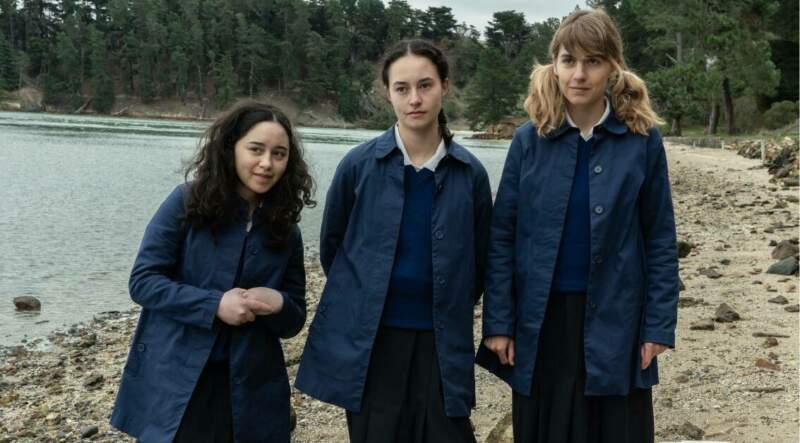
The historical ills of the three Cs (colonialism, capitalism and Christianity) loom at the fore of Josephine Stewart-Te Whiu’s feature debut, a coming-of-age tale about two Māoris and one Pākehā (a white New Zealander) sent to an island reform school for delinquent girls. Nellie (Erana James) and Daisy (Manaia Hall) are sent to the school to whitewash the Māori out of them and accept the word of god. Lou (Nathalie Morris), a rebellious, well-off white girl, is there for remediation of sexual perversions – nothing worse than dad catching you making out with your female babysitter back in the conservative 1950s. As in RaMell Ross’ adaptation of Colson Whitehead’s “Nickel Boys” last year, there are different rules when it comes to people of color, even in a hellhole. In the still of the night, from one hut, blood-curdling screams are heard. We never really learn what goes on there, just that whatever it is, it isn’t good, and that the school marm (Rima Te Wiata, “Hunt for the Wilderpeople”) is quick to slap any Māori incantation from the mouths of Nellie and Daisy, even though she is of Māori origin and ostensibly came up through the same system. Tellingly, Daisy can’t read and the school doesn’t seem interested in her education; just her assimilation and Christian brainwashing. Part of the school’s mission is to keep the teens chaste (a remote island helps with that logistically) and get them prepared to become demurring housewives, a low bar made even lower by the persistent patronization and Draconian discipline. The driving force to the film is the playful kinship between the trio (aided by the chemistry among the three performers) and their never-give-in resolve despite the dead-end hopelessness of their situations. Gorgeously shot by Maria Ines Manchego (“Uproar”) and executive produced by Taika Waititi (“Wilderpeople,” “JoJo Rabbit”), “We Were Dangerous” is a quiet reminder of the sins of religious imperialism, the agency of lateral violence that accompanies it and the sexual oppression and subjugation of women during the rising tide of world prosperity.
Bertrand Bonello’s unsettling yet alluring contemplation on fate and the future, “The Beast,” is an enigmatic weave of three periods in which two actors – Léa Seydoux (“Dune: Part Two,” “Blue is the Warmest Color”) and George MacKay (“1917”) – play roughly the same attracted-to-each-other, but unable-to-connect souls. It’s based loosely on or, I’d say, more inspired by Henry James’ 1903 short story “The Beast in the Jungle.” In the story, a fickle man of stature feels fated to suffer infamy, and as a result, lives a cautious, coddled existence trying to avoid the inevitable. The punchline is that it’s this that makes him notorious. Bonello’s reimagining is more “Cloud Atlas” (2012) by way of “Mulholland Drive” (2001) than anything truly Jamesian.
The film begins with Gabrielle (Seydoux), a pianist and French socialite, perusing an art exhibit in a Parisian gallery circa 1910. Amid the meandering cascade of transmogrified nude men captured in various torturous states, mouths agape and phalluses prominently on display, she bumps into a young British aristocrat named Louis (MacKay) who claims they have met before. Whether the claim is true or a ploy, the connection between the two feels instant and deep and immediately illicit, as Gabrielle’s husband is in the next room. The flirtation as they walk and talk in dour, somber tones isn’t sexual per se, but more soulful, as Louis vows to be Gabrielle’s savior when she, à la James’ protagonist, professes a perpetual fear she cannot fully articulate. From there we jump to 2044 Paris with Gabrielle working with an AI assistant – they have progressed to fully realistic, near-flesh incarnations and can even engage in sex – to try to find work, but can’t because she is too cluttered by emotion (that fear?) and thus less desirable (because emotions make you less effective, or so that is the premise). In both the Belle Époque and future Paris, the streets are nearly bare, as if a pandemic or apocalypse has occurred. All we ever see is Gabrielle and maybe one or two other wandering souls. The gorgeously shot, stark framing is beyond visceral, and that 1910 timeframe is intentional: The sequence takes place right after the Great Flood of Paris, when the Seine overflowed and the streets were knee deep in water, a historic occurrence that later folds into the plot with dire consequences as Lous and Gabrielle pay a visit to the doll factory owned by her husband (a stoic and purposeful Martin Scali).
The third and most jarring of threads takes place in Los Angeles 2014. Gabrielle is an aspiring actor housesitting a spartan glass manse in a upscale neighborhood while Louis, a never-been-kissed incel who vlogs his hate for women, catches sight of Gabrielle at a club and begins to stalk her. Like that Parisian flood, it’s a natural catastrophe – an earthquake – that becomes an agent of fate for the two.
Given all the time and personal hopping, Bonello’s tight narrative control is more than a neat party trick, but beyond that it’s the immersed performances by the actors that compel. Seydoux, whose Gabrielle is driven by a perennial sense of not knowing and doom, is the more rooted across the chapters, though her opening green screen scream scene and audition clips are priceless, eye-popping pullouts. MacKay is the one asked to do some broad changeups, toggling from dutiful gentleman to angry misogynist blaming the world for his failures. You know that in the filmmaking process there was time to change wardrobe and get into character, but as rendered it feels like bold turns on a dime – a wonderment, to be sure.
Pages from other films are clearly borrowed, but feel new. Gabrielle 2044 undergoing a DNA purification process to become a more employable candidate lies in a black isolation pool with a mechanical arm inserting a long needle into her ear. It’s a scene that feels pulled right from a Cronenberg body mutilation movie, which is hauntingly apt; Seydoux appeared in the auteur’s most recent endeavor, “Crimes of the Future” (2022). With the human-AI emotional connection there’s “Her” (2013), and a bit from Michael Haneke’s grim “Funny Games” (1997 and 2007), in which the rewind of video footage plays into the reshaping of the narrative.
The essence of “The Beast” is not unlike Kar-Wai Wong’s haunting elixir “2046” (2004). It’s imbued with a sense of bridled passion as the future and the past inform and influence each other. There’s dread and desire in every frame. Not all of it clicks, but overall its tonality mesmerizes, captivate and drives at you from within.
“Love Lies Bleeding,” the delightfully audacious lesbian crime noir from Rose Glass, may not be a road movie per se, but it sure feels like one. It’s everything “Drive-Away Dolls” wanted to be and more: edgy, free of tropes and seared tight by the kind of angry authenticity that imbued “Titane” (2019), “Bound” (1994) or anything Greg Araki ever lambasted us with in the 1990s.
The setting’s a podunk New Mexico town in the mid-1980s – boxy cars, big hair and no cellphones – where Lou (Kristen Stewart) bides her time toiling at a no-frills pump-and-grunt gym, where unclogging the toilet is job No. 1. (And this loo is not like the sleek pieces of pristine public art tended to in Wim Wenders’ well received “Perfect Days.”) No, this is like a Fenway’s men’s room at its odorous worst, and the clientele are all juiced-up meatheads, though Lou feels at home among them, like one of those small fish that swims calmly among sharks and cleans their gills. It probably helps that she has a side hustle shilling steroids.
Lou lives a modest existence. Her flat is classic Allston: worn sofa, tatty rug and clothes strewn everywhere. Her life feels flat too. There is no light in it. Even her one passing love interest, Daisy, (Anna Baryshnikov, daughter of Mikhail), a vapid young woman with a beaming smile and nothing to say even though she’s always talking, feels done and over with. Clearly something has to give, and we get the first whiff of what’s going on under the covers when two FBI agents posing as old family friends come by to inquire about Lou’s father and mother. It’s here we learn Lou is somewhat estranged from her father, Lou Sr. (Ed Harris, rocking a Brian Eno ’70s do), who owns the gym, a gun range and most everything (and everyone) else in the town, but remains close to her sister Beth (an unrecognizable Jena Malone in a blonde bob) who has a tumultuous home life with her husband J.J. (Dave Franco), a rat-tailed scum who works at the firing range.
Tangled webs and criminal pasts get more tangled when Jackie (a super-jacked Katy O’Brien) drifts into town and Lou’s gym, but not before an encounter with J.J. Jackie’s a transient soul pumping her way across America en route to a bodybuilding contest in Las Vegas. She’s got big dreams and even bigger pecs. It’s love at first pump, or something like that. After getting cornered by two sneering lunkheads, Jackie and Lou fall into bed. Souls get bared, love springs and Jackie moves in (she had been sleeping under a bridge). For much-needed cash, she takes up a job waitressing at Lou Sr.’s shooting range, which doesn’t sit too well with Lou.
Glass, who made audiences take notice with “Saint Maude” (2019), an immersive, eerily tense ambient piece, strikes a dutiful balance between pulp punchiness and grrl power anthem with a peppering of gonzo genre-stretching flourishes. One of those goes-to-11 touches is Jackie juicing to the point of Hulk-like ’roid rages and some outré, almost Lynchian veers into alter reality. The chemistry between Lou and Jackie carries the film atop its broad, sculpted shoulders, driven by the kind of passion and injustice that made “Thelma & Louise” (1991) and “Bound” (1996) such indelible fist-in-the-air fuck-the-patriarchy staples. The cinematography by Ben Fordesman recasts the neon-basked Southwest in a gritty neo-noir light that deepens the film’s sense of time, place and genre, but the key here is Stewart, whose underreactive restraint is the film’s hook. Jackie’s the hammer. The two together are an intoxicating tandem, vulnerable yet steeled as they try to make it to tomorrow and their way out.
“Star Wars: The Last Jedi” picks up right where “The Force Awakens” left off, and smartly so with Rey (Daisy Ridley, amping up the grit factor favorably) on a remote, bucolic planet trying to press Luke Skywalker (Mark Hamill) into a few rounds of Jedi training while Luke’s sister, Princess/Gen. Leia (a fitting final performance from Carrie Fisher, who passed away after principal photography completed) tries to steer the remaining Resistance forces to a new base with the evil Empire’s First Order in hot pursuit. How it all sorts out isn’t a straightforward affair, and that plays to its advantage with plenty of twists, turns and pleasant surprises to hold an audience rapt over the two-and-a-half-hour running time.
Given all that, it’s still an unenviable task to have to take over the reins from J.J. Abrams, the creative wunderkind who helmed “The Force Awakens” and has a reputation for making what’s old trendy and hip again – i.e., the “Star Trek” reboot – but Rian Johnson, who also scripted, proves more than game to go where Abrams has taken the next franchise trilogy, and beyond. To be sure, there’s a lot going on in “Last Jedi”; the gaping absence of Han Solo (Harrison Ford), the elevation of Skywalker back to the fore (Hamill well up to the task), the deeper darkening of Darth Vader successor Kylo Ren (a palpably conflicted Adam Driver) and the Trump-like megalomania of the craggy supreme leader with the silly moniker of Snoke (Andy Serkis doing what he does best: seamless live-action capture) and even Yoda – yes, Yoda. But Johnson, who had so effectively juggled time travel threads folding back in on themselves in the satisfying sci-fi thriller “Looper” (2012), orchestrates it all masterfully, jumping from one far-flung point in the galaxy to the next without disconnect, and with plenty of humor and wit to fill any dead space. Continue reading →
Guillermo del Toro returns to fine form with this fairy tale-cum-horror story that effectively echoes the texture, mood and style of his 2006 gem, “Pan’s Labyrinth.” Appetizing as that sounds, “The Shape of Water” doesn’t quite have the fullness or magical immersion of the Mexican auteur’s crowning achievement (to date) – but that’s a mighty yardstick for any film to be measured by.
Set in Cold War-era Baltimore, the narrative flows through the mundane life of a demure, mute cleaning woman named Elsa (Sally Hawkins, who lays it all on the line and should be recognized for such a fine effort), who we learn grew up an orphan and was abused as a child. Given all that, Elsa’s got pretty neat digs above a classic nickelodeon (and del Toro has fun with the marquee and features it plays) and works the nightshift at a secretive military installation where all kinds of strange experiments growl and bark from behind steel doors – often requiring a SWAT team of cleaners to mop up the bloody aftermath.
Locked behind one such portal is an amphibious humanoid referred to as “The Asset,” something of a sleeker version of the Creature from the Black Lagoon if crossed with Abe Sapien from del Toro’s raucously fun “Hellboy” films. Chained and shackled in a pool, the creature is routinely beaten and electrocuted by a square-jawed operative named Strickland (Michael Shannon) who fished it out of the murky waters of South America. Strickland goes after his charge with all the oppressive superiority of a plantation owner, and Shannon’s natural southern drawl helps sell the notion. If there’s any question as to what del Toro is aiming for, there’s a scene at a diner where a black couple are not allowed to sit at the counter and Elsa’s next-door neighbor, Giles (Richard Jenkins), exists deep in the closet and is shunned regularly for his quirky “difference.” Then there’s Elsa’s understanding work partner, Zelda (the ever-affable Octavia Spencer), an African-American woman. In short, everyone around Elsa who gets her is disenfranchised or oppressed. They’re a merry band of outliers, a not so subtle sociopolitical subtext – that feels a bit too strapped on – and the most robust and likable of all that come across the screen. Continue reading →
You know how it goes with Woody Allen films (at least since the mid-1990s, around the time of his tabloid break from Mia Farrow): one a year, with every third effort being a worthy nugget, preceded by and antecedent by two duds. Just take the electric “Blue Jasmine” (2013), which rightly garnered the royal Cate Blanchett an Oscar, followed up by the sluggish “Magic in the Moonlight,” which squandered the talents of two Oscar winners, and “Irrational Man,” the unholy marriage of Phillip Roth and Alfred Hitchcock. “Cafe Society” (2016) marked an up, which leads us to Allen’s latest, “Wonder Wheel.” Does it follow the model? Yes, but not entirely.
A key narrative device in “Wonder Wheel” are asides to the audience by a hunky Coney Island lifeguard named Mickey (Justin Timberlake) who patrols the shores sometime after the end of the Second World War, as America sits perched on the cusp of prosperity. Hope and prospect seem to be everywhere for everybody, except a merry-go-round operator named Humpty (Jim Belushi, interestingly cast and auspiciously named) and his wife, Ginny (Kate Winslet), a failed actress turned grousing waitress. They’re both on second marriages; he has problems with the sauce, and her preteen son from a previous marriage has an affinity for lighting impromptu fires. There’s also the matter of Humpty’s daughter, Carolina (an ebullient Juno Temple), whom Humpty disowned after she ran off and married a Miami gangster. Shortly into the film Carolina returns, seeking refuge with the desire to go to night school to become a teacher. It makes for a happy reunion until mob heavies from Miami show up looking for their boss’ dame.
Despite the myriad moving parts and personalities, “Wonder Wheel” is unquestionably Winslet’s “Blue Jasmine” opportunity; the entirety of the drama flows through Ginny, the cumulative angst, anxiety and ephemeral moments of joy, erupting through her in deeply emotive bursts. Like “Jasmine” too, “Wheel” bears the indelible imprint of a Tennessee Williams drama, replete with claustrophobic quarters, grand dreams, dank, rife sexual desire and assured tragedy. Allen’s orchestration may feel a bit stagey, but it works effectively to emboss the moments of intimacy and confrontation that come mostly in tightly tied tandems, one melting into the other or the other laying the tinder for the other to ignite.
It takes a while, but we find out Ginny and Mickey are having a thing under the boardwalk. He’s an attentive lover and earnestly entertains the notion of dropping out of grad school (he served in the South Pacific and now wants to be a playwright) and running off with Ginny, saving her from a loveless marriage. Then enters Carolina. The attraction between the ingénue and lifeguard is fast and instantaneous and happens right before Ginny’s eyes when she introduces the two during a chance encounter on the boardwalk. If ever there was an emotional house of cards, this is it, and not all the players in the incestuous love triangle are fully aware of others’ involvement – Greek playwrights would approve. Continue reading →
Director Martin McDonagh, a playwright best known for such dark comedies as “The Pillowman” and “The Cripple of Inishmaan,” put film audiences on pleasurable, if uneasy, heel with his cinematic crossovers “In Bruges” (2008) and “Seven Psychopaths” (2012). Humor amid violent doings – the graphicness of which you couldn’t make happen in the center of a stage – was the takeaway from those first two films; Tarantino meets the Coen brothers is in the ballpark, and what a glorious one it is. But McDonagh’s vision and style is something of its own, and it operates on its own bloody terms. “Three Billboards Outside Ebbing, Missouri” is more of the same, and a bit of a feminist anthem that arrives coincidentally, and poetically, as entertainment heavies including Harvey Weinstein and Louis C.K. are eviscerated for lewd and criminal sexual behavior.
As if a Coen influence was not enough, the film stars Frances McDormand, who ruled the roost in the brothers’ masterworks “Blood Simple” (1984) and “Fargo” (1996), for which she won an Oscar. (She’s also married to Joel Coen). Here McDormand plays Mildred Hayes, a steely eyed woman who’s responsible for the three billboards of the film’s overly long title – and something of a bother to the town. Against blood-red backdrops the billboards say “Still No Arrests?”; “How Come, Chief Willoughby?”; and “Raped While Dying.” They concern the death of Mildred’s daughter, which has gone unsolved for months. Mildred blames the town’s beloved sheriff, Willoughby (Woody Harrelson, able to keep pace admirably with McDormand). Continue reading →
The new super adventure inspirationally labeled “Justice League” is an extremely crowded affair littered with jumps in plot, and things end up exactly as one might expect: in a giant CGI beatdown with an arch-villain. Still, after the turgid “Batman v Superman” it’s good to see Zach Snyder fit a lot into a neat two hours, and finally do justice to the floundering DC Comics franchise. (An encouraging trend, considering the sharp and fun “Wonder Woman” directed by Patty Jenkins.)
Things pick up in the immediate aftermath of “BvS,” with Superman (Henry Cavill) still dead or comatose and his mortal darling Lois Lane (Amy Adams) burdened by grief and suffering reporter’s block. That leaves fellow “Leaguers” Wonder Woman (Gal Gadot) and Batman (Ben Affleck) to fend for the world as alien ghouls with dragonfly wings descend upon the planet in slow strokes, kidnapping folks. Batman (what is it with these movies where Christian Bale and Affleck talk in constipated growls from behind the mask, but are smoothly eloquent in Bruce Wayne mode?) deduces astutely that the nasty bug-beings are part of a bigger plot – to unite the three Mother Boxes (like the Infinity Gems over in the Marvel Universe) and give an entity known as Steppenwolf – not to be confused with the band founded by John Kay (“Born to be Wild”) or the novel by the tortured German novelist, Hermann Hesse – the ultimate power to terraform the earth and wipe out humankind. Continue reading →




 Given all that, it’s still an unenviable task to have to take over the reins from J.J. Abrams, the creative wunderkind who helmed “The Force Awakens” and has a reputation for making what’s old trendy and hip again – i.e., the “Star Trek” reboot – but Rian Johnson, who also scripted, proves more than game to go where Abrams has taken the next franchise trilogy, and beyond. To be sure, there’s a lot going on in “Last Jedi”; the gaping absence of Han Solo (Harrison Ford), the elevation of Skywalker back to the fore (Hamill well up to the task), the deeper darkening of Darth Vader successor Kylo Ren (a palpably conflicted Adam Driver) and the Trump-like megalomania of the craggy supreme leader with the silly moniker of Snoke (Andy Serkis doing what he does best: seamless live-action capture) and even Yoda – yes, Yoda. But Johnson, who had so effectively juggled time travel threads folding back in on themselves in the satisfying sci-fi thriller “Looper” (2012), orchestrates it all masterfully, jumping from one far-flung point in the galaxy to the next without disconnect, and with plenty of humor and wit to fill any dead space.
  Set in Cold War-era Baltimore, the narrative flows through the mundane life of a demure, mute cleaning woman named Elsa (Sally Hawkins, who lays it all on the line and should be recognized for such a fine effort), who we learn grew up an orphan and was abused as a child. Given all that, Elsa’s got pretty neat digs above a classic nickelodeon (and del Toro has fun with the marquee and features it plays) and works the nightshift at a secretive military installation where all kinds of strange experiments growl and bark from behind steel doors – often requiring a SWAT team of cleaners to mop up the bloody aftermath.
 A key narrative device in “Wonder Wheel” are asides to the audience by a hunky Coney Island lifeguard named Mickey (Justin Timberlake) who patrols the shores sometime after the end of the Second World War, as America sits perched on the cusp of prosperity. Hope and prospect seem to be everywhere for everybody, except a merry-go-round operator named Humpty (Jim Belushi, interestingly cast and auspiciously named) and his wife, Ginny (Kate Winslet), a failed actress turned grousing waitress. They’re both on second marriages; he has problems with the sauce, and her preteen son from a previous marriage has an affinity for lighting impromptu fires. There’s also the matter of Humpty’s daughter, Carolina (an ebullient Juno Temple), whom Humpty disowned after she ran off and married a Miami gangster. Shortly into the film Carolina returns, seeking refuge with the desire to go to night school to become a teacher. It makes for a happy reunion until mob heavies from Miami show up looking for their boss’ dame.
 As if a Coen influence was not enough, the film stars Frances McDormand, who ruled the roost in the brothers’ masterworks “Blood Simple” (1984) and “Fargo” (1996), for which she won an Oscar. (She’s also married to Joel Coen). Here McDormand plays Mildred Hayes, a steely eyed woman who’s responsible for the three billboards of the film’s overly long title – and something of a bother to the town. Against blood-red backdrops the billboards say “Still No Arrests?”; “How Come, Chief Willoughby?”; and “Raped While Dying.” They concern the death of Mildred’s daughter, which has gone unsolved for months. Mildred blames the town’s beloved sheriff, Willoughby (Woody Harrelson, able to keep pace admirably with McDormand).
  Things pick up in the immediate aftermath of “BvS,” with Superman (Henry Cavill) still dead or comatose and his mortal darling Lois Lane (Amy Adams) burdened by grief and suffering reporter’s block. That leaves fellow “Leaguers” Wonder Woman (Gal Gadot) and Batman (Ben Affleck) to fend for the world as alien ghouls with dragonfly wings descend upon the planet in slow strokes, kidnapping folks. Batman (what is it with these movies where Christian Bale and Affleck talk in constipated growls from behind the mask, but are smoothly eloquent in Bruce Wayne mode?) deduces astutely that the nasty bug-beings are part of a bigger plot – to unite the three Mother Boxes (like the Infinity Gems over in the Marvel Universe) and give an entity known as Steppenwolf – not to be confused with the band founded by John Kay (“Born to be Wild”) or the novel by the tortured German novelist, Hermann Hesse – the ultimate power to terraform the earth and wipe out humankind.
  For What it's Worth