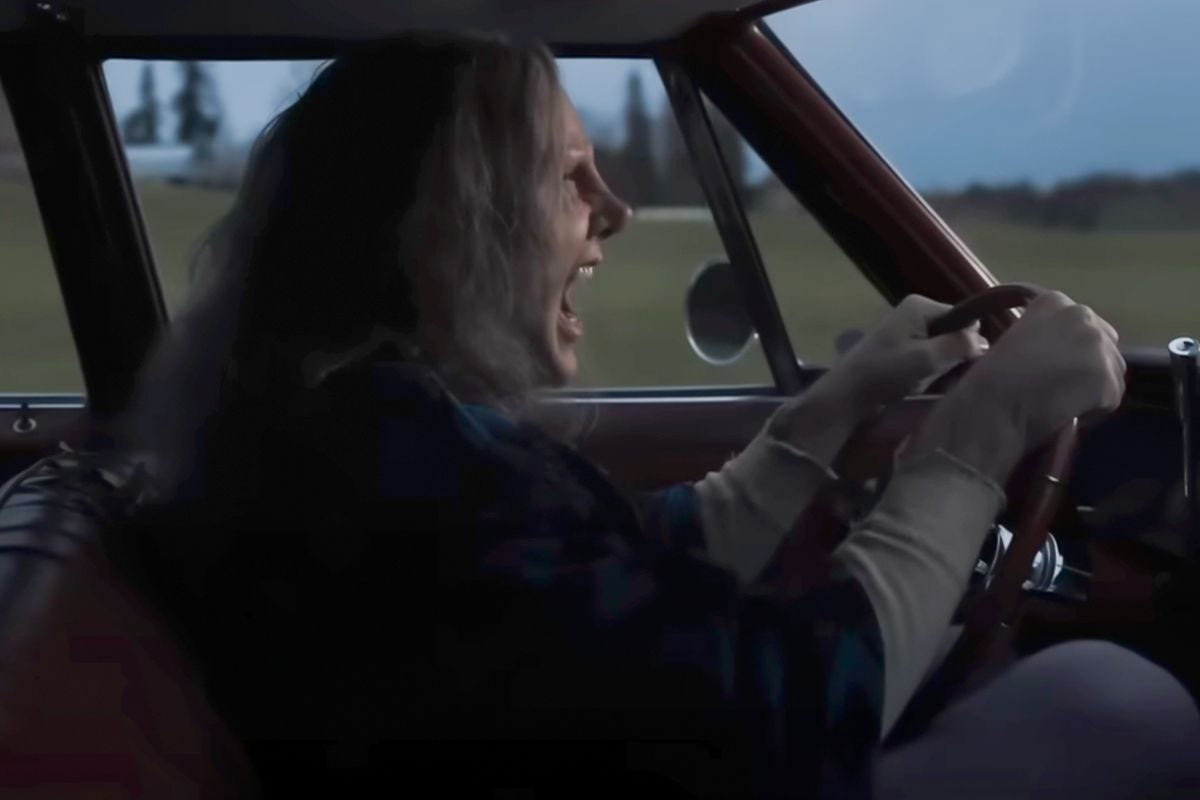
The creepy horror shenanigans of YouTubers-turned-filmmakers Danny and Michael Philippou caught fire with their feature debut “Talk to Me” (2022), which played smartly with genre, race and mythos. It didn’t all click, but you couldn’t forget it. With their follow-up, “Bring Her Back,” the brothers reach a new level in psychological horror that features several grim, look-away scenes.
Things begin badly for brother and sister Andy (Billy Barratt) and Piper (Sora Wong), who come home after school and find their father dead on the bathroom floor. Piper is legally blind (she can see shapes and light, and that’s about it) and the protective Andy is months shy of his 18th birthday, ineligible to get custody. Complicating matters, there are documented incidents of violence in Andy’s past. Initially, child services wants to split the two up, but a saving grace comes in the form of Laura (Sally Hawkins), a former child services worker who lost her daughter in a recent drowning accident and is caretaking for another foster child, a mute 10-year-old by the name of Oliver (Jonah Wren Phillips).
As the sibs settle in at Laura’s remote bungalow, there’s hope in the air, but something’s clearly off. Laura’s chatty and welcoming, but also controlling, spouting out a litany of rules and regs between awkward hugs. Piper is given the daughter’s room – which, bathed in pink and bejeweled with beads, has been maintained like a shrine – while Andy is relegated to a utility closet of sorts that has barely enough room for his mattress and a workout bench. The first real tell comes when we meet Oliver, a lithe androgynous sort with a faraway look in his eyes, standing shirtless and barefoot at the bottom of the drained pool out back, holding the cat that’s “not to be let out of the house” like he’s about to break its neck. Damien, the kid from “The Omen” (1976), has nothing on Oliver. And there are those strange red marks under his eyes; hard to tell if they’re birthmarks or the result of some occult ritual.
Reviewed: ‘The Monkey’ and ‘Elevation’ in theaters and streaming now
‘The Monkey’ (2025)
Osgood Perkins, a dead ringer for dad Anthony Perkins (“Psycho”), continues the family tradition from the other side of the lens with this spin on horror master Stephen King’s 1980 short story. The not-so-slow burn is set in Casco, Maine, where we open with Capt. Petey Shelborn (Adam Scott) walking into a pawn shop covered in blood to fix his windup mechanical monkey. After a flamethrower, a speargun and a rat enter the scene, we learn that the monkey is not a toy, a point hammered home regularly by those possessing it. It is something evil, if not death itself. Its victims of ghoulish, cartoonish circumstance are random – only the person winding up the monkey is safe. When the monkey plays its drum, anyone nearby is at risk. Petey’s twin sons Hal and Bill (both Christian Convery) later discover the monkey in a closet in their unhappy home; their dad is now a deadbeat, as their mom, Lois (Tatiana Maslany), tells us. A few cranks of the monkey’s key by the curious kids and mayhem ensues among mom, babysitter Annie Wilkes (Danica Dreyer) and Uncle Chip (Perkins), who moved in to care for the boys with his swinger wife, Aunt Ida (Sarah Levy). The twins behead the mechanical monkey, throw it in the trash and down a well, but it always returned. Flash forward 25 years, and Hal (now played by Theo James) works at a supermarket and visits his own son Petey (Colin O’Brien) once a year out of fear of cursing him. Hal, the film’s occasional narrator, tells us that he and his brother don’t get along. Bill is now totally unhinged and wants to bond with the windup wingding of disaster, with Petey and Hal looped in to his demented scheme as much of Casco gets sent to the great beyond in bloody ways. Part of the fun is Theo James’s yin-and-yang roles as the buttoned-up, protective and paranoid Hal and the delusional Bill, who sports a pseudo-mullet and “damn it all to hell” gusto. Elijah Wood (“Lord of the Rings”) pops in for a dark turn as dim-witted Ted, employed by Bill to retrieve the monkey. Levy’s Aunt Ida is unforgettable for all the wrong reasons, with an unsettling sexual aura and a plotline that’s a creepshow instant classic.
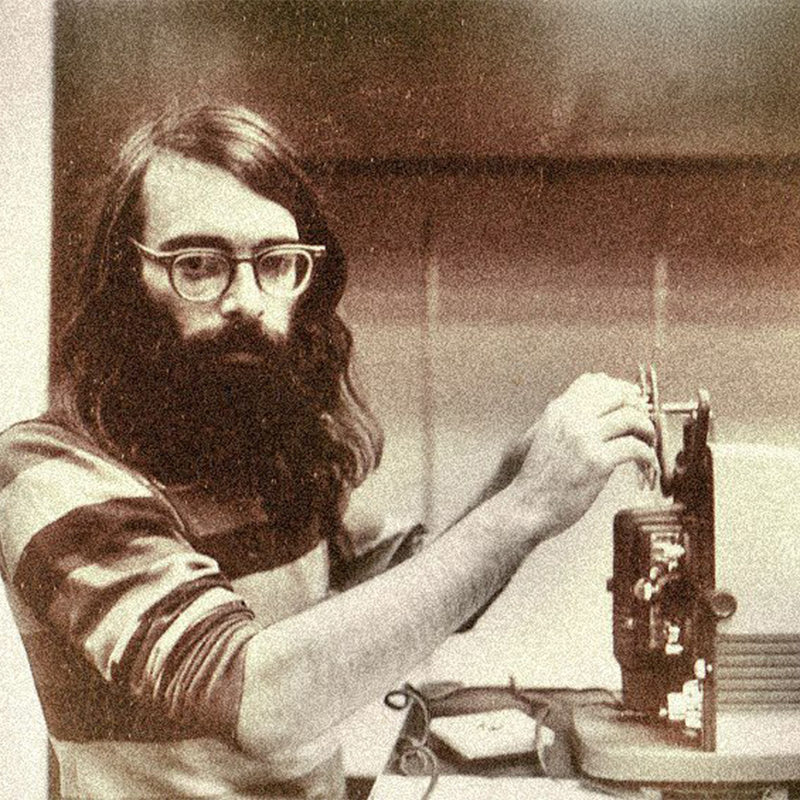
The Revolutions per Minute Festival hosts 10 works by Somerville experimental filmmaker Saul Levine at The Brattle Theatre on Sunday.
Not sure what experimental films are? If you’ve ever been to Boston’s Institute of Contemporary Art and seen trippy, surreal video installations, you’re on your way. Experimental or avant-garde film is usually deeply personal, often sociopolitical in context and reflective of the artist’s life in the moment.
Levine, born 1938, has been producing films for nearly 60 years; he was a professor in the Visual Arts Program at MassArt for 39 years.
Levine started his filmmaking career with “Salt of the Sea” (1965), featuring footage of his friends hopping from a boat to a buoy in the New Haven harbor. “I tried to make the jump with the camera,” Levine said, “and I fell into the water but held on to the camera.” The waterlogged footage, which Levine described as “abstract swirls of magenta and turquoise,” was turned into a four-minute short that ended with a clear shot of his friend perched upon the buoy.
If you watch Levine’s later works, such as his series “Driven (Boston After Dark)” (2002-present), in which Levine rides around in a car filming subjects and captures moments in time, or “Sun Drum Moon Note” (2018), which screens Sunday, you’ll notice shaky camera work. Part of that is Levine’s editing style, but adding to it are genetic neurological ticks – what Levine refers to as “tremors” – that he’s had since birth. As a result, Levine also speaks with a noticeable stammer.
Age and neurological affliction keeps Levine from getting behind the camera as much as he used to. Levine’s time at MassArt was also cut short, ending with his resignation in 2018. He said he felt “forced out” after school administrators accused him of harming students by showing his compiled film “Notes After a Long Silence” (1989), a collage that includes scenes of him having sex with his then partner. “It was ridiculous,” Levine said, as he’d screened “Notes” over several years without complaint and “the film was posted on the school’s website.” Levine gave passionate commentary on the situation in a video on Facebook, saying he felt “ambushed” by the school’s administration. The same year, fellow MassArt professor Nicholas Nixon, a Guggenheim fellow and photographer, came under scrutiny in a Boston Globe article for more severe, yet similar allegations of inappropriate academic behavior. The Globe mentioned Levine in conjunction with Nixon, who also resigned.
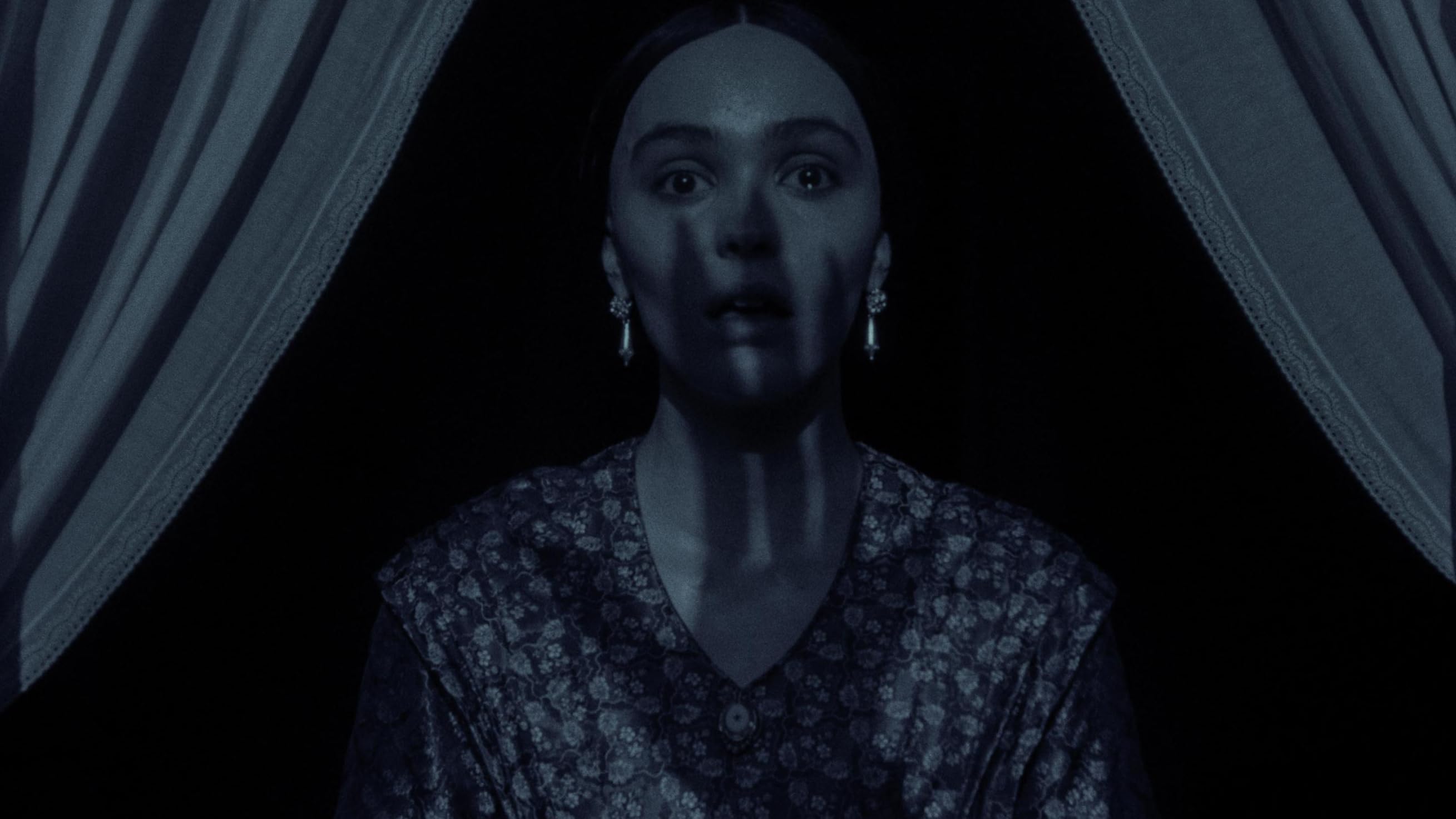
Robert Eggers’ remake of F.W. Murnau’s indelible 1922 classic is more akin in plot and scope to Francis Ford Coppola’s 1992 film “Bram Stoker’s Dracula” than Murnau’s inaugural cinematic adaptation, which was inspired by Stoker’s classic 1897 vampire tale. What’s the difference between Dracula and Nosferatu? Drac’s more dashing and suave, whereas the nosferatu named Count Orlok is a bald, withered being, grotesque by most human norms of comeliness and hygiene. Murnau, a master of practical effects, cranked up the mystical mind control aspects and educed a once-in-a-century performance from Orlok portrayer Max Schreck. Here, as played by Bill Skarsgård, whose brother Alexander worked with Eggers on “The Northman” (2022), Orlok is a shadowy incarnation that never comes into the light the way Schreck or even Klaus Kinski did in Werner Herzog’s 1979 take. Despite the title “Nosferatu the Vampyre” on the Herzog version, Kinski’s count is listed as “Dracula” and was something of a blend of the Bela Lugosi and Schreck incarnations. Eggers, who has made his name with eerie ambient immersions into the outré – “The Witch” (2015) and “The Lighthouse” (2019) – does more of the same here with strong black-and-white visuals delivered by director of photography Jarin Blaschke, who’s worked with Eggers on all his films, and the sonorous bolstering of Orlok’s gravelly intonations. The object of the carnivorous count’s desire is Ellen Hutter (Lily-Rose Depp), a young German woman with whom he forges a psychic connection despite residing far away in Transylvania (a picture can do that). To meet IRL, Orlok summons Ellen’s real-estate lackey husband, Thomas (Nicholas Hoult, now on-screen in “Juror #2”), to his castle to receive a deed to the flat across the way from their apartment in Wisborg. The count drains half the hemoglobin in Thomas’ body – nothing like weakening your rival in love before moving in. Once ashore in Wisborg (the scenes of Orlok dining on the crew while at sea are the most grim and gruesome), Orlok unleashes a plague and takes over the souls of a few townsfolk to employ as minions in pursuit of Ellen. In his adaptation, Eggers pays sincere homage to Murnau and Herzog’s versions. The result feels new in look and posture, but it doesn’t innovate much in the vampiric pantheon. Depp turns in the film’s most palpable performance, and for a Christmas treat, Eggers regular Willem Dafoe drops in as a batty academic and occult expert intent on sending Orlok back to the beyond for good.
‘Babygirl’ (2024)
Keeping with the psychosexual power games, Nicole Kidman notches her second Christmas film that features her bare derrière. That other movie, Stanley Kubrick’s 1999 swan song, “Eyes Wide Shut,” has grown on me over the years, especially the theme of small indulgences having larger, unintended ripples. Here Kidman plays Romy, the very in-charge chief executive of an e-commerce company named Tensile Automation – basically Amazon on crack. Romy lives in a palatial Manhattan condo with her husband Jacob (Antonio Banderas), a noted New York theater director, and two precocious teen daughters (Esther McGregor and Vaughan Reilly), but something’s clearly amiss. After sex, Romy runs off to another room to watch incest porn; then there’s the new intern Samuel (Harris Dickinson) who seems to know how to push every one of Romy’s buttons and regularly challenges her authority and proclamations in public forums – something few if any in the C-suite of Tensile Automation would dare to consider. Samuel chooses Romy as his mentor, and in their one-on-ones, keeps on pushing. Outside the office, the relationship turns physical with Samuel subjecting Romy to the kind of erotic B&D shenanigans that made “9½ Weeks” (1986) a kinky cultural staple for decades. Like Todd Field did with “Tár” (2022), writer-director Halina Reijn (“Bodies Bodies Bodies”) does a deft job of flipping the gender power paradigm. Kidman is superb as she riffles through the masks her character wears – nurturing mother, caring wife, nonapologetic CEO, lonely, unfulfilled soul and object of sexual subservience – often on a dime. Dickinson’s Samuel, by contrast, feels underwritten and hollow, which is a letdown given the strong performances he delivered in “Beach Rats” (2017) and “Triangle of Sadness” (2022). We never get the why of Samuel doing what he does, and when he starts threatening to upend Romy at the office or her coddled home life (he shows up uninvited for one of the girls’ birthday parties), he takes on the role of cruel manipulator as well as wormy opportunist, one we find ourselves rooting for a billionaire exec to take down. Also notable in the web of desire and deceit is Sophie Wilde (“Talk to Me”) as Romy’s protégée, who ends up dating Samuel as the affair becomes combative.
‘The Fire Inside’ (2024)
Cambridge-born filmmaker Rachel Morrison, the first woman cinematographer to receive an Oscar nod (“Mudbound”) in the category, makes her directorial debut with this biopic about Claressa “T-Rex” Shields, the first U.S. woman to win gold in Olympic boxing. The focus of Morrison’s film (working from a script by “Moonlight” director Barry Jenkins), is not her current pinnacle of pow, however, as she is still stalking opponents in the ring and undefeated as a pro, but Shields’ challenging early years in Flint, Michigan, where she was raised by a distracted single mother (the father was in jail) and lacking resources to get by. As Shields, Ryan Destiny brings a fierce pugnaciousness to the part. It’s an impressive, all-in performance not without nuance and a vein of vulnerability. The heat – and heart – of the film lies in Shields’ relationship with trainer Jason Crutchfield (Brian Tyree Henry), who backfills as a father figure. Bigger matters around Shields’ rise to prominence are a persisting gross gender disparity when it comes to compensation, respect and beyond, with a U.S. Olympic Committee publicist on Shields constantly to be more “ladylike.” Well-crafted and shot (by music video pro Rina Yang, not Morrison), with deep, palpable performances from Destiny and Henry, “The Fire Inside” strangely plays out somewhat flat-footed. Part of that’s the overuse of genre clichés (something you would not expect from the normally reliable Jenkins, but then again, consider his new “Mufasa”) and the knowledge that Shields would go on to become the Tom Brady of her sport. I’m not sure what’s next on Morrison’s plate, but “The Fire Inside” displays enough poise and promise to to get me off my stool for another round.
‘Homestead’ (2024)
Angel Studios, the family-themed, faith-based production company behind last year’s box office wonder “Sound of Freedom” (made for a cool 14 mill, it grossed near 200) saddles up with this post-terrorist-attack survival drama in which food, water and other life-sustaining needs become scarce as infrastructure and the law crumbles. The what and the why is a dirty bomb delivered by sailboat, detonated just off the L.A. coastline. Communications go silent, and the folks living on a sprawling, vineyard-esque estate of the title go into lockdown mode. The patriarch of the gorgeous grounds, billionaire Ian Ross (played by the steely eyed Neal McDonough) hires his own security detail headed by ex-Green Beret Jeff Eriksson (Bailey Chase) to keep out the riffraff (people seeking food and shelter). Based on the “Black Autumn” series by Jeff Kirkham and Jason Ross and directed patly by Ben Smallbone, “Homestead” wafts wisps of provocations – the haves versus the have-nots, what to eat when the corner market is bare and commitment to community, i.e., helping your fellow human in the wake of a societal collapse, but none really excite. Part of that is because Ross and his crew are so inherently entitled that you half want to see the hordes at the gate come for them Marie Antoinette style, and Chase’s operative is cold, aloof and always sizes up a situation with a finger on the trigger; neither character is particularly empathetic. The film does work its way around in the end, but feels rote. Alex Garland’s “Civil War,” released this year, covered similar territory with more bite. You do have to marvel at the spread that Ross and his family are holed up in, and much of the film feels like a grand mansion tour (despite the California setting, it’s in Bountiful, Utah, not too far from Angel Studios HQ).
“Do Not Expect Too Much from the End of the World,” “Small Things Like These” and “The Lost Children”
‘Do Not Expect Too Much from the End of the World’ (2024)
A sardonically black political comedy that’s right out of left field, powered by witty takes on hot topics (Andrew Tate, Putin and Pornhub, to name a few) and a killer performance by Ilinca Manolache, without whom the movie could not be. Manolache plays Angela, a feisty Romanian woman looking to make it in the gig economy as a filmmaker and TikTok sensation. Her main hustle is as a production assistant for a company that makes safety videos, kind of – on many shoots, Angela coaches accident victims, often in wheelchairs, to talk about the safety measures they should have taken to have avoided injury versus the clear negligence of the employer to provide a safe workplace. They’re more CYAs than PSAs, and that’s the degree of biting humor imbued by writer-director Radu Jude (“Bad Luck Banging or Loony Porn”).
When we meet Angela, she’s buck naked, on her bedside table is Proust, a half-drunk beer and a glass of wine. From her unapologetic posture as she drags herself out from under the covers at 5 a.m. we know she’s a take-no-shit sort. Donning a sequin dress, Angela wills her way through the day, which includes several safety shoots, chatting with director Uwe Boll about beating the bejesus out of critics who take exception to his lowly regarded films (“BloodRayne,” “Alone in the Dark”), a quickie in her SUV, where nearly half the film takes place, and frequent TikTok dispatches as her evil alter-ego, a bald, bushy-browed incel named Bobiţă who boasts of sexual conquests and hanging out with Tate, the controversial purveyor of all things manly and macho.
Jude employees a unique stylistic palette to frame his modern absurdity; much of Angela in transit is shot in matted black-and-white (reminiscent of Pawel Pawlikowski’s wonderful “Cold War”) while her TikTok and safety videos are shot in color. Jude too infuses footage from the 1981 film “Angela Goes On” about a female cab driver in communist Romania. The thematic juxtaposition (of constantly driving and having a hard time getting from point A to point B) is all about the bureaucratic nonsense that confronts and confounds the two Angelas back during the days of Ceaușescu’s police state and in the capitalist now.
Manolache, who feels like she could slide easily into an early Almodovar or classic Fellini romp, is all-in as the foul-mouthed Angela, full of vim and palpable vigor, and quite muscular and confident in the way she defines her womanhood and place in society. Along with Mickey Madison’s bravura turn in “Anora,” it’s the most pop-off-the-screen performance by an actress this year – Angela and Anora could easily team up and rule the world, and given where we’re heading, that would likely be a good thing.
The ending long take, a filming of a PSA at the site of an accident, is the most somber and dark absurdity in the film, with telling plays on Putin and Ukraine, American TV and the devious use of Bob Dylan’s “Subterranean Homesick Blues” placards to further victimize and subjugate the maligned.
‘Small Things Like These’ (2024)
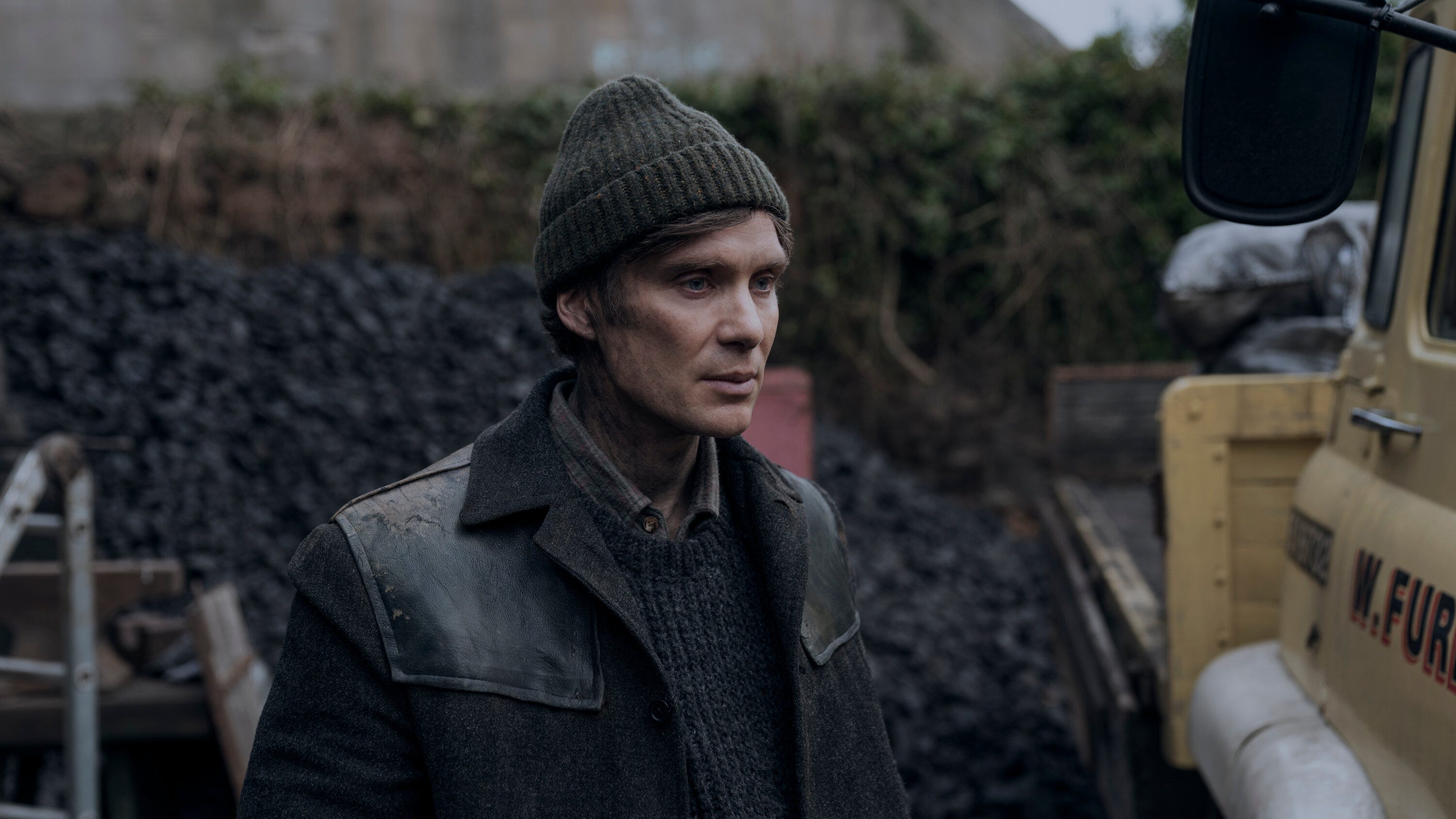
Based on Claire Keegan’s novel about the Magdalene Laundries in Ireland, this project directed by Tim Mielants draws emotional depth from an all-in performance by star Cillian Murphy, nearly even more internalized and conflicted here than he was for his Oscar win as Oppenheimer in the Christopher Nolan-helmed biopic last year. The Laundries were a series of so-called asylums for wayward girls, unwed mothers and “fallen women” (former sex workers, recovering addicts, etc.) run by nuns. Keegan’s story targets their sordid history of using women as indentured labor, housing them in prisonlike lockdowns and often taking their babies forcibly from them so the institution could profit from the adoptions. The misdeeds are revealed through the meanderings of Bill Furlong (Murphy), a merchant in 1985 Ireland who provides one such institution with coal. Seeking a signature for an order one day, he witnesses a girl being dragged across the hall screaming. She mouths to him for help. For a frozen second he thinks to act, but the steely eyed sister in charge (Emily Watson) swoops in to explain things away with a cup of tea. Later, Bill discovers a young pregnant girl shackled in the coal shed – yep, it’s that kind of shop of little horrors. Then there’s Bill’s own backstory, his five daughters (his wife is played by Eileen Walsh, who starred in 2002’s “The Magdalene Sisters,” a film that went at the same subject), which serve as a point of reflection and increasing concern, and the boy down the street, often shoeless and starving. Much of what appears quiet, composed and buttoned-down is anything but. The Magdalene Laundries operated from the 1800s to, amazingly, up through the 1990s. In scope, as Mielants and Keegan (“The Quiet Girl”) tell it, “Small Things Like These” feels not too far off from our own Catholic Church abuse scandal (“Spotlight”): cover-ups over decades, victimization of the vulnerable and the leveraging of religious righteousness to make it happen. It’s a somber weaving of disturbing discoveries, but not one without threads of humanity and compassion brought to the screen by Murphy’s deeply emotive performance.
‘The Lost Children’ (2024)
A hackneyed documentary about the incredible true story of survival by four children (ages 11 months to 13 years) in the Colombian rainforest for 40 days after their plane crashed in May of last year. The three adults aboard (including the pilot and the mother of the Indigenous children) perished upon impact. The Colombian military takes up the search and are later joined by a legion of Indigenous volunteers. Directed by Orlando von Einsiedel, Jorge Duran and Lali Houghton, the film focuses hard on this point to showcase the jungle knowledge of the Indigenous searchers and their unease working with the military because, as the film has it, the factions have been at opposite sides of conflicts over decades. Specifics are never really provided, which is one of the film’s major annoyances. The dramatic recreations of the search feel sloppy and staged (often people in arguably real footage have their faces blurred), though the wildlife photography is top shelf. The reason to stay with the film is the chilling footnote that the children’s father and stepfather, Manuel Ranoque, initially at the fore of the search and a seeming heroic figure, is accused (by talking heads, the mother’s aunt and sister) as an abuser, suggesting the children could be evading the search effort to avoid him. The dubbing is mumblecore awful and the staging of Indigenous rituals and ways borders on exploitative arrogance, even though it ostensibly aims to be embracing.
In the latest from Azazel Jacobs (“French Exit”) grief and sisterly differences are wrestled with as familial tensions crest, crash, subside and flow. We open in a small, spare Brooklyn apartment (black pleather couches, an Ikea-esque dining set and no carpeting) as estranged sisters Katie (Carrie Coon), Christina (Elizabeth Olsen) and Rachel (Natasha Lyonne) try to work out the logistics of their terminally ill father’s final hospice cycle. Katie, the oldest, is a bit of a control freak, as evidenced by her telephone disagreements with her husband and teenage daughter back home in California. Christina’s the idealistic free spirit trying to hold the situation together while figuring out the next chapter in her life, and Rachel is the one who’s been living with dad and taking care of him while slacking around the apartment and smoking weed. In short, three very different personalities that, given the heightened emotional state, clash more than not. The three leads deliver genuine, deeply felt performances that ripple with rage, regret and vulnerability. In scope and tenor, “His Three Daughters” is not far off from Florian Zeller’s quietly compelling “The Father” (2020), including a shift in reality that brings home the palpable final punch. The are times the film – which one could imagine as an intimate, in-the-round stage play – gets a bit too cyclical, but usually the dutiful hospice worker named Angel (Rudy Galvan) steps in to update the trio on the changing reality. He’s regarded as both valued family ally and annoying interloper. You never really see or hear the father other than as the sound of a respirator and beeps from a heart monitor reverberating from the back room while the three women in the tiny living room try to make sense of their past, present and future as a family.
‘Merchant Ivory’ (2024)
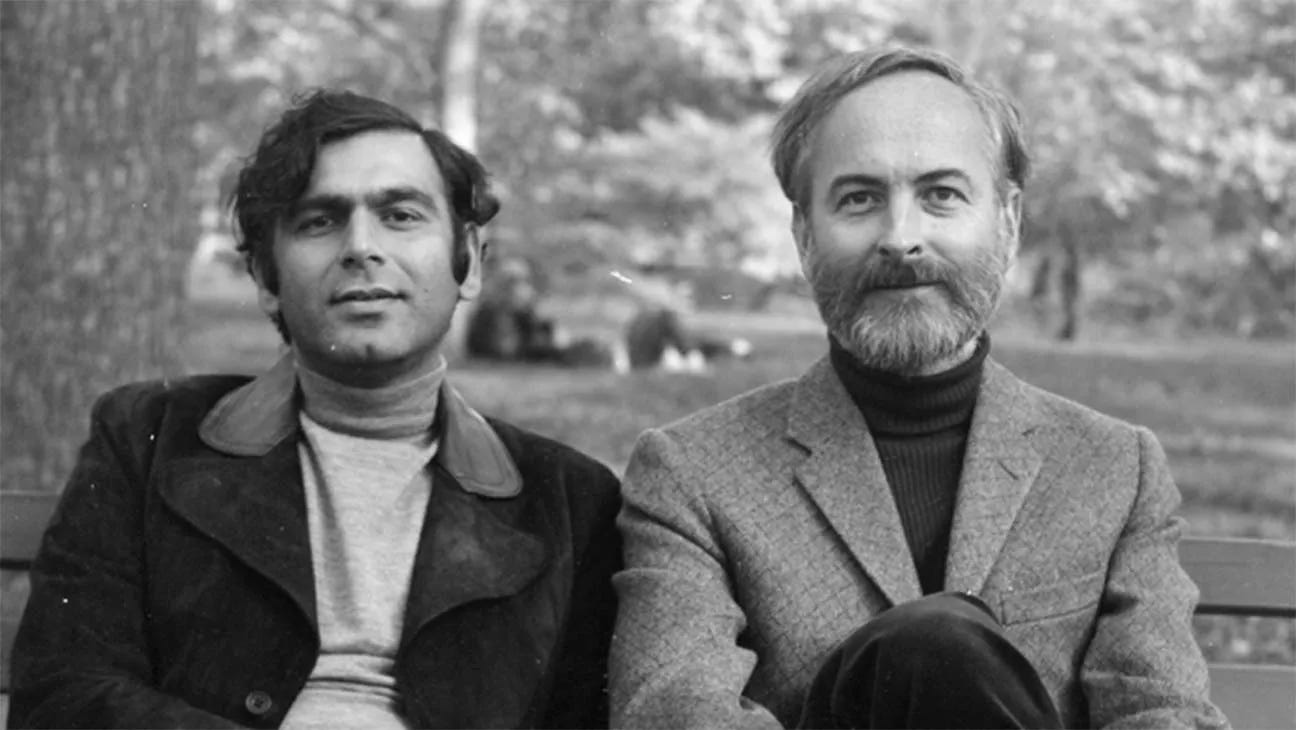
Stephen Soucy’s hagiography of the legendary filmmaking tandem that produced such critically acclaimed period dramas as “Howard’s End” (1985), “A Room with a View” (1992) and “Remains of the Day” (1993) puts their output into historical and cultural context and pulls back the veil on the challenges the two faced as a gay couple during less accepting times. Their films were the backbone of art house cinema in the ’80s and ’90s and beyond, until producer Ismail Merchant’s untimely death in 2005. Director James Ivory is still with us and spry in his mid-90s as he offers candid insight into production challenges and his dynamic with Merchant, the high-energy producer always looking to cut costs (you’d be shocked at how little some of these classics were made for) and shill projects to potential investors versus Ivory’s more somber, quiet approach. Soucy gives you the full rewind from Ivory being an adoptee (Ivory notes that the Paul Newman post-Depression, Great War film “Mr. & Mrs. Bridge” felt reflective of his childhood) to Merchant’s upbringing as a Muslim in Northern India, as well as a look into the rest of a production company “family” that included screenwriter Ruth Prawer Jhabvala, a German-born Jew reared in England (due to a guy named Hitler), and composer Richard Robbins, educated at the New England Conservatory. It was Jhabvala’s prize-winning book “Heat and Dust” that drew interest from Merchant and Ivory; when they chose to adapt, they educed a career shift for Jhabvala, collaborating on 16 films and winning Oscars for “Howard’s End” and “A Room with a View.” Troupe regulars Emma Thompson, Vanessa Redgrave and Helena Bonham Carter are on hand to chime in, as are Hugh Grant, James Wilby and Rupert Graves, who starred together in “Maurice” (1987), a film Soucy and Ivory home in on specifically – not only because of its examination of a closeted gay couple during a time when being gay was a crime in Britain, but because of its powerful context at the time of its release when the AIDs crisis and Act Up were beginning to boil over. The access Soucy earns and Ivory’s frankness create an intimate portrait, including the willingness to concede that some of the team’s later films (“Jefferson in Paris” and “A Soldier’s Daughter Never Cries” among them), while well funded, never registered the kind of critical success as the earlier films. Ivory’s only Oscar came as a writer in 2018 on “Call Me By Your Name.” Breathing in Soucy’s intoxicating love letter, you wish you could go back in time and be part of the Merchant-Ivory “family.” You will also want to go back and rewatch their classics, and perhaps even revisit some of those so-called miscues.
Not entirely a “missed connection” or even “the one that got away,” but more “the one that ran away.” Based on Ólafur Jóhann Ólafsson’s novel of the same name, Baltasar Kormákur’s pine-across-time-and-continents is bookended in two globally defining fates: the bombing of Hiroshima and the onset of Covid. Told in two timelines, “Touch” revolves around a 70-something Finnish gentleman by the name of Kristofer (Egill Ólafsson), a widower with a daughter who passes the time singing in a choir. He’s also recently diagnosed with early stage Alzheimer’s, and from his long, reflective face it’s clear he’s unsettled, memories a-flutter, unfulfilled; before the disease or virus can take hold, to London he goes, just as hotels and airlines are starting to mask up and shut down. The “why” we get in the other timeline – the 1960s – as a young Kristofer (played by the director’s son, Pálmi) drops out of school and takes up a job as a dishwasher in a Japanese restaurant. Kristofer bonds with the owner, Takahashi (Masahiro Motoki), who came to London to escape the pain and scars of the bombing, and with Takahashi’s daughter, Miko (Kôki). How events pan out in both timeframes take some painful and surprising turns. The ambient tenor orchestrated by Ólafsson is subtle and quietly moving, coming more from the soul and setting than from the flying of romantic sparks. It’s a reflective, internal story that plumbs tragedy and pain as much as it wells with hope and promise. The action takes place primarily in London with scenes in Finland and Japan; in this journey of the yearning heart, location is largely ancillary. The performers hit their marks well, though it’s hard to reconcile the lanky Pálmi with the stout Egill as the younger and older Kristofer. Given that much of “Touch” takes place in the kitchen of a Japanese restaurant, Ólafsson, the director, does a nice job of bringing the sensuality of the food to the fore, if not quite putting it in the company of “The Taste of Things” (2023) or “Babette’s Feast” (1987).
‘Longlegs’ (2024)
All the hype about this serial killer chiller from Oz Perkins being the next “Silence of the Lambs” (1991) has been well chummed by releasing company Neon, almost to the point of the marketing becoming the reality. Nicolas Cage, also a producer on the film, makes for an unforgettable Hannibal Lecter-Buffalo Bill hybrid as the sadistic psycho of the title, and green FBI agent Lee Harker (Maika Monroe) pops out of the microwave like something of a reheated Clarice Starling as she lurches into dark, forbidding places looking to bag Longlegs. It’s a moody piece propelled by deftly heightened atmospheric dread and some great performances, but it blows its credibility in the final act, and much of what’s thrown onscreen from a crime investigation standpoint makes little sense despite all its ardor and articulation – the hand waving is impressive. Set in Oregon in the 1990s (Bill Clinton is the prez), there’s been a series of families killed over a 20-year period. The crimes look usually like murder-suicide by the dad, except for a series of cryptic notes left at the scenes. Early on we learn that Harker has innate instincts that go beyond profiling and may be tied to a childhood trauma. They get her put on the Longlegs case with senior agent Carter (a dutiful and on-point Blair Underwood). To say more about the plot would be to ruin the tense ride. Monroe was good as a stalked soul who fights back in “Watcher” (2022) and “It Follows” (2014) but is less effective here, if mostly because of the arduous bait-and-switch twists the plot opts for. Cage is unquestionably the reason to see the film: His well-meted appearances as the pasty, androgynous and indelibly ghoulish Longlegs make the film, though the upping of the ante gets to be a little much near the end. Also impressive is Alicia Witt as Lee’s mother, who has a few bad habits and more than a few skeletons in the closet. Perkins’ other films, including “The Blackcoat’s Daughter” (2017), have been equally dark and moody and on point in genre, but yet never quite transcended. “Longlegs,” with the killer turns from Cage and Witt, ups the game, but cliches and a soulless finale hobble it from reaching its full stride.
Are prequels necessary? I can say I had a damn good time with “Furiosa,” the “Mad Max: Fury Road” (2015) prequel this year and this, showing how world annihilation by alien invasion came to be a thing in the “Quiet Place” series. What the two films have in common is a can-do – er, make that, kick-ass – lead in the form of Anya Taylor-Joy in George Miller’s post-apocalyptic road-rage flick and here, in an apocalyptic preamble, the infallible Lupita Nyong’o, so compelling – and Oscar winning – in “12 Years a Slave” (2013) and in two roles in Jordan Peele’s sophomore feature “Us” (2019). Nyong’o is the main reason “Day One” flies as Sam, a young woman who ostensibly has terminal cancer. She’s part of a hospice excursion (the only one without white hair and white skin) bused into New York City for a marionette performance. Then things go crash-bang out on the avenue. Meteors, or the like, are raining down. Explosions and soot and ash are everywhere.
The imagery is evocative of 9/11. A disoriented Sam walks through the debris and billows of smoke, clinging to her service cat, Frodo, while survivors around her shout out for loved ones. For their efforts they are eviscerated by the velociraptorlike xenomorphs we came to know in the John Krasinski-helmed films. The bloody assault comes on like a flash, akin to the zombies in “World War Z” (2013). People are picked off and picked apart left and right, though as we know from Krasinski’s future chapters, this species of eradicating aliens can’t see; they home in for the kill by sound.
Cut-off survivors hole up in crumbling penthouse-crowned skyscrapers as military Black Hawks fly overhead. Those trapped in Manhattan are told to shelter in place silently and that boats will come to evacuate them – the military has blown the bridges around the island, having learned that water is pretty perilous to the invaders. Sam, with her wide, luminous eyes doing the communicating and Frodo in her clutch, has other ideas and heads for a visit to the old studio apartment where she penned poetry and to get a slice at the best pizza shop in Harlem. She’s going in the opposite direction of everyone else, but a British law school student (Joseph Quinn) tags along with her despite her gestured objections.
Competently directed by Michael Sarnoski, who punched his ticket with the Nicholas Cage curio “Pig” in 2021, “Day One” builds with purpose and fervor, but ultimately drifts into the predictable. The use of thunder and rain and a deflating car tire offer up nice flourishes, but not quite to the degree that Krasinski scored on the two chapters starring his wife, Emily Blunt. Djimon Hounsou, who had a significant role as Henri in “Part II” plays the crossover character trapped in the city with Sam. He’s in the film just enough to make the link; this is the Sam show. No Nyong’o, no movie.
(from left, back to camera) Eddie (Alden Ehrenreich) and Stache (Aaron Holliday) in Cocaine Bear, directed by Elizabeth Banks.
When in college during the big ’80s we’d cross the Florida peninsula at night to partake in spring break mayhem in Fort Lauderdale and Miami – gonzo road trips for a wee bit of fun. To do so we took a route through the Everglades known as Alligator Alley and were warned by locals never to stop, or at least not to dally. Why? Alligators for sure, but more so, drug dealers and other illicit types collecting bales of marijuana and duffel bags full of cocaine kicked out of prop planes to dealers camped out to retrieve them and sell to those spring breakers. Tony Montana it wasn’t, and often, as I was told, dumps were lost or intercepted by other shady sorts or the ever-prowling authorities. About the only things I ever ran into along Alligator Alley were swarms of mosquitoes and some really godawful, low-grade tequila one of my college mates insisted on drinking as pregame petrol for all in the van not taking wheel duty.
That said, such a real-life drug drop from above is the loose inspiration for “Cocaine Bear,” a devilish little diamond in the rough with cult aspirations that isn’t far off in tenor and production values from the 1990 surprise “Tremors,” starring Kevin Bacon. The drug drop is supposed to take place over Tennessee but goes awry when the plane malfunctions and starts to go down. Most of the coke lands in the Chattahoochee National Forest in Georgia, where a few kilos are snorted up by a 500-pound mama bear (we learn that the pronouns are “she/her” when she passes out on a random drug dealer who can then identify her because – well, now you get a feel for the film’s cheeky, campy edge). The bear wants more, and will kill for it, be you a wayward hiker with a little accidental dust on your leg, a drug dealer seeking to retrieve the stash because your Colombian supplier will come for you, a law enforcer trying to intercept the former or an amorous ranger with designs on the park’s goofball naturalist. There’s a potpourri of personalities and agendas swirling around this very dangerous, coked-up beast.
Directed by Pittsfield native and more often actor Elizabeth Banks (“The Hunger Games” and “Pitch Perfect” series) making a nice rebound from her 2019 failed reboot of “Charlie’s Angels,”“Cocaine Bear” packs a lot into 90-ish minutes and hits some hilarious highs. It’s also pretty gruesome and the CGI bear is, to be kind, B-rate, which only adds to the winning camp factor. It’s a go-for-broke concept played to the wire by Banks and bolstered by a cast of deft character actors and stars outside their normal wheelhouse: Keri Russell as the mom trying to find her wayward daughter (Brooklynn Prince), who’s lost in the woods; “Modern Family” guy Jesse Tyler Ferguson; Ice Cube’s kid O’Shea Jackson Jr., so good in “Long Shot” (2019) and pretty spot on here as drug dealer’s gopher; the ever-affable Isiah Whitlock Jr. as the maverick cop out of his jurisdiction and having to deal with a pampered lap dog; Margo Martindale as the park ranger quick on the trigger; Alden Ehrenreich (“Solo”) as the dealer’s son, in tow to help retrieve the coke; Russell’s “Americans” costar Matthew Rhys in a cameo as the coke-snorting aviator who kicks the whole mess off; and the late Ray Liotta as the head heavy not looking forward to answering to his Escobar sources.
How much of it is true? Very little that we know of. In 1985 a load of coke did get lost in Tennessee, never to be recovered, and a 175-pound black bear was found dead of an overdose across the border in Georgia. That’s it – the rest is a gift from Banks and writer Jimmy Warden during the time of year studios dump their failed projects in theaters and on streaming platforms as the movie industry gears up for the Oscars and big-screen spring seasons. Due to an illness I had to scrap my plans to attend a press screening in Boston and instead caught the early Thursday show at the Somerville Theater’s large auditorium, which was a true, relaxing pleasure – navigating evening press screenings, to which media outlets and PR firms often give away promo passes to the public, can be teeming gantlets (a bear, dare I say?). I was in no mood and double happy to stay local.
Not really the kind of movie to see after a Thanksgiving Day feast, or even after the leftovers. No, “Bones and All,” the latest from director Luca Guadagnino (“Suspiria,”“A Bigger Splash”) is not for the meek, squeamish or recently well fed, as its subject matter are the folk known as “eaters,” aka cannibals, and it is, at times, quite gory. (There’s a degree of perversity at play here, as Guadagnino’s career-cementing “Call Me by Your Name” in 2017 starred Armie Hammer, who in the years following would be brought up on sexual abuse allegations that included purported cannibalistic yens.)
Based on the novel by Camille DeAngelis, the film begins innocently enough with 18-year-old Maren (Taylor Russell) hanging out with friend as a slumber party. It’s all what normal girls in nightgowns eating junk food and talking about crushes do, until Maren playful nips one of her cohort’s fingers. It’s no big thing until the third or forth nip, when she tries to bite the whole thing off. Friends intercede and Maren sprints off home, where she and her father (André Holland) pack up and depart to a new whereabouts with new aliases. Dad seems to be a champion of his daughter, but shortly thereafter, Maren is on her own with a tape from her father that she plays now and then, through which we learn about her past misdeeds (babysitters fare poorly in the film). Troubled by her condition, which appears to be genetic, Maren decides to find her mother, whom she never really knew. The quest takes her from northern Maryland to Minnesota, with a lot of lessons and feasting along the way.
The setting is the early 1980s, when it was impossible to find a flesh-eaters chat group online – but that’s okay, because these special folk can smell each other. As Maren waits for a bus along the way, a daffy, dapper guy named Sully (Mark Rylance, creepy in a limited role) strolls up and, in an avuncular, Southern twang, tells her he could smell her a mile away and asks her to a house down the way for a bite. Maren naturally is reluctant, and she’s apprehensive as Sully chats away while dressing Cornish game hens. Is this the nourishment he was talking about? Nope. Turns out the house belongs to an elderly woman who’s fallen and can’t get up, and Sully’s waiting for the right moment to feed – just at the moment she dies, because warm food is what’s most desired by the cannibals among us. If the eaters could place an order via Grubhub, the delivery time would most certainly be too long.
Maren moves on from Sully and partners up with a rangy lad named Lee (Timothée Chalamet, who became an A-lister with Guadagnino’s “Call Me by Your Name”) whose methods are more straightforward and seem to benefit society at large – who’s going to miss a convenience story bully? On their meander to Minnesota they swing through Kentucky to give Lee’s 16-year-old sister driving lessons. It’s a strange sojourn, with the pair living on the fringe as vagabond outsiders. They bond, but not really romantically, and encounter other eaters along the way. As you can expect, Sully makes a return appearance, which unfortunately is one of the film’s least credible yarns.
Russell, so good in Trey Edward Shults’ “Waves” (2019) grows as as performer, conveying Maren’s inner turmoil with a nuanced physicality. Chalamet’s laconic Lee comes off as a vulnerable, reflective soul while emanating an aura of quiet lethality. The film is also bolstered by indelible turns by Chloë Sevigny, David Gordon Green (yup, the director of “Joe” and the recent, unbearable “Halloween” series reboot) and Michael Stuhlbarg in small parts, but to say more about the what and why would be to ruin the film.
I can say that there will be times when the eaters feed that you may need to look away or thorough split fingers – and even then will hear the ripping and groans of satiation. It’s not cartoonish like some zombie flicks, but visceral, grim and disturbingly real, like Claire Denis’ “Trouble Every Day” (2001) and Julia Ducournau’s “Raw” (2016). “Bones and All” is definitely not a movie for a family, but it about family, roots and tradition, no matter how troubling that tradition may be.



















 For What it's Worth