Tag Archives: Film

The Lost City of Z

26 Apr

James Gray, who started out directing gritty New York-rooted crime dramas (“Little Odessa,” “The Yards” and “We Own the Night”) before branching out into matters of the heart (“Two Lovers”) and a “Godfather”-esque epic of sorts (“The Immigrant”), heads up river and into uncharted water with “The Lost City of Z,” a rewind of real-life adventurer Percy Fawcett’s trips to the Amazon in the early 1900s, when he claimed to have found the seeds of an advanced culture that may have predated western civilization.

As Gray’s account (based on David Grann’s factually disputed novel) has it, Fawcett (Charlie Hunnam from “Sons of Anarchy”), a British military officer with a calm demeanor but a chip on his shoulder because he felt passed over for assignments, reluctantly accepts a fluff mission from the Royal Geographical Society to map Amazonia as part of a larger effort to protect Britain’s rubber tree interests. His first mission, fraught with cannibals, piranhas and tropical ailments such as a face-eating flesh disease and gangrene, set off in 1906. Years later, upon return to Britannia, Fawcett is greeted by jeers of blasphemy for claiming traces of intelligent civilization in a jungle full of “savages.”

The trip obviously set something off in Fawcett, who becomes inexhaustibly determined to find “Z” – which many believe to be a fragment of the similarly elusive ancient kingdom, El Dorado. All in all, according to Grann, Fawcett would make eight trips to the Amazon, the last being in 1925 when he and his son (played by Tom Holland, who has newly taken over the webs of Spider-Man in the Marvel movie franchises) would disappear. Gray wisely pares down the octet of sojourns to three and in between stages some impressive World War I trench warfare, reenacting Fawcett’s short tenure as an artillery commander in Flanders. Waiting at home through all these ordeals is Fawcett’s loyal wife Nina (the lovely Sienna Miller), who tends to an ever-growing family without much protest. I’m not sure I’ve seen a more supportive life partner on screen.

The strength of “Z” lies in the bond Fawcett forges with his loyal aide, Henry Costin (Robert Pattinson) as they head repeatedly into the unknown with the promise of discovery and self revelation ever ripe. Such was the driving force behind “Aguirre, the Wrath of God” (1972) and “Apocalypse Now” (1979), but here, that current gets lost in the muddy roils of posture and pretense. The film, full of intent and admirable in so many ways, never delves into the darkness of Fawcett’s soul; equally as unsatisfactory, it fails to conjecture about his fate.  Cray and Crann have painted a handsome, humane portrait of Fawcett,  who by other accounts something of a controversial figure, accused of being a showman to garner funding and attention with claims of spotting strange beasts never before sighted and accomplishing improbable feats – including alleging that he shot a 62-foot anaconda. In the end “Z” becomes an entertaining travelogue of minor character in history that unfortunately turns back just as the water gets choppy.

Ghost in the Shell

1 Apr

Put a pretty girl in some Lycra and, poof, you got a movie, right? Well, yes and no. It worked with Kate Beckinsale and Milla Jovovich in the “Underworld” and “Resident Evil” series respectively, but not so much for Charlize Theron in “Aeon Flux” or Halle Berry in “Catwoman.” You can add Scarlett Johansson to that “not” list with this live-action adaptation of Masamune Shirow’s manga “Ghost in the Shell,” done more righteously in the 1995 animation feature directed by Mamoru Oshii. Sure, Scar-Jo looks fetching, much as she does as the Black Widow in the “Avengers” series, and the film, helmed by Rupert Sanders (“Snow White and the Huntsman”) with lush cinematography by Jess Hall, might even be more optically alluring. The “Blade Runner”-esque reimagining of a near-future Shanghai is a wonderment in its own right and perhaps worth the price of entry, but not enough to atone for an inert script and robotic acting.

Things begin promisingly enough when Scar-Jo’s Major rises elegantly out of a synthetic pool, the first cybernetic organism manufactured by the Hanka Robotics corporation. Major’s a leap forward in human and technology fusion (the flesh and steel body being the “shell,” with her computer-infused brain the “ghost”), yanked from her scientific incubators (a matronly Juliette Binoche among them) and appropriated as a weapon to fight cyberterrorists. The target du jour is an elusive entity known as Kuze (Michael Pitt), who’s out to hack Hanka and the government to pieces. Major’s barely out of the lab when we get a glimmer of her prowess, leaping from a tall building and taking out a room full of assassins with barely a hair out of place. It’s a fiery, kinetic jolt that perhaps comes too early for its own good. The shell in which the film operates becomes quickly inconsistent in tenor and tone, bouncing from somber, semi-serious oppressive future vision (back to “Blade Runner”) to hyperbolic free-for-all and, in the process, uproots the prospect of suspension of disbelief.

Sadly too, Scar-Jo, so fantastic in “Under the Skin” (2013) and normally quite capable, comes off Ben Affleck-wooden here and is further undermined by the film’s lack of an emotional core. The device of Major struggling to tap into her “ghost” to discover her true identity, much akin to Peter Weller’s cyborg in “RoboCop” (1987), piques interest at turns, but ultimately feels tacked on and beholden to the larger sheen. The corporate and governmental double dealings, which strangely seem apt as metaphor for the Trump presidency and its shadowy ties to Russia, also could have been played for greater satire and bite but also become lazy and lackluster plot points. By the end of the film, everything’s empty and contrived. Then the “spider tank” shows up and hyperbole takes off her gown to reveal a not-so-appealing figure.

T2 Trainspotting

29 Mar
Johnny Lee Miller and Ewan McGregor reprise their roles as Sick Boy and Renton, both a little older but not much wiser

It’s been 21 years since Danny Boyle and Ewan McGregor shocked audiences with that creepy dive into a fecal-fleeced toilet in Trainspotting, somehow making being a heroin addict a hilariously biting — albeit tragic — trip along the way. Part gonzo romp, part sad social satire, the stylish weave followed the vein-piercing antics of four Edinburgh junkies, slaves to skag and capable of doing anything to score their next fix — including ripping off their best mates. Not a great lot to throw in with, but a highly entertaining one as the fix-needing squabbles reached the near hyperbolic absurdity of the Three Stooges.

At the end of that 1996 adaptation of Irvine Welsh’s cult novel, one of the four is dead and another runs off with the group’s hard-earned drug money, which leave affairs in a difficult place to pick up, but Boyle and his screenwriter John Hodge, who adapted T1 and has collaborated with Boyle on several other projects, have a real feel for the lads and leverage Welsh’s 2002 follow up, Porno to give the middle-aged blokes a shot at redemption before heading off for the nursing home.

We first catch up with McGregor’s Renton (the guy who stole all the money and — as the film has it — ruined everyone else’s life) now living in the Netherlands and who appears to have made good on his promise at the end of Trainspotting to change, but a small cardiovascular event trips him up (literally) and sends him back to Scotland where he learns his mom has passed. A quick check in with old pal Spud (Ewen Bremner) finds unhappy times for the sweetly pathetic user who’s been unable to shake his monkey. The reunion is cemented by an uproarious eruption of vomit that becomes one of the film’s most lingering images the same way excrement took center stage the last time. Next up on the reunion tour is Sick Boy (Elementary‘s Johnny Lee Miller) who half wants revenge but also needs Renton to help launch a massage parlor that’ll offer happy endings to those in the know. Renton agrees partly out of remorse and old time’s sake but also because he’s drawn to Sick Boy’s girlfriend and house-madam-to-be, Veronika (Anjela Nedyalkova, who’s sultry, yet knowing presence lights up the screen). Continue reading

Raw

19 Mar

If you’re up on your festival buzz, you’ve likely heard about the swarm of ambulances called into the Toronto International Film Festival to extract viewers of the film “Raw” because they had passed out from the gore. A weave about a vegan who develops a taste for human flesh while away at college might do that to you, but what makes the film so visceral and utterly disturbing isn’t so much the blood-and-guts aspect but the cold realization that there’s nothing supernatural going on here (vampires, zombies and lycans, oh my) – just your average waif with an eating disorder that consumes her. And others.

The screening I attended passed out barf bags, which was clearly more of a joke/marketing gimmick than a splatter control concern. That was too bad; the film stands on its own, without such hype. Written and directed by first-timer Julia Ducournau, the arty lo-fi production brims with the creepy, slight alter-reality ambience of a Ben Wheatley film (“High Rise” and “Kill List”).
We catch up with Justine (Garance Marillier) as she’s being dropped off at veterinary college by her parents. She’s a demure ingenue who doesn’t eat meat (the whole family is vegetarian), so you can only imagine her surprise when dining at the cafeteria she bites into a chunk of sausage nestled inside her mashed potatoes. It’s a bad beginning, but the least of her problems. Before she can even settle in and meet her roommate, Adrien (a lean Rabah Nait Oufella), a hazing party blasts open the door and throws their belongings – mattresses and all – out the window. Subsequently all “rookies” are rounded up and forced to crawl up the stairs of the dorm and to a rave of sorts. For a week, we learn, the newbies are under the thumb of the older students and ritualistically doused with animal blood and forced to eat such dissection orts as rabbit livers. Continue reading

Interview with director Olivier Assayas

16 Mar

Inspired By Progress For Women, A French Filmmaker Prefers To Keep His Movies About Them

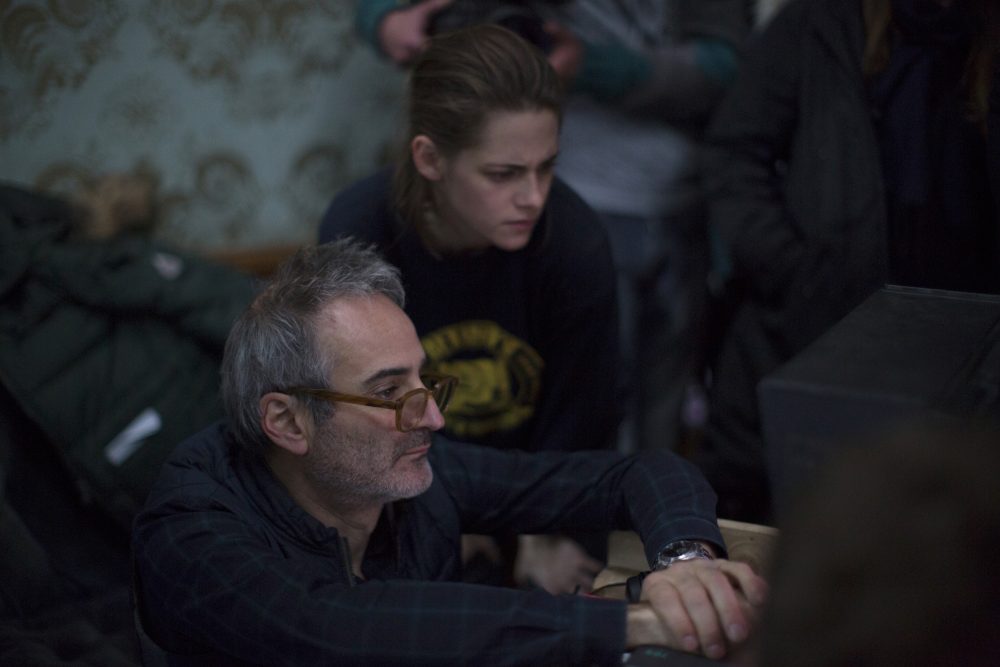
Kristen Stewart and Olivier Assayas on the set of "Personal Shopper." (Courtesy IFC Films)closemore

French auteur Olivier Assayas, whose kinetic style and eclectic works have enchanted cinephiles over the past 30 years, doesn’t particularly relish the term “muse.” “It’s somewhat cheesy,” he notes during an interview to discuss his latest release “Personal Shopper.” The inspiration garnered from his lead actresses, Assayas says, germinates from a more genuine and iterative process.

Past partnerings with Maggie Cheung, his wife from 1998 to 2001, yielded the deconstructive melodrama “Irma Vep” (1996) and the sobering “Clean” (2004). With fellow countrymate and longtime friend Juliette Binoche, he churned out “Summer Hours” (2008) and the top 10 list-maker “Clouds of Sils Maria” (2014).

“Personal Shopper,” which opens in Boston this Friday, marks Assayas’ second collaboration with American actress Kristen Stewart, who starred alongside Binoche in “Sils Maria” and has since become a highly sought-after talent. Stewart made the unlikely transition from the box-office bait, teen-targeted “Twilight” saga, to an art house darling collecting raves for her recent efforts in “Café Society,” “Still Alice” and “Certain Women.” And “Personal Shopper,” which scored Assayas Best Director honors at last year’s Cannes Film Festival, will likely only raise Stewart’s stock.

“I discovered Kristen when doing ‘Clouds,’” Assayas says, “and [during filming] I learned how capable she was and I was fascinated. Once that was done, I was inspired by her and wrote the part [of Maureen Cartwright in ‘Shopper’] with her in mind.”  Continue reading

Logan

8 Mar
Hugh Jackman grunts and grimaces through his (possibly) final outing as the Wolverine

Courtesy of Twentieth Century Fox

Hugh Jackman grunts and grimaces through his (possibly) final outing as the Wolverine

Logan, the third Wolverine spin-off from the X-Men movie empire, which has grown terribly long in the tooth (or is that claw?), does a nice job of righting the ship with this elegiac closing chapter. Part of the reason for the franchise’s demise has been its lack of innovation, but also, and more to the point, the superhero market oversaturation with the Avengers and Justice League entries out there chasing fanboy dollars as well. Besides Professor Charles Xavier (Patrick Stewart) the best thing about the X-Men series has always been the tortured soul of Logan. Brought so palpably to the screen by Hugh Jackman, his badger-like sneer, tang of feral sexuality, and discernible sense of conflicted rage has always raced around inside the character’s metal-reinforced body.

The good news for fans, and even more so those losing faith, is that Xavier and Logan find themselves back together and without a cavalcade of other mutants and two-dimensional bad guys to weigh them down. It essentially allows the two classically trained thespians to dig in deep and get at the core of their characters’ beaten-down and mercurial personas. As far as acting goes, Logan may just be the grand dame of slumming it. It takes place in the not-too-distant future (2029) and finds our two uber-beings on tough times. Mutants and mutations have been culled way down, and we’re fed the factoid that there hasn’t been a mutant born in a decade or so, making Logan and Xavier perhaps the last of their line.  Continue reading

Get Out

24 Feb

Jordan Peele’s “Get Out” is a devilish little bit of social commentary that takes the essence of “Guess Who’s Coming to Diner” and forces it, with vehemence but also panache, into a “Wicker Man”/“Stepford Wives” construct. The result is something clearly borrowed, incredibly fresh and nearly perfect in light of the current political climate. What’s also remarkable is that the horror flick-cum-black comedy marks Peele’s directorial debut, and a surprising one at that – not only because is it so sharp and confident, but also because Mr. Peele is better known as half of the comedy team of Key and Peele on Comedy Central.

The setup’s simple enough. Chris (Daniel Kaluuya), an aspiring photog, agrees reluctantly to meet the parents of his girlfriend, Rose (Allison Williams of “Girls”), whom he’s been dating for five months – just long enough to have to take these things seriously.

“Do they know I’m black?” Chris asks, a question that the lily-white Rose shrugs off, telling him that her dad would have voted for a Obama for a third time if he had the chance. It’s a pointed little barb, but since “Get Out” started filming long before it played at Sundance in January, I’m not certain Peele understood the whole political backdrop he’d be facing. Given the results of the election, the daggers the film throws couldn’t be any more on point. Continue reading

Paterson

30 Jan

There’s a quirky poetic flow to “Paterson” as in nearly every Jim Jarmusch film, seeping outward in languorous yet artful movements, and while “Paterson” is tightly coddled, it’s also one of the director’s more earthy and accessible efforts – something akin to the universality of a Frost poem, possessing the ability to sate on many levels while appealing to a diverse audience. And poetry is the operative word, as the film revolves around an aspiring poet by the name of Paterson (Adam Driver, finally in this film and “Silence” able to step out to the fore) who by day guides a boxy bus around the city of (you guessed it) Paterson, N.J.

The beauty of Driver’s performance is the quiet, soulful humanity imbued in the character. Paterson doesn’t drive his bus with contempt for the menial job or harbor any grand delusions of his higher mission as an artist – he’s not that arrogant douche! Quite the opposite. Poetry, we learn early on, is a passion that fills a hole in Paterson’s life, but he writes and observes quietly; Jarmusch, as the penning poet sits in his bus at the station waiting for the signal to hit the roads, superimposes the scrawlings onscreen with Driver in his purposeful drawl doing the narrative voiceovers. The poems are works by the poet Ron Padgett; the recurring “Love Poem” has a great talky line about matches: “Currently our favorite brand is the Ohio Blue Tip.” (If you’ve ever read Nicholson Baker, this will call to mind the mundane yet plumbing ditherings of “A Box of Matches.”)
Not much really happens in “Paterson,” though there is a slight, surreal crescendo toward the end, but what drives the film beyond Driver’s solid anchoring is Jarmusch’s idiosyncratic eye and the potpourri of personality that inhabits Paterson (the city). That’s especially so at Paterson’s home, where his partner and muse Laura (Golshifteh Farahani, channeling the playfully alluring foreign ingenue that Maria de Medeiros brought so vivaciously to life as Butch’s girlfriend Fabienne in “Pulp Fiction”) undertakes a different art project each day, mostly turning whatever it is she touches (curtains, cupcakes or a random wall in the small ranch home) into a black-and-white tiled mosaic, and the racially integrated bar where a pantheon of Paterson’s famous are hung as photos above the till. There’s an early mention of Rubin “Hurricane” Carter and the Bob Dylan ballad that rings a bit off-tone, but the recursive reference to doctor and poet William Carlos Williams – who practiced medicine near Paterson during the first half of the last century and wrote an anthology titled for and about the town (containing several letters of fellow New Jersey poet Allen Ginsberg) – as Paterson’s idol and inspiration is a smartly baked layer of lyric genius that subtly yields background about the man and the town of the same name. Continue reading

Oscat Not So White

30 Jan

This Year’s Academy Awards May Just Counter ‘Oscars So White’ Controversy

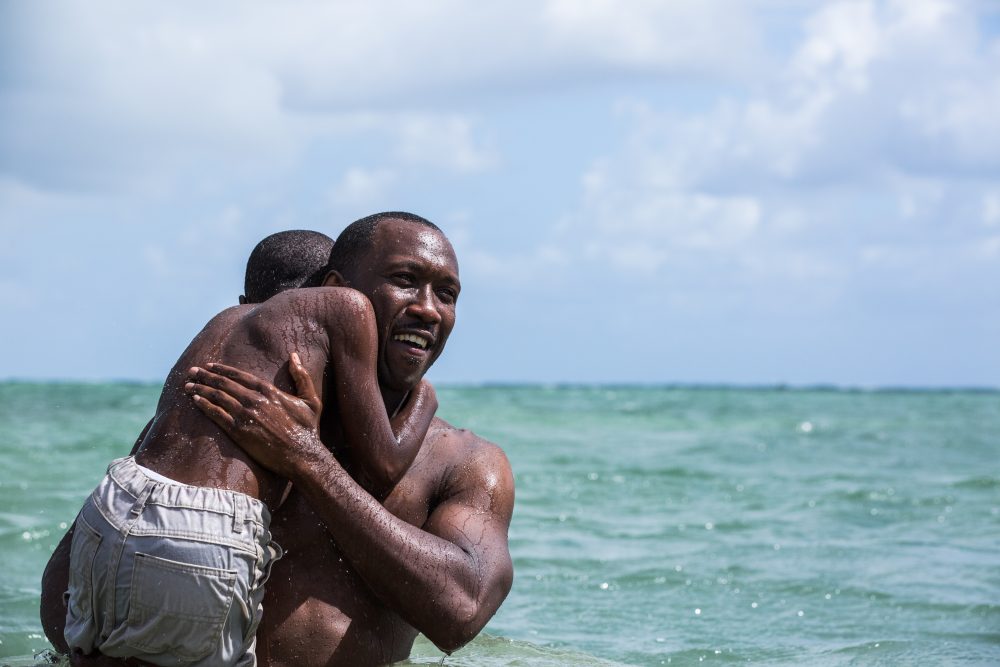
Alex Hibbert and Mahershala Ali in "Moonlight." (Courtesy David Bornfriend/A24)closemore
COMMENTARY

On Tuesday, the Academy of Motion Picture Arts and Sciences will announce their slate of Oscar nominees, a lineup that will certainly be eyed with much scrutiny for its diversity. Last year, the #OscarsSoWhite controversy exploded after people of color were noticeably left off the Academy’s ballot for the second year in a row — a move backward considering 2014’s Best Picture winner, “12 Years A Slave.” Given the films that found success in 2016, both critically and commercially, the list of nominees should successfully change the tide.

The origins of the hash-tagged tumult, which had notables like Spike Lee and Jada Pinkett Smith boycotting the ceremony last year, are two-fold. For starters, the Academy’s makeup is not diverse by any measure — a Los Angeles Times analysis in 2016 found it was 91 percent white and 76 percent male. Secondly, the industry was not producing many quality films made by, or featuring, people of color.

The cast and crew of "Spotlight" accept the Oscar for Best Picture in 2016. (Chris Pizzello/Invision/AP)
The cast and crew of “Spotlight” accept the Oscar for Best Picture in 2016. (Chris Pizzello/Invision/AP)

When the nominations came out last year, Academy President Cheryl Boone Isaacs, who is black, promised immediate action. Following a unanimous vote by the board eight days later, rule changes stipulated that members who had been dormant in the industry for over a decade would be be moved to emeritus status (effectively losing their voting rights) and the recruitment of new members would begin immediately. Though, past winners and nominees retain full membership status and voting rights. The list of 683 invitees contained a notable presence of women and people of color (Rita Wilson, American Repertory Theater stalwart Cherry Jones, Nia Long, Mahershala Ali now in “Moonlight” and “Hidden Figures,” and John Boyega).

The industry too, almost as if on cue, made an initial, responsive roar when Nate Parker’s slave uprising saga, “Birth of a Nation,” garnered a record-setting $17 million distribution deal at the Sundance Film Festival in late January of last year. Expectations for the film were high, but when it finally poured into theaters, the edgy concept of a bloody revolt against injustice, while admirable, didn’t measure up at the box office. “12 Years a Slave” it was not and Parker’s past allegations of rape (he was acquitted) didn’t help either.

Colman Domingo as Hark, Nate Parker as Nat Turner and Chike Okonkwo as Will in "The Birth of a Nation." (Courtesy Fox Searchlight Pictures)
Colman Domingo as Hark, Nate Parker as Nat Turner and Chike Okonkwo as Will in “The Birth of a Nation.” (Courtesy Fox Searchlight Pictures)

In light of “Oscars So White,” “Birth of a Nation” registered something of a disappointment, but the industry, in its own organic way, was quietly on the mend. The later crop of films featuring diverse filmmakers, casts and subjects shone — from “Moonlight,” the saga of a gay black youth, bullied and growing up under the negligent eye of a crack-addicted mother, to “Loving,” the haunting recount of the interracial couple who boldly broke the anti-miscegenation law in segregated Virginia and, more recently “Hidden Figures,” another based on true events, pre-civil rights movement drama about African-American female mathematicians working at NASA during the space race. Overall, 2016 was a year the blockbuster faltered and small films about people with varying backgrounds and experiences, navigating adversity, took center stage.

Continue reading

Live by Night

14 Jan

Affleck Should Have Stuck To Directing For His Latest Boston-Based Film ‘Live By Night’

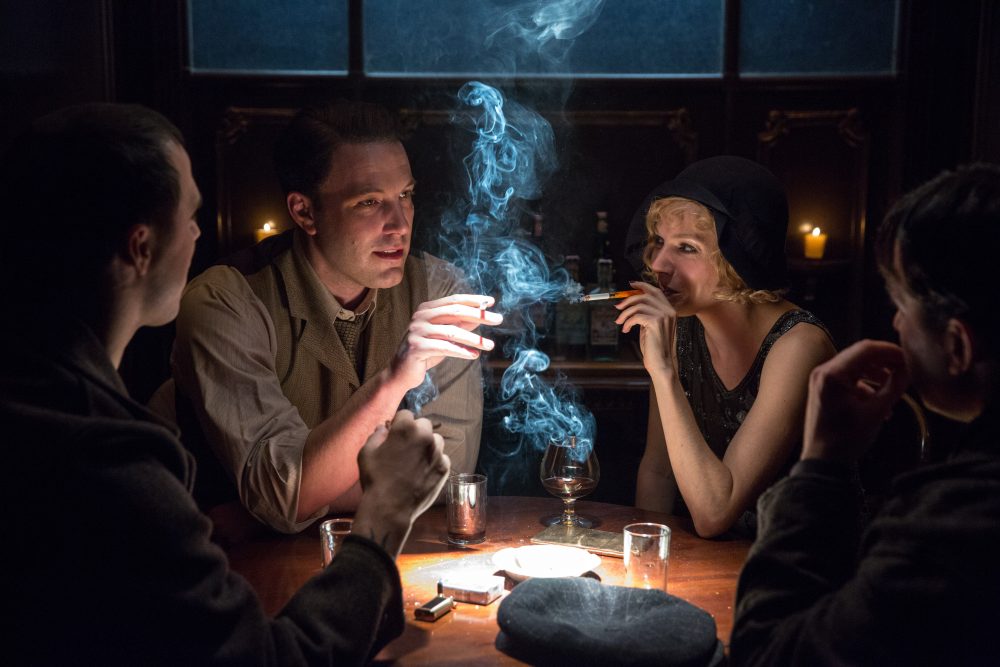
Ben Affleck, as Joe Coughlin, and Sienna Miller, as Emma Gould, in "Live By Night." (Courtesy Warner Bros. Pictures)

Ben Affleck, the good-looking, locally-reared actor, who from time to time has projected a wooden on-screen presence, has turned out to be a reliably decent director. His debut, “Gone Baby Gone” back in 2007, transformed Dennis Lehane’s Boston-seated crime novel into a cinematic pulp noir. That edgy effort had cinephiles anxious for more and Affleck rewarded their patience with another gritty crime drama, “The Town,” in 2010 and then “Argo” in 2012. His latest effort, “Live By Night,” brings another Lehane crime story to the screen.

It begins during the Prohibition Era in Boston, where the Irish and Italians are locked in a blood feud over the bootleg trade, and later transitions to Ybor City, the developing section of Tampa, Florida, where Italian and Latino crime coalitions govern the town and control the flow of molasses — critical for rum.

Brendan Gleeson as Officer Thomas Coughlin in "Live By Night." (Courtesy Warner Bros. Pictures)
Brendan Gleeson as Officer Thomas Coughlin in “Live By Night.” (Courtesy Warner Bros. Pictures) Continue reading