1917

10 Jan

‘1917’: They’ve only a short time to save lives, and we go with them through the hell of war

tmp-19117


When it comes to war movies, there’s plenty about World War II but far, far less when it comes to chronicling its bloody predecessor. What exists is pretty rich and powerful, including classics such as “All Quiet on the Western Front” (1930), “Gallipoli” (1981, and a classic!) and “Paths of Glory” (1957), which all captured the barbaric horror of trench warfare – inhumane hellholes of mass slaughter where heroics were measured by the last man standing. A couple of years ago, Peter Jackson fittingly embraced those lost heroes with the cinematic ode “They Shall Not Grow Old,” the “Lord of the Rings” director’s first documentary; and looking to add to that list, director Sam Mendes (“American Beauty” and “Skyfall”) drops a taut, face-paced shot of adrenaline on us in “1917,” which might not be long on plot, but pins you to the edge effectively as the clock ticks and ordinance explodes overhead.

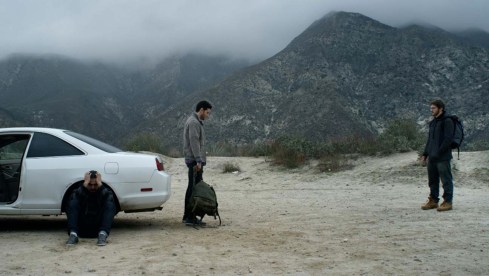
Much will be made about the long-shot cinematography by Roger Deakins (“Fargo” and an Oscar winner for “Blade Runner 2049”). It’s absolutely brilliant, and any of those pooh-poohing it as a gimmick likely don’t understand the technical complexity involved. Deakins’ artistry gets put on display from frame one as we meet up with young lance corporals Schofield (George MacKay) and Blake (Dean-Charles Chapman) lazing wearily in a field. Brought bleary-eyed before their C.O., they’re ordered to deliver a message to another allied outpost several clicks away: The grim circumstance of the situation is that communications are down, and if they fail to make the drop before the next sunrise, some 1,600 British soldiers will march into a trap and be slaughtered. Blake’s brother, as we’re informed, is among the unaware – the sense of urgency’s not just paramount, its personal.

From that brief, officious interlude, we’re off, following the lads down into the trenches, through the bomb burst, across the wire and into German-controlled French countryside. Along the way, mangled corpses hang from barbed wire entanglements and bob in the mud pits and streams they must cross. Then there’s the close encounters with the enemy, including the pilot of a downed biplane, when a brief moment of humanity turns deadly. The whole harrowing ordeal unfurls in real time, with the two constantly flushed, harried and under fire. In its pressure-cooked pace, “1917” invokes the same fraught “what could possibly go wrong next?” anxiousness that “Uncut Gems” rattled us with just weeks ago.

What’s most impressive about Mendes’ salute to valor is the seamless synergy of choreography, action and sound (both ambient and Thomas Newman’s soul-shaking score). It’s an immersive effect that embeds you with the soldiers as if you were there, following as they charge through the trenches and duck enemy fire. That POV, while wholly visceral and unique, also makes “1917” feel a bit like a video game, in which depth of character becomes secondary to the next eye-popping visual. Chapman and MacKay are plenty fine, mind you; they’re just not given the theatrical real estate to expand. It’s all action, all the time. Pauses along the frenetic path do give us a chance to breathe when the pair check in with higher-ups (played by Colin Firth, Benedict Cumberbatch and Mark Strong), but then it’s onto the next bullet-blazing gauntlet.

Murder Still a Mystery, One Year Later

3 Jan


District Attorney Marian Ryan steps aside at a Thursday press conference in Woburn so Elizabeth Dobbins can speak on the one-year anniversary of the death of her brother, Paul Wilson. (Photo: Tom Meek)

On the one-year anniversary of the killing of Paul Wilson, 60, in Danehy Park, law enforcement officials gathered at the Middlesex District Attorney’s Office in Woburn on Thursday to assure the public they continue to investigate – and to ask again for the public’s help in finding the killer.

Joining them was Wilson’s sister, Elizabeth Dobbins, who reflected on Wilson as big man with a big heart, and a man who valued family and friends. “He could connect with anyone and everyone,” she said, calling his death “incomprehensible and senseless.”

While there was little new to be revealed by District Attorney Marian Ryan and Cambridge police Deputy Superintendent Leonard DiPietro, it was made clear that a bat found at the scene of the crime was not used to kill Wilson.

“There is nothing that connects this item with the crime,” officials said. “A search of the park following the attack resulted in the collection of several samples of biological matter. Forensic testing has been conducted indicating that some of the blood found at the scene was animal blood; testing on further biological evidence remains ongoing.”

An image of Paul Wilson released Thursday by law enforcement officials.

Videos given to police by people in the area have not provided any answers, and Ryan said hundreds of park neighbors and visitors have been interviewed. “By revisiting this anniversary today, we are reminding the community of this crime and reinforcing the need for cooperation and information from the general public,” DiPietro added.

It was also noted that since the attack on Wilson, “investigators have also been made aware of some similar incidents that have occurred in Cambridge and other communities” but are not connected to his death, they said. “He was also found with his belongings on him, including an Apple Watch – suggesting robbery was not the motive.”

On Jan. 2, 2019, Wilson returned from work at IBM to the Porter Square T station and rode a Blue Bike home, parking it by his house on Sherman Street before walking through the park,  investigators said. Wilson was found by a passer-by shortly before 6:48 p.m. on an asphalt path near the Danehy Park parking lot and dumpsters, near New Street. He was taken to Beth Israel Deaconess Hospital and pronounced dead from blunt force trauma at around 10:18 p.m. 

“There’s no reason to believe the crime didn’t take place where the body was found [and] there’s more reason to believe it did,” Cambridge Police Commissioner Branville G. Bard Jr. said at a public meeting a year ago. “Mr. Wilson was found right under working lights in a well-lit area. That wasn’t the problem.”

The discussion of motive was similar to what was discussed a year ago.  Wilson was “brutally murdered,” Bard said, and Ryan said at the time that there was no reason to believe the intention of the attack, in which “most of the blows were to the top of the head,” was a robbery. 

The death continues to be investigated by the Middlesex District Attorney’s Office, state police assigned there and by Cambridge police. “We have made some progress but have not ye identified a suspect,” Ryan said Thursday, renewing a call for anyone with information about the incident to call (781) 897-6600.

People with information are also invited to call Cambridge Police at (617) 349-3300. Anonymous reports can be left at (617) 349-3359; sent by text message to 847411 (begin your text with TIP650, then type your message); or by email by visiting CambridgePolice.org/Tips.

American Dharma

2 Jan

‘American Dharma’: Bannon in a bunker, explaining what makes him tick, tick, tick …

American Dharma' Review: What Makes Steve Bannon Tick? - The New York Times

Early on, as Morris interviews the commanding agitator in an abandoned hanger – ostensibly emulating Peck’s command center in that Henry King classic – Bannon in his gushing appreciation of “Fog of War” gives Morris an insider pat on the back about filmmaking. It’s an eye-popping pause, but true enough: Bannon has 10 directorial credits on IMDB, with such right-wing propaganda docs as “Torchbearer” (2016) and “Battle for America” (2010), most having abysmally low ratings (in the 2 or 3 range, with one or two breaking the middling 5 mark). During the session, Bannon recounts his entry at Breitbart, the takedown of Anthony Weiner on Twitter and joining Trump with shrewd strategies to shift the tide in the 2016 presidential campaign. For instance: to counter the Billy Bush tape, he attempted to sit Bill Clinton’s four sexual assault accusers at the front of a presidential debate the former president was to be in attendance at. The mention of Russian trolls is scant, and Hillary Rodham Clinton in her own words (via a post-election interview clip) attributes her loss almost exactly to what Bannon does: the Comey investigation and emails to Weiner.

Throughout the film, which boasts a smart score and does a brilliant job of interweaving film and news clips with public opinion overlaid via the Twittersphere, Morris, who clearly has vastly different political leanings than Bannon, affords his subject a long leash – perhaps too long – but not one that can’t be tugged on by the factual record. It’s nearly comical and hard to fathom when Bannon balks incredulously at Morris’ announcement that he voted for Hillary because he feared Trump. Later, when Morris links Bannon’s departure from the White House to the deadly Unite the Right march in Charlottesville, Virginia, Bannon does a soft shoe and reverts to his fearmongering prognostications of greater divisions to come (check out his latest venture, warroom.org.) 

If there’s one thing to drink in about Bannon, it’s his cocksure confidence and charisma (on display more here than when at Trump’s side). He’s a clear natural leader with patriotic zeal, but the question then becomes: of whose country, and with what agenda? Morris and subject go at that, and watching the film, it’s chilling to see the spell Bannon and the alt-right can cast. Educated progressives clearly discounted that too much in the past; Morris’ film serves as stark (if accidental) reminder of that, and a timely one.

In Fabric

2 Jan

‘In Fabric’: That’s a killer dress you’ve got on, but the film around it unravels as we watch


tmp-in fab

“In Fabric,” the latest arthouse horror offering from British writer-director Peter Strickland (“The Duke of Burgundy,” 2014, and “Berberian Sound Studio,” 2012), hems hard and long on its eerie, immersive style, but remains elusive when it comes to the what and why. Centering on a bloodthirsty “artery red” dress with supernatural powers and the department store staff/cult that sends it out into the world, “In Fabric” has the vibe of “Suspiria” sans the foreboding grip – because there we have an inkling of what the cult is up to.

Like the recent “Waves,” “In Fabric” is told in two parts. In the first segment we meet Sheila (Marianne Jean-Baptiste), a bank teller and lonely single mother in her 50s looking to get her groove back after a divorce. A trip to a high-end boutique department store (think Lord & Taylor or Saks with a perfume wisp of the occult) nets Sheila the “risqué” red dress that she’s steered to by the freaky S&M head sales associate (Fatma Mohamed). At night, strange things go on: the dress floats menacingly about the house; Sheila, ever wandering herself, peers thorough a crack in a door to watch her son (Jaygann Ayeh) perform cunnilingus on his girlfriend (Gwendoline Christie); and down at the department store, the coven gather round a redheaded mannequin and writhe in orgasmic ritual. 

There’s a lot of moody kink and a fantastic retro ’70s horror score by the techno group Cavern of Anti-Matter that helps bind the giallo homage together. Through paper clippings Sheila learns that the former wearer of the dress (the model in the catalog) died bizarrely (death by zebra, anyone?). Perhaps the scariest part of “In Fabric,” however, isn’t the killer dress but the higher-ups, white men who question their underlings’ intent and commitment constantly. In one scene, Sheila is called in by her superiors (comedians Steve Oram and Julian Barratt) who are concerned with the sincerity of her handshake and the amount of time she spends in the bathroom. It’s a shakedown of sorts in which the knife-twisting is all done with the “fuck you” politeness  demanded by British etiquette. In the latter chapter, a nerdy washing-machine repairman named Reg who dons the dress (Leo Bill) is humiliated by his ogre of a boss and pretty much everyone else, including Sheila’s managers, who pick him apart when he applies for a loan.

Themes of ritualistic consumerism and crowd mentality are embroidered in, but so ostentatiously and without satirical substance that they feel like cheap window dressing, especially when measured against George Romero’s great “Dawn of the Dead” (1978), which proves a much more devious and effective take on constant consumption. Even as plot developments trend toward the silly, Strickland remains focused on his spellbinding effect – and not enough can be said about the vulnerable, no-nonsense approach of Jean-Baptiste (of Mike Leigh’s “Secret and Lies”). When she’s on screen, she keeps the outré tale from unraveling. “In Fabric” is a unique experience best taken in with logic left at the door.

The Top 25 Films of the Decade

29 Dec

tmp-underskin

2010-2019 list in alphabetical order with links to reviews/articles.

  1. 12 Years a Slave
  2. The Act of Killing
  3. Birdman
  4. Blackkklansman
  5. Blue is the Warmest Color
  6. Burning
  7. Citizenfour
  8. Dunkirk
  9. The Diary of a Teenage Girl
  10. The Florida Project
  11. Get Out
  12. The Handmaiden
  13. Isle of Dogs
  14. Mad Max: Fury Road
  15. Moonlight
  16. O. J.: Made in America
  17. Once Upon a Time in Hollywood
  18. Parasite
  19. Shoplifters
  20. Spring Breakers
  21. The Social Network
  22. The Tree of Life
  23. Under the Skin
  24. The Wolf of Wall Street
  25. Zero Dark Thirty

The Best Films of 2019

29 Dec
tmp-irish

THE IRISHMAN (2019) Ray Ramano (Bill Bufalino ) Al Pacino (Jimmy Hoffa) and Robert De Niro (Frank Sheeran)

  1. Once Upon a Time in Hollywood
  2. Parasite
  3. Portrait of a Lady on Fire
  4. Aquarela
  5. Apollo 11
  6. The Irishman
  7. Long Day’s Journey into Night
  8. Aga
  9. Little Women
  10. The Farewell

Honorable mentions: Toy Story 4, The Nightingale, Ford v Ferrari, Bombshell, Us, The Last Black Man in San Francisco, Uncut Gems, Midnight Traveler, The Mustang, Pain and Glory

Also here are the Cambridge Day’s Arts Staffs’ 2019 Top 10.

Little Women

24 Dec

‘Little Women’: The Alcott classic updated, richer in themes of feminism and family


tmp-lw2

The updated version of Louisa May Alcott’s autobiographical classic may prompt many to question the need, as there’s been multiple versions (TV included) of “Little Women” across the decades. But in execution, Greta Gerwig’s reworking makes good sense on many levels. First off, there’s a subtle layering in of female gaze and modern take one the era’s chauvinism. Then there’s answering the questions: Can Gerwig really make films, or was her autobiographical debut, “Lady Bird” (2017), a one-off? (A resounding yes to the first, no to the second.) And finally, this is one of the better-cast takes on Alcott’s tale. The 1994 version directed by Gillian Armstrong also boasted an amazing cast, led by Winona Ryder; the George Cukor 1933 and Mervyn LeRoy 1949 versions starring Katherine Hepburn and June Allyson respectively as Alcott’s alter ego, Jo March, hung it all on their leads. And might I add, this updating was shot here, with scenes in Alcott’s real Concord abode (Orchard House); the others were mostly local sites posing as Concord, shot on sound stages or north of the border, in Canada.

When we first catch up with Jo (Saoirse Ronan, so affecting as Gerwig’s alter ego in “Lady Bird”) she’s barely eking out a living in New York selling women-themed serials to a publisher (Tracy Letts, perfectly intimidating here, as he is in “Ford v Ferrari”) who demands endings that place the female character in a happy marriage and/or domestic servitude. We then wind back to her days in Concord where her father (Bob Odenkirk, “Better Call Saul”), a pastor and an idealist, and mother (Laura Dern, having a banner year with a warm turn here to pair with her edgy go in “Marriage Story”) have turned the house into something of an artists’ colony for their daughters’ bohemian pursuits; Jo, the writer, Amy (Florence Pugh, from “Midsommar” who crushes it here walking a fine line between vanity and vulnerability), the artist, Beth (Eliza Scanlen), a pianist and the oldest, Meg (Emma Watson) fancying the stage. Pretty rad for the time, while across the way are the well-to-do Laurences (Chris Cooper as the staunch patriarch) whose son Theodore (a passable Timothée Chalamet, who feels a long way off from his Oscar nominated “Call Me By Your Name” turn), referred to as “Laurie,” creates something of a love triangle with Jo and Amy. When younger, he and Jo were close, and the prospect of a rekindling is ever present despite Amy lurking about when young Laurence comes by to visit.

If not for financial ills and affairs of the heart, let alone the tucking under of women – offset by Jo and the March ladies’ irrepressible spirit – “Little Women” might come off simply as first-world problems. Gerwig, who scripted as well, adds a nuanced, feminist spin that renders a new essence while embracing Alcott’s work and classic context. In her treatment, Gerwig also expands the autobiographical aspect of the material – namely about money and the unconventional pursuits of her parents and the family. Alcott’s father, Amos, was an abolitionist, radical education reformer, founder of the ill-fated Fruitlands colony in Harvard, Massachusetts, and part of the Transcendentalist movement. It was Louisa May and her tales that helped hold onto and pay for the grand Orchard House. Beyond the fine direction and performances, folks will revel in the periodization of local spots (the Crane Estate, the Colonial Theatre, Arnold Arboretum and even the Fruitlands Museum) and seeing parts of Boston and Lawrence stand in for 19th century New York.

Uncut Gems

24 Dec

‘Uncut Gems’: Scheming knows no bounds, but walls, and Kevin Garnett, are closing in

Adam Sandler is amazing in 'Uncut Gems' with Kevin Garnett

Much will be made about the choice to cast Sandler in a dramatic lead – he’s known mostly for slack, sophomoric fare such as “Happy Gilmore” (1996) and “The Waterboy” (1998) – but folks can all take a deep breath; the New Hampshire native is more than fine, and feels minted for the part of an overly intense New York Jew with big ambitions, self-destructive addictions and a penchant for bad life choices.

The fun part here for Boston peeps is that old friend Kevin Garnett pops up in the cast, playing himself (KG!). If you’re thinking it’s his latter Brooklyn Nets years, think again – he’s with the Green, as the year (we’re told during a colonoscopy) is 2012, and the Cs are playing the 76ers in the Eastern Conference Semis (the LeBron-led Miami Heat would win the title that year) with KG winding his way through New York between road games with Philly. What’s KG got to do with a two-bit hustler? He’s buds with a streetwise operator named Demany (LaKeith Stanfield, so good in “Sorry to Bother You”) who stores his Rolex stash at Howard’s cramped showroom in New York’s jewelry district. Meanwhile Howard gets a covert shipment (in a fish belly) of Ethiopian opals, all glommed together in a two-fist mass. Garnett catches a glimmer of the stone, feels a mystical emanation and decides he wants to hold onto it for good luck during the next game. His collateral? The 2008 NBA championship ring he won with the Cs, which Howard pawns immediately, putting the whole enchilada on Garnett and the Celtics to take down Philly, playing home court.

Howard’s an impulsive sort. Did I mention he’s big into a loan shark (Eric Bogosian, excellent) who has close family ties with Howard (they do Passover together, which is awkward, to say the least)? Then there’s Howard’s discerning wife (Idina Menzel), hot and onto it all, and the kept woman he puts up in a posh pad (Julia Fox, who should ride a breakthrough wave after this) and the two sons he hardly ever sees as he bounces from one dicey situation to the next, buying just enough time to make the next poor choice, ever adding to a mounting shitstorm of lies and imminent retribution. Continue reading

Bombshell

19 Dec

‘Bombshell’: Trio has news for Fox and Ailes, coming in form that seems fair and balanced

Bombshell': Everything We Know About the Fox News–Inspired Movie | Glamour

The high-wire act that “Bombshell” performs is its ability to humanize Ailes without letting him off the hook (vs., let’s say, “Vice,” which hung Dick Cheney up as a nefarious puppet master from start to end). Lithgow should be given a medal for wallowing in such muck. He shares a scene with Robbie’s Kayla (a composite character) that should make anyone with a shred of humanity very uncomfortable, if not outraged, as she pushes for and gets a one-on-one meeting with Ailes (through his secret backdoor entrance to his office suite) in which she’s asked to stand and show him her form (“news is a visual medium”), hiking her skirt higher and higher. In the end you feel that there’s so much more tawdriness, let alone criminality, that doesn’t get splashed across the screen. Much of what Kelly does in the film is strategize with Ailes on Trump, and once Ailes is under investigation by the Murdochs (Malcolm McDowell as Rupert) wrestles with how to roll with the swirling storm against the man who made her. Carlson is more of a clear-cut matter, the fired newscaster portrayed by Kidman not self-righteously or as an outright victim, but as conflicted and seeking respect in the wake of long-endured indignities. It’s a nuanced performance that many will overlook, whereas Theron’s Kelly, makes tart asides to the audience (think “The Big Short,” which is no coincidence; see below) that gives us the inside scoop on how things operate at Fox, but not on what’s in her head. Theron’s emulation of Kelly, her voice and mannerisms, is off-the-charts uncanny

Much will likely be made about what’s not on the screen in “Bombshell” though the script by Charles Randolph, who penned “The Big Short” (2015), gets to delve into the lurid now that Ailes has conveniently departed us. Like “The Irishman” and “Richard Jewell,” for that matter, “Bombshell” makes for a compelling fact-based narrative, but is it a bona fide testimonial or a skewed version of the truth? In terms of balance, Kelly isn’t let off the hook for silence in the face of accusations against her mentor, or poor judgment in calling out the notion of a “black Santa” on air and sticking with it. It makes her human, flawed and endearing. These are not heroic actions. Carlson’s the real hero, putting it on the line and against all odds. 

The film is directed by Jay Roach, who’s known mostly for his light “Meet the Fockers” romps. It’s a bold step out for Roach, much like Todd Phillips of “The Hangover” films did this year with “Joker.” Sometimes stories of such sordid and heinous happenings require a droll, dark comedic hand to pack it all into a digestible pill.

Star Wars: the Rise of Skywalker

19 Dec

‘Star Wars: The Rise of Skywalker’: Full galaxy of goings-on packed in a 42-year escapism pod


tmp-rey2

More than 40 years in the making, the “Star Wars” trilogy of trilogies finds its way to the end – kind of. Not that we (those who saw the original “Star Wars” in theaters in the days before Fandango or the Internet) ever thought it would really be made into the extended triple trilogy envisioned by George Lucas. But with Disney managing the final three of “The Force Awakens” (2015), “The Last Jedi” (2017) and now “The Rise of Skywalker,” there’s been a revival of excitement that went missing when the inert, Lucas-helmed prequel series of the late ’90s and early 2000s neutered the frenetic fandom of the original “Star Wars” (1977) and the enterprise’s crowning jewel, “The Empire Strikes Back” (1980). Continue reading