It was a strange year in cinema, a year where blockbuster success at the box office was rare (“Inside Out 2” was the top grab, followed by the overdone “Deadpool & Wolverine” superfrenemy romp) and outshone by adult-themed animation, non-English-language and documentary offerings. Also strong were films featuring women’s voices and indie creep-outs – a combination best embodied and exemplified by TJ Mollner’s “Strange Darling,” Anna Kendrick making her directorial debut with “Woman of the Hour” and the gonzo body-horror spectacle “The Substance.” None of which made mt top 10, but were squarely in the hunt.
A sardonically black political comedy that’s right out of left field, powered by witty takes on hot topics (Andrew Tate, Putin and Pornhub, to name a few) and a killer performance by Ilinca Manolache, without whom the movie could not be. Manolache plays Angela, a feisty Romanian woman looking to make it in the gig economy as a filmmaker and TikTok sensation. Her main hustle is as a production assistant for a company that makes safety videos, kind of – on many shoots, Angela coaches accident victims, often in wheelchairs, to talk about the safety measures they should have taken to have avoided injury despite the clear negligence of the employer to provide a safe workplace. They’re more CYAs than PSAs, and that’s the degree of biting humor imbued by writer-director Radu Jude (“Bad Luck Banging or Loony Porn”)
2. “Flow”
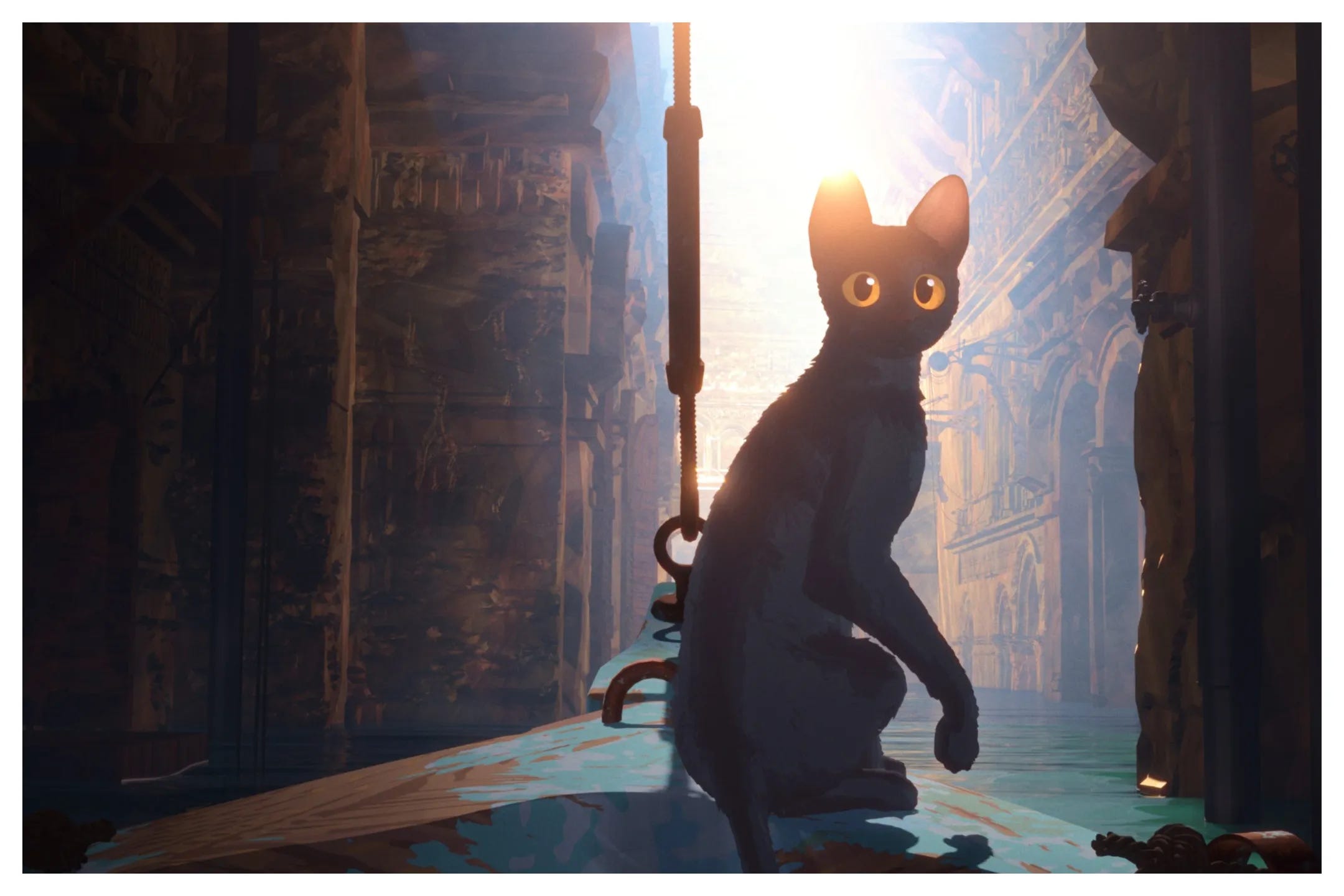
The official Oscar nominee from Latavia, is a mesmerizing, dialogue-free animated adventure about a cat and all the other birds, dogs and capybara that out feline encounters. Themes of climate change—flash floods and tsunamis are the reason the cat and fellow animals find themselves adrift on a sailboat—and a peaceful world sans the presence of man and mankind’s destructive ways pervade Gints Zilbalodis’s gorgeously stylized of an Eden like end to the world. Visually “Flow” has all the beauty and poetry of a Hayao Miyazaki masterpiece and the way it navigates mature matters makes it multi-tiered and applicable for all members of the family regardless of age.
Not a claymation romp for the whole family – not even close. No, this very dark and very adult animated tale has twins (voiced by “Succession” and “Power of the Dog” stars Sarah Snook and Kodi Smit-McPhee) separated after the death of their father and placed in foster homes on opposite coasts of Australia, as well as edgy, plot-driving incursions into swinging, fat feeding, pyromania and religious zealotry. Wickedly funny yet tenderly bittersweet, “Memoir of a Snail” has the dark, loving embrace of Tim Burton done with the edgy verve of Trey Parker and Matt Stone of “South Park.”
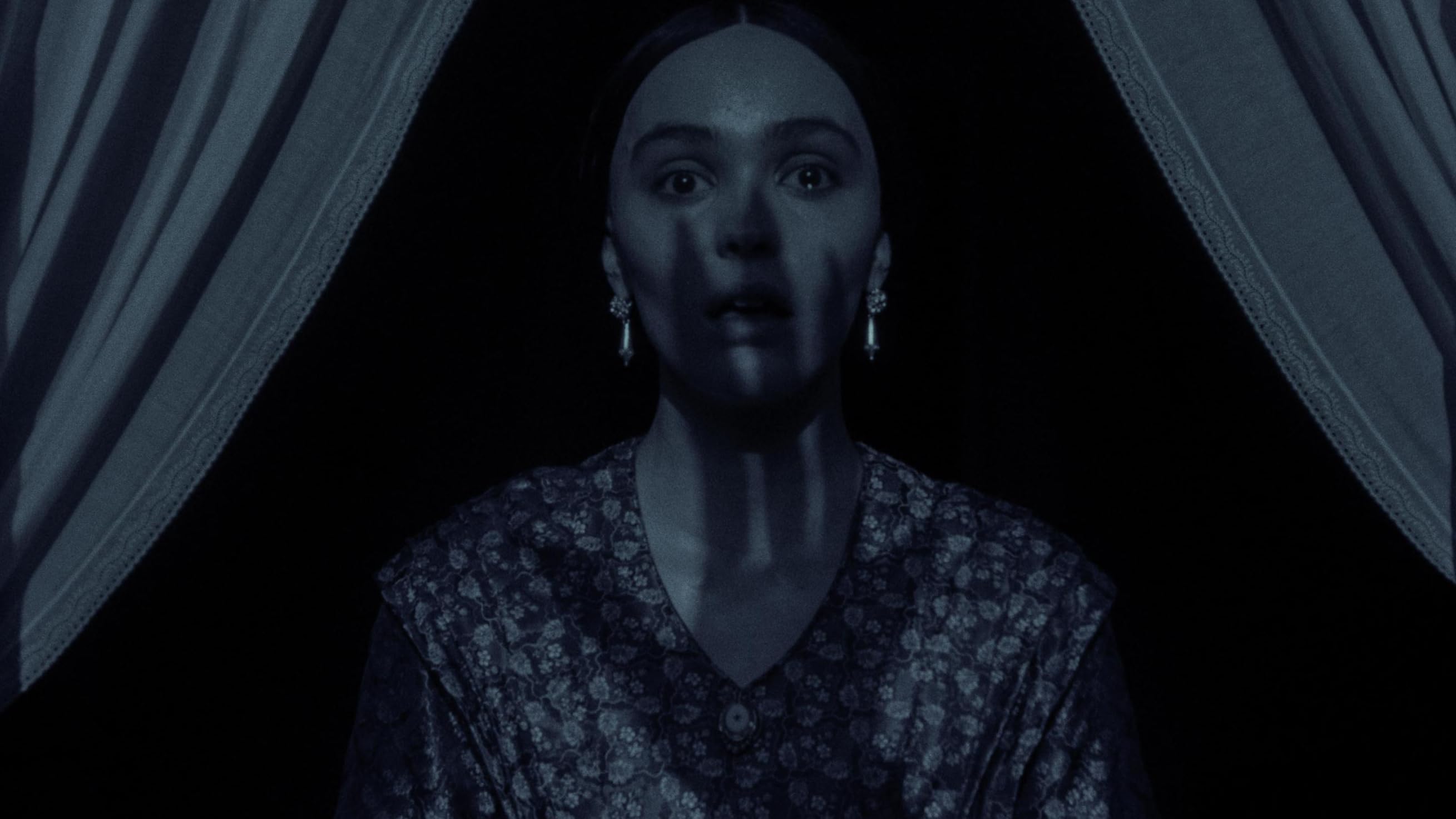
Robert Eggers’ remake of F.W. Murnau’s indelible 1922 classic is more akin in plot and scope to Francis Ford Coppola’s 1992 film “Bram Stoker’s Dracula” than Murnau’s inaugural cinematic adaptation, which was inspired by Stoker’s classic 1897 vampire tale. What’s the difference between Dracula and Nosferatu? Drac’s more dashing and suave, whereas the nosferatu named Count Orlok is a bald, withered being, grotesque by most human norms of comeliness and hygiene. Murnau, a master of practical effects, cranked up the mystical mind control aspects and educed a once-in-a-century performance from Orlok portrayer Max Schreck. Here, as played by Bill Skarsgård, whose brother Alexander worked with Eggers on “The Northman” (2022), Orlok is a shadowy incarnation that never comes into the light the way Schreck or even Klaus Kinski did in Werner Herzog’s 1979 take. Despite the title “Nosferatu the Vampyre” on the Herzog version, Kinski’s count is listed as “Dracula” and was something of a blend of the Bela Lugosi and Schreck incarnations. Eggers, who has made his name with eerie ambient immersions into the outré – “The Witch” (2015) and “The Lighthouse” (2019) – does more of the same here with strong black-and-white visuals delivered by director of photography Jarin Blaschke, who’s worked with Eggers on all his films, and the sonorous bolstering of Orlok’s gravelly intonations. The object of the carnivorous count’s desire is Ellen Hutter (Lily-Rose Depp), a young German woman with whom he forges a psychic connection despite residing far away in Transylvania (a picture can do that). To meet IRL, Orlok summons Ellen’s real-estate lackey husband, Thomas (Nicholas Hoult, now on-screen in “Juror #2”), to his castle to receive a deed to the flat across the way from their apartment in Wisborg. The count drains half the hemoglobin in Thomas’ body – nothing like weakening your rival in love before moving in. Once ashore in Wisborg (the scenes of Orlok dining on the crew while at sea are the most grim and gruesome), Orlok unleashes a plague and takes over the souls of a few townsfolk to employ as minions in pursuit of Ellen. In his adaptation, Eggers pays sincere homage to Murnau and Herzog’s versions. The result feels new in look and posture, but it doesn’t innovate much in the vampiric pantheon. Depp turns in the film’s most palpable performance, and for a Christmas treat, Eggers regular Willem Dafoe drops in as a batty academic and occult expert intent on sending Orlok back to the beyond for good.
‘Babygirl’ (2024)
Keeping with the psychosexual power games, Nicole Kidman notches her second Christmas film that features her bare derrière. That other movie, Stanley Kubrick’s 1999 swan song, “Eyes Wide Shut,” has grown on me over the years, especially the theme of small indulgences having larger, unintended ripples. Here Kidman plays Romy, the very in-charge chief executive of an e-commerce company named Tensile Automation – basically Amazon on crack. Romy lives in a palatial Manhattan condo with her husband Jacob (Antonio Banderas), a noted New York theater director, and two precocious teen daughters (Esther McGregor and Vaughan Reilly), but something’s clearly amiss. After sex, Romy runs off to another room to watch incest porn; then there’s the new intern Samuel (Harris Dickinson) who seems to know how to push every one of Romy’s buttons and regularly challenges her authority and proclamations in public forums – something few if any in the C-suite of Tensile Automation would dare to consider. Samuel chooses Romy as his mentor, and in their one-on-ones, keeps on pushing. Outside the office, the relationship turns physical with Samuel subjecting Romy to the kind of erotic B&D shenanigans that made “9½ Weeks” (1986) a kinky cultural staple for decades. Like Todd Field did with “Tár” (2022), writer-director Halina Reijn (“Bodies Bodies Bodies”) does a deft job of flipping the gender power paradigm. Kidman is superb as she riffles through the masks her character wears – nurturing mother, caring wife, nonapologetic CEO, lonely, unfulfilled soul and object of sexual subservience – often on a dime. Dickinson’s Samuel, by contrast, feels underwritten and hollow, which is a letdown given the strong performances he delivered in “Beach Rats” (2017) and “Triangle of Sadness” (2022). We never get the why of Samuel doing what he does, and when he starts threatening to upend Romy at the office or her coddled home life (he shows up uninvited for one of the girls’ birthday parties), he takes on the role of cruel manipulator as well as wormy opportunist, one we find ourselves rooting for a billionaire exec to take down. Also notable in the web of desire and deceit is Sophie Wilde (“Talk to Me”) as Romy’s protégée, who ends up dating Samuel as the affair becomes combative.
‘The Fire Inside’ (2024)
Cambridge-born filmmaker Rachel Morrison, the first woman cinematographer to receive an Oscar nod (“Mudbound”) in the category, makes her directorial debut with this biopic about Claressa “T-Rex” Shields, the first U.S. woman to win gold in Olympic boxing. The focus of Morrison’s film (working from a script by “Moonlight” director Barry Jenkins), is not her current pinnacle of pow, however, as she is still stalking opponents in the ring and undefeated as a pro, but Shields’ challenging early years in Flint, Michigan, where she was raised by a distracted single mother (the father was in jail) and lacking resources to get by. As Shields, Ryan Destiny brings a fierce pugnaciousness to the part. It’s an impressive, all-in performance not without nuance and a vein of vulnerability. The heat – and heart – of the film lies in Shields’ relationship with trainer Jason Crutchfield (Brian Tyree Henry), who backfills as a father figure. Bigger matters around Shields’ rise to prominence are a persisting gross gender disparity when it comes to compensation, respect and beyond, with a U.S. Olympic Committee publicist on Shields constantly to be more “ladylike.” Well-crafted and shot (by music video pro Rina Yang, not Morrison), with deep, palpable performances from Destiny and Henry, “The Fire Inside” strangely plays out somewhat flat-footed. Part of that’s the overuse of genre clichés (something you would not expect from the normally reliable Jenkins, but then again, consider his new “Mufasa”) and the knowledge that Shields would go on to become the Tom Brady of her sport. I’m not sure what’s next on Morrison’s plate, but “The Fire Inside” displays enough poise and promise to to get me off my stool for another round.
‘Homestead’ (2024)
Angel Studios, the family-themed, faith-based production company behind last year’s box office wonder “Sound of Freedom” (made for a cool 14 mill, it grossed near 200) saddles up with this post-terrorist-attack survival drama in which food, water and other life-sustaining needs become scarce as infrastructure and the law crumbles. The what and the why is a dirty bomb delivered by sailboat, detonated just off the L.A. coastline. Communications go silent, and the folks living on a sprawling, vineyard-esque estate of the title go into lockdown mode. The patriarch of the gorgeous grounds, billionaire Ian Ross (played by the steely eyed Neal McDonough) hires his own security detail headed by ex-Green Beret Jeff Eriksson (Bailey Chase) to keep out the riffraff (people seeking food and shelter). Based on the “Black Autumn” series by Jeff Kirkham and Jason Ross and directed patly by Ben Smallbone, “Homestead” wafts wisps of provocations – the haves versus the have-nots, what to eat when the corner market is bare and commitment to community, i.e., helping your fellow human in the wake of a societal collapse, but none really excite. Part of that is because Ross and his crew are so inherently entitled that you half want to see the hordes at the gate come for them Marie Antoinette style, and Chase’s operative is cold, aloof and always sizes up a situation with a finger on the trigger; neither character is particularly empathetic. The film does work its way around in the end, but feels rote. Alex Garland’s “Civil War,” released this year, covered similar territory with more bite. You do have to marvel at the spread that Ross and his family are holed up in, and much of the film feels like a grand mansion tour (despite the California setting, it’s in Bountiful, Utah, not too far from Angel Studios HQ).
It takes a little while to buy into Timothée Chalamet as quirky troubadour and American icon Bob Dylan, but once he gets you on the hook, it’s clear that the uncannily deep performance is certain to be one of the year’s best. I was never all-in with all the Chalamet love after he burst onto the screen in Luca Guadagnino’s “Call Me by Your Name” (2017) and received an Oscar nod for his part as young lover to an older partner. And yes, he shone as Hal in “The King” (2019), but in the “Dune” films he’s felt underweight as Paul Atreides, the man-boy turned messiah. With his turn as Bob, I’m done dithering – and did I mention he does all the singing of Dylan’s early ’60s catalog, nasal twang and all? It’s more than just a little impressive.
Departing from your typical cradle-to-grave biopic arc, writer-director James Mangold (“Heavy,” “Ford v Ferrari”) and co-writer Jay Cocks, working from Elijah Wald’s 2015 book “Dylan Goes Electric!” home in on Dylan’s ascent to notoriety and his transition from folk to electric rock, which caused a sizable stir at the 1965 Newport Folk Festival. Dylan reportedly had conversations with Mangold and offered some additional tidbits that got worked into the film. We begin with the young Bob visiting his idol Woodie Guthrie (Scoot McNairy, also onscreen as Amy Adams’ passive husband in “Nightbitch”) at a hospital where he’s battling Huntington’s disease and can’t talk. By his side is “If I had a Hammer” singer and Newport Fest organizer Pete Seeger (a nearly unrecognizable Edward Norton, knocking it out of the park as the solemn, mild-mannered folkie). Three legends, one small room.
The film flows like that: Dylan’s soulful sojourns cross paths with other era icons, sometimes collaborating and other times clashing. As the film has it, it’s Seeger among the crew trying to pull the plug on Dylan’s electric set late in the film. In between, much revolves around Dylan’s relationships with girlfriend Suze Rotolo, fictionalized as Sylvie Russo (Elle Fanning) to allow narrative flexibility and respect Rotolo’s memory and surviving family; and folk and feminist icon Joan Baez (played with vim and nuance by Monica Barbaro, whose stock is certain to rise in the wake of the film). It’s Baez who early on gives Dylan a big lift, bringing him on tour, and despite their romantic interludes has no qualms about calling him out for being a self-interested asshole.
Rock biopics are notoriously tricky. Without the artist or the artist’s estate behind the project, often the music is missing – see “Stoned” (2005, about Brian Jones) or “Stardust“ (2020, about David Bowie). This isn’t Dylan’s first treatment either, which would be Todd Haynes’ more abstract and cagey “I’m Not There” (2007), in which Cate Blanchett, Richard Gere and Heath Ledger are part of a six-actor rotation playing Dylan in different incarnations. Mangold’s take is more rooted, but both films are wise to seek the essence of Dylan and not attempt to provide answers into the slippery persona who, after becoming the only musician to win the Nobel Prize, skipped the ceremony and sent fellow rocker Patti Smith to perform a few Dylan works in his stead.
One of the finer strands in “A Complete Unknown” is the letters exchanged between Dylan and Johnny Cash (a brash Boyd Holbrook) and their meetups at Newport. Cash, whom Mangold framed with great success in “Walk the Line” (2005) with Joaquin Phoenix, is depicted as something of a Dylan agitator and muse who pushes him to push back on the folkies who want to keep Newport unplugged; his inclusion allows an uproarious scene one not-so-sober festival morn with Cash trying to park his Caddy by caroming and careening off the fenders and bumpers of other cars. The true gift of “A Complete Unknown” is its ability to transport the viewer via dreamy time machine, re-creating the era impressively but maintaining a tight focus.
If you feel the film meanders or is too myopic, that’s the point: It’s the young Bob Dylan wrestling with his roots, idols and place in the world. Little else bleeds in, and the film is not afraid to be critical of perhaps the greatest songwriter of the modern era. History does get manipulated some, but mostly for effect and efficiency, and Chalamet clearly did his homework, while the supporting cast of Norton, Barbaro, Holbrook and Fanning all strum along seamlessly in tune.
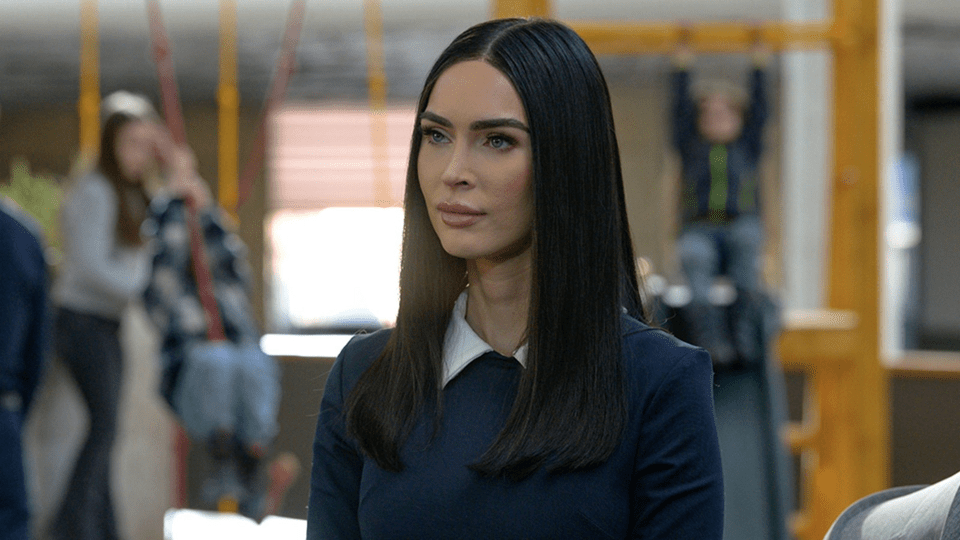
A silly concept well-played, thanks largely to lead Megan Fox leaning in on her screen persona. It’s not the first time for Fox, who rose to notoriety as eye candy for teenage boys in the “Transformer” films: In 2009 she paired with “Girlfight” (2000) director Karyn Kusama and writer Diablo Cody (“Juno”) for the deconstructive horror-comedy “Jennifer’s Body.” Here she plays Alice, a droid nanny in a clingy maid outfit. She’s what’s known as a “sim,” mass-produced humanlike robots programmed to help out around the house, hospital, worksite or whatever. Alice is brought into the fold of a family to aid Nick (Michele Monroe) in the care of his daughter (Matilda Firth) and infant son because mom (Madeline Zima) is waiting on a heart transplant and might not be in the picture long. There’s tension because Nick is a construction worker dealing with the issue of sims replacing him and his crew at work, yet also sexual tension between him and Alice that’s pretty high from the get-go, added by glimpses of Alice in her babydoll garb and undies. The catalyst that turns Alice into a “M3gan”-esque terminator (yes, Megan goes M3gan) is the movie “Casablanca” – no joke. Nick’s a fan, and when Alice sits down to watch it with him one night and fires off a salvo of film factoids, Nick asks her if there is anyway to expunge the info from her memory banks so she might enjoy the cinematic experience organically. The answer is a disastrous reset that renders Alice jailbroken and able to go off script. Fox does a commendable job of physically articulating the tics and quirks of being a ’bot. How the film directed by S.K. Dale, who worked with Fox on “Till Death” (2021, also streaming on Netflix), evolves from there, packs a few neat curveballs and leaves things open for a sequel, but you’ve seen this bad ’bot plot before – and better.
‘Red One’ (2024)
Still playing in theaters but also now on Amazon Prime for free this week is this ho-ho-ho, so-so comedy-adventure that has Saint Nick (J.K. Simmons) kidnapped so an evil impish creature can take over the reins of Christmas. “The Nightmare Before Christmas” (1993) this is not. Simmons’ Santa is a bit of a change-up from your usual: He works out, hates macaroons and has a tricked-out sled with grotesquely jacked CGI reindeer. In this winter wonderland universe directed by Jake Kasdan (“Zero Effect”) there’s an org called the Mythological Oversight and Restoration Authority that’s trying to “rewild” the world with entities of myth and lore. One such is Grýla (Kiernan Shipka), the winter witch from Icelandic lore wants to take over the sleigh and deliver snow globes to the naughty that will imprison them in the globe for life. This is cause for pause, because is imprisoning potential future sociopaths a bad thing (well, yeah, because it’s kids, and naughty doesn’t mean homicidal), and did Grýla in the plotting of her scheme ever contemplate a three-strikes policy? In the mix to save the day are Dwayne Johnson as Nick’s head of security, Chris Evans as a hacker and bungling pa who accidentally gives away the secret locale of Santa’s operations, and Lucy Liu as a Mora operative. Thankfully, the ever-cantankerous Krampus (Kristofer Hivju, “Cocaine Bear”) makes an appearance and brings fire and fun to the few scenes he’s in. “Red One” is relatively watchable family fare, but as ephemeral and forgettable as a first dusting of snow.
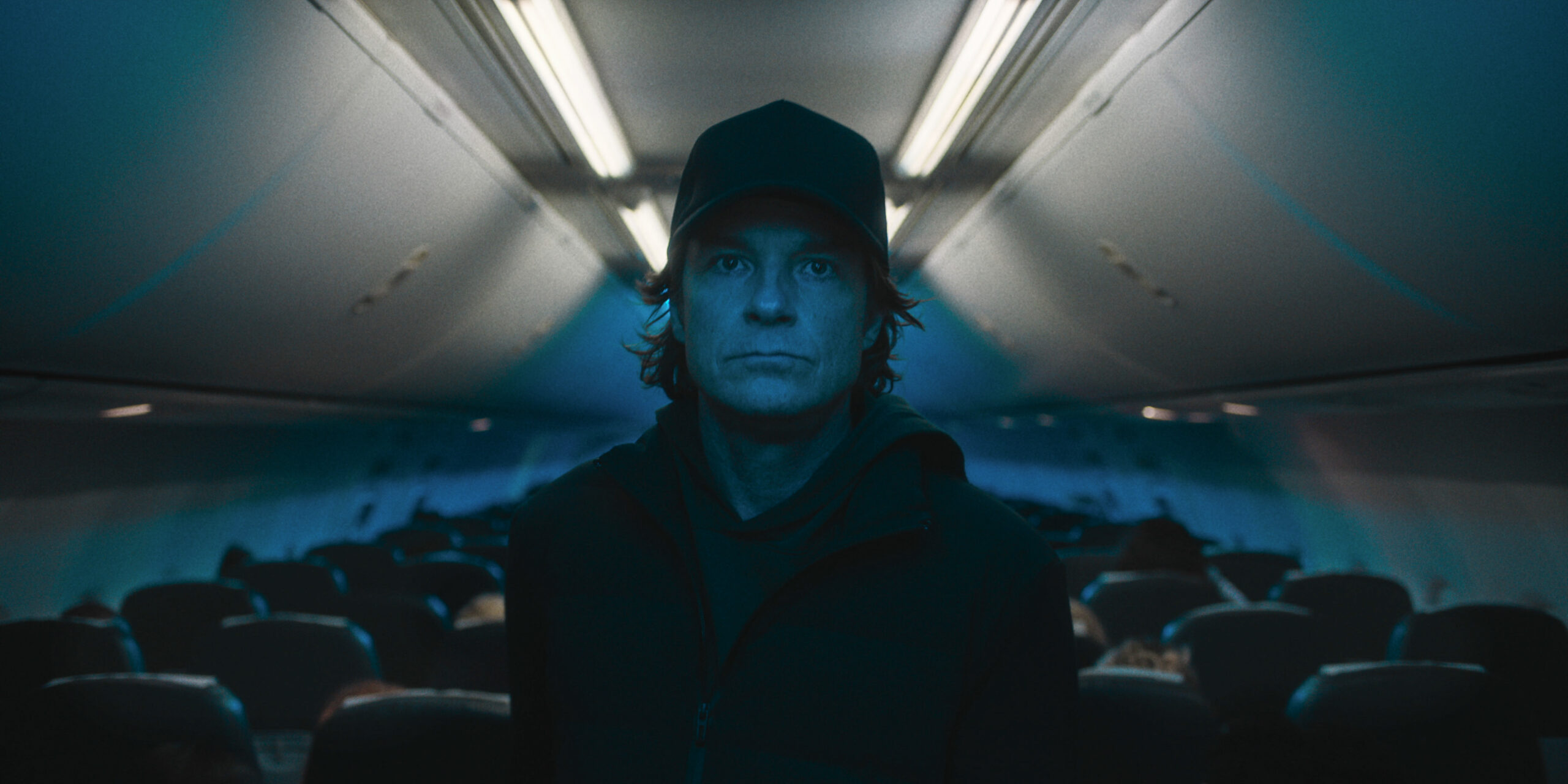
Another just-watchable holiday-themed flick that treads heavily on its “Die Hard” (1988) aspirations, starting with an East Coast fish-out-of-water Jersey boy hero, now played by Taron Egerton (Elton John himself from “Rocketman”), trying to thwart a terrorist strike in a bustling L.A. complex. Egerton plays Ethan Kopek, an underachieving TSA officer and cop wannabe who regularly shows up late for airport shifts and, as a result, draws menial shit job duties and can’t get a promotion. It’s Christmas Eve and, as is his MO, Ethan shows up late and is assigned a luggage-scanning post. Unbeknown, the station is the target of terrorists trying to get a briefcase full of the lethal Russian nerve gas Novichok onto a plane. The motive has to do with framing the Russians by killing a congresswoman aboard and thus generating contracts for U.S. military contractors, or something like that, not the most inventive MacGuffin. The terrorists, led by a calm, cool Jason Bateman (“Ozark”), get the bag through the checkpoint through a threat to Ethan: that his pregnant girlfriend (Sofia Carson) working in another wing of the airport is in a sniper’s scope and will be shot should he not comply with their every instruction. It’s a pat but passable thriller, with credit to Bateman’s wormy confidence and Danielle Deadwyler, good here as a cop in the mix and even better in “The Piano Lesson” this year. But they’re not enough to elicit a “Yippee-ki-yay.”
Long, overindulgent and absolutely riveting, the first feature film by Harvard grad Joshua Oppenheimer is hard to make heads or tails of as it explores life after the end of the world. The cinematic visionary who blew audiences away with his imaginative documentaries on the Indonesian death squads of the 1960s (“The Act of Killing” and “The Look of Silence,” both Oscar nominated) saddles up with Tilda Swinton, it boy George McKay of “1917” – already having a banner year with “The Beast” and the hard-hitting “Femme” to his credit – and Michael Shannon, who starred in the similarly themed, “Take Shelter” (2011). They play Mother, Son and Father, respectively. Along with “Nightbitch,” also currently in theaters, this no-name concept seems to be the arthouse convention du jour.
We catch up with the trio living the posh life in a bunker a half-mile underground after the rest of the world has been burned to a crisp. The shelter is in the labyrinth of an abandoned salt mine bought presciently decades ago by Father, a former oil exec (who, by proximity, had a hand in the incineration of humankind). Son was born in the bowels of that salt mine, and the well-tended-to trio are not alone in their enclave. With them are a doctor (Lennie James, “The Walking Dead”), a cook (Bronagh Gallagher) and a butler (Tim McInnerny, “Gladiator II”). Everything for the most is safe and good, and their biggest discomfort is the bitter sourness of the wine they vinify. Then an interloper drops in – almost literally. The arrival of the young woman known as Girl (Moses Ingram) is not welcomed. Mother and Father have a xenophobic policy and initially restrain and restrict Girl; eventually they admit her into their midst, where as you can guess, sexual tensions with Son rise quickly and cause social dynamics and routines to shift.
Did I mention that “The End” – not to be confused with the similarly titled and themed 2013 film “This is the End” starring Jonah Hill and James Franco – is a musical? For his two Indonesian hit-squad docs, Oppenheimer stepped outside the boundaries of nonnarrative convention and gave former squad leaders resources (money and cameras) to make their own films depicting their recollection of their parts in the bloody overthrow. One made a garish musical with former killers dressed in drag and singing alongside the cascading waters of a grand waterfall. Could that have been the inspiration for the cast of “The End” to break into song in the dusty corridors of a salt mine? The probability is too overwhelming to deny.
The overall fabric of “The End” is not too far from L.Q. Jones’s postapocalyptic“A Boy and His Dog” (1975), in which Don Johnson as that “boy” discovers an underground Eden and ultimately upends an order serving mostly an elite few. Besides the gender role swap, the other notable delta between the films is the causality for eradication – global nuclear annihilation or human-triggered climate change catastrophes. Oppenheimer doesn’t harangue the audience by climbing onto the climate change pulpit, a theme more clearly held off in the corner of the frame. For his microsociety, there’s no wrestling with what-ifs, because it’s already happened, but members have guilt and admit to things they did that led to the perishing of others.
Given the texture of his films, it’s clear that the cleansing power of confession is something that drives Oppenheimer – it was the thing he sought to educe from Indonesian militia leaders after decades of denial. The result in those films was stunning, emotionally impactful and horrific; here, narrative artifice diminishes that impact, but “The End” is effectual in its own right. It is gorgeously framed and shot, with near period-piece delicacy, and the performers create sharp characters and prove quite capable when dropping into song. The offset between Swinton’s subtle, ethereal otherworldliness and Shannon’s gruff bristle takes a while to digest, but serves the film well. “The End” does go on a bit too long for the concept, but effectively provokes with themes of isolationism, empowered entitlement and one’s responsibility to a fellow human, as well as stewardship of the vast blue orb we’ve indelibly infected through negligence and avarice.
Luca Guadagnino’s adaptation of William Burroughs’ semiautobiographical novella is a steamy walk on the wild side set in 1950s Mexico City and destinations south. Bond guy Daniel Craig goes all-in as Burroughs alter ego William Lee, a compulsive yet civil expat with means and a predatory tick. For those who wondered what Craig would do after letting go of 007, “Queer” signals something more than just the bawdy good fun of his Benoit Blanc romps (“Knives Out,”“Glass Onion”). Here, the actor turns in a bold change-up that’s more than worthy of awards banter. Lee has relocated to Mexico, because – at the time – it was one of the few havens for a man of stature wanting to pursue same-sex dalliances as well as illicit drug use without the inherent social and legal persecution that was (and still is?) rife and looming in the states. Beyond the bustling “queer” community Lee’s embedded in, he can score smack or coke easily around the corner, a real win-win for a gentlemanly hedonist. The film’s broken into three chapters, the first two focusing on Lee’s obsessive pursuit of a tall, sculpted, younger lad by the name of Eugene Allerton (Drew Starkey), another American hanging out in Mexico City trying to work out their place in the world and through the bigger ideological issues that confronted Burroughs and his fellow Beats. For a good long while, Allerton remains at an arm’s length, aloof and just out of reach, but “Queer” morphs into something of a buddy road trip as we steer into the third chapter and the pair head to Ecuador and Panama with the goal of greater euphoria and enlightenment (and telepathy, Lee hopes). The circumstances that led Burroughs to Mexico, and to write “Queer,” are intriguing: He had just accidentally shot and killed his wife, Joan Vollmer, during a drunken game of Willam Tell (leading also to Burroughs’ 1954 novel, “Naked Lunch,” adapted adroitly to the screen by David Cronenberg in 1991). Given its content, “Queer” would not get published until 1985. Guadagnino, who’s skilled at projecting carnivorous carnality on screen (“Suspiria,”“Challengers,”“Bones and All”), simmers up a slow-building character study steeped in lust and drugs. As with all the Italian auteur’s films, “Queer” is crafted gorgeously from a cinematic standpoint, but its dips into surrealism late in the film are narratively awkward. There’s a thinness and slight disjointedness that at times threaten to pull one out, but even those foibles are offset easily by Craig’s screen-consuming commitment to the part.
‘Nightbitch’ (2024)
Rachel Yoder’s novel, which touched a nerve about the disproportional contributions the male and the female of the species make when it comes to child rearing, looked primed for the big screen with Amy Adams cast in the lead and the capable Marielle Heller to direct. Heller, as you may recall, blazed her way onto the screen with the intimate 2015 coming-of-age drama “The Diary of a Teenage Girl,” but here, with Yoder’s experimental text about a mother who may or may not be transforming into a dog (thus the title), domestic themes dealing with the onus of matronly nurture, the male provider complex and even the glass ceiling feel contrived and forced. “I don’t want to be trapped inside a 1950s marriage,” says Adams’ Mother (the characters have no names) to her clueless husband (Scoot McNairy). He’s not a bad guy, but does regularly drop into video game oblivion as Mother, ever put upon (or so that’s the lens of the film), tends to their 2-year-old. “Nightbitch” is a deeply internal film, with Mother reflecting regularly on (and brooding about) her status and the relative (in)equality in the homestead. The kick comes when she starts to commune with the pack of dogs that roam her suburban neighborhood; later her teeth get sharp and pointy, meat becomes a must munch, patches of fur begin to spring up here and there and there’s the unsavory discovery of a burgeoning tail. “An American Werewolf in London” (1981), this is not. The context of what is real and what is not is often hard to glean – and more so, you just don’t care. Sure, it’s a clear manifestation of Mother’s emotional state and a bigger metaphor for the unrecognized burden of motherhood being taking for granted, but as presented it’s lazily murky, unlike how Mary Harron’s “American Psycho” (2000) deftly blurred reality, delusion and the externalization of emotional anxiety. Adams puts in a game effort, but Mother’s not that deep or interesting, and neither is McNairy’s husband, resulting in a generic couple living generic lives and going through generic ennui. The pooch stuff, as rendered, feels tacked-on. As a feminist poke, “Nightbitch” makes its point, but not convincingly so. It’s frustrating to watch the talented Adams (“Arrival,” “American Hustle”) dig deep only to get collared by a flat script, and the cinematic act of going from reality to body-morphing alter reality should have been punched up more. “Nightbitch” whimpers slowly into the night, a fangless could-have-been.
“Do Not Expect Too Much from the End of the World,” “Small Things Like These” and “The Lost Children”
‘Do Not Expect Too Much from the End of the World’ (2024)
A sardonically black political comedy that’s right out of left field, powered by witty takes on hot topics (Andrew Tate, Putin and Pornhub, to name a few) and a killer performance by Ilinca Manolache, without whom the movie could not be. Manolache plays Angela, a feisty Romanian woman looking to make it in the gig economy as a filmmaker and TikTok sensation. Her main hustle is as a production assistant for a company that makes safety videos, kind of – on many shoots, Angela coaches accident victims, often in wheelchairs, to talk about the safety measures they should have taken to have avoided injury versus the clear negligence of the employer to provide a safe workplace. They’re more CYAs than PSAs, and that’s the degree of biting humor imbued by writer-director Radu Jude (“Bad Luck Banging or Loony Porn”).
When we meet Angela, she’s buck naked, on her bedside table is Proust, a half-drunk beer and a glass of wine. From her unapologetic posture as she drags herself out from under the covers at 5 a.m. we know she’s a take-no-shit sort. Donning a sequin dress, Angela wills her way through the day, which includes several safety shoots, chatting with director Uwe Boll about beating the bejesus out of critics who take exception to his lowly regarded films (“BloodRayne,” “Alone in the Dark”), a quickie in her SUV, where nearly half the film takes place, and frequent TikTok dispatches as her evil alter-ego, a bald, bushy-browed incel named Bobiţă who boasts of sexual conquests and hanging out with Tate, the controversial purveyor of all things manly and macho.
Jude employees a unique stylistic palette to frame his modern absurdity; much of Angela in transit is shot in matted black-and-white (reminiscent of Pawel Pawlikowski’s wonderful “Cold War”) while her TikTok and safety videos are shot in color. Jude too infuses footage from the 1981 film “Angela Goes On” about a female cab driver in communist Romania. The thematic juxtaposition (of constantly driving and having a hard time getting from point A to point B) is all about the bureaucratic nonsense that confronts and confounds the two Angelas back during the days of Ceaușescu’s police state and in the capitalist now.
Manolache, who feels like she could slide easily into an early Almodovar or classic Fellini romp, is all-in as the foul-mouthed Angela, full of vim and palpable vigor, and quite muscular and confident in the way she defines her womanhood and place in society. Along with Mickey Madison’s bravura turn in “Anora,” it’s the most pop-off-the-screen performance by an actress this year – Angela and Anora could easily team up and rule the world, and given where we’re heading, that would likely be a good thing.
The ending long take, a filming of a PSA at the site of an accident, is the most somber and dark absurdity in the film, with telling plays on Putin and Ukraine, American TV and the devious use of Bob Dylan’s “Subterranean Homesick Blues” placards to further victimize and subjugate the maligned.
‘Small Things Like These’ (2024)
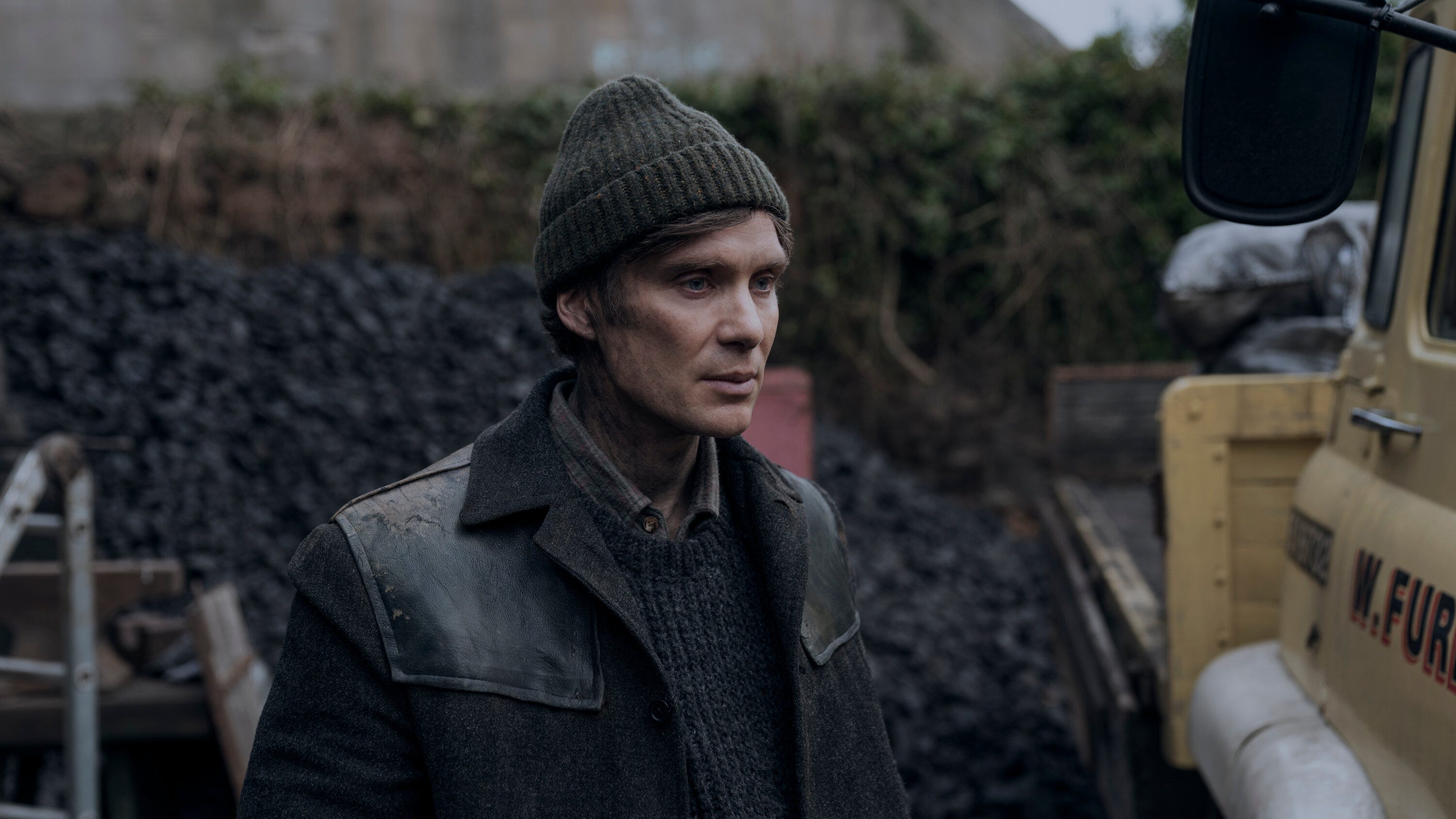
Based on Claire Keegan’s novel about the Magdalene Laundries in Ireland, this project directed by Tim Mielants draws emotional depth from an all-in performance by star Cillian Murphy, nearly even more internalized and conflicted here than he was for his Oscar win as Oppenheimer in the Christopher Nolan-helmed biopic last year. The Laundries were a series of so-called asylums for wayward girls, unwed mothers and “fallen women” (former sex workers, recovering addicts, etc.) run by nuns. Keegan’s story targets their sordid history of using women as indentured labor, housing them in prisonlike lockdowns and often taking their babies forcibly from them so the institution could profit from the adoptions. The misdeeds are revealed through the meanderings of Bill Furlong (Murphy), a merchant in 1985 Ireland who provides one such institution with coal. Seeking a signature for an order one day, he witnesses a girl being dragged across the hall screaming. She mouths to him for help. For a frozen second he thinks to act, but the steely eyed sister in charge (Emily Watson) swoops in to explain things away with a cup of tea. Later, Bill discovers a young pregnant girl shackled in the coal shed – yep, it’s that kind of shop of little horrors. Then there’s Bill’s own backstory, his five daughters (his wife is played by Eileen Walsh, who starred in 2002’s “The Magdalene Sisters,” a film that went at the same subject), which serve as a point of reflection and increasing concern, and the boy down the street, often shoeless and starving. Much of what appears quiet, composed and buttoned-down is anything but. The Magdalene Laundries operated from the 1800s to, amazingly, up through the 1990s. In scope, as Mielants and Keegan (“The Quiet Girl”) tell it, “Small Things Like These” feels not too far off from our own Catholic Church abuse scandal (“Spotlight”): cover-ups over decades, victimization of the vulnerable and the leveraging of religious righteousness to make it happen. It’s a somber weaving of disturbing discoveries, but not one without threads of humanity and compassion brought to the screen by Murphy’s deeply emotive performance.
‘The Lost Children’ (2024)
A hackneyed documentary about the incredible true story of survival by four children (ages 11 months to 13 years) in the Colombian rainforest for 40 days after their plane crashed in May of last year. The three adults aboard (including the pilot and the mother of the Indigenous children) perished upon impact. The Colombian military takes up the search and are later joined by a legion of Indigenous volunteers. Directed by Orlando von Einsiedel, Jorge Duran and Lali Houghton, the film focuses hard on this point to showcase the jungle knowledge of the Indigenous searchers and their unease working with the military because, as the film has it, the factions have been at opposite sides of conflicts over decades. Specifics are never really provided, which is one of the film’s major annoyances. The dramatic recreations of the search feel sloppy and staged (often people in arguably real footage have their faces blurred), though the wildlife photography is top shelf. The reason to stay with the film is the chilling footnote that the children’s father and stepfather, Manuel Ranoque, initially at the fore of the search and a seeming heroic figure, is accused (by talking heads, the mother’s aunt and sister) as an abuser, suggesting the children could be evading the search effort to avoid him. The dubbing is mumblecore awful and the staging of Indigenous rituals and ways borders on exploitative arrogance, even though it ostensibly aims to be embracing.
Not sure that “Gladiator,” the Oscar-winning sword-and-sandal revenge epic starring Russell Crowe, needed a sequel, but the fates, furies and a cadre of calculating Hollywood studio execs have deemed it so with a clear, hopeful eye on a box-office bang-up. It’s not on par with its 2000 predecessor, but the script by David Scarpa, who collaborated last year on “Napoleon” with director Ridley Scott (still cranking them out well into his 80s), does connect the dots smartly with blood and purpose. We find ourselves 20-something years since the events of the last film that concluded with the death of Crowe’s Colosseum warrior, Maximus after killing hedonistic, self-interested Emperor Commodus (Joaquin Phoenix) and, in theory, restoring the voice of democracy to the senate and the people. What’s happened in the interim is anything but: Rome is run by two foppishly fey brothers, Geta (Joseph Quinn) and Caracalla (Fred Hechinger), man-boys with a penchant for mascara, bloodshed and monkeys. Taking a step back, it’s eerie to realize how much that paradigm feels all too close and reflective of our new now – earmarking the struggle for democracy as pervasive throughout humankind’s brief, short history.
G2 begins with the siege of Numidia (Northern Africa) by Roman legions led by general Marcus Acacius (Pedro Pascal), a dutiful soldier whose political ideals don’t align with those of the decadent, indulgent twin emperors, though he seems all-in on the expansion of the republic. Galleons crash into a seawall, flaming boulders are catapulted, arrows fly and swords get crossed. The resistance is fervent and game, led in part by a farmer-military tactician named Hanno (a beefed up Paul Mescal, of “Aftersun” and “Foe”) whose wife (Yuval Gowen) likewise straps on the lorica segmentata and joins the fray, but Marcus and his troops overwhelm the seaside city easily. Caught by an arrow, Hanno’s wife is one of the casualties. As a result – just as it was with Maximus – a blood grudge ignites and becomes the film’s plot-driving fire: revenge or death.
Given the title and what came before, the action heads back to Rome, where Marcus is feted for his feat while Hanno is shackled and thrown into the gladiator pool overseen by Denzel Washington’s Macrinus, a former slave turned gladiator turned backroom fixer and ultimately, shrewd political manipulator. Rhinos, killer baboons and sharks (yes sharks, they flood the Colosseum for one such contest) join the endless legion of hulking Master Blasters the ill-equipped gladiators have to confront. Akin to the Maximus arc, Hanno becomes an arena sensation for his fortitude, smartly engineered victories (baboon biting not withstanding) and fanciful beheadings. But as this is old Rome, the real violence is what goes on behind gauzy veils in unofficial councils where schemes within schemes are hatched. Macrinus, who seems to have a J. Edgar Hoover-sized file on everyone in town, plays the ends against the means, promising Hanno his shot at Marcus if he can survive long enough; Marcus, angered by mass corruption and injustice, weighs an insurrection to return Rome to its starving masses. Marcus’ wife, Lucilla (Connie Nielsen), the sister of Commodus and Maximus’ love-interest in G1, it turns out, has blood ties to Hanno (the movie tries to obfuscate this point until midway in, but the plot twist – which I won’t tip – is as clear as day, early on).
The machinations feed and play off each other with Shakespearean overtones. Washington’s performance even feels like a kitschy extension of his 2021 performance in “The Tragedy of Macbeth.” He chews the screen while Mescal simmers, seethes and burns. This is Mescal’s first big studio film, and while he’s up to the task, his Hanno doesn’t have the gravelly gravitas of Crowe’s Maximus; he’s mono-focused whereas Maximus seemed to legitimately play the long game. As Marcus, Pascal is dour and soulful in the thin, thankless part that is mostly tinder fanned to fuel the plot. It’s Nielsen, classic and captivating, who shines with a bigger part to play. It’s her uneasy and evolving relationship with Hanno that becomes the film’s emotional epicenter.
Like “Napoleon,” there’s a lot packed into “Gladiator II.” Not all of it sticks. The overly sexualized identities of the two emperors (and others), gets far too close to the hyperbolic tipping point (think “Caligula”) and stokes the embers of gender politics that so roiled and divided our nation two weeks ago. Then there’s the matter of seemingly unlimited access to Hanno in his cordoned-off jail cell between contests, where Lucilla and Marcus continually score covert meetings despite the emperors’ forbidding. As far as history goes, Nielsen and Mescal’s characters were true historic figures, as was Commodus, but the plotlines and narrative in the two “Gladiators” are all historical fiction. It’s too bad we can’t turn the page like Scott and Scarpa and rescript this moment.
Not a claymation curio for the whole family, nor a sequel to “Marcel the Shell with Shoes On” (2021). No, this very dark and adult animated tale of twins separated after the death of their father and placed in foster care has edgy, plot-driving incursions into swinging, fat feeding, pyromania and religious zealotry. The film is wickedly funny at times but tenderly bittersweet, with deeply realized characters. The casting, an inspired all-star slate from Down Under, pairs “Succession” star Sarah Snook and Kodi Smit-McPhee (“Power of the Dog”) as Grace and Gilbert Pudel, fraternal twins born with health issues and bullied at school. Mom died early and dad, a street performer who struggles to keep the family afloat, succumbs a few years later; Grace and Gilbert get placed with families at opposite ends of Australia. Much of the film is told through the longing letters between the two, desperate to reunite. Neither is in an ideal situation. Gilbert lives with Calvinist religious zealots who want to “pray the gay out” and abusively employ him as indentured labor on their apple orchard. Grace lives pretty much on her own in a nice house, because her absentee foster parents are swingers and darting constantly out to key parties or nudist retreats. Her bestie is an 80-year-old firecracker named Pinky (a brilliant Jacki Weaver), whose tale of how she earned the nickname and a sidebar about having sex with John Denver in a helicopter are uproarious delights. Directed by Adam Elliot, making a strong impression with his second feature, “Memoir of a Snail” is agile in construct and scrumptious to behold – “The Nightmare Before Christmas” good. The “shell” theme about the personal baggage we all carry around with us and how we withdraw or put up walls is a bit thinly etched, but the movie’s sibling bond is strongly felt. It’s like the dark, loving embrace of Tim Burton done with the edgy verve of Trey Parker and Matt Stone. It’s also one of the best films you can see in a theater now.
‘A Real Pain’ (2024)
Another film featuring a “Succession” star (in addition to Sarah Snook in “Memoir of a Snail” and “The Apprentice,” starring Jeremy Strong in an Oscar-worthy turn, now on Amazon Prime). Kieran Culkin stars opposite Jessie Eisenberg (“The Social Network”) as Benji to his David, cousins who sojourn to Poland to visit the house their Holocaust-surviving grandmother lived in and connect with their Jewish roots. The two are cut from vastly different cloths; Benji is slack, conflicted and seemingly adrift, whereas David is rooted (married, with a child) and tightly wound. We never get the full details of their stateside profiles, but they don’t much matter and you can fill in the blanks easily given their dynamic. The pair signs onto a Holocaust tour led by an amiable guide (Will Sharpe) who, along with a survivor of the Rwandan civil war (Kurt Egyiawan) examining the toll of genocide in other parts of the world, are the only two who do not have personal, Jewish ties to Poland. In the group too is Jennifer Grey of “Dirty Dancing” fame as a middle-aged woman going through a tough divorce. Benji sidetracks the group regularly with his raffish whims – posing for photos at a statue of liberating soldiers as if part of the platoon, or requesting that the guide dig into the souls of Holocaust victims and tell their story rather than just reciting their names from a register. He becomes something of the group’s mercurial class clown, though many of his politely peevish plays are sparked by seeds of genuine emotional intelligence. He’s an amiable lost boy and clearly one subject of the film’s title. As youths, he and David used to be closer, but given time, space and the arc of life, have grown apart, so “the pain” refers also to Benji’s loneliness and the pair’s fraying over the years as well as the inherent trauma of digging into the atrocities of the past. The film, written and directed by Eisenberg, has a talky, European meandering feel to it, a bit like those Linklater films that paired Ethan Hawke with Julie Delpy – people who care deeply for each other yet who talk around a topic. Eisenberg also avoids making the Holocaust a didactic distraction with leaden exposition. It’s present in every frame, but “A Real Pain” is a character study first. Eisenberg, cutting just his second feature, does a solid job of balancing the tale with the looming shadow of world-changing events. It’s a journey of revelation and reconnection that works on the strength of authentic, awkward chemistry between its two leads.
“The Wild Robot,” “Don’t Move” and “Woman of the Hour”
‘The Wild Robot’ (2024)
A very “Wall-E”-esque pleaser with something to say about humans, machines, emotional intelligence and environmental stewardship. Marrying all that together is an AI ’bot named Roz (voiced by Oscar winner Lupita Nyong’o, “12 Years a Slave,” “Us”) whose shipping container is tossed overboard during a storm, marooning her on a remote island with rich Northeastern biodiversity (pinewoods, bears, beavers, geese and possums) that feels right out of Camden, Maine. Roz is a home helper droid made by a megacompany like Amazon to perform tasks such as making beds, building sheds, shearing sheep and so on. Borrowing a page from Isaac Asimov, the semihumanoid robot (think a rounder C-3PO with spindly arms and legs) has a “do no harm” rule – or close enough. Stranded in a humanless remote, Roz reprograms herself to learn animal lingo and learns that the fauna refer to her as “the monster.” In the awkward dance of finding a task to do, tragic happenstance has Roz becoming the mother imprint for a runt gosling named Brightbill (Kit Connor). The to-do then teaching the hatchling how to forage for food, swim and ultimately fly, because the fall migration is around the corner. Other geese don’t think Brightbill is long for this world and bully him, while hanging close to Roz is Fink (“Mandalorian” Pedro Pascal), a fox posing as a knowing adviser when his true intent is a fast meal. Roz’s transmitter to HQ keeps dropping out or breaking, which ultimately brings to the island a maintenance droid (Stephanie Hsu, “The Menu”) that’s not a fan of Roz developing emotionally. Issues of AI and the environment are at the fore, without pulling focus from the central core bonding of Roz, Fink and Brightbill. The animation, as orchestrated by Oscar nominee Chris Sanders (“Lilo & Stitch,” “How to Train Your Dragon”) is well-envisioned and robust and likely to earn him another nod (though it’ll have some real competition from the Latvian gem “Flow” that just played The Brattle). But the heart of the film is castaway Roz, a tin woodswoman who becomes emotionally aware.
‘Don’t Move’ (2024)
Nice-guy serial killers seem to be all the rage. Already this year we’ve had bad dad Josh Hartnett in “Trap,” and “Dating Game” contestant Rodney Alcala in Anna Kendrick’s impressive true-crime-adjacent debut “Woman of the Hour.” Now we get this tale of cat-and-mouse survivorship in which a grieving mother hiking the California mountains (Kelsey Asbille) stands at a ledge contemplating a jump and is talked down sort-of by a dashing, passing-by dad-guy (Finn Wittrock, so fun as one of the two DIY hedge fund knuckleheads in “The Big Short”). Everything’s cordial until they get to the trailhead parking lot and Wittrock’s Richard tases Asbille’s Iris. Iris is zip-tied, tossed in the back of his car and told that he’s going to take her to his cabin, braid her hair and add her to his list of female bodies at the bottom of the lake. Iris gets free and nearly overpowers Richard, and that’s when he hits her with his Plan B: She’s been injected with a paralyzing agent that’s 20 minutes away from kicking in. The film, directed by Brian Netto and Adam Schindler, moves in unpredictable turns as others – a police officer and a fellow cabin owner – cross paths with Richard and Iris. The tension remains high even if elements of the underlying story don’t quite work, including the how and why for Richard’s predilection. Asbille, controversial for her claims of Native Americans origins to shore up her casting as an Indigenous person in the hit series “Yellowstone,” is a bit too glamorous in the part but still compelling, doing much with her large, luminous eyes and trembling lips because, at one point, that’s all she got. It’s not bad, but if you’re on Netflix, “Woman of the Hour” is the better way to spend your time.
‘Woman of the Hour’ (2023)
Actress Anna Kendrick makes her directorial debut with this chilling true-crime-adjacent serial-killer thriller set in the late ’70s. Like this year’s “MaXXXine,” it revels in the era’s scummy kitsch and skewers its rampant misogyny. The main event is a “Dating Game” show segment in which a young, aspiring actor named Sheryl Bradshaw (Kendrick) is a reluctant contestant, having signed on at the behest of her agent. If you’ve never seen “The Dating Game” or other indelible shows of the time such as “The Gong Show” and “The Newlywed Game,” they’re peppered with innuendos, evoking a degree of cringeworthiness that’s captured well by Kendrick and writer Ian McDonald. Bachelor No. 1 is a bit of a blockhead who can’t answer a question confidently, No. 2’s not much better, but at least he doesn’t trip over his tongue. Then there’s No. 3, who cleans up, masterfully playing off Sheryl’s wit and verve and turning his adversaries’ miscues to his advantage. He’s also Rodney Alcala (Daniel Zovatto), who that year would be arrested and convicted of the murder of six women – and implicated in as many as 130 murders. Of course, he’s Sheryl’s pick. Kendrick and McDonald transform a rote, straight-ahead story into an ever-shifting collage of terror and charm, with cutaways showing Alcala helping a flight attendant move into her apartment, taking snaps of a lonely pregnant woman abandoned by her boyfriend at a national park, and a beach party photo shoot. I don’t need to tell you how these encounters go; it’s how Kendrick decides to shoot and navigate the grimness that matters, as it’s done with subtle, unconventional style and great, visceral affect. Zovatto is a great casting choice and performer, and his Alcala is a natural charmer with a brimming undercurrent of malice – echoing Philip Seymour Hoffman in some of his roles, or Vincent D’Onofrio in “Full Metal Jacket” (1987). Kendrick, not far from her refuses-to-be-a-victim persona of “A Simple Favor” (2018), has some feminist zing as Sheryl, going off script in the final round to ask the bachelors, “What are girls for?” You know Alcala’s a killer early, giving many of his scenes – with his prey, or in the offices of the Los Angeles Times, where he freelances as a photographer – a delectable unpredictability and creepiness. It’s an ambitious and impressive debut for Kendrick, and one that should bear greater casting opportunities for Zovatto.