Football legend Upton Bell of Porter Square, Cambridge, with a model of a statue dedicated to his father at the University of Pennsylvania’s Franklin Field.
This weekend is the big one, Super Bowl LIX – which is likely not that big of a deal around these parts now that the Patriots are the doormat of the AFC East. Sure, the team went to nine Super Bowls from 2000 to 2020 and still holds the record for the most appearances by any NFL franchise (11), but those glory days are in the rearview and there’s little hope on the horizon (other than Drake Maye and a coaching reboot).
The ad blitz campaign contest on tap features a rematch of Super Bowl LVII (2023) in which the Kansas City Chiefs and all-world QB Patrick Mahomes beat the Philadelphia Eagles in a 38-35 thriller. It was the Eagles too in Super Bowl LII (2018) who notched their first Lombardi Trophy by beating the Brady-led Patriots 41-33. (The mystery and sting of the Malcolm Butler benching still lingers like the scent of floral flatulence in the wake of a weekend cleanse retreat.)
There is one here among us who has deep ties to the Chiefs, Eagles and Patriots alike and a personal and professional portfolio that’s a veritable who’s who from the gridiron to the White House: Upton Bell, who walked and talked for a series of catch-ups last week on the street, on the phone, at the gym and over email.
If the name doesn’t click, the Porter Square resident was the Patriots’ general manager in the early 1970s – the youngest in the NFL. His father, Bert Bell, founded and was owner of the Eagles. The connection to the Chiefs is something a bit more complicated (but we’ll get to that later).
Payal Kapadia’s somber meditation on womanhood and companionship amid the bustling streets of Mumbai feels like a living and breathing document. It follows the lives of three intertwined women, two of whom are nurses and roommates. The more dour of the duo, Prabha (Kani Kusruti), is estranged from her arranged husband, who is now working in Germany, and moves through her days with restrained and wistful introspection. The younger of the two, Anu (Divya Prabha), is bright-eyed, perky and naively idealistic as she constantly overspends and often asks Prabha to cover her rent. She has a secret Muslim lover who asks her to wear a burka when sneaking over for their trysts. That’s one of the interesting things about Kapadia’s portrait of Mumbai – it delves into and illuminates the myriad subtle cultural, linguistic and religious identities that coexist nearly seamlessly in the dense urban setting. The movie places the patriarchy under a microscope, not by lambasting double standards and gender inequality, but by showing the sisterhood formed through common causes and tribulations. Prabha and Anu are busy working out their romantic and professional futures while the third woman, the hospital’s cook, Parvaty (Chhaya Kadam), a steely, no-nonsense, middle-aged widow, rails in vain against a developer who wants to displace her. “All We Imagine as Light” is a quiet film that affects the viewer in ebbs and flow, and Kapadia’s poetic cinematic flourishes add a dreamy, hypnotic affect to the deeply emotional sojourn. Kapadia was recently in Brookline to show the film at the Coolidge Corner Theatre and was rightly praised as a breakthrough filmmaker. The texture and tenor of “All We Imagine as Light” is reminiscent of Deepa Mehta’s Elements trilogy, which bodes well for Kapadia’s future endeavors.
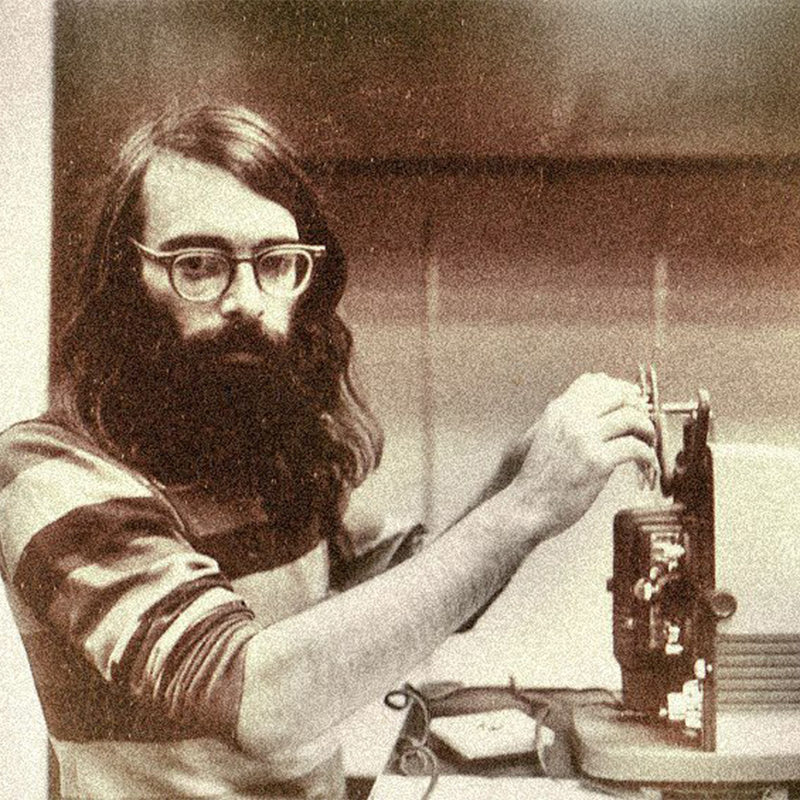
The Revolutions per Minute Festival hosts 10 works by Somerville experimental filmmaker Saul Levine at The Brattle Theatre on Sunday.
Not sure what experimental films are? If you’ve ever been to Boston’s Institute of Contemporary Art and seen trippy, surreal video installations, you’re on your way. Experimental or avant-garde film is usually deeply personal, often sociopolitical in context and reflective of the artist’s life in the moment.
Levine, born 1938, has been producing films for nearly 60 years; he was a professor in the Visual Arts Program at MassArt for 39 years.
Levine started his filmmaking career with “Salt of the Sea” (1965), featuring footage of his friends hopping from a boat to a buoy in the New Haven harbor. “I tried to make the jump with the camera,” Levine said, “and I fell into the water but held on to the camera.” The waterlogged footage, which Levine described as “abstract swirls of magenta and turquoise,” was turned into a four-minute short that ended with a clear shot of his friend perched upon the buoy.
If you watch Levine’s later works, such as his series “Driven (Boston After Dark)” (2002-present), in which Levine rides around in a car filming subjects and captures moments in time, or “Sun Drum Moon Note” (2018), which screens Sunday, you’ll notice shaky camera work. Part of that is Levine’s editing style, but adding to it are genetic neurological ticks – what Levine refers to as “tremors” – that he’s had since birth. As a result, Levine also speaks with a noticeable stammer.
Age and neurological affliction keeps Levine from getting behind the camera as much as he used to. Levine’s time at MassArt was also cut short, ending with his resignation in 2018. He said he felt “forced out” after school administrators accused him of harming students by showing his compiled film “Notes After a Long Silence” (1989), a collage that includes scenes of him having sex with his then partner. “It was ridiculous,” Levine said, as he’d screened “Notes” over several years without complaint and “the film was posted on the school’s website.” Levine gave passionate commentary on the situation in a video on Facebook, saying he felt “ambushed” by the school’s administration. The same year, fellow MassArt professor Nicholas Nixon, a Guggenheim fellow and photographer, came under scrutiny in a Boston Globe article for more severe, yet similar allegations of inappropriate academic behavior. The Globe mentioned Levine in conjunction with Nixon, who also resigned.
It’s amazing, given how Draconian the Iranian government has been about censorship and control over its own narrative, that the voices of filmmakers Mohammad Rasoulof and Jafar Panahi persist. Both have been arrested and spent time in jail because they make films critical of the oppressive regime. These films are usually shot and edited secretly and often bootlegged out of the country to gain distribution in the West. Panahi struck the first blow with the sublime and frightening “The Circle” (2000), which detailed the systemic imprisonment of women for morality violations that most people in a free state would consider little more than jaywalking. Rasoulof goes further with “The Seed of the Sacred Fig,” crafting a domestic gender rift against the backdrop of the real-life death of Mahsa Amini in 2022 after being taken into custody for a hijab violation. The event galvanized the Woman, Life, Freedom movement and led to protests in the streets. In the home of Iman (Missagh Zareh), he and his wife Najmeh (Sohelia Golestani) and teenage daughters Rezvan (Mahsa Rostami) and Sana (Setareh Maleki) come at the headline event differently. Iman, who works for the state judicial department and reviews and signs execution orders, believes the theocracy’s line that Amin died of a stroke; his wife and daughters, like all those protesting, believe the death was the result of abuse and torture. Iman has a gun as part of his position, and as tension in the house rises, the firearm goes missing. Ultimately the action leaves the confines of the family’s apartment and the distrust threatens to turn violent. Just before the film played Cannes, Rasoulof was sentenced to eight years in prison with a flogging and fled the country, another reflection of a theocratic patriarchy holding authoritarian reins chokingly tight.
‘Soundtrack to a Coup d’Etat’ (2024)
A perfect companion to RaMell Ross’ superb “Nickel Boys,” as both deal with a grotesquely unjust Black experience on the cusp of the civil rights movement. “Nickel Boys” is a microcosm of racial injustice, whereas “Soundtrack to a Coup d’Etat” looks globally. The doc by Johan Grimonprez details the dubious events surrounding the assassination of Patrice Lumumba, inaugural leader of the Democratic Republic of Congo – just liberated from Belgium and quickly becoming a Cold War conflict because its rich uranium deposits were coveted by the United States and Soviet Union for use in nukes. It is astounding to see archival footage of the smooth and charismatic Malcom X and an animated Nikita Khrushchev making the same condemnations at the U.N. of the West for its colonialism and denial of rights to Black people. Insert into the mix Louis Armstrong as a Trojan horse cultural ambassador to the Congolese while Eisenhower, the CIA and Belgian operatives scheme against Lumumba in ways troublesome, embarrassing and downright heinous out of fear the nation (and its uranium) would fall into Soviet hands. Grimonprez, employing frenetic freestyle editing, homes in on socially active jazz greats of the time – among them Nina Simone, doing her amazing “Sinnerman,” Abbey Lincoln and Max Roach bringing the beat and emotional heat and Dizzy Gillespie – as well as X and Maya Angelou (she, Lincoln and Roach stormed the U.N. in the wake of Lumumba’s death) to fill the frame with sound and voice. The frequent shards of quotes he flashes onscreen are stunningly effective. Grimonprez has tapped into an incredible intersection of time, place and players that he turns into an immersive experience that entertains and informs unlike any Wikipedia page or history book.
‘The Room Next Door’ (2024)
Iconic Spanish filmmaker Pedro Almodóvar (“Tie Me Up, Tie Me Down,” “Women on the Verge of a Nervous Breakdown”) makes his first English-language film, and with the double-barrel casting of Tilda Swinton and Julianne Moore on paper it seems like a can’t-miss collaboration. While it definitely hits, it’s not the boom you’d expect from such a loaded lot. Based on Sigrid Nunez’s novel “What Are You Going Through,” “Room Next Door” is a contemplation on mortality – something that seems to be on Almodóvar’s mind these days given this, “Parallel Mothers” (2021) and most personally, “Pain and Glory” (2018). Novelist Ingrid (Moore) and war correspondent Martha (Swinton sporting a neat crop top), Manhattanites but distant for years, reunite because Martha is terminally ill and wants Ingrid to spend the end days with her in a quaint VRBO upstate. The performers are all in, yet the characters somehow feel shallow and contrived and the dialogue too meted, as if were a stage play. It’s gorgeous and affecting, but ephemeral and wispy.
RaMell Ross’ adaptation of Colson Whitehead’s 2019 novel about racial injustice and worse at a detention school for boys in 1962 Florida (the tail end of Jim Crow and eve of the civil rights movement) stuns in its dreamy, hypnotic use of POV shifts, abstraction of violence and subtle yet powerful commentary on the inhumane ills we do to each other. The effect of “Nickel Boys” is intentionally unsettling as we embed with Elwood (Ethan Herisse) and Turner (Brandon Wilson), two Black boys at the Nickel Academy, where kids are divided into white and nonwhite under the ever-present eyes of glowering guards, not far off from the “boss man” in “Cool Hand Luke” (1967). As you can guess, the former get better food, longer recesses and lighter labor. They also don’t run the risk of “disappearing”; the real-life school Whitehead modeled his novel on, the Dozier School for Boys, was shut down in 2011 after an investigation by the Department of Justice found 55 unmarked graves. The causes of death were varied: fire, malnutrition, disease and blunt trauma, all grim, if not criminal.
Ross and co-writer Joslyn Barnes choose to go at Whitehead’s straight-ahead arc in fragments and wispy Terrence Malick-esque glimmers. It is as mesmerizing as it is terrorizing. Much of the early part of the film is told from Elwood’s point of view – we don’t see Elwood, just see and experience what he does, from being harassed and assigned extra work by overseers to becoming friends with Turner. When we jump into Turner’s view, we finally see Elwood: lanky, languid and demurely charming. The film slips into omniscient POV at times too, not entirely consistently, but it’s in the boys’ blinders, with each reining in emotions to survive, that the film’s at its most evocative and immersive high.
The backstory for the tour of horrors at Nickel (the beatings and abuse tend to take place just off frame, the way atrocities at Auschwitz were layered in obliquely in Jonathan Glazer’s “The Zone of Interest” last year) is that Elwood was imprisoned wrongly; he was an early enrollee in college and, on his first day of school, innocently caught a ride with a car thief and was held as an accomplice when stopped. In the flash of a badge, his life goes from promising future to dire straits. Fortunately he has a caring nana fighting for him (the always excellent Aunjanue Ellis-Taylor, going a long way here as the woman who raises Elwood after his parents abandoned him when he was 6), which is more than most (and why those 55 graves went unquestioned for so long). Her efforts to raise him are stymied regularly by bureaucracy, systemic racism and shithead shysters and wind up making Elwood a target inside.
The pit of despair is deep and wide, but hope never dims.
In texture and tenor, the reimagining of Whitehead’s text by Ross (a documentary filmmaker making an impressive feature debut) and Barnes is a radical departure while hewing to its narrative structure and barbed social agenda. It’s a jumping-off that adroitly leverages the language of cinema (the camerawork by Jomo Fray is ethereal and transportive) to evoke on a deep level. It wouldn’t work without Herisse and Wilson’s transformative turns and fluid onscreen chemistry, as well as the surrounding cast of boys and jailers. “Nickel Boys” is a subtle yet haunting condemnation of racism in America and one that doesn’t feel as far off as the measure of years in between tell us.
It was a strange year in cinema, a year where blockbuster success at the box office was rare (“Inside Out 2” was the top grab, followed by the overdone “Deadpool & Wolverine” superfrenemy romp) and outshone by adult-themed animation, non-English-language and documentary offerings. Also strong were films featuring women’s voices and indie creep-outs – a combination best embodied and exemplified by TJ Mollner’s “Strange Darling,” Anna Kendrick making her directorial debut with “Woman of the Hour” and the gonzo body-horror spectacle “The Substance.” None of which made mt top 10, but were squarely in the hunt.
A sardonically black political comedy that’s right out of left field, powered by witty takes on hot topics (Andrew Tate, Putin and Pornhub, to name a few) and a killer performance by Ilinca Manolache, without whom the movie could not be. Manolache plays Angela, a feisty Romanian woman looking to make it in the gig economy as a filmmaker and TikTok sensation. Her main hustle is as a production assistant for a company that makes safety videos, kind of – on many shoots, Angela coaches accident victims, often in wheelchairs, to talk about the safety measures they should have taken to have avoided injury despite the clear negligence of the employer to provide a safe workplace. They’re more CYAs than PSAs, and that’s the degree of biting humor imbued by writer-director Radu Jude (“Bad Luck Banging or Loony Porn”)
2. “Flow”
The official Oscar nominee from Latavia, is a mesmerizing, dialogue-free animated adventure about a cat and all the other birds, dogs and capybara that out feline encounters. Themes of climate change—flash floods and tsunamis are the reason the cat and fellow animals find themselves adrift on a sailboat—and a peaceful world sans the presence of man and mankind’s destructive ways pervade Gints Zilbalodis’s gorgeously stylized of an Eden like end to the world. Visually “Flow” has all the beauty and poetry of a Hayao Miyazaki masterpiece and the way it navigates mature matters makes it multi-tiered and applicable for all members of the family regardless of age.
Not a claymation romp for the whole family – not even close. No, this very dark and very adult animated tale has twins (voiced by “Succession” and “Power of the Dog” stars Sarah Snook and Kodi Smit-McPhee) separated after the death of their father and placed in foster homes on opposite coasts of Australia, as well as edgy, plot-driving incursions into swinging, fat feeding, pyromania and religious zealotry. Wickedly funny yet tenderly bittersweet, “Memoir of a Snail” has the dark, loving embrace of Tim Burton done with the edgy verve of Trey Parker and Matt Stone of “South Park.”
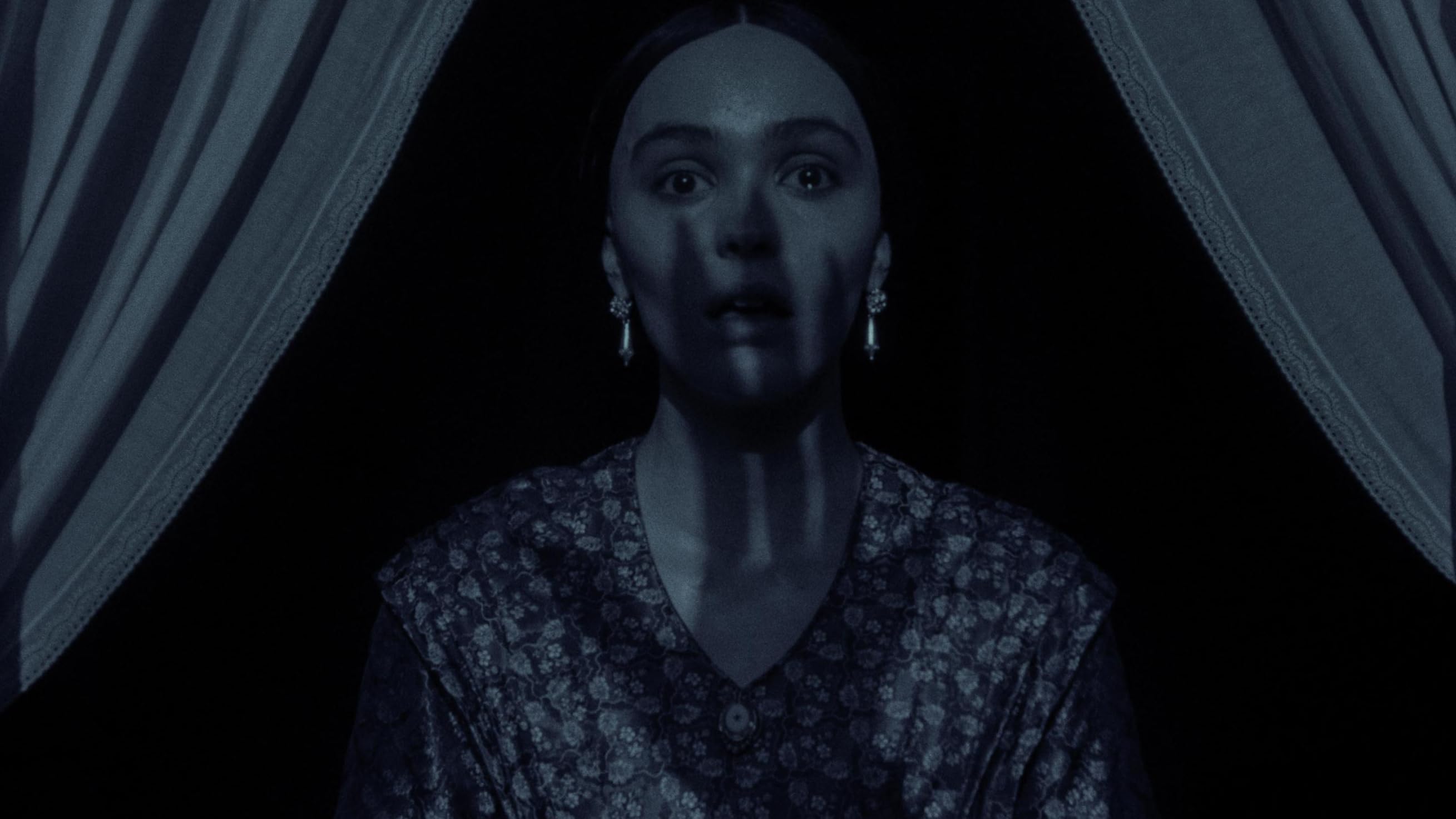
Robert Eggers’ remake of F.W. Murnau’s indelible 1922 classic is more akin in plot and scope to Francis Ford Coppola’s 1992 film “Bram Stoker’s Dracula” than Murnau’s inaugural cinematic adaptation, which was inspired by Stoker’s classic 1897 vampire tale. What’s the difference between Dracula and Nosferatu? Drac’s more dashing and suave, whereas the nosferatu named Count Orlok is a bald, withered being, grotesque by most human norms of comeliness and hygiene. Murnau, a master of practical effects, cranked up the mystical mind control aspects and educed a once-in-a-century performance from Orlok portrayer Max Schreck. Here, as played by Bill Skarsgård, whose brother Alexander worked with Eggers on “The Northman” (2022), Orlok is a shadowy incarnation that never comes into the light the way Schreck or even Klaus Kinski did in Werner Herzog’s 1979 take. Despite the title “Nosferatu the Vampyre” on the Herzog version, Kinski’s count is listed as “Dracula” and was something of a blend of the Bela Lugosi and Schreck incarnations. Eggers, who has made his name with eerie ambient immersions into the outré – “The Witch” (2015) and “The Lighthouse” (2019) – does more of the same here with strong black-and-white visuals delivered by director of photography Jarin Blaschke, who’s worked with Eggers on all his films, and the sonorous bolstering of Orlok’s gravelly intonations. The object of the carnivorous count’s desire is Ellen Hutter (Lily-Rose Depp), a young German woman with whom he forges a psychic connection despite residing far away in Transylvania (a picture can do that). To meet IRL, Orlok summons Ellen’s real-estate lackey husband, Thomas (Nicholas Hoult, now on-screen in “Juror #2”), to his castle to receive a deed to the flat across the way from their apartment in Wisborg. The count drains half the hemoglobin in Thomas’ body – nothing like weakening your rival in love before moving in. Once ashore in Wisborg (the scenes of Orlok dining on the crew while at sea are the most grim and gruesome), Orlok unleashes a plague and takes over the souls of a few townsfolk to employ as minions in pursuit of Ellen. In his adaptation, Eggers pays sincere homage to Murnau and Herzog’s versions. The result feels new in look and posture, but it doesn’t innovate much in the vampiric pantheon. Depp turns in the film’s most palpable performance, and for a Christmas treat, Eggers regular Willem Dafoe drops in as a batty academic and occult expert intent on sending Orlok back to the beyond for good.
‘Babygirl’ (2024)
Keeping with the psychosexual power games, Nicole Kidman notches her second Christmas film that features her bare derrière. That other movie, Stanley Kubrick’s 1999 swan song, “Eyes Wide Shut,” has grown on me over the years, especially the theme of small indulgences having larger, unintended ripples. Here Kidman plays Romy, the very in-charge chief executive of an e-commerce company named Tensile Automation – basically Amazon on crack. Romy lives in a palatial Manhattan condo with her husband Jacob (Antonio Banderas), a noted New York theater director, and two precocious teen daughters (Esther McGregor and Vaughan Reilly), but something’s clearly amiss. After sex, Romy runs off to another room to watch incest porn; then there’s the new intern Samuel (Harris Dickinson) who seems to know how to push every one of Romy’s buttons and regularly challenges her authority and proclamations in public forums – something few if any in the C-suite of Tensile Automation would dare to consider. Samuel chooses Romy as his mentor, and in their one-on-ones, keeps on pushing. Outside the office, the relationship turns physical with Samuel subjecting Romy to the kind of erotic B&D shenanigans that made “9½ Weeks” (1986) a kinky cultural staple for decades. Like Todd Field did with “Tár” (2022), writer-director Halina Reijn (“Bodies Bodies Bodies”) does a deft job of flipping the gender power paradigm. Kidman is superb as she riffles through the masks her character wears – nurturing mother, caring wife, nonapologetic CEO, lonely, unfulfilled soul and object of sexual subservience – often on a dime. Dickinson’s Samuel, by contrast, feels underwritten and hollow, which is a letdown given the strong performances he delivered in “Beach Rats” (2017) and “Triangle of Sadness” (2022). We never get the why of Samuel doing what he does, and when he starts threatening to upend Romy at the office or her coddled home life (he shows up uninvited for one of the girls’ birthday parties), he takes on the role of cruel manipulator as well as wormy opportunist, one we find ourselves rooting for a billionaire exec to take down. Also notable in the web of desire and deceit is Sophie Wilde (“Talk to Me”) as Romy’s protégée, who ends up dating Samuel as the affair becomes combative.
‘The Fire Inside’ (2024)
Cambridge-born filmmaker Rachel Morrison, the first woman cinematographer to receive an Oscar nod (“Mudbound”) in the category, makes her directorial debut with this biopic about Claressa “T-Rex” Shields, the first U.S. woman to win gold in Olympic boxing. The focus of Morrison’s film (working from a script by “Moonlight” director Barry Jenkins), is not her current pinnacle of pow, however, as she is still stalking opponents in the ring and undefeated as a pro, but Shields’ challenging early years in Flint, Michigan, where she was raised by a distracted single mother (the father was in jail) and lacking resources to get by. As Shields, Ryan Destiny brings a fierce pugnaciousness to the part. It’s an impressive, all-in performance not without nuance and a vein of vulnerability. The heat – and heart – of the film lies in Shields’ relationship with trainer Jason Crutchfield (Brian Tyree Henry), who backfills as a father figure. Bigger matters around Shields’ rise to prominence are a persisting gross gender disparity when it comes to compensation, respect and beyond, with a U.S. Olympic Committee publicist on Shields constantly to be more “ladylike.” Well-crafted and shot (by music video pro Rina Yang, not Morrison), with deep, palpable performances from Destiny and Henry, “The Fire Inside” strangely plays out somewhat flat-footed. Part of that’s the overuse of genre clichés (something you would not expect from the normally reliable Jenkins, but then again, consider his new “Mufasa”) and the knowledge that Shields would go on to become the Tom Brady of her sport. I’m not sure what’s next on Morrison’s plate, but “The Fire Inside” displays enough poise and promise to to get me off my stool for another round.
‘Homestead’ (2024)
Angel Studios, the family-themed, faith-based production company behind last year’s box office wonder “Sound of Freedom” (made for a cool 14 mill, it grossed near 200) saddles up with this post-terrorist-attack survival drama in which food, water and other life-sustaining needs become scarce as infrastructure and the law crumbles. The what and the why is a dirty bomb delivered by sailboat, detonated just off the L.A. coastline. Communications go silent, and the folks living on a sprawling, vineyard-esque estate of the title go into lockdown mode. The patriarch of the gorgeous grounds, billionaire Ian Ross (played by the steely eyed Neal McDonough) hires his own security detail headed by ex-Green Beret Jeff Eriksson (Bailey Chase) to keep out the riffraff (people seeking food and shelter). Based on the “Black Autumn” series by Jeff Kirkham and Jason Ross and directed patly by Ben Smallbone, “Homestead” wafts wisps of provocations – the haves versus the have-nots, what to eat when the corner market is bare and commitment to community, i.e., helping your fellow human in the wake of a societal collapse, but none really excite. Part of that is because Ross and his crew are so inherently entitled that you half want to see the hordes at the gate come for them Marie Antoinette style, and Chase’s operative is cold, aloof and always sizes up a situation with a finger on the trigger; neither character is particularly empathetic. The film does work its way around in the end, but feels rote. Alex Garland’s “Civil War,” released this year, covered similar territory with more bite. You do have to marvel at the spread that Ross and his family are holed up in, and much of the film feels like a grand mansion tour (despite the California setting, it’s in Bountiful, Utah, not too far from Angel Studios HQ).
It takes a little while to buy into Timothée Chalamet as quirky troubadour and American icon Bob Dylan, but once he gets you on the hook, it’s clear that the uncannily deep performance is certain to be one of the year’s best. I was never all-in with all the Chalamet love after he burst onto the screen in Luca Guadagnino’s “Call Me by Your Name” (2017) and received an Oscar nod for his part as young lover to an older partner. And yes, he shone as Hal in “The King” (2019), but in the “Dune” films he’s felt underweight as Paul Atreides, the man-boy turned messiah. With his turn as Bob, I’m done dithering – and did I mention he does all the singing of Dylan’s early ’60s catalog, nasal twang and all? It’s more than just a little impressive.
Departing from your typical cradle-to-grave biopic arc, writer-director James Mangold (“Heavy,” “Ford v Ferrari”) and co-writer Jay Cocks, working from Elijah Wald’s 2015 book “Dylan Goes Electric!” home in on Dylan’s ascent to notoriety and his transition from folk to electric rock, which caused a sizable stir at the 1965 Newport Folk Festival. Dylan reportedly had conversations with Mangold and offered some additional tidbits that got worked into the film. We begin with the young Bob visiting his idol Woodie Guthrie (Scoot McNairy, also onscreen as Amy Adams’ passive husband in “Nightbitch”) at a hospital where he’s battling Huntington’s disease and can’t talk. By his side is “If I had a Hammer” singer and Newport Fest organizer Pete Seeger (a nearly unrecognizable Edward Norton, knocking it out of the park as the solemn, mild-mannered folkie). Three legends, one small room.
The film flows like that: Dylan’s soulful sojourns cross paths with other era icons, sometimes collaborating and other times clashing. As the film has it, it’s Seeger among the crew trying to pull the plug on Dylan’s electric set late in the film. In between, much revolves around Dylan’s relationships with girlfriend Suze Rotolo, fictionalized as Sylvie Russo (Elle Fanning) to allow narrative flexibility and respect Rotolo’s memory and surviving family; and folk and feminist icon Joan Baez (played with vim and nuance by Monica Barbaro, whose stock is certain to rise in the wake of the film). It’s Baez who early on gives Dylan a big lift, bringing him on tour, and despite their romantic interludes has no qualms about calling him out for being a self-interested asshole.
Rock biopics are notoriously tricky. Without the artist or the artist’s estate behind the project, often the music is missing – see “Stoned” (2005, about Brian Jones) or “Stardust“ (2020, about David Bowie). This isn’t Dylan’s first treatment either, which would be Todd Haynes’ more abstract and cagey “I’m Not There” (2007), in which Cate Blanchett, Richard Gere and Heath Ledger are part of a six-actor rotation playing Dylan in different incarnations. Mangold’s take is more rooted, but both films are wise to seek the essence of Dylan and not attempt to provide answers into the slippery persona who, after becoming the only musician to win the Nobel Prize, skipped the ceremony and sent fellow rocker Patti Smith to perform a few Dylan works in his stead.
One of the finer strands in “A Complete Unknown” is the letters exchanged between Dylan and Johnny Cash (a brash Boyd Holbrook) and their meetups at Newport. Cash, whom Mangold framed with great success in “Walk the Line” (2005) with Joaquin Phoenix, is depicted as something of a Dylan agitator and muse who pushes him to push back on the folkies who want to keep Newport unplugged; his inclusion allows an uproarious scene one not-so-sober festival morn with Cash trying to park his Caddy by caroming and careening off the fenders and bumpers of other cars. The true gift of “A Complete Unknown” is its ability to transport the viewer via dreamy time machine, re-creating the era impressively but maintaining a tight focus.
If you feel the film meanders or is too myopic, that’s the point: It’s the young Bob Dylan wrestling with his roots, idols and place in the world. Little else bleeds in, and the film is not afraid to be critical of perhaps the greatest songwriter of the modern era. History does get manipulated some, but mostly for effect and efficiency, and Chalamet clearly did his homework, while the supporting cast of Norton, Barbaro, Holbrook and Fanning all strum along seamlessly in tune.
A silly concept well-played, thanks largely to lead Megan Fox leaning in on her screen persona. It’s not the first time for Fox, who rose to notoriety as eye candy for teenage boys in the “Transformer” films: In 2009 she paired with “Girlfight” (2000) director Karyn Kusama and writer Diablo Cody (“Juno”) for the deconstructive horror-comedy “Jennifer’s Body.” Here she plays Alice, a droid nanny in a clingy maid outfit. She’s what’s known as a “sim,” mass-produced humanlike robots programmed to help out around the house, hospital, worksite or whatever. Alice is brought into the fold of a family to aid Nick (Michele Monroe) in the care of his daughter (Matilda Firth) and infant son because mom (Madeline Zima) is waiting on a heart transplant and might not be in the picture long. There’s tension because Nick is a construction worker dealing with the issue of sims replacing him and his crew at work, yet also sexual tension between him and Alice that’s pretty high from the get-go, added by glimpses of Alice in her babydoll garb and undies. The catalyst that turns Alice into a “M3gan”-esque terminator (yes, Megan goes M3gan) is the movie “Casablanca” – no joke. Nick’s a fan, and when Alice sits down to watch it with him one night and fires off a salvo of film factoids, Nick asks her if there is anyway to expunge the info from her memory banks so she might enjoy the cinematic experience organically. The answer is a disastrous reset that renders Alice jailbroken and able to go off script. Fox does a commendable job of physically articulating the tics and quirks of being a ’bot. How the film directed by S.K. Dale, who worked with Fox on “Till Death” (2021, also streaming on Netflix), evolves from there, packs a few neat curveballs and leaves things open for a sequel, but you’ve seen this bad ’bot plot before – and better.
‘Red One’ (2024)
Still playing in theaters but also now on Amazon Prime for free this week is this ho-ho-ho, so-so comedy-adventure that has Saint Nick (J.K. Simmons) kidnapped so an evil impish creature can take over the reins of Christmas. “The Nightmare Before Christmas” (1993) this is not. Simmons’ Santa is a bit of a change-up from your usual: He works out, hates macaroons and has a tricked-out sled with grotesquely jacked CGI reindeer. In this winter wonderland universe directed by Jake Kasdan (“Zero Effect”) there’s an org called the Mythological Oversight and Restoration Authority that’s trying to “rewild” the world with entities of myth and lore. One such is Grýla (Kiernan Shipka), the winter witch from Icelandic lore wants to take over the sleigh and deliver snow globes to the naughty that will imprison them in the globe for life. This is cause for pause, because is imprisoning potential future sociopaths a bad thing (well, yeah, because it’s kids, and naughty doesn’t mean homicidal), and did Grýla in the plotting of her scheme ever contemplate a three-strikes policy? In the mix to save the day are Dwayne Johnson as Nick’s head of security, Chris Evans as a hacker and bungling pa who accidentally gives away the secret locale of Santa’s operations, and Lucy Liu as a Mora operative. Thankfully, the ever-cantankerous Krampus (Kristofer Hivju, “Cocaine Bear”) makes an appearance and brings fire and fun to the few scenes he’s in. “Red One” is relatively watchable family fare, but as ephemeral and forgettable as a first dusting of snow.
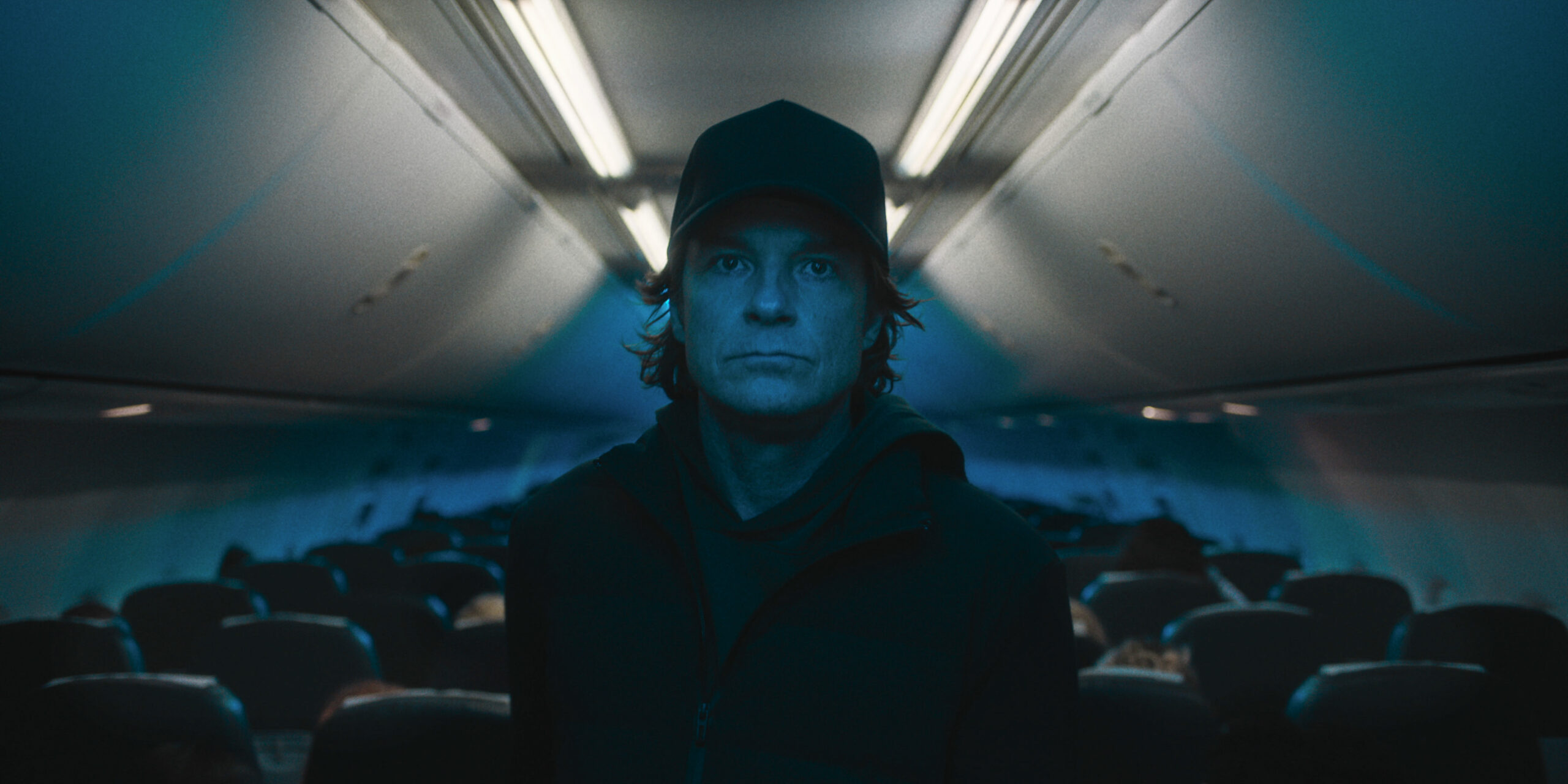
Another just-watchable holiday-themed flick that treads heavily on its “Die Hard” (1988) aspirations, starting with an East Coast fish-out-of-water Jersey boy hero, now played by Taron Egerton (Elton John himself from “Rocketman”), trying to thwart a terrorist strike in a bustling L.A. complex. Egerton plays Ethan Kopek, an underachieving TSA officer and cop wannabe who regularly shows up late for airport shifts and, as a result, draws menial shit job duties and can’t get a promotion. It’s Christmas Eve and, as is his MO, Ethan shows up late and is assigned a luggage-scanning post. Unbeknown, the station is the target of terrorists trying to get a briefcase full of the lethal Russian nerve gas Novichok onto a plane. The motive has to do with framing the Russians by killing a congresswoman aboard and thus generating contracts for U.S. military contractors, or something like that, not the most inventive MacGuffin. The terrorists, led by a calm, cool Jason Bateman (“Ozark”), get the bag through the checkpoint through a threat to Ethan: that his pregnant girlfriend (Sofia Carson) working in another wing of the airport is in a sniper’s scope and will be shot should he not comply with their every instruction. It’s a pat but passable thriller, with credit to Bateman’s wormy confidence and Danielle Deadwyler, good here as a cop in the mix and even better in “The Piano Lesson” this year. But they’re not enough to elicit a “Yippee-ki-yay.”
Long, overindulgent and absolutely riveting, the first feature film by Harvard grad Joshua Oppenheimer is hard to make heads or tails of as it explores life after the end of the world. The cinematic visionary who blew audiences away with his imaginative documentaries on the Indonesian death squads of the 1960s (“The Act of Killing” and “The Look of Silence,” both Oscar nominated) saddles up with Tilda Swinton, it boy George McKay of “1917” – already having a banner year with “The Beast” and the hard-hitting “Femme” to his credit – and Michael Shannon, who starred in the similarly themed, “Take Shelter” (2011). They play Mother, Son and Father, respectively. Along with “Nightbitch,” also currently in theaters, this no-name concept seems to be the arthouse convention du jour.
We catch up with the trio living the posh life in a bunker a half-mile underground after the rest of the world has been burned to a crisp. The shelter is in the labyrinth of an abandoned salt mine bought presciently decades ago by Father, a former oil exec (who, by proximity, had a hand in the incineration of humankind). Son was born in the bowels of that salt mine, and the well-tended-to trio are not alone in their enclave. With them are a doctor (Lennie James, “The Walking Dead”), a cook (Bronagh Gallagher) and a butler (Tim McInnerny, “Gladiator II”). Everything for the most is safe and good, and their biggest discomfort is the bitter sourness of the wine they vinify. Then an interloper drops in – almost literally. The arrival of the young woman known as Girl (Moses Ingram) is not welcomed. Mother and Father have a xenophobic policy and initially restrain and restrict Girl; eventually they admit her into their midst, where as you can guess, sexual tensions with Son rise quickly and cause social dynamics and routines to shift.
Did I mention that “The End” – not to be confused with the similarly titled and themed 2013 film “This is the End” starring Jonah Hill and James Franco – is a musical? For his two Indonesian hit-squad docs, Oppenheimer stepped outside the boundaries of nonnarrative convention and gave former squad leaders resources (money and cameras) to make their own films depicting their recollection of their parts in the bloody overthrow. One made a garish musical with former killers dressed in drag and singing alongside the cascading waters of a grand waterfall. Could that have been the inspiration for the cast of “The End” to break into song in the dusty corridors of a salt mine? The probability is too overwhelming to deny.
The overall fabric of “The End” is not too far from L.Q. Jones’s postapocalyptic“A Boy and His Dog” (1975), in which Don Johnson as that “boy” discovers an underground Eden and ultimately upends an order serving mostly an elite few. Besides the gender role swap, the other notable delta between the films is the causality for eradication – global nuclear annihilation or human-triggered climate change catastrophes. Oppenheimer doesn’t harangue the audience by climbing onto the climate change pulpit, a theme more clearly held off in the corner of the frame. For his microsociety, there’s no wrestling with what-ifs, because it’s already happened, but members have guilt and admit to things they did that led to the perishing of others.
Given the texture of his films, it’s clear that the cleansing power of confession is something that drives Oppenheimer – it was the thing he sought to educe from Indonesian militia leaders after decades of denial. The result in those films was stunning, emotionally impactful and horrific; here, narrative artifice diminishes that impact, but “The End” is effectual in its own right. It is gorgeously framed and shot, with near period-piece delicacy, and the performers create sharp characters and prove quite capable when dropping into song. The offset between Swinton’s subtle, ethereal otherworldliness and Shannon’s gruff bristle takes a while to digest, but serves the film well. “The End” does go on a bit too long for the concept, but effectively provokes with themes of isolationism, empowered entitlement and one’s responsibility to a fellow human, as well as stewardship of the vast blue orb we’ve indelibly infected through negligence and avarice.

















 For What it's Worth