Archive | Review RSS feed for this section

WBCN and The American Revolution

25 Apr

‘WBCN and The American Revolution’ tunes IFFB into rock history at weekend screening


The WBCN airstaff circa 1969 included Michael Ward, Steven Segal, J.J. Jackson, Al Perry, Sam Kopper, Jim Parry and Joe Rogers, aka Mississippi Harold Wilson. (Photo: David Bieber)

It’s been 10 years since WBCN, the radio station that defined rock ’n’ roll in Boston for more than four decades, went off the air. For anyone living in Boston before the Internet boom, ’BCN was as big a part of Hub life as the Celtics and the Red Sox – and now in a documentary by Bill Lichtenstein, “WBCN and The American Revolution,” the early days of the envelope-pushing radio station get their nostalgic due. The film plays this weekend as the Centerpiece Spotlight Documentary of the Independent Film Festival Boston.

The anniversary of the station’s demise wasn’t quite the impetus for the film, Lichtenstein said. “What drew me to the project, besides my roots, was that in the mid-2000s, in wake of 9/11 and Bush, there was a lot going on and people were not speaking up. John Kerry was running for president and Bruce Springsteen did a benefit concert and he was critiqued for being too political, and the same time, Napster started to bring back old songs and Bruce’s first interview at ’BCN showed up on the Internet,” Lichtenstein said. “I thought maybe I could go back and see what there was out there on ’BCN, because ’BCN had no archival footage.”

Lichtenstein, a Cambridge resident, began as a 14-year-old intern at the station in 1970, eventually becoming a DJ and newscaster. After leaving ’BCN, he worked at ABC in New York on news shows such as “20/20” and “Nightline.” Continue reading

Avengers: Endgame

25 Apr

‘Avengers: Endgame’ was a long time coming, and it’s another exceptionally long time going


And so it begins, or ends, and no matter how you see it, it’s a long one. “Avengers: Endgame,” the de facto part two of “Avengers: Infinity War,” clocks in at more than three hours – 30 minutes longer than “Infinity” and chock full of maudlin eddies that should have been pared back. That said, “Endgame” gets the job done, passing the baton as it closes out a long-running chapter with some sentimental eye rubs. Where Disney’s Marvel Universe goes from here is likely a focus on new blood such as Black Panther (Chadwick Boseman) and Captain Marvel (Brie Larson). They’re both in “Endgame,” tossed in as inert garnish.

In case you need a rewind: At the end of “Infinity War,” Thanos (Josh Brolin), blessed with the unholy alignment of all six infinity stones (the power of a god to create and destroy), has eradicated half the life in the universe and, with that, half of the Avengers crew. We catch up with Iron Man/Tony Stark (Robert Downey Jr.) floating near-dead in space, Hawkeye (Jeremy Renner) searching desperately for his wife and children and Ant-Man (Paul Rudd) spit out unceremoniously of a five-year time warp – in a beat-up Ford Econoline or the like, to boot. The film moves along sluggishly for the first half-hour, and I’d be wrong to tell you fully how it flies, but the simple answer is: The remaining Avengers crew need to somehow turn back the clock. Given that this is Marvel, and a superhero fantasy (the opening with Traffic’s “Dear Mr. Fantasy” is nearly as ingenious as the use of “Mr. Blue Sky” in “Guardians of the Galaxy Vol. 2” – is there some mandate for classic rock songs with “Mr.” in the title in the Marvel Uni?) that time travel quest – with semi-hilarious film references to “Back to the Future” – happens sure enough, and the “Infinity War” with Thanos gets something of a do-over.

Before that the film notches some of its greatest self-deprecating wins, namely in that the buff god of thunder, Thor (Chris Hemsworth), some five years after Thanos’ win in Wakanda, is now a potbellied booze bag looking like the portly Val Kilmer, “large mammal” portrayal of the latter-years Jim Morrison in Oliver Stone’s “The Doors.” Or take the Hulk/Bruce Banner, (Mark Ruffalo) who has gotten his raging greenness and mild manner intellect to come to terms. And then there’s Hawkeye, who’s been bestowed the worst hairstyle imaginable – an unholy marriage of a mullet and a mohawk. How and why this choice was ever made is never explained and demands a film of its own, but yes, it’s a weird alternate reality out there, and not necessarily a bad one. As one observant Avenger points out, with half as many humans on the planet the water in the Hudson is now so clean, pods of a resurgent whale populations are hanging out where there were once toxically polluted slurries.

Ultimately “Endgame,” like “Infinity War,” both directed by the brothers Russo (Anthony and Joe, who made the far cheekier and superior “Civil War”) turns into a major CGI boggle of superheroes battling a herd of creepy-crawly things from another planet. Amid all the chaos there’s one gratuitous yet neat scene where an all-female phalanx of supers try to get the final wold-saving run done, and yes, Captain America (Chris Evans, with the requisite square-jawed woodenness)  is there to anchor the whole shebang; in very (too) small metes, we also get Samuel L. Jackson, Robert Redford and Tilda Swinton. It’s a very crowded affair.  Some big names and friends move on and out with a tear or two to be shed, but I was more struck by other matters looming at the edges of the frame, including nature’s resurgence in a less populated world, curiosity for how far Brie Larson and the “Captain Marvel” franchise can realistically go and, most of all, that haircut Renner is saddled with. It’s indelible and unshakable. If his Hawkeye could travel back in time to the 1990s there would be NHL hockey teams north of the border that would surely inject him in the first line based on hair alone.

High Life

15 Apr

‘High Life’: Sending convicts to a black hole, occupied by pursuits only sometimes solitary

Costuming High Life, Claire Denis' claustrophobic sci-fi thriller | Dazed

Way up high, what’s that in the sky? Looks like a metal shipping container with rocket boosters glued on. A bit hokey indeed, but would you believe me if I told you “High Life” was the first English-language film from French auteur Claire Denis, and it’s a sci-fi adventure? Strange but true, though in fact there’s very little sci-fi-ish about the death-row deep-space mission that’s more about colliding personalities and strange sexual dances in dark places. Yes, in outer space no one can hear your orgasmic cries of ecstasy, but that’s mostly because they happen in a sealed box. (More on that later.)

The crew of that shipping container – the “7” – are all criminals (“scum, trash and refuse”), rocketing toward a black hole while radioing back to command their findings. Kind of. The one thing they do seem tasked with is the prospect of reproduction in outer space. The men must fill cups in a booth (it looks like a photo booth in a mall, but is not to be confused with the formerly mentioned “box”) and are given precious sleeping pills for their effort. The women are impregnated occasionally, but the birth of a child usually proves fatal for mother and infant. All this is orchestrated under the watchful and controlling eye of Dr. Dibs (the eternally eternal Juliette Binoche), who, in her tight nursing uniform, seems to be the closest thing to a commanding force aboard a ship with the feel of a basement boiler room or padded-cell dormitory. One crew member won’t share his seed, Monte (Robert Pattinson, who pleasingly keeps getting further away from his “Twilight” origins), and seems more in control of his own fate than others on the 7.

Given the lethality of childbirth and the fact that this is a crew of social marauders and murderers relegated to the deep, lawless abyss of space, what could go wrong? A primal carnage works its way through the 7 about midway through the film (as well as a realization that the narrative has been moving in time hops), with much of the violence meted out being raw retaliation, or the culmination of adamant disagreement. Folks aboard seem more interested in their two pounds of flesh and sleeping pills than any destination or technical issues that could imperil them. Of all the wacky internal violence, only one of the acts is sexual in nature – mostly because the 7 is equipped with a “fuck box,” a high-tech Shaker booth of sorts. We visit the Orgasmatron device only once, as our fair Dr. Dibs takes her turn. Inside there’s a well-endowed Sybian device, with trapeze handles to add you your bucking pleasure. Binoche, with a flowing, glorious mane of dark hair, is framed from her bare milky back, an image of Lady Godiva riding off into the dark night of endless pleasure.

Clearly Denis is operating under the creative influence of Andrei Tarkovsky’s 1970s sci-fi classics, “Solaris” and “Stalker,” potent blends of psychological thriller and adventure into the unknown. There’s even the unmistakable image of a body floating in space eerily similar to Princess Leia (Carrie Fisher) suspended in the cold dark outside the hull of a rebel cruiser in “The Last Jedi.”  It’s hard to imagine Denis borrowing from such commercial fare, but there it is. Overall, the unthinkable mix is a jumbled delight. Like Gaspar Noe’s “Climax,” this could have been set in any confined locale – a sealed tier in a parking garage, a cabin atop a snowbound mountain, an ocean liner stranded at sea or even a ginormous freight elevator during a power outage – and the result would be the same. Denis is one of the most maverick female filmmakers out there, in good company with Kathryn Bigelow, Lynn Ramsey and Debra Granik, and adds her hard feminist fingerprint to “High Life” as she has in great films such as “Trouble Every Day,” “Beau Travail” and “White Noise.” Her latest adventure  isn’t quite on par with those films (you can still catch several at the Brattle Theater as part of “The Good Works of Claire Denis” series) but it is a riveting psychological odyssey from launch to climatic nadir.

Diane

5 Apr

‘Diane’: Mother has some issues of her own, and she’s taking the audience down with her

Image result for diane movie 2019


Sin and redemption is an arduous process. For Diane (Mary Kay Place, knocking it out of the park and into the next city) it’s an endless ordeal. When we first catch up with Diane she seems something of a saint, doing her son’s laundry, visiting her terminally ill cousin, Donna (Deirdre O’Connell) in the hospital, looking in on a convalescing neighbor and staffing a local soup kitchen with her friend Bobbie (Andrea Martin), whom she tells much over coffee and drinks throughout the film.

Over the slow-arcing – and emotionally aching – course of “Diane” we come to learn that part of the motivation in these selfless acts is atonement. Too, life at home in rural Western Massachusetts (though shot in Upstate New York) isn’t so tranquil. Diane’s mercurial adult son, Brian (Jake Lacy, who actually is from Western Massachusetts) is a recovering addict and in the throes of relapse. In such a state he’s content to wallow in his own squalor and drop the C-word should his mother threaten him with an intervention. Diane’s life is exhausting, to say the least, and then there’s that specter from her past that’s been driving her for years, the way Casey Affleck’s weary and remorseful dad shambled across the screen with the heaviness of the world on his slim shoulders in “Manchester by the Sea”(2016).

If the film sounds a bit like the Lucas Hedges and Julia Roberts tough-love flick “Ben is Back,” it is – in some ways. “Diane” is far grittier. It might sound as if Diane just needs a spa day; but she gets that, and then she goes out and gets a drink and another, and another after that, until she’s cut off. It’s arguably the best scene in the film, as Place’s tortured soul tries to find solace at the bottom of a glass while mouthing lyrics to 1990s classics on the jukebox. At some point Brian goes missing, and where the film goes from there is anything but predictable.

What director Kent Jones (of the 2015 documentary “Hitchcock/Truffaut,” making his feature debut) mainlines here is a sense of rue and how the present is shaped in crashing waves from small, rippling transgressions out of the past. The sense of fate, family and faith, let alone loyalty and betrayal, resounds. Jones goes about it all with subtlety, and has a talented ensemble (the great Estelle Parsons among the lot).

It’s impossible to sit through “Diane” and not get pulled by the strong emotional current or bold performances. If the name Mary Kay Place is a bit of a head-scratcher, she’s always been off to the side in films such as “Being John Malkovich” and “Girl Interrupted” (both 1999), but that’s now likely to change, and for many others in the cast as well. It may be early in the year, but boy, there’s a lot of gold prospects in “Diane.”

The Beach Bum

29 Mar

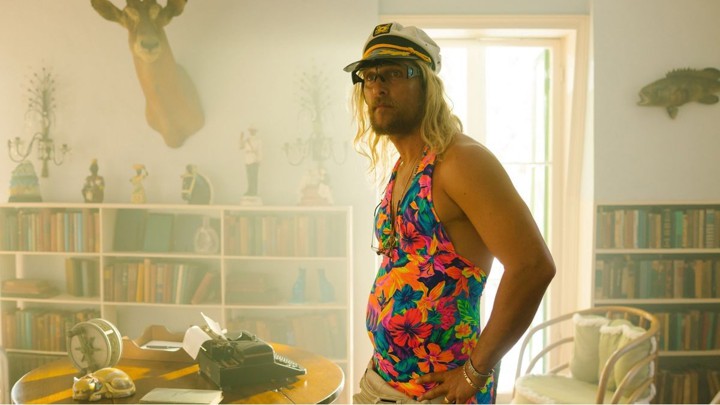
‘The Beach Bum’: McConaughey is Moondog, the weed is strong and life is all right, all right

By Tom Meek 

Image result for the beach bum movie
Harmony Korine, the wunderkind (as screenwriter) behind Larry Clark’s dark and disturbing 1995 chronicle of bad adolescent behavior, “Kids,” has been a dicey go when working the camera. An experimental filmmaker who’s pushed the boundaries of sex, sexual violence and despair, his work is often critically hailed but financially anemic. His first film, “Gummo” (1997), about white trash eccentrics in a depressed Ohio township, cost more than $1 million to make and grossed about $20,000. “Mr. Lonely” (2007) about celebrity impersonators in Paris, ran $9 million to put together and grossed less than $250,000. Not great math, but “Spring Breakers” – his 2013 Day-Glo crossover starring Selena Gomez and Vanessa Hudgens as coeds turned boat-running perps – crushed it both at the box office and with the critics. So what could go wrong with a return to sun-soaked Florida, a big-name cast and some gonzo high times? Well, sharks for one, and a muddled vape waft of a plot for two.

If you’re a fan of Matthew McConaughey’s eternal high school hound-dog in Richard Linklater’s brilliant 1993 teen comedy, “Dazed and Confused,” “The Beach Bum” will be something of a treat; he plays the maturation of that delusional soul, a party-every-day stoner named Moondog, a once-was poet famous enough to take the mic from Jimmy Buffett at a gig. Moondog hangs in the Keys, lounging on a houseboat named “Well Hung,” drinking PBRs and banging on bongo drums accompanied by buxom, naked females. It’s something of a cross between “Waterworld” and a Goya painting. But Moondog, it turns out, is a family man with a wife and daughter up in Miami. Baby girl is getting married to a guy Moondog refers to, even at the ceremony, as “Limp Dick.” 

Moondog’s wife Minnie (Isla Fisher) is loaded and lives in a seaside manse replete with infinity pools and more house staff than Tony Montana. She’s also got her own side distraction with longtime family friend and rap mogul (or maybe more of a drug dealer?) named Lingerie (Snoop Dogg, who owns every scene with aplomb). When Moondog shows up drunk in a skiff at the dock, he and Minnie immediately down a few cocktails; as she receives a poolside pedicure from an away-glancing pedicurist, Moondog performs oral sex on her. For such eccentric hedonists, their daughter Heather (Stefania LaVie Owen, who ever seems on the verge of cracking up at McConaughey‘s goofy Moondog hijinks) is exceptionally well adjusted, aside from her choice of spouse – he’s simple a generic 9-to-5 wonk, not suited for this family by any means.

Not to give too much away, but the film could be subtitled, “A Wedding, a Funeral and a Book.” The big win to the film besides McConaughey, who has to power it along and does so with lecherous, avuncular charm, is the utterly inspired casting. I mean, there’s a duet between Jimmy Buffett and Snoop Dogg; Zac Efron shows up and smashes a wheelchair-bound elder over the head with a whiskey bottle – Korine must have some kind of vendetta against “High School Musical” – and Jonah Hill emulates the accentuated Southern twang of Strother Martin as Moondog’s money-grubbing agent. Then there’s Martin Lawrence as Captain Wack, who likes to wake and bake (his parrot needs a few lines of toot to get up and going as well) and take unwary tourists out on dolphin tours. That’s where the film jumps the shark, or I should say a shark jumps unnecessarily into the film. It’s a near fatal stroke, but nothing McConaughey‘s Moondog can’t fix with a giant blunt, a bottle of booze and some bad prose. Any decent prose that flows from Moondog is borrowed from the greats, though. The one poem we get that’s heralded by mucky-mucks is about appreciating the prowess of one’s penis to do it twice a day. 

It might be too harsh to call “Beach Bum” a spectacle of excess, the way that maybe “Fear and Loathing in Las Vegas” (1998) or “Candy” (1968) were, but it’s listing in that direction. Overall the film doesn’t have the biting edge of “Spring Breakers,” but if you have a taste for Korine’s raucous rambling skids through the highs and lows of society (think “Gummo” or “Trash Humpers”) this is the grade-A Wagyu, James Beard-approved course for you. And of course there’s McConaughey. The film does’t work without him. This is a sheer shambles of cinematic poetry that’s all McConaughey.

The Mustang

28 Mar

‘The Mustang’: Breaking horses as prison task builds powerfully for quiet man in a quiet film


Image result for the mustang movie

If “The Mustang” feels like something of a redux of “The Rider,” it is, especially if you consider the nucleus of a man trying to heal through bonding with a beast and the raw beauty of the tumbleweed-dusted valleys and plains that fill the screen. Both films deal with broken men. In the case of “The Rider,” Chloé Zhao’s beautiful second feature, it was physical as well as emotional, as a brain-injured horseman confronted the near certain risk of death should he mount a steed again. In the case of “The Mustang,” there are deeper and darker elements, namely that it’s set inside the razor-wired confines of a maximum security correctional facility in Nevada.

The broken man here is Roman Coleman (Matthias Schoenaerts), a transfer tossed immediately in solitary confinement because of an outburst at an anger management counselor (Connie Britton).Not a good start, but Roman’s mostly a quiet, keep-to-himself kind of guy (“I’m not good with people,” he remarks). You can tell there’s simmering rage and demons inside, yet also vulnerability and compassion in those perpetually narrowed eyes. Once out of the box, Roman is assigned to shit duty – literally. The prison, because of its location in the heart of wild mustang country, runs a program to break the bucking beasts and sell them at auction – ironically, mostly to the police. For some reason, and we’re not entirely told why, Myles (Bruce Dern) the old codger who runs the equestrian side of the prison, sees something in the way Roman scoops up manure and mandates him into the program.

The horse-whispering is pretty neat and drives the film as expected, but it’s Roman’s bond with a fellow inmate, Henry (Jason Mitchell),and visits from his pregnant daughter, Martha (Gideon Adlon), who harbors justified animosity for her father, that cast a longer shadow. Issues of racial division are clearly etched in the yard, and there’s an illicit drug trade that threatens to drag in Roman.

Thankfully nothing about “The Mustang” is heavy handed; Laure de Clermont-Tonnerre has composed a quietly powerful portrait for her first feature, with a script so spare you almost wished people expressed themselves a bit more. Her real ace in the hole, besides the majestic beast that bucks its stall viciously (it too, gets tossed in solitary) is Schoenaerts, best known for his role as a Russian baddie in the silly and misguided J-Law spy thriller “Red Sparrow” (2018), but delivering a breakout performance here. With a shaved head and dewy eyes, he looks something like a mini-me version of Dwayne “The Rock” Johnson, and casts a presence that is at once intimidating and resilient while remaining soulful and pained, imbued with the rue of past actions. It’s a film-winning performance that’s aided just the slightest by prodding barbs from Dern’s cantankerous mentor, the warning snorts from the mercurial steed and mostly, the cagey, sassy baiting from Mitchell’s hands-on, horse-wrangling instructor.The casting and arc of emotion couldn’t be more perfect, and the final frame will surely break you.

Hotel Mumbai

28 Mar

‘Hotel Mumbai’: Caught in a terrorist attack, relying on themselves, each other to survive

By Tom Meek

Image result for hotel mumbai movie


The other day I was talking with some folk about the dark comedic virtues of Peter Bogdanovich’s “Targets,” which was made back in 1968 and clearly inspired by the Charles Whitman shooting spree of 1966. On that fateful Aug. 1, Whitman killed 16 people and shocked a nation that had never seen such carnage (now sadly common). It surfaced in Stanley Kubrick’s brilliant antiwar film “Full Metal Jacket” (1987) when R. Lee Ermey’s indelible drill instructor extols the virtue of Whitman’s marksmanship, and two years ago, in the riveting, animated documentary “Tower,” which outlined law enforcement’s inability at the time to deal with such a threat quickly or effectively, resulting in the formation of SWAT and other tactical response units. There’s a similar case in “Hotel Mumbai,” a based-on-real-events drama revolving around a 2008 terrorist attack and ensuing siege at the world-renowned Taj Mahal Palace Hotel. As history and Anthony Maras’ feature debut has it, Mumbai, a city of more than 18 million people, essentially had no response to deal with a handful of well-coordinated extremists armed with assault weapons and a take-no-prisoners mandate.

The film’s a nail-biter, to be sure, and quite effectively paced. We get to know some of the potential victims and heroes intimately, the way we did in Paul Greengrass’ harrowing 9/11 saga, “United 93” (2006). Perhaps to give the film a more international appeal and a Western flavor, much of the action hangs on an American architect named David (Armie Hammer) and his Middle Eastern wife Zahra (Nazanin Boniadi). Early on, before the shit goes down, the couple joke that they should have left their newborn at home (to enjoy more romantic time together), and probably wish that were so during the attack; they spend much of the hours-long assault separated from the baby, who’s vaulted inside a palatial suite with a rightfully hysterical nanny (Tilda Cobham-Hervey). From the staff side, we imbed with Arjun (Dev Patel, “Slumdog Millionaire”), a compassionate waitperson, and the strict but fearless head chef, Hemant Oberoi (Anupam Kher) who runs his kitchen like a military operation. Continue reading

US

24 Mar

‘Us’: Jordan Peele’s terrific sophomore flick shows how scary it can be to fight with family


Image result for US

Jordan Peele’s follow-up to the genre-rebranding horror classic “Get Out” (2017) is something more pure in terms of blood and gore, but not as sharp politically or socially. Not that that makes it a bad movie – I’m just not sure it’s possible to improve on “Get Out.” And while “Us” is something else entirely, it is cut from the same cloth.

What’s to know? The Wilson family are off for a summer vacation in Santa Cruz, replete with a house on the bay and an amusement park boardwalk. It sounds dreamy, but as the nuclear family rolls in there’s dread on the mother’s face, with good cause. Turns out when Addy was 10 (played by an effectively wide-eyed Madison Curry) she had an encounter with an identical girl who accosted her in the house of mirrors and, as a teen, went through years and years of therapy. They unpack, dad (Winston Duke) scores a sputtering speedboat and they take in a few beach beverages with well-off bores Josh and Kitty (Tim Heidecker and Elisabeth Moss). It’s not until they settle in that evening that a family shows up on the front lawn. A call to the cops and Duke’s Dave wielding a bat does little. Soon the summer home is invaded and the Wilsons are looking at four versions of themselves, each dressed in a red Michael Myers jumpsuit and holding mother-sized pairs of gardening shears.

Only Addy’s twin can speak; the rest make only animal noises. But their intent is clear: Separate and exterminate their original. It’s “Invasion of the Body Snatchers” done Jason Voorhees style.

The real fun here is watching Lupita Nyong’o play Addy and her evil “tethered” twin. She’s amazing on both sides of the equation, and it’s nice to see the Oscar-winning actress (“12 Years a Slave”) take full center stage. Duke, who costarred with Nyong’o in “Black Panther” (2018) is up to the task as well, and Shahadi Wright Joseph and Evan Alex cast as the Wilson kids are convincing both as imperiled humans on the run and the shadow demons looking to replace them.

While “Us” revolves around a black family in a largely white setting, it doesn’t have the sociopolitical punch that “Get Out” had. When Addy asks her evil who they are, she replies “We are Americans.” Perhaps it’s a light reference to equity disparity? It doesn’t matter – “Us” is best seen as a straight-up chiller that’s well crafted and fantastically acted. As Peele pulls back the camera and the plot widens, the film doesn’t quite hold its spell. Sometimes horror films on the lake are best when they stay by the lake.

The Image Book

16 Mar

‘The Image Book’: Godard’s cinematic collage will consume you, given the time and attention

Image result for the image book showtimes

In my mind there’s a debate which director had the best decade ever. An obvious choice is Coppola in the 1970s, topping Spielberg and Scorsese with four killers (“The Godfather,” “The Godfather II,” “The Conversation” and “Apocalypse Now”). How do you beat that? Well, in the 1960s, Jean-Luc Godard churned out “Breathless,” “Contempt,” “Band of Outsiders,” “Weekend,” “Alphaville” and “Sympathy for the Devil,” among others. That’s a pretty stacked deck, even if folks want to debate the last two entries. For me the French New Waver’s sci-fi flick (“Alphaville”) never worked, but it’s highly regarded; and many find Godard’s chronicling of the Rolling Stones’ “Sympathy for the Devil” studio sessions stilted, intermixing what I would call their greatest song with images of the Black Panthers and negative American imagery. But you can’t make that song look or sound bad, even if you interrupt it with total nonsense.

I digress. Godard is almost 90 and he’s made more than 100 films of various lengths and formats. He’s probably not been truly relevant stateside since his 1985 take on the Virgin Mary, “Hail Mary.” In pre-sex scandal Irish Catholic Boston, where the church was a powerhouse, there were far more protesters outside the Paris Cinema on Boylston Street (now a Walgreens) than people trying to get tickets. I wonder how that would float now? Shortly afterward, Godard made a short called “Meeting Woody Allen” – again, I wonder how it might be received today?

I don’t think Godard gives a rat’s ass what folks think of his films. He’s always made the vision he wants. Initially he wanted to be a writer, and dabbled in journalism; he crossed the creative divide into making films more about themes and feelings – the theater of the absurd and, in the case of “Weekend,” the lurid.One could argue that many of his 1960s works, namely “Breathless,” about a day in the life of a petty hood in Paris (Jean-Paul Belmondo) are visual contemplations on the cycle of violence.

That’s where we are with his latest, “The Image Book,” which gets five screenings in March at the Harvard Archive, starting with two Friday. In a highly edited montage we get newsreel footage of battle, cinematic battle, lots of Godard’s own work (several chapters of the film are labeled “Remake”), even “Jaws,” some choice footage from “Salò, or the 120 Days of Sodom” and classic Hollywood B&W snippets from the 1930s and 1950s, saturated with deep color that makes them feel like moving watercolor paintings. Like Godard’s “Goodbye to Language” (2014), a serendipitous exploration of the parallels between the travails of a couple and a dog, “Image Book” is haunting and ethereal, though edits and audio transitions are jarring at times. It’s like an ICA video installation on the early works of David Lynch: You can drop in and drop out, and it pretty much all still makes sense. It’s a building wave of emotion and social commentary that Godard has very carefully assembled. The patient will be consumed. 

Most tag Godard incorrectly as founder of the French New Wave with “Breathless” (1960), but that honor is reserved for Agnès Varda, who made “Le Pointe Courte” in 1955. She’s got a few years on Godard, and in 2017 was nominated for an Oscar for her documentary “Faces Places.” (Those French have clearly found the fountain of youth.) In 1967 she collaborated with Godard, among others, on “Far from Vietnam” a pro-North Vietnamese postcard protesting U.S. involvement in the country. That film, a college of vivid images, is a perfect companion piece for “The Image Book.”


 

Climax

9 Mar

‘Climax’: Oh, Noé, the drinks have been dosed and the dancers are all too disturbingly into it


Image result for Climax movie

No, “Climax” has nothing to do with the New England Patriots owner and a brothel in Florida. It’s just the latest from take-him-or-leave-him French provocateur Gaspar Noé, of such haunting and stylish depictions of depravity as “Irréversible” (2002) and “Enter the Void” (2009). The former revolved around a brutal rape in a dingy Parisian underpass, while the latter unfurled a techno-charged odyssey about a soul seeking rebirth after drug deal gone wrong in the bowels of Tokyo. Here, Noé gives us a dance party that goes wildly off the rails and beyond.

“Climax” is disorienting on many levels. It begins with a blank white screen, and you half expect credits to roll before a woman in a sleeveless leotard staggers into view. It’s a top-down shot, and you realize she’s trudging through snow – and surely must be freezing. The camera zooms in and we hear wails of pain and see faint traces of blood smeared across her arms. Is it hers, you wonder, as she falls into the whiteness, writhing and contorting, creating the imprint of a bloody snow angel. Then the credits do roll. What’s this? Did someone queue the film up wrong?

It’s the only outdoor scene in the film, and an apt encapsulation of Noé‘s envelope-pushing style and its ability to pique, unsettle, enrapture and linger. After the credits, the film cuts to an old boob tube playing VHS audition tapes of dancers with names such as Cyborg, Psyche and Gazelle who tell the camera why they love to dance and want to be part of a troupe heading out on tour. Packed tightly around the television are DVD binders of “Salò, or 120 Days of Sodom,” “Suspiria,” “Taxi Driver” and similarly macabre flicks. It’s a pretty good indication of where this is all going – kind of. Continue reading