Bah Kaju
“Godzilla Minus Zero”
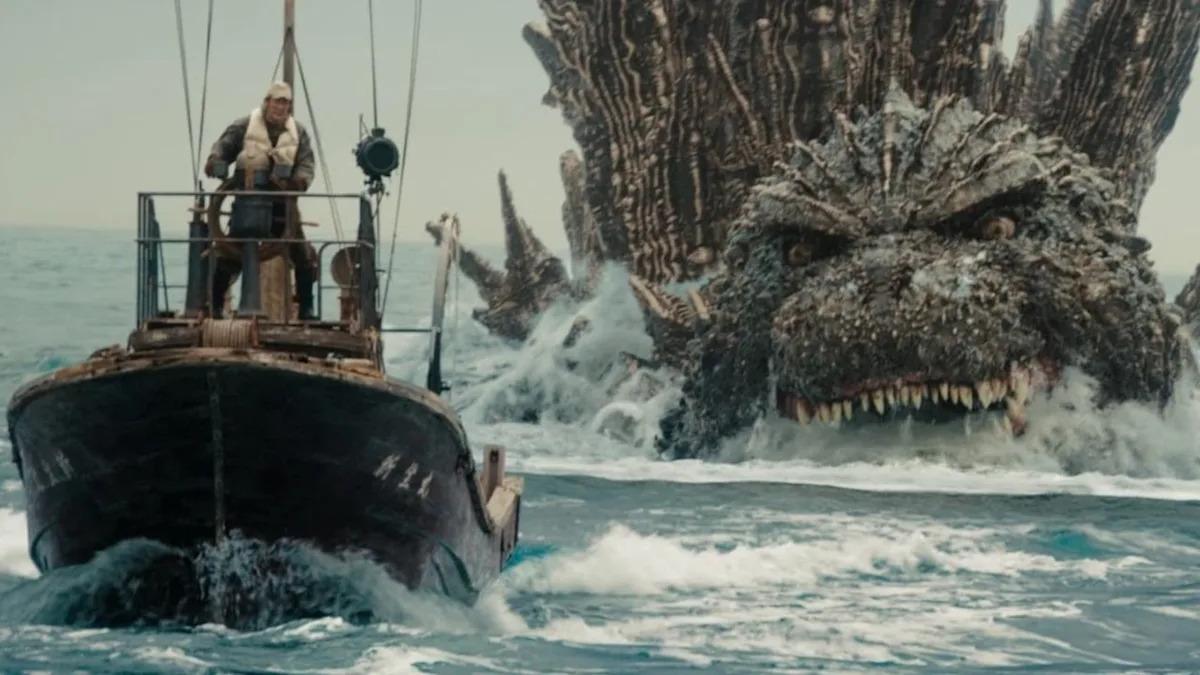
⭐⭐⭐Rating: 3 out of 4
Bostonians may remember that the kaiju stomped us to smithereens in “Godzilla: King of the Monsters” (2019), where Godzilla and Ghidorah met up at Fenway for a CGI smackdown. Those titanic adversaries are back at it in “Godzilla Minus Zero,” but have taken their fight far away, to postwar Japan
The movie follows its prequel, 2023’s “Godzilla Minus One,” which was set in 1947. Two years later, former kamikaze pilot Koichi Shikishima (Ryunosuke Kamiki) and Noriko (Minami Hamabe), now married and raising their adopted daughter, Akiko, have a hard-won domestic peace to protect. Naturally, something enormous has other plans.
That something is the aforementioned Ghidorah, the dragon-like menace whose mysterious arrival sends scientist Kenji Noda (Hidetaka Yoshioka), now heading the Disaster Response Bureau, scrambling to assemble a response after a few villages get trampled into oblivion. Other familiar faces from the prequel include boat captain Seiji Akitsu (Kuranosuke Sasaki), young crewman Shiro Mizushima (Yuki Yamada) and neighbor Sumiko Ota (Sakura Ando). Joining the mix are meteorologist Makoto Aoyama (Masami Nagasawa) and biologist Kanji Murakami (Min Tanaka), whose wartime scars extend well beyond scientific curiosity. Whether they can stop Ghidorah the way they stopped Godzilla before is another matter.
Noriko carries a more literal reminder of the last go-round. Her altered eye and the dark growth on her neck stem from exposure to Godzilla’s cells during an attack. The same regenerative properties that allowed her to survive have left her changed, making the monster’s legacy something intimate and bodily.
Efforts to stop Ghidorah’s rampage hang in Noda and Shikishima’s aeronautical derring-do, but ultimately require the intervention of the radioactive Godzilla. The franchise has come a long way from its man-in-a-rubber-suit beginnings. “Minus One” leveraged models and practical effects that earned writer-director Takashi Yamazaki and three fellows the 2024 Oscar for best visual effects. Yamazaki again oversees the effects here, but the human wreckage gives the towering spectacle its footing.
Filmmaking wise, “Minus Zero” is visually exceptional when you peel back what Yamazaki and crew are doing and compare it to the whole CGI Godzilla-verse in Hollywood — it’s the difference between skydiving for real and doing so virtually. Naoki Sato’s score bridges the franchise’s eras too, reaching back to the ominous, emphatic strains associated with those early Japanese creature features and Akira Ifukube’s indelible Godzilla music. Later in the film, an ethereal mix arises that’s hauntingly reminiscent of Hans Zimmer’s work on Christopher Nolan’s “Interstellar” (2014). It underscores sliding panes of plot reveals as time is rewound and reshuffled. That shift from impending doom to expansive wonder suits a series in which monsters can be both terrors and objects of awe. The buildings may come down in spectacular fashion, but it’s the lives being rebuilt beneath them that give the destruction weight.
“Ebenezer”

⭐⭐Rating: 2 out of 4
Do we need another cinematic version of Dickens’ timeless great, “A Christmas Carol”? The answer is a qualified “no,” as this redemption vehicle for Johnny Depp gets mired in the heavy-handed moodiness and unnecessary jump scares of director Ti West. The art-house horror darling (“ X” (2022) and “ MaXXXine” (2024)) was rewarded for his notoriety with a bigger canvas and budget, but misses the message of this story.
To be clear, Depp’s not bad in a role performed by the likes of Alastair Sim, Albert Finney, Michael Caine, Patrick Stewart, Mr. Magoo and Bill Murray, all of whom knocked it out of the park. The issue is West focuses so much on Scrooge he loses sight of the social ills Dickens brought his lens to: poverty, economic inequality, squalid living conditions, limited human services and the evils of child labor. West’s sensibilities for ’70s porn, sudden death from unexpected sources and all things Mia Goth are spot on, but Dickens’ horrors came from interior torment, not visual effects. The film hangs on Depp — nearly unrecognizable under gobs of latex and special effects — who acts his prosthetic proboscis off, but he’ll hardly be remembered for the take.
West’s setup from Nathaniel Halpern’s script buries the socioeconomic and medical plight of Bob Cratchit (Rupert Grint) and Tiny Tim (Freddie Lee-Grey) until midway through. Up to that point, Scrooge is repugnant primarily in countenance, his miserly and demanding demeanor lacking consequences. Even the ghosts of Scrooge’s late, like-minded partner, Jacob Marley (Ian McKellen), and of Christmas Past, Present and Future (To Come) all take a while getting around to Scrooge’s miscues.
The Past segment (ghost played by Andrea Riseborough) does create sympathy, as we the young Scrooge (Arthur Conti) fall in love with a woman played by Ellie Bamber and confront street violence and poverty. But as the film progresses it becomes less emotively rooted and at times feels performative. The makeup and sets are fantastic, and West can conjure a nasty mood, but the longer he dwells on the ghosts, the less we feel the human misery that made Dickens’ story so unsettling in the first place.


Leave a Reply