‘Train Dreams’ (2025)
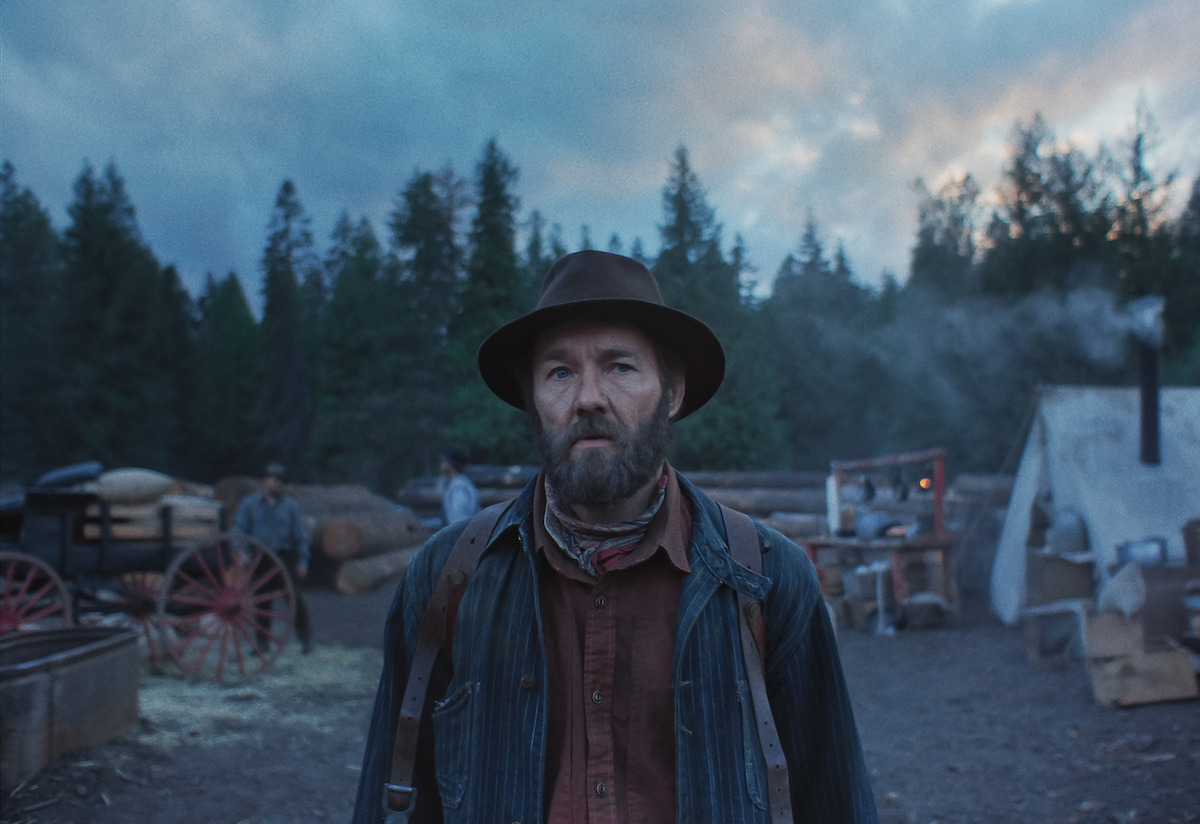

Films crafted around hermits are often peppered with idyllic framings of their lush surroundings and driven by strong, intense performances by the lead, who must, for the most part, connote much of their character’s inner turmoil via facial expressions and the glance of the eye. That was the case with Ben Foster in Debra Granik’s “Leave No Trace” (2018) as well as Daniel Day-Lewis in his recent comeback, “Anemone.” This film, gorgeously shot by Adolpho Veloso, has the trippy, hypnotic aura of a Terrence Malick fever dream, and we get Joel Edgerton in his richest and most robust performance to date. His Robert Grainier, we’re told, never spoke into a phone during a life that ends serenely in 1968. Based on the novella by Denis Johnson and adapted by Clint Bentley and Greg Kwedar – the Oscar-nominated tandem behind “Sing Sing” – “Train Dreams” is pretty much the telling of Grainier’s life in full; orphaned young, unknowing what befell his parents, and, as a quiet young man when we catch up with him, working as a logger and railway hand in the remote reaches of Idaho. His life as a loner and drifter pretty much has him moving from one lumber camp to the next until he meets Gladys (Felicity Jones) at a church in Fry. It’s love at first pleasantry, and with Gladys game for the woods, the two wed, build a bungalow atop the crest of a dell and have a daughter. It’s an enchanting “Little House on the Prairie” existence until a wildfire sweeps through the valley while Grainier happens to be off on one of his logging missions. When he returns, Gladys and his daughter are nowhere to be found. For a good part of the film, Grainier, propelled by guilt and grief, searches nearby towns looking for them or any news of their fate. Ultimately he returns to the woods, where he registers a small degree of comfort taking in an abandoned litter of dogs and rebuilding the cabin on the same perch. The power of guilt and grief creeps in and begins to bend reality, and Grainier struggles to make sense of his existence and the world in large. The acting is top tier, reserved and quietly affecting. Others adding heart and humanity in small, meaty parts are William H. Macy as Arn Peeples, a grumpy coot who likes to use explosives to fell his trees, and Kerry Condon as the first woman to work at a U.S. National Forestry outpost.
Left-Handed Girl’ (2025)

An impressive first solo feature for Shih-Ching Tsou, a longtime Sean Baker (“Anora”) collaborator with bit parts in and production credits on his “Tangerine” (2015), “The Florida Project” (2017) and “Red Rocket” (2021). Baker returns the favor here as an executive producer, co-writer and editor. The girl of the title is I-Jing (Nina Ye), the 9-year-old, younger daughter of Shu-Fen (Janel Tsai), a struggling single mother who runs a noodle café in Taipei’s bustling night market strip. The “affliction” of the title is seen as the devil’s work by I-Jing’s grandfather, who continually points out her abnormality and forces her to eat and draw with her right hand. I-Jing’s older sister, I-Ann (Shih-Yuan Ma), lanky, lean and surly beyond all belief, works in a nearby market where her deliveries of betel nut packages to the sleazy men curbside requires a degree of sashay and flirtation. Her boss encourages skimpier outfits, and the two pass the late-night lull with quick, indiscreet carnal encounters – often with the door open and the noise of the street flowing in. Side plots have Shu-Fen’s mother involved in an illegal passport pipeline to America and the noodle shop landlord ever lurking and ready to evict. What begins as cheery and bright shifts and darkens in sly, unpredictable ways. The three leads convey a palpably deep and sometimes contentious sense of sisterhood, and Ye and Ma are exceptional in their roles. Like several of Baker’s early works, “Left-Handed Girl” was shot on iPhones, and the streaky neon reds and pinks as captured by Ko-Chin Chen and Tzu-Hao Kao give the film an alluring, Day-Glo shimmer. It’s a vibrant, street-level tour of Taipei nightlife told through a distinctly female gaze.
 For What it's Worth
Leave a comment