The brutality of war gets put on trial in the latest from director Alex Garland (“Men,” “Ex Machina”) working alongside Ray Mendoza, a 16-year Navy Seal and military consultant on movies such “The Outpost” (2019) and “Mile 22” (2018) who takes on more creative responsibilities here as co-director and co-writer. Mendoza worked in his former capacity on Garland’s last project, “Civil War” (2024), which eerily depicted a divided United States in the near dystopian future as a president tries to cling to a third term. Here, the two toss fiction aside for a reenactment of a 2006 Navy Seal surveillance mission in Ramadi, Iraq, that goes horribly off script when local jihadists ID the team and strategize an all-out assault on the platoon. It’s “Black Hawk Down” (2001) by way of “Assault on Precinct 13” (1976). As billed in the opening credits, the narrative is stitched together from the memories of those who endured the ever-surging siege – including Mendoza. As in “Black Hawk,” the filmmakers embed you with the team as it takes fire from unseen assailants on adjacent roofs or as IEDs explode, disorient and maim. (A content warning for grim scenes are a given.) The sound editing and subjective POVs are adroitly effective and the ensemble gives gritty goes from top to bottom, led by Will Poulter (also onscreen in an entirely different role in “Death of a Unicorn,” reviewed below) as a shellshocked squad leader; D’Pharaoh Woon-A-Tai (“Reservation Dogs”) as Mendoza; and Charles Melton, so good in “May December” (2023), as the leader of the support squad called in for the evac. As the credits roll, you’ll see the real-life Seals alongside their thespian counterparts, though some real-life faces are blurred out. This perplexed me until I went to the press notes, which cited privacy, consent (not all were reached during the filmmaking process) and security concerns (both personal and because some are still in the service).
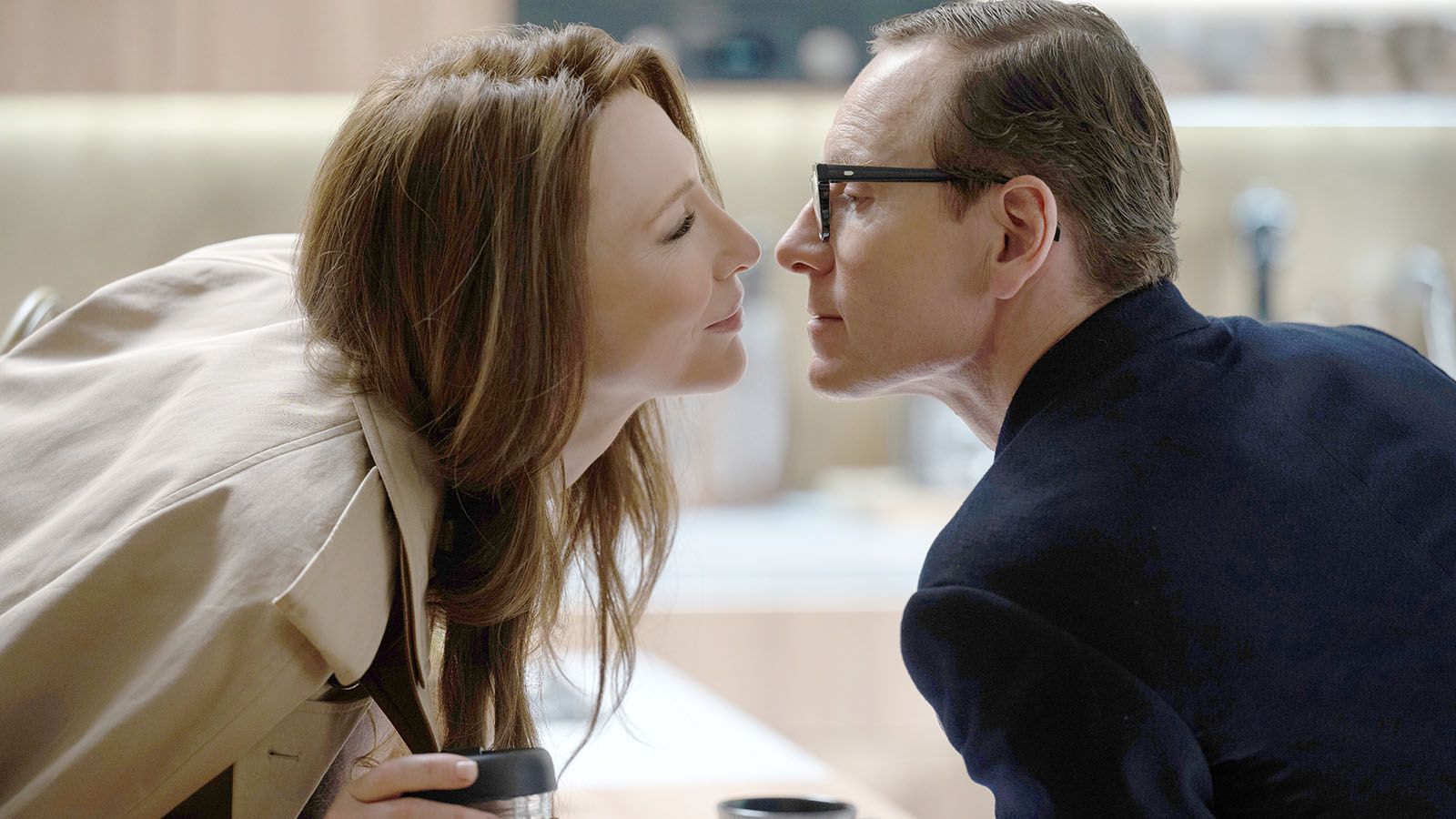
The latest from prolific filmmaker Stephen Soderbergh (“Ocean’s Eleven,” “Traffic”) is a sharp, thoughtful spy thriller in the neighborhood of “Tinker Tailor Soldier Spy” (2011), if updated for these high-tech times and tossed on a treadmill. There’s plenty of cloak and dagger, but the story’s center is the relationships between husbands, wives and lovers, be they deviously duplicitous, of high fealty or otherwise. “Black Bag” comes in at about 90 minutes, matching the paranormal psycho-thriller “Presence” released this year by Soderbergh. Who drops two utterly different films within weeks of each other? Both were written by “Jurassic Park” (1993) scribe David Koepp, who outdoes himself here, and both were shot in limited locations, though “Black Bag” has a bigger, world-hopping feel to it. The London-set work and contrasting light-dark framings brought together warmly by a deep, bass-driven jazz score impress in craftsmanship and seamless ease. At the epicenter of the smoldering espionage are British operatives George (Michael Fassbender) and his wife Kathryn (Cate Blanchett). George has been alerted to a mole at the agency and tasked to find them – and given just a week to do so. On the list of five possible double dealers: his wife. Hanging in the balance is a nuclear meltdown and the potential death of 20,000 people, but that’s just a side issue to what interests Soderbergh and Koepp. We begin with George inviting the suspects to his and Kathryn’s posh London flat for a lovely lamb roast. Every guest is a professional liar, but did I mention the gravy’s laced with a truth serum? The other attendees are grizzled party-boy Freddie (Tom Burke), his latest office fling and X factor Clarissa (Marisa Abela), the hunky yet generic Col. Stokes (Regé-Jean Page of “Bridgerton”) and the agency’s resident psych, Zoe (Naomie Harris), who, because of a departmental mandate, has regular sessions with everyone at the table. She’s also having a fling with the colonel. As the serum kicks in and courses come and go, infidelities are confessed. The meal culminates with a knife pinning one diner’s hand to the table. George sifts through the fallout as he finds Kathryn plans to travel and a movie ticket stub for two in the wastebasket of her boudoir. When inquired as to the destination of her trip, “black bag” is Kathryn’s response; the info can’t be divulged, with no exceptions for spouses. The chemistry between Fassbender and Blanchett is intellectually and erotically electric, and George and Kathryn have a fashion sense to die for. The casting overall is a coup, though Pierce Brosnan, still dapper as ever as an agency higher-up, feels stirred in as an afterthought. The casting and lean, well-honed and MacGuffin-driven script by Koepp make the film work, as well as the tightness of the final product as pulled together by Soderbergh, who edits and shoots as well.
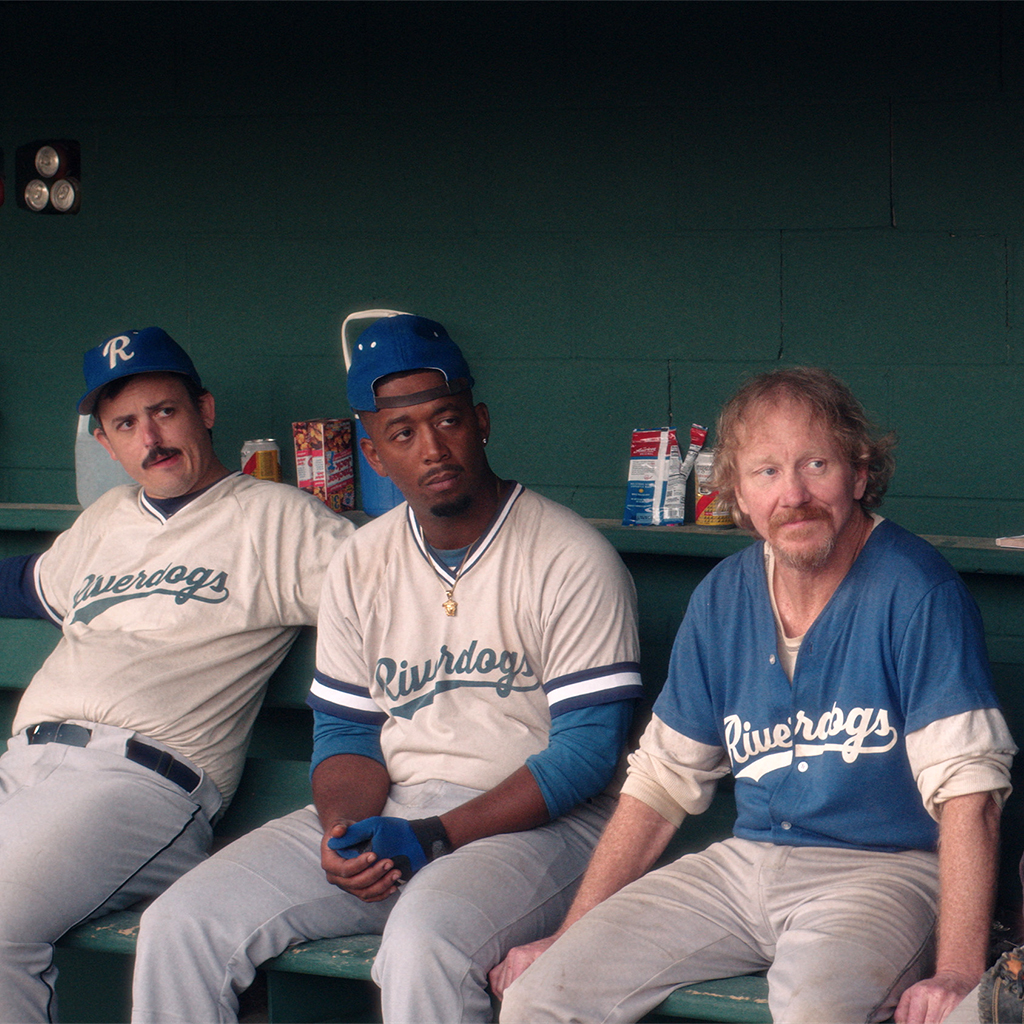
Keith Poulson, Ari Brisbon and David Pridemore in “Eephus.”
Opening day is near. There’s Cracker Jack excitement in the air and a legitimate hope that the Red Sox will return to postseason form. For lovers of the game and team enthusiasts (primed to get their hearts broken) who can’t wait, catch “Eephus,” a nostalgic slow-roller of a film with “Field of Dreams” (1989) undertones. Though it doesn’t play like one, it’s a rookie effort – the directorial debut of Carson Lund, a longtime cinematographer with roots in New England and ties to the hometown team and America’s game.
The Nashua, New Hampshire, native attended Emerson College and had a stint taking tickets and helping out at the Harvard Film Archive (where his film had a sneak peek last month; it’s now at the Somerville Theatre). His cinematic moorings put him in good company with Robert Eggers, a fellow filmmaker from the Granite State (“The Witch,” “Nosferatu”) and, from the halls of Emerson, the Daniels, who rocked the 2023 Oscars with “Everything Everywhere All at Once.”
Lund has been shooting commercials and making independent films for the past 10 years in Los Angeles, where he and Tyler Taormina have formed the Omnes Films collaborative to help finance and launch independent projects. Lund served as director of photography on Taormina’s two critically acclaimed lo-fi features, “Ham on Rye” (2020) and “Christmas Eve in Miller’s Point” (2024). On “Eephus,” Taormina serves as one of several producers.
Lund said that while growing up, he played baseball around all of New England. “I consider Boston my home city. I went to Red Sox games when I was young, and it cemented my love of the game.” When he moved to L.A., he joined an adult recreational league that became the inspiration for “Eephus.” The project took nearly 10 years to get to the plate.
Reviewed: ‘Eephus,’ ‘Chaos: The Manson Murders,’ ‘Mickey 17,’ ‘Delicious’ and ‘Silent Zone’
‘Eephus’ (2024)
If you need a baseball fix before the Red Sox’s opening day, this drolly nostalgic work by first-time feature filmmaker Carson Lund may be just the thing. In it, a bunch of old-time ballers play one last game at a park in the autumnally speckled hills of Central Massachusetts (Douglas, to be exact) before the lot is torn up and a school built. The time is somewhere in the early to mid-1990s, when the Curse of the Bambino was still a thing, but besides 1970s Sox hurler Bill “The Spaceman” Lee appearing in a small part, there’s no mention of the hometown team or MLB at all – these are just local dudes with day jobs playing for Adler’s Paint on some team called the River Dogs. It’s unclear if they ever play other teams, are in a league or just play each other. The ragtag and grizzled lot are cut with character as deep as the wrinkles on their mismatched uniforms. Many have paunches, and others casually sip beer and offer laconic barbs as they warm up for a sleepy match that begins with the sun high in the sky and concludes with the aid of headlights as a cold October evening rolls in. It’s a long, lazy marathon that Lund builds as a dryer, tamped down version of Richard Linklater’s “Everybody Wants Some!” (2016) with the same level of respect and love for the game that John Sayles imbued in his unheralded “Eight Men Out” (1988). Adding local flavor is legendary documentary filmmaker Frederick Wiseman as the voice of the radio broadcast announcer. The title refers to a super slow, arcing pitch that came into being in the 1940s and makes a knuckleball look like blazing heat. It’s rare but gets an every-now-and-then use due to its ability to daunt and confound batters – try it a second time, and it’s to the moon. For lovers of the game, this nostalgic slow roll is right down the strike zone. (Speaking of the Red Sox and the Curse of the Bambino, I have been part of a season ticket holder group since that game was played out in Douglas, but I almost missed seeing the Sox reverse the curse, something you can read all about in my “The Season That Almost Wasn’t” published in Slippery Rock University’s lit mag SLAB in 2007. You’ll likely get paywalled, but here’s a publicly viewable version posted last year on Substack.)
‘Chaos: The Manson Murders’ (2025)
Keeping with legendary Cambridge-based documentary filmmakers, the latest from Errol Morris (“The Thin Blue Line,” “American Dharma”) tackles the unshakable enigma of Charles Manson, his cult and the grisly Tate-LaBianca murders they committed. Fifty-plus years later, the inconceivable acts of Manson and his “family” loom like they happened yesterday. Morris’ rewind is kind of chaotic despite being organized into neat chapters, throwing a lot out there without resolving things as the filmmaker normally does. The Beach Boys, Doris Day, a Kennedy assassination, the CIA and LSD experimentation all make their way in, and the film’s peppered with frequent segues to Manson songs played off his one record – believe it or not, the diabolical manipulator was not a bad singer-songwriter; the Beach Boys even recorded one of his tunes, which, in a way, led to the Tate murders. It’s all based on a similarly titled 2020 book by Tom O’Neill, who claims the race war theory put forth by lead prosecutor Vincent Bugliosi was fabricated for courtroom theatrics so Bugliosi could get rich off writing “Helter Skelter.” This feels a tad like conspiracy theory. More interesting is the archival footage of Manson, creepy and charismatic, and the chilling confessionals from his followers who did the killings, though most informative and credible are former prosecutor Stephen Kay, who worked alongside Bugliosi, and Bobby Beausoleil, a songwriter who joined Manson’s cult and is still in jail for carrying out an earlier murder at Manson’s behest. (His testimony is delivered from telephone interviews. It should be noted that he’s up for parole this year, so there’s that.) Morris and O’Neill put a lot out there, but the most compelling part of the film is the maniacal puppet master, his cold, aloof rantings, hold on his subjects and ability to skirt the law and authorities even when he was a known sociopath and likely high risk to the public. The film makes one want to go back and rewatch Quentin Tarantino’s rescript of history, “Once Upon a Time … in Hollywood” (2019) to cross reference fact and fiction. No matter, Manson, his minions, their crimes and courtroom antics remain a fresh and lurid annal of American history.





 For What it's Worth