Tag Archives: Timothée Chalamet

A Complete Unknown

25 Dec

In a biopic with purpose, Dylan goes electric and shakes up the old folkies

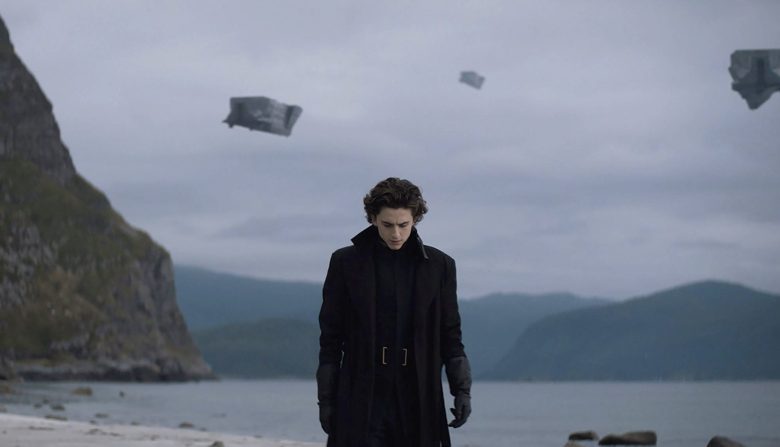
It takes a little while to buy into Timothée Chalamet as quirky troubadour and American icon Bob Dylan, but once he gets you on the hook, it’s clear that the uncannily deep performance is certain to be one of the year’s best. I was never all-in with all the Chalamet love after he burst onto the screen in Luca Guadagnino’s “Call Me by Your Name” (2017) and received an Oscar nod for his part as young lover to an older partner. And yes, he shone as Hal in “The King” (2019), but in the “Dune” films he’s felt underweight as Paul Atreides, the man-boy turned messiah. With his turn as Bob, I’m done dithering – and did I mention he does all the singing of Dylan’s early ’60s catalog, nasal twang and all? It’s more than just a little impressive.

Departing from your typical cradle-to-grave biopic arc, writer-director James Mangold (“Heavy,” “Ford v Ferrari”) and co-writer Jay Cocks, working from Elijah Wald’s 2015 book “Dylan Goes Electric! home in on Dylan’s ascent to notoriety and his transition from folk to electric rock, which caused a sizable stir at the 1965 Newport Folk Festival. Dylan reportedly had conversations with Mangold and offered some additional tidbits that got worked into the film. We begin with the young Bob visiting his idol Woodie Guthrie (Scoot McNairy, also onscreen as Amy Adams’ passive husband in “Nightbitch”) at a hospital where he’s battling Huntington’s disease and can’t talk. By his side is “If I had a Hammer” singer and Newport Fest organizer Pete Seeger (a nearly unrecognizable Edward Norton, knocking it out of the park as the solemn, mild-mannered folkie). Three legends, one small room.

The film flows like that: Dylan’s soulful sojourns cross paths with other era icons, sometimes collaborating and other times clashing. As the film has it, it’s Seeger among the crew trying to pull the plug on Dylan’s electric set late in the film. In between, much revolves around Dylan’s relationships with girlfriend Suze Rotolo, fictionalized as Sylvie Russo (Elle Fanning) to allow narrative flexibility and respect Rotolo’s memory and surviving family; and folk and feminist icon Joan Baez (played with vim and nuance by Monica Barbaro, whose stock is certain to rise in the wake of the film). It’s Baez who early on gives Dylan a big lift, bringing him on tour, and despite their romantic interludes has no qualms about calling him out for being a self-interested asshole.

Rock biopics are notoriously tricky. Without the artist or the artist’s estate behind the project, often the music is missing – see “Stoned” (2005, about Brian Jones) or “Stardust“ (2020, about David Bowie). This isn’t Dylan’s first treatment either, which would be Todd Haynes’ more abstract and cagey “I’m Not There” (2007), in which Cate Blanchett, Richard Gere and Heath Ledger are part of a six-actor rotation playing Dylan in different incarnations. Mangold’s take is more rooted, but both films are wise to seek the essence of Dylan and not attempt to provide answers into the slippery persona who, after becoming the only musician to win the Nobel Prize, skipped the ceremony and sent fellow rocker Patti Smith to perform a few Dylan works in his stead. 

One of the finer strands in “A Complete Unknown” is the letters exchanged between Dylan and Johnny Cash (a brash Boyd Holbrook) and their meetups at Newport. Cash, whom Mangold framed with great success in “Walk the Line” (2005) with Joaquin Phoenix, is depicted as something of a Dylan agitator and muse who pushes him to push back on the folkies who want to keep Newport unplugged; his inclusion allows an uproarious scene one not-so-sober festival morn with Cash trying to park his Caddy by caroming and careening off the fenders and bumpers of other cars. The true gift of “A Complete Unknown” is its ability to transport the viewer via dreamy time machine, re-creating the era impressively but maintaining a tight focus. 

If you feel the film meanders or is too myopic, that’s the point: It’s the young Bob Dylan wrestling with his roots, idols and place in the world. Little else bleeds in, and the film is not afraid to be critical of perhaps the greatest songwriter of the modern era. History does get manipulated some, but mostly for effect and efficiency, and Chalamet clearly did his homework, while the supporting cast of Norton, Barbaro, Holbrook and Fanning all strum along seamlessly in tune.

Dune Part 2

2 Mar

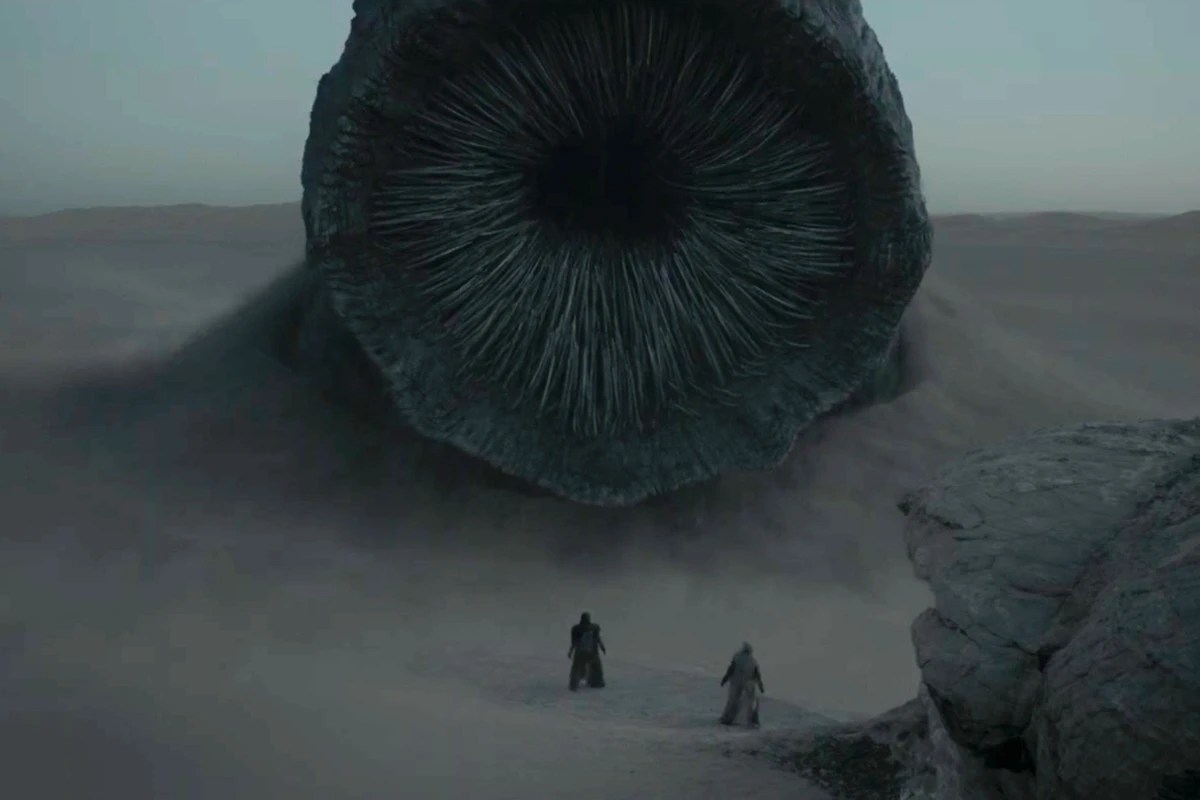
Feudalism and colonialism vie with the giant sandworm for best space monster

After seeing the first installment of Denis Villeneuve’s reenvisioning of Frank Herbert’s beloved sci-fi saga, the prospect of “Dune: Part Two” left me with a modicum of dread. Why? Villeneuve (“Arrival,” “Blade Runner 2049”), who is a competent craftsman and then some, had done well with a rote, by-the-numbers introduction that, while serviceable, didn’t seem to have the gravitas – or the legs – to go above and beyond David Lynch’s much-made-of 1984 version. Plus, who was going to take on the role of the ruthless Feyd-Rautha that Sting made so memorable in the Lynch version, and would Timothée Chalamet’s taciturn and aloof Paul Atreides ever give us a reason to yield up a precious thimble of perspiration? Questions to which we now get answers.

“Part Two” is bigger, a notch better and longer too, mostly because much of the requisite backstory has been dispensed: A feudal empire occupying the desert planet of Arrakis, the only source of melange or spice, a drug that lengthens one’s life and can imbue super-prescient capabilities and space travel via hyper warp. (Call it oil or coca for cocaine and you’d have the precious resource analogy.) The displacement and oppression of the Indigenous folk of the planet – yes, Herbert bridged feudalism and colonialism, for a double fucking of people simply going about their daily lives.

There’s more action in “Part Two” – and more worms – as Chalamet’s Paul and his mother, Lady Jessica (Rebecca Ferguson), transition into the messiah realized and Reverend Mother of the Fremen, the Indigenous people, by drinking the blood of one of those giant sandworms. It’s a crazy acid trip that kills most who decide to drop out and tune in; only those destined by prophecy make it through, or something like that. Paul even gets to ride a worm (far less cheesy than Kyle MacLachlan’s sand surfing back in 1984, but somehow not quite as satisfying). And of course there’s the whole big take-back-the-planet throw-down with the Harkonnens, bad guys led by a grotesque baron (the always excellent Stellan Skarsgård, nearly unrecognizable under makeup and CGI) who violently displaced House Atreides as stewards of Arrakis in “Part One.”

The mega battles are mostly blessedly brief – clearly Villeneuve knew that throngs of shadowy figures wielding knives in a sandstorm wasn’t a sustainable spectacle. The visuals that make it onto the screen are lean, pointed and stunning, some through fine editing and special effects (including beguiling shots of moons and distant planets) as well as scrumptious cinematography by Greig Fraser (“The Mandalorian,” “Zero Dark Thirty”), not only of vast sandscapes but in the gladiatorial arena on the home planet of House Harkonnen, shot in a post-nuclear-blast ashy black-and-white. That’s where the baron’s nephew, Feyd-Rautha, slices up a few Atreides holdovers as part of his birthday celebration. (Feyd-Rautha is played by “Elvis” portrayer Austin Butler, bringing his own bite to the part and looking like one of the pasty, skin-headed war boys out of 2015’s “Mad Max: Fury Road.”)

As far as the casting goes, Chalamet and Ferguson grow in their parts. There was something off about Chalamet in “Part One,” and that lingers some here too; the sum of the parts doesn’t quite add up. Winners are Zendaya getting more screen time as Chani, Paul’s Fremen warrior instructor and love interest; Javier Bardem’s cagey Stilgar, one of the Fremen elders who feels like he could walk into any David Lean-directed desert epic and be at home; Butler; and, in smaller parts as members of the priestess-witch sisterhood known as the Bene Gesserit – Lady Jessica belongs to it – Florence Pugh as the emperor’s daughter, coming into her powers; Charolette Rampling as the Mother Reverend, in consultation with the emperor; and Léa Seydoux, lithe and fawning as Lady Margot, who’s assigned by Rampling’s Mother to ferret out Feyd-Rautha by any charming means possible. The one negative is the casting of Christoper Walken as the emperor. Don’t get me wrong, I love Walken and nearly everything he’s done, but the soft-spoken Jersey boy heavy in outer space doesn’t quite make the warp jump.

With its coveted resource as the plot-triggering core, and a crash-and-burn extraction process, “Dune: Part Two” isn’t far off from an “Avatar” chapter. It has a different ecosystem – desert instead of jungle and water – but the same invasive avarice. It packs in a lot thematically beyond space colonialism, though. Religion comes under scrutiny: Is it a means of pacifying and controlling the masses, as Chani challenges, or can sustained faith lead believers to a better place? As prophecy meets politics, the players in Herbert’s universe reveal themselves to be playing games within games as the ones holding the strings of power vie for legacy and control.

Speaking of the future, just like with “Part One,” the next “Dune” chapter isn’t announced at the film’s conclusion. Rest assured there will be a “Part Three.”

Bones and All

26 Nov

Searching for where she belongs consumes this cannibal teen

By Tom Meek Friday, November 25, 2022

Not really the kind of movie to see after a Thanksgiving Day feast, or even after the leftovers. No, “Bones and All,” the latest from director Luca Guadagnino (“Suspiria,” “A Bigger Splash”) is not for the meek, squeamish or recently well fed, as its subject matter are the folk known as “eaters,” aka cannibals, and it is, at times, quite gory. (There’s a degree of perversity at play here, as Guadagnino’s career-cementing “Call Me by Your Name” in 2017 starred Armie Hammer, who in the years following would be brought up on sexual abuse allegations that included purported cannibalistic yens.)

Based on the novel by Camille DeAngelis, the film begins innocently enough with 18-year-old Maren (Taylor Russell) hanging out with friend as a slumber party. It’s all what normal girls in nightgowns eating junk food and talking about crushes do, until Maren playful nips one of her cohort’s fingers. It’s no big thing until the third or forth nip, when she tries to bite the whole thing off. Friends intercede and Maren sprints off home, where she and her father (André Holland) pack up and depart to a new whereabouts with new aliases. Dad seems to be a champion of his daughter, but shortly thereafter, Maren is on her own with a tape from her father that she plays now and then, through which we learn about her past misdeeds (babysitters fare poorly in the film). Troubled by her condition, which appears to be genetic, Maren decides to find her mother, whom she never really knew. The quest takes her from northern Maryland to Minnesota, with a lot of lessons and feasting along the way.

The setting is the early 1980s, when it was impossible to find a flesh-eaters chat group online – but that’s okay, because these special folk can smell each other. As Maren waits for a bus along the way, a daffy, dapper guy named Sully (Mark Rylance, creepy in a limited role) strolls up and, in an avuncular, Southern twang, tells her he could smell her a mile away and asks her to a house down the way for a bite. Maren naturally is reluctant, and she’s apprehensive as Sully chats away while dressing Cornish game hens. Is this the nourishment he was talking about? Nope. Turns out the house belongs to an elderly woman who’s fallen and can’t get up, and Sully’s waiting for the right moment to feed – just at the moment she dies, because warm food is what’s most desired by the cannibals among us. If the eaters could place an order via Grubhub, the delivery time would most certainly be too long.

Maren moves on from Sully and partners up with a rangy lad named Lee (Timothée Chalamet, who became an A-lister with Guadagnino’s “Call Me by Your Name”) whose methods are more straightforward and seem to benefit society at large – who’s going to miss a convenience story bully? On their meander to Minnesota they swing through Kentucky to give Lee’s 16-year-old sister driving lessons. It’s a strange sojourn, with the pair living on the fringe as vagabond outsiders. They bond, but not really romantically, and encounter other eaters along the way. As you can expect, Sully makes a return appearance, which unfortunately is one of the film’s least credible yarns.

Russell, so good in Trey Edward Shults’ “Waves” (2019) grows as as performer, conveying Maren’s inner turmoil with a nuanced physicality. Chalamet’s laconic Lee comes off as a vulnerable, reflective soul while emanating an aura of quiet lethality. The film is also bolstered by indelible turns by Chloë Sevigny, David Gordon Green (yup, the director of “Joe” and the recent, unbearable “Halloween” series reboot) and Michael Stuhlbarg in small parts, but to say more about the what and why would be to ruin the film.

I can say that there will be times when the eaters feed that you may need to look away or thorough split fingers – and even then will hear the ripping and groans of satiation. It’s not cartoonish like some zombie flicks, but visceral, grim and disturbingly real, like Claire Denis’ “Trouble Every Day” (2001) and Julia Ducournau’s “Raw” (2016). “Bones and All” is definitely not a movie for a family, but it about family, roots and tradition, no matter how troubling that tradition may be.

Dune

23 Oct

Do Villeneuve and Chalamet finally get it right?

The hotly anticipated second cinematic take on Frank Herbert’s 1965 sci-fi classic rolls into theaters this week. Billed as an adaptation and “not a remake” of the now infamous 1984 misfire by David Lynch, the new “Dune” arrives in two, two-hour plus chapters. “Part I” is a marked upgrade from that butchered Lynch release (he lost creative control and the film was edited down to just over two hours). It’s sharper, more conformable in its saga duds, and as you can imagine, the use of modern computer effects go a long way to offset those cheesy sets and clunky models.

Set some 8,000 years in the future in a galaxy far, far away, “Dune” much like “Star Wars” (or is it “Star Wars,” much like “Dune”?) is driven by lore, the assent of a man-boy to the mantle of hero and some nasty interstellar parlor games. We hone in on House Atreides, a noble lot tasked by the intergalactic emperor to housesit a barren desert planet called Arrakis. The why is maguffin of sorts, the planet’s main resource is its spice-melange, a radiant cinnamon-like powder that makes spaceships travel at warp speed and also gives those that can consume it and not die, super human awareness. Arrakis also has monstrous sand worms who like to munch on mining equipment and hovercraft for fun and then there’s the indigenous Fremen, who live in caves below the Saharan seas of sand and have a long his history of oppression by foreigners, most notably the violent regime of the Harkonnens, the previous imperial group to occupy the planet.

Continue reading

A Rainy Day in New York

14 Oct

‘A Rainy Day in New York’: Woody Allen’s latest, if you’re willing to see it, makes it into theaters

By Tom Meek

This may be going out on a limb, but can it be that one crisis covers for another? I mean, would Woody Allen’s “A Rainy Day in New York ” find a release if there wasn’t Covid, theaters were fully open and the ire of the #MeToo moment was still the poker-hot social issue? I wonder. Back in 2019, when #MeToo brought renewed focus on charges of sexual misconduct against Allen from his daughter Dylan Farrow, Amazon dropped the film and many of its stars – Jude Law, Timothée Chalamet and Elle Fanning – distanced themselves from the project and the director.

Allen, whose filmmaking career has spanned seven decades and employed some of the biggest thespian talents (Joaquin Phoenix, Javier Bardem, Cate Blanchett) and given rise to others (Diane Keaton, Meryl Streep), has had more recent misses (“Wonder Wheel, ” “Irrational Man,” “Magic in the Moonlight”) than hits (“Cafe Society ” and “Blue Jasmine”). Given his run in the ’70s and ’80s churning out comedy classics such as “Annie Hall ” (1977), “Sleeper” (1973) and “Hannah and Her Sisters ” (1986), one has to wonder if the tabloid controversies haven’t taken their toll on Allen’s artistry. 

The good news is, that after much ado (Allen had sued Amazon over the non-release) “A Rainy Day in New York ” is something of a solid-effort uptick. Nothing new or earth-shattering, mind you, just a nice revisit to the Allen universe where characters collide in a comically (dark) cloistered and privileged environment. “Rainy Day” is similar in atmosphere and scope to “Cafe Society.”

Allen’s alter-ego this time is a lad by the name of Gatsby Welles (Chalamet), something of a college-aged Holden Caulfield. He’s well-off, already flopped out of an Ivy League institution, simmering with discontent and adorned with an attractive arm piece named Ashleigh (Elle Fanning) who seems less interested in Gatsby than in celebrity. (Allen made a similarly named film in 1998 with Leonardo DiCaprio and Kenneth Branagh that not enough people lent their eyes to.) Gatsby also has a bit of a complicated relationship with his highbrow mother (Cherry Jones, biting deep into the juicy part). Much of what propels the film, besides the imposing event of the title that pushes players together – i.e., through a shared cab ride with someone you’d rather avoid – is the love triangle that develops when Gatsby runs into Chan (Selena Gomez), the younger sister of a girl he used to date and whose trickle-down tales of that former romance pin Gatsby in the 4-6 range for things such as romantic attentiveness and kissing.

The overly ambitious and greener pasture-looking Ashleigh remains in the dark, or uncaring, as she’s just scored a big journalistic scoop interviewing a famous filmmaker (Liev Schreiber) in the throes of late career melancholy. This leads to introductions to a neurotic screenwriter (Law) looking to step out on his wife, whom he things is cheating on him, and the hot actor du jour (Diego Luna) – think DiCaprio, Clooney or Phoenix. 

The windup comes a bit fast, and the revelations come out of left field, but be thankful Jones’ domineering grand dame holds it all together. Chalamet, still hot off his Academy Award turn in “Call Me By Your Name” (2017), feels a bit lost in the traffic here, as he did in “Little Women” (2019). Gatsby is swept along by the action, not driving it. The actor’s boyish good looks play to and against the part, and is best when he’s rocked on his heels either by mum or Gomez’s puckish challenger. 

For folks longing for a classic Woody Allen film, this is as about as close to the spot as it’s been in years, maybe even a decade. It’s not close to a classic, but also a film we might not have seen in a wide release if the latest James Bond film, “No Time to Die,” did not get pushed to 2021. Theaters, now closing because of such delays, need quality content, and there’s a dearth of it. (Just look at what’s playing at Kendall Square or in any AMC theater, while Regal Fenway is re-closing). “A Rainy Day in New York ” is not James Bond or “Tenet,” but it is the next best thing for now.