‘Die My Love’ (2025)
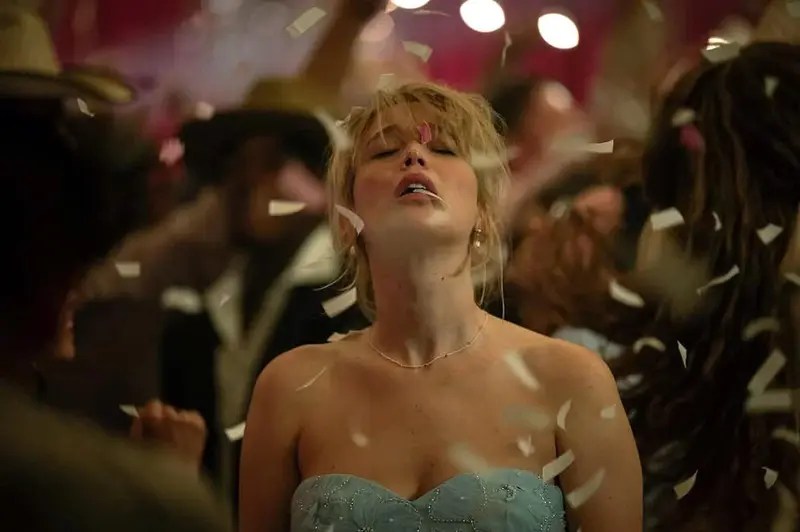

Lynne Ramsay, the Scottish filmmaker behind such macabre psychological chillers as “We Need to Talk About Kevin” (2011) and “You Were Never Really Here” (2017) – the former, about a youth who commits a mass school shooting, the latter with Joaquin Phoenix as a hammer-wielding sociopath-avenger – may be the most convincing female voice in matters of masculinity onscreen since Kathryn Bigelow (“The Hurt Locker,” “A House of Dynamite”). And the company in that elite club may just be a crew of two. Here, going to the more feminine side of things doesn’t make anything less messy, violent or bloody. In fact, it’s more unsettling. No human being dies of a violent act, though animals – a horse and a poorly adjusted dog – don’t fare as well. Jennifer Lawrence is Grace, who has a lot pushing and pulling in her head. She’s a writer who’s moved into the old Montana farmhouse of her partner Jackson (Robert Pattinson) with the intent of sinking into creativity and new motherhood. Neither really happens as Grace becomes less and less rooted in reality and waking delusions take hold. Is Jackson having an affair? Is the menacing presence on a motorcycle (LaKeith Stanfield) also Grace’s moonlight lover in the rickety old barn? Or is it all an illusion cast by an unreliable narrator dealing with postpartum delirium, or something more chronic? Ramsay, working from Ariana Harwicz’s 2013 novel, keeps us in the dreamy, demented dark – when Grace crashes through a sliding glass door, opens the car door to jump or bashes her head into a hotel suite mirror and Jackson underreacts, you don’t know if this is par for the course, the man has no idea what to do and is simply silent and agog, if it’s a disjointed distortion of reality or somewhere in between. There are clues, but teasingly few. Lawrence gives a bold, brave performance, emotionally exposed and often naked, oddly like an antithetical companion piece to her 2023 dark comedy, “No Hard Feelings.” In “Mother!” (2017) the madness around Lawrence’s bearer of life was external and a metaphor for the religious patriarchy; here it’s internal, and troubling to the forces who can’t get a handle on or squash it – a forced commitment in an asylum seems to fix things for a moment, but did it really happen? The tension over what is real is the film’s weakness and appeal, but not enough can be said about Lawrence: She switches on and off, or explodes, or recedes, with seamless perfection. It’s stunning. Ramsay and Lawrence are in tune at every turn and we are lucky to be here for their deftly deliberate dissonance.
Continue reading For What it's Worth