Dispatch from Cambridge: The quirky, witty twee of Wes Anderson may be running dry. Sad but so. The genre-bending director scored early and often with such notable art house hits as his take on Salinger’s Glass family, “The Royal Tenenbaums” (2001), his toe dip into animation, “The Fabulous Mr. Fox” (2009) and my favorite, “Moonrise Kingdom” (2012). The list goes on. Anderson was pretty much a sure thing, but his most recent three films – “The French Dispatch” (2021), “Asteroid City” (2023) and this ambitious misfire – have been sputters of what was and what might have been and, worse, smug delves into cinematic overindulgence.
The creepy horror shenanigans of YouTubers-turned-filmmakers Danny and Michael Philippou caught fire with their feature debut “Talk to Me” (2022), which played smartly with genre, race and mythos. It didn’t all click, but you couldn’t forget it. With their follow-up, “Bring Her Back,” the brothers reach a new level in psychological horror that features several grim, look-away scenes.
Things begin badly for brother and sister Andy (Billy Barratt) and Piper (Sora Wong), who come home after school and find their father dead on the bathroom floor. Piper is legally blind (she can see shapes and light, and that’s about it) and the protective Andy is months shy of his 18th birthday, ineligible to get custody. Complicating matters, there are documented incidents of violence in Andy’s past. Initially, child services wants to split the two up, but a saving grace comes in the form of Laura (Sally Hawkins), a former child services worker who lost her daughter in a recent drowning accident and is caretaking for another foster child, a mute 10-year-old by the name of Oliver (Jonah Wren Phillips).
As the sibs settle in at Laura’s remote bungalow, there’s hope in the air, but something’s clearly off. Laura’s chatty and welcoming, but also controlling, spouting out a litany of rules and regs between awkward hugs. Piper is given the daughter’s room – which, bathed in pink and bejeweled with beads, has been maintained like a shrine – while Andy is relegated to a utility closet of sorts that has barely enough room for his mattress and a workout bench. The first real tell comes when we meet Oliver, a lithe androgynous sort with a faraway look in his eyes, standing shirtless and barefoot at the bottom of the drained pool out back, holding the cat that’s “not to be let out of the house” like he’s about to break its neck. Damien, the kid from “The Omen” (1976), has nothing on Oliver. And there are those strange red marks under his eyes; hard to tell if they’re birthmarks or the result of some occult ritual.
All good things must end, or so they say. But do they have to? This part deux to 2023’s “Mission: Impossible – Dead Reckoning Part One” does have a sheen of finality to it, with plenty of nostalgia.
The key to the MI series is Tom Cruise: No Cruise, no movie. He’s a transcendent (and ageless) actor who sells the brand with bona fide stardom, a renown for performing his own stunts and a drive to be forever outdoing himself – and he usually doesn’t disappoint. In “Final Reckoning,” he succeeds with the help of writer-director Christopher McQuarrie, back for his fourth MI go-round.
Obviously, Cruise has a lot of faith in McQuarrie – and why wouldn’t he? After winning a Best Screenwriting Oscar early on for “The Usual Suspects” in 1996, McQuarrie has had a meteoric shot of a career in Hollywood. Besides these MI shuffles, he was one of the pens on another Cruise franchise, “Top Gun: Maverick,” back in 2022 and four others, directing Cruise in“Jack Reacher” (2012) and with scriptwriting creds on “Valkyrie” (2008), “The Edge of Tomorrow” (2014) and “The Mummy” (2017).
After four years of headlines about the tragic on‑set shooting of cinematographer Halyna Hutchins, “Rust” finally arrives in theaters for a limited run and on streaming platforms with something of a whimper. There’s plenty of gunplay to be sure, and the film’s evocative of Clint Eastwood’s “Pale Rider” (1985) and the Coen brothers’ 2010 remake of the John Wayne classic, “True Grit,” without reaching those lofty heights. Star Alec Baldwin’s now notorious shooting death of Hutchins – and wounding of director Joel Souza – clouds nearly every scene, something underscored by Baldwin’s Harland Rust being a stone-cold killer more than able with a six-shooter. The Wyoming-set Western begins with a bit of a “Little House on the Prairie” preamble as Lucas Hollister (Patrick Scott McDermott), a parentless 13-year-old protecting his younger brother from bullies, inadvertently shoots and kills the ruffians’ father (the eerie tie-ins to real life are endless). Hanging is in order, but before the execution can be carried out Harland shows up, wipes out the jail watch and absconds with the boy. On the trail, conversations between Harland and Lucas are terse. If Lucas asks too many questions, Harland dishes out some of Wayne’s slap-first tough love. Of course the law and a horde of scummy bounty hunters are after the two, with plenty of blazing shootouts along the dusty path. Baldwin looks the part of gruff gunslinger, but his avuncular, wispy voice undercuts his character’s bravado where a Wayne, Eastwood or Jeff Bridges would have tonal command of a scene. Another unavoidable reminder of Hutchins: The film is stunningly shot, with dark and muted texturings and rich, opulent framings of the amber plains akin to the camerawork by Ari Wegner that made “Power of the Dog” (also shot in 2021) jump off the screen. “Rust” makes for a passable Western sojourn that will forever be steeped in tragic ignominy.
Reviewed: “The Shrouds,” “Pangolin: Kulu’s Journey” and “The Wedding Banquet”
‘The Shrouds’ (2024)
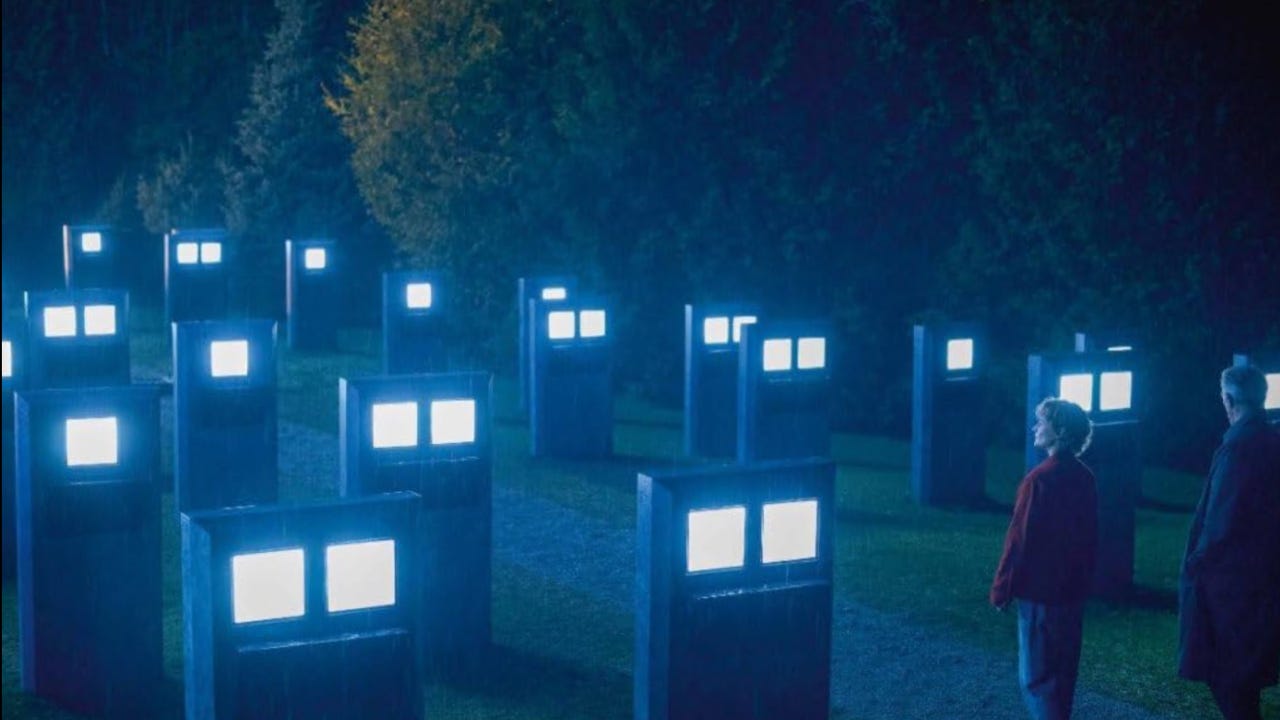
Master of the macabre David Cronenberg has always been one to explore the impacts and unintended consequences of near-future technology on humans – and often, in humans. Take “Videodrome” (1983), in which the advent of cable TV and pop-up public access stations served as a crucible for snuff videos, or “Existenz” (1999), in which a game designer trying to evade assassins melds physically with her game and the Internet. In “The Shrouds,” Cronenberg, still wrestling with the grief of losing his wife to cancer in 2017, deals with connecting the living to the departed through a Chinese-manufactured sheet with high-tech capabilities that allows the bereaved to log in through an app and look in on their loved ones as they decay away into eternity. It’s creepy and cool stuff that has some far-reaching implications, such as China perhaps leveraging the shrouds as a surveillance network. As an arguable stand-in for Cronenberg, the handsomely gaunt Vincent Cassel plays Karsh, who has also lost his wife Becca (Diane Kruger) to cancer and subsequently founded GraveTech, an Internet-connected series of cyber sarcophagus plots around the globe. Instead of headstones, there are tech towers that, with the right passcode or eye scan, allow one to pop up images of the dead or dial up memories. Karsh’s life is complicated: He dates, but prefers more illicit sexual liaisons involving Becca’s sister Terry (also played by Kruger) and Soo-Min (Sandrine Holt), the blind wife of a prospective client (Vieslav Krystyan). Then there’s Terry’s ex-husband Maury (Guy Pearce), who does much of the coding for GraveTech. Karsh’s nighttime imaginings of Becca missing an arm or a breast are far more lurid and grim than anything gazed upon electronically in the crypt. There’s also the mystery of small nodes that have grown on some of the deceased: Are they bone tissue residue, spy-network plants or something else related to the medical treatments they received at end of life? Unfortunately, many plot threads are left dangling, but they are a minor annoyance offset by the riveting psychosexual dance between the principal cast. Cassel holds the film together, but it’s Kruger and Holt who drive it – especially Kruger as Terry, who regards Karsh with contempt until an unexpected encounter, when his offhand conspiracy theorizing turns out to be her sexual trigger.
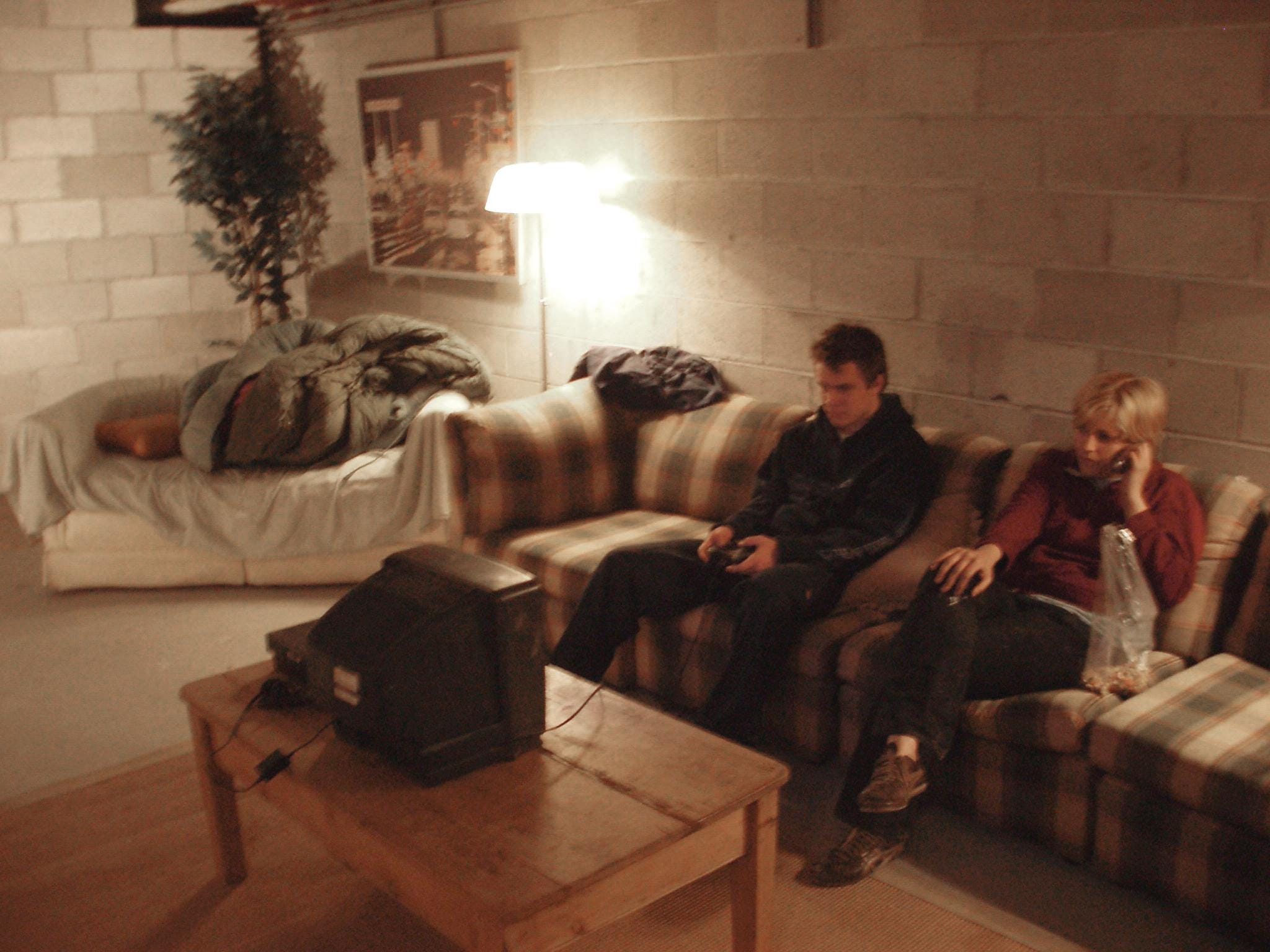
Jeremy Workman’s documentary recounts the antics of eight Rhode Island artists who in 2003 covertly built and lived in a hidden 750-square-foot apartment within the Providence Place Mall. To build the secret enclosure within a dead space in the massive mall, the team had to smuggle in cinder blocks and furniture. The apartment remained undetected for more than four years. The focal point of the film is Michael Townsend, a Rhode Island School of Design instructor, installation artist and something of a merry pied piper who sees the world as his canvas. Earlier Townsend projects include a creepy-cool community of mannequins in a post-apocalyptic setting under an overpass and along an industrial canal, as well as a 9/11 memorial depicting the faces of the fallen. The mall apartment, by default, was something more whimsical, and those involved videotaped the progress on grainy lo-res camcorders. Some of the banter about sacrifice for art and commercialism amid a retail center provokes, coming most to an edge when Townsend and his then wife, Adriana Valdez, one of the eight, get into a jocular tiff about life goals and values – she wants to build a real house in the world. The apartment, replicated on a soundstage for the documentary, makes a nice backdrop for the talking-head testimonials of Townsend and others, but it borders on the cheesy when Townsend acts out moments from the past. The apartment became second-tier national news when exposed; when asked then if he’d been curating a piece of art or living in the mall out of necessity, Townsend gleefully says, essentially, “life is art and art is life.” The son of military parents, Townsend makes for an intriguing character study in real time, archival footage and cheeky reenactment.
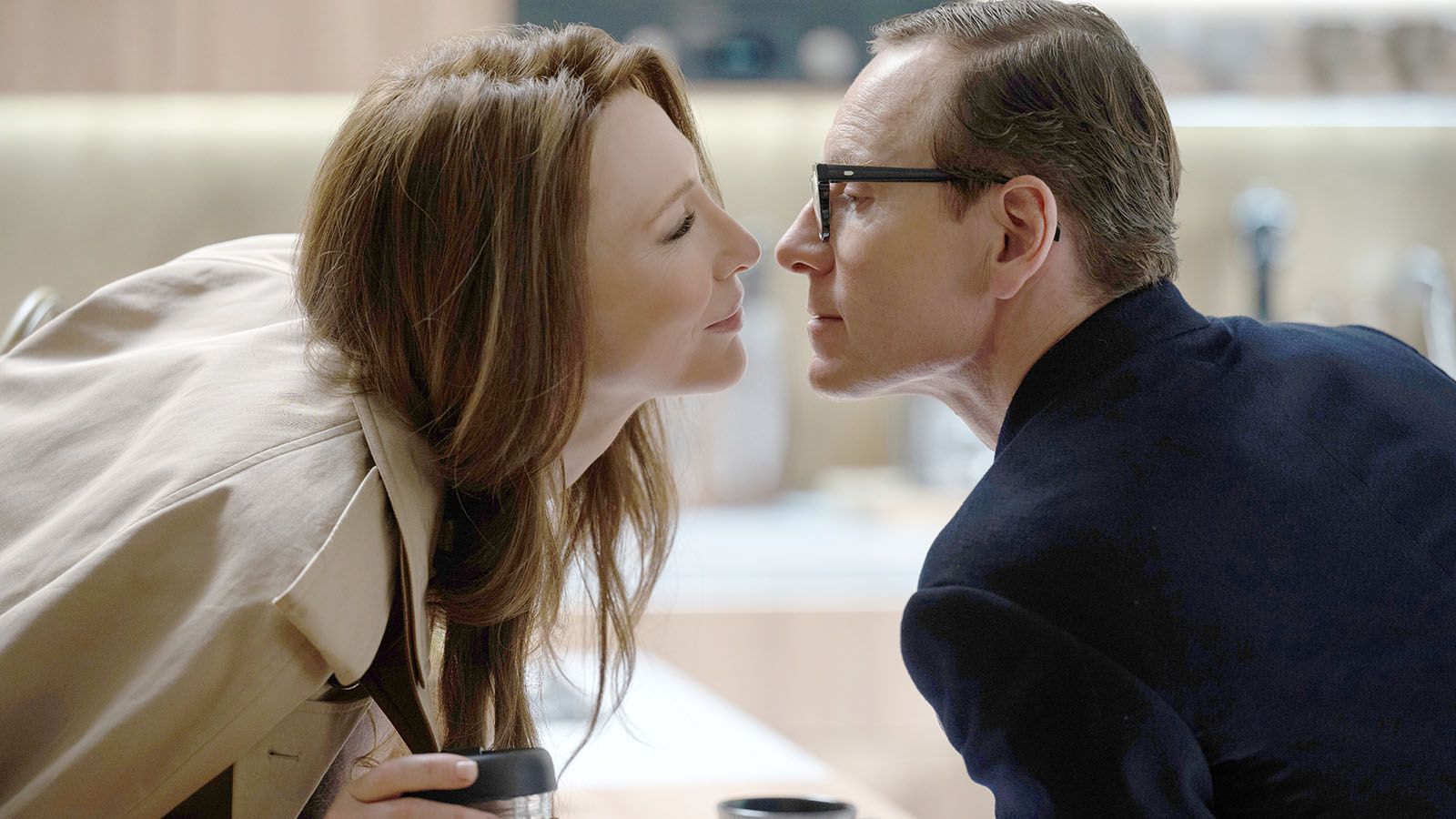
The latest from prolific filmmaker Stephen Soderbergh (“Ocean’s Eleven,” “Traffic”) is a sharp, thoughtful spy thriller in the neighborhood of “Tinker Tailor Soldier Spy” (2011), if updated for these high-tech times and tossed on a treadmill. There’s plenty of cloak and dagger, but the story’s center is the relationships between husbands, wives and lovers, be they deviously duplicitous, of high fealty or otherwise. “Black Bag” comes in at about 90 minutes, matching the paranormal psycho-thriller “Presence” released this year by Soderbergh. Who drops two utterly different films within weeks of each other? Both were written by “Jurassic Park” (1993) scribe David Koepp, who outdoes himself here, and both were shot in limited locations, though “Black Bag” has a bigger, world-hopping feel to it. The London-set work and contrasting light-dark framings brought together warmly by a deep, bass-driven jazz score impress in craftsmanship and seamless ease. At the epicenter of the smoldering espionage are British operatives George (Michael Fassbender) and his wife Kathryn (Cate Blanchett). George has been alerted to a mole at the agency and tasked to find them – and given just a week to do so. On the list of five possible double dealers: his wife. Hanging in the balance is a nuclear meltdown and the potential death of 20,000 people, but that’s just a side issue to what interests Soderbergh and Koepp. We begin with George inviting the suspects to his and Kathryn’s posh London flat for a lovely lamb roast. Every guest is a professional liar, but did I mention the gravy’s laced with a truth serum? The other attendees are grizzled party-boy Freddie (Tom Burke), his latest office fling and X factor Clarissa (Marisa Abela), the hunky yet generic Col. Stokes (Regé-Jean Page of “Bridgerton”) and the agency’s resident psych, Zoe (Naomie Harris), who, because of a departmental mandate, has regular sessions with everyone at the table. She’s also having a fling with the colonel. As the serum kicks in and courses come and go, infidelities are confessed. The meal culminates with a knife pinning one diner’s hand to the table. George sifts through the fallout as he finds Kathryn plans to travel and a movie ticket stub for two in the wastebasket of her boudoir. When inquired as to the destination of her trip, “black bag” is Kathryn’s response; the info can’t be divulged, with no exceptions for spouses. The chemistry between Fassbender and Blanchett is intellectually and erotically electric, and George and Kathryn have a fashion sense to die for. The casting overall is a coup, though Pierce Brosnan, still dapper as ever as an agency higher-up, feels stirred in as an afterthought. The casting and lean, well-honed and MacGuffin-driven script by Koepp make the film work, as well as the tightness of the final product as pulled together by Soderbergh, who edits and shoots as well.
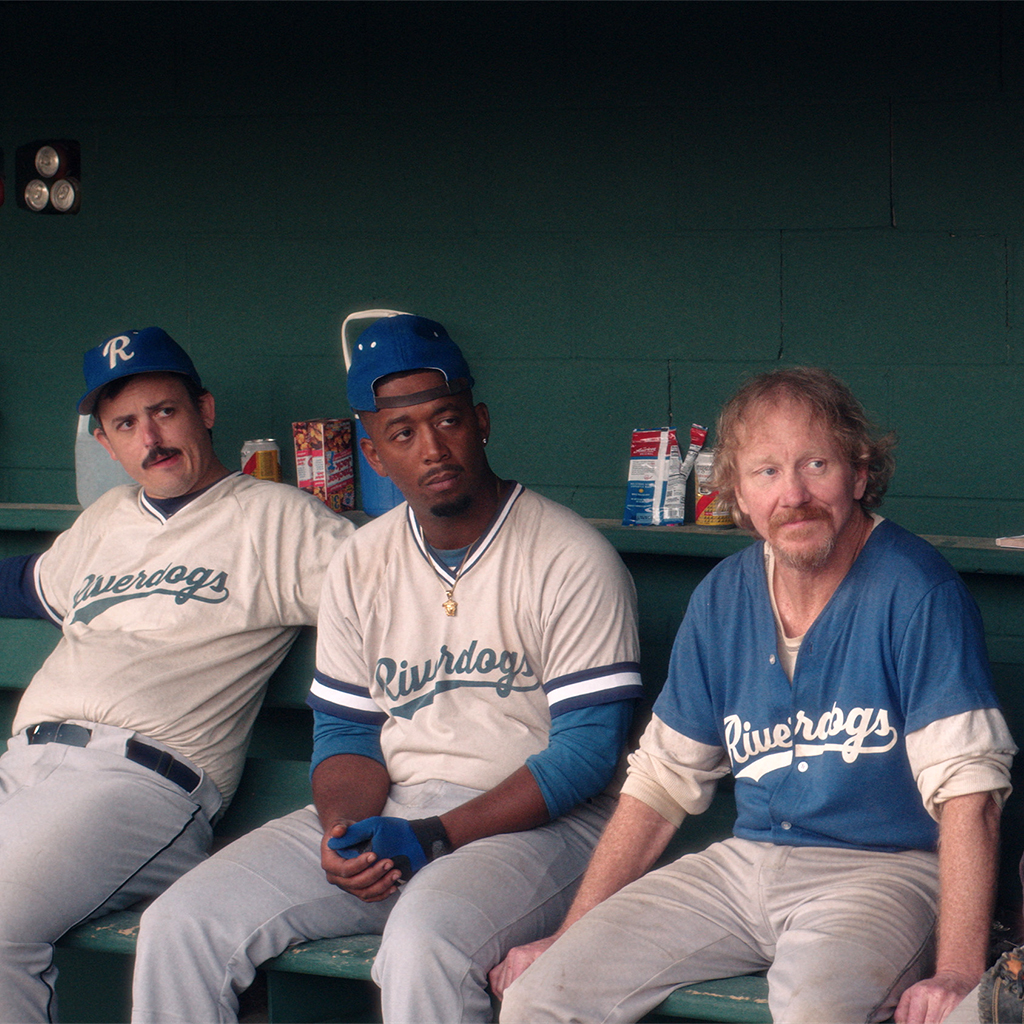
Keith Poulson, Ari Brisbon and David Pridemore in “Eephus.”
Opening day is near. There’s Cracker Jack excitement in the air and a legitimate hope that the Red Sox will return to postseason form. For lovers of the game and team enthusiasts (primed to get their hearts broken) who can’t wait, catch “Eephus,” a nostalgic slow-roller of a film with “Field of Dreams” (1989) undertones. Though it doesn’t play like one, it’s a rookie effort – the directorial debut of Carson Lund, a longtime cinematographer with roots in New England and ties to the hometown team and America’s game.
The Nashua, New Hampshire, native attended Emerson College and had a stint taking tickets and helping out at the Harvard Film Archive (where his film had a sneak peek last month; it’s now at the Somerville Theatre). His cinematic moorings put him in good company with Robert Eggers, a fellow filmmaker from the Granite State (“The Witch,” “Nosferatu”) and, from the halls of Emerson, the Daniels, who rocked the 2023 Oscars with “Everything Everywhere All at Once.”
Lund has been shooting commercials and making independent films for the past 10 years in Los Angeles, where he and Tyler Taormina have formed the Omnes Films collaborative to help finance and launch independent projects. Lund served as director of photography on Taormina’s two critically acclaimed lo-fi features, “Ham on Rye” (2020) and “Christmas Eve in Miller’s Point” (2024). On “Eephus,” Taormina serves as one of several producers.
Lund said that while growing up, he played baseball around all of New England. “I consider Boston my home city. I went to Red Sox games when I was young, and it cemented my love of the game.” When he moved to L.A., he joined an adult recreational league that became the inspiration for “Eephus.” The project took nearly 10 years to get to the plate.
Reviewed: ‘The Monkey’ and ‘Elevation’ in theaters and streaming now
‘The Monkey’ (2025)
Osgood Perkins, a dead ringer for dad Anthony Perkins (“Psycho”), continues the family tradition from the other side of the lens with this spin on horror master Stephen King’s 1980 short story. The not-so-slow burn is set in Casco, Maine, where we open with Capt. Petey Shelborn (Adam Scott) walking into a pawn shop covered in blood to fix his windup mechanical monkey. After a flamethrower, a speargun and a rat enter the scene, we learn that the monkey is not a toy, a point hammered home regularly by those possessing it. It is something evil, if not death itself. Its victims of ghoulish, cartoonish circumstance are random – only the person winding up the monkey is safe. When the monkey plays its drum, anyone nearby is at risk. Petey’s twin sons Hal and Bill (both Christian Convery) later discover the monkey in a closet in their unhappy home; their dad is now a deadbeat, as their mom, Lois (Tatiana Maslany), tells us. A few cranks of the monkey’s key by the curious kids and mayhem ensues among mom, babysitter Annie Wilkes (Danica Dreyer) and Uncle Chip (Perkins), who moved in to care for the boys with his swinger wife, Aunt Ida (Sarah Levy). The twins behead the mechanical monkey, throw it in the trash and down a well, but it always returned. Flash forward 25 years, and Hal (now played by Theo James) works at a supermarket and visits his own son Petey (Colin O’Brien) once a year out of fear of cursing him. Hal, the film’s occasional narrator, tells us that he and his brother don’t get along. Bill is now totally unhinged and wants to bond with the windup wingding of disaster, with Petey and Hal looped in to his demented scheme as much of Casco gets sent to the great beyond in bloody ways. Part of the fun is Theo James’s yin-and-yang roles as the buttoned-up, protective and paranoid Hal and the delusional Bill, who sports a pseudo-mullet and “damn it all to hell” gusto. Elijah Wood (“Lord of the Rings”) pops in for a dark turn as dim-witted Ted, employed by Bill to retrieve the monkey. Levy’s Aunt Ida is unforgettable for all the wrong reasons, with an unsettling sexual aura and a plotline that’s a creepshow instant classic.
Not sure this fourth flick was necessary, but I’m happy it exists. Renée Zellweger’s goofball heroine has always been a lovable hot mess of miscues and tribulations, and is again here. Of course the series being so British – dry and droll, with cheeky nods and winks – only deepens the buttoned-up hijinks. In the last chapter (“Bridget Jones’s Baby”), Hugh Grant’s Daniel Cleaver, one of the two gents who vied for Bridget’s love in the 2001 original, is presumed dead; in this nearly 10-year follow-up, Mark Darcy (Colin Firth), the guy who won her heart and had two children with her, really is dead. (Something about a humanitarian aide mission gone awry in the Sudan.) As a single mom, Bridget can’t boil a pot of water and has zero romantic prospects, though her friends push her to Tinder and other romantic meetup venues. “Labia adhesion is a thing,” one friend tells her when Bridget admits to not having sex in more than four years. Relief comes in the form of a handsome 29-year-old bloke named Roxster McDuff (Leo Woodall, “The White Lotus”), who rescues Bridget (she was 43 when she had her son in the last installment) and her children (a younger daughter in the mix now) from being treed in a park. Bridget does slowly get her groove back and returns to her old gig as a TV producer. How the happily ever after or never not pans out, I won’t say. Returning players include Emma Thompson as Bridget’s old ob-gyn who extols the virtues of a rife sex life and Jim Broadbent and Gemma Jones in a requisite cameo as Bridget’s parents. Strangely enough, Firth and Grant show up too, though I won’t spoil how. Also in the mix is the always excellent Chiwetel Ejiofor (“12 Years a Slave”) as Bridget’s son’s music teacher. Just who “the boy” is, is a bit unclear; is it Bridget’s son, William (Casper Knopf), the hunky Roxster or maybe even Hugh Grant, who starred in a movie called “About a Boy” in 2002? The answer doesn’t much matter, as it’s Bridget’s world and we‘re just happy to spend a few madcap moments in it.







 For What it's Worth