When Hollywood comes to town to make a “Boston movie,” like 2023’s “The Holdovers” starring Paul Giamatti, Da’Vine Joy Randolph and Dominic Sessa, finding the faces in the crowd is often the job of Boston Casting, the biggest such agency in the Boston area.
Boston Casting was founded in 1990 by fifth-generation Cantabrigian Angela Peri. Over a croissant and chai at the Iggy’s Bread cafe in Huron Village, Imagine, Peri walked me through her story.
She’s a Cambridge Rindge and Latin School alum who was bitten by the acting bug. Though her mother discouraged the pursuit, Peri went to Los Angeles and Italy and dabbled in the business as a makeup artist, comedian and bit performer. She brushed elbows with Denis Leary and Ellen DeGeneres on the L.A. comedy scene and, while in Italy, graced the screen ever so briefly in “Cinema Paradiso” (1988), the Academy Award-winning love letter to community movie houses.
Meta is all the rage these days in films about filmmakers and the filmmaking process. Take Richard Linklater’s ode to the French New Wave, “Nouvelle Vague” (available on Netflix), which follows a young Jean-Luc Godard in 1959 Paris seeking to make his first film (“Breathless”), or “Jay Kelly” from Noah Baumbach (“White Noise,” “Squid and the Whale”), in which George Clooney essentially plays George Clooney. Add to that Joachim Trier’s stirring “Sentimental Value,” about the creative tempest of filmmaker Gustav Borg (Stellan Skarsgård), an auteur well into his autumn seeking to achieve one last cinematic masterpiece.
There’s not an ounce of fat in the script, the performances are tight and lived-in and Trier, hailed for his edgy, dramatic simmers “The Worst Person in the World” (2021) and “Oslo, August 31st” (2011), again proves masterful in presenting a slow, ever-mounting, emotionalism, a devilish dark humor and a climax of melancholy and rue. The movie gets to you from the inside out.
The latest from Guillermo del Toro (“The Shape of Water,” “Nightmare Alley”) is a he-said, they-said kind of a tale that’s fairly faithful to its Mary Shelley roots. In scope and success it’s akin to Kenneth Branagh’s 1994 effort with Robert De Niro as the Creature but won’t make anyone forget Boris Karloff and the 1931 James Whale classic. Del Toro gets his creepy-crawly shivers in early with a smattering of reanimation scenes as Victor Frankenstein (Oscar Isaac) plugs half corpses into a battery and gets them to sputter to life for a board of London scientists who are both wowed and appalled – “Only god can create life,” one shouts, and that was Shelley’s point: Don’t mess with Mother Nature. If you do, the consequences can be boss-level bad. And, in this case, existential and unrelenting. At nearly two and a half hours, the film is told in two chapters, one from Victors’ “he” perspective and one from the Creature’s “they” view – yes, pronouns back then mattered too, but in this case the “they” is a humanization of the Creature versus the “it” used by Victor and others. The Creature is played with empathetic loneliness and rage by Jacob Elordi (“Saltburn,” “Priscilla”). The most touching scenes are with a blind man in the woods (David Bradley, excellently channeling his inner Anthony Hopkins) and with scream-queen “it girl” Mia Goth (“X,” “Infinity Pool”) as Elizabeth, the fiancée of Victor’s brother Willam (Felix Kammerer, “All Quiet on the Western Front”) whom both the Creature and Victor have strong sexual tensions with. Goth also plays Claire Frankenstein, the lads’ mum who dies in birthing William – from bearer of life to love interest, a piquant ponder, right? The rendering of the Creature takes its cues from classic Karloff mashed up with the tall, porcelain-white alien beings in “Prometheus” (2012), who, as that movie had it, created us; it’s here we shall note that the subtitle of Shelley’s tale is “The Modern Prometheus.” Christopher Waltz is in the cast as Harlander, Elizabeth’s uncle and the financier of Victor’s reanimation lab, the tower atop a Scottish seaside cliff designed to pull down that massive bolt of lightning to bring the Creature to life. There’s a lot stitched into de Toro’s vision of Shelley, some a smooth, seamless period horror, other times moving in gangly, awkward leaps in which the timing of events is too overly convenient and implausible. Another round of editing and tightening may have helped, but del Toro’s “Frankenstein” is a wonderment that’s at its best when quiet and internal, or as Elordi rises up and roils in beast mode.
‘Aileen: Queen of the Serial Killers’ (2025)
Emily Turner’s documentary revisits the life and crimes of Aileen Wuornos, America’s first crowned female serial killer. The film doesn’t add much to the 2003 biopic “Monster,” which won Charlize Theron an Oscar for her portrayal of Wuornos, or Nick Broomfield’s docs “Aileen Wuornos: The Selling of a Serial Killer” (1992) and “Aileen: The Life and Death of a Serial Killer” (2003). If anything, it casts a softer light on Wuornos’ adoptive mother, Arlene Pralle, a horse breeder and born-again Christian; her hippie attorney, Steve Glazer; and childhood friend Dawn Botkins, who in Broomfield’s films were opportunists trying to make a buck off their proximity to Aileen. Aileen herself comes off as warm and engaging in her day-before-execution interview with Australian pen pal Jasmine Hirst – a stark contrast to Broomfield’s 2003 final interview. It’s telling too when Wuornos whispers into Hirst’s ear and tells her she’s “going to make millions.” The most interesting spins are the outtakes from “Dateline” investigator Michele Gillen’s interview footage, the testimony of the female judge removed from the case before trial and the brimming political aspirations of god-fearing prosecutor John Tanner. The rewind of a related cop scandal – investigators cut Hollywood deals while the investigation was ongoing – intrigues, as do the late reveals of Aileen’s confessional truth before execution. Both were well covered in Broomfield’s takes, and the latter to different conclusions. It’s not new, but Aileen still rivets, and this will likely send viewers to the archives for Broomfield’s bits and Gillen’s deep delve.
‘Ballad of a Small Player’ (2025)
Edward Berger’s casino drama dazzles in every scene framed by Academy Award-winning cinematographer James Friend (“All Quiet on the Western Front”) – though as a tale, it lacks sense and soul. The true star of the film is Macau, an island causeway south of Hong Kong that has become an international hub of casinos. Amid the bright lights we embed with gambler Lord Doyle (Colin Farrell), a dignified Brit with Bond-esque reserve who lives large but can’t pay for it. His tab at the posh hotel he has holed up in is $350,000, and it’s long past due. The next big hand keeps coming up bust, and soon Doyle’s only drip of credit is from a compassionate senior casino employee named Dao Ming (Fala Chen) who may not be as kind as her eyes present, and may, in fact, be a willful enabler. More mystery wafts in with Tilda Swinton as an investigator of white collar crimes, like Faye Dunaway in “The Thomas Crown Affair” (the 1968 Boston shot version). There are also some questions as to the verisimilitude of Doyle’s lineage. Farrell, recently in “The Banshees of Inisherin” (2022) and “The Penguin” series, keeps proving he’s become an actor willing to go all in for his character, but he’s not given enough here from Rowan Joffe’s adaptation of a Lawrence Osborne novel. Given Joffe’s and Berger’s CVs (“The American” and “Conclave” among them, respectively) it’s a disappointing sojourn of sideways movements that never finds a peak. “Ballad of a Small Player” marks the third successive Netflix project by a major filmmaker – along with “A House of Dynamite” and “Frankenstein” – to get a short theatrical run and mixed critical reactions before being moved to the streaming giant’s platform of plenty.
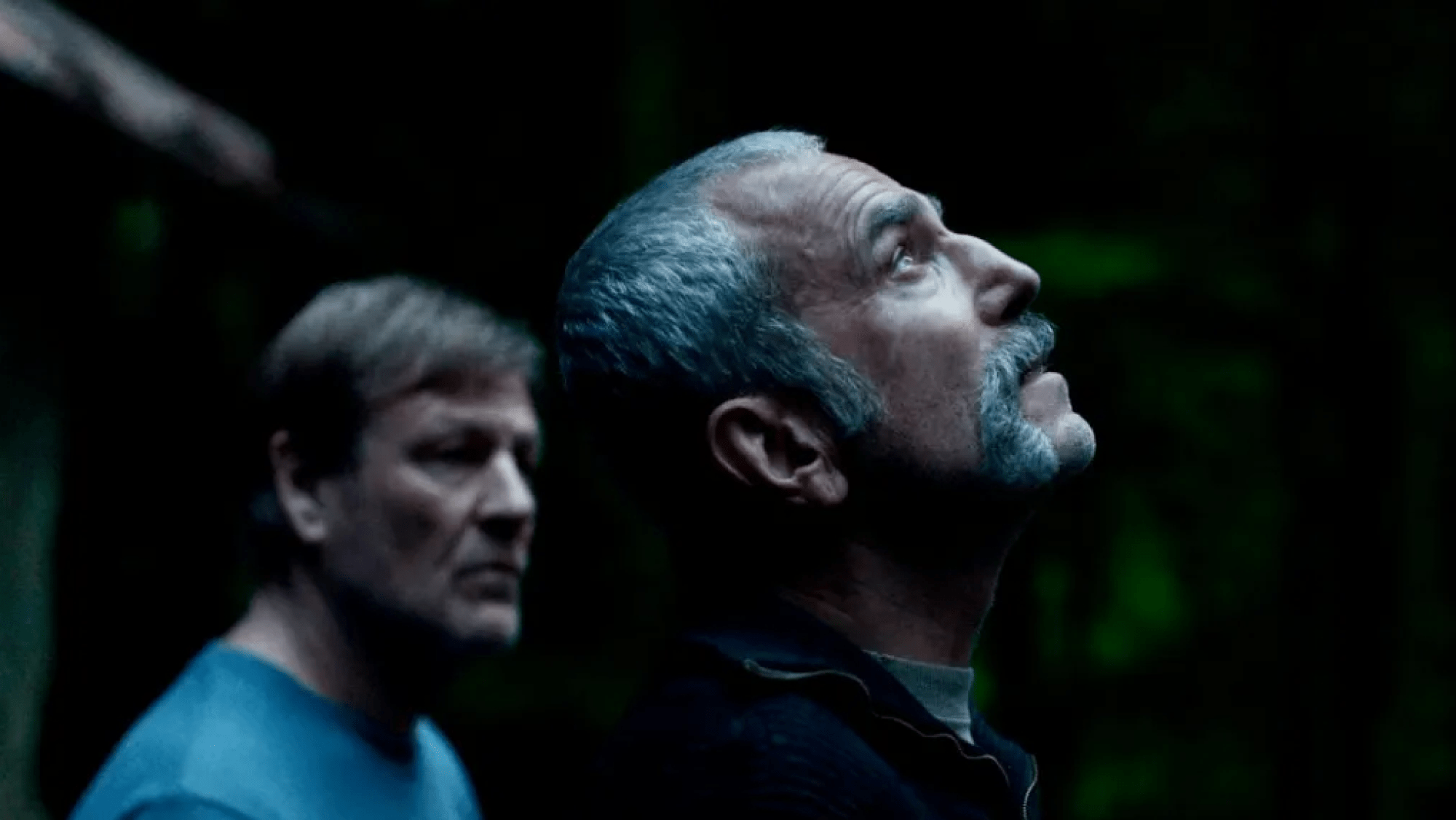
A deeply engrossing, if uneven, sojourn into the realm of reckoning and redemption. The ace in the hole here would be Daniel Day-Lewis, who came out of retirement (in 2017, with the release of “Phantom Thread,” he implied it would be his last film before the camera) to make this deeply emotionally portrait with his writer-director son Ronan in his filmmaking debut. The senior Day-Lewis co-wrote the script, but from the overall scrumptious look and intensity, Ronan is an up-and-comer to watch. The title refers to the delicate and sensitive flower that closes up when touched and is evocative of Day-Lewis’ Ray, who has dropped out of society and is living off the grid in the woods of Northern England. For nearly 20 years, his brother Jem (Sean Bean) has been rearing Ray’s son Brian (Samuel Bottomley, “How to Have Sex”) after marrying Ray’s former lover, Nessa (Samantha Morton). In short, Jem stepped in when Ray stepped out on the pregnant Nessa; Jem ventures out to find Ray now because Brian is struggling. To say why Ray has gone into isolation wouldn’t be a spoiler, but it’s besides the point – involving Ireland’s violent Troubles, with the present-day of “Anemone” set in the early to mid-1990s. Much of the early segments of the film are long, speechless moments between Jem and Ray in the lush, deep forest that offers access to a remote beach and nearby stream. The intensity that defined Day-Lewis and earned him three Best Actor Oscars (the only male lead to do so; Katherine Hepburn notched four) is on full display in the red flicker of his cottage’s fireplace as he delivers two big soliloquies that give us Ray’s “why.” Cutbacks to Nessa and Brian in a distant working-class borough fill out the picture, and Bean and his character know the landscape and their place in it. The film, shot by Ben Fordesman (“Love Lies Bleeding,” “Out of Darkness”) and scored by Bobby Krlic, is a stunning fusion of sound and image – intimate yet expansive with deep eerie chords that conjure wonderment and a haunting sense of foreboding. Not all of it melds, yet it rivets in nearly every frame.
Adapted from the similarly titled Stephen King novella from the collection “If It Bleeds,” “The Life of Chuck” has to be the best feel-good downer of a film – maybe ever. It’s got everything, from a mysterious apocalyptical event to a rigorous dance number. Wang Chung shoehorns its way into the action too. (The band has little to do with the dance number, though it may have been the inspiration.)
“Chuck” unfolds in three acts told in reverse. In Act III, “Thanks Chuck,” small-town schoolteacher Marty Anderson (Chiwetel Ejiofor) tries to reconnect with his ex-wife, Felicia (Karen Gillan), as the world implodes in small, eerie waves. Traffic backs up, technology goes on the fritz and the busy hospital where Felicia works is suddenly empty one day. Then glowing billboards thanking Chuck “for 39 great years” start popping up everywhere with the bespectacled mug of a guy who looks like a meek, mild local TV host. He’s the Chuck of the title, played by Tom Hiddleston – more commonly known as Loki in the Marvel Universe and a Bond-esque presence in “The Night Manager” streaming series. Things get weird and even more Chucky when the power goes out and his glowing visage starts projecting from the windows of the houses in Felicia’s neighborhood.
Reviewed: “The Shrouds,” “Pangolin: Kulu’s Journey” and “The Wedding Banquet”
‘The Shrouds’ (2024)
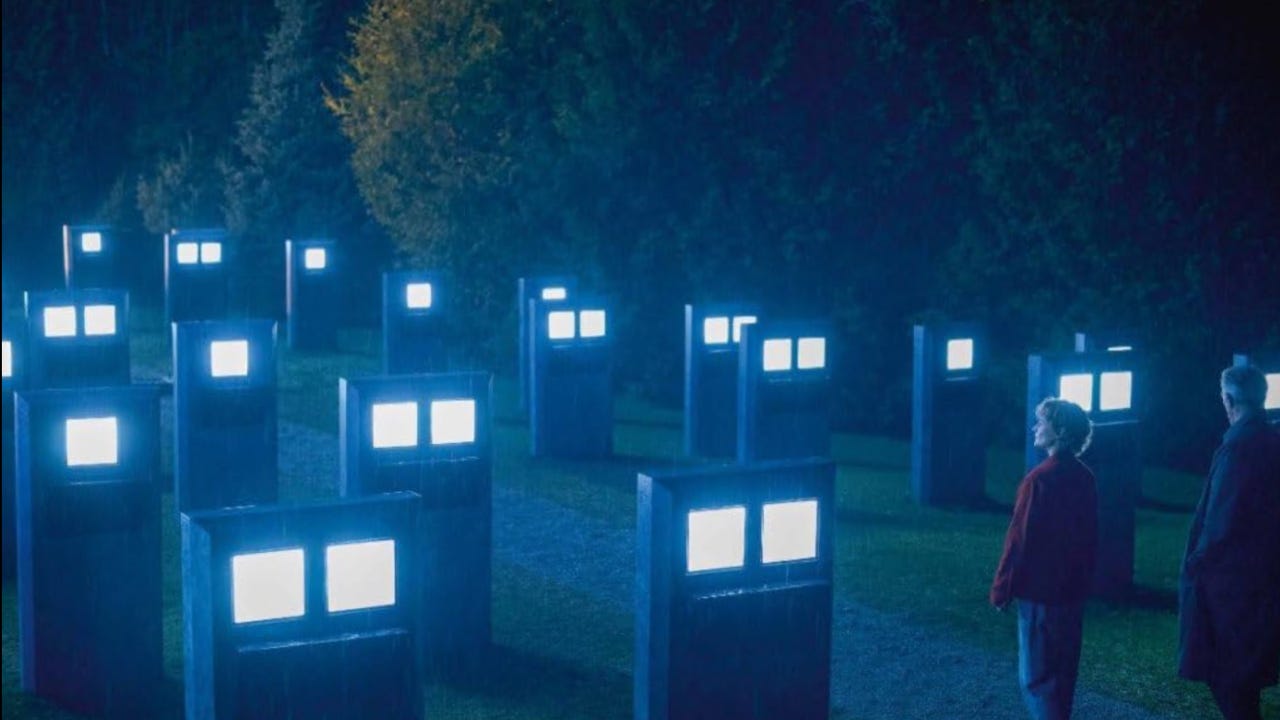
Master of the macabre David Cronenberg has always been one to explore the impacts and unintended consequences of near-future technology on humans – and often, in humans. Take “Videodrome” (1983), in which the advent of cable TV and pop-up public access stations served as a crucible for snuff videos, or “Existenz” (1999), in which a game designer trying to evade assassins melds physically with her game and the Internet. In “The Shrouds,” Cronenberg, still wrestling with the grief of losing his wife to cancer in 2017, deals with connecting the living to the departed through a Chinese-manufactured sheet with high-tech capabilities that allows the bereaved to log in through an app and look in on their loved ones as they decay away into eternity. It’s creepy and cool stuff that has some far-reaching implications, such as China perhaps leveraging the shrouds as a surveillance network. As an arguable stand-in for Cronenberg, the handsomely gaunt Vincent Cassel plays Karsh, who has also lost his wife Becca (Diane Kruger) to cancer and subsequently founded GraveTech, an Internet-connected series of cyber sarcophagus plots around the globe. Instead of headstones, there are tech towers that, with the right passcode or eye scan, allow one to pop up images of the dead or dial up memories. Karsh’s life is complicated: He dates, but prefers more illicit sexual liaisons involving Becca’s sister Terry (also played by Kruger) and Soo-Min (Sandrine Holt), the blind wife of a prospective client (Vieslav Krystyan). Then there’s Terry’s ex-husband Maury (Guy Pearce), who does much of the coding for GraveTech. Karsh’s nighttime imaginings of Becca missing an arm or a breast are far more lurid and grim than anything gazed upon electronically in the crypt. There’s also the mystery of small nodes that have grown on some of the deceased: Are they bone tissue residue, spy-network plants or something else related to the medical treatments they received at end of life? Unfortunately, many plot threads are left dangling, but they are a minor annoyance offset by the riveting psychosexual dance between the principal cast. Cassel holds the film together, but it’s Kruger and Holt who drive it – especially Kruger as Terry, who regards Karsh with contempt until an unexpected encounter, when his offhand conspiracy theorizing turns out to be her sexual trigger.
Payal Kapadia’s somber meditation on womanhood and companionship amid the bustling streets of Mumbai feels like a living and breathing document. It follows the lives of three intertwined women, two of whom are nurses and roommates. The more dour of the duo, Prabha (Kani Kusruti), is estranged from her arranged husband, who is now working in Germany, and moves through her days with restrained and wistful introspection. The younger of the two, Anu (Divya Prabha), is bright-eyed, perky and naively idealistic as she constantly overspends and often asks Prabha to cover her rent. She has a secret Muslim lover who asks her to wear a burka when sneaking over for their trysts. That’s one of the interesting things about Kapadia’s portrait of Mumbai – it delves into and illuminates the myriad subtle cultural, linguistic and religious identities that coexist nearly seamlessly in the dense urban setting. The movie places the patriarchy under a microscope, not by lambasting double standards and gender inequality, but by showing the sisterhood formed through common causes and tribulations. Prabha and Anu are busy working out their romantic and professional futures while the third woman, the hospital’s cook, Parvaty (Chhaya Kadam), a steely, no-nonsense, middle-aged widow, rails in vain against a developer who wants to displace her. “All We Imagine as Light” is a quiet film that affects the viewer in ebbs and flow, and Kapadia’s poetic cinematic flourishes add a dreamy, hypnotic affect to the deeply emotional sojourn. Kapadia was recently in Brookline to show the film at the Coolidge Corner Theatre and was rightly praised as a breakthrough filmmaker. The texture and tenor of “All We Imagine as Light” is reminiscent of Deepa Mehta’s Elements trilogy, which bodes well for Kapadia’s future endeavors.
In the latest from Azazel Jacobs (“French Exit”) grief and sisterly differences are wrestled with as familial tensions crest, crash, subside and flow. We open in a small, spare Brooklyn apartment (black pleather couches, an Ikea-esque dining set and no carpeting) as estranged sisters Katie (Carrie Coon), Christina (Elizabeth Olsen) and Rachel (Natasha Lyonne) try to work out the logistics of their terminally ill father’s final hospice cycle. Katie, the oldest, is a bit of a control freak, as evidenced by her telephone disagreements with her husband and teenage daughter back home in California. Christina’s the idealistic free spirit trying to hold the situation together while figuring out the next chapter in her life, and Rachel is the one who’s been living with dad and taking care of him while slacking around the apartment and smoking weed. In short, three very different personalities that, given the heightened emotional state, clash more than not. The three leads deliver genuine, deeply felt performances that ripple with rage, regret and vulnerability. In scope and tenor, “His Three Daughters” is not far off from Florian Zeller’s quietly compelling “The Father” (2020), including a shift in reality that brings home the palpable final punch. The are times the film – which one could imagine as an intimate, in-the-round stage play – gets a bit too cyclical, but usually the dutiful hospice worker named Angel (Rudy Galvan) steps in to update the trio on the changing reality. He’s regarded as both valued family ally and annoying interloper. You never really see or hear the father other than as the sound of a respirator and beeps from a heart monitor reverberating from the back room while the three women in the tiny living room try to make sense of their past, present and future as a family.
‘Merchant Ivory’ (2024)
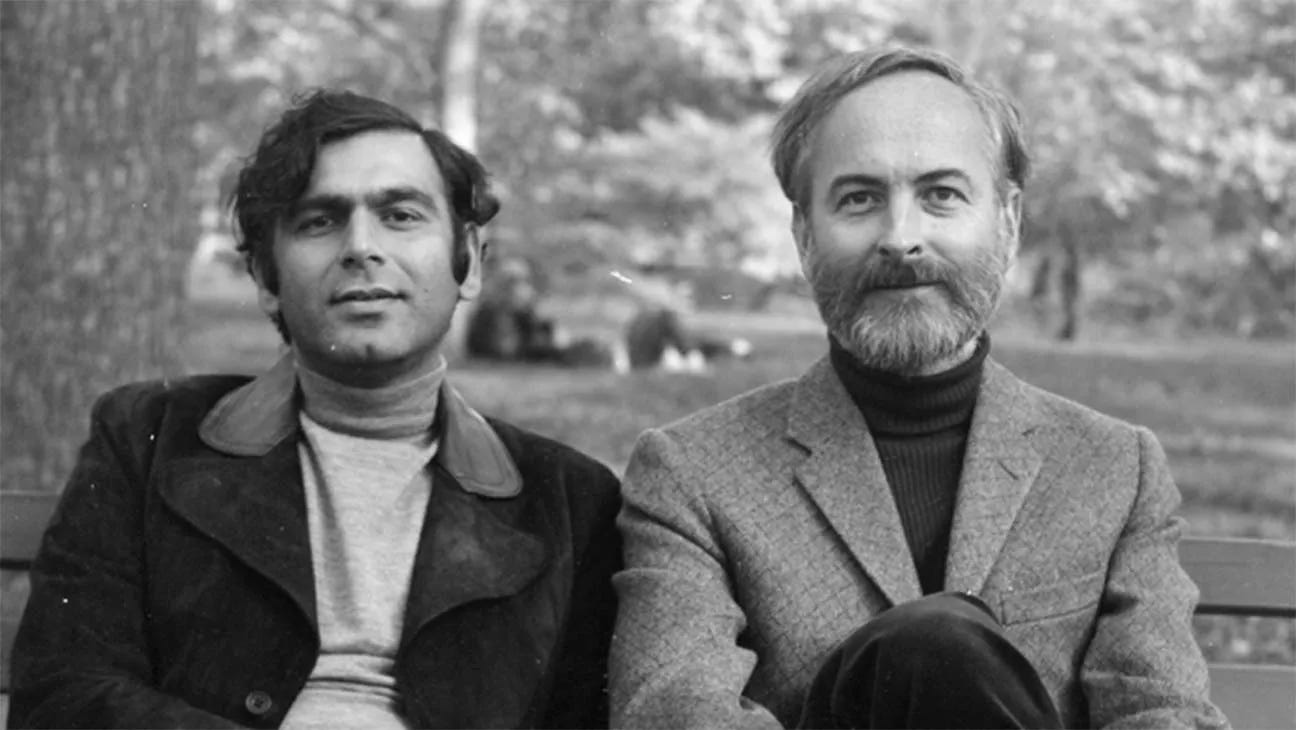
Stephen Soucy’s hagiography of the legendary filmmaking tandem that produced such critically acclaimed period dramas as “Howard’s End” (1985), “A Room with a View” (1992) and “Remains of the Day” (1993) puts their output into historical and cultural context and pulls back the veil on the challenges the two faced as a gay couple during less accepting times. Their films were the backbone of art house cinema in the ’80s and ’90s and beyond, until producer Ismail Merchant’s untimely death in 2005. Director James Ivory is still with us and spry in his mid-90s as he offers candid insight into production challenges and his dynamic with Merchant, the high-energy producer always looking to cut costs (you’d be shocked at how little some of these classics were made for) and shill projects to potential investors versus Ivory’s more somber, quiet approach. Soucy gives you the full rewind from Ivory being an adoptee (Ivory notes that the Paul Newman post-Depression, Great War film “Mr. & Mrs. Bridge” felt reflective of his childhood) to Merchant’s upbringing as a Muslim in Northern India, as well as a look into the rest of a production company “family” that included screenwriter Ruth Prawer Jhabvala, a German-born Jew reared in England (due to a guy named Hitler), and composer Richard Robbins, educated at the New England Conservatory. It was Jhabvala’s prize-winning book “Heat and Dust” that drew interest from Merchant and Ivory; when they chose to adapt, they educed a career shift for Jhabvala, collaborating on 16 films and winning Oscars for “Howard’s End” and “A Room with a View.” Troupe regulars Emma Thompson, Vanessa Redgrave and Helena Bonham Carter are on hand to chime in, as are Hugh Grant, James Wilby and Rupert Graves, who starred together in “Maurice” (1987), a film Soucy and Ivory home in on specifically – not only because of its examination of a closeted gay couple during a time when being gay was a crime in Britain, but because of its powerful context at the time of its release when the AIDs crisis and Act Up were beginning to boil over. The access Soucy earns and Ivory’s frankness create an intimate portrait, including the willingness to concede that some of the team’s later films (“Jefferson in Paris” and “A Soldier’s Daughter Never Cries” among them), while well funded, never registered the kind of critical success as the earlier films. Ivory’s only Oscar came as a writer in 2018 on “Call Me By Your Name.” Breathing in Soucy’s intoxicating love letter, you wish you could go back in time and be part of the Merchant-Ivory “family.” You will also want to go back and rewatch their classics, and perhaps even revisit some of those so-called miscues.










 For What it's Worth