It turns out “1917” isn’t the only beat-the-clock film this weekend. “Underwater,” a 95-minute race against time, gets its start early and rarely lets down. No, it’s not as harrowing, sharp or intelligent as “1917,” and that’s not because it’s a sci-fi thriller that asks a lot of its viewers – it’s because it’s an ersatz hodgepodge of genre cornerstones that have come before, namely “The Abyss” (1989), the “Alien” films and so on. To say more might spoil some not-so-surprising twists.
 We begin with ominous news clippings about mysterious tremors off the Pacific coast and plunge quickly down to a drilling platform 7 miles beneath the ocean surface. There Kristen Stewart’s Norah, a mechanical engineer and one of 300 workers on the rig, brushes her teeth casually as the ring-shaped structure shifts and groans worryingly. More groans, a droplet of water and then all hell breaks loose. By the time we come up for air – and it’s a jittery, frenetic sequence, maybe the film’s best – most of the structure’s gone, as are most of those 300 employees. In a sealed-off section, Norah and five other survivors come to the unhappy realization that they’re trapped, with no serviceable means of returning to the surface, and the rest of the gigantic structure is collapsing slowly down on them.
The answer, as the rig’s captain (Vincent Cassel) has it, is clunky robotic diving suits designed to withstand all that pressure and an iffy, near blind amble across the ocean floor to an older facility that may have resources to get home. Up to that point, and at the onset of that sojourn, the film’s pretty gripping (think “Deepwater Horizon” inverted) but then something weird and ghostly swims by and our budding character study becomes a creature-feature fear fest – and not a very compelling one.
Directed by William Eubank, who showed poise and promise with the mind-bending thriller “The Signal” (2014), the film’s composed competently enough, and production values are high. It’s just all weighed down by an inert storyline that doesn’t even feign putting a new spin on old tropes: As they prepare to make the trip, Norah tells the other surviving woman, Emily (Jessica Henwick), to take off her pants, as they won’t fit in the deepwater diving suit, though the goofball big boy of the group (T.J. Miller) fits into the unisex exoskeleton just fine. Later on, like in Ridley Scott’s 1979 deep space thriller, there’s a panty-line payoff; it’s not egregious, but most definitely worthy of an eye roll. Through it all, the bespectacled Stewart (in an Annie Lennox bob) maintains a commanding hold of the screen, casting palatable emotions as needed. Without her, “Underwater” might have been a full-on collapse; even with, when the camera starts to settle on Norah and her mates and something crashes down or swims in from the dark, it reminds us that these humans are just chum. Best not to get too attached.



 We catch up with the Kims first, living in a shabby basement apartment where they fold pizza boxes for a buck and scam Wi-Fi from those above. They live hand to mouth until the enterprising daughter of the clan, Ki-jung (So-dam Park, sassy and excellent) lands a job as an art therapy tutor to the Parks’ young, eccentric (and demanding) son, who was traumatized in first grade by something emerging from the lowest level of the Parks’ sleekly palatial, very Scandinavian home. A host of opportunities emerge. Ki-taek’s older brother is ensconced tutoring the Park’s daughter. The mother supplants the Parks’ longtime housekeeper. And what if the patriarch of the Kims could get a job as the Parks’ driver? Neat idea, but they already have a chauffeur. The resolution is a pair of soiled panties left in the back of the Benz for Madame Park, quite OCD and repressed, to get her gloved mitts on.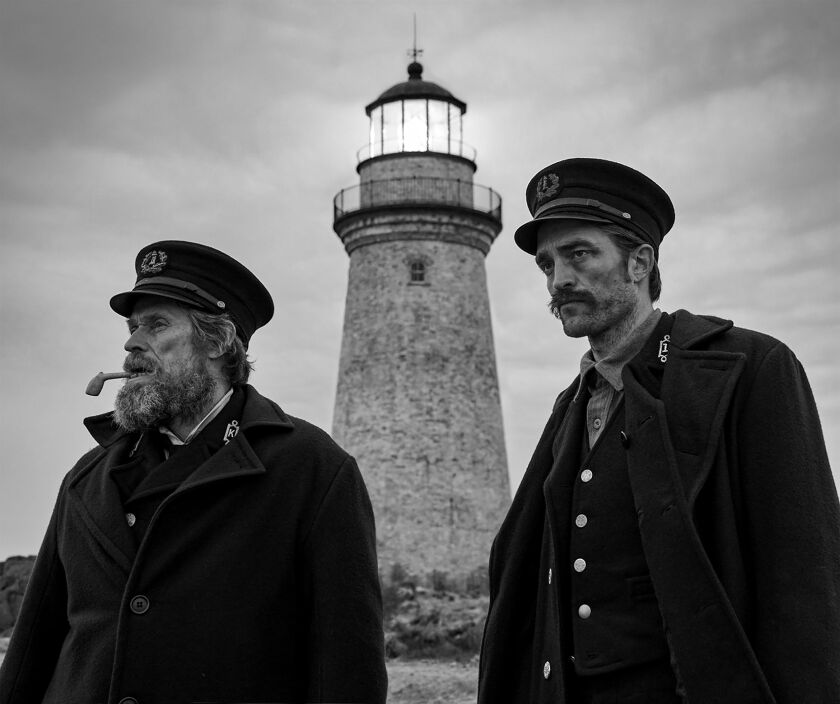
 The narrative the ambience hangs from isn’t quite as sure, but what’s to worry when you have Willem DaFoe and Robert Pattinson? The setup, based on writings by Melville and sea-obsessed others of the era, has two men keeping the flame on a remote isle somewhere far off the New England coast. It’s circa 1890, so there are no cell towers; there’s also no Morse code from the island should something go wrong. The pair are dropped off on the rock for a four-week shift. Dafoe’s Thomas is a salty old tar, Pattinson’s wide-eyed Ephraim the newbie in his charge. The order of things gets laid out early on: Thomas does the all the attending to light, which is kept under tight lock and key, as well as the cooking, while Ephraim pretty much does the backbreaking rest – scrubbing the floors, hauling heavy loads of coal across jagged rock outcroppings, emptying the piss pots and painting the structure from a rickety harness that would make any OSHA official cringe.


/cdn.vox-cdn.com/uploads/chorus_image/image/63283733/2511_tfp_00139a.0.jpg)


 It’s actually floating that proves to be the final desperate measure as a mother and two children drift haplessly down a river, hoping for a new beginning yet never able to see around the bend. The other big surprise to “Bird Box” is the impressive throng of talent involved – and their inability to lift the project. The unexceptional script written by Eric Heisserer, a scribe who not too long ago adapted another slack sci-fi story (“Arrival”) into a sharp, thinking person’s flick, adheres hard to the flat source material by rocker-turned-novelist Josh Malerman. There’s plenty of gold in the mix too: Lead actress Sandra Bullock has an Academy Award to her credit, and director Susanne Bier also has Oscar pedigree from her 2010 Danish film “In a Better World.” What gives? For one, the producers probably held Heisserer to the best-selling book for fear they might disenfranchise their ready-made target audience. It doesn’t help that Bier shoots this in a way that feels more like a TV miniseries than a big-budget, two-hour, end-of-the-world burn.