Tending to the flowers fertilized in the shadow of a German genocide
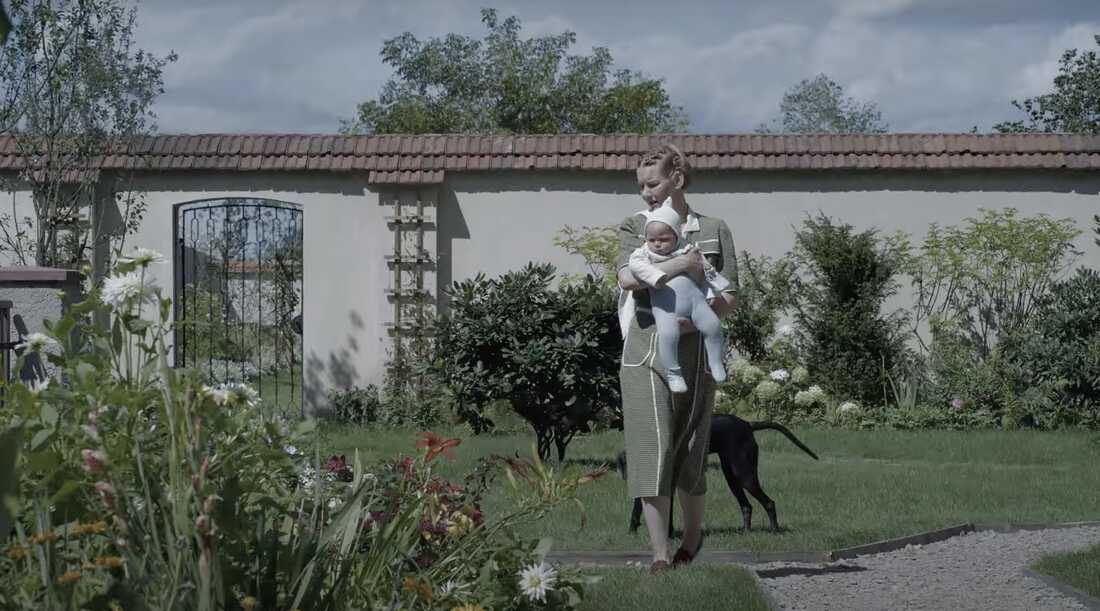

If you didn’t think we needed another Holocaust film, Jonathan Glazer would like you to think again. “The Zone of Interest” is Glazer’s very loose adaptation of the novel by Martin Amis, the author of “London Fields” who passed away last year before the film was shown at Cannes, and it flips the lens on one of the most heinous and barbaric undertakings committed to history. The major departure from Amis’ text is that Glazer opts to go less obliquely at the matter: Instead of using Amis’ fictionalized commandant of Auschwitz, he names names, focusing on the real-life Rudolf Höss (Christian Friedel), whom we grimly learn was something of a revered efficiency expert; his wife Hedwig (Sandra Hüller); and their five young children. Technically you could call “The Zone of Interest” a biopic, but one like you’ve never seen before.
The other big changeup is that we never step inside the walls of the death camp and, for the most, hang out with Hedwig and the children as she tends to the garden and they play in their well-manicured yard in the shadow of a high wall lined with barbed wire. Occasionally we hear a muffled scream or distant gunshot, the repugnant gravity of which is an alarming stab in the ribs. But for Frau Höss, this is the everyday, and she goes about her business without a second thought. There are times too that particles of ash fall from above, giving reason for a cough or the application of a tissue. Other than those inconveniences, life for the Höss contingent is not far off from that of the von Trapp family, sans the musical numbers and wide smiles. And that’s Glazer’s quiet driving point, that such an atrocity was born of complacency and complicity, be it by birth, assimilation, association or failure to see – willful or not – and could happen again. Did the children have choice in their station, did even mom and dad? There’s much to chew on. More diabolical scenes have Rudolf in meetings with peers and higher-ups looking to score maximum efficiency as crammed carloads of poor souls from Hungary are ushered north by train and into the jaws of Höss’ well-honed, methodical processes. Compared with “Succession,” it’s a staid, dour affair, as all are on the same page. There is no contention or hidden agendas, just quiet agreement with the cold winds of detached dehumanization whirring loudly.
To give us an abstract tear-away – a palate cleanser – Glazer every now and then drops into nocturnal scenes, shot in black-and-white thermal imaging, of a young girl wandering through a strange, foreboding landscape doing something or other with apples. It feels like a page from Guillermo del Toro’s “Pan’s Labyrinth” (2006) and, likewise, is a means of dealing with trauma and the bigger conflict taking place in the outside world.
This is the first film in 10 years by Glazer, director of the edgy, sublime British gangster flick “Sexy Beast” (2000). His last was “Under the Skin,” an eerie, inventive sci-fi pontification on an alien foraging for food, with us being the food.
The “Zone” score by Mica Levi, whose dark, ethereal notes Glazer relied upon to make “Under the Skin” so transportive, amplifies the anguish in achy grinds that not only echo the pain and suffering from inside the walls, but the torment within those meting the wrongs as they struggle with the consequences of their actions. There’s one brief yet powerful scene of remorse in which one agent of repugnance doubles over and gags, ostensibly to cough up the evil entity inside that possesses him. There is no exorcism or atonement for those choosing genocide.
The central performances are essential. Not enough can be said for Hüller and her work in the past year. She was the primary reason Justine Triet’s “Anatomy of a Fall” registered as so extraordinary in its otherwise ordinary scope, and is just as valuable here projecting a controlled, stoic posture bolstered by a dark sense of privileged entitlement. Friedel too is all in, but Glazer’s camera doesn’t often leave the domestic realm of the Höss house, and daddy’s a very busy man, who like any good family guy doesn’t bring his work home with him – even if it looms over his backyard with all the girth and heft of a menacing kaiju restrained by chains that are bound to break. The reckoning is there, and Glazer roots us so we can’t look away, imbedded with corroded souls swept up in a malignant campaign.
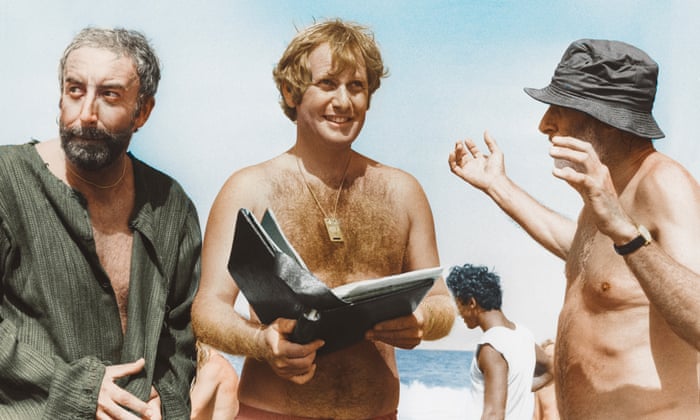
 “The Ghost of Peter Sellers” is something of a therapy session for director Peter Medak, who worked with Sellers on the abysmal 1973 pirate comedy “Ghost in the Noonday Sun.” Medak was an up-and-comer hot off the 1972 hit “The Ruling Class” and chanced into Sellers – the world’s most revered comic actor of the time – and at the “Pink Panther” star’s behest, agreed to helm the film conceived by Sellers’ comedic running mate, Spike Milligan. Medak, 35 at the time, said yes (“How could I not?”) and the film went on to be an unmitigated disaster. It ran well over budget, and has still never fully been released.


 For What it's Worth