Impressive cast elevates hideous crime into a debate about freedom
Tom Meek, Friday, January 6, 2023
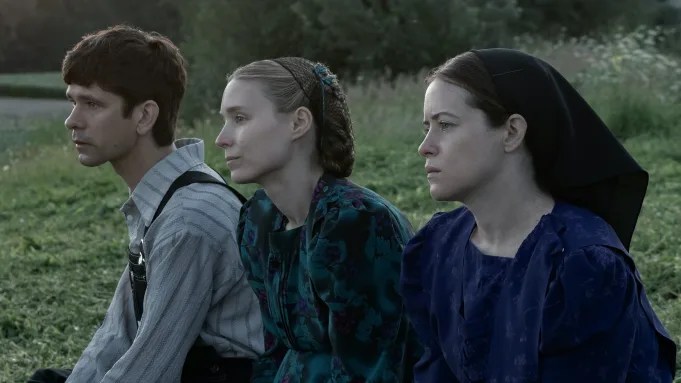
Sarah Polley’s ambitious adaptation of Miriam Toews’ novel of the same title is a poignant contemplation about women, their systemic subjugation and ultimately the union of sisterhood that enables them to stand and fight male oppression, which in this case packs a heinous, criminal twist. Toews’ “Women Talking” was inspired by real events in a remote Mennonite colony in Bolivia where several women and underage girls were given animal tranquilizers, raped repeatedly while unconscious and told that their bruises and subsequent pregnancies were the work of ghosts and devils. It’s a dark tale that, in the wake of Harvey Weinstein and #MeToo, feels necessary and on point.
In construct, the film feels a bit like a stage play; much of the action takes place in the loft of a barn where three matriarchs (played by Sheila McCarthy, Judith Ivey and the great Frances McDormand) and their female kin debate what to do in response to the spate of sexual atrocities. There’s almost no men onscreen, though their presence remains ever present through the lingering effects of their misdeeds. The one XY allowed up in the loft is a sheepish lad by the name of August (Ben Whishaw), tasked with taking notes of what the women say and to help record the events that led to this moment. Why he’s invited is an interesting twist – part of the sequestered community’s oppressive tradition is that only boys learn to read and write. The revelation’s not as vile or personal as sexual assault, but illuminates a community where a segment can be used and abused with seeming impunity. The scene of a teenage girl waking up in the aftermath of one such unlawful trespass is heartbreaking. When the women catch onto the methodic violations (they’re called “attacks”) and capture a perpetrator in the act, he gives up his fellow assailants and several are imprisoned, with the rest in town rallying around and trying to post bail.
The film has a veneer of surreality that works to its benefit. Polley never tells us explicitly we’re embedded in a Mennonite community, and for a while you feel you could be on an Amish farm in rural Pennsylvania, or even the Calvinist outpost in Robert Eggers’ “The Witch” (2015), but then a pickup truck blasting “Daydream Believer” rolls down a dusty road and there’s a reality-check moment that feels right out of M. Night Shyamalan’s “The Village” (2004) – it comes early, so don’t have at me for a spoiler.
Over its run, “Women Talking” becomes a bit too cyclical and verbose. The main debate becomes if the women should leave while the men are away, stay and fight or forgive and move on. It’s provocative and engaging at first, but begins to ebb into something existential that blunts the severity of the situation. Still, Polley has an ace cast who are all-in on concept and mission, especially Jessie Buckley, who last year starred in another thought piece about the harmful, entitled misdeeds of the opposite sex in Alex Garland’s “Men.” Here she plays one of the matriarch’s daughters dispensed into a marriage with a known abusive husband – and encouraged by the mother to stay. Mara Rooney (“The Girl with the Dragon Tattoo,” “The Social Network”) is one of the young women violated and impregnated in her sleep.
One of the big quandaries that arises in the ongoing debate is what to do about the boys? There’s some consensus that 15 is the right cutoff between offender and innocent who need their mother. There’s also a school of thought that the boys, and even the men, are victims of tradition, lore and a religion that enables it all. Going beyond #MeToo, “Women Talking” brings to the fore religious regimes not unlike the conservative theocracy in Iran, which recently has come under criticism from brave naysayers within. Polley’s film isn’t a clean shot, but it hits a nerve that needs hitting again and again.
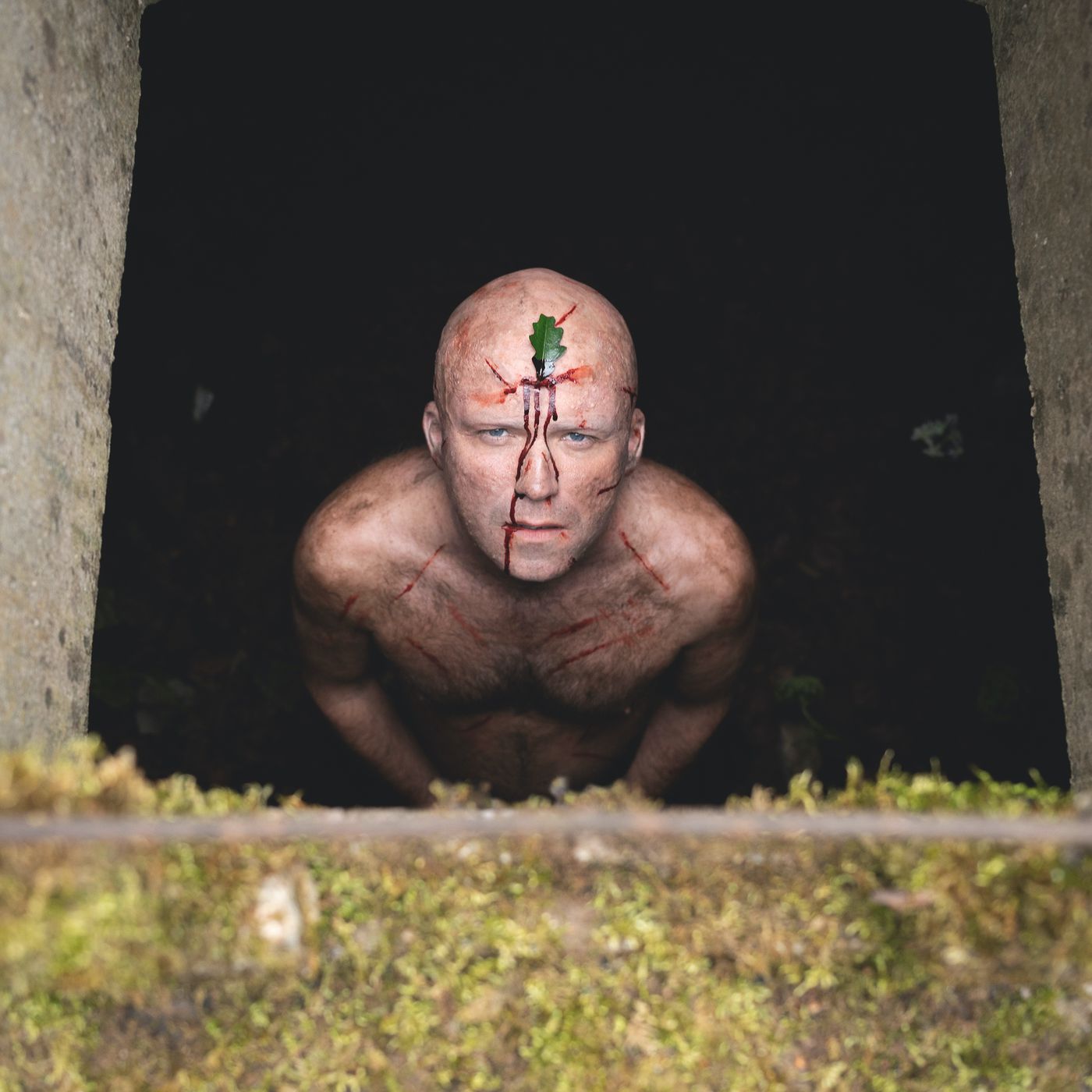


 In “Ex Machina,” the ladies get the last laugh on the guys; here too the tale’s more about female resolve than male bravado. The five women who venture into Garland’s void exhibit plenty of steel under fire, until they start losing their minds – literally. After a brief glimmer of a meteor striking a coastal lighthouse, the film dotes on the emotional throes of a widow (Natalie Portman) struggling with accepting that her husband (Oscar Isaac), a special forces officer missing in action for a year, is likely dead, as well as the guilt of the affair he unearthed on the eve of his departure. Things feel like a dramatic downer, but one night he shows up, something of a zombie, a bit washed-out, disoriented and unable to give answers other than “I don’t know.” We’re hooked.
 Nathan (Oscar Isaac), the mad scientist in question, made his nugget by inventing Blue Book, a stand-in for Google. He believes he’s created the perfect AI, so he invites Caleb (Domhnall Gleeson, son of Brendan) the company’s top coder, to his hillside retreat – it requires helicopter transport to get to – to see if his AI is as human as he believes it to be. The Turing test puts the AI through the loops to see if it can interact with a human seamlessly without revealing it’s a machine. Since Ava (Alicia Vikander) is a pretty face on a shapely acrylic body with a slight whirr and sleek cables and a soft blue neon glow pervading her translucent torso, any shell game is up immediately, but as Nathan tells Caleb over beers and pleas of “please call me dude,” it takes the test to another level. Just what that level is really, given the test’s foundation (a real one formed by the “Enigma” code cracker) never really materializes as Nathan continues to drink and descend into dark philosophical tirades and Caleb and Ava engage in interview sessions neatly separated by a thick wall of impenetrable glass, like a visitation at a prison.
  For What it's Worth