Tag Archives: Film

Short Takes

21 Mar

Reviewed: ‘Black Bag,’ ‘Magazine Dreams,’ and ‘The Alto Knights’

‘Black Bag’ (2025)

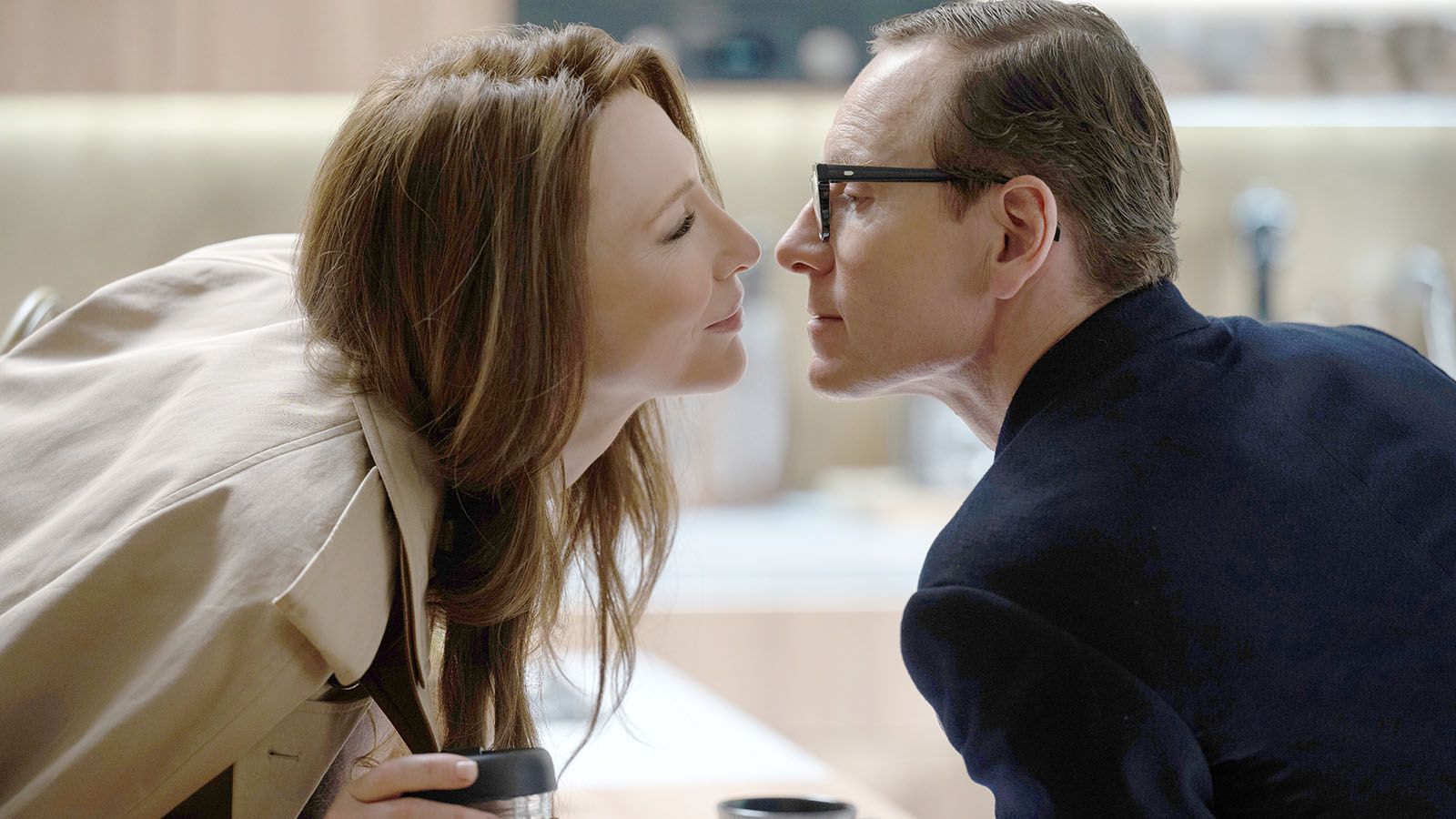
The latest from prolific filmmaker Stephen Soderbergh (“Ocean’s Eleven,” “Traffic”) is a sharp, thoughtful spy thriller in the neighborhood of “Tinker Tailor Soldier Spy” (2011), if updated for these high-tech times and tossed on a treadmill. There’s plenty of cloak and dagger, but the story’s center is the relationships between husbands, wives and lovers, be they deviously duplicitous, of high fealty or otherwise. “Black Bag” comes in at about 90 minutes, matching the paranormal psycho-thriller “Presence” released this year by Soderbergh. Who drops two utterly different films within weeks of each other? Both were written by “Jurassic Park” (1993) scribe David Koepp, who outdoes himself here, and both were shot in limited locations, though “Black Bag” has a bigger, world-hopping feel to it. The London-set work and contrasting light-dark framings brought together warmly by a deep, bass-driven jazz score impress in craftsmanship and seamless ease. At the epicenter of the smoldering espionage are British operatives George (Michael Fassbender) and his wife Kathryn (Cate Blanchett). George has been alerted to a mole at the agency and tasked to find them – and given just a week to do so. On the list of five possible double dealers: his wife. Hanging in the balance is a nuclear meltdown and the potential death of 20,000 people, but that’s just a side issue to what interests Soderbergh and Koepp. We begin with George inviting the suspects to his and Kathryn’s posh London flat for a lovely lamb roast. Every guest is a professional liar, but did I mention the gravy’s laced with a truth serum? The other attendees are grizzled party-boy Freddie (Tom Burke), his latest office fling and X factor Clarissa (Marisa Abela), the hunky yet generic Col. Stokes (Regé-Jean Page of “Bridgerton”) and the agency’s resident psych, Zoe (Naomie Harris), who, because of a departmental mandate, has regular sessions with everyone at the table. She’s also having a fling with the colonel. As the serum kicks in and courses come and go, infidelities are confessed. The meal culminates with a knife pinning one diner’s hand to the table. George sifts through the fallout as he finds Kathryn plans to travel and a movie ticket stub for two in the wastebasket of her boudoir. When inquired as to the destination of her trip, “black bag” is Kathryn’s response; the info can’t be divulged, with no exceptions for spouses. The chemistry between Fassbender and Blanchett is intellectually and erotically electric, and George and Kathryn have a fashion sense to die for. The casting overall is a coup, though Pierce Brosnan, still dapper as ever as an agency higher-up, feels stirred in as an afterthought. The casting and lean, well-honed and MacGuffin-driven script by Koepp make the film work, as well as the tightness of the final product as pulled together by Soderbergh, who edits and shoots as well.

Continue reading

Short Takes

14 Mar

Reviewed: ‘Eephus,’ ‘Chaos: The Manson Murders,’ ‘Mickey 17,’ ‘Delicious’ and ‘Silent Zone’

‘Eephus’ (2024)

If you need a baseball fix before the Red Sox’s opening day, this drolly nostalgic work by first-time feature filmmaker Carson Lund may be just the thing. In it, a bunch of old-time ballers play one last game at a park in the autumnally speckled hills of Central Massachusetts (Douglas, to be exact) before the lot is torn up and a school built. The time is somewhere in the early to mid-1990s, when the Curse of the Bambino was still a thing, but besides 1970s Sox hurler Bill “The Spaceman” Lee appearing in a small part, there’s no mention of the hometown team or MLB at all – these are just local dudes with day jobs playing for Adler’s Paint on some team called the River Dogs. It’s unclear if they ever play other teams, are in a league or just play each other. The ragtag and grizzled lot are cut with character as deep as the wrinkles on their mismatched uniforms. Many have paunches, and others casually sip beer and offer laconic barbs as they warm up for a sleepy match that begins with the sun high in the sky and concludes with the aid of headlights as a cold October evening rolls in. It’s a long, lazy marathon that Lund builds as a dryer, tamped down version of Richard Linklater’s “Everybody Wants Some!” (2016) with the same level of respect and love for the game that John Sayles imbued in his unheralded “Eight Men Out” (1988). Adding local flavor is legendary documentary filmmaker Frederick Wiseman as the voice of the radio broadcast announcer. The title refers to a super slow, arcing pitch that came into being in the 1940s and makes a knuckleball look like blazing heat. It’s rare but gets an every-now-and-then use due to its ability to daunt and confound batters – try it a second time, and it’s to the moon. For lovers of the game, this nostalgic slow roll is right down the strike zone. (Speaking of the Red Sox and the Curse of the Bambino, I have been part of a season ticket holder group since that game was played out in Douglas, but I almost missed seeing the Sox reverse the curse, something you can read all about in my “The Season That Almost Wasn’t” published in Slippery Rock University’s lit mag SLAB in 2007. You’ll likely get paywalled, but here’s a publicly viewable version posted last year on Substack.)


‘Chaos: The Manson Murders’ (2025)

Keeping with legendary Cambridge-based documentary filmmakers, the latest from Errol Morris (“The Thin Blue Line,” “American Dharma”) tackles the unshakable enigma of Charles Manson, his cult and the grisly Tate-LaBianca murders they committed. Fifty-plus years later, the inconceivable acts of Manson and his “family” loom like they happened yesterday. Morris’ rewind is kind of chaotic despite being organized into neat chapters, throwing a lot out there without resolving things as the filmmaker normally does. The Beach Boys, Doris Day, a Kennedy assassination, the CIA and LSD experimentation all make their way in, and the film’s peppered with frequent segues to Manson songs played off his one record – believe it or not, the diabolical manipulator was not a bad singer-songwriter; the Beach Boys even recorded one of his tunes, which, in a way, led to the Tate murders. It’s all based on a similarly titled 2020 book by Tom O’Neill, who claims the race war theory put forth by lead prosecutor Vincent Bugliosi was fabricated for courtroom theatrics so Bugliosi could get rich off writing “Helter Skelter.” This feels a tad like conspiracy theory. More interesting is the archival footage of Manson, creepy and charismatic, and the chilling confessionals from his followers who did the killings, though most informative and credible are former prosecutor Stephen Kay, who worked alongside Bugliosi, and Bobby Beausoleil, a songwriter who joined Manson’s cult and is still in jail for carrying out an earlier murder at Manson’s behest. (His testimony is delivered from telephone interviews. It should be noted that he’s up for parole this year, so there’s that.) Morris and O’Neill put a lot out there, but the most compelling part of the film is the maniacal puppet master, his cold, aloof rantings, hold on his subjects and ability to skirt the law and authorities even when he was a known sociopath and likely high risk to the public. The film makes one want to go back and rewatch Quentin Tarantino’s rescript of history, “Once Upon a Time … in Hollywood” (2019) to cross reference fact and fiction. No matter, Manson, his minions, their crimes and courtroom antics remain a fresh and lurid annal of American history.

Continue reading

Short Takes

28 Feb

Reviewed: ‘The Monkey’ and ‘Elevation’ in theaters and streaming now

‘The Monkey’ (2025)

Osgood Perkins, a dead ringer for dad Anthony Perkins (“Psycho”), continues the family tradition from the other side of the lens with this spin on horror master Stephen King’s 1980 short story. The not-so-slow burn is set in Casco, Maine, where we open with Capt. Petey Shelborn (Adam Scott) walking into a pawn shop covered in blood to fix his windup mechanical monkey. After a flamethrower, a speargun and a rat enter the scene, we learn that the monkey is not a toy, a point hammered home regularly by those possessing it. It is something evil, if not death itself. Its victims of ghoulish, cartoonish circumstance are random – only the person winding up the monkey is safe. When the monkey plays its drum, anyone nearby is at risk. Petey’s twin sons Hal and Bill (both Christian Convery) later discover the monkey in a closet in their unhappy home; their dad is now a deadbeat, as their mom, Lois (Tatiana Maslany), tells us. A few cranks of the monkey’s key by the curious kids and mayhem ensues among mom, babysitter Annie Wilkes (Danica Dreyer) and Uncle Chip (Perkins), who moved in to care for the boys with his swinger wife, Aunt Ida (Sarah Levy). The twins behead the mechanical monkey, throw it in the trash and down a well, but it always returned. Flash forward 25 years, and Hal (now played by Theo James) works at a supermarket and visits his own son Petey (Colin O’Brien) once a year out of fear of cursing him. Hal, the film’s occasional narrator, tells us that he and his brother don’t get along. Bill is now totally unhinged and wants to bond with the windup wingding of disaster, with Petey and Hal looped in to his demented scheme as much of Casco gets sent to the great beyond in bloody ways. Part of the fun is Theo James’s yin-and-yang roles as the buttoned-up, protective and paranoid Hal and the delusional Bill, who sports a pseudo-mullet and “damn it all to hell” gusto. Elijah Wood (“Lord of the Rings”) pops in for a dark turn as dim-witted Ted, employed by Bill to retrieve the monkey. Levy’s Aunt Ida is unforgettable for all the wrong reasons, with an unsettling sexual aura and a plotline that’s a creepshow instant classic.

Continue reading

Short Takes

26 Jan

Reviewed: ‘All We Imagine as Light,’ ‘The Front Room’ and ‘Ad Vitam’ and ‘Back in Action’

‘All We Imagine as Light’ (2024)

Payal Kapadia’s somber meditation on womanhood and companionship amid the bustling streets of Mumbai feels like a living and breathing document. It follows the lives of three intertwined women, two of whom are nurses and roommates. The more dour of the duo, Prabha (Kani Kusruti), is estranged from her arranged husband, who is now working in Germany, and moves through her days with restrained and wistful introspection. The younger of the two, Anu (Divya Prabha), is bright-eyed, perky and naively idealistic as she constantly overspends and often asks Prabha to cover her rent. She has a secret Muslim lover who asks her to wear a burka when sneaking over for their trysts. That’s one of the interesting things about Kapadia’s portrait of Mumbai – it delves into and illuminates the myriad subtle cultural, linguistic and religious identities that coexist nearly seamlessly in the dense urban setting. The movie places the patriarchy under a microscope, not by lambasting double standards and gender inequality, but by showing the sisterhood formed through common causes and tribulations. Prabha and Anu are busy working out their romantic and professional futures while the third woman, the hospital’s cook, Parvaty (Chhaya Kadam), a steely, no-nonsense, middle-aged widow, rails in vain against a developer who wants to displace her. “All We Imagine as Light” is a quiet film that affects the viewer in ebbs and flow, and Kapadia’s poetic cinematic flourishes add a dreamy, hypnotic affect to the deeply emotional sojourn. Kapadia was recently in Brookline to show the film at the Coolidge Corner Theatre and was rightly praised as a breakthrough filmmaker. The texture and tenor of “All We Imagine as Light” is reminiscent of Deepa Mehta’s Elements trilogy, which bodes well for Kapadia’s future endeavors.

Continue reading

RPM brings experimental filmmaker Saul Levine to The Brattle on Sunday to show 10 explorations

26 Jan

Filmmaker Saul Levine in 1968.

The Revolutions per Minute Festival hosts 10 works by Somerville experimental filmmaker Saul Levine at The Brattle Theatre on Sunday.

Not sure what experimental films are? If you’ve ever been to Boston’s Institute of Contemporary Art and seen trippy, surreal video installations, you’re on your way. Experimental or avant-garde film is usually deeply personal, often sociopolitical in context and reflective of the artist’s life in the moment.

Levine, born 1938, has been producing films for nearly 60 years; he was a professor in the Visual Arts Program at MassArt for 39 years.

Levine started his filmmaking career with “Salt of the Sea” (1965), featuring footage of his friends hopping from a boat to a buoy in the New Haven harbor. “I tried to make the jump with the camera,” Levine said, “and I fell into the water but held on to the camera.” The waterlogged footage, which Levine described as “abstract swirls of magenta and turquoise,” was turned into a four-minute short that ended with a clear shot of his friend perched upon the buoy.

If you watch Levine’s later works, such as his series “Driven (Boston After Dark)” (2002-present), in which Levine rides around in a car filming subjects and captures moments in time, or “Sun Drum Moon Note” (2018), which screens Sunday, you’ll notice shaky camera work. Part of that is Levine’s editing style, but adding to it are genetic neurological ticks – what Levine refers to as “tremors” – that he’s had since birth. As a result, Levine also speaks with a noticeable stammer.

Age and neurological affliction keeps Levine from getting behind the camera as much as he used to. Levine’s time at MassArt was also cut short, ending with his resignation in 2018. He said he felt “forced out” after school administrators accused him of harming students by showing his compiled film “Notes After a Long Silence” (1989), a collage that includes scenes of him having sex with his then partner. “It was ridiculous,” Levine said, as he’d screened “Notes” over several years without complaint and “the film was posted on the school’s website.” Levine gave passionate commentary on the situation in a video on Facebook, saying he felt “ambushed” by the school’s administration. The same year, fellow MassArt professor Nicholas Nixon, a Guggenheim fellow and photographer, came under scrutiny in a Boston Globe article for more severe, yet similar allegations of inappropriate academic behavior. The Globe mentioned Levine in conjunction with Nixon, who also resigned.

Continue reading

Short Takes

9 Jan

Reviewed: ‘Seed of the Sacred Fig,’ ‘Soundtrack to a Coup d’Etat’ and ‘Room Next Door’ in theaters

‘The Seed of the Sacred Fig’ (2024)

It’s amazing, given how Draconian the Iranian government has been about censorship and control over its own narrative, that the voices of filmmakers Mohammad Rasoulof and Jafar Panahi persist. Both have been arrested and spent time in jail because they make films critical of the oppressive regime. These films are usually shot and edited secretly and often bootlegged out of the country to gain distribution in the West. Panahi struck the first blow with the sublime and frightening “The Circle” (2000), which detailed the systemic imprisonment of women for morality violations that most people in a free state would consider little more than jaywalking. Rasoulof goes further with “The Seed of the Sacred Fig,” crafting a domestic gender rift against the backdrop of the real-life death of Mahsa Amini in 2022 after being taken into custody for a hijab violation. The event galvanized the Woman, Life, Freedom movement and led to protests in the streets. In the home of Iman (Missagh Zareh), he and his wife Najmeh (Sohelia Golestani) and teenage daughters Rezvan (Mahsa Rostami) and Sana (Setareh Maleki) come at the headline event differently. Iman, who works for the state judicial department and reviews and signs execution orders, believes the theocracy’s line that Amin died of a stroke; his wife and daughters, like all those protesting, believe the death was the result of abuse and torture. Iman has a gun as part of his position, and as tension in the house rises, the firearm goes missing. Ultimately the action leaves the confines of the family’s apartment and the distrust threatens to turn violent. Just before the film played Cannes, Rasoulof was sentenced to eight years in prison with a flogging and fled the country, another reflection of a theocratic patriarchy holding authoritarian reins chokingly tight. 


‘Soundtrack to a Coup d’Etat’ (2024)

A perfect companion to RaMell Ross’ superb “Nickel Boys,” as both deal with a grotesquely unjust Black experience on the cusp of the civil rights movement. “Nickel Boys” is a microcosm of racial injustice, whereas “Soundtrack to a Coup d’Etat” looks globally. The doc by Johan Grimonprez details the dubious events surrounding the assassination of Patrice Lumumba,  inaugural leader of the Democratic Republic of Congo – just liberated from Belgium and quickly becoming a Cold War conflict because its rich uranium deposits were coveted by the United States and Soviet Union for use in nukes. It is astounding to see archival footage of the smooth and charismatic Malcom X and an animated Nikita Khrushchev making the same condemnations at the U.N. of the West for its colonialism and denial of rights to Black people. Insert into the mix Louis Armstrong as a Trojan horse cultural ambassador to the Congolese while Eisenhower, the CIA and Belgian operatives scheme against Lumumba in ways troublesome, embarrassing and downright heinous out of fear the nation (and its uranium) would fall into Soviet hands. Grimonprez, employing frenetic freestyle editing, homes in on socially active jazz greats of the time – among them Nina Simone, doing her amazing “Sinnerman,” Abbey Lincoln and Max Roach bringing the beat and emotional heat and Dizzy Gillespie – as well as X and Maya Angelou (she, Lincoln and Roach stormed the U.N. in the wake of Lumumba’s death) to fill the frame with sound and voice. The frequent shards of quotes he flashes onscreen are stunningly effective. Grimonprez has tapped into an incredible intersection of time, place and players that he turns into an immersive experience that entertains and informs unlike any Wikipedia page or history book. 


‘The Room Next Door’ (2024)

Iconic Spanish filmmaker Pedro Almodóvar (“Tie Me Up, Tie Me Down,” “Women on the Verge of a Nervous Breakdown”) makes his first English-language film, and with the double-barrel casting of Tilda Swinton and Julianne Moore on paper it seems like a can’t-miss collaboration. While it definitely hits, it’s not the boom you’d expect from such a loaded lot. Based on Sigrid Nunez’s novel “What Are You Going Through,” “Room Next Door” is a contemplation on mortality – something that seems to be on Almodóvar’s mind these days given this, “Parallel Mothers” (2021) and most personally, “Pain and Glory” (2018). Novelist Ingrid (Moore) and war correspondent Martha (Swinton sporting a neat crop top), Manhattanites but distant for years, reunite because Martha is terminally ill and wants Ingrid to spend the end days with her in a quaint VRBO upstate. The performers are all in, yet the characters somehow feel shallow and contrived and the dialogue too meted, as if were a stage play. It’s gorgeous and affecting, but ephemeral and wispy. 

The Best Films of 2024

29 Dec

It was a strange year in cinema, a year where blockbuster success at the box office was rare (“Inside Out 2” was the top grab, followed by the overdone “Deadpool & Wolverine” superfrenemy romp) and outshone by adult-themed animation, non-English-language and documentary offerings. Also strong were films featuring women’s voices and indie creep-outs – a combination best embodied and exemplified by TJ Mollner’s “Strange Darling,” Anna Kendrick making her directorial debut with “Woman of the Hour” and the gonzo body-horror spectacle “The Substance.” None of which made mt top 10, but were squarely in the hunt.


1. “Do Not Expect Too Much From the End of the World

A sardonically black political comedy that’s right out of left field, powered by witty takes on hot topics (Andrew Tate, Putin and Pornhub, to name a few) and a killer performance by Ilinca Manolache, without whom the movie could not be. Manolache plays Angela, a feisty Romanian woman looking to make it in the gig economy as a filmmaker and TikTok sensation. Her main hustle is as a production assistant for a company that makes safety videos, kind of – on many shoots, Angela coaches accident victims, often in wheelchairs, to talk about the safety measures they should have taken to have avoided injury despite the clear negligence of the employer to provide a safe workplace. They’re more CYAs than PSAs, and that’s the degree of biting humor imbued by writer-director Radu Jude (“Bad Luck Banging or Loony Porn”)


2. “Flow”

The official Oscar nominee from Latavia, is a mesmerizing, dialogue-free animated adventure about a cat and all the other birds, dogs and capybara that out feline encounters. Themes of climate change—flash floods and tsunamis are the reason the cat and fellow animals find themselves adrift on a sailboat—and a peaceful world sans the presence of man and mankind’s destructive ways pervade Gints Zilbalodis’s gorgeously stylized of an Eden like end to the world. Visually “Flow” has all the beauty and poetry of a Hayao Miyazaki masterpiece and the way it navigates mature matters makes it multi-tiered and applicable for all members of the family regardless of age.


3. “Memoir of a Snail

Not a claymation romp for the whole family – not even close. No, this very dark and very adult animated tale has twins (voiced by “Succession” and “Power of the Dog” stars Sarah Snook and Kodi Smit-McPhee) separated after the death of their father and placed in foster homes on opposite coasts of Australia, as well as edgy, plot-driving incursions into swinging, fat feeding, pyromania and religious zealotry. Wickedly funny yet tenderly bittersweet, “Memoir of a Snail” has the dark, loving embrace of Tim Burton done with the edgy verve of Trey Parker and Matt Stone of “South Park.”

Continue reading

A Complete Unknown

25 Dec

In a biopic with purpose, Dylan goes electric and shakes up the old folkies

It takes a little while to buy into Timothée Chalamet as quirky troubadour and American icon Bob Dylan, but once he gets you on the hook, it’s clear that the uncannily deep performance is certain to be one of the year’s best. I was never all-in with all the Chalamet love after he burst onto the screen in Luca Guadagnino’s “Call Me by Your Name” (2017) and received an Oscar nod for his part as young lover to an older partner. And yes, he shone as Hal in “The King” (2019), but in the “Dune” films he’s felt underweight as Paul Atreides, the man-boy turned messiah. With his turn as Bob, I’m done dithering – and did I mention he does all the singing of Dylan’s early ’60s catalog, nasal twang and all? It’s more than just a little impressive.

Departing from your typical cradle-to-grave biopic arc, writer-director James Mangold (“Heavy,” “Ford v Ferrari”) and co-writer Jay Cocks, working from Elijah Wald’s 2015 book “Dylan Goes Electric! home in on Dylan’s ascent to notoriety and his transition from folk to electric rock, which caused a sizable stir at the 1965 Newport Folk Festival. Dylan reportedly had conversations with Mangold and offered some additional tidbits that got worked into the film. We begin with the young Bob visiting his idol Woodie Guthrie (Scoot McNairy, also onscreen as Amy Adams’ passive husband in “Nightbitch”) at a hospital where he’s battling Huntington’s disease and can’t talk. By his side is “If I had a Hammer” singer and Newport Fest organizer Pete Seeger (a nearly unrecognizable Edward Norton, knocking it out of the park as the solemn, mild-mannered folkie). Three legends, one small room.

The film flows like that: Dylan’s soulful sojourns cross paths with other era icons, sometimes collaborating and other times clashing. As the film has it, it’s Seeger among the crew trying to pull the plug on Dylan’s electric set late in the film. In between, much revolves around Dylan’s relationships with girlfriend Suze Rotolo, fictionalized as Sylvie Russo (Elle Fanning) to allow narrative flexibility and respect Rotolo’s memory and surviving family; and folk and feminist icon Joan Baez (played with vim and nuance by Monica Barbaro, whose stock is certain to rise in the wake of the film). It’s Baez who early on gives Dylan a big lift, bringing him on tour, and despite their romantic interludes has no qualms about calling him out for being a self-interested asshole.

Rock biopics are notoriously tricky. Without the artist or the artist’s estate behind the project, often the music is missing – see “Stoned” (2005, about Brian Jones) or “Stardust“ (2020, about David Bowie). This isn’t Dylan’s first treatment either, which would be Todd Haynes’ more abstract and cagey “I’m Not There” (2007), in which Cate Blanchett, Richard Gere and Heath Ledger are part of a six-actor rotation playing Dylan in different incarnations. Mangold’s take is more rooted, but both films are wise to seek the essence of Dylan and not attempt to provide answers into the slippery persona who, after becoming the only musician to win the Nobel Prize, skipped the ceremony and sent fellow rocker Patti Smith to perform a few Dylan works in his stead. 

One of the finer strands in “A Complete Unknown” is the letters exchanged between Dylan and Johnny Cash (a brash Boyd Holbrook) and their meetups at Newport. Cash, whom Mangold framed with great success in “Walk the Line” (2005) with Joaquin Phoenix, is depicted as something of a Dylan agitator and muse who pushes him to push back on the folkies who want to keep Newport unplugged; his inclusion allows an uproarious scene one not-so-sober festival morn with Cash trying to park his Caddy by caroming and careening off the fenders and bumpers of other cars. The true gift of “A Complete Unknown” is its ability to transport the viewer via dreamy time machine, re-creating the era impressively but maintaining a tight focus. 

If you feel the film meanders or is too myopic, that’s the point: It’s the young Bob Dylan wrestling with his roots, idols and place in the world. Little else bleeds in, and the film is not afraid to be critical of perhaps the greatest songwriter of the modern era. History does get manipulated some, but mostly for effect and efficiency, and Chalamet clearly did his homework, while the supporting cast of Norton, Barbaro, Holbrook and Fanning all strum along seamlessly in tune.

The End

19 Dec

Documentary director turns to fiction and makes it sing of guilt for climate destruction

Long, overindulgent and absolutely riveting, the first feature film by Harvard grad Joshua Oppenheimer is hard to make heads or tails of as it explores life after the end of the world. The cinematic visionary who blew audiences away with his imaginative documentaries on the Indonesian death squads of the 1960s (“The Act of Killing” and “The Look of Silence,” both Oscar nominated) saddles up with Tilda Swinton, it boy George McKay of “1917” – already having a banner year with “The Beast” and the hard-hitting “Femme” to his credit – and Michael Shannon, who starred in the similarly themed, “Take Shelter” (2011). They play Mother, Son and Father, respectively. Along with “Nightbitch,” also currently in theaters, this no-name concept seems to be the arthouse convention du jour. 

We catch up with the trio living the posh life in a bunker a half-mile underground after the rest of the world has been burned to a crisp. The shelter is in the labyrinth of an abandoned salt mine bought presciently decades ago by Father, a former oil exec (who, by proximity, had a hand in the incineration of humankind). Son was born in the bowels of that salt mine, and the well-tended-to trio are not alone in their enclave. With them are a doctor (Lennie James, “The Walking Dead”), a cook (Bronagh Gallagher) and a butler (Tim McInnerny, “Gladiator II”). Everything  for the most is safe and good, and their biggest discomfort is the bitter sourness of the wine they vinify. Then an interloper drops in – almost literally. The arrival of the young woman known as Girl (Moses Ingram) is not welcomed. Mother and Father have a xenophobic policy and initially restrain and restrict Girl; eventually they admit her into their midst, where as you can guess, sexual tensions with Son rise quickly and cause social dynamics and routines to shift.

Did I mention that “The End” – not to be confused with the similarly titled and themed 2013 film “This is the End” starring Jonah Hill and James Franco – is a musical? For his two Indonesian hit-squad docs, Oppenheimer stepped outside the boundaries of nonnarrative convention and gave former squad leaders resources (money and cameras) to make their own films depicting their recollection of their parts in the bloody overthrow. One made a garish musical with former killers dressed in drag and singing alongside the cascading waters of a grand waterfall. Could that have been the inspiration for the cast of “The End” to break into song in the dusty corridors of a salt mine? The probability is too overwhelming to deny. 

The overall fabric of “The End” is not too far from L.Q. Jones’s postapocalyptic“A Boy and His Dog” (1975), in which Don Johnson as that “boy” discovers an underground Eden and ultimately upends an order serving mostly an elite few. Besides the gender role swap, the other notable delta between the films is the causality for eradication – global nuclear annihilation or human-triggered climate change catastrophes. Oppenheimer doesn’t harangue the audience by climbing onto the climate change pulpit, a theme more clearly held off in the corner of the frame. For his microsociety, there’s no wrestling with what-ifs, because it’s already happened, but members have guilt and admit to things they did that led to the perishing of others. 

Given the texture of his films, it’s clear that the cleansing power of confession is something that drives Oppenheimer – it was the thing he sought to educe from Indonesian militia leaders after decades of denial. The result in those films was stunning, emotionally impactful and horrific; here, narrative artifice diminishes that impact, but “The End” is effectual in its own right. It is gorgeously framed and shot, with near period-piece delicacy, and the performers create sharp characters and prove quite capable when dropping into song. The offset between Swinton’s subtle, ethereal otherworldliness and Shannon’s gruff bristle takes a while to digest, but serves the film well. “The End” does go on a bit too long for the concept, but effectively provokes with themes of isolationism, empowered entitlement and one’s responsibility to a fellow human, as well as stewardship of the vast blue orb we’ve indelibly infected through negligence and avarice.

Short Takes

14 Dec

“Queer” and “Nightbitch”

‘Queer’ (2024)

Luca Guadagnino’s adaptation of William Burroughs’ semiautobiographical novella is a steamy walk on the wild side set in 1950s Mexico City and destinations south. Bond guy Daniel Craig goes all-in as Burroughs alter ego William Lee, a compulsive yet civil expat with means and a predatory tick. For those who wondered what Craig would do after letting go of 007, “Queer” signals something more than just the bawdy good fun of his Benoit Blanc romps (“Knives Out,” “Glass Onion”). Here, the actor turns in a bold change-up that’s more than worthy of awards banter. Lee has relocated to Mexico, because – at the time – it was one of the few havens for a man of stature wanting to pursue same-sex dalliances as well as illicit drug use without the inherent social and legal persecution that was (and still is?) rife and looming in the states. Beyond the bustling “queer” community Lee’s embedded in, he can score smack or coke easily around the corner, a real win-win for a gentlemanly hedonist. The film’s broken into three chapters, the first two focusing on Lee’s obsessive pursuit of a tall, sculpted, younger lad by the name of Eugene Allerton (Drew Starkey), another American hanging out in Mexico City trying to work out their place in the world and through the bigger ideological issues that confronted Burroughs and his fellow Beats. For a good long while, Allerton remains at an arm’s length, aloof and just out of reach, but “Queer” morphs into something of a buddy road trip as we steer into the third chapter and the pair head to Ecuador and Panama with the goal of greater euphoria and enlightenment (and telepathy, Lee hopes). The circumstances that led Burroughs to Mexico, and to write “Queer,” are intriguing: He had just accidentally shot and killed his wife, Joan Vollmer, during a drunken game of Willam Tell (leading also to Burroughs’ 1954 novel, “Naked Lunch,” adapted adroitly to the screen by David Cronenberg in 1991). Given its content, “Queer” would not get published until 1985. Guadagnino, who’s skilled at projecting carnivorous carnality on screen (“Suspiria,” “Challengers,” “Bones and All”), simmers up a slow-building character study steeped in lust and drugs. As with all the Italian auteur’s films, “Queer” is crafted gorgeously from a cinematic standpoint, but its dips into surrealism late in the film are narratively awkward. There’s a thinness and slight disjointedness that at times threaten to pull one out, but even those foibles are offset easily by Craig’s screen-consuming commitment to the part.


‘Nightbitch’ (2024)

Rachel Yoder’s novel, which touched a nerve about the disproportional contributions the male and the female of the species make when it comes to child rearing, looked primed for the big screen with Amy Adams cast in the lead and the capable Marielle Heller to direct. Heller, as you may recall, blazed her way onto the screen with the intimate 2015 coming-of-age drama “The Diary of a Teenage Girl,” but here, with Yoder’s experimental text about a mother who may or may not be transforming into a dog (thus the title), domestic themes dealing with the onus of matronly nurture, the male provider complex and even the glass ceiling feel contrived and forced. “I don’t want to be trapped inside a 1950s marriage,” says Adams’ Mother (the characters have no names) to her clueless husband (Scoot McNairy). He’s not a bad guy, but does regularly drop into video game oblivion as Mother, ever put upon (or so that’s the lens of the film), tends to their 2-year-old. “Nightbitch” is a deeply internal film, with Mother reflecting regularly on (and brooding about) her status and the relative (in)equality in the homestead. The kick comes when she starts to commune with the pack of dogs that roam her suburban neighborhood; later her teeth get sharp and pointy, meat becomes a must munch, patches of fur begin to spring up here and there and there’s the unsavory discovery of a burgeoning tail. “An American Werewolf in London” (1981), this is not. The context of what is real and what is not is often hard to glean – and more so, you just don’t care. Sure, it’s a clear manifestation of Mother’s emotional state and a bigger metaphor for the unrecognized burden of motherhood being taking for granted, but as presented it’s lazily murky, unlike how Mary Harron’s “American Psycho” (2000) deftly blurred reality, delusion and the externalization of emotional anxiety. Adams puts in a game effort, but Mother’s not that deep or interesting, and neither is McNairy’s husband, resulting in a generic couple living generic lives and going through generic ennui. The pooch stuff, as rendered, feels tacked-on. As a feminist poke, “Nightbitch” makes its point, but not convincingly so. It’s frustrating to watch the talented Adams (“Arrival,” “American Hustle”) dig deep only to get collared by a flat script, and the cinematic act of going from reality to body-morphing alter reality should have been punched up more. “Nightbitch” whimpers slowly into the night, a fangless could-have-been.