Tag Archives: Documentary

Creem: America’s Only Rock ’n’ Roll Magazine’

14 Aug

‘Creem: America’s Only Rock ’n’ Roll Magazine’: In on the joke, and at least once on with the band

By Tom Meek

The original title to this nostalgic dial back was “Boy Howdy! The Story of Creem Magazine,” the “Boy Howdy” being the rock magazine’s identifying icon, conjured up by legendary cartoonist Robert Crumb (allegedly in exchange for the mag covering the costs of a medical treatment). The posted title of Scott Crawford’s documentary reflects the storied magazine’s sub-banner, an intentional eff-you to “Rolling Stone,” which launched a few months earlier. As the talking heads in the film have it – including former editors and writers there – “Rolling Stone” was a highbrow culture magazine, while “Creem,” named after the rock group Cream, was just about rock ’n’ roll and adoringly true to its Detroit roots throughout its 20-year existence. It was posture and pose versus edgy, raw ardor.

Interestingly, one of those talking heads recalling Creem with such zeal is film director Cameron Crowe (“Singles,” “Jerry McGuire”) whose experience as a Rolling Stone writer gave him the seeds for the bittersweet rock romance “Almost Famous” (2000). Another ardent fan, Chad Smith of the Red Hot Chili Peppers, grew up close enough to bike down to Creem’s offices (described as “aesthetic squalor”) and rues that he never made the pages of the mag. Other rewinds about drop-ins from Detroit rock royalty such as Iggy Pop, Ted Nugent and Alice Cooper dot the film; one time, a Creem journalist embedded with the band Kiss onstage for a show.

The Creem reflected in film feels much like the early days at the Boston Phoenix that I heard about when I joined back in the early 1990s – underground culture, alternative music and cult films, all done for peanuts by hustling journos who’d rather be at a late-night gig and write about it the next day than pull down big dollars as a stolid nine-to-fiver. It was about passion and the vibe, and Crawford gets his finger on that. The film would make a nice double bill with “Other Music,” which also played the Brattle’s Virtual Screening Room this year. The personalities at Creem – including publisher Barry Kramer and critic and editor Lester Bangs, who both died before the magazine flamed out – were clearly a strong and agitated olio. As one surviving commentator said of its legacy and embraced irreverence, “either you’re in on the joke or you were the joke.” Rock on.

A Most Beautiful Thing

29 Jul

Pulling together: Boston filmmaker tells story of first Black rowing team

Boston filmmaker Mary Mazzio’s documentary “A Most Beautiful Thing,” which recounts the travails of the first Black high school crew team in the country, was supposed to open in theaters back in March but the COVID-19 swell altered that and still holds a lingering effect on the film’s release. AMC, the theater chain that Mazzio has an arrangement with, has yet to get back up and running and so Mazzio, with her finger on the pulse of social issues and more topographically, in light of the George Floyd slaying and subsequent Black Lives Matter protests, is pushing ahead with the film’s release on Xfinity Friday, July 31, and releasing on other major streaming platforms at staggered future dates — Sept. 1 on Peacock and Oct. 14 on Amazon Prime.

Mazzio, a former Olympic rower, notched her unique arrangement with AMC when the theater was exploring means to address complaints that most films exhibited carried unflattering stereotypes of people of color and underrepresented communities, and as a result was actively seeking more positive and aspirational material. “Positively diverse,” is how Mazzio said (then) CEO Gerry Lopez described it. It was a natural fit as AMC snapped up several of Mazzio projects like “Ten9Eight: Shoot for the Moon” (2009) that detailed a business plan competition with teen entrants from high-crime, inner city communities like Harlem, Compton, Chicago and Baltimore, and “Underwater Dreams” (2014), which chronicled teens of undocumented parents who come together and go head-to-head against MIT in an underwater robotics competition.

Continue reading

Plimpton! Starring George Plimpton as Himself

31 May

tag-harvard-square tag-media tag-slider last_archivepost slideshow-width”>

plimp4

Because of his WASPy, blue-blooded demeanor and cheeky curiosity, George Plimpton always stuck me as a something of a cross between Thurston Howell III and Hawkeye Pierce – the latter maybe because Alan Alda played Plimpton in the 1968 film based on the writer’s bestselling book, “Paper Lion.” Directors Tom Bean and Luke Poling, in their plumbing of the author, editor and sometimes actor, seek to paint a portrait of a man who was more than the sum of his stunts, which famously included turns as a quarterback for the Detroit Lions, goalie for the Boston Bruins, acting with John Wayne and performing with the New York Philharmonic.
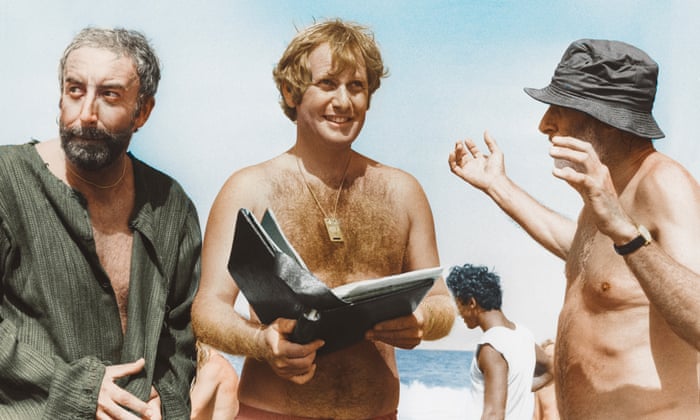
Plimpton choose to call these endeavors “participatory journalism,” and it made for good readership in the pages of Sports Illustrated back in the days when Hemingway and Richard Ford were turning in copy. (There was also a “Plimpton! Adventures in Africa” TV series in the early ’70s, hence the film’s title.) He was a string bean of a kid – one of the big reveals early in the film is Plimpton at the prestigious Exeter boarding school failing to make a sports team, which makes his bold undertakings later in life feel like he had something to prove. The main event the film homes in on is Plimpton going a few rounds with boxing legend Archie Moore, the only man to fight both Ali and Rocky Marciano.

And where there is George Plimpton, there is The Paris Review, the literary magazine Plimpton help found in the ’50s and edited until his death in 2003. His love of figures such as Hemingway and Roth is palpable throughout the film, especially in his relentless pursuit to get such luminaries to sit down for interviews. As the doc progresses, Plimpton’s love of the Review shines through even brighter as he becomes a pitch person for car sales and garage openers to make money to support the literary rag. The ads make for a wonderful little time capsule.

Plimpton, as the movie paints him, was a romantic and idealist who kept close ties with the Kennedy family and was there to help wrest the gun from Sirhan Sirhan’s hand when Robert F. Kennedy was assassinated. Plimpton also enjoyed a party, hosting late-night soirees in New York with the likes of Gore Vidal, Truman Capote, Tom Wolfe and Allen Ginsberg. His son Taylor, who reads some of his father’s pieces throughout the film, recounts being kept up regularly by the late-night carousing. Plimpton was also friends with Hugh Hefner and dabbled in acting – we all know of his turn as a shrink in “Good Will Hunting” (1997), but he also had small parts in “Rio Lobo” (1970) and even “Lawrence of Arabia” (1962).

Not all were warm to the eclectic Plimpton. Several literati, such as James Salter, make brief appearances in the film to brand him a “dilettante” – something echoed by Plimpton himself, as the film is imbued with an eerie sense of rue that the journo did not produce “more serious” works.

Other notable local flavorings include former hockey player and coach Mike Milbury, who was one of the Bruins whom Plimpton (often seen wobbling on skates in clips) embedded with, and co-director Poling, who later partnered with Independent Film Festival Boston founder Adam Roffman for the beguiling 2015 short doc, “Spearhunter.”

Bigger familiar faces who make the doc include Ken Burns; “The Wild Bunch” (1969) screenwriter Walon Green, who directed an episode of the “Plimpton!” show; and author Jay McInerney (“Bright Lights, Big City”) whose literary career Plimpton helped launch. Bean and Poling’s balanced tribute makes clear Plimpton was a lover of adventure and new things, and wanted to bringing those experiences firsthand to his readers – and to do so he was unafraid to go into the lion’s den.

The Ghost of Peter Sellers

25 May

‘The Ghost of Peter Sellers’: Failed film haunts, so director does retake on a cruel comic genius


GHPS

“The Ghost of Peter Sellers” is something of a therapy session for director Peter Medak, who worked with Sellers on the abysmal 1973 pirate comedy “Ghost in the Noonday Sun.” Medak was an up-and-comer hot off the 1972 hit “The Ruling Class” and chanced into Sellers – the world’s most revered comic actor of the time – and at the “Pink Panther” star’s behest, agreed to helm the film conceived by Sellers’ comedic running mate, Spike Milligan. Medak, 35 at the time, said yes (“How could I not?”) and the film went on to be an unmitigated disaster. It ran well over budget, and has still never fully been released.

What we get from Medak’s unique point of view – which is kind of meta, as he’s a filmmaker making a documentary about the making of a film he made – is rue, remiss and a tang of anger. Sellers, after all, pretty much quit the film early on and, as Medak has it, did plenty to undermine the young director and upend a once-promising career. The film is not a hit piece on Sellers, though, and ultimately embraces the troubled star as it delves into his several messy relationships, cardiovascular issues and, as Medak frames with care, mental health issues. Medak’s assessment of his star is backed by Sellers’ daughter, who provides earnest and thoughtful insights.

What’s also amazing to glean from Medak’s rewind is his own journey as a survivor of the Nazi occupation of Hungary during World War II and the Communist iron glove that took hold during the formation of the Soviet Union. But nothing looms as large as Sellers to Medak; it’s the thing that has consumed him for years, and the use of “ghost” is the title is more than apt. The dissection of the production, the filmmaking process and the shenanigans of Sellers and Milligan provide for jaw drops, be it Sellers leveraging his heart condition via a doctor’s note so he could go party in a pub, or the magical transformation of a Chinese junk into the pirate ship only to have it crash on its maiden voyage. Similar films about the making of great films (from the clips of “Noon” that you see here, you know that is not the case), “Burden of Dreams” (1982, about “Fitzcarraldo”) and “Hearts of Darkness” (1991, about “Apocalypse Now”) are more distant and observant; “Ghost of Peter Sellers” to me felt like a somber “The Other Side of the Wind” (2018), Orson Welles’ last, unfinished film framed inside of a documentary. There’s loose narrative play in that film, but Medak here stays close to his heart. In the end he brings it all home while shedding light on careers and films worth remembering … even if the one he’s focused on is not one of them.

Spaceship Earth

10 May


ss earth

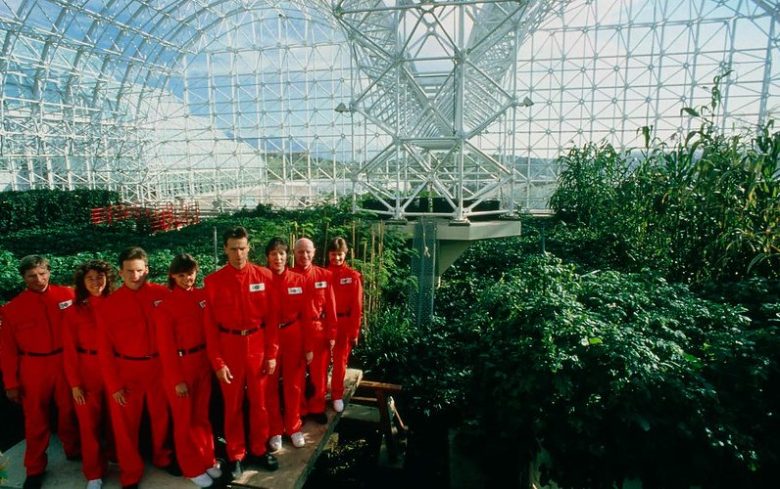
One of my daughter’s favorite rides at Disney World is Spaceship Earth, so it caught her attention when I told her I was seeing a movie called just that, and left her crestfallen when she learned it was essentially a Nat Geo special about old people living in a greenhouse in the desert. The documentary by Matt Wolf follows the rise and fall of (and what went horribly wrong with) Biosphere 2, the artificial environment built in Oracle, Arizona, where, from 1991 to 1993 eight people sealed themselves off in a self-sustaining complex as an experiment to see if humans could live in a contained terrarium without the regular gifts of Mother Earth – aka Biosphere 1.

The stage is set as a bunch of San Francisco idealists and entrepreneurs caught between the Wall Street greed of the 1980s and the Internet bubble conceive an experiment in controlled sustainability and, with deep pockets, build it and select their earthbound astronauts – which, like the Starship Enterprise, has a scientist, doctor, biologist and engineer among the crew. Their mission: to live in the mini Earth (it has its own sea) for two years without contact, nutrients, sustenance or air from the outside. Sunshine is fair game.

Given where we’re at today, you could view Biosphere 2 as the ultimate quarantine, but it’s when personalities take center stage that “Spaceship Earth” gets interesting. Of the eight people in scientific lockdown there’s a couple, a fitness freak physician who waves his virility wide and high to a near gonzo degree, and the must-have MacGyver, ever with screwdriver in hand and donning a utility belt as things go bust now and then. The big challenges inside the bubble come when oxygen levels get low, or one woman gets her hand caught in a straw shredder; outside, project head John Allen, who comes off as something of a cult leader, is embroiled in court proceedings regarding control of the endeavor. It’s one of a few small failings of Wolf’s doc that the enigmatic persona of Allen, a self-described ecologist and early climate change whistleblower, remains vague and unprobed. As the film has it, many in the science community labeled him a hack and Biosphere 2 a stunt producing no real data of value. Times have changed, however, and that’s another failing: There’s no contextual relevance for the experiment to our Biosphere 1 today.

Wolf’s straight-ahead use of archival footage and interviews with surviving terrarium astronauts (terranauts) is effective in conveying the more intriguing narrative of how personalities played off each other in such a confined petri dish. It’s a chronicle of a curious blip in history, a time capsule of the era and food for thought for the future, especially in these self-contained times.

The Third Strike

10 May

By Tom Meek

The Third Strike | Film Threat

In states such as Massachusetts, where recreational marijuana is legal, the processing for awarding sellers’ licenses has been done with a preference and prioritization for those from communities adversely impacted by drug criminalization laws. That translates mostly to people of color from inner-city enclaves, though just what “adversely impacted” means may be elusive to most looking in at the process. For anyone who’s wondering or finds that phraseology somewhat vague, Nicole Jones’ documentary “The Third Strike” arrives to set you straight.

“The Third Strike” revolves around laws enacted in the early 1980s that made a three-peat drug offender a candidate for life in prison – actually, automatically, with no deliberation or real process. That may sound good if we were talking about a violent criminal, but this is about people who deal an occasional dime of weed, something barely above a jaywalking offense today. In the threes-strikes era, a person who commits murder three times would be entitled to parole hearings and the possibility of release; deal even a small amount of weed three times and it’s essentially “a death sentence,” as one taking head in the film puts it.

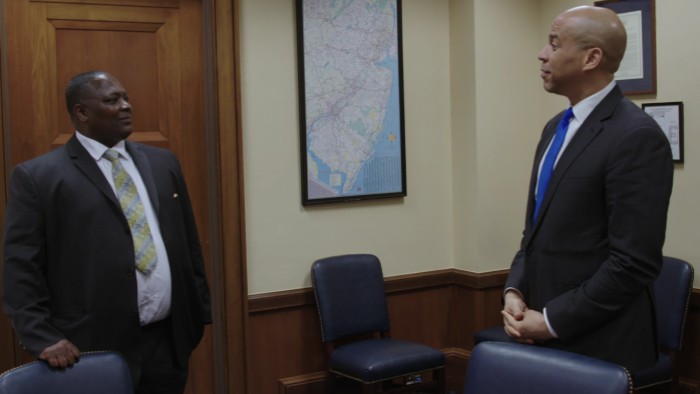
To underscore the point, Jones examines the case of Edward Douglas, the first man released as a result of The First Step Act in January 2019. Key players in his freeing are attorney MiAngel Cody, who leads a liberation project, and U.S. Sen. Cory Booker, who talks in convincing volumes about the injustice of the “three strikes” law. Jones’ juxtaposition of Douglas’ transgression with those of hardened violent criminals is an easy sell, but the soul-shaking win of the film is the man himself, a sweet, jovial, innocent sort, looking to catch up on lost time with family and grateful rather than angry. He brims with innate warmth and obvious humanity.

The conclusions of “The Third Strike” are nothing new, but it does shed a powerful light on social inequities of color and crime and reminds us of people who did little more than spit on the sidewalk still rotting in jail, tagged with a sentence more ironclad than that of the repeat killer one cell over.

Other Music

17 Apr

‘Other Music’: Coolest music shop in New York, capturing the moment in a corporate shadow


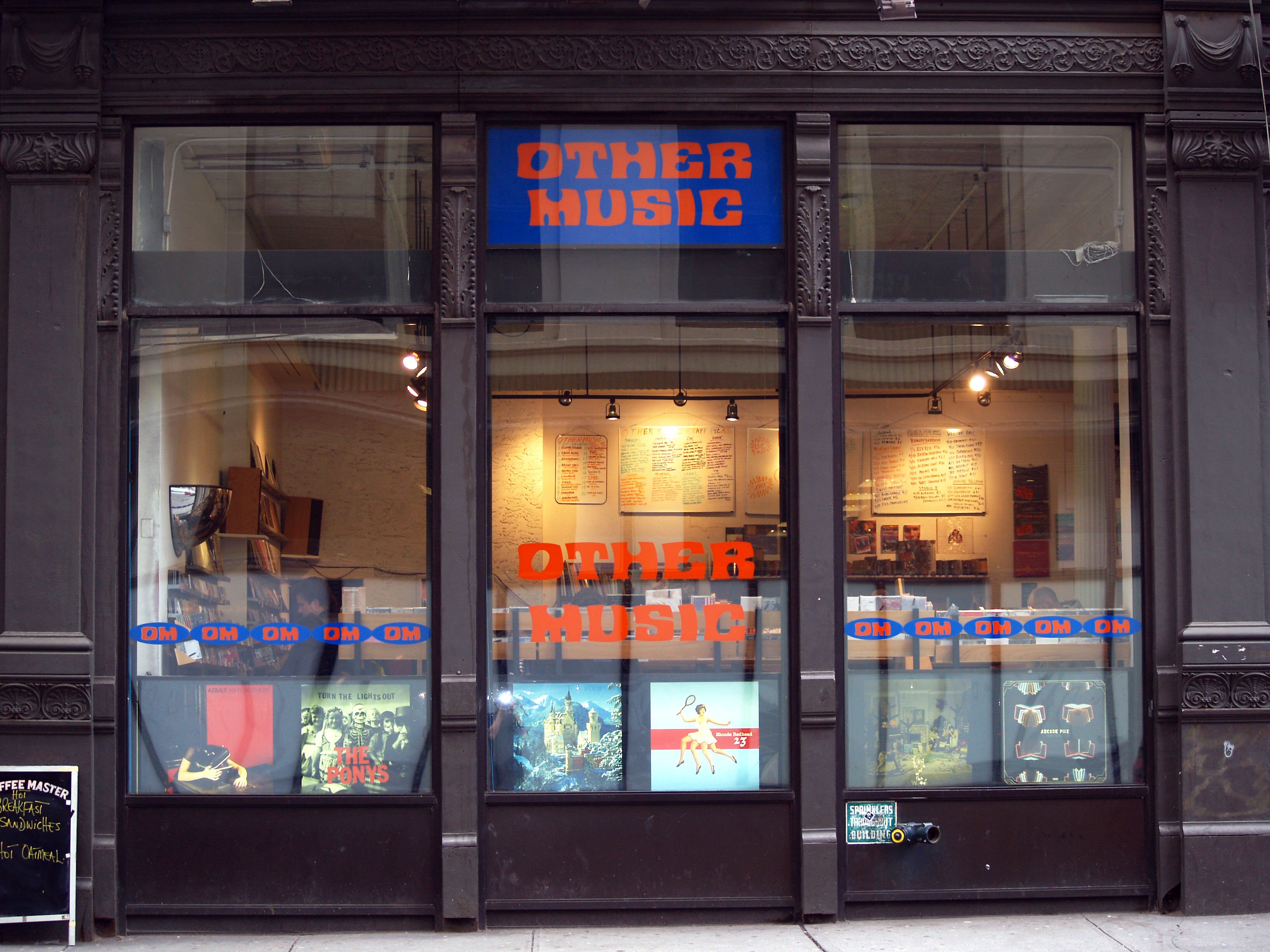
Virtual theater releases are about to become a thing. They are already happening at the Somerville and Coolidge Corner theaters, and come to the Brattle this week with “Other Music,” a cozy but somber documentary about a small alternative record shop in New York City’s East Village that shuttered in 2016. The store was so tiny, one manager says there was a height limit, because anyone too tall would hit their head; and all the record and aisle labels were handwritten by the staff, who had encyclopedic knowledge of cutting-edge music. Filmmakers Puloma Basu and Rob Hatch-Miller capture not only this quirkiness, but the social and cultural relevance of the venue, where staff was so sharp and knew their customer’s taste so well they often would get “pick ’em” requests from loyalists such as actor Benicio del Toro.

Defiantly, Other Music opened in the ’90s across from a Tower Records – and outlived its overshadowing titan. It never carried the latest from Dylan or Oasis; it was all about curating the next wave. Acts that would go on to soar nationally, including St. Vincent, Vampire Weekend and Neutral Milk Hotel (playing the classic acoustic “Two-Headed Boy”) played the store’s cramped confines, as seen in footage that is grainy and wonderful; Interpol, looking to get recognition early on, sold their handmade CDs at Other Music on consignment. Co-owner Josh Madell jokes that he and his early partners often invited dates to come in to the store to listen to music, then steered them toward tasks such as working the cash register. Testimony from myriad near-famous talking heads cites the store’s reputation for inclusivity before such notions ever became a woke battle cry.

One thing you can’t help but take from the film from a local standpoint are the parallels with beloved Stereo Jack’s Records on Massachusetts Avenue between Harvard and Porter Squares. It’s eerie, uncanny and undeniable, but also a statement about Stereo Jack’s existence and Other Music’s longevity, which speak to a culture beyond the bottom line – it’s all about the music and the community it infuses.

It’s not mentioned in the film but there was also a cousin Other Music store on Winthrop Street in Harvard Square, part of the Crimson Galeria, now a Shake Shack. That store shuttered in 2002.

Tread

21 Feb

‘Tread’: They did this bulldozer owner wrong, and he’ll take out half the town to make it right

tmp-tread22
Documentarian Paul Solet takes a newsreel curio and turns it into “Tread,” a riveting, anthropological examination of small-town life, the hairs that get curled during long legal proceedings and the psychological pathology of righteous retribution. If you dial back to 2004 you may recollect a pissed-off citizen going berserk in the podunk town of Granby, Colorado, with a bulldozer. It was no ordinary piece of construction equipment, but a Komatsu D55A tricked out with armor and automatic weapons – in essence, a tank that authorities were ineffective in stopping for a several-hourlong rampage.

But before getting to that, Solet rewinds to what would send Marvin Heemeyer over the edge. It’s important to keep in mind that Granby’s a close-knit mountain town of 2,000. In interviews, many townsfolk reflect fondly on Heemeyer, noting his amiable manner and skill as a welder and skimobile racer. During the buildup we also meet Trisha Macdonald, Heemeyer‘s girlfriend, whose sensible and reflective presence doesn’t suggest the kind of person who would take up with someone who was arguably off their rocker, let alone a brimming sociopath. But then there are tape recordings by Heemeyer himself, righteous and delusional: “God bless me in advance for the task which I am about to undertake.” In a pivotal scene underscoring the psychological mood, a re-enactor playing Heemeyer shaves his head, Travis Bickle style, before firing up the big rig.

The pushing point, we’re told, is a long simmering land dispute. Heemeyer owned and operated a muffler and welding shop, but the parcel he bought at auction was also desired by a local businessman with strong municipal and political ties. Infractions and numerous legal battles – that Heemeyer lost – added up and took their toll, forcing the 50-something craftsman to withdraw and put his skill to work. The killdozer, when you first catch a glimpse of it, seems like something out of a zany sci-fi or post-apocalyptic film. What’s also impressive is Solet’s meticulous orchestration of the narrative, especially during that final chaotic showdown when a gantlet of police, grenades, 50-caliber bullets and even earth movers couldn’t stop Heemeyer from obliterating half the town. The blend of archival footage, commentary from the participants and re-enacted dramatization builds with the taut grit of a hardboiled thriller.

Solet, born and raised in Cambridge, cut his teeth in the horror genre (“Grace,” “Dark Summer” and a “Tales of Halloween” segment). His last outing, “Bullet Head” (2017) was something of a crime thriller with an envious cast, featuring Adrien Brody, Antonio Banderas and John Malkovich. The project wasn’t quite fully baked, but perhaps a helpful warm up for “Tread,” a clear departure for Solet that’s a compelling ride and a window into the machinations of small-town life that push one of their own too far.

What She Said: The Art of Pauline Kael

21 Feb

‘What She Said: The Art of Pauline Kael’: Sweet kiss for film critic with acid tongue

What She Said' Review: Film Critic Pauline Kael Gets Own Documentary |  IndieWire

“What She Said: The Art of Pauline Kael” is framed with tape recording of Kael being interviewed by a young girl who gaily asks the critic her first movie (Chaplin) and later, her favorite film is (a detail I’ll let the moviegoer discover). Kael, who lived in Great Barrington and died just before 9/11, came from humble roots in Northern California, where she attended college at Berkeley. She never graduated, failed as a playwright in New York and her one marriage ended quickly, but throughout it all she maintained a deep passion for emotion-provoking narratives, be they bound by book jacket or cinematically projected. Her early reviews were on radio and for free, but being a single mother Kael looked to get paid for her labor; before landing at The New Yorker she was at McCall’s, which ended badly. 

Film clips spruce up the narrative, sometimes to echo Kael’s thoughts and other times simply as illustrating the film being trumpeted or impaled. We get Kael’s personal reflections from letters and other scrawlings read by Sarah Jessica Parker in voice only, evoking a smooth, husky Hollywood starlet persona that feels warmly congruent with the actual Kael we hear at the bookends, and in interview clips with Dick Cavett and other TV talk show hosts of the era. Plenty of celebrities lend their talking heads to the project, most prominently screenwriter/director Robert Towne (“Chinatown”), Alec Baldwin and film-nerd-turned-auteur Quentin Tarantino. Continue reading

American Dharma

2 Jan

‘American Dharma’: Bannon in a bunker, explaining what makes him tick, tick, tick …

American Dharma' Review: What Makes Steve Bannon Tick? - The New York Times

Early on, as Morris interviews the commanding agitator in an abandoned hanger – ostensibly emulating Peck’s command center in that Henry King classic – Bannon in his gushing appreciation of “Fog of War” gives Morris an insider pat on the back about filmmaking. It’s an eye-popping pause, but true enough: Bannon has 10 directorial credits on IMDB, with such right-wing propaganda docs as “Torchbearer” (2016) and “Battle for America” (2010), most having abysmally low ratings (in the 2 or 3 range, with one or two breaking the middling 5 mark). During the session, Bannon recounts his entry at Breitbart, the takedown of Anthony Weiner on Twitter and joining Trump with shrewd strategies to shift the tide in the 2016 presidential campaign. For instance: to counter the Billy Bush tape, he attempted to sit Bill Clinton’s four sexual assault accusers at the front of a presidential debate the former president was to be in attendance at. The mention of Russian trolls is scant, and Hillary Rodham Clinton in her own words (via a post-election interview clip) attributes her loss almost exactly to what Bannon does: the Comey investigation and emails to Weiner.

Throughout the film, which boasts a smart score and does a brilliant job of interweaving film and news clips with public opinion overlaid via the Twittersphere, Morris, who clearly has vastly different political leanings than Bannon, affords his subject a long leash – perhaps too long – but not one that can’t be tugged on by the factual record. It’s nearly comical and hard to fathom when Bannon balks incredulously at Morris’ announcement that he voted for Hillary because he feared Trump. Later, when Morris links Bannon’s departure from the White House to the deadly Unite the Right march in Charlottesville, Virginia, Bannon does a soft shoe and reverts to his fearmongering prognostications of greater divisions to come (check out his latest venture, warroom.org.) 

If there’s one thing to drink in about Bannon, it’s his cocksure confidence and charisma (on display more here than when at Trump’s side). He’s a clear natural leader with patriotic zeal, but the question then becomes: of whose country, and with what agenda? Morris and subject go at that, and watching the film, it’s chilling to see the spell Bannon and the alt-right can cast. Educated progressives clearly discounted that too much in the past; Morris’ film serves as stark (if accidental) reminder of that, and a timely one.