Judas and the Black Messiah’: Black Panthers attempt to change history, but it repeats itself
By Tom MeekFriday, February 12, 2021
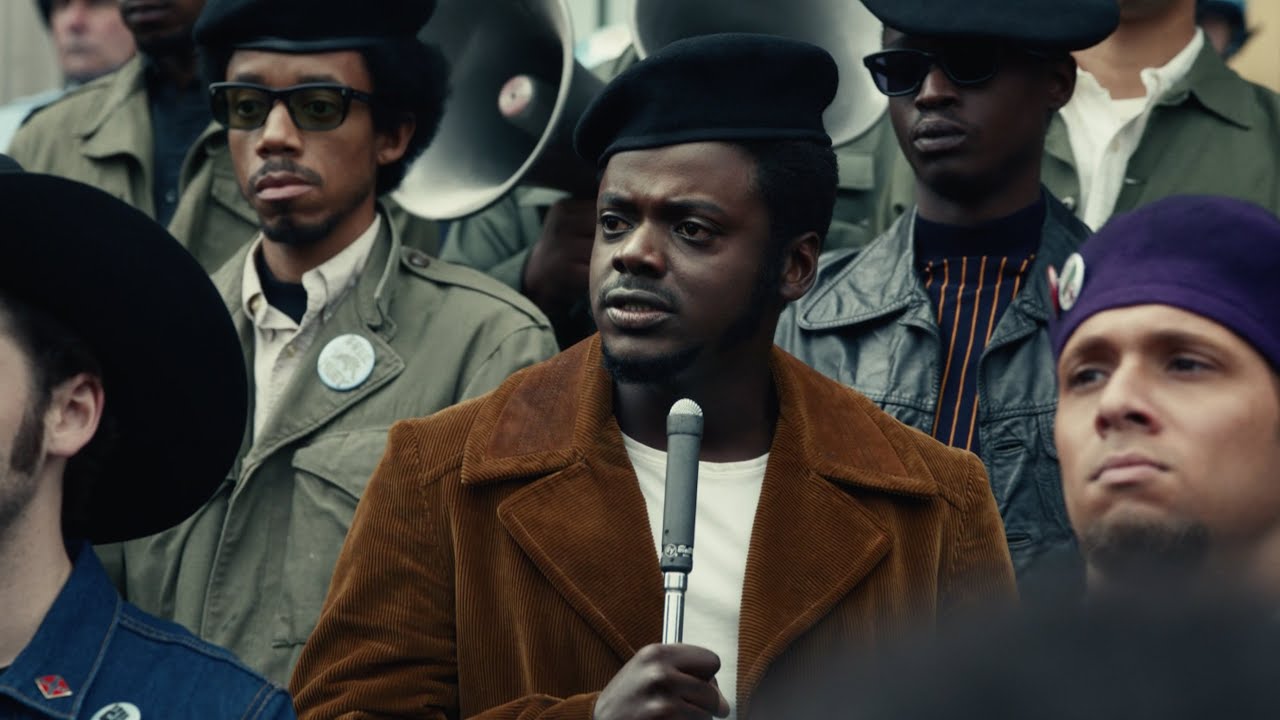

“Judas and the Black Messiah” begins as a fairly rote history lesson – though an important one – detailing the galvanization of the Black Panther Party in Chicago in 1968 and onward in the wake of the assassination of Martin Luther King Jr. and the year’s chaotic Democratic convention (so beautifully chronicled by Haskell Wexler’s “Medium Cool,” a wild blend of real footage and staged narrative, and Aaron Sorkin’s faux follow-on, “The Trial of the Chicago Seven,” which came out last year).
The film, directed by Shaka King (“Newlyweeds”), is blessed with the thespian thunder and lightning punch of Daniel Kaluuya (“Get Out”) and LaKeith Stanfield (“Sorry to Bother You”) playing 21-year-old Black Panther leader Fred Hampton and Bill O’Neal, Hampton’s security adviser who also happened to be an FBI informant. Hampton as depicted seems enlightened and visionary beyond his years – charismatic, powerfully eloquent in the way other iconic Black leaders of the era were, and willing to take up arms if the structures of society try to cage or emasculate a people. It’s a riveting tour de force by Kaluuya, but the film’s engine and drive comes from its Judas. King, who also penned the script, tries to cast O’Neal in a somewhat sympathetic light, more pressed by his FBI handlers (Jesse Plemons and Martin Sheen as J. Edgar Hoover), but we also get framing footage of a 1990 interview with the real-life O’Neal (his only interview), and the character in the dramatization and the one in the archive reel don’t feel congruent. It’s not hampering to the film, which finds fire as the Panther movement builds, matched by police that employ offensive (and perhaps illegal) force to hammer it down. But it does leave the enigmatic burn of just who was Bill O’Neal, and what was his motivation?
How things sort out in history for Hampton and O’Neal is on the record, and to give those details here I believe would be to underserve the film and the viewing experience. In texture, “Judas and the Black Messiah” reminds me of Kathryn Bigelow’s dark, underappreciated 2017 unrest drama “Detroit,” in that it takes a smaller chapter of the civil rights struggle and shines a light on police audacity and social inequity. In their dramatic richness, the films help to keep those chapters in our minds, educate, revise the record and spark historical and social interest. “Judas” does all that and cements Kaluuya as an A-lister.





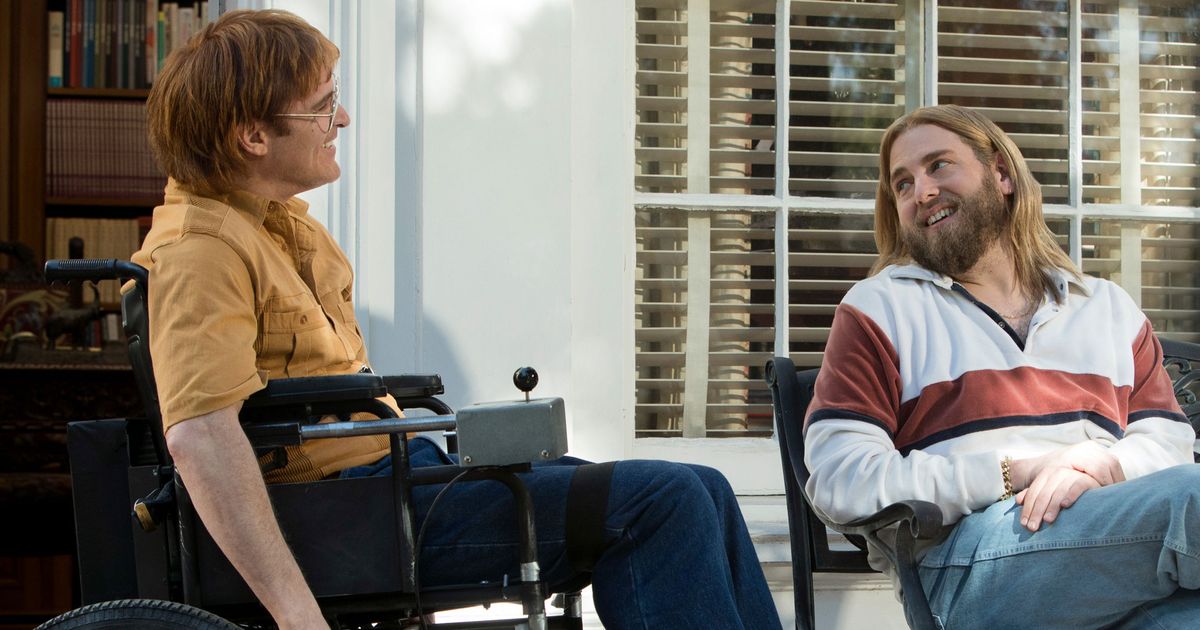
 “Don’t Worry, He Won’t Get Far on Foot,” isn’t a topical grabber; it’s a biopic about an esoteric satirist/sketch artist by the name of John Callahan who died in 2010 after spending most of his adult life in a wheelchair, paralyzed from the waist down after a car accident involving a drunken driver. The terrible catch there being that the car was Callahan’s, driven by another (Jack Black) because Callahan was too drunken to drive.
 It’s not a widely known bit of history, but Katherine Johnson (Taraji P. Henson), Mary Jackson (singer Janelle Monáe, successfully doubling up as an actor) and Dorothy Vaughan (Oscar winner Octavia Spencer, killer good) toiled for NASA during the Mercury space program as engineers and computers – mathematicians doing the technical legwork before Big Blue dropped its first mainframe – and proved critical in getting John Glenn up and into orbit. One of the film’s most telling – and touching – moments comes when Glenn (Glen Powell) meets Johnson during a technical assembly of scientists and mucky-mucks where she’s not only the only woman or person of color in the room, but the only one able to solve complicated flight variables mathematically. Later, when there’s a snag in the mission and the reentry point needs recalculating, he asks for her aid, referring to her simply as the “the smart one.”
  For What it's Worth