Oscat Not So White

30 Jan

This Year’s Academy Awards May Just Counter ‘Oscars So White’ Controversy

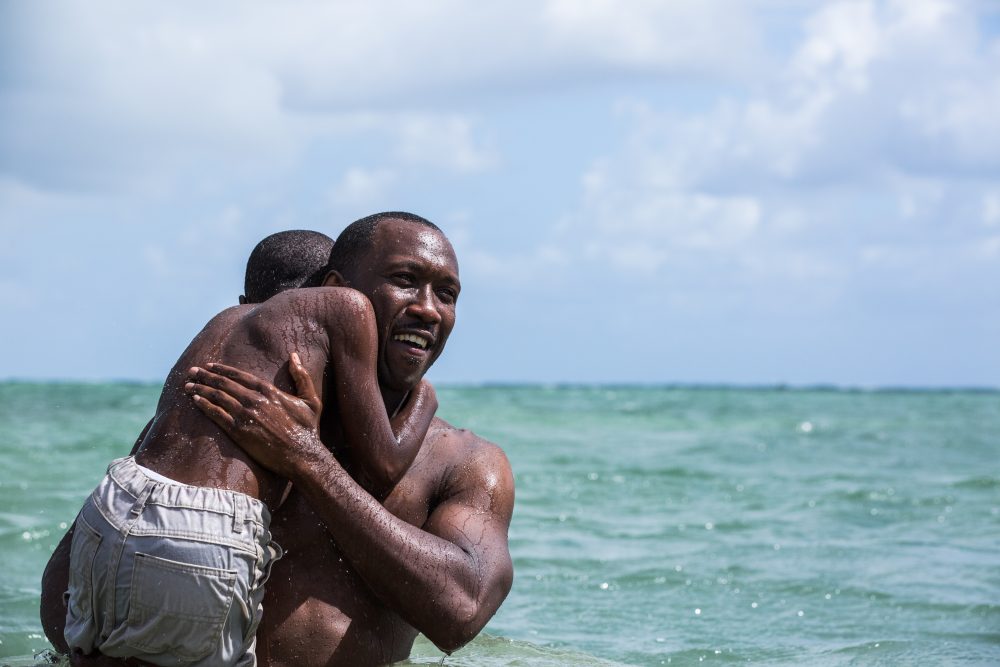
Alex Hibbert and Mahershala Ali in "Moonlight." (Courtesy David Bornfriend/A24)closemore
COMMENTARY

On Tuesday, the Academy of Motion Picture Arts and Sciences will announce their slate of Oscar nominees, a lineup that will certainly be eyed with much scrutiny for its diversity. Last year, the #OscarsSoWhite controversy exploded after people of color were noticeably left off the Academy’s ballot for the second year in a row — a move backward considering 2014’s Best Picture winner, “12 Years A Slave.” Given the films that found success in 2016, both critically and commercially, the list of nominees should successfully change the tide.

The origins of the hash-tagged tumult, which had notables like Spike Lee and Jada Pinkett Smith boycotting the ceremony last year, are two-fold. For starters, the Academy’s makeup is not diverse by any measure — a Los Angeles Times analysis in 2016 found it was 91 percent white and 76 percent male. Secondly, the industry was not producing many quality films made by, or featuring, people of color.

The cast and crew of "Spotlight" accept the Oscar for Best Picture in 2016. (Chris Pizzello/Invision/AP)
The cast and crew of “Spotlight” accept the Oscar for Best Picture in 2016. (Chris Pizzello/Invision/AP)

When the nominations came out last year, Academy President Cheryl Boone Isaacs, who is black, promised immediate action. Following a unanimous vote by the board eight days later, rule changes stipulated that members who had been dormant in the industry for over a decade would be be moved to emeritus status (effectively losing their voting rights) and the recruitment of new members would begin immediately. Though, past winners and nominees retain full membership status and voting rights. The list of 683 invitees contained a notable presence of women and people of color (Rita Wilson, American Repertory Theater stalwart Cherry Jones, Nia Long, Mahershala Ali now in “Moonlight” and “Hidden Figures,” and John Boyega).

The industry too, almost as if on cue, made an initial, responsive roar when Nate Parker’s slave uprising saga, “Birth of a Nation,” garnered a record-setting $17 million distribution deal at the Sundance Film Festival in late January of last year. Expectations for the film were high, but when it finally poured into theaters, the edgy concept of a bloody revolt against injustice, while admirable, didn’t measure up at the box office. “12 Years a Slave” it was not and Parker’s past allegations of rape (he was acquitted) didn’t help either.

Colman Domingo as Hark, Nate Parker as Nat Turner and Chike Okonkwo as Will in "The Birth of a Nation." (Courtesy Fox Searchlight Pictures)
Colman Domingo as Hark, Nate Parker as Nat Turner and Chike Okonkwo as Will in “The Birth of a Nation.” (Courtesy Fox Searchlight Pictures)

In light of “Oscars So White,” “Birth of a Nation” registered something of a disappointment, but the industry, in its own organic way, was quietly on the mend. The later crop of films featuring diverse filmmakers, casts and subjects shone — from “Moonlight,” the saga of a gay black youth, bullied and growing up under the negligent eye of a crack-addicted mother, to “Loving,” the haunting recount of the interracial couple who boldly broke the anti-miscegenation law in segregated Virginia and, more recently “Hidden Figures,” another based on true events, pre-civil rights movement drama about African-American female mathematicians working at NASA during the space race. Overall, 2016 was a year the blockbuster faltered and small films about people with varying backgrounds and experiences, navigating adversity, took center stage.
Continue reading

Live by Night

14 Jan

Affleck Should Have Stuck To Directing For His Latest Boston-Based Film ‘Live By Night’

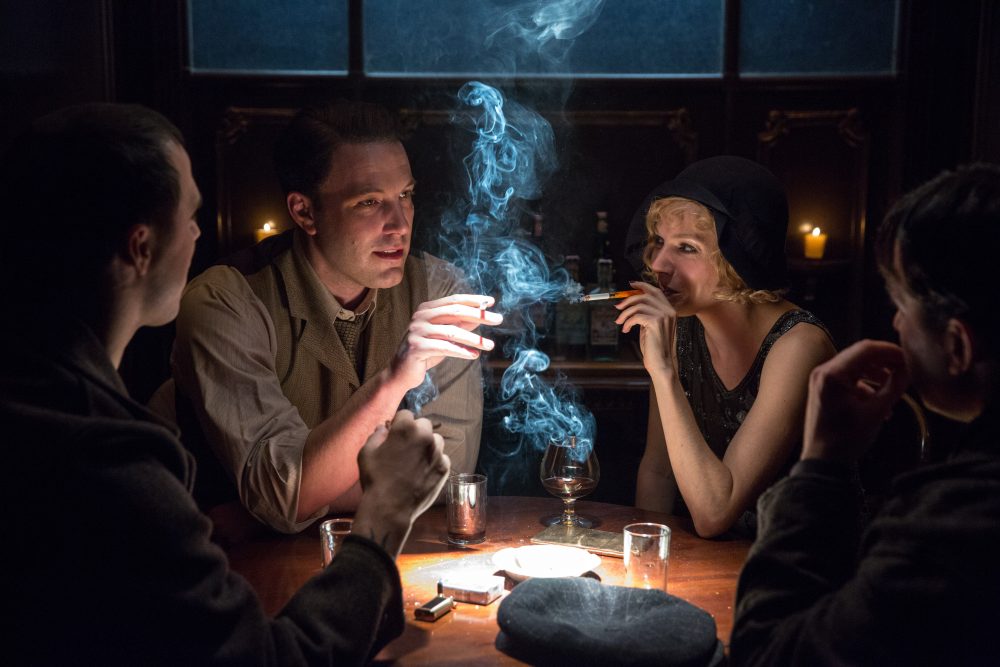
Ben Affleck, as Joe Coughlin, and Sienna Miller, as Emma Gould, in "Live By Night." (Courtesy Warner Bros. Pictures)

Ben Affleck, the good-looking, locally-reared actor, who from time to time has projected a wooden on-screen presence, has turned out to be a reliably decent director. His debut, “Gone Baby Gone” back in 2007, transformed Dennis Lehane’s Boston-seated crime novel into a cinematic pulp noir. That edgy effort had cinephiles anxious for more and Affleck rewarded their patience with another gritty crime drama, “The Town,” in 2010 and then “Argo” in 2012. His latest effort, “Live By Night,” brings another Lehane crime story to the screen.

It begins during the Prohibition Era in Boston, where the Irish and Italians are locked in a blood feud over the bootleg trade, and later transitions to Ybor City, the developing section of Tampa, Florida, where Italian and Latino crime coalitions govern the town and control the flow of molasses — critical for rum.

Brendan Gleeson as Officer Thomas Coughlin in "Live By Night." (Courtesy Warner Bros. Pictures)
Brendan Gleeson as Officer Thomas Coughlin in “Live By Night.” (Courtesy Warner Bros. Pictures) Continue reading

Hidden Figures

7 Jan

One of the best films of 2016 (yes, it opened in New York City and Los Angeles a few weeks ago as part of awards season’s annual bait-and-switch shenanigans) happens to be a sentimental crowdpleaser that, for all its potential schmaltz and didactic pitfalls, maintains an incredibly poignant balance especially when it comes to matters of race – and there’s plenty of them; “Hidden Figures” is about three African-American women employed as engineers and mathematicians by NASA during the first space launch, just as Martin Luther King Jr.’s historic push for Civil Rights was gaining its groundswell.

It’s not a widely known bit of history, but Katherine Johnson (Taraji P. Henson), Mary Jackson (singer Janelle Monáe, successfully doubling up as an actor) and Dorothy Vaughan (Oscar winner Octavia Spencer, killer good) toiled for NASA during the Mercury space program as engineers and computers – mathematicians doing the technical legwork before Big Blue dropped its first mainframe – and proved critical in getting John Glenn up and into orbit. One of the film’s most telling – and touching – moments comes when Glenn (Glen Powell) meets Johnson during a technical assembly of scientists and mucky-mucks where she’s not only the only woman or person of color in the room, but the only one able to solve complicated flight variables mathematically. Later, when there’s a snag in the mission and the reentry point needs recalculating, he asks for her aid, referring to her simply as the “the smart one.” Continue reading

Rogue One

21 Dec
Diego Luna and Felicity Jones go rogue in this stand-alone entry in the Star Wars franchise

Walt Disney Pictures

Diego Luna and Felicity Jones go rogue in this stand-alone entry in the Star Wars franchise

Rogue One: A Star Wars Story postures itself as a one-off stand alone, the first (and only?) entry in the “anthology” series versus the “saga” series where the other seven franchise films fall. Just to set the table right, Rogue One does slide into the deck seamlessly in terms of chronology, just where exactly shall remain a mystery as one of the things Disney has done with this change-up is to pack it with nuggets of surprise — so much so that they pleaded with the critical masses to not burst their bubble in their reviews, “that you as press continue to be our partners on this journey.” Such requests generally go unheard as most critics are aware of their responsibility to audiences and art, but having seen the film I get it, and you will too. Though I am sure there are those out there who will spoil, I will not.

The big win for the series and fans overall when Disney took over the franchise from LucasFilms back in 2012, was the infusion of new blood and reined-in filmmaking. No disrespect to creator George Lucas, but Return of the Jedi (1983) couldn’t hold a torch to the darker and meatier The Empire Strikes Back (1980) and the three films in the prequel trilogy (1998-2005) were wooden and so overpacked with CGI magic, that all the character and mythos that cemented the original series got lost in a vortex of filmmaking overindulgence. The Force Awakens, JJ Abrams’ 2015 initial go at the sequel series, was an admirable reboot, leveraging its ancestral roots while setting the stage for the next new adventure, even if it was too much a plot redux of A New Hope (the 1977 original that anointed and defined the blockbuster). Now comes Rogue One charging out of the gate, a breath of fresh air and more restrained in all the right places, but primarily in that it saves its best for last and is orchestrated in a way that every laser blast and saber slash bears profound impact. There’s nothing indiscriminate about what’s placed on screen. Continue reading

Patriots Day

19 Dec

Wahlberg’s Dramatized ‘Patriots Day’ Won’t Suture Any Wounds

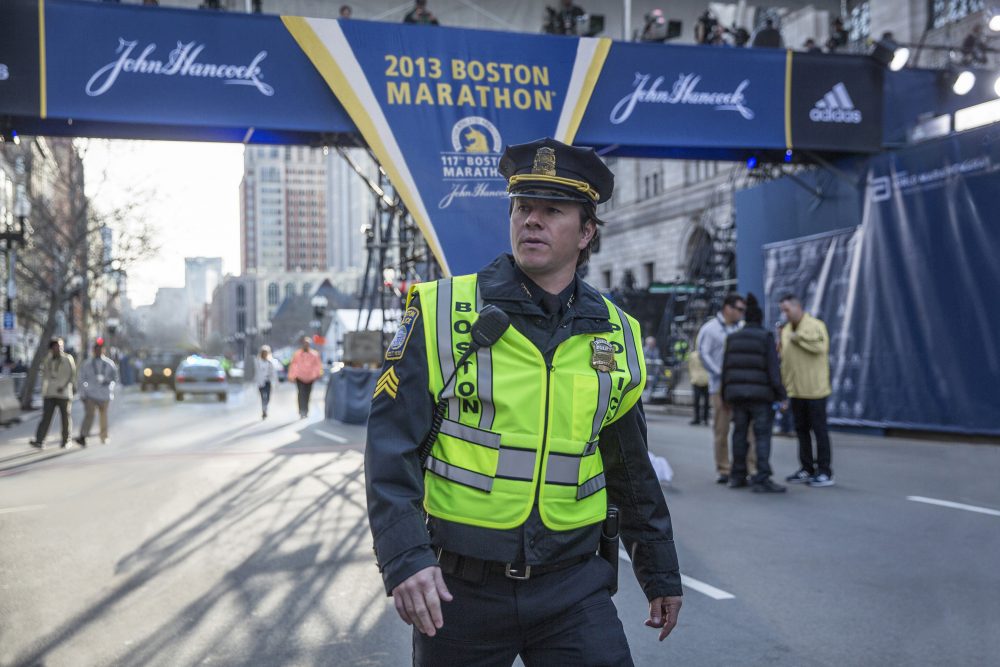
Mark Wahlberg as fictional BPD Sergeant Tommy Saunders in "Patriots Day." (Courtesy CBS Films)

So here comes the big cinematic rendering of the 2013 Boston Marathon bombing that rocked the city for the better part of a week and now seems destined to be etched into our collective history just below city-defining headliners like the Boston Tea Party, busing in the ‘70s and the murderous legacy of Whitey Bulger.

The good news about “Patriots Day,” which opens Wednesday, is that it delivers a modicum of cathartic release as well as an intriguing look behind the scenes as an active crime investigation takes shape. The bad news, however, is that it knowingly injects fiction into the mix in a way that nearly subverts the project’s mission of “getting it right,” as Boston-bred star and producer Mark Wahlberg has said repeatedly. In the process, the dramatization shortchanges those that were there — the heroes and the victims — and the character of our fair city.

Three screenwriters, including the director Peter Berg, are credited with the script. The studio’s publicists informed me that the sources ranged from conversations with the Boston Police Department and other local agencies that responded to news reports and “60 Minutes.” What they’ve cooked up feels like a cobbling together of news feeds condensed and sanitized into a singular heroic narrative that regularly brims with the Boston Strong motto.

Continue reading

19 Dec
One of Cambridge’s separated bike lane tests is along Massachusetts Avenue just north of Harvard Square. (Photo: Tom Meek)

The City of Cambridge made good last week on a City Council order from October implementing two experimental, separated bike lanes along short swaths of Massachusetts Avenue – one in Central Square, along the northbound stretch skirting Lafayette Park; the other also northbound, just north of Harvard Square along the Harvard Law School campus. The Law School installation removed parking spaces; the Central Square setup shifted parked cars outward, so the bike lane runs between the passenger side of parked vehicles and the curb. Each section is about about a football field long.

The implementations are similar to ones installed in November along Massachusetts Avenue in Boston as part of the city’s pursuit of Vision Zero – a program aimed at achieving a rate of zero traffic fatalities. The October order was one of a series of bicycle safety orders pushed by cycling advocates and groups after the death of Amanda Phillips in Inman Square in June and Joseph Lavins, struck by a truck in Porter Square, three months later.

The separation device is a zebra-striped swath painted on the road with flex posts, and the raised structures are removable pylons. More permanent flex barrier posts have been ordered and should be installed in the next two weeks, weather permitting, said Joseph Barr, director of Cambridge’s Traffic, Parking and Transportation department.

Still, there is “no set date” for how long the lanes will be left up, Barr said. The primary purpose of the temporary measures is to garner feedback on safety and the feasibility of the solution for expansion. There are plans for similar protected lanes in Inman Square in the spring, but the loss of parking spaces is typically fiercely debated in traffic changes.

“Folks will realize the loss of some parking in some areas is less important than than creating safe streets for those riding bikes,” vice mayor Marc McGovern said.

The reaction from the bike community so far has been guarded elation. “The new protected bike lanes are a great start,” said Joseph Poirier, of the Cambridge Bicycle Safety group formed in the wake of Phillips’ death, “but we know that we won’t see the huge mode shifts to biking from driving until we have a complete network of low-stress, protected bike lanes throughout the city. Isolated segments are a helpful start, but people won’t start to replace driving trips with bike trips until their entire journey is protected and low-stress. The research is pretty clear about this.”

Cambridge can be a leader in rolling out a connected, comprehensive network of protected bike lanes, group members say. “Remember that all of the great policies in the Netherlands started with a single car-free day in Utrecht,” is how Richard Fries, executive director of Mass Bike, sums it up.

Jackie

19 Dec
Director Pablo Larrain has worked on political films before, like 2012's 'No,' about the 1988 Chilean Pinochet referendum

Director Pablo Larrain has worked on political films before, like 2012’s ‘No,’ about the 1988 Chilean Pinochet referendum

Adversity is a great yardstick for character. Filmmakers in on this nugget of wisdom understand that the more compelling route to showcasing a historic icon is in the moments or incidents that come to define them, not the rote, cradle-to-the-grave biopic format. Selma did that for Martin Luther King (2014) as did Loving — albeit on a much smaller scale. Now we have Jackie, an up close and intimate inside look at the famous first lady in the immediate aftermath of her husband’s assassination.

The entire mood of Pablo Larraín’s film bears a thick, dour air atop a quiet, yet deep-rooted resolve. It’s an impressively bold attempt at such a revered presidency with much of the project’s success hanging on Natalie Portman’s fully-immersed and utterly mesmerizing portrait of the grieving first widow. Add to that Mica Levi’s beguiling score that palpably embosses the emotional undercurrent of every scene — if you’re unfamiliar with the composer, she brought a similarly aural pulse to Jonathan Glazer’s Under the Skin (2013) and with Jackie will surely become a hotly sought resource.

The film begins at the Kennedy Compound in Hyannisport, Mass. with an unnamed journalist (Billy Crudup, ostensibly based on Life magazine’s Theodore White who interviewed Jackie around that time). He arrives to get the scoop on the widow’s sense of loss. “There’s the truth that people believe,” Jackie tells him “and there’s what I know.” Thus setting the table for the back and forth parry, which while polite, often tilts towards the adversarial, though it does bear strokes of cathartic relief for Portman’s Ms. Kennedy. Throughout the interview the media savvy Jackie holds the reins tight as well as her inner turmoil. “You want me to describe the sound the bullet made when it collided with my husband’s skull?” she bluntly injects confronting the inevitable before the journalist can wind his way around to the question. From the journalist’s stunned face we then rewind to Dallas to that fateful day of Nov. 22, 1963. Continue reading

La La Land

1 Dec
Sebastian (Ryan Gosling) and Mia (Emma Stone) fall in love after bumping into one another in traffic

The last time I was bowled over by a musical was back in 2002 when Chicago cleaned up at the Academy Awards. Going from there to the leg shaking mastery of Fred Astaire, there’s not a lot in between. But now, from Damien Chazelle, the directorial wunderkind who made banging a drum such a vicious game of egos in Whiplash (2014), the increasingly rare genre gets a slick revisionist redress that takes bold chances and wins on most counts.

Not much can prepare you for what goes on in La La Land. The film begins with a somber traffic jam as the camera slowly pulls through the gully between inert cars. The feeling of gridlock dread is overpowering, much akin to Jean-Luc Godard’s new wave classic, Weekend (1967), but then, as it settles in through the car window of one calm young woman in a sheer yellow dress, she begins to sing a wistful song in a soft, low key. Two minutes later the highway is abuzz in dance and a choral number (a kick up your heels tune called “Another Day in the Sun”) in a long shot that’s more audacious than the opening of Robert Altman’s The Player (1992). It’s hard to believe but true. There are so many performers and stunts going on — the parkour guy gliding smoothly across the hoods of cars with a half-pike twist over the jersey barrier as he flies in and out of frame so seamlessly, you wonder how exhausted he was at the end of the shoot and how it’s humanly possible to maintain such a wide ‘oh happy day’ smile on his beaming face — that the degree of difficulty during the song is off the charts. The retake quotient must have been high, and the result is so astonishing, it seems impossible to top. Continue reading

Manchester by the Sea

23 Nov
Michelle Williams and Casey Affleck star as exes in Manchester by the Sea


Heartbreak and resentment fill nearly every frame of Kenneth Lonergan’s emotionally charged drama that delves into redemption and atonement in ways that are so bleakly real and to the bone, it lingers with you days later — something few movies have done so far this year with the notable exceptions of Moonlight, Loving, and The Handmaiden.

Manchester by the Sea begins with the tedious anguish of unclogging a stopped up toilet. It’s immediately apparent that the handler of the plunger, Lee Chandler (Casey Affleck), suffers from more than just the stench of the task at hand. Lee’s a quiet inward man who toils as a handyman/janitor in Boston until his brother’s weak heart beckons him back to the town of the film’s title — a 40 minute scoot north —where we learn that Lee had existed before in happier and more prosperous times. The gorgeous seaside town itself becomes a story of two sides, the well-to-do living in stately green-lawned manses while the working class fishermen nestle up in cozy, but cramped cottages along pot-hole marred lanes. Lee’s past there is a ghost he doesn’t want to confront and the cold chalky grey of winter descending poetically underscores his aching dread. Continue reading

The Trump supporter profile on film

21 Nov

Angry white men on film: Seven times cinema got to the Trump vote before us

Most of us in the proudly liberal-leaning Hub are still in shock from Donald Trump’s historic and controversial “win” last week, making the demagogue the 45th president-elect. Throughout the presidential campaign there were near-riotous breakouts at Trump rallies and the candidate famously offended minorities, immigrants and, most resoundingly, women. “The Art of the Deal” Don looked primed to go up in flames at any turn and got away with language and behavior that would get any wage-earning wonk fired without a second consideration, but come Nov. 8 there was pushback from a certain populace in mid- and and Southern states who had been suffering quietly through the long, slow manufacturing ebb and were left out of the high-tech, life sciences and servicing surges – the non-college-educated white male, known as hard-working union members in more prosperous times, who had previously delivered swing states such as Pennsylvania and Michigan blue. We on the coasts scratch our head why, slow to realize the cold sting of disenfranchisement as a powerful motivator. Below are seven films that delve into the psyche of the dislocated white male, usually outcast, antisocial and operating outside the law:


“Hell or High Water” (2016)
Boston-born Ben Foster and Chris Pine (the new Captain Kirk) play brothers desperate to keep the family farm by heisting banks. Foster’s Tanner, just out of the slammer, has been there before, but Pine’s Toby is divorced and struggling to stay afloat financially and maintain a relationship with his progeny. The bureaucratic bank holding the homestead’s deed plays the heavy, and Jeff Bridges checks in as the sympathetic, but dutiful sheriff caught in the mix on the eve of his retirement. Pine and Foster make the frustration of hopeless conclusions, and the flight against them, deeply palpable. David Mackenzie, the British-born director who turned in the saucy “Young Adam” (2003), renders the Texas setting like a sequel to “No Country for Old Men” and registers one of the best films of the year so far. See also: “Out of the Furnace” (2013).


“All the Right Moves” (1983)
A young Tom Cruise plays a high school football star in dying steel-mill Pennsylvania who values his gridiron prowess as a way out of the economic dead-end, but his strict coach (Craig T. Nelson) may have other ideas. The death of the working-class American Dream and the despair as big biz going overseas for cheaper labor remains pointedly relevant. See also: “Hoosiers” (1986)  Continue reading