Interview with Local Filmmakers of “The Rabbi Goes West”

15 Nov

‘Rabbi Goes West’ on mission to Montana, filmmakers following to close out festival
 

tmp-rabbi.jpg

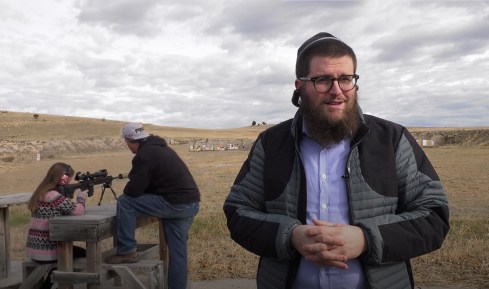
North Cambridge resident Gerald Peary knows a lot about film. He’s been a critic for more than 40 years and a film studies professor and curator for more than a quarter-century, and is about to premiere his third documentary feature, “The Rabbi Goes West,” Sunday night at the Somerville Theatre. The film – co-directed with Peary’s wife, Amy Geller, it follows a Chabad rabbi who moves from Brooklyn, New York, to Bozeman, Montana – closes out this year’s Boston Jewish Film Festival, playing this week and last at the Brattle Theatre and other locations.

The reason for 34-year-old Chaim Bruk’s relocation is a mission to bring his brand of Judaism to the American West by placing a mezuzah (an encased prayer offering) on the door of every Montana Jew – not a large population. Along the way Bruk encounters resistance from within the Jewish community, and more frighteningly, threats from neo-Nazis.

“I wanted to make a film which spoke to my Judaism,” Peary said. “I’m the most secular Jew, who doesn’t attend synagogue but knows who all the Jewish writers, athletes, et cetera, are. I asked myself, ‘What do I like about Judaism?’ I like mezuzahs – the scrolls put up on Jewish doorposts including inside a verse from Deuteronomy. Having a mezuzah on your door tells the world you’re Jewish, and it’s a big ‘fuck you’ to Hitler, Nazis and Neo-Nazis. ‘Jews are here!’”

“The Rabbi Goes West” co-directors Amy Geller and Gerald Peary.

“Anyway, I read on the Internet about a Hasidic rabbi who has a pledge to put a mezuzah on the door of very Jew in the state of Montana – that’s 2,000 Jews in a state 14 times larger than Israel. I called up Rabbi Chaim Bruk in Bozeman, Montana, and he invited Amy out to film him putting up mezuzahs. The rest is our movie,” Peary said.

Geller co-directed “The Guys Next Door” (2016), a documentary about a gay male couple raising daughters, and Peary said he was delighted to work with a partner who is a “brilliant, talented producer first, and second, knows documentaries inside and out.”

“She was also incredibly demanding about our film,” Peary said, “never letting go of any facet of the movie until she felt it was perfect.“ During production, Peary said most nights they would discuss and argue about the film over dinner and while going to bed. “That was all exhausting,” he said, “but if the movie is really good, it’s because of the intensity of our collaboration.”

Over the years, Peary has penned for several alt-weeklies in the area (“Real Paper” and “Boston Phoenix” – both sadly defunct), taught film studies at Suffolk University and continues to run the Cinemathèque program at Boston University and contribute to The Arts Fuse. His first film, “For the Love of Movies: The Story of American Film Criticism” (2009), which Geller co-produced, served as something of a bittersweet elegy for iconic film critics Roger Ebert and Andrew Sarris (both died in the short years following) and poetically pondered the fate and value of film criticism. In 2015, his “Archie’s Betty” explored the roots of the comic book town of Riverdale in Haverhill, where Archie creator Bob Montana had attended high school.

Peary doesn’t think making movies affects what he writes when easing back into the critic’s chair – something Ebert also did, having famously penned Russ Meyers’ bit of 1970s kink, “Beyond the Valley of the Dolls.”

“Everyone making movies has endless hardship stories, especially about the financing part in a country which doesn’t support the arts in any way. But it’s ultimately what’s on screen that counts, and only what counts,” Peary said. “I’ve always been a tough critic with high demands for cinema, and I remain that way.”

The Report

15 Nov

‘The Report’: It’s CIA ‘enhanced interrogation’ put to post-9/11 test in page-turner of a movie‘The Report’: It’s CIA ‘enhanced interrogation’ put to post-9/11 test in page-turner of a movie

tmp-rpt


Scott Z. Burns has been mostly known as a screenwriter on such Steven Soderbergh projects as “The Informant!” (2009), “Contagion” (2011) and “Side Effects” (2013). Here, in this dark delve into recent U.S. misdeeds, Burns not only writes but takes the director’s chair, with Soderbergh as producer. The simplistic title “The Report” represents something more complex and foreboding – “The Torture Report,” with that middle word crossed off as soon as it spills across the screen in the opening credits. The report in question concerns waterboarding and other “enhanced interrogation techniques” employed by the Bush administration in the wake of 9/11, and is deeply redacted by the CIA.

If you haven’t seen “Zero Dark Thirty” (2012), Kathryn Bigelow’s brilliant take on the hunt for Osama bin Laden, there’s a scene early on demonstrating the use of the interrogation techniques. It’s throughly unpleasant, and“The Report” dials the discomfort up from a 9 to, say, an 11. The film begins with U.S. Senate aide and researcher Dan Jones (Adam Driver) consulting with a lawyer about possibly treasonous charges against him for “relocating” a CIA document, then winds back to when Jones, who toiled in counterintelligence after college, lands on the staff of U.S. Sen. Dianne Feinstein and is tasked to lead a U.S. Senate Intelligence Committee probe into the CIA’s use of torture after 9/11.

It’s mostly a paper trail chase, but a riveting one – think “All the President’s Men” (1976) replete with a mini-me version of Deep Throat. Jones and his team are granted access to documents in a secure basement vault on CIA turf, but no documents are to leave the chamber, and Jones and associates aren’t allowed to interview any of the operatives involved. Meanwhile Feinstein (Annette Bening), solemn and serious, applies pressure to agency leaders under the Bush and Obama regimes, finding the desire for it all to go away is clearly bipartisan.

Through documents (which lead to dramatizations of events) we learn of contractors James Mitchell (Douglas Hodge) and Bruce Jessen (T. Ryder Smith), slithering sorts and former military intel who sell a fictitious (or composite) CIA honcho named Bernadette (Maura Tierney) on enhanced interrogation even without proven results. From the PowerPoint presentation alone, viewers’ eyebrows will raise, but for Bernadette it’s a key weapon in the war on terrorism – Geneva Conventions be damned. As a pair, Mitchell and Jessen are something of a disturbing chuckle, lapping up taxpayer-bought scotch aboard jets and going about their business like Kidd and Wint in the Bond flick “Diamonds are Forever” (1971). Through it all Tierney’s dutiful top cop promises results to her higher-ups and sits and watches the heinous shenanigans (naked men being beaten and sleep deprived by heavy metal music played at eardrum-bursting levels) with cold steely resolve, forever waiting.

The definition of “torture,” as explained in the film, is complicated: It turns out that if you can extract information that can save lives, how you got it doesn’t matter; if not, enhanced interrogation is a human rights violation, and you’ll be left out to dry. Burns orchestrates some nice juxtapositions in setting: Most of the film takes place in dark, windowless rooms, be it that basement vault where Jones and crew toil away in, the subterranean hellholes on foreign soil where Mitchell and Jessen perform their dirty deeds or the soulless conference room on Capital Hill that serves as a boxing ring for Feinstein and CIA Director John Brennan (Ted Levine).

From top to bottom, the performances impress. Bening shines as the fiery Feinstein demanding accountability, and Linda Powell brings similar intensity as loyal Feinstein staffer Marcy Morris; John Hamm adds rational cool as Denis McDonough, the Obama chief of staff trying to hold the middle ground. Of course, the film hangs from Driver’s dogged research wonk, whose focus and commitment to the task and idealism is imbued with a heaviness and signs of fraying over the long-fought years. Words matter – in this case, a very specific one.

Ford v Ferrari

13 Nov

‘Ford v Ferrari’: Keen to outrace the Italians, team’s truer enemy is signing their paychecks

tmp-fordVFerari

Friendship and faith abound in this take on the fast and furious arms race between an automotive giant and chic auto boutique on the boot of Italy. Back in the late ’50s, Carroll Shelby won the grueling Le Mans 24-hour auto race, something few Americans up to that point had ever done, as the race had long been dominated by Team Ferrari. After winning Le Mans, Shelby (Matt Damon) is informed of a cardiovascular condition that will prevent him from racing while Ford, the mega conglomerate, is looking for ideas to jump-start the brand. The automaker’s upper echelon, painted as a collection of stiff, square suits, has recently kicked off the Mustang line – thanks to Lee Iacocca, played by Jon Bernthal – but wants to appeal hipper to the blossoming Boomer generation by taking down the glamorous and glorious Ferrari team at the French-hosted, daylong drive fest. For the cause, and for a lean and efficient approach, Ford taps the maverick Shelby to build car and team.

Based on true events, “Ford v Ferrari” revs across the finish line mostly because of the yin and yang relationship between the affable Shelby and his driver, Ken Miles (Christian Bale), and the external pressures put on them by Ford. Ken’s a hothead and a family man, and both he and Shelby face crushing financial pressures – over at shop Shelby, the renowned race car driver sells the same sleek collector’s item to multiple buyers on the same given day, with the mantra “Get the check but don’t let them drive away with it.” Extreme auto wonks Shelby and Miles go about their work with innate knowhow, lightening and quickening the car – Ford loads the initial GT with a clunky computer for diagnostics, which Miles unceremoniously rips out and opts for scotch tape and yarn to determine drag. As it turns out, it’s Ford that’s the film’s biggest villain with higher-up Leo Beebe (Josh Lucas, nailing the smarminess) a creepy control freak sharking around who wants Miles out (he’s not a Ford man) and Shelby to bow to him on every decision. Even more telling is Ford’s botched acquisition of Ferrari (viva la Fiat!) and the overbearing, near Trumpian portrait of Beebe’s boss, CEO Henry Ford II (Tracy Letts).

Directed serviceably by James Mangold (“Logan” and “Girl, Interrupted”) “Ford v Ferrari” marks one of the better (not that there’s a bevy) of recent racing flicks. It’s akin to Ron Howard’s surprising “Rush” back in 2013 as it careens along the roadway of friendship and rivalry at top speed. The race scenes and era are recreated impeccably, but “Ford v Ferrari” goes on a bit too long (two and a half hours) for its own good. Damon’s game thinker and Bale’s mercurial Brit carry the film from start to finish with a juicy contribution from Letts (the scene in which Shelby takes Ford II for a spin in the GT40 is priceless, though a bit over the top) and a more somber and uplifting turn from Caitriona Balfe as Miles’ wife, Mollie. Bernthal’s Iacocca, however, feels a bit lost as the film seems to wrestle with the icon’s legacy and complicity in Ford II’s tyrannical leadership. I’m sure the scion’s family and the current corporate brass at the automaker may have different takes; as told, the division from within proves the biggest obstacle to job No. 1.


Of Fox and Disney in 02138

12 Nov

Favorite cinemas in Harvard, Davis squares are unaffected – so far – as Mouse cages Fox

By Tom Meek

Repertory theaters see cause for concern at Disney’s new control over decades’ worth of Fox films, says Ned Hinkle, creative director at Harvard Square’s Brattle Theatre. (Photo: The Brattle Theatre)

The launch of the Disney+ streaming service next week may be good for stay-at-home watchers of the Mouse’s classics and Pixar films, “The Simpsons” and tourists in the “Star Wars” and Marvel universes, but it also could shake up repertory cinemas that screen titles such as “All About Eve,” “The Sound of Music,” “The Revenant,” “Alien,” the original “Planet of the Apes” and Terrence Malick’s “The Thin Red Line” – including Harvard Square’s Brattle Theatre and the Somerville Theatre in Davis Square.

Disney, which acquired 20th Century Fox for $71 billion this year, seems to be quietly locking away the studio’s trove of 100 years of classics into its “vault,” Vulture reported last month. Disney did not announce a policy, but the sudden cancellation of booked screenings of Fox films (“The Omen” and “The Fly”) at theaters around the country sparked panic through the cinematic community that the movies might become no longer be available for exhibition.

One common theory is that Disney doesn’t want a current product (a new film such as the upcoming “Frozen II”) to compete against one of its classic/repertory films (say, “Fantasia” or “Bambi”).

“I understand the rationale might be to send people to Disney’s streaming service,” said Ian Judge, manager of Frame One’s Somerville Theatre. “We had dealt with this issue with Disney before they purchased Fox, and in order to get Disney repertory we had to have them reclassify Somerville as a repertory house in their system, which means we no longer play new Disney product there.”

That means that you’ll see only Disney-owned classics in Davis Square; new films from the company play at Frame One’s Capitol Theatre in Arlington. “We have been lucky to have that option, but for single locations, it’s putting them in a tough spot,” Judge said. 

The Brattle happens to be one of those single locations. “At the moment,” said Ned Hinkle, creative director at the Brattle, “this is not an issue for the Brattle – or any other purely repertory cinema – but having such a large corporate entity in charge of such a huge swath of cinema culture has everyone on edge.” Hinkle echoed Vulture’s concern of “not knowing” Disney’s long-term plans for popular repertory titles such as “The Princess Bride,” “Fight Club” and “Aliens” and other entries on Fox’s vast slate. The academically affiliated Harvard Film Archive is another “single location” repertory house that is not affected.

The one Fox film that Disney is keeping its paws off: Late-night cult classic “The Rocky Horror Picture Show,” which has had runs at the shuttered cinemas in Harvard Square and at the Apple Cinema at Fresh Pond (a nonrepertory theater) and is slated to play AMC’s non-rep Boston Common theater Saturday. But “Rocky Horror” has no Disney product to compete with.

More will likely become known as Disney+ launches, but for now, here, let the projectors roll.

Cambridge goes to 20 mph

30 Oct

Nearly four-fifths of city’s streets turn 20 mph with installation of 660 signs come November


Speed limit signs for 25 mph will become more rare in Cambridge this fall, as nearly 80 percent of streets fall to a 20 mph limit. (Photo: Acquaforte via Pixabay)

Beginning in November, the city will begin to reduce speed limits on nearly 80 percent of streets in Cambridge to 20 mph from the statewide 25 mph. The move comes as part of the city’s commitment to its Vision Zero strategy to reduce road deaths.

If a 5 mph reduction seems insignificant, a study from the AAA Foundation for Traffic Safety showed that pedestrians are almost half as likely to be killed or seriously injured if struck by a car traveling 25 mph versus a car traveling 30 mph.

The city enacted the measure in January when looking to expand areas designated as “safety zones,” which had been reserved primarily for roads passing by schools and senior centers. The rollout will see 660 “Safety Zone” signs erected starting in East Cambridge and spreading west over a loose three-month period. The map will be updated to reflect progress as the project moves along.

“We’ve heard concerns about speeding from people throughout the Cambridge community,” said Joseph Barr, director of the city’s Traffic, Parking & Transportation Department. “Reducing the speed limit is an important step toward addressing those concerns. This change will also inform the way that we design our streets and help support our ongoing traffic calming efforts.”

Nate Fillmore, of the Cambridge Bicycle Safety Group, speaks about road safety to the City Council in February 2018. (Photo: Ceilidh Yurenka)

Bicyclists, who have testified to feeling at risk from sharing roads with speeding cars, embraced the announcement. “Changing to the lower speed limit is critical,” said Steve Bercu, a Cambridge resident and member of the board of directors of the Boston Bicyclist Union, “in that it impacts the design speed of all projects going forward.” Nate Fillmore, of the Cambridge Bicycle Safety Group, was more direct on the matter of design: “This change needs to be followed up on with citywide changes to the built environment that reflect the new speed, including narrower lanes, raised crosswalks and protected bicycle lanes on major streets wherever possible.”

One city councillor backing the initiative, Quinton Zondervan, hailed the move. “This will make our city much safer for vulnerable road users, allowing more people to walk and bike, leading to less pollution and a healthier community,” Zondervan said.

Addressing concerns of residents discussed on area listservs, vice mayor Jan Devereux added, “Of course, we will need enforcement to put teeth into this desire to slow down drivers – the lack of speed enforcement is another complaint I hear often. Automated enforcement by camera could help, and the council is on record in support of [a bill] pending on Beacon Hill.” Matters of privacy have always been a concern with camera use enforcement, though it’s the primary mechanism in place for cars without toll transponders on the Massachusetts Turnpike.

The big difference between the reduction to 25 mph from 30 mph made optional statewide a few years ago and this city reduction to 20 mph is that signs are needed to mark the deviation from the statewide default.

Enforcement, the city said, would be data driven as it always has been. “When in doubt, go 20 mph,” said the communication from the city.

Jojo Rabbit

26 Oct

‘Jojo Rabbit’: Hitler Youth’s imaginary friend, true enemy battle for territory in his affections

Jojo Rabbit - Plugged In

We catch up with Jojo (Roman Griffin Davis) as he heads off to a Hitler Youth boot camp for a weekend. He’s a proud loyalist and, because dad’s gone missing, his male surrogate is the führer himself. Talk about an unholy and unhealthy imaginary friend, but Waititi, who is half Maori and half Jewish, plays the part with a deft, humorous touch, giving Hitler a warm, avuncular sheen while not letting him off the hook for, well, everything.

The leporine tag of the title comes from that boot camp, where the undersized Jojo botches a test of manhood and is tagged a “scared little rabbit.” The best part about the camp is that we get Sam Rockwell as a snarky, demoted officer running things and Rebel Wilson as his chortling assistant – “Get your things together, kids, it’s time to burn some books!” Back at home, Jojo’s mother Rosie (Scarlett Johansson) doesn’t quite share her son’s all-things-Aryan zeal. Then there’s that someone hiding in the walls: Turns out mom and dad are anti-Nazi propagandists, and the older girl living in a secret compartment upstairs is Jewish, and being sheltered by mom. Jojo discovers Elsa (Thomasin McKenzie) and begins to study her (keeping a science journal detailing “the Jewish beast,” which, while shocking and telling, also becomes a major turning point in the film). As the interviews progress, a friendship begins to take seed. They never let Rosie know that Jojo knows, but in passing Jojo tells his pal Yorki (Archie Yates, whose round-faced exuberance makes him an infectious scene stealer) he’s “captured one,” and even Rockwell’s officer. But no one really believes him or cares, as the Third Reich has begun to crumble.

Beyond the wide-eyedtransformation of its young protagonist, the heart and humanity of “Jojo Rabbit” radiates through its women. Since she’s donned Lycra in the Marvel Universe and teamed up for freaky times with Luc Besson (“Lucy”), filmgoers might have forgotten ScarJo’s emotive resonate from past immersions into nuanced roles of cold alien bait (“Under the Skin”) or a dislocated American in Japan (“Lost in Translation”). She carries the part of a conflicted mother fully. You know her Rosie detests sending her son off to boot camp, but does so not only because of the bigger forces at play, but because she’s an adoring mother trying to support her progeny as best she can. McKenzie, who gave such a mature and central performance in the off-the-grid drama “Leave No Trace” (2017), ups her stock here. Her character’s somber reflectiveness and innate compassion go a long way in disarming Jojo’s regime-first reactiveness. The scenes of the two communicating indirectly while connecting on a personal level build subtly and effectively, offsetting the mad world outside.

I’m not sure if there’s such adroit, slapstick skewering in “Caging Skies,” the book by Christin Leunens on which the film is based, but in Waititi’s World War II universe, shouts of “Heil Hitler” – initially shocking – ultimately become something of a comic refrain, like, say, in a Mel Brooks movie, and Rockwell, Wilson and Waititi play their deplorables with over-the-top, nod-and-wink perfection. The material is equal parts grim and hysterical (especially the debate over which of the Allied forces are worse to humans and dogs – Americans, Russians or the British), and folk will likely seize on comparisons with “The Death of Stalin” (2017) due to the era, comedic style and subject. It’s only natural, but “Jojo Rabbit” delivers a palpable human story that touches as we laugh and the world around explodes. And somehow David Bowie and the Beatles find their way in.

Interview with Robert Eggers

26 Oct

Remote location, relentless weather had effect on ‘Lighthouse’ filming, not just on characters

Robert Eggers reveals at least one secret behind his stormy new movie

Robert Pattinson and Willem DaFoe in Robert Eggers’ “The Lighthouse,” playing now at Davis Square’s Somerville Theatre.

Don’t spend too much time looking for answers about the meaning of “The Lighthouse,” Robert Eggers’ sophomore film, from Eggers himself.

Eggers, interviewed on a swing through town before “The Lighthouse” began screening Thursday at Davis Square’s Somerville Theatre, said he didn’t set out with a specific theme or statement, but “wanted to raise more questions than provide answers.”

The character study of two clashing personalities (Willem DaFoe and Robert Pattinson) tending to a New England beacon far offshore during the late 1800s is in throwback black and white, hard to define – it’s not really arthouse horror or a psychodrama, but a dabble of both and then some – and hits some pretty dark depths. It might not have been made had Eggers not caught Hollywood’s eye with his 2015 Calvinist colonial beguiler “The Witch,” which made a splash at Sundance and won him the Directing Award.

Robert Eggers. (Photo: Tom Meek)

“I had to choose very carefully,” Eggers said of his follow-up, invoking the notoriously fickle nature of the industry. Eggers, intentionally vague, mentioned a flirtation with a bigger project that got made by another filmmaker while “The Lighthouse” came to fruition from a script he and his brother Max had worked on years earlier, inspired by an old Welsh poem and the works of maritime penners of the era such as Melville. 

The film, with the provocation, tricks of the light and a dash of the outré now identified as part of Eggers’ signature style, landed two very big fish as its stars with surprising ease. “I didn’t think ‘The Witch’ would find much of an audience, [but] one of its fans was Willem Dafoe, who contacted me and asked me out for lunch – which was like ‘Wow,’ because he was a huge hero of mine. And Robert Pattinson had similarly been in contact with me,” Eggers said. “When they greenlit ‘The Lighthouse,’ I thought, who else?”

Of his journey into film, New Hampshire native Eggers has it down pat: “My dad was a Shakespeare professor at UNH, my mom had a kids’ theater company and I got bad grades – so the only college I got into was an acting school in New York.” Afterward, Eggers joined a theater troupe, where set design became his forte and a skill that ultimately elevated him in the theater and filmmaking industries. Those roots are on display impressively in the “The Lighthouse”; the structure of the title looks like an authentic relic but was built from the ground up for the film. “Anyone who could hold a hammer in Nova Scotia helped out, because we didn’t have a lot of time,” he said.

Because much of the film takes place during a relentless nor’easter that drives the action, that set was erected on Cape Forchu, a rocky peninsula on the southern tip of Nova Scotia that Eggers calls a “the most punishing location we could find that had good road access.” 

“It really delivered, but I had never been so cold in my life. I mean, I had experienced colder weather, but the gale force winds on that rock in the North Atlantic were just so relentless, and there’s no respite with all the saltwater spray coming at you,” Eggers said. Many of the scenes are in driving rain – mostly natural, though sometimes driven by a fan and only occasionally helped by a firehose. The short time on location, weather and physical demands of filming meant there was little time for relaxation.

Aside from Dafoe and Pattinson, who give performances worthy of award consideration, the other big star of the film is a clamorous seagull who menaces Pattinson’s newbie with all the brio of the bullish goat Black Phillip in “The Witch.”

“Actually it was three trained seagulls,” Eggers said. “They’re rescue birds, and they’re so smart and clever.” For the scene where the seagull files up to a window and pecks it three times, Eggers thought he was going to have to cut the elements together and maybe use CGI, but the bird did what was in the director’s head on the first take. 

Next up for Eggers is “The Northman,” a 10th century viking revenge story staring Nicole Kidman, her “Big Little Lies” costar Alexander Skarsgård, Dafoe and Anna Taylor-Joy (the star of “The Witch”). I had to ask Eggers how he became so obsessed with off-the-grid period pieces. “It’s what rings my bell,” he said. “I prefer to understand where we are and where we are going by exploring where we came from.”

Parasite

18 Oct

‘Parasite’: What’s rising from the basement? Another squad eager to fight in the class war

Image result for parasite movie

Korean director Bong Joon-ho, who plumbed issues of economic disparity in “The Host” (2006) and “Snowpiercer” (2013), is back at it in “Parasite,” where we meet the haves and have-nots – the Parks and the Kims – and the shit starts flying.

We catch up with the Kims first, living in a shabby basement apartment where they fold pizza boxes for a buck and scam Wi-Fi from those above. They live hand to mouth until the enterprising daughter of the clan, Ki-jung (So-dam Park, sassy and excellent) lands a job as an art therapy tutor to the Parks’ young, eccentric (and demanding) son, who was traumatized in first grade by something emerging from the lowest level of the Parks’ sleekly palatial, very Scandinavian home. A host of opportunities emerge. Ki-taek’s older brother is ensconced tutoring the Park’s daughter. The mother supplants the Parks’ longtime housekeeper. And what if the patriarch of the Kims could get a job as the Parks’ driver? Neat idea, but they already have a chauffeur. The resolution is a pair of soiled panties left in the back of the Benz for Madame Park, quite OCD and repressed, to get her gloved mitts on.
The Parks, for all their wealth and stature, are 120 percent unaware that their new battery of employees know each other. It’s a happy coexistence for a good while; then the Parks go away for a long weekend and the Kims move in and make the place their own, emptying the liquor cabinets and pretty much turning the sparkling, spartan palace into a squatter’s paradise. It’s also when that something in the basement rears its head and the movie goes from a tense 5 to a frenetic 11.

Bong’s “Snowpiercer,” famously nearly ruined by disgraced movie mogul Harvey Weinstein, was about class stratification – those in the cramped dingy rear of the post eco-apocalyptic train eating soylent-ish green squares until they rise up and storm the gilded front, where champagne and sushi are fed to the 1 percent. Here, as with Jordan Peele in this year’s “Us,” Bong once again lets his message bubble up steadily yet subtly, ever pointed and tugging at the corner of the frame.

The culmination is as shocking, provocative and thoroughly entertaining (and resonant) as in “The Host,” which stormed the minds and hearts of critics and filmgoers the way the mutant beast did the urban landscape along the Han River. Beyond the impressive efforts of the ensemble cast, not enough can be said of the superbly composed framing by Kyung-pyo Hong (“Snowpiercer” and “Burning”), especially the wide shots of dingy urban alleyways, littered with refuse and Escher-like ascents. It’s a complete effort all around, and the kind of follow-up folks were hungry for after “The Host.” By returning to familiar themes and (untraditional) family values, Bong has again latched on to the collective mindset with a deft touch of the outré.

The Lighthouse

18 Oct

Image result for the lighthouse movie

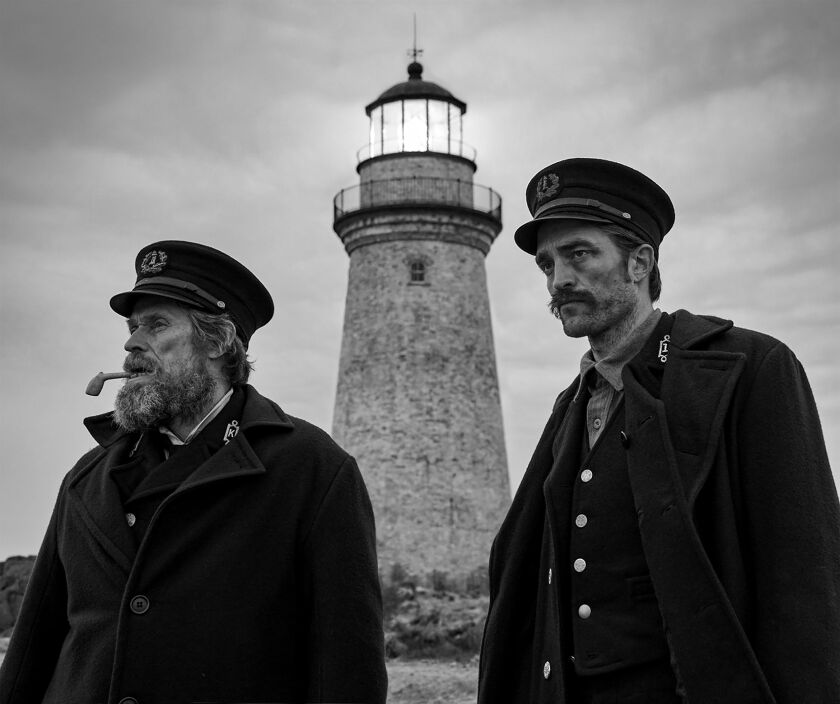
“The Lighthouse” is a senses-riveting immersion, aurally awash in the sonorous sounds of the sea, the pelt of torrential rain and the soul-shaking roar of the title structure’s bullhorn. It’s also brilliantly composed in austere black and white, in a retro-cropped format (practically, a neat square at 1.19:1) by Jarin Blaschke, who also shot director Robert Eggers’ debut, “The Witch” in 2015. “Roma,” another bold black and white gamble, walked off with the Academy’s best achievement in cinematography last year – and rightly so – but I must say, much of what Blaschke and Eggers conjure up here is more vital to their film’s core and registers an overall surpassing grade. Hard to imagine, but yes, it’s that stunning.

The narrative the ambience hangs from isn’t quite as sure, but what’s to worry when you have Willem DaFoe and Robert Pattinson? The setup, based on writings by Melville and sea-obsessed others of the era, has two men keeping the flame on a remote isle somewhere far off the New England coast. It’s circa 1890, so there are no cell towers; there’s also no Morse code from the island should something go wrong. The pair are dropped off on the rock for a four-week shift. Dafoe’s Thomas is a salty old tar, Pattinson’s wide-eyed Ephraim the newbie in his charge. The order of things gets laid out early on: Thomas does the all the attending to light, which is kept under tight lock and key, as well as the cooking, while Ephraim pretty much does the backbreaking rest – scrubbing the floors, hauling heavy loads of coal across jagged rock outcroppings, emptying the piss pots and painting the structure from a rickety harness that would make any OSHA official cringe. 
Thomas proves to be an Ahab-like taskmaster, though just what his white whale is never surfaces. The first rub between the mates comes over the consumption of booze (Ephraim won’t partake) and later the quality of those scrubbed floors. What Eggers begins to simmer here (as he did in “The Witch”) is a slow descent into madness as things fall apart, with faint hints of perhaps something bigger and more divine at play – fog-impaired siren sightings, booze-addled images of sensually writhing tentacles and even the incarnation of Neptune himself. The existential horror story gets triggered by a vociferant gull with all the brio and menace of the devil-eyed goat Black Phillip in “The Witch,” and the arrival of a nor’easter that could hold up their relief by weeks, if not months. The stranding ultimately becomes an opportunity for the actors to really dig in and Act – and boy do they, as alcohol, sexual tension and stormwater rain down upon the splintering shingles of their characters’ relationship with the mystery of the lighthouse tower and Thomas’ journal (also conspicuously under lock and key) ever pulling at Ephraim.

The chemistry between the two, well at the top of their games, couldn’t be any more perfect, and it’s a pretty physically taxing slog, to boot. Pattinson, so good in such offbeat, gritty ditties as “Good Time” (2017) and “High Life” this year, pours himself into the part, never flinching as torrents of wind-driven rain or fecal matter pelt his face. But this is Dafoe’s flick, his mercurial changeups and old sea dog affect behind a beard so thick and mangy it rivals that of Edmond O’Brien’s old coot in “The Wild Bunch” (1969), sells and seals both the authentic air of the period and the reality-warping mayhem. 

The film’s finest moment, echoing the “Indianapolis” scene in “Jaws” (1974), has the marooned liquored up and singing and dancing gaily. In the cloistered quarters, the choreography and execution are pure bravura. Of course there’s no shark to break the interlude, just the specter of loneliness, haunted pasts and the unmistakeable boundary of taboo. Other cinematic borrowings from “The Shining” (1981) and “Apocalypse Now” (1979) may raise a brow, but are otherwise unnecessary distractions. 

The other bright spot is the titular structure itself. The isle-perched beacon looks a legitimate relic, 150 years old, but truth be told, it was erected to house Eggers’ haunted hall of personal demons. There’s also some eye-grabbing visual effects with the use of white burning light and an eerie score by Mark Korven that deepens the whole, beguiling experience. Like Pattinson’s deep space cruiser en route to a black hole in Claire Denis’ “High Life,” “The Lighthouse” is less about liftoff or landing and more about the tormented sojourn.

Pain and Glory

16 Oct


Image result for pain and glory
Reconnections abound in Pedro Almodóvar’s latest, one of his most intimate and personal films in years. Given it’s about an aging movie director struggling with physical ailments and the last chapter of his life, “Pain and Glory” is clearly, deeply autobiographical and something of Almodóvar‘s “8½” (1963). The title embraces physical and emotional pain as well as reflection on past “glories” with the dim but beating prospect of perhaps one more to come.

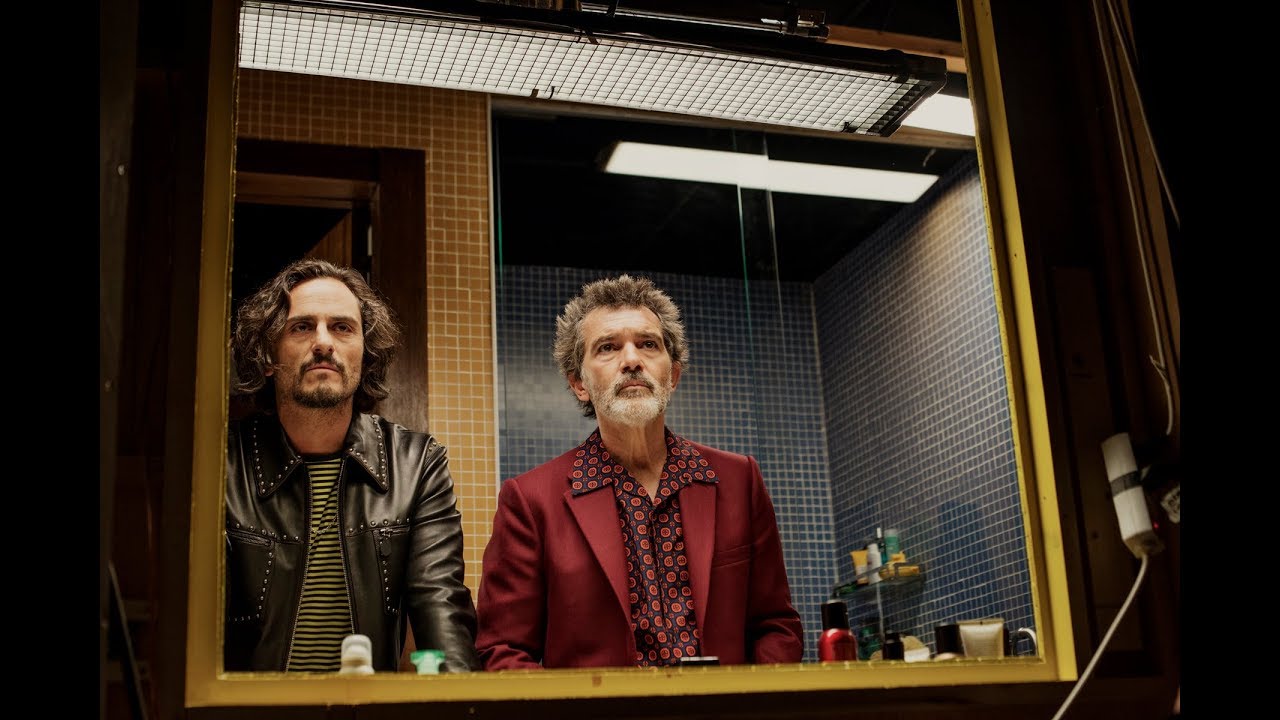
Longtime Almodóvar collaborator (and alter ego) Antonio Banderas, looking quite Clooney-esque with a salt-n-pepper beard, plays Salvador Mallo, a cherished film director who lives alone in Madrid, hobbled by chronic disorders and lament. It’s painful to watch him get in and out of a cab. In a voiceover we get the tick list of afflictions: asthma, sciatica and tinnitus – and to illustrate the point, Almodóvar launches into animated anatomy lesson to let us know just how nasty a fused disc can be.

Salvador’s relief comes through a restoration re-release of one of his past glories (the film’s title “Sabor” translated is “Flavor” or “Taste”). The prospect has him track down the lead actor, Alberto (Asier Etxeandia), from whom he’s been estranged for years over Alberto’s use of heroin on set – which is ironic, as during their reconnection Salvador starts using heroin to ease his emotional and physical pain, and ultimately gets hooked. With the big re-release looming, we flip back in time to a young Salvador (Asier Flores) and his mother, Jacinta (an elegant and graceful Penélope Cruz), living humbly in an alabaster “cave” apartment where, during the day, Salvador tutors an illiterate young man named Eduardo (a wide-eyed, handsome César Vicente) in exchange for tiling, painting and freshening up the dingy al fresco abode. Also in the present, there’s the specter of Salvador’s former lover, Federico (Leonardo Sbaraglia), a similarly majestic aging lion who now lives in Buenos Aires and has a female partner. Federico and Edmond, we learn, are the inspiration for much of Salvador’s work (though maternal themes run almost as deep in Almodóvar‘s works as LGBTQ and raw, sexual desire, i.e., “Volver” in 2006, “High Heels” in 1991 and “All About My Mother” in 1999).

Given the construct, it should come as no surprise that “Pain and Glory” is a deeply internal film rooted in melancholy and rue, and you feel the title’s emotional signifiers palpably. Banderas, so soulful and integral to the film, gives the performance of his career and should be rewarded for it come awards season.

Those looking for some of the outrageous graphic shock Almodóvar’s been known for (“Tie Me Up! Tie Me Down!” in 1989 or “The Skin I Live In” in 2011) may be somewhat disappointed – though there is a long, ogling penis-envy shot, which, while it makes sense in context, feels a tad off from the rest of the film. I’m not sure where the Spanish auteur goes from here; he faltered some with “I’m So Excited!” (2013) while trying to rekindle the raucous, ribald zing of past (and personal favorite) classics such as “Pepi, Luci, Bom and Other Girls Like Mom” (1980) and “Women on the Verge of a Nervous Breakdown” (1988), but with “Pain and Glory” there’s a sense of coming full circle. All the ends connect – but not how you might expect. It feels like a warm and complete closing from a man in full.