Archive | Review RSS feed for this section

Flag Day

20 Aug

Flag Day’: Penn raises ‘Flim-Flam’ flags aplenty, acting with family in another daughter’s memoir

By Tom Meek Thursday, August 19, 2021

About every five years, Academy Award-winning actor Sean Penn takes the director’s chair for a tight focus on those struggling mightily in small arenas. Many of these lo-fi, big-themed efforts come with some heavy-duty thespian firepower. For his directorial debut, “The Indian Runner” (1991), Penn was blessed with a cast that included Viggo Mortensen, David Morse, Charles Bronson, Sandy Dennis and Benicio Del Toro, as well as Dennis Hopper; afterward he teamed up with Jack Nicholson for “The Crossing Guard” (1995) and “The Pledge” (2001). Here the film’s more of a family affair in which Penn’s real-life children, Dylan and Hopper, play his onscreen progeny. The cast has some A-list names too with Regina King, Josh Brolin and Eddie Marsan in the mix, but in parts so small that if you close your eyes for a few seconds you might miss them. 

Adapted from Jennifer Vogel’s 2005 memoir “Flim-Flam Man: The True Story of My Father’s Counterfeit Life” (script by Jez Butterworth, a co-writer on “Black Mass” and “Ford v Ferrari”), “Flag Day” depicts the tumult of a father-daughter relationship across decades. Penn plays the titular con man, with his daughter portraying the young Jennifer Vogel. The film’s an earnest but rambling mess that draws you in with its shaggy-dog charms and wisps of mystery but pushes you out with jerky POV shifts and scenes of characters just screaming and shouting at each other without saying anything or furthering the narrative – my guess would be improv gone wrong. Told mostly through Jennifer’s gaze, the film occasionally (and jarringly) jumps to Penn’s John off on his own doing some pseudo-sociopathic activity. He has an abode with windows papered up as if he were a vampire, an empty briefcase he takes to his nonexistent job each day and is always looking over his shoulder. Over the years Jennifer often finds John in a “business meetings” with Hell’s Angels-like ruffians from which he often comes out bloodied. John’s a talker, always spinning and not quite dad-of-the-year material, but by comparison with his ex-wife Patty (Katheryn Winnick, “Vikings” and “Big Sky”), a lethargic alcoholic who could not get out of bed in the early years, he seems like a better choice at least to Jennifer. She seeks him out after mom’s creepy new beau tries to crawl into bed with her and mom, in the aftermath, sides with her man.

Just what John is up to is never made clear. It should be a major distraction, but when the late-teens Jennifer comes back to roost with him, the film becomes more about the two of them trying to get a leg up on life together and less about the dubious schemes John sets up while Jennifer is at work (as an intern and then journalist at Minnesota’s City Pages, where I also wrote). The film becomes a bittersweet waltz of hope, heartbreak and delusion, and a deeply intimate one. Penn, embracing the ’70s and ’80s setting, shoots for that lived-in indie look and at times evokes the gritty realism of John Cassavetes; at other, more lyrical turns he projects the dreamy idealism of Terrence Malick. It’s an arty endeavor, but not one that endears.

As far as Penn’s directorial efforts go, “Flag Day” is a step up from his 2016 misfire “The Last Face,” starring then-girlfriend Charlize Theron, his son Hopper and Javier Bardem, but still a lesser effort and a long way away from his 2007 high, “Into the Wild.”

CODA

12 Aug

Coda’: This Child of Deaf Adults is called to sing in a family drama from Cambridge’s Sian Heder

By Tom Meek Wednesday, August 11, 2021

Cambridge Rindge and Latin grad Sian Heder connects old and new with local color and universal language in “Coda,” a heartwarming English-language adaptation of the 2014 French film “La Famille Bélier” about an aurally able girl from a deaf family with a desire to sing. Forget France, we’re in old-school Gloucester for this spin, hanging on the working-class side of town the way Kenneth Lonergan’s award-winning “Manchester by the Sea” (2016) did. It’s a rewarding transposition for us locals.

The acronym of the title is “Children of Deaf Adults.” Here that’s Ruby Rossi (Emilia Jones, “High-Rise”) a Gloucester High student who lives with mom Jackie (Marlee Matlin), dad Frank (Troy Kotsur) and older brother Leo (Daniel Durant) – all three deaf. The Rossis are a fishing family; Ruby works the boat early in the morn and, understandably exhausted, nods off in class. Mean, more-well off girls give her a hard time and form a barrier to her afar crush, Miles (Ferdia Walsh-Peelo), one of the popular kids, but Ruby finds an in when she learns he’s signed up for choir. Ruby, ever singing on the boat and at home, follows suit.

“Coda” moves in a fairly predictable arc, but it does so sans apology and it does so well. Plot threads include the struggles of the the small Gloucester fisherman to remain relevant in changing times and the quiet, ongoing struggle for the hearing-impaired to not be brushed aside. That latter is at once moving and has many clever, gut-tickling moments, such as when Ruby must translate to a doctor about mom and dad’s burning loin issues – Frank signs that his balls are on fire. The doctor explains it’s just jock itch from the sea and humidity, and that the two should lay off sex for a while. That comes as something of a relief for Ruby because mom and dad are usually at it, and loudly so, when friends or Miles stop by.

Oscar winner Matlin (“Children of a Lesser God”) is the big name here and she’s brash, funny and vulnerable as Jackie, but the real tour de force is Kotsur as Frank. The two have perfect chemistry, blasting heavy metal out of their pickup – another one of the many cringeworthy moments Ruby endures with warmth in her heart. The two actors are deaf in real life, as is Durant (effective as the big brother arriving into manhood). Heder was determined to use hearing-impaired actors not only for authenticity but because the are underrepresented on film.

Heder who struggled as an actor after graduating Carnegie Mellon University, got a CV bounce and access from writing on “Orange is the New Black.” Her directorial debut “Tallulah” (2016) was another tight, situation-driven female journey staring Ellen Page as an adrift young woman who intervenes dramatically on behalf of the toddler of an inattentive and over-privileged mother. Both films are deeply nested in their protagonist’s view and dilemmas. “Coda” is a more typical drama, but it’s also shows the director deepening her art. She and the cast hit all the right notes, making an old tune hip and catchy again.

Local note: Heder’s parents are local artists Mags Harries and Lajos Héder. Harries is responsible for “Glove Cycle,” the bronze mitts that adorn the endless escalator in the Porter Square T station.

The Suicide Squad

8 Aug

‘The Suicide Squad’: Supervillains born to lose get their chance like James Gunn’s ‘Guardians’

By Tom Meek Wednesday, August 4, 2021

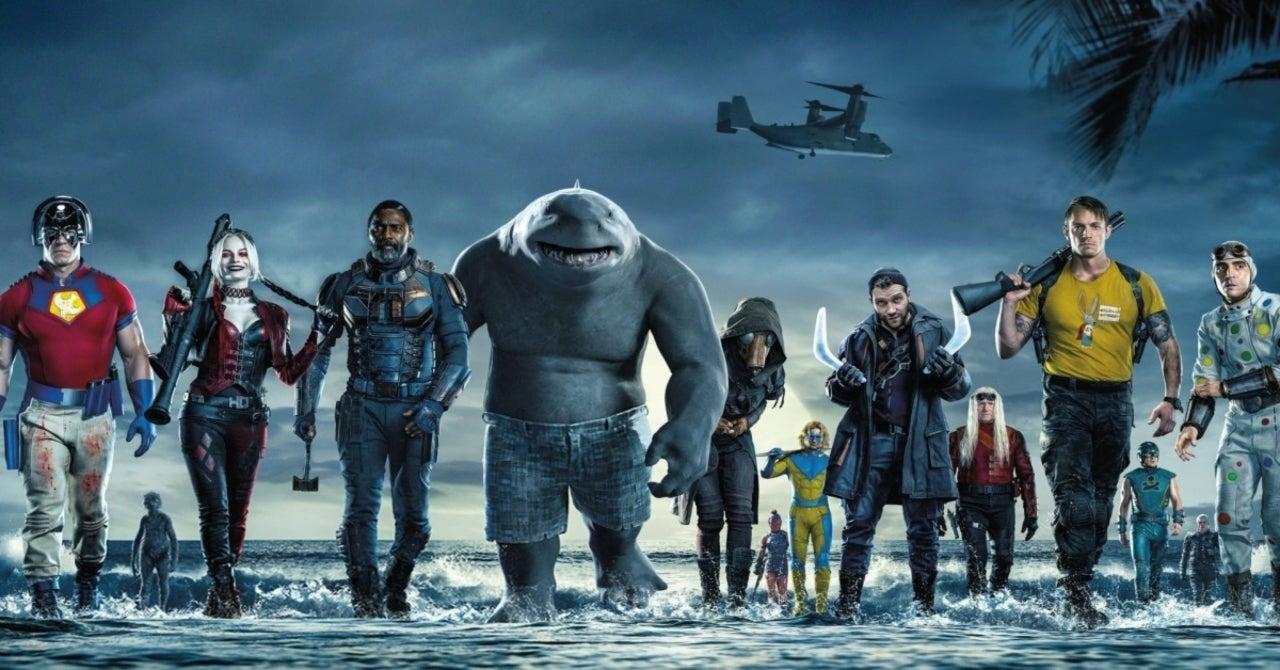
With this semi-reboot of DC’s Suicide Squad concept, the whole riveting potential of Harley Quinn still remains to be realized – and perhaps never will be. “The Suicide Squad,” not to be confused with “Suicide Squad,” is a step up from that disappointing 2016 entry point as well as “Birds of Prey” (2020), the muddled feminist take designed to let Margot Robbie take her Harley out for a wide-open spin. The carrot here is that it’s helmed by James Gunn, the once lo-fi auteur of gore and superhero quirk (“Slither” and “Super”) who rose to mainstream notoriety with the marvelously offbeat Marvel Universe entry “Guardians of the Galaxy” (2014). It’s wildly intriguing, if curious, to see him on the DC side of things, but what better hand to give a boost to a floundering franchise holding tight to the blood-splattered dress of its all-star player?

That said, Robbie’s maniacally mercurial – and damn lethal – Quinn is a supporting player here, which is good and bad. Good in that she’s a lightning bolt of frenetic energy in every scene she’s in. Bad in that when she’s not onscreen, the film ebbs noticeably. Also, at more than two hours, the film feels way too long for what it is. It begins with the snazzy pop that Gunn was able to maintain throughout the entirety of his two “Guardians” chapters as a squad of convicts with special skills (“odd” would be the better word) is led by patriotic jarhead Rick Flag (Joel Kinnaman) and Quinn to a beach landing on Corto Maltese, a fictitious South American country. In their charge there’s a Laplander with a catchy accent and a big javelin (Flula Borg), a soldier with detachable arms (Nathan Fillion), Captain Boomerang (Jai Courtney, playing the part again), SNLer Pete Davidson as Blackguard, the fly in the ointment, Gunn regular Michael Rooker with glorious, flowing Edgar Winter-like locks as Savant and a giant CGI weasel. The landing’s something of a D-Day, with few besides Quinn making it to the next stage. 

Gunn, playing with us, rewinds to the assembly of the team by government handler Amanda Waller (Oscar winner Viola Davis, also back again). There we learn that the team, known as Team One, really was a “Suicide Squad”; it was a distraction and fodder so Team Two, led reluctantly by Bloodsport (Idris Elba), a dead shot with an arsenal of firearms neatly attached to his body armor, could slip in sans bloodbath. His squad is equally as ragtag, with John Cena growing his acting chops as Peacemaker, a sardonic arms and demolition expert, and the straight-faced Polka-Dot Man (David Dastmalchian), who can toss toxic dots at adversaries and whose mommy issues nearly upstage Quinn. There’s also a waif known as the Ratcatcher (Daniela Melchior) who can summon a horde of rats, and King Shark, aka Nanaue, the half-man, half-shark voiced by Sylvester Stallone and a likable oaf when not chomping on human flesh – I really wanted a Land Shark joke, which would have been justified by Davidson’s inclusion. Speaking of humor, the reason the United States wants to infiltrate Corto Maltese is something called Project Starfish, for an ever-transforming extraterrestrial housed in a castle-like silo by a mad scientist called The Thinker (Peter Capaldi), who has brain bulbs or whatnot sticking out of his head and looks like the unholy fusion of Hellraiser and Doc from the “Back to the Future” films. Getting back to that joke, Peacemaker remarks that “in prison, a starfish is another name for butthole.” He later says he’d eat a beach full of penises to do his duty for country. Yeah, a lot of the gags miss wide, which is why you’re only too happy when Quinn drops back in the game.

From a sociopolitical angle you could argue that the film shines a light on the long-running exploitation of developing Latin countries by U.S. and other Western interests. Naturally, there’s also those home-bred despots looking to fulfill their megalomaniacal whims – the killing of women and children being a moral threshold for some of the Squad, and a shrug and whatever for others. The movie’s supposed to be Elba’s, and while his Bloodsport’s sword-waving with Peacemaker is puckishly good second-tier fun, the shine here is Quinn. No Quinn, no movie. In the grand finale the Squad is confronted with said starfish, something of a cross between a kaiju and the Stay-Puft Marshmallow Man. It’s not a shark jump, but it does underscore the missed opportunity.

The Green Knight

31 Jul

The Green Knight’: Arthurian odyssey, updated

By Tom Meek Thursday, July 29, 2021

David Lowery’s cinematic adaptation of the late 14th century Middle English chivalric romance (a poem about an odyssey, to be more precise), “Sir Gawain and the Green Knight,” is a hypnotic wonderment and one of the best films – if not the best – of the year so far. The cast and filmmaking are superb. “The Green Knight” is also the edgiest Medieval rendering since John Boorman’s “Excalibur” (1981) mixed arty filmmaking, sex and dark psychodrama into the cauldron of drama that is King Arthur’s court.

At one point the lady of a castle (Alicia Vikander, “Ex Machina”) offers Sir Gawain (Dev Patel, “Hotel Mumbai”) a book from her vast collection and quips that sometimes she rewrites stories to make them more dramatic and relevant, if so moved. As evidenced by “The Green Knight,” Lowery (“Pete’s Dragon,” “A Ghost Story” and “The Old Man and the Gun”) was so moved, keeping the bones from the anonymous original author but adding a few twists and fantastical flourishes that blur the lines of reality brilliantly and make us question the mind of the protagonist.

The yarn begins with a cozy gathering at the castle of the aged King Arthur (Sean Harris, perfectly delicate, yet commanding) on Christmas Day, as Gawain dreams of knightly fame yet spends most of his time hedonistically with his lover (also played by Vikander) and other “millennials” of the Middle Ages. The merriment (you’d think it would be bawdier, but this is a dour lot) is interrupted by the entity of the film’s title (played by Ralph Ineson), who makes a magnificent entry. Part tree, part man, he looks like something from the mind of Guillermo del Toro (“Pan’s Labyrinth,” “The Shape of Water”) and issues a challenge to the court for a knight to strike him a blow; a year later, he gets to strike back at the Green Chapel, his place of residence some six days north. Gawain, seeing an opportunity to earn his wings, jumps at the opportunity and lops off the Green Knight’s head. Easy-peasy, right? Not so fast. The Green Knight scoops up the head and rides off laughing. “One year hence,” he shouts.

It’s a long year for Gawain, who balks on the eve of the quest. A sagely Arthur and the desire for knighthood spur him on, and much of the film is Gawain’s journey. Along the way there’s the bloody remains of battle, a puckish young lad (Barry Keoghan, so good in “The Killing of a Sacred Deer”), a frisky fox, giant women who look like the blown up Joi from “Blade Runner 2049” (2018) and a maiden seeking her head. The grueling sojourn reveals Gawain’s fragility both mentally and physically. He’s not a very apt adventurer, and his chivalry is tested when, starving and near collapse, he arrives at the castle of a twinkle-eyed lord (Joel Edgerton, “Loving”) and his lady (the book-offering Vikander), who welcomes Gawain in and nourishes him. The sexual tension between the three is deeper than Loch Ness, though there’s also the matter of a blindfolded old hag who looms in the corner of every frame during the chapter, ever watching and judging.

The cast is exceptional (including Kate Dickie and Sarita Choudhury as Guinevere and Morgan Le Fay, respectively), but the film is Patel’s, and he shines in the part of a man wanting much without doing. His long face and sad, soulful eyes lend to Lowery’s drab atmosphere of contrasting prosperity and fame, poverty and despair. The other stars are the cinematography by Andrew Droz Palermo, the Irish landscape that poses for his lens and Daniel Hart’s attention-holding score, which turn the film into an immersive experience. The ending adheres to the poem for the most but launches into new areas – creating tendrils, if you will. The whole dreamy rendering is rooted but simultaneously airy, a lofty lore, freakishly forged by visionary filmmaking.

Roadrunner: A Film About Anthony Bourdain

18 Jul

‘Roadrunner: A Film About Anthony Bourdain’ provides a tasting menu of takes on the late chef

By Tom Meek Thursday, July 15, 2021

Anthony Bourdain stars in Morgan Neville’s documentary, ROADRUNNER, a Focus Features release. Courtesy of CNN / Focus Features

It’s uncanny how alive Anthony Bourdain appears in Morgan Neville’s documentary about the celebrity chef, raconteur and intrepid traveler, “Roadrunner: A Film About Anthony Bourdain.” Not because it’s good to see his familiar, avuncular mug grabbing at life with zest and glee, but because of his self-reflective inner probing that feels as if he’s chiming in on his own life and death in the present – something that’s impossible, as Bourdain committed suicide in 2018. Still, his input is eerily prescient.

Neville steers carefully around much of that headline-grabbing act and in doing so raises more questions than answers, which is certain to leave those seeking closure unsatisfied.

With credits including “Won’t You Be My Neighbor?” (2018) and the Oscar-winning “20 Feet from Stardom” (2013), Neville does a yeoman’s job of getting us the fast what-to-knows: Bourdain was a heroin addict who early on labored in P-town seafood shacks and rose to fame at the age of 43 with “Kitchen Confidential” (published in 2000), an insider’s tell-all about sex, drugs and egos in the go-go New York City restaurant biz. He struck TV fame with “A Cook’s Tour,” “No Reservations” and finally “Parts Unknown,” culinary travelogues with the ever-curious Bourdain digging into the culture and politics of destinations close and far away. What many might not know is that Bourdain hardly traveled at all until doing those shows, and later became agoraphobic.

Neville employs a tight fist in curating who chimes in with reflections. Those giving us glimmers include Bourdain’s TV producers, fellow celebrity chefs Éric Ripert, who was with Bourdain in Strasbourg when he died, and a very emotional David Chang. Also in the mix of close friends are artist David Choe and musicians John Lurie and Josh Homme, of Queens of the Stone Age. Then there’s Bourdain’s past relationships. His second wife, Ottavia Busia Bourdain, gets plenty of screen time but offers little to deepen our understanding. Strangely absent is Bourdain’s first wife, Nancy Putkoski, to whom Bourdain was married for 20 years. Asia Argento, Bourdain’s paramour during his final years, appears only in archival footage. As Neville and several talking heads paint it, the Italian actress and filmmaker was a force of chaos on the set of “Parts Unknown” when Bourdain brought in her and renowned cinematographer Christopher Boyle to shoot a few episodes. The film also sets up Argento as the catalyst for his suicide – the Courtney to his Kurt, if you will. While many chime in that Anthony killed Anthony, others say Bourdain was addicted to Argento, and there’s a front page tabloid splash right before his final act revealing Argento holding hands with another man. All of the above is told in a mere whisper, and you wish Argento was given the lens to share her side of the story.

Also missing from the film is Bourdain’s sense of epicurean love and wonderment. The film is slickly crafted and propelled by music, namely the title track by Boston-based Jonathan Richman and the Modern Lovers and some cool ditties by Lurie and Homme. It’s a celebration of life that leaves many parts of its enigmatic subject unknown.

Black Widow

11 Jul

‘Black Widow’: She’s back for one final adventure that also returns Marvel’s universe to big screens

By Tom Meek Thursday, July 8, 2021

Finally the “Black Widow” backstory drops after long being held back because of Covid. It could be subtitled “All in the Family” or “Family Business,” as Black Widow Natasha Romanoff (Scarlett Johansson) has a whole family of super spies with super abilities. Dad Alexei (David Harbour) is something of the USSR’s answer to Captain America, called the Red Guardian back in the day (more on that later); mom (Rachel Weisz, “The Lobster”) has crazy tech and disguise skills; and younger sis Yelena (Florence Pugh, “Midsommar” and “Little Women”) is a fellow widow (more on that later).

The film, directed by Cate Shortland, kicks off in early 1990s Ohio, where the clan is an embedded sleeper cell (with Ever Anderson and Violet McGraw playing the young sisters) akin to the Jennings in “The Americans” TV series. We’re barely understanding who is who when the feds come for them. After a shootout and flight aboard a rickety single-prop plane, they escape to Russian turf, where the sisters are drugged and sent to widow school (think the unenviable ordeal J-Law’s reluctant spy had to undergo in “Red Sparrow”). Turns out there’s something called the Red Room, a sky-high hidden fortress where a guy named Dreykov (played by Ray Winstone) cranks out a widow army and controls them with a drug that compels obedience to all his devious commands. He’s a pretty pat – and thin – heavy in search of a Bond film, but it’s up to Natasha and her fam to take him down. Of course, having li’l sis as one of the operatives under mind control means there’s skin in the game. There’s also some nonsense about a coveted red gaseous antidote and a plot for world domination or destruction; I kinda lost the point, as the last hour of the film is a loud, crash-bang showdown that goes on and on and on.

As far as Marvel fare goes, this one is done by the MCU template – Disney must have an app that cranks out the plot points – and as a result has little at stake. We know Natasha still has Thanos and the “Infinity War” to go, and there are several name drops of her Avenger friends, whom she says she needs to bring back together. Shortland, who showed so much promise with edgy arthouse draws “Somersault” (2004) and “Lore” (2012), connects the dots, but as with Anna Boden and Ryan Fleck doing “Captain Marvel” (2019), her intimate indie style is nowhere to be found under an unending stream of bombastic CGI effects. I did appreciate the intricate hairstyles given to the widows, especially Yelena’s neatly nested French braids that seemed almost like an armament in their own right. And Harbour, so good in the recent Steven Soderbergh noir “No Sudden Move,” brings the comic relief in spades. Sure he’s a menace early on, but in the present campaign against Dreykov he’s paunchy and shoehorned into his far-too-tight old red uniform and in constant need of some alpha male ego stroking. He and Pugh’s wisecracking younger widow keep you in the action even as the Russian accents drop and then suddenly return.

Zola

2 Jul

‘Zola’: Stripper showdown in the Sunshine state, increasing in tension with every raunchy tweet

By Tom Meek Thursday, July 1, 2021

Well, here we are, people, the first movie adapted from a tweetstorm. Not an incoherent, three-in-the-morning political shaming from @realdonaldtrump (account suspended) but one from a 19-year-old Detroit server and exotic dancer named A’Ziah “Zola” King, who chronicled her 2015 shitshow of a road trip to Florida after being enticed along by a fellow dancer under false premises. The 148-tweet thread that plays out like “Hustlers” (2019) on steroids, even garnered King an exchange with “Selma” (2014) director Ava DuVernay: “There’s so much untapped talent in the hood,” DuVernay said. Zola’s response: “I’m not from the hood tho Ava. Ima suburban bitch. Still love you tho.”

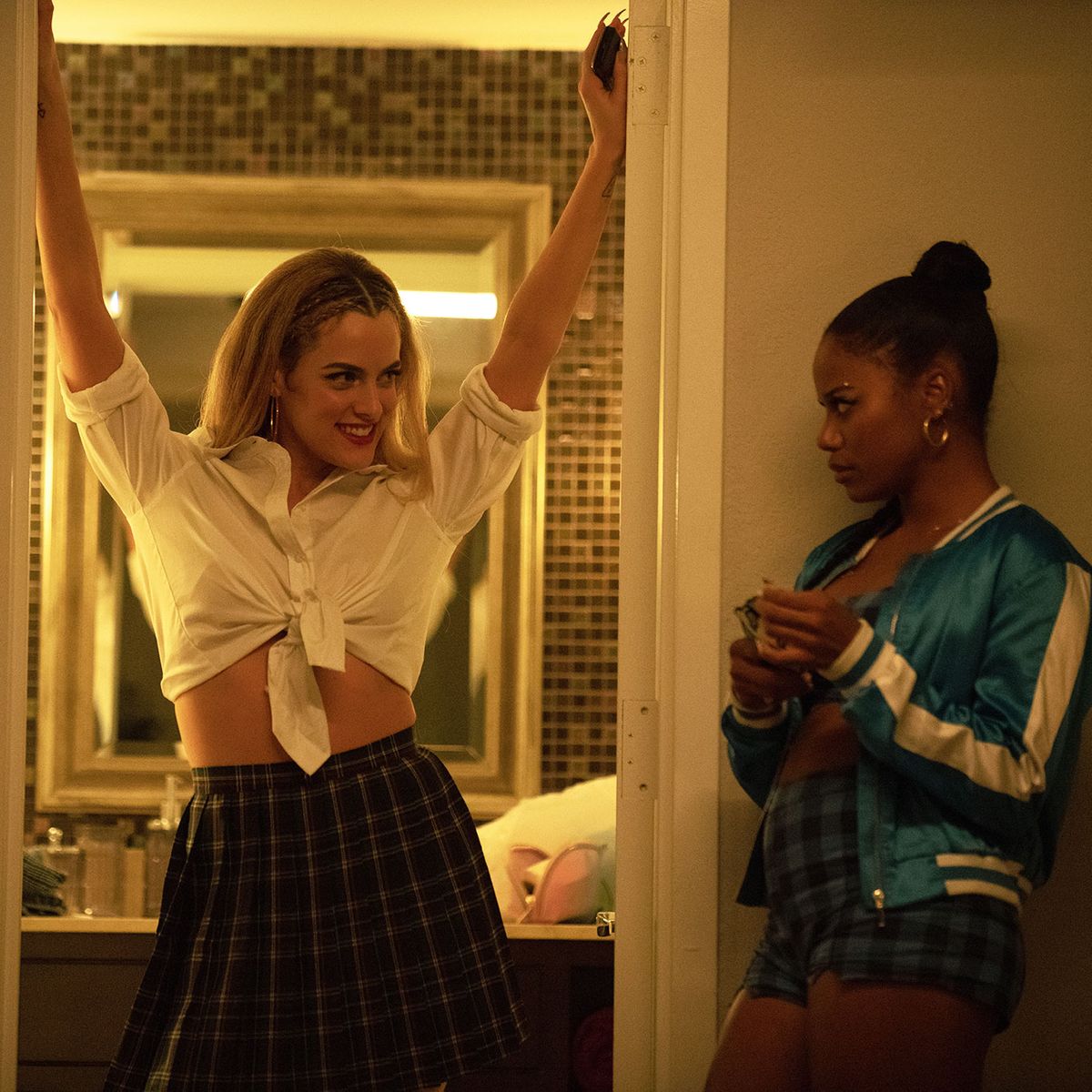
The real-life King worked at a Hooters. In this stylish, day-glo rendering by Janicza Bravo (episodes of “Dear White People” and “Them”), Zola, played by Taylour Paige, works in a diner and pole dances at night. One day when waiting on an interracial couple, the trashy girlfriend (known as “the white bitch” in the tweet blasts, tagged here as Stefani and animated effusively by Riley Keough) chums up to Zola. “Wanna dance?” she asks casually. Even though we’re in Zola’s head, with her tweets and thoughts coming to us in voice-over, we don’t get much of an inkling as to what the conversation is really about until we land at a male entertainment club.

There’s an immediate bond between the two, as well as a distinct unease that hangs in the air and helps drive the film. For a bigger payday, the two pile into a luxe van with Stefani’s hapless boyfriend Derrek (Nicholas Braun) and roommate X (Colman Domingo, finding his niche) to go dancing in the Sunshine State. Turns out that doesn’t pay so much either, and X is really Stefani’s pimp; this all unbeknownst to Zola and Derrek, who’s left in a raunchy motel to stew.

Zola’s got a beau back home and has boundaries, and even though X menacingly forces her into a call, the film lets Zola steer her way to just helping garner Stefani better johns on certain blacklisted social media sites, upping the dollar value. Stefani’s all too happy to please and seemingly has no boundaries and limitless energy. Her justification, when pushed, is that she has to support a child back home. She also has masterful control over Derrek, who spends the night frantically calling and texting.

Things get increasingly dicey as another pimp circles, X seems ready to explode into violence and Derrek declines emotionally as he wakes to the harsh reality about Stefani he’s buried through denial, puppy dog love and doofus gullibility. Stefani knows just when to throw the dog a bone, though, and Zola is always there to reluctantly watch the carnal play. It’s also here in the middle of the film that the arc really has nowhere else to go. Guns and group sex don’t raise the stakes; the action has crested, and it feels like the filmmaker and writer Jeremy O. Harris (“Slave Play”) – working off King’s tweets – are happy enough to hang it all on the frenemy chemistry of their two leads. I get the why, but it’s not a very satisfying choice in the end.

That said, the two actresses do play off each other brilliantly. Paige (“White Boy Rick”) is the anchor and holds it all well, but the film is really Keough’s. It’s not a big surprise, as the granddaughter of Elvis has landed in similar roles before in Andrea Arnold’s envelope-pushing “American Honey” (2016) and the streaming series “The Girlfriend Experience,” with those notable turns feeling akin to research for this culmination. Looking like one of the robotic beauties from the “Neon Demon” (2016), Keough nails the white-wannabe-from-the-hood vernacular (think a subtler form of Gary Oldman in “True Romance”) and the race differential between the women only adds to the tension.

The important thing to bear in mind is that this is all this based on King’s tweets; in follow-up stories, the “white bitch” known as Jess has said she turned no tricks, and it was Zola who was down for it. Ostensibly trying to give a nod to that, Bravo and Harris switch perspectives to let Stefani share some thoughts with us, but in the end what happened in those bedrooms happened. Since it doesn’t rescript the facts, this comes off as awkward and distracting, though the leads and Bravo’s stylish eye push the film above its narrative deficiencies with 16mm camera work by Ari Wegner – remember the name – that is vibrant and mood setting. “Zola” begins with all the dark, captivating allure of Nicolas Winding Refn’s “Neon Demon” and Harmony Korine’s wicked descent into Floridian fun-time hell, “Spring Breakers” (2013). It just doesn’t know how to finish, and simply ends when you think the big turn is just around the next bend. 

F9: The Fast Saga

25 Jun

‘F9: The Fast Saga’ blasts seat-rattling overload with downshifts to a star-studded family drama

Less is more, except when it comes to vaccinations, your bank account and movies about jacked dudes driving muscle cars. Hard to believe this living-on-longer-than-it-should franchise about car jockeys doubling as covert agents has made it to “F9: The Fast Saga,” a cheekily oxymoronic title for a series taking on the endurance aspects of Le Mans. It also proves false, as more and more characters and famous mugs are folded into the mix and others are resurrected from chapters that barely made the grade (hello, “Tokyo Drift”). It’s a long drag, lasting more than two hours, that with all its world-hopping feels like the checkered flag is always around the next bend. Even the seat-rattling sensory overload of jittery dash-cam footage, hyperkinetic cutting and all the crash-booms that litter the screen tend to weaken over time. As we should know by now, much of the magic and mayhem is done on green screen, given whoosh and life by an army of CGI coders in Canada, and the ease of turning a key so effortlessly to produce car crash wonderment feels like a cheat. One laments losing the gritty authenticity of old-school stunt work and keen editing of Willam Friedkin’s “The French Connection” (1971) and his day-glo neo-noir “To Live and Die in LA” (1985), real-time car chase capers that will never be replicated – though “Drive” (2011) made a respectable go at it.

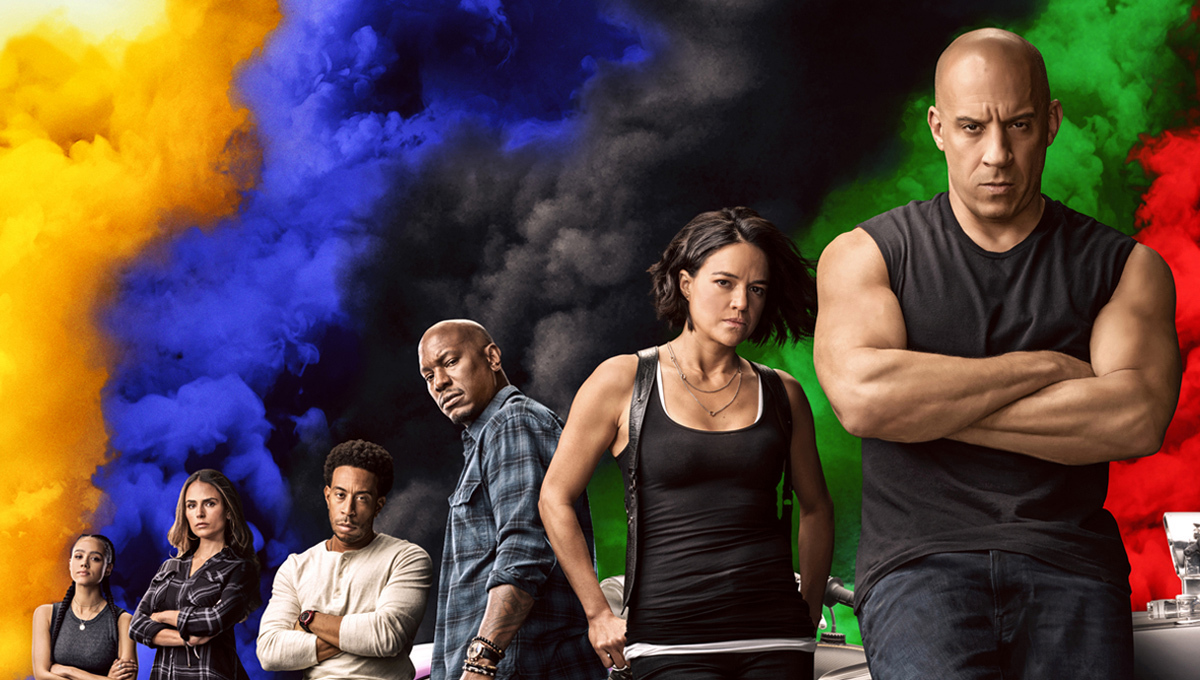
It’s not that I had a bad time at “F9,” which puts original “F&F” director Justin Lin back in the driver’s seat, or harbor a serious distaste for the series. I just wish it could be a notch sharper and more entertaining. (And can we please banish the line “Let’s do this” and the like?) The whole ka-bang, kaboom is driven by a MacGuffin: a DNA-coded device called “Aries” that allows its possessor to access and control all computer code in the universe. Russian trolls and Bond villains would literally die for it; here it’s a foppish Euro psycho named Otto (Thue Ersted Rasmussen) and an army of faceless commandos in helmets and black Kevlar suits. On the side of good are heroes such as Dom (Vin Diesel) and Lefty (Michelle Rodriguez), tearing up the streets of old world Europe with retrofitted American classics – being inconspicuous ain’t a thing – to stop Aries from morphing into the mother of all computer viruses.

Diesel’s swagger and Rodriguez’s simmer have always been – and still are – the engine of the franchise, and Diesel’s brooding Dom has a massively clichéd yet winning “Rocky” thing going for him, the secret sauce to solid hack filmmaking. But it’s a perk that Helen Mirren, Kurt Russell and Charlize Theron, who had small yet entertaining parts in past episodes, pop up in small bits (Theron, sporting a modish bowl cut, gets to get her vamp on with a dose of camp), while local guy and WWE sensation John Cena shows up as Dom’s baby bro with a dark past, seemingly revving his engine for the opposite side of justice. On paper, the brotherly rivalry has the trappings of a Shakespearean tragedy; in execution, no matter how hard the filmmakers and actors try, the pathos feels like another green screen trick of the light.

Reaching for new highs, the stunts and FX often lurch into hyperbole – there’s a Pontiac Fiero with a jet rocket strapped to its roof – but that becomes one of the charms of “F9,” which doesn’t take itself too seriously. (That scene in the Fiero with Tyrese Gibson and Ludacris is a good example.) Challenging Lin’s pacing is the ton of backstories that need to be told, the most interesting of which is that of young Dom (Vinnie Bennett, impressive) and his brother’s early woes. The film, however, only really moves at two speeds, and it’s a bit unsettling to go from a quiet reveal to Michael Bay-esque barrages of bombast without any shifting of gears. To that end, “F9,” like a Bay flick, is perfectly packaged box office bait, joyous popcorn junk that should drive folks back to theaters after long Covid shutdowns

In the Heights

12 Jun

‘In the Heights’: Movie with a song in its heart

By Tom Meek

Before there was “Hamilton,” the hottest ticket on Broadway in decades, there was “In the Heights,” the musical by “Hamilton” creator Lin Manuel Miranda and Quiara Alegría Hudes about a hot summer tear through the streets of Washington Heights, where music and dreams drive the pulse of the multifaceted Latinx community. Here in the hands of “Crazy Rich Asians” (2018) director John M. Chu, that Tony Award-winning play takes on a kinetic yet intimate feel as crowds break into song or have dance or rap-offs.

The script, written by Hudes (the stage musical was based on her book), homes in on two young couples or couples-to-be, or not. Usnavi (Anthony Ramos, “Hamilton” and “A Star Is Born”) runs a bodega called Little Dream and has a crush on regular Vanessa (Melissa Barrera, Showtime’s “Vida”), but is apprehensive about making a move on her, as she’s in the process of quitting her beauty salon job to move uptown and become a fashion designer. Usnavi’s Greek chorus of regulars and friends egg him on or console him in the wake of each romantic misfire. More complicated and germane is Nina (Leslie Grace) back home from Stanford, which her dad (Jimmy Smits), a car service repair shop owner, sacrificed so much to send her to. She doesn’t want to return – to tell why would ruin the story, but the reason ushers in a conversation about race and dreamers – and has a burgeoning relationship with Benny (Corey Hawkins, “Straight Outta Compton” and “BlacKKKlansman”), a radio dispatcher at dad’s shop.

For the most part “In the Heights” is a whirlwind of music, dance and emotional undulations, in which dashed opportunities are always left with a modicum of hope. Chu keeps it all clicking along with the snappiness of a “La La Land” (2016), yet the quiet pauses with Nina and her dad and Usnavi (played on stage by Miranda) and his posse have their own interior pulse and reverberations. Zesty and light, yet deep and meaningful, Miranda’s love letter to an immigrant-based community is heartfelt; and with Chu at the controls and a talented cast whose dancing, acting and singing is pitch-perfect all the way through, “in the Heights” is going to move you.

A Quiet Place Part II

31 May

‘A Quiet Place Part II’: After an explosive start, back to a world of even more menacing silence

By Tom MeekFriday, May 28, 2021

Maybe the long-delayed release of John Krasinski’s sequel to his surprise 2018 horror flick hit “A Quiet Place” wasn’t such a bad thing (but yes, Covid, terrible). It gave us more time to distance ourselves from the novelty of human-mauling aliens who can home in on a target only by sound. They were formidable and terrifying then, and are again. “A Quiet Place Part II” opens before the last film did, giving us the cataclysmic landing of the aliens – an ominous, fiery streak across the sky before the first batlike incarnation with a maw full of needlelike teeth chows down on the first denizen of a sleepy upstate enclave. We see familiar faces (Krasinski’s dad, Emily Blunt’s mom and Millicent Simmonds’ daughter) hurrying for shelter and an existence in total silence – one branch crack or a sudden sneeze and you could be lunchmeat.

“Part II” is just as taut and lean as its predecessor. It covers a lot of ground in 90-plus minutes. After a sudden alien invasion that triggers the fall of civilization as we know it, we jump forward to Day 474 since that fireball hit as the Abbotts, or what’s left of them – Evelyn (Blunt), her children Regan (Simmonds) and Marcus (Noah Jupe), and a newborn baby – are still holed up in an old farmstead. At night, they send up a fire signal that is eventually answered. From there, as in most post-apocalyptic films in which death can strike from a dozen angles, it becomes the duplicitous agendas of lawless people that becomes as lethal as the voracious raptors that lurk, waiting for a too-loud footfall to be an impromptu dinner bell.

There are some nice new additions here: Cillian Murphy as Abbott family friend Emmett (we catch him at a Little League game in that preamble), a grizzled, hirsute loner who’s lost much, and Djimon Hounsou as a fierce father and one of the rare bastions of human compassion. In this chapter too, the kids move to the fore, undertaking quests and protector roles that ease the burden on mom some. The film splits into multiple threads, and a few feel unnecessary, but Krasinski and his team of editors keep it tight and adrenaline-pumping. In a world where silence is more than golden, it’s the only means of life,  big roles are played by elements such as a bear trap, a first-aid kit just out of reach, a vial of much needed antibiotics and a safe room that needs to be opened every five minutes to avoid oxygen starvation. Water and boats do too, but to tell you much more would be to ruin the fun. Simmonds, so good in the last film, again makes the case for future work; and of course Murphy, with those liquid blue eyes piercing through the dirt streaks and matted hair, brings a conflicted soulfulness to his grieving father. As the film ends you know for sure there’s a “Part III” coming. You can almost see it opening with Day 500