It’ll be interesting to see if “Raw” lives up to its hype from the Toronto International Film Festival, where people reportedly passed out in response to its graphic gore.
The French film by Julia Ducournau is something of a feminist anthem built around a demurring young vegan who transforms into a flesh-crazed cannibal during her stint at veterinary school. In more fantastical fare — vampire, zombie, or cannibalistic tribe flicks (like the cult classic “Cannibal Holocaust”) — people eat people all the time, almost to the point of normalizing it. What’s more unsettling and provocative is when regular folk, like Ducournau’s voracious heroine, prey on their fellow humans — sometimes covertly so, skirting the law, norms, and even opportunistically turning their friends and family into a bloody feed.
The most famous of the lot is of course Hannibal Lecter, the Thomas Harris literary creation that spurred a film franchise and TV series. Here’s a list of other “cannibals among us” films, with an eye on the esoteric and outré.
Other femmes who feast on flesh
David Cronenberg’s “Rabid” (1977) intended to star Sissy Spacek as the ingenue who, after an accident and a radical operation, can only subsist on human blood. The studio nixed the idea, and producer Ivan Reitman (who would go on to make “Ghostbusters” and four years prior made the lame camp comedy-horror “Cannibal Girls”) decided to cast porn star Marilyn Chambers. Spacek would end up making “Carrie,” and Chambers, leveraging her raw sexuality, proved eerily effective as the reluctant predator of “Rabid.” Also worthy, Nicholas Winding Refn’s tale of Hollywood dreams and lurid excess, “The Neon Demon” (2016), and “Under the Skin” (2013), where an otherworldly Scarlett Johansson patrols the streets of Glasgow seeking lads who don’t have anyone waiting up for them. Continue reading →
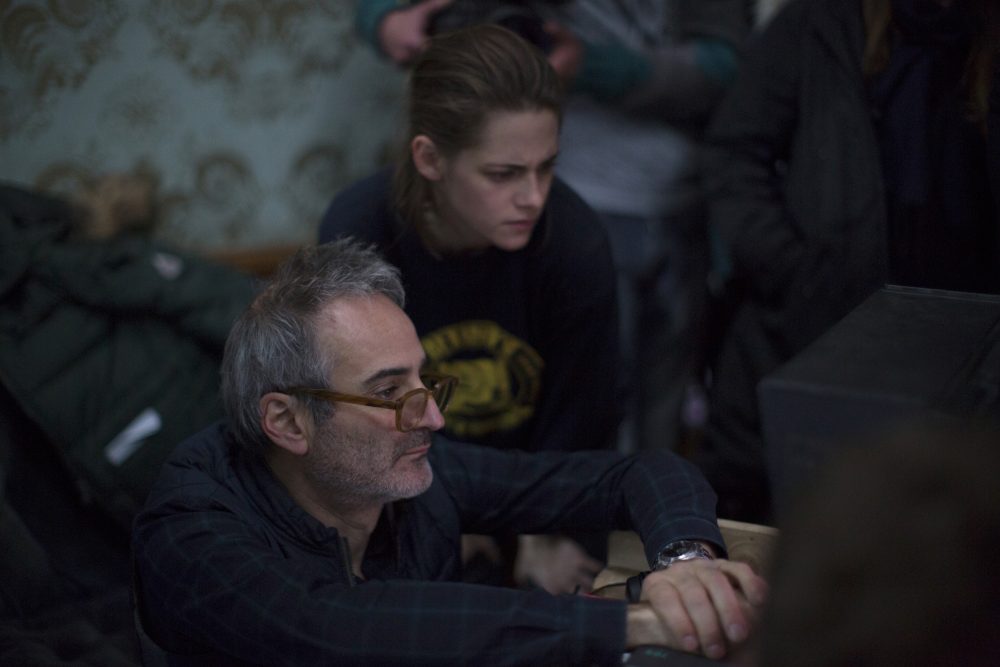
French auteur Olivier Assayas, whose kinetic style and eclectic works have enchanted cinephiles over the past 30 years, doesn’t particularly relish the term “muse.” “It’s somewhat cheesy,” he notes during an interview to discuss his latest release “Personal Shopper.” The inspiration garnered from his lead actresses, Assayas says, germinates from a more genuine and iterative process.
Past partnerings with Maggie Cheung, his wife from 1998 to 2001, yielded the deconstructive melodrama “Irma Vep” (1996) and the sobering “Clean” (2004). With fellow countrymate and longtime friend Juliette Binoche, he churned out “Summer Hours” (2008) and the top 10 list-maker “Clouds of Sils Maria” (2014).
“Personal Shopper,” which opens in Boston this Friday, marks Assayas’ second collaboration with American actress Kristen Stewart, who starred alongside Binoche in “Sils Maria” and has since become a highly sought-after talent. Stewart made the unlikely transition from the box-office bait, teen-targeted “Twilight” saga, to an art house darling collecting raves for her recent efforts in “Café Society,” “Still Alice” and “Certain Women.” And “Personal Shopper,” which scored Assayas Best Director honors at last year’s Cannes Film Festival, will likely only raise Stewart’s stock.
“I discovered Kristen when doing ‘Clouds,’” Assayas says, “and [during filming] I learned how capable she was and I was fascinated. Once that was done, I was inspired by her and wrote the part [of Maureen Cartwright in ‘Shopper’] with her in mind.” Continue reading →
On Tuesday, the Academy of Motion Picture Arts and Sciences will announce their slate of Oscar nominees, a lineup that will certainly be eyed with much scrutiny for its diversity. Last year, the #OscarsSoWhite controversy exploded after people of color were noticeably left off the Academy’s ballot for the second year in a row — a move backward considering 2014’s Best Picture winner, “12 Years A Slave.” Given the films that found success in 2016, both critically and commercially, the list of nominees should successfully change the tide.
The origins of the hash-tagged tumult, which had notables like Spike Lee and Jada Pinkett Smith boycotting the ceremony last year, are two-fold. For starters, the Academy’s makeup is not diverse by any measure — a Los Angeles Times analysis in 2016 found it was 91 percent white and 76 percent male. Secondly, the industry was not producing many quality films made by, or featuring, people of color.
The cast and crew of “Spotlight” accept the Oscar for Best Picture in 2016. (Chris Pizzello/Invision/AP)
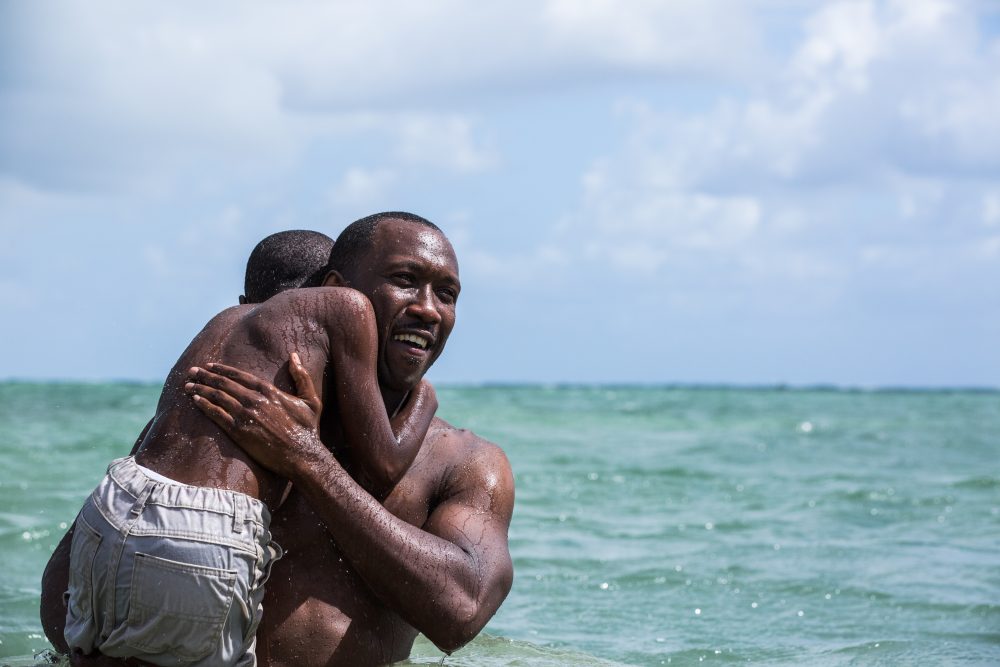
When the nominations came out last year, Academy President Cheryl Boone Isaacs, who is black, promised immediate action. Following a unanimous vote by the board eight days later, rule changes stipulated that members who had been dormant in the industry for over a decade would be be moved to emeritus status (effectively losing their voting rights) and the recruitment of new members would begin immediately. Though, past winners and nominees retain full membership status and voting rights. The list of 683 invitees contained a notable presence of women and people of color (Rita Wilson, American Repertory Theater stalwart Cherry Jones, Nia Long, Mahershala Ali now in “Moonlight” and “Hidden Figures,” and John Boyega).
The industry too, almost as if on cue, made an initial, responsive roar when Nate Parker’s slave uprising saga, “Birth of a Nation,” garnered a record-setting $17 million distribution deal at the Sundance Film Festival in late January of last year. Expectations for the film were high, but when it finally poured into theaters, the edgy concept of a bloody revolt against injustice, while admirable, didn’t measure up at the box office. “12 Years a Slave” it was not and Parker’s past allegations of rape (he was acquitted) didn’t help either.
Colman Domingo as Hark, Nate Parker as Nat Turner and Chike Okonkwo as Will in “The Birth of a Nation.” (Courtesy Fox Searchlight Pictures)
In light of “Oscars So White,” “Birth of a Nation” registered something of a disappointment, but the industry, in its own organic way, was quietly on the mend. The later crop of films featuring diverse filmmakers, casts and subjects shone — from “Moonlight,” the saga of a gay black youth, bullied and growing up under the negligent eye of a crack-addicted mother, to “Loving,” the haunting recount of the interracial couple who boldly broke the anti-miscegenation law in segregated Virginia and, more recently “Hidden Figures,” another based on true events, pre-civil rights movement drama about African-American female mathematicians working at NASA during the space race. Overall, 2016 was a year the blockbuster faltered and small films about people with varying backgrounds and experiences, navigating adversity, took center stage.
By Tom Meek
Wednesday, December 14, 2016 Last revised on: Friday, December 16, 2016.
One of Cambridge’s separated bike lane tests is along Massachusetts Avenue just north of Harvard Square. (Photo: Tom Meek)
The City of Cambridge made good last week on a City Council order from October implementing two experimental, separated bike lanes along short swaths of Massachusetts Avenue – one in Central Square, along the northbound stretch skirting Lafayette Park; the other also northbound, just north of Harvard Square along the Harvard Law School campus. The Law School installation removed parking spaces; the Central Square setup shifted parked cars outward, so the bike lane runs between the passenger side of parked vehicles and the curb. Each section is about about a football field long.
The implementations are similar to ones installed in November along Massachusetts Avenue in Boston as part of the city’s pursuit of Vision Zero – a program aimed at achieving a rate of zero traffic fatalities. The October order was one of a series of bicycle safety orders pushed by cycling advocates and groups after the death of Amanda Phillips in Inman Square in June and Joseph Lavins, struck by a truck in Porter Square, three months later.
The separation device is a zebra-striped swath painted on the road with flex posts, and the raised structures are removable pylons. More permanent flex barrier posts have been ordered and should be installed in the next two weeks, weather permitting, said Joseph Barr, director of Cambridge’s Traffic, Parking and Transportation department.
Still, there is “no set date” for how long the lanes will be left up, Barr said. The primary purpose of the temporary measures is to garner feedback on safety and the feasibility of the solution for expansion. There are plans for similar protected lanes in Inman Square in the spring, but the loss of parking spaces is typically fiercely debated in traffic changes.
“Folks will realize the loss of some parking in some areas is less important than than creating safe streets for those riding bikes,” vice mayor Marc McGovern said.
The reaction from the bike community so far has been guarded elation. “The new protected bike lanes are a great start,” said Joseph Poirier, of the Cambridge Bicycle Safety group formed in the wake of Phillips’ death, “but we know that we won’t see the huge mode shifts to biking from driving until we have a complete network of low-stress, protected bike lanes throughout the city. Isolated segments are a helpful start, but people won’t start to replace driving trips with bike trips until their entire journey is protected and low-stress. The research is pretty clear about this.”
Cambridge can be a leader in rolling out a connected, comprehensive network of protected bike lanes, group members say. “Remember that all of the great policies in the Netherlands started with a single car-free day in Utrecht,” is how Richard Fries, executive director of Mass Bike, sums it up.
Most of us in the proudly liberal-leaning Hub are still in shock from Donald Trump’s historic and controversial “win” last week, making the demagogue the 45th president-elect. Throughout the presidential campaign there were near-riotous breakouts at Trump rallies and the candidate famously offended minorities, immigrants and, most resoundingly, women. “The Art of the Deal” Don looked primed to go up in flames at any turn and got away with language and behavior that would get any wage-earning wonk fired without a second consideration, but come Nov. 8 there was pushback from a certain populace in mid- and and Southern states who had been suffering quietly through the long, slow manufacturing ebb and were left out of the high-tech, life sciences and servicing surges – the non-college-educated white male, known as hard-working union members in more prosperous times, who had previously delivered swing states such as Pennsylvania and Michigan blue. We on the coasts scratch our head why, slow to realize the cold sting of disenfranchisement as a powerful motivator. Below are seven films that delve into the psyche of the dislocated white male, usually outcast, antisocial and operating outside the law:
“Hell or High Water” (2016)
Boston-born Ben Foster and Chris Pine (the new Captain Kirk) play brothers desperate to keep the family farm by heisting banks. Foster’s Tanner, just out of the slammer, has been there before, but Pine’s Toby is divorced and struggling to stay afloat financially and maintain a relationship with his progeny. The bureaucratic bank holding the homestead’s deed plays the heavy, and Jeff Bridges checks in as the sympathetic, but dutiful sheriff caught in the mix on the eve of his retirement. Pine and Foster make the frustration of hopeless conclusions, and the flight against them, deeply palpable. David Mackenzie, the British-born director who turned in the saucy “Young Adam” (2003), renders the Texas setting like a sequel to “No Country for Old Men” and registers one of the best films of the year so far. See also: “Out of the Furnace” (2013).
“All the Right Moves” (1983)
A young Tom Cruise plays a high school football star in dying steel-mill Pennsylvania who values his gridiron prowess as a way out of the economic dead-end, but his strict coach (Craig T. Nelson) may have other ideas. The death of the working-class American Dream and the despair as big biz going overseas for cheaper labor remains pointedly relevant. See also: “Hoosiers” (1986) Continue reading →
A “ghost bike” memorial is set up Tuesday in Porter Square in memory of bicyclist Bernard “Joe” Lavins. (Photo: Andrew Huang)
More than 200 cyclists, co-workers and friends gathered in Porter Square on Tuesday to hold a candlelight vigil for Dr. Bernard “Joe” Lavins, who was struck and killed Oct. 5 by an 18-wheeler while bicycling through the tangled intersection in front of Christopher’s restaurant.
Details of the accident have yet to be released, but his death marks the second cyclist in Cambridge killed in a little over three months after Amanda Phillips was doored and struck by a lawn service vehicle June 23 in Inman Square.
The ceremony, led by the Rev. Laura Everett, head of the Massachusetts Council of Churches and a cycle advocate, dedicated a “ghost bike” memorial in Lavins’ memory, and mourners recalled Lavins, a 60 year-old research scientist at Ironwood Pharmaceuticals in Cambridge.
The Rev. Laura Everett leads the Tuesday memorial ceremony in Porter Square. (Photo: Tom Meek)
He was a cautious man, mourners said, who took a bike safety class put on by the company before he began commuting from his home in Lexington two years ago. (To get away from the frustrations of driving and to get more exercise, because he loved junk food too much, one friend pointed out.)
Ken Carlson, a colleague of Lavins’ at Ironwood who also chairs the Somerville Bike Committee, and Chris O’Dea, another co-worker who cycles, called for “something positive to come from the terrible tragedy” – namely to make Porter Square and all hazardous hotspots throughout the city safe for cycling.
Five city councillors attended the event – Craig Kelley, Leland Cheung, Jan Devereux, Nadeem Mazen and vice mayor Marc McGovern – and John Adams, proprietor of the Kendall Square pool hall Flat Top Johnny’s, gave a history of the ghost bike, a symbol of remembrance and a reminder to motorists to share the road. Peter Cheung, a video editor and cycling enthusiast from Jamaica Plain, painted Lavins’ ghost bike after it was found in the basement of Flat Top Johnny’s. Admiration of his work brought a sweeping response from Cheung: “No more ghost bikes.”
Lavins leaves behind a wife and a 13-year-old daughter – and a heartbroken cycling community that wants change now.
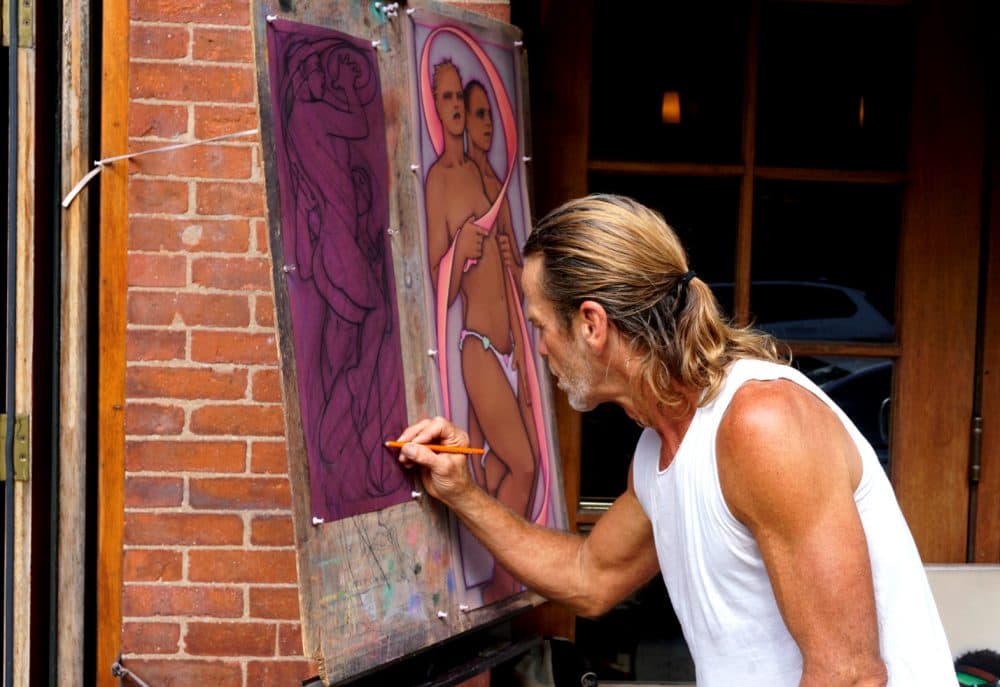
If you’ve ever been by Sonsie on Newbury Street on a bright sunny day in the past 20-plus years (since the restaurant’s opening back in 1993), you’ve probably seen Eric Kluin — the surfer-esque painter with six-pack abs — busily at work on his easel perched just outside the establishment’s welcoming French windows that open out onto the sidewalk.
A shirtless fixture that’s hard to miss, Kluin’s something of a curio. Does he have a license to secure that spot? Is this some entitled ploy to pick up women? These are questions you might ask yourself as you pass by. Reasonable questions for the intrigued, but the answers might surprise you.
Kluin, a pretty laid back individual, moved to Boston in the late ’80s after working at a halfway house in Arizona where he had formerly been a resident. He’s been a recovering alcoholic for 22 years, and ironically, it was a bar that gave him his shot at a sustained recovery.
He began consuming alcohol abusively at the University of Michigan where he studied art, and didn’t stop until he was scraped off the floor of his flat in Boston by a concerned friend and tossed into rehab — twice. He admittedly describes himself as a “classic alcoholic who would drink himself to death if given the opportunity.” Continue reading →
Signs warn of alligators and snakes near Seven Seas Lagoon.
By Tom Meek GLOBE CORRESPONDENT SEPTEMBER 09, 2016
Vacation resorts — those destinations you leverage your life savings for so the family can relax and have fun without sweating the pressures of daily life — include safety and security as part of the package, right? Such was the likely expectation of the family from Nebraska whose 2-year-old son was killed by an alligator at Walt Disney World’s Grand Floridian Resort earlier this summer. The attack, which took place on an idyllic swath of beach on the manmade Seven Seas Lagoon, occurred as the family took in one of the resort’s family movie night offerings. For me the news was extra chilling, as just weeks earlier, my wife and 6-year-old daughter sat on that very beach watching “The Force Awakens.” Eerier still was the realization that a misadventure of mine two years earlier had given me a glimmer into the dangers that lurked in Walt’s waters.
I’ll be the first to testify to the structural beauty of the stately Grand Floridian and its limitless amenities, but those foreboding “no swimming” signs along the beaches gave me pause the very first time I passed them by. There was no footnote or qualification, just a red slash through a silhouetted swimmer. I assumed the water was polluted. I couldn’t have been more wrong.
Installing bike lanes isn’t a cure-all for bicycling infrastructure, and they have problems of their own. (Photo: Marino Pascal)
May was Bike Month, the month we celebrate all who crank through the urban landscape reducing traffic, helping save the environment and promoting a healthy lifestyle. But besides some flag waving, what do Bike Months really accomplish? Do more people saddle up the steel steed, do motorists become more sympathetic and aware of cyclists, are the roads somehow suddenly safer? Unfortunately no – it merely underscores the lip service municipalities and agencies put forth when they could better serve the biking community and public safety by putting real dollars into infrastructure, policy and traffic law changes.
For me, the month began with great optimism. I sent letters to transportation heads in Boston and Cambridge outlining 10 unnecessary hazards to bikers in each city where immediate improvement could be had. I ride a 15-mile round trip every day from Porter Square to the very end of the Seaport, and had hoped that, given the month, documenting these persistent areas of peril (unclassifiable on the wonderful, but limitedSeeClickFix app) might garner some attention and thought from those with the power to enact change.
What happened was fairly emblematic of bureaucracy, and embosses the truth that we don’t value cycling as much as we say we do. From Boston I got a cricket concerto (though the canyons of potholes I flagged by South Station did get filled within days). Separately, a call toBoston Bikes – a municipal department opened in 2007 – to ask about bike rack policies and safe passage around or through Boston Common turned out to be a frustrating do-nothing back-and-forth. At no time during the conversation did the young rep mention Boston Bikes doing something, anything; she just directed me to take up issues elsewhere at City Hall, or to use an app. It was disappointingly clear that she cared little about cycling and wasn’t in touch with the state of the roads or traffic conditions, let alone the community she served. Continue reading →
A still from the film “Weiner.” (Courtesy of IFC Film)
The political season is well upon us, more vehemently and contentiously so than past presidential primaries, especially given the surprising number of upstarts, lack of usual faces and an arguably unpopular field. If either of the Democratic candidates win, history will be made with the first female commander in chief or the oldest citizen to assume the Oval Office. If Republican front-runner Donald Trump wins, his victory will cap a campaign of shock and awe, bluster and division, the likes of which seemed only possible in a movie.
That said, hitting the campaign trail has not been a particularly vast topic explored on film, but when it has, it’s been done with biting satire or a telling inward look at ourselves, our society and how we value democracy.
Most often those films stoke our fear of big corporations and power brokers seeking to influence control, as well as our fascination with scandal, the politician’s sudden fall and the tabloid train wreck that ultimately becomes a reflection of our impossible expectations, our own hypocrisies and an illumination of the intoxicating stupor of power that leads to self-destructive hubris.
Below is a list of 10 movies that bear particular relevance to the campaign as it is currently unfolding. (The last film in the list, “Weiner,” opens this weekend in select locations.)
“The Best Man” (1964)
Gore Vidal’s seminal skewering of big egos clashing for the White House pit a fictionalized version of Adlai Stevenson (played by Henry Fonda) against a JFK-like incarnation (Cliff Robertson), both vying for a former president’s approval. The shards of political courtship carry the tang of Obama having to mitigate his allegiances with Sanders and his former secretary of state Clinton. Vidal adapted his stage play, Franklin J. Schaffner (who helmed “Planet of the Apes” and “Patton”) directs and Lee Tracy was nominated for an Academy Award for best supporting actor for his turn as the ailing former president, casting an ostensible nod to Harry Truman. Continue reading →





 For me, the month began with great optimism. I sent letters to transportation heads in Boston and Cambridge outlining 10 unnecessary hazards to bikers in each city where immediate improvement could be had. I ride a 15-mile round trip every day from Porter Square to the very end of the Seaport, and had hoped that, given the month, documenting these persistent areas of peril (unclassifiable on the wonderful, but limited
 For What it's Worth