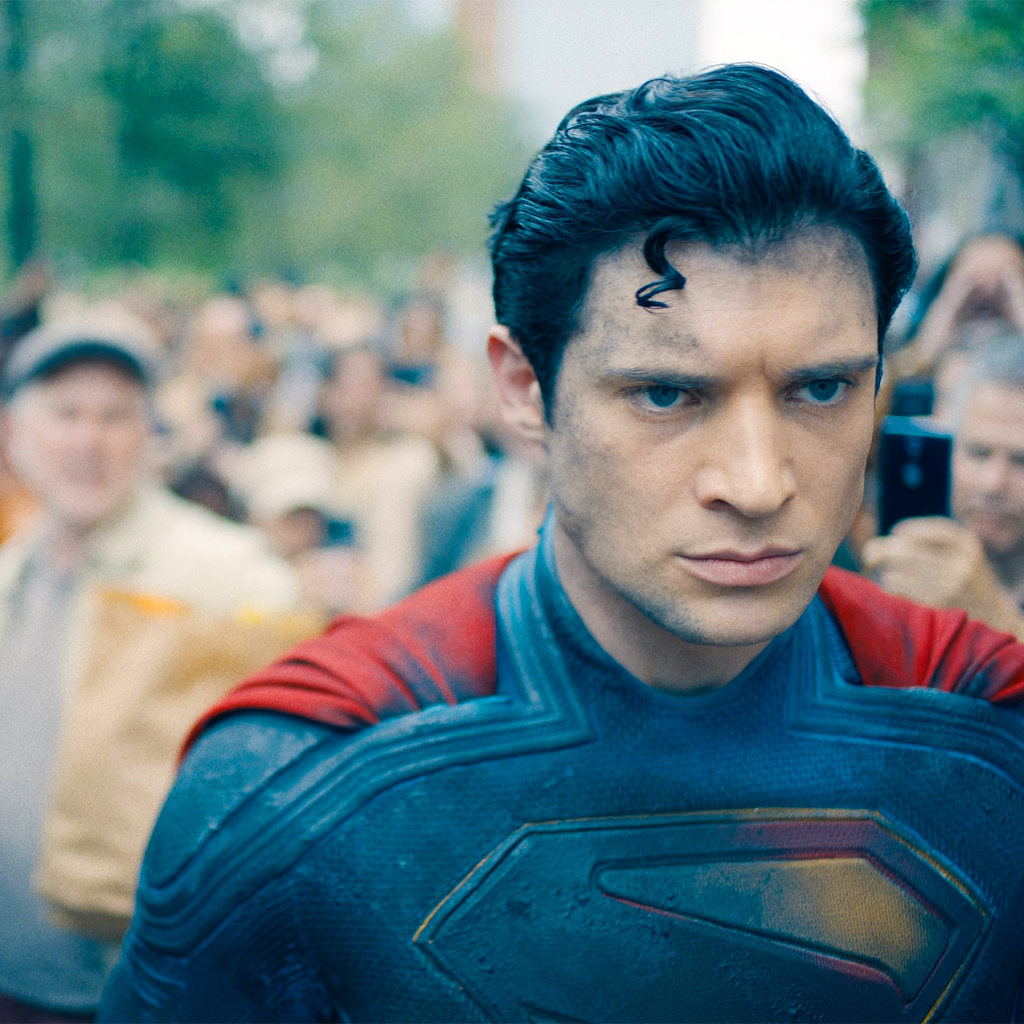
Crowds jeer in James Gunn’s recently released “Superman.”
James Gunn’s “Superman” swooped into theaters a week ago and knocked it out of the park with more than $125 million at the domestic box office. Not bad for a flat-footed rebrand that’s a long way from “Jaws,” which 50 years ago became the pindrop for the blockbuster, pulling in more than $260 million ($1.5 billion by today’s standards), with the eventual Academy Award winner that year (and No. 2 in box office totals), “One Flew Over the Cuckoo’s Nest,” taking in less than 40 percent of that. With that success, Spielberg’s gambit forever altered filmmaking and the way we see films; producers began seeking ready-made target audiences and the next big onscreen wow that would blow watchers’ minds and create lines to the ticket booth.
Before that 1975 cash splash, auteurs and independent studio heads called the shots in Hollywood. After “Jaws,” it was unclear where the film industry was heading, but in 1977 George Lucas went supernova with the first “Star Wars” chapter (lamely retitled “Episode IV: A New Hope” for purposes of the three-trilogy series). That same year Spielberg’s “Close Encounters of the Third Kind” also caught fire. The smashes “Raiders of the Lost Ark” (1981) and “E.T.: the Extra-Terrestrial” (1982) would cement the shift in how and why Hollywood made movies. It also marked the end of American New Wave, which in the ’60s and ’70s was responsible for such indelible classics as “Bonnie and Clyde” (1967), “The French Connection” (1971), “Chinatown” (1974) and “Two-Lane Blacktop” (1971).
Because of Bruce the Shark’s monster bite at the box office and the obsession with all things “in a galaxy far, far away,” artistic freedom ceded to bean counting. That’s not to say Spielberg and Lucas did not achieve something special, because they did: “Jaws” remains a nearly flawless film. The dialogue is tight and the filmmaking meticulous. There are scenes that have audible background banter as the foreground exchange takes place – something done rarely these days – and the casting was not only inspired, it was lightning in a bottle. Today, you’d get a lazy mishmash of who’s hot at the box office that doesn’t work onscreen. And with the practical effects of the era there were takes, retakes and more takes, not something shot against a green screen that one could edit and manipulate over and over again on a computer screen. You got it right on set even if you had to go late into the night and the next day.
Fast-forward to now and the top-grossing films are video game adaptations (“A Minecraft Movie”), live-action remakes (“Lilo & Stitch,” “How to Train Your Dragon”), superhero retools (“Captain America: Brave New World,” “Thunderbolts” and Gunn’s underwhelming revamp), and dino reboots (“Jurassic World: Rebirth”). What do they all have in common? Locked-down intellectual property with a rabid fan base and copious amounts of computer-generated effects. Much of the above play like they were scripted by an AI ’bot in a buggy beta stage. “Minecraft” is a near-unwatchable assault on the intellect (and I really like Jason Momoa and Jack Black). Even bringing back talented “Jurassic Park” scribe David Koepp, “Rebirth” came off as lazy and inert despite the A-list casting of Mahershala Ali and Scarlett Johansson (making her the highest-grossing movie star, sorry, Samuel L. Jackson). The most inspired and character-driven of the lot is “Thunderbolts,” about a JV squad of supers like Gunn’s plucky “Guardians of the Galaxy” films and his Harley Quinn-finally-done-right kicker, “The Suicide Squad” (2022).

Gunn, for the most, has proven infallible in the superhero arena (his “Peacemaker” series spinoff was a breath mint of brilliance); he gets tangled in the cape this time. The usually witty retorts are generic mush lost to CGI and the insertion of a mangy caped supermutt that adds little to the bland, super saga. Gunn gets credit for going for the gusto, but Superman was better in his darker, Zack Snyder incarnation (“Man of Steel” and the bloated but engaging “Batman v Superman”), or the more character-based Christopher Reeve films of the ’70s and ’80s.
It’s an unfortunate state. Of course, the most recent writers’ strike and Covid wounded the industry deeply. Worldwide box office grosses in 2015 were around $11 billion; at the height of Covid that plummeted to $2 billion; last year’s global take was just over $8 billion. And there’s hope: Ryan Coogler’s “Sinners” will likely not only be in the domestic top 10 at year’s end, but almost certainly contend for the Best Picture Oscar. To be honest, as much as I admired and appreciated what Coogler was going for, I felt he stuffed too much into one film – and that many of the barbed social issues (racism, assimilation, appropriation, etc.), masterful set and cinematography work and superb supporting performances (from Delroy Lindo, Wunmi Mosaku, Omar Benson Miller and Jack O’Connell, among the many) got muted as a result. That said, since we’re now well into a barren cinematic summer, I’ve loaded “Sinners” gratefully into my rewatch queue now that its surfaced on HBO Max.
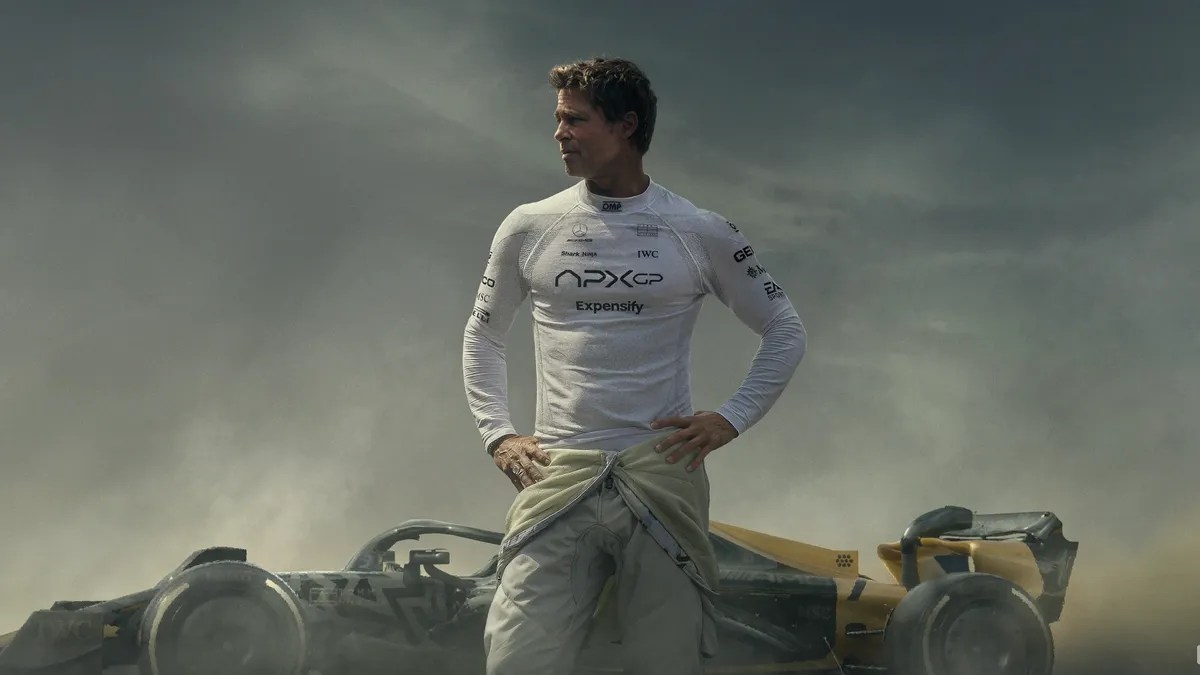
Yes, “F1: The Movie,” another top-10 cash taker, offered new movie theater thrills, but if you took away star Brad Pitt or the rapid-fire editing and fantastic sound engineering that put you in the driver’s seat, what do you have? A fairly generic tale of a has-been old-schooler taking a cocky prodigy reluctantly under his wing. But like “Sinners,” and to a lesser degree, “Mission: Impossible – The Final Reckoning,” which is also in the year-end box office hunt, the film boasts a bona fide creative spirit. You can see onscreen the care, chemistry and attention to detail that went into it from script to editing bay. Aside from Coogler, Joseph Kosinski and Christopher McQuarrie – the hands behind “Sinners,” “F1” and “Final Reckoning” – as well as Gunn, you’ve likely never heard of the other box office helmers. The names Jake Schreier (“Thunderbolts”) and Jared Hess (“Minecraft”) shoot across the page and evaporate back into the data sphere unknown. Both were likely the last piece of a committee-driven endeavor to bring a product to market. Without Coogler, “Sinners” doesn’t happen. And no offense to Mr. Hess, but it could have been been Tommy Wiseau helming “Mind-less-craft” and the result and box office tally would be the same.
In this day of data-driven metrics, analytics, AI shortcuts and deepfakes, filmmaking is going the way of the NBA and MLB. Numbers don’t lie; do the math; stick with the formula. Boring! Stars still sell seats, but what people crave is drama and unpredictable narrative arcs. They want to be challenged, surprised and wowed, not spoon fed CGI pap. Spielberg knew that. Coogler knows it. Audiences need to show they know that. As is, assembly-line flicks such as “Minecraft” and “Superman” are bringing the experience of going to the movies down. What the cinematic world needs now is a creative reset.
 For What it's Worth
Leave a comment