Archive | January, 2025

Short Takes

26 Jan

Reviewed: ‘All We Imagine as Light,’ ‘The Front Room’ and ‘Ad Vitam’ and ‘Back in Action’

‘All We Imagine as Light’ (2024)

Payal Kapadia’s somber meditation on womanhood and companionship amid the bustling streets of Mumbai feels like a living and breathing document. It follows the lives of three intertwined women, two of whom are nurses and roommates. The more dour of the duo, Prabha (Kani Kusruti), is estranged from her arranged husband, who is now working in Germany, and moves through her days with restrained and wistful introspection. The younger of the two, Anu (Divya Prabha), is bright-eyed, perky and naively idealistic as she constantly overspends and often asks Prabha to cover her rent. She has a secret Muslim lover who asks her to wear a burka when sneaking over for their trysts. That’s one of the interesting things about Kapadia’s portrait of Mumbai – it delves into and illuminates the myriad subtle cultural, linguistic and religious identities that coexist nearly seamlessly in the dense urban setting. The movie places the patriarchy under a microscope, not by lambasting double standards and gender inequality, but by showing the sisterhood formed through common causes and tribulations. Prabha and Anu are busy working out their romantic and professional futures while the third woman, the hospital’s cook, Parvaty (Chhaya Kadam), a steely, no-nonsense, middle-aged widow, rails in vain against a developer who wants to displace her. “All We Imagine as Light” is a quiet film that affects the viewer in ebbs and flow, and Kapadia’s poetic cinematic flourishes add a dreamy, hypnotic affect to the deeply emotional sojourn. Kapadia was recently in Brookline to show the film at the Coolidge Corner Theatre and was rightly praised as a breakthrough filmmaker. The texture and tenor of “All We Imagine as Light” is reminiscent of Deepa Mehta’s Elements trilogy, which bodes well for Kapadia’s future endeavors.

Continue reading
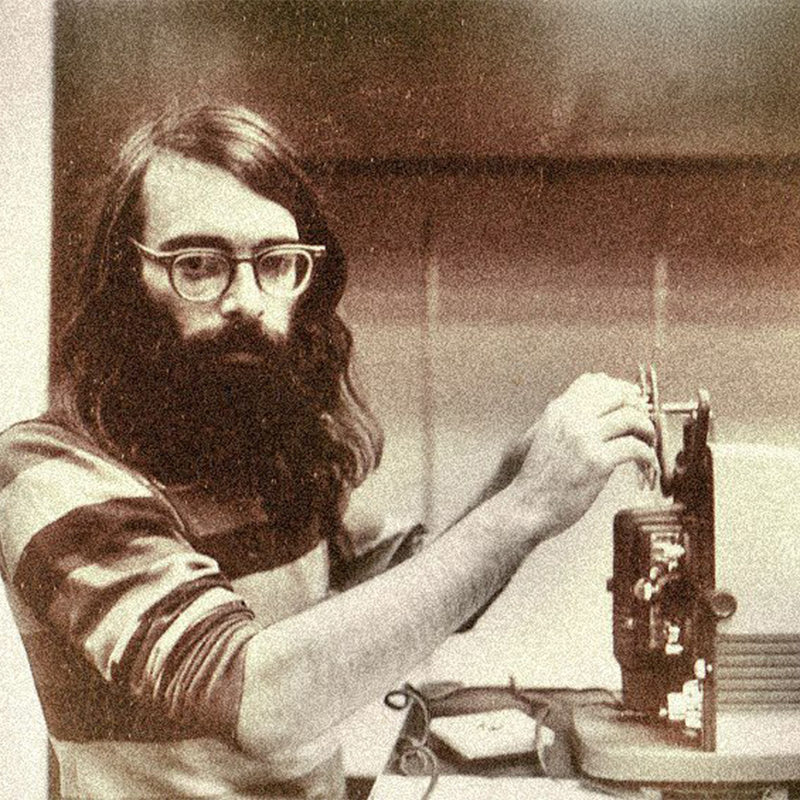

RPM brings experimental filmmaker Saul Levine to The Brattle on Sunday to show 10 explorations

26 Jan

Filmmaker Saul Levine in 1968.

The Revolutions per Minute Festival hosts 10 works by Somerville experimental filmmaker Saul Levine at The Brattle Theatre on Sunday.

Not sure what experimental films are? If you’ve ever been to Boston’s Institute of Contemporary Art and seen trippy, surreal video installations, you’re on your way. Experimental or avant-garde film is usually deeply personal, often sociopolitical in context and reflective of the artist’s life in the moment.

Levine, born 1938, has been producing films for nearly 60 years; he was a professor in the Visual Arts Program at MassArt for 39 years.

Levine started his filmmaking career with “Salt of the Sea” (1965), featuring footage of his friends hopping from a boat to a buoy in the New Haven harbor. “I tried to make the jump with the camera,” Levine said, “and I fell into the water but held on to the camera.” The waterlogged footage, which Levine described as “abstract swirls of magenta and turquoise,” was turned into a four-minute short that ended with a clear shot of his friend perched upon the buoy.

If you watch Levine’s later works, such as his series “Driven (Boston After Dark)” (2002-present), in which Levine rides around in a car filming subjects and captures moments in time, or “Sun Drum Moon Note” (2018), which screens Sunday, you’ll notice shaky camera work. Part of that is Levine’s editing style, but adding to it are genetic neurological ticks – what Levine refers to as “tremors” – that he’s had since birth. As a result, Levine also speaks with a noticeable stammer.

Age and neurological affliction keeps Levine from getting behind the camera as much as he used to. Levine’s time at MassArt was also cut short, ending with his resignation in 2018. He said he felt “forced out” after school administrators accused him of harming students by showing his compiled film “Notes After a Long Silence” (1989), a collage that includes scenes of him having sex with his then partner. “It was ridiculous,” Levine said, as he’d screened “Notes” over several years without complaint and “the film was posted on the school’s website.” Levine gave passionate commentary on the situation in a video on Facebook, saying he felt “ambushed” by the school’s administration. The same year, fellow MassArt professor Nicholas Nixon, a Guggenheim fellow and photographer, came under scrutiny in a Boston Globe article for more severe, yet similar allegations of inappropriate academic behavior. The Globe mentioned Levine in conjunction with Nixon, who also resigned.

Continue reading

Short Takes

9 Jan

Reviewed: ‘Seed of the Sacred Fig,’ ‘Soundtrack to a Coup d’Etat’ and ‘Room Next Door’ in theaters

‘The Seed of the Sacred Fig’ (2024)

It’s amazing, given how Draconian the Iranian government has been about censorship and control over its own narrative, that the voices of filmmakers Mohammad Rasoulof and Jafar Panahi persist. Both have been arrested and spent time in jail because they make films critical of the oppressive regime. These films are usually shot and edited secretly and often bootlegged out of the country to gain distribution in the West. Panahi struck the first blow with the sublime and frightening “The Circle” (2000), which detailed the systemic imprisonment of women for morality violations that most people in a free state would consider little more than jaywalking. Rasoulof goes further with “The Seed of the Sacred Fig,” crafting a domestic gender rift against the backdrop of the real-life death of Mahsa Amini in 2022 after being taken into custody for a hijab violation. The event galvanized the Woman, Life, Freedom movement and led to protests in the streets. In the home of Iman (Missagh Zareh), he and his wife Najmeh (Sohelia Golestani) and teenage daughters Rezvan (Mahsa Rostami) and Sana (Setareh Maleki) come at the headline event differently. Iman, who works for the state judicial department and reviews and signs execution orders, believes the theocracy’s line that Amin died of a stroke; his wife and daughters, like all those protesting, believe the death was the result of abuse and torture. Iman has a gun as part of his position, and as tension in the house rises, the firearm goes missing. Ultimately the action leaves the confines of the family’s apartment and the distrust threatens to turn violent. Just before the film played Cannes, Rasoulof was sentenced to eight years in prison with a flogging and fled the country, another reflection of a theocratic patriarchy holding authoritarian reins chokingly tight. 


‘Soundtrack to a Coup d’Etat’ (2024)

A perfect companion to RaMell Ross’ superb “Nickel Boys,” as both deal with a grotesquely unjust Black experience on the cusp of the civil rights movement. “Nickel Boys” is a microcosm of racial injustice, whereas “Soundtrack to a Coup d’Etat” looks globally. The doc by Johan Grimonprez details the dubious events surrounding the assassination of Patrice Lumumba,  inaugural leader of the Democratic Republic of Congo – just liberated from Belgium and quickly becoming a Cold War conflict because its rich uranium deposits were coveted by the United States and Soviet Union for use in nukes. It is astounding to see archival footage of the smooth and charismatic Malcom X and an animated Nikita Khrushchev making the same condemnations at the U.N. of the West for its colonialism and denial of rights to Black people. Insert into the mix Louis Armstrong as a Trojan horse cultural ambassador to the Congolese while Eisenhower, the CIA and Belgian operatives scheme against Lumumba in ways troublesome, embarrassing and downright heinous out of fear the nation (and its uranium) would fall into Soviet hands. Grimonprez, employing frenetic freestyle editing, homes in on socially active jazz greats of the time – among them Nina Simone, doing her amazing “Sinnerman,” Abbey Lincoln and Max Roach bringing the beat and emotional heat and Dizzy Gillespie – as well as X and Maya Angelou (she, Lincoln and Roach stormed the U.N. in the wake of Lumumba’s death) to fill the frame with sound and voice. The frequent shards of quotes he flashes onscreen are stunningly effective. Grimonprez has tapped into an incredible intersection of time, place and players that he turns into an immersive experience that entertains and informs unlike any Wikipedia page or history book. 


‘The Room Next Door’ (2024)

Iconic Spanish filmmaker Pedro Almodóvar (“Tie Me Up, Tie Me Down,” “Women on the Verge of a Nervous Breakdown”) makes his first English-language film, and with the double-barrel casting of Tilda Swinton and Julianne Moore on paper it seems like a can’t-miss collaboration. While it definitely hits, it’s not the boom you’d expect from such a loaded lot. Based on Sigrid Nunez’s novel “What Are You Going Through,” “Room Next Door” is a contemplation on mortality – something that seems to be on Almodóvar’s mind these days given this, “Parallel Mothers” (2021) and most personally, “Pain and Glory” (2018). Novelist Ingrid (Moore) and war correspondent Martha (Swinton sporting a neat crop top), Manhattanites but distant for years, reunite because Martha is terminally ill and wants Ingrid to spend the end days with her in a quaint VRBO upstate. The performers are all in, yet the characters somehow feel shallow and contrived and the dialogue too meted, as if were a stage play. It’s gorgeous and affecting, but ephemeral and wispy. 

Nickel Boys

3 Jan

Racist cruelty in a 1960s institution but mercifully transcendent through abstraction

RaMell Ross’ adaptation of Colson Whitehead’s 2019 novel about racial injustice and worse at a detention school for boys in 1962 Florida (the tail end of Jim Crow and eve of the civil rights movement) stuns in its dreamy, hypnotic use of POV shifts, abstraction of violence and subtle yet powerful commentary on the inhumane ills we do to each other. The effect of “Nickel Boys” is intentionally unsettling as we embed with Elwood (Ethan Herisse) and Turner (Brandon Wilson), two Black boys at the Nickel Academy, where kids are divided into white and nonwhite under the ever-present eyes of glowering guards, not far off from the “boss man” in “Cool Hand Luke” (1967). As you can guess, the former get better food, longer recesses and lighter labor. They also don’t run the risk of “disappearing”; the real-life school Whitehead modeled his novel on, the Dozier School for Boys, was shut down in 2011 after an investigation by the Department of Justice found 55 unmarked graves. The causes of death were varied: fire, malnutrition, disease and blunt trauma, all grim, if not criminal.

Ross and co-writer Joslyn Barnes choose to go at Whitehead’s straight-ahead arc in fragments and wispy Terrence Malick-esque glimmers. It is as mesmerizing as it is terrorizing. Much of the early part of the film is told from Elwood’s point of view – we don’t see Elwood, just see and experience what he does, from being harassed and assigned extra work by overseers to becoming friends with Turner. When we jump into Turner’s view, we finally see Elwood: lanky, languid and demurely charming. The film slips into omniscient POV at times too, not entirely consistently, but it’s in the boys’ blinders, with each reining in emotions to survive, that the film’s at its most evocative and immersive high.

The backstory for the tour of horrors at Nickel (the beatings and abuse tend to take place just off frame, the way atrocities at Auschwitz were layered in obliquely in Jonathan Glazer’s “The Zone of Interest” last year) is that Elwood was imprisoned wrongly; he was an early enrollee in college and, on his first day of school, innocently caught a ride with a car thief and was held as an accomplice when stopped. In the flash of a badge, his life goes from promising future to dire straits. Fortunately he has a caring nana fighting for him (the always excellent Aunjanue Ellis-Taylor, going a long way here as the woman who raises Elwood after his parents abandoned him when he was 6), which is more than most (and why those 55 graves went unquestioned for so long). Her efforts to raise him are stymied regularly by bureaucracy, systemic racism and shithead shysters and wind up making Elwood a target inside.

The pit of despair is deep and wide, but hope never dims.

In texture and tenor, the reimagining of Whitehead’s text by Ross (a documentary filmmaker making an impressive feature debut) and Barnes is a radical departure while hewing to its narrative structure and barbed social agenda. It’s a jumping-off that adroitly leverages the language of cinema (the camerawork by Jomo Fray is ethereal and transportive) to evoke on a deep level. It wouldn’t work without Herisse and Wilson’s transformative turns and fluid onscreen chemistry, as well as the surrounding cast of boys and jailers. “Nickel Boys” is a subtle yet haunting condemnation of racism in America and one that doesn’t feel as far off as the measure of years in between tell us.